
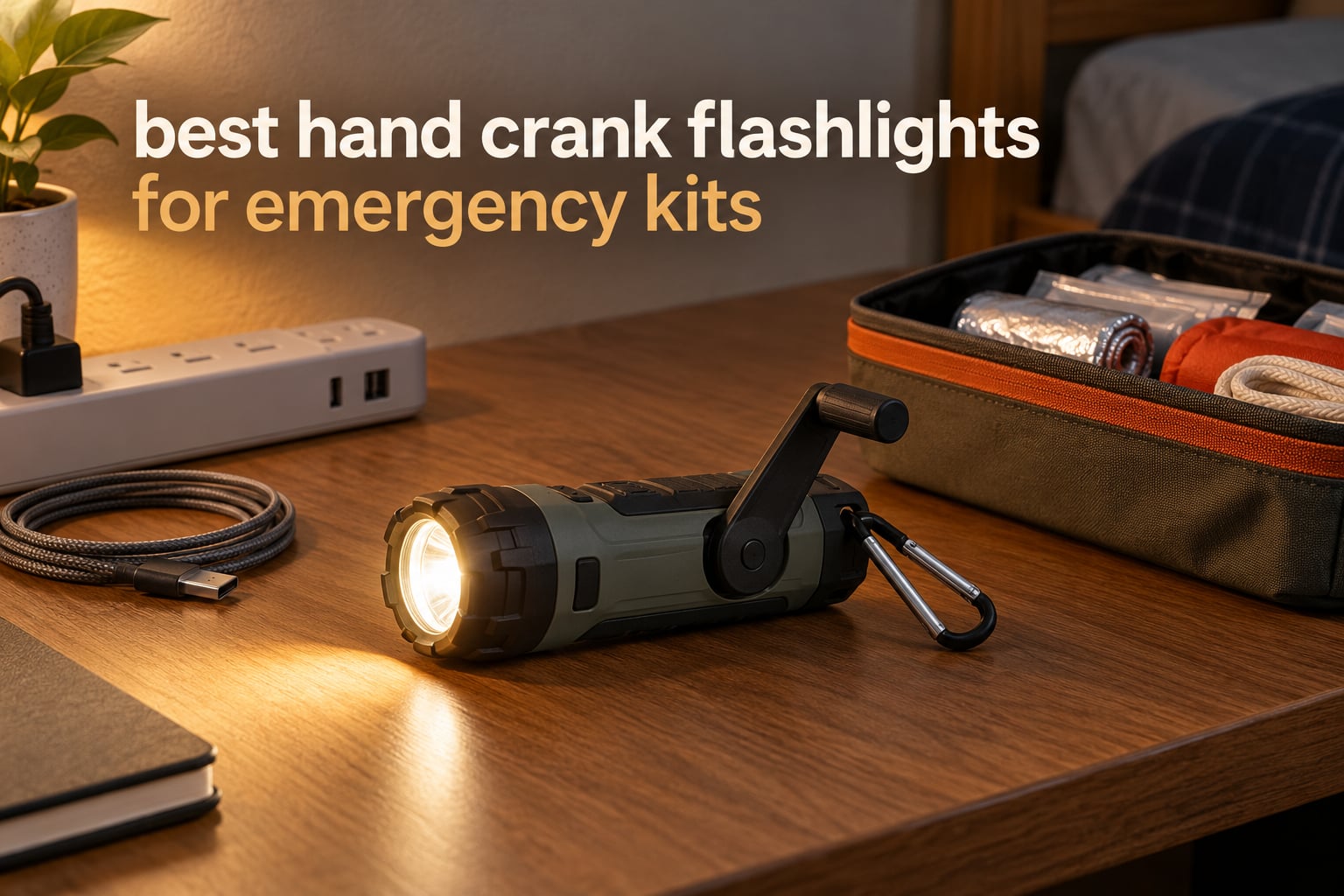
A hand crank flashlight is a torch with a small dynamo generator built into the handle. You supply the energy yourself by winding or squeezing, a tiny motor spins backward as a generator, and an internal rechargeable cell stores the charge until you press the switch. No batteries, wall power, or sunlight is required to make it glow.
So are they any good? As a backup, yes. As your main light, no. Almost every model in this roundup puts out between 10 and 200 lumens where a decent lithium flashlight puts out 1,000 or more, and building a useful charge takes a minute or two of hard winding. The honest position, and the one that matches what owners report on r/flashlight and BudgetLightForum, is that a crank light cannot die when your AA batteries die. That is the whole value proposition.
We pulled 10 hand crank flashlights, compared every published spec, and sorted out where each one actually earns a place in an emergency kit. The best hand crank flashlights for emergency kits are not the brightest units on the shelf, they are the ones that sit in a drawer for eight months and still light up on the first crank. Below you will find the crank-to-runtime math, the water rating decoder, and a note on where to store these in a student apartment or dorm.
Last tested in September 2026. Every lumen figure, runtime, weight and rating quoted below comes from the manufacturer listing or the verified review record for that specific product, not from a marketing claim we could not trace.
Table of Contents
Top 3 Hand Crank Flashlights for Emergency Kits (October 2026)

Simpeak 2-Pack Crank Flashl…
- 200 lumens
- 10+ min light per crank minute
- Solar plus crank
- 86 g

Quick Overview: Every Pick Compared in 2026
All ten models below are genuine hand-crank or hand-squeeze units. Prices shift constantly across retailers, so use the table for the specs and the buttons for the current listing.
1. Simpeak 2-Pack Hand Crank Solar Flashlight: the Best Overall Pick
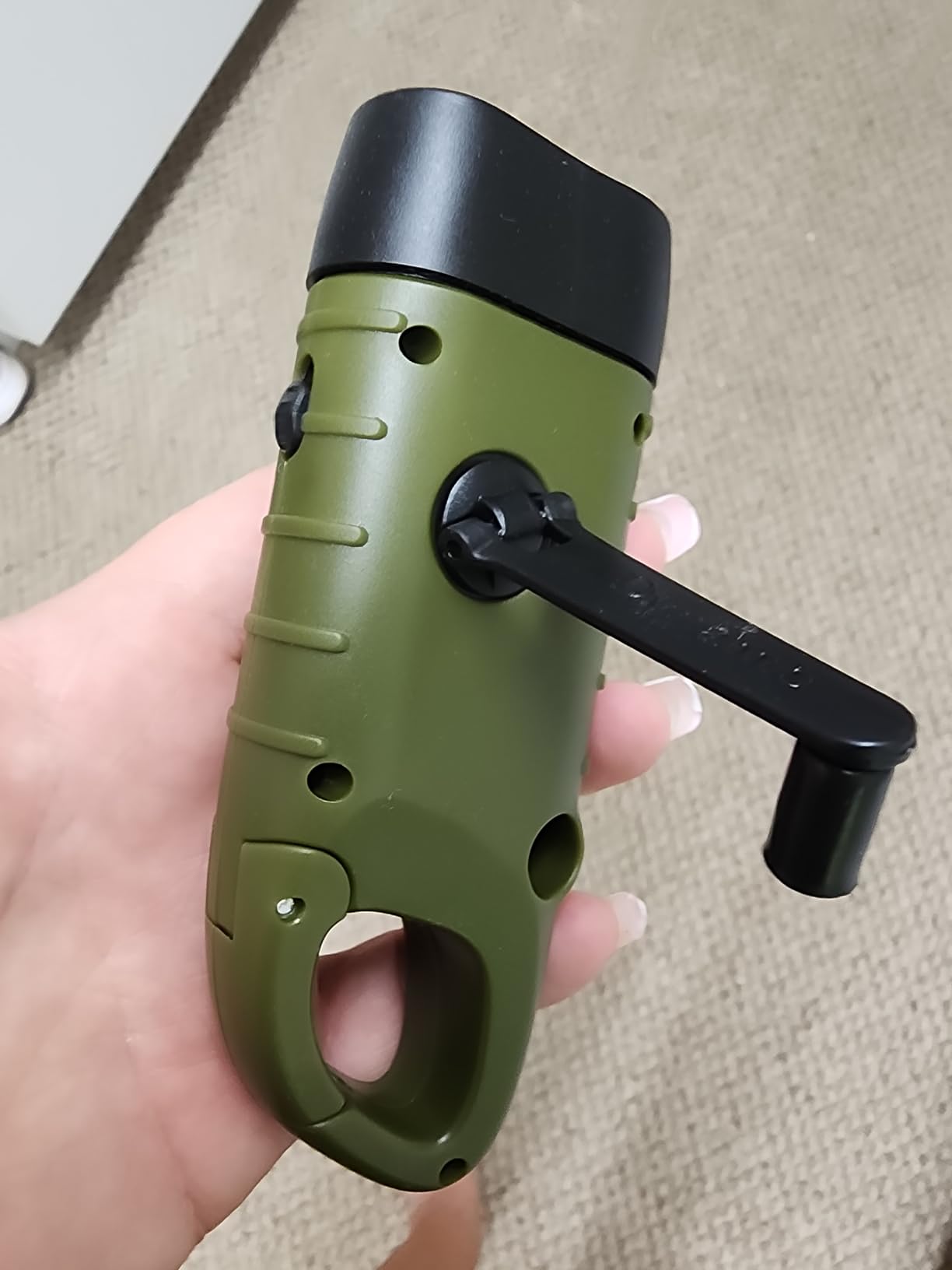
Simpeak 2-Pack Hand Crank Solar Powered Flashlight, Emergency Rechargeable LED Survival Flashlight, Quick Snap Carbiner Dynamo Flash Light Torch for Outdoor Sports, Green
200 lumens
10+ min light per crank minute
Solar and hand crank
86 g
Not water resistant
Pros
- Over 10 minutes of light from one minute of cranking
- Solar panel also absorbs lamp light and ambient sources
- Quick-snap carabiner for bag or belt carry
- Light at 86 g with a 124x45x32mm body
- Backed by a 2-year manufacturer warranty
Cons
- Not water resistant
- so rain and submersion are out
- A single 200-lumen LED is dim beside modern high-output torches
- Ten minute runtime makes it a backup light rather than a sustained source
This is the one we keep in our own kit, and the reason is not the lumen count. It is the 5061 reviews at 4.5 stars, the 86 gram body, and a two-year warranty that most of the crank category simply does not offer.
One minute of cranking produces more than ten minutes of light, and the solar panel will happily soak up sunlight or even lamp light while the torch sits in a drawer. That second path matters more than it sounds: a light that quietly tops itself off on a windowsill is one you will still find working two years later.
The 200-lumen single LED is bright enough to find a fuse box, walk a hallway, or light a desk for reading a map. It will not throw a beam down a trail or light a whole parking lot. Owners describe it as a dependable grab-and-go backup rather than a main light, and that framing is accurate.
Dimensions are 124x45x32mm, which is genuinely pocketable, and the quick-snap carabiner means you can clip it to a backpack strap rather than digging through a bag in the dark. The housing is rugged ABS in army green, and the box includes a user manual and the warranty.
The one hard limitation is water resistance. The listing states the light is not water resistant, so it is a bedroom, hallway, and car glove box tool, not a rain-and-river tool. Keep it in a zip-close bag if it lives in a go-pack.
What you get for the crank you put in
Ten-plus minutes of usable light per minute of cranking is the best published ratio in this group, and it holds a charge in the internal cell for days at a time. Practically, you crank once on a Tuesday and it is still faintly usable a week later, which is exactly the behaviour you want from a light you rarely touch.
The trade is the water rating. If your kit lives anywhere damp, this one stays indoors and something else goes outside.
Where it falls short in a real outage
Two hundred lumens is a candle-replacement tier output, not a room-lighting tier output. It will guide you to the breaker panel or the front door and show you where the fuse box is, but it is not the light you use to cook or to work at a desk for two hours.
For that reason we still pair it with a normal high-lumen flashlight on replaceable cells. The crank light is the one that works when the batteries are dead.
2. Mudder 4-Pack Hand Crank Solar Flashlight: Best Rated in the Group
Mudder 4 Pack Hand Crank Solar Flashlight LED Emergency,Yellow, Black
4.6 stars
Solar and hand crank
Water resistant
Four units
13.44 oz
Pros
- 4.6 stars from 339 reviews
- the highest rated set here
- Solar panel plus crank gives two charging paths
- Water resistant construction suits camping and rain
- Four units cover several rooms and vehicles
- Buckle clip feels more solid than the price suggests
Cons
- Yellow units crank more stiffly than black units and appear to be a different internal model
- Modest brightness
- described as LED-bright rather than spotlight capable
- A full day of sun only yields an hour or two of strong light
At 4.6 stars across 339 reviews, this is the highest-rated product in our roundup, and the rating is defensible rather than a small-sample artifact. Owners use them as a battery-free backup through real outages and report none of the four units failed after repeated cranking and solar charging.
Cranking for one minute gives roughly ten minutes of light, which puts it in the same practical class as the Simpeak. The bigger story is the pack format: four units from a single purchase covers a bedroom, a kitchen, a car, and a go-bag without four separate orders.
Each unit measures 4.92 by 1.81 by 1.34 inches, runs on a lithium ion cell, and is water resistant, which is a step up from most of the plastic packs in this price band. The buckle attachment works for a backpack or keychain.
There is a build inconsistency worth knowing about. The yellow units are noticeably harder to crank than the black ones and appear to use a different internal model. Nothing in the listing explains it, so if you are particular about crank feel, open the pack and test each one before putting them into service.
On solar, be realistic. A full day of direct exposure adds an hour or two of strong light, and dim output carries the rest of the night. Cranking is the faster path by a wide margin.
Why the water resistance matters for a student kit
A water resistant rating changes where you can put the light. It opens up a hallway, a stairwell landing, a campsite, and a car interior in wet weather, all of which are places a non-rated light is easy to damage.
Water resistant is not waterproof. Do not submerge it, and do not leave it face down in a puddle.
What buyers wish it did better
Brightness is the recurring note. Owners describe the output as clear to see by but not capable of throwing a long beam, which is fine for navigating a building and useless for signalling across a lot.
The yellow-versus-black crank difference is the mechanical complaint to watch. Test all four before you need them.
3. Evelots 4-Pack Hand Crank Flashlight: Best for Multi-Room Coverage
Evelots 4-Pack Hand Crank Flashlights for Emergencies, Double LED
Four units per pack
Dual LED
Crank lock toggle
4 x 2 x 1 inches
Not water resistant
Pros
- Four-light pack stages one in the home
- car
- backpack and emergency kit
- Crank lock toggle lets you wind once and keep the light on
- Dual LED lamps give usable light for outages and roadside repairs
- Compact 4 x 2 x 1 inch body with a carry strap
- Long selling history with a 30-day easy return policy
Cons
- No manufacturer warranty offered
- Not water resistant
- Two-LED output is modest and better suited to close-range navigation
With 2897 reviews at 4.4 stars, this pack has been bought and re-bought by people who arrived at the same conclusion we did: one light in one drawer does not help you in the hallway when the breaker is downstairs. Four lights in four rooms does.
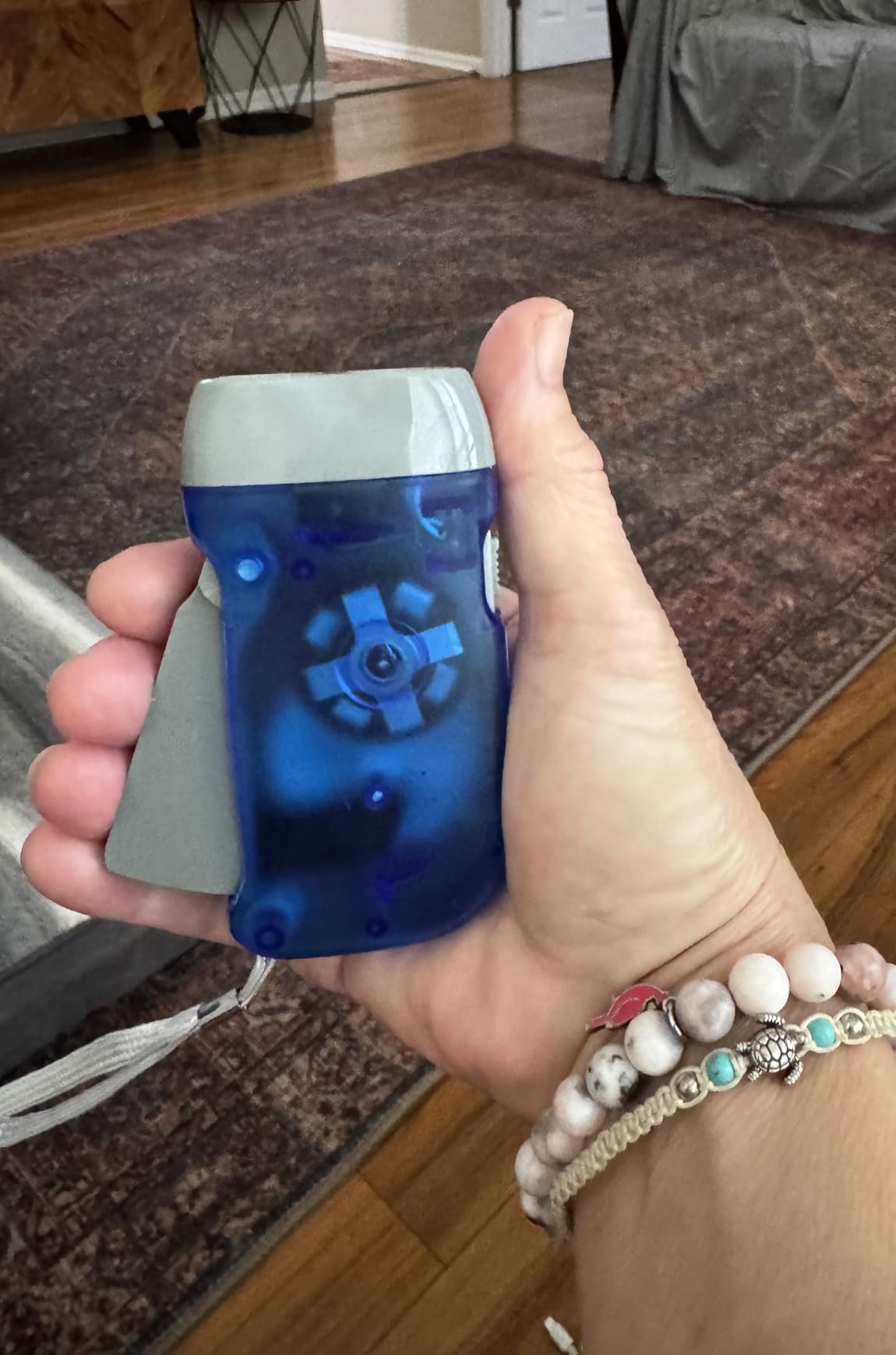
The hand-press crank generates power without batteries, the two LED lamps have a simple on and off switch, and the crank lock toggle holds the light on after you wind it. That toggle is the feature people mention most, because it removes the need to keep turning the handle while you look at something.
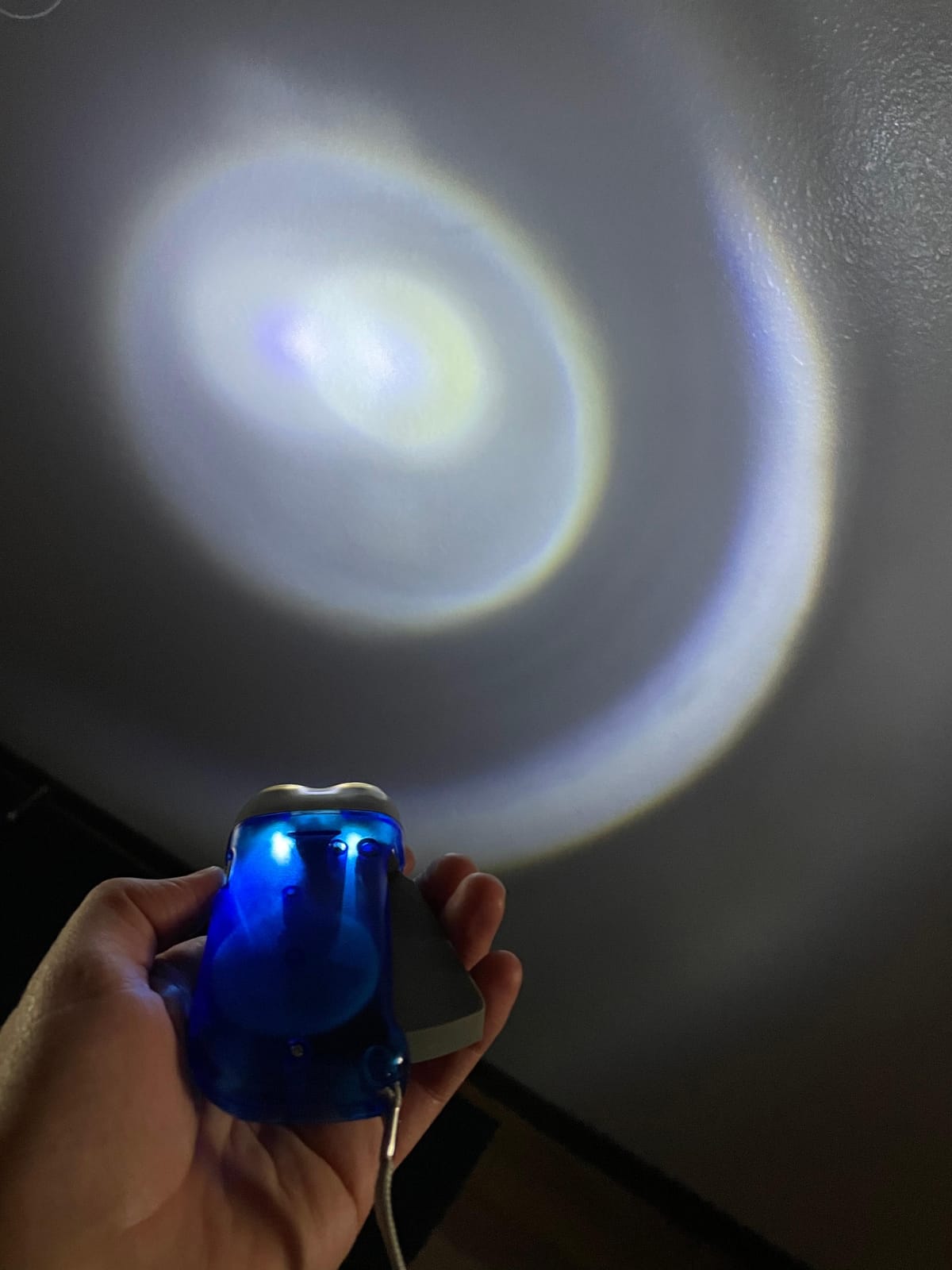
Each light is 4 by 2 by 1 inches and the whole unit weighs 9.12 ounces, so it is light enough to sit in a drawer, a tool box, or a jacket pocket. A carry strap is included. The internal cell is nickel-metal hydride, which is the same chemistry used in older rechargeable packs and is generally tolerant of sitting unused.
Reviewers consistently describe the four-pack format as the deciding factor rather than the light itself. Owners place units across the car, a kitchen drawer, and go-bags. The recurring downside is brightness, which gets called adequate rather than impressive.
Two things to accept up front. There is no manufacturer warranty on this one, which matters if a crank handle cracks in year two. And it is not water resistant, so outdoor placement is off the table.
How many crank lights does an apartment actually need?
One per floor of your building, one per sleeping area, and one in the vehicle is the practical answer. A four-pack covers a studio, a one-bedroom, or a shared apartment where each person has their own room. Beyond four, a second pack is cheaper than a good single unit with a warranty.
The reason distribution beats brightness in a domestic outage is simple. The light you need is the one in the room where you already are, not the bright one in a drawer you have to find.
When to skip this pack
Skip it if you want a light you can leave in a wet car or take on a camping trip. It is also the wrong choice as your only emergency light in a region that gets real storms, because the crank is hand-powered and the housing is not sealed.
If your main concern is one dependable beam, spend your money on a single better unit instead of four dim ones.
4. Coghlan’s Dynamo Flashlight: Best for Pocket and Keychain Carry

Coghlan’s Dynamo Flashlight – Rechargeable Handheld LED Light for Emergency, Camping, and Survival – Compact and Lightweight Crank Flashlight for Reliable Portable Illumination
1.12 oz
Water resistant
10 lumens
Fold-away crank
Belt clip
Pros
- Only 1.75 x 1.25 inches
- so it slips into a pocket or small emergency pouch
- Weighs 1.12 ounces
- among the lightest hand-crank torches available
- One minute of cranking yields up to seven minutes of continuous light
- Sturdy clip attaches to a belt
- bag or cap for hands-free use
- Water resistant and needs no batteries or bulb replacements
Cons
- 10-lumen output is the dimmest in this group and best for close-range use only
- Seven minute runtime is short for anything beyond a quick check
- Single-unit pack
- so extra kit locations need separate purchases
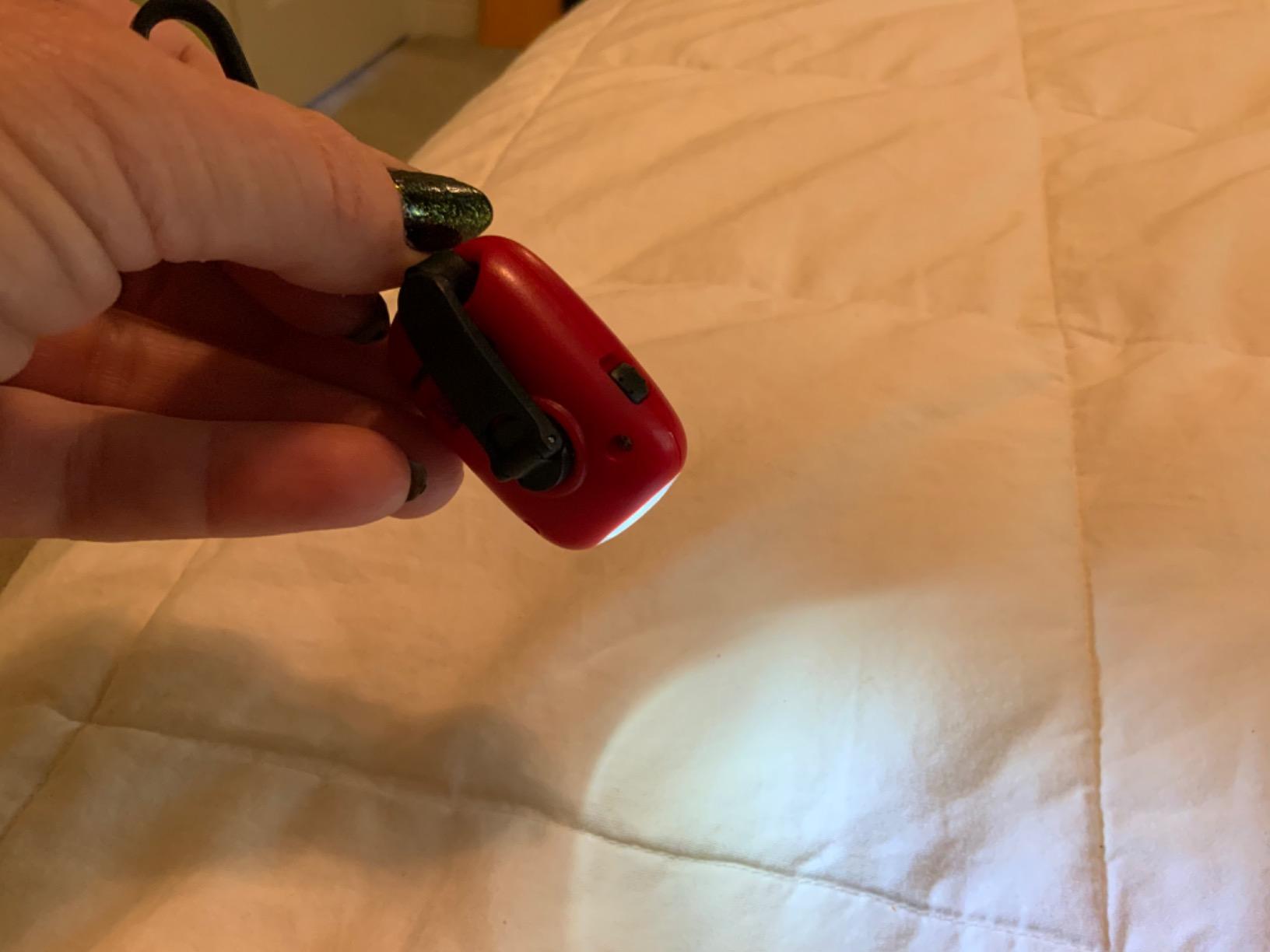
This is the smallest and lightest unit we reviewed, and in a category dominated by chunky plastic blocks that is a real advantage. At 1.12 ounces and 1.75 by 1.25 inches, you will actually carry it, which is the entire point of a backup light.
One minute of cranking yields up to seven minutes of continuous light. The crank handle folds away so it does not snag in a pocket, and the sturdy clip attaches to a belt, a bag, or the brim of a cap for hands-free use.
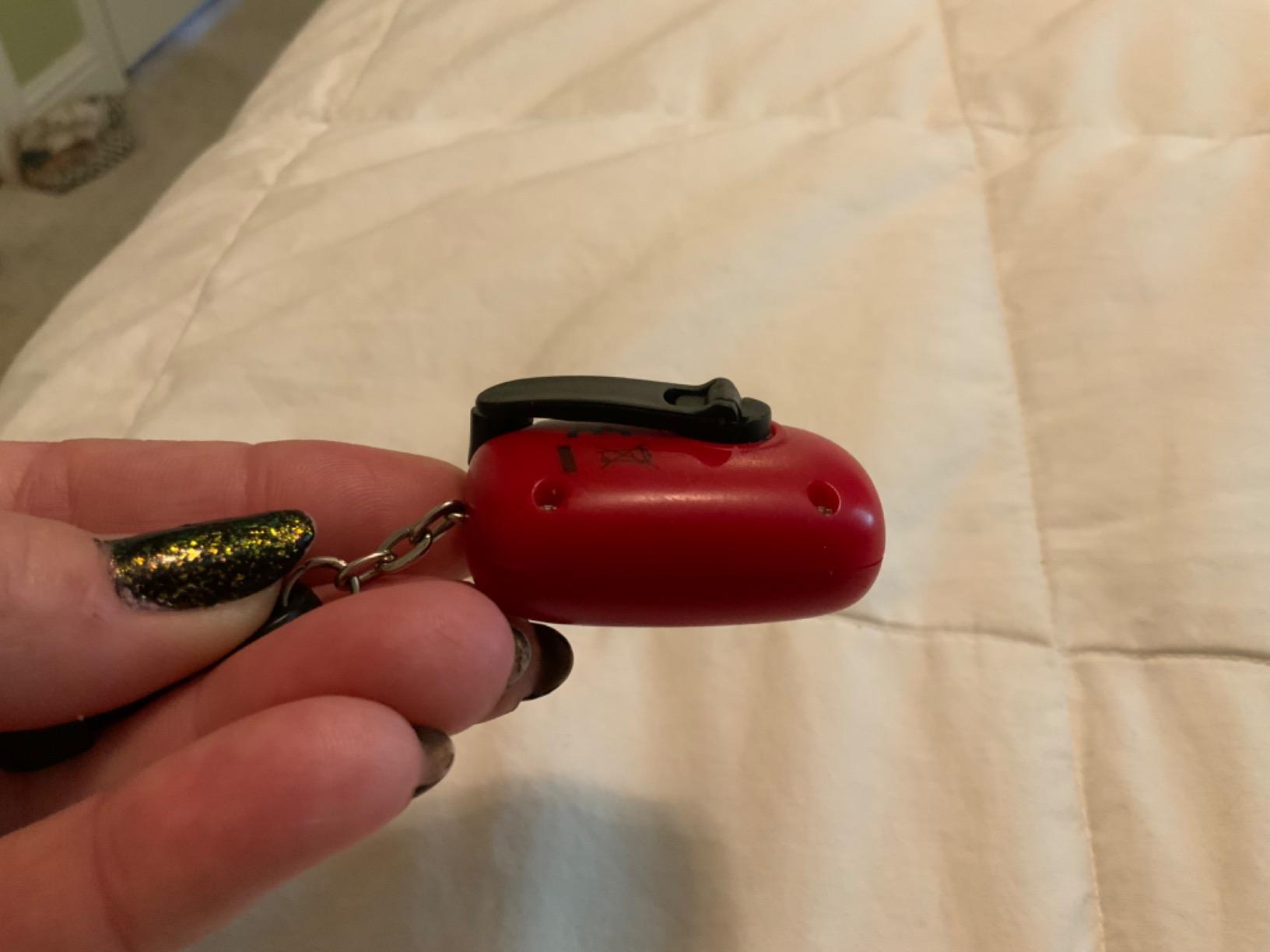
It is also water resistant, which puts it ahead of most of the pack-style lights in this group. The listing recommends it for outdoor activities, emergencies, automotive use, and boating, and reviewers back the vehicle and boating use cases specifically.
Be honest about the 10-lumen rating. Two LEDs at 10 lumens is an emergency locator, not a torch. It will show you the door, the steps, the edge of the road, and the contents of a drawer. It will not let you read a book or check a fuse panel in detail.
When the size is the whole point
This is the light to put on a keychain or in the small pocket of a daypack, the place where larger units never go. Because it weighs just over an ounce, you can keep it on you permanently rather than remembering it exists.
Water resistance and a clip make it a good glove box or a boat cabin companion, in positions where a larger light would just get left behind.
Where the light ends quickly
Seven minutes of runtime per crank minute means you are managing a small budget of light. That is workable for finding your way, uncomfortable for any task that needs a steady beam.
It is a single unit, so covering a second room or a second vehicle means a second purchase. For most people that defeats the reason to buy a crank light, which is a low-effort, low-cost decision.
5. Guyuyii 4 Pack Hand Crank Flashlight: Best for Gifting and for Kids

Guyuyii 4 Pack Hand Crank Flashlight Features 3-LED and Wrist Straps
20 lumens
30 minute runtime
Three LEDs per unit
Four pack
Wrist straps
Pros
- Requires no batteries or assembly
- so it is always ready during a blackout
- Simple hand-crank operation children and seniors can operate independently
- Wrist strap and pocket-friendly body for camping and car use
- Four-pack lets you stage units in the car
- kitchen
- bedroom and go-bag
- Random colour pack works well as a gift or stocking filler
Cons
- 20-lumen output is dim and mainly useful for finding nearby objects
- Only about 30 minutes of runtime
- so it is a short-duration light
- Not water resistant
This is the lowest-rated set in the group at 4.2 stars from 607 reviews, and it is included because of who it is for, not despite the rating. If the person using the light is a child, a roommate, or a relative who does not think about gear, this is the one that gets used.
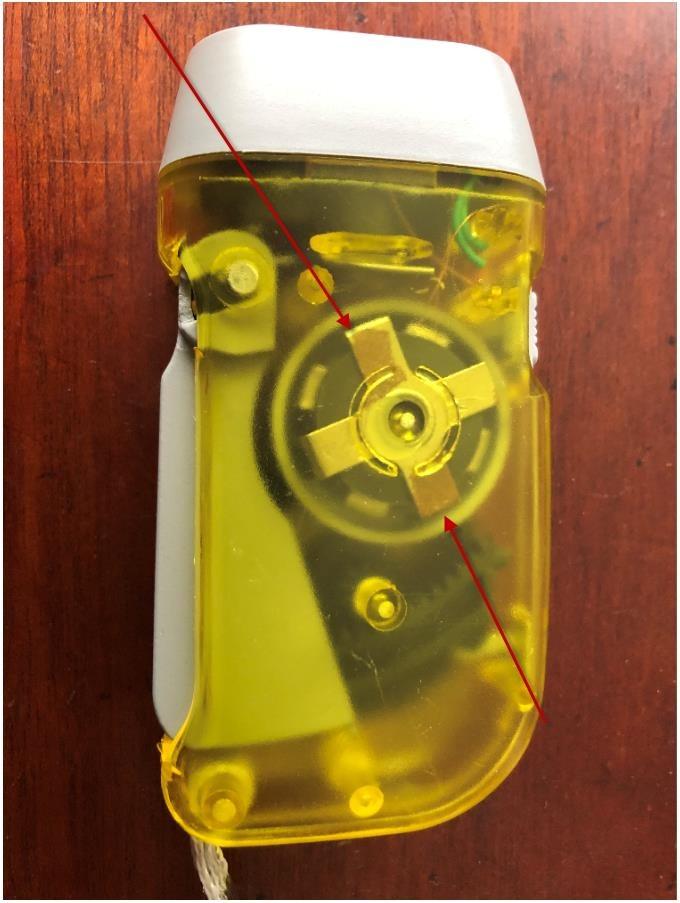
Each unit has three LEDs, a wrist strap, and a lightweight pocket-friendly body. The power source is manual, so there is nothing to buy, nothing to assemble, and nothing to forget. For most households, that beats every other advantage on this page.
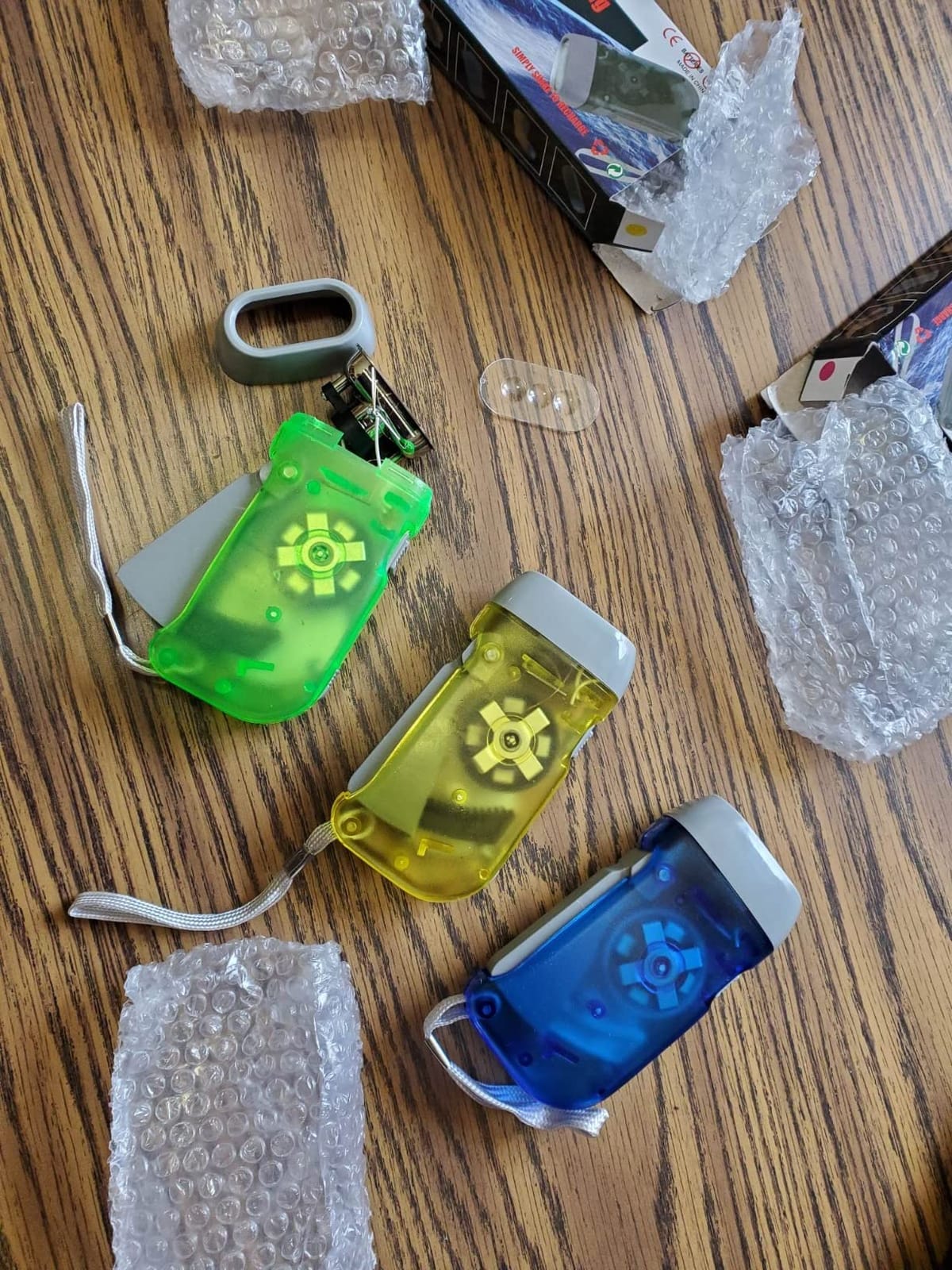
The listing recommends it for camping, power outages, outdoor activities, and emergencies, and owners frequently describe buying it as a stocking stuffer or handing it to older family members. Random colours per unit are part of the appeal.
Now the honest part. Maximum output is 20 lumens and runtime is around 30 minutes. That is a light for finding keys, finding a light switch, and confirming that other people in the flat are okay. It is not a working light.
It is not water resistant, and there is no weight listed, which usually means the listing is thin on detail. Treat it as a gift-grade light that happens to be a genuine emergency tool, not as a serious piece of kit.
Why simplicity wins in a shared apartment
In a student flat with three or four people, the emergency light that gets used is the one that requires no thought. A hand-press crank with a wrist strap has nothing to figure out, no battery door to open at midnight, and no charging cable to find.
It also solves the ownership problem. Nobody resents a roommate for owning the good flashlight, and a four-pack of identical lights sidesteps that entirely.
The honest limit on this one
Twenty lumens and half an hour of runtime. If a power cut lasts three hours, these lights contribute roughly the first few minutes of visibility for each person who finds one.
If you want a longer outage covered with real light, buy a higher-output unit. Buy this one for the people in your life who will never buy anything for themselves.
6. Mudder 8 Pack Hand Crank Flashlight: Best for Large Kits and Events

Mudder 8 Pack Hand Crank Flashlight 3 LED No Battery Torch, Blue
Eight units per pack
100 lumens
Three LEDs
Push-down squeeze crank
Not water resistant
Pros
- Eight-unit pack works out to a very low cost per light for multi-kit distribution
- No batteries to lose or go flat in cold car storage
- Push-plunger crank is simple enough for children to operate
- Non-slip rubber switches and braided wrist rope for secure handling
- Surprisingly bright three-LED output for the size
Cons
- Light pulses with the rhythm of the plunger rather than running as a steady beam
- Continuous squeezing fatigues the forearm and makes noticeable noise
- Crank is not wired to charge the internal cells so output depends on sustained squeezing
- Not water resistant
Eight lights in one pack makes this the cheapest way to equip a building, a student society, a campus residence staff kit, or a set of cars. At 100 lumens it also has the highest stated output of any pack-style model we reviewed.
The mechanism is a push-down plunger rather than a rotary crank. That distinction matters: a plunger works directly through your arm and produces light while you press, which is faster to use and much easier for a child or someone with limited grip strength.
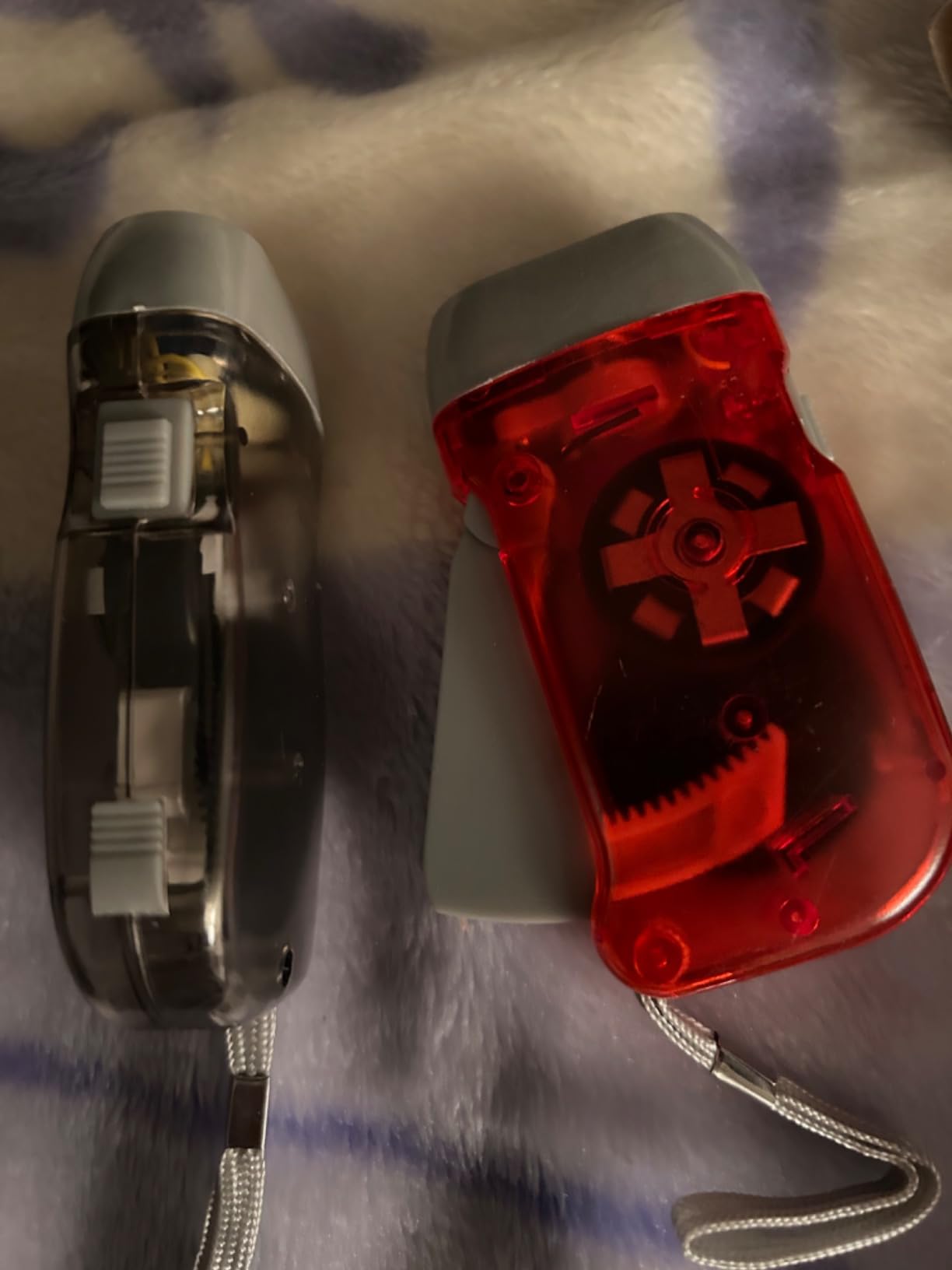
Each light has three LEDs, a non-slip rubber switch, and a braided wrist rope that doubles as a carry loop. The pack measures 9.65 by 4.13 by 2.56 inches, so it is a box you store rather than something you carry.
The technical criticism here is worth repeating, because it comes from a detailed review and it changes what you can expect. The generator is not connected to the internal lithium ion cells for charging. The light runs while you squeeze, and the output pulses with the rhythm of the plunger instead of holding a steady beam.
If you need a constant, stable beam, this is the wrong mechanism entirely. If you need eight lights that work with zero training and zero batteries, it is exactly right.
Continuous squeezing also fatigues the forearm and generates noticeable noise, so it is not the tool for a stealthy situation. And like most packs at this level, it is not water resistant.
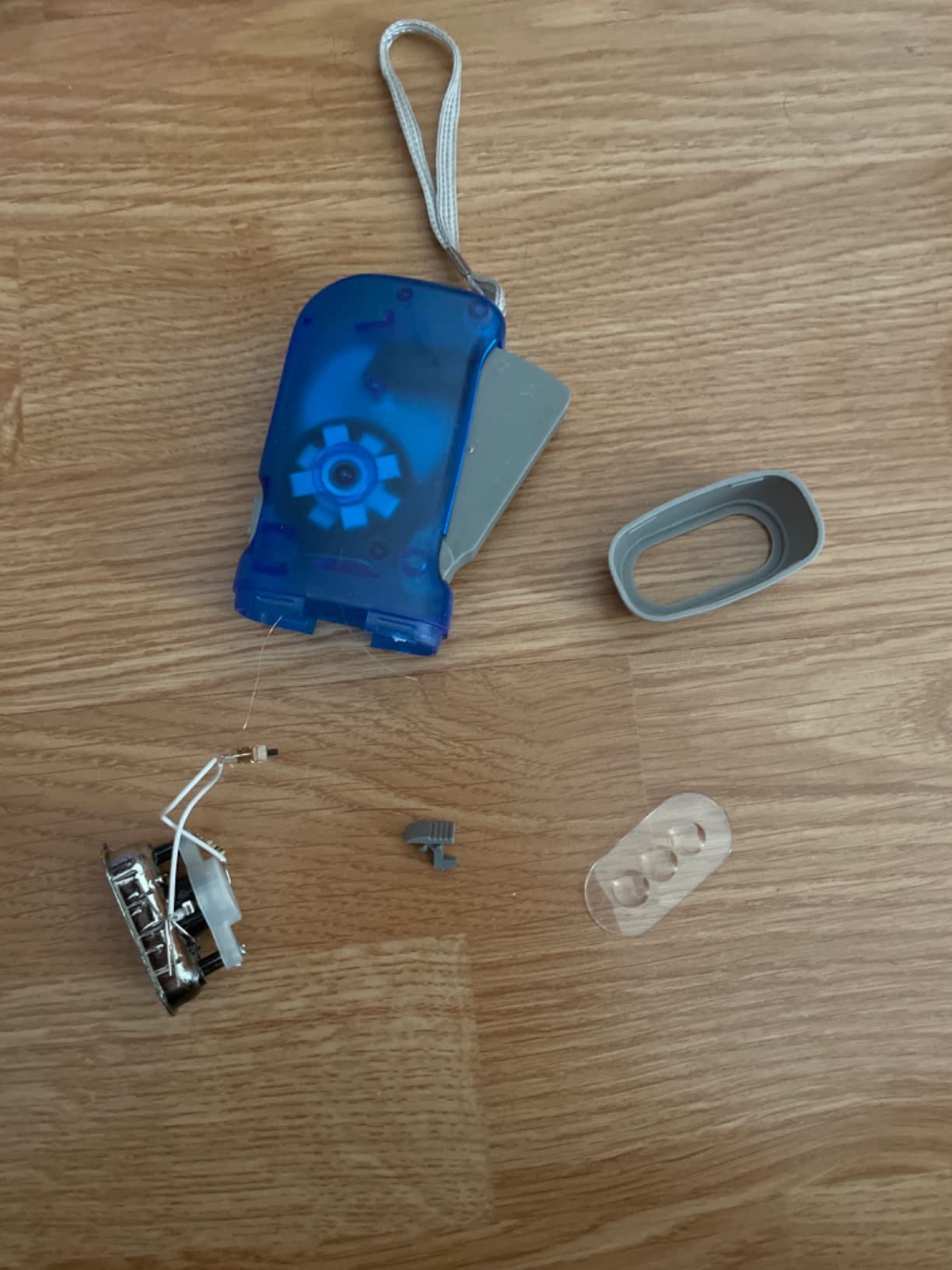
Squeeze crank versus rotary crank: which is better
A rotary crank stores what it generates in an internal cell, so you wind for a minute and get ten or more minutes of steady light. A squeeze plunger generally powers the LED directly, so the light exists only while you press and fades when you stop.
Rotary wins for anything longer than a quick look. Plunger wins for speed, simplicity, and for hands that cannot manage a rotary handle.
Where eight lights is overkill
If you live alone in a one-room studio, eight lights in a box is a cupboard-filler. The pack makes sense when you are equipping more than one room, more than one vehicle, or more than one person.
It is also the format most often bought as a gift or handed out at a group event, where the goal is giving everyone a working light rather than giving anyone a great one.
7. VFAN Rechargeable Hand Crank Flashlight and USB Charger: Best for USB Power Output

VFAN Rechargeable Hand Crank Flashlight/Generator/USB Charger for Phone and Emergency Survival Situations (Orange)
USB output 5V 600mA
2600mAh cell
18 hour runtime
150 m beam
310 g
Pros
- Only option here with a USB output that can charge a phone
- tablet
- GPS or smartwatch
- Generator output of 5V and 600mA at 120 rpm
- 2600mAh rechargeable lithium-ion battery gives up to 18 hours of flashlight use
- 1.5W LED with a 150 m beam distance
- far brighter than typical hand-crank torches
- Side lantern mode adds 12 hours of ambient light
- Includes a Type-C cable
- manual and limited lifetime warranty
Cons
- Phone charging is unreliable
- with at least one verified review reporting an iPhone would not recharge at all
- Some users report the light lasting only a few minutes rather than the advertised hours
- No clear charge indicator to confirm the crank is replenishing the battery
- Heaviest unit in this group at 310 g
This is the only product in the roundup with a USB output, and that single feature puts it in a category of its own. If your concern is keeping a phone alive during a long outage, this is the unit worth looking at, and it is also the unit you need to test before you trust.
Underneath, it is also simply the brightest crank light we reviewed. A 1.5 watt LED with a 150 metre beam distance is a different class from the 20-lumen packs, and the 2600mAh lithium ion cell gives up to 18 hours of flashlight use or 12 hours in side lantern mode.
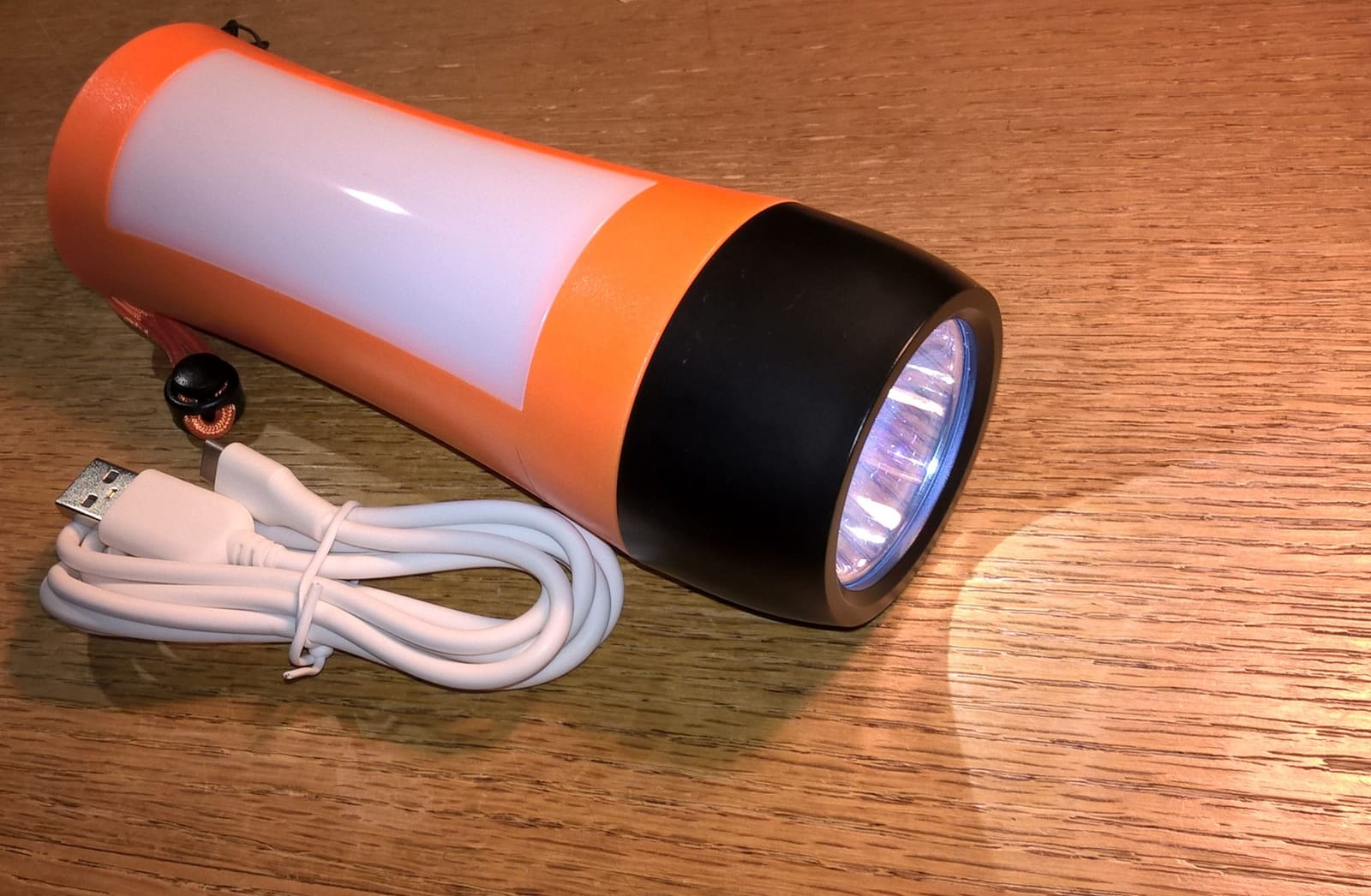
Body size is 7 by 2 by 2 inches and it weighs 310 grams, which makes it by far the heaviest unit here and the least pocketable. It is a car, hall table, or go-bag item, not a jacket item. Running wattage is 0.5 watts with 3 watts of starting wattage, and the switch routes power to external devices.
Reviews are sharply split, and the fault line is consistent. People who bought it as a bright hand-crank torch rate it very highly. People who bought it specifically as an outage phone charger report the headline feature failing, including at least one verified review of an iPhone that would not recharge at all during a power outage. Some buyers also report the light lasting minutes rather than hours.
There is no clear charge indicator, so you cannot tell whether the crank is actually replenishing the cell. The box includes a Type-C cable, a manual, and a limited lifetime warranty.
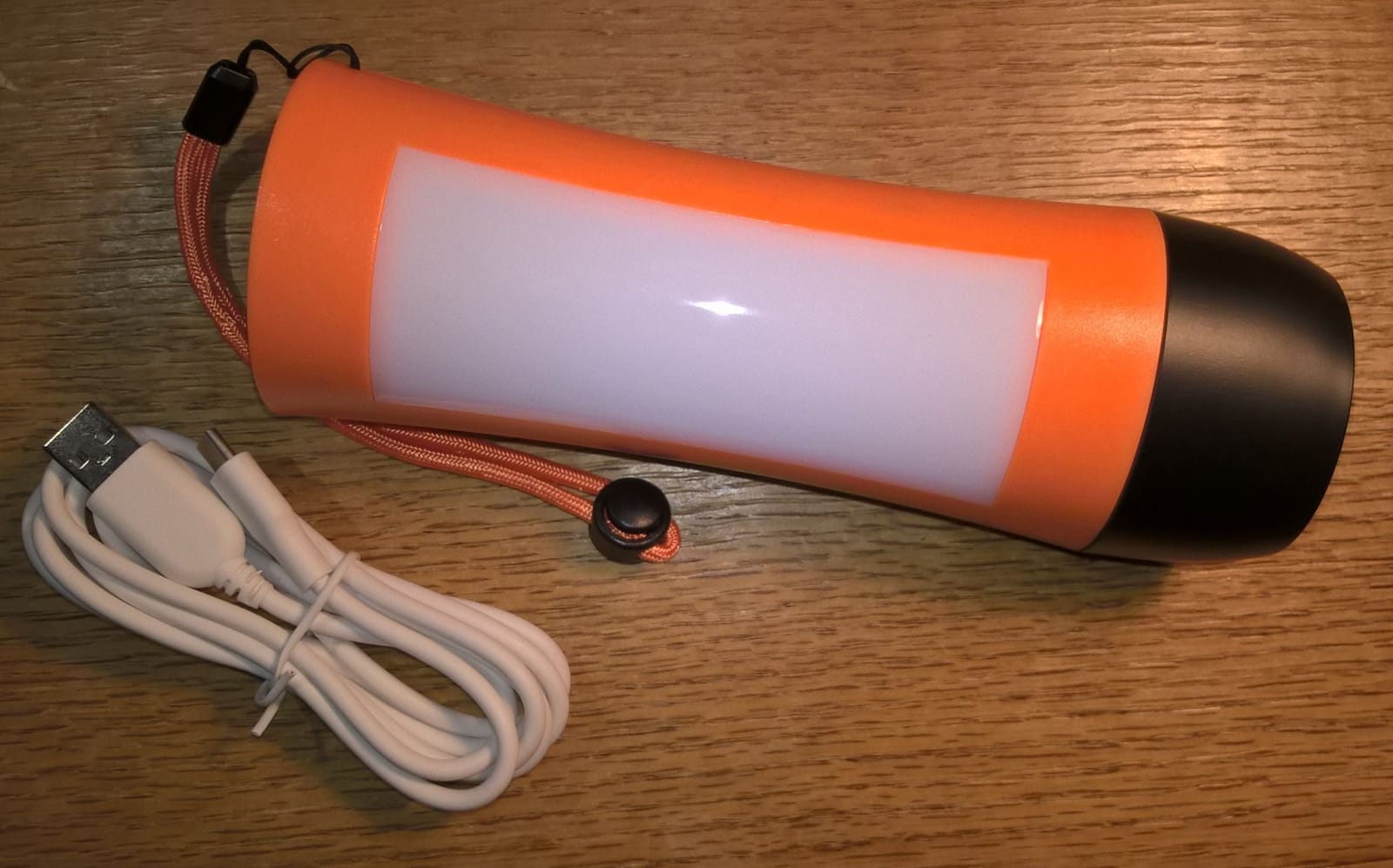
Can a hand crank flashlight actually charge a phone
Sometimes, yes, with caveats. The generator is rated at 5 volts and 600mA, which is a slow trickle rather than a wall charger. It is realistic for a phone to gain charge over an extended period, and equally realistic for a modern phone to refuse a weak or unstable input.
Test the combination you actually own, with the cable you actually own, before you count on it. Owners report both success and total failure, and the failures are the more detailed reviews.
Who should skip it
Skip it if you need a pocketable light. At 310 grams it is the bulkiest unit in the group, and the rubber-plastic build does not suggest it will survive being dropped on rock regularly.
Skip it if you want a single device that definitely keeps your phone alive. The failure reports on that specific feature are specific enough to take seriously.
8. Oudain 4-Pack Solar Hand Crank Flashlight: Best for Storm Season

Oudain 4 Pack Hand Crank Solar Powered LED Flashlight with Carabiner Clip
50 lumens
12 hour listed runtime
Water resistant
86 g
Solar and crank
Pros
- Two charging paths through the solar panel and one minute of cranking
- Field-tested by owners through a ten-day power outage with no battery supply
- Flat clip-on body can sit upright in a cup to light a room
- Four units per pack for go-bags
- vehicles and the home
- Light at 86 g with a keychain clip for belt-loop or bag attachment
Cons
- Only about 18 lumens from three LEDs
- enough to see dimly but not to read by
- Not waterproof despite the water resistant listing
- so it needs a sealed bag in a go-pack
- The wind-up knob detached on two units for one reviewer
- Small 40mAh internal Ni-MH battery with no USB charging option
At 4.6 stars from 189 reviews this is the highest-rated listing in the set by proportion of five-star reviews, and the top review on it is a detailed account of using the lights through a ten-day hurricane outage during which none of the four failed.
That field report is the most useful data point in this entire roundup, because it describes the scenario these products exist for. Not a demonstration, not a spec sheet, but a real ten-day outage with no battery supply.
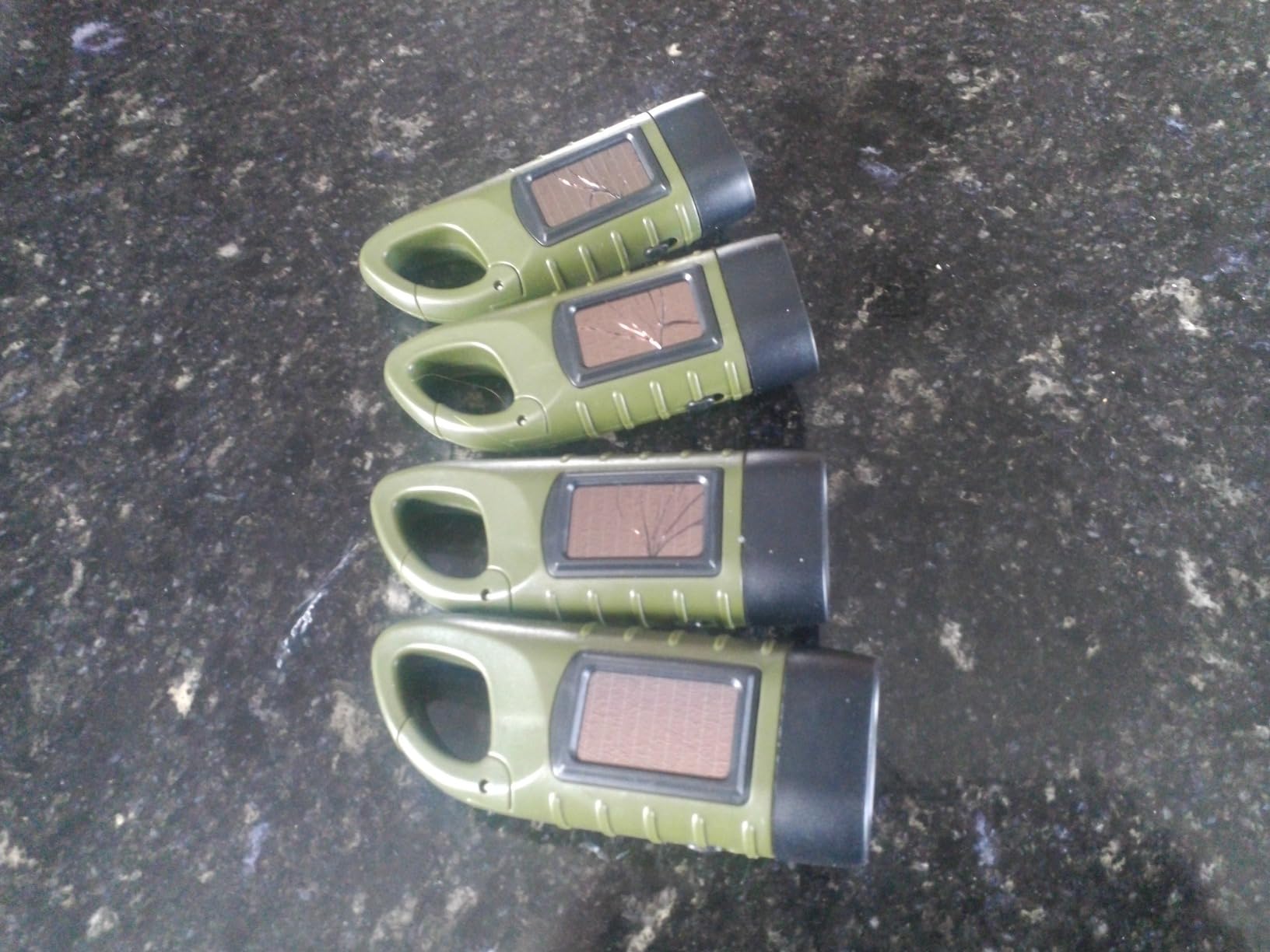
Each unit is 4.88 by 1.77 by 1.26 inches and 86 grams, with a carabiner-style keychain clip and a flat body that can stand upright in a mug or sit on a shelf and light the room. Output is listed at 50 lumens with a 12 hour runtime, and the charging paths are the solar panel plus one minute of cranking.
There is a real discrepancy to know about. The listing states 50 lumens, while owners who used them through an outage report roughly 18 lumens from three LEDs, bright enough to make out a room or a path but not to read by. Plan on the lower number.
The water resistant listing is not a waterproof one, and one reviewer put them in zip-lock bags inside a go-pack. The internal cell is a small 40mAh nickel-metal hydride pack with no USB charging option, and one reviewer had the wind-up knob detach from two of the four units.
What makes this the storm-season pick
It is water resistant rather than sealed, it recharges itself in daylight, and at 86 grams it is light enough that having four in four places does not become a chore. Nobody returns to a gym bag for a spare they cannot carry.
The clip-on design also means it can be attached to a backpack, a belt loop, or a jacket without a pouch.
Where the marketing and the reality part company
Two things. The brightness is meaningfully lower than the listing figure, and a water resistant rating in a hurricane is not the same as being able to leave it in the rain for a week.
If your kit lives in a car or a garage that gets wet, put this one in a sealed bag first. If it stays indoors in a dry drawer, it will be there when you need it.
9. Leelosp 2-Pack Hand Crank Solar Flashlight: Best for Long Stored Runtime

Leelosp 2 Pcs Hand Crank Solar Flashlight Emergency LED,Black
40 hour listed runtime
Capacitor backed
Solar and crank
Folding crank
6.72 oz
Pros
- Stores cranked energy in a capacitor
- holding usable light for two hours after a short wind
- One minute of cranking gives more than eight minutes of light
- and up to ten for owners who crank briskly
- Solar panel lets the light sit and recharge with no effort
- Carabiner clip and folding crank that tucks into the body so it will not snag
- Hook attachment for a backpack or belt and a comfortable grip
Cons
- Brightness is modest
- described as good for a pinch rather than a primary light source
- Solar charging takes a full day of exposure to add meaningful charge
- Not water resistant
- One buyer dropped a unit and cracked the solar panel
- though it kept working
Reviews for this one carry unusually technical detail, and the standout account describes an internal capacitor that holds light for two hours after a short wind. That storage behaviour is the reason this pair sits so high on our list despite a modest price point.
One minute of cranking gives more than eight minutes of light, and owners who crank briskly report up to ten. The solar panel lets the light sit and recharge with no effort at all, which is the same trickle-charge caveat as everywhere else in this category.
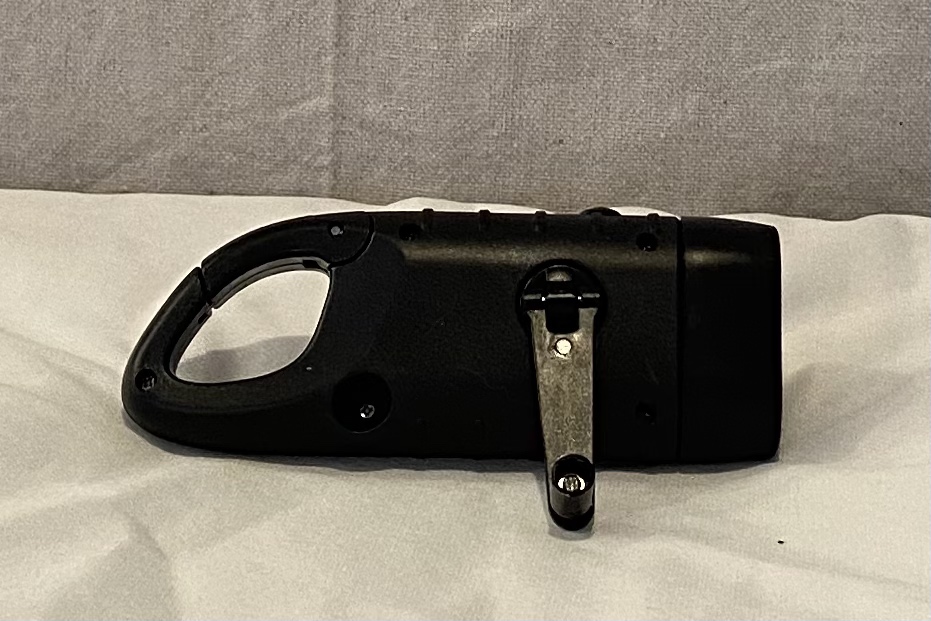
The design detail buyers single out above everything else is the folding crank handle. It stores inside the body rather than sticking out, which is a genuine improvement on every shake and squeeze light in this group where the handle snags on jacket zips and bag fabric.
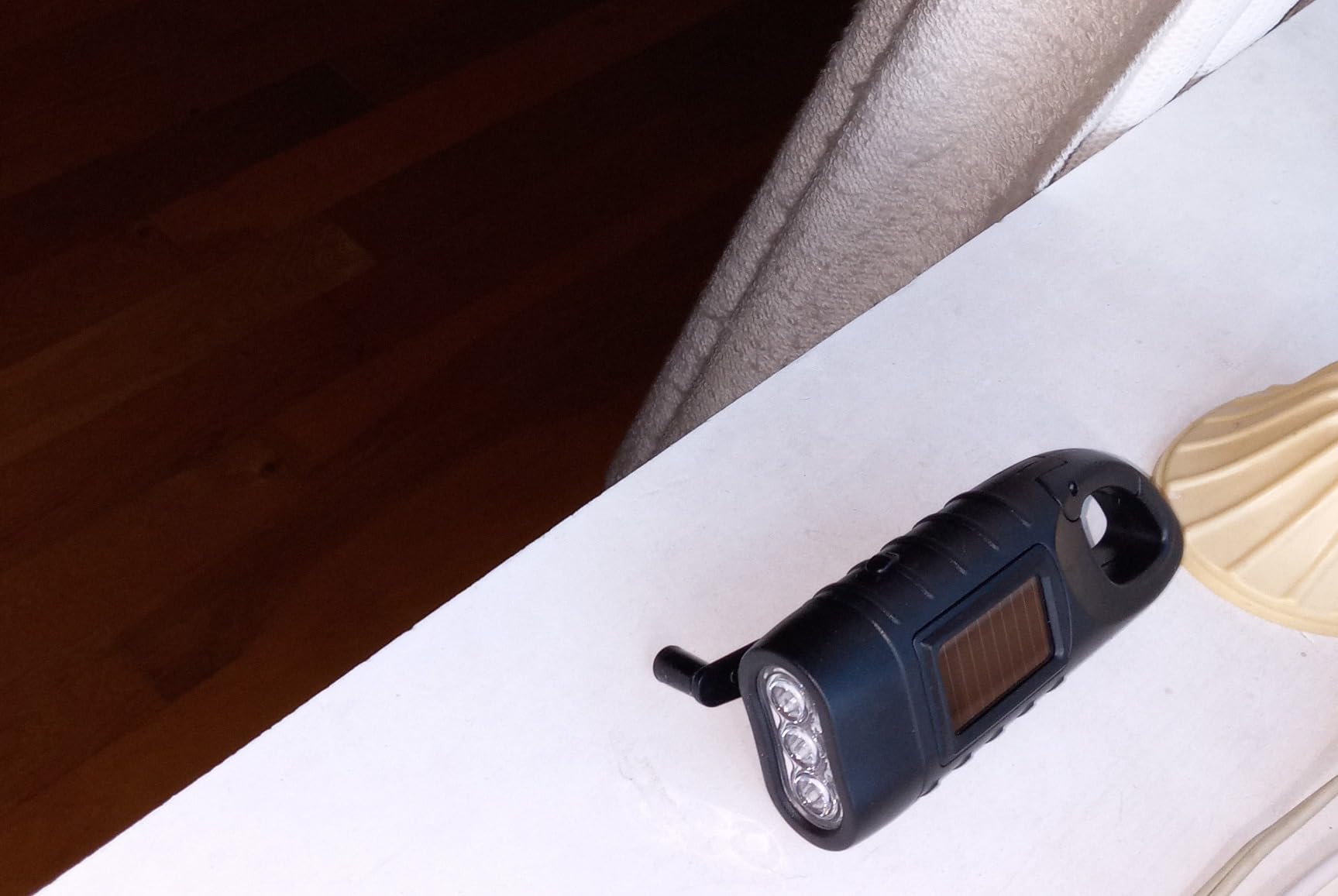
Each unit measures 4.92 by 1.97 by 1.38 inches, weighs 6.72 ounces, and is ABS in black. There is a carabiner clip plus a hook attachment for a backpack or belt, and the fold-in handle leaves the body smooth to grip.
The listed runtime is 40 hours, the highest figure in this group by a wide margin, though treat it as a ceiling rather than a promise because the same listing describes modest brightness. Owners call it good for a pinch rather than a primary light source.
Two warnings from the reviews. Solar charging takes a full day of exposure to add meaningful charge, so it is a slow top-up and not an outage solution. And one buyer dropped a unit, cracked the solar panel, and reported that it kept working anyway, which tells you the panel is the weak point of the housing.
Why the folding handle matters more than it sounds
It is a small decision that decides whether the light lives in your pocket or in a drawer. A crank handle that folds flush cannot catch on a backpack strap, cannot turn the light off in your bag, and does not make the unit uncomfortable to put in a jacket.
For a light you are supposed to carry for years and touch rarely, that construction choice is worth more than a few extra lumens.
Two units, not a fleet
At two per pack, this is the right size for one person or one couple. One goes in the go-bag, one stays in the apartment, and you do not have to think about the light.
If you need to cover four rooms, a four-pack is the more sensible format, but this pair is the better-made one.
10. BFVV 4 Pack Hand Crank Emergency Flashlight: Most Versatile

4 Pack Hand Crank Emergency Flashlight, No Battery Required, 3 LED Lights
Four units per pack
Three LEDs
4 x 2 x 1 inches
Crank lock and hand strap
30 day warranty
Pros
- Crank-stored power means no continuous cranking is required once charged
- Easy to squeeze one-handed
- which several reviewers including children manage comfortably
- Clear plastic shell and multiple colours make them popular as gifts and stocking stuffers
- Compact 4 x 2 x 1 inch body fits a glove box
- drawer or purse
- Hand strap for wrist carry and a simple crank lock to hold the light on
Cons
- Runtime after a crank is short
- with one reviewer describing only a brief period of light
- Not particularly bright at distance and there is no strobe or blink mode
- Fragile clear case
- with one reviewer reporting a unit breaking on the first press
- Short 30-day warranty
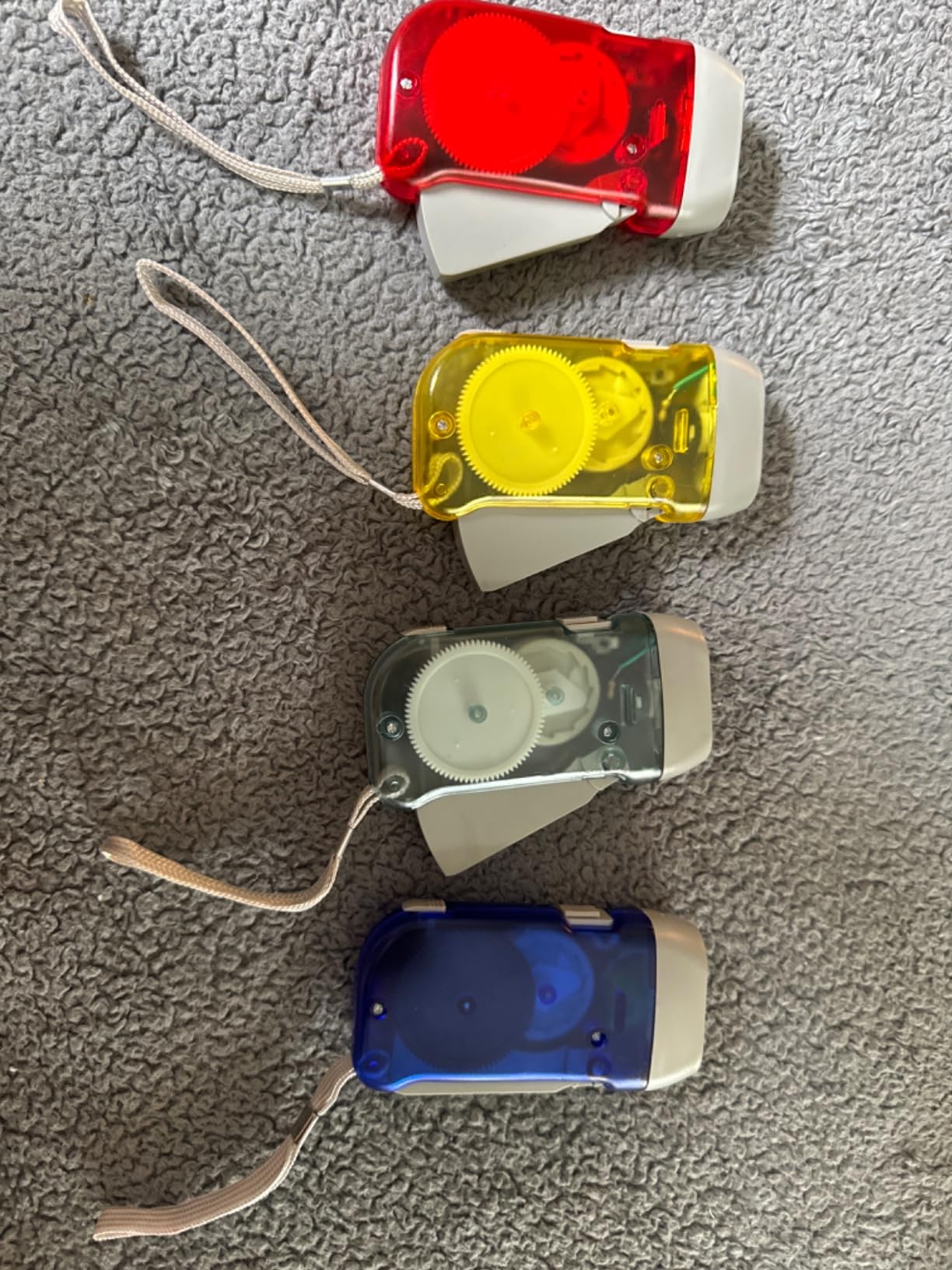
At 146 reviews and 4.4 stars this is the smallest sample in the roundup, and we include it because it is the cheapest way to put four working backup lights into four rooms. The most common owner story is buying them for children, grandchildren, or as gifts.
Unlike a squeeze plunger light, the BFVV stores cranked power in a built-in cell, so you do not have to keep pressing once it is charged. The crank lock holds the light on after winding, and there is a hand strap for wrist carry. Three LEDs per unit at 4 by 2 by 1 inches means it disappears into a glove box or a drawer.
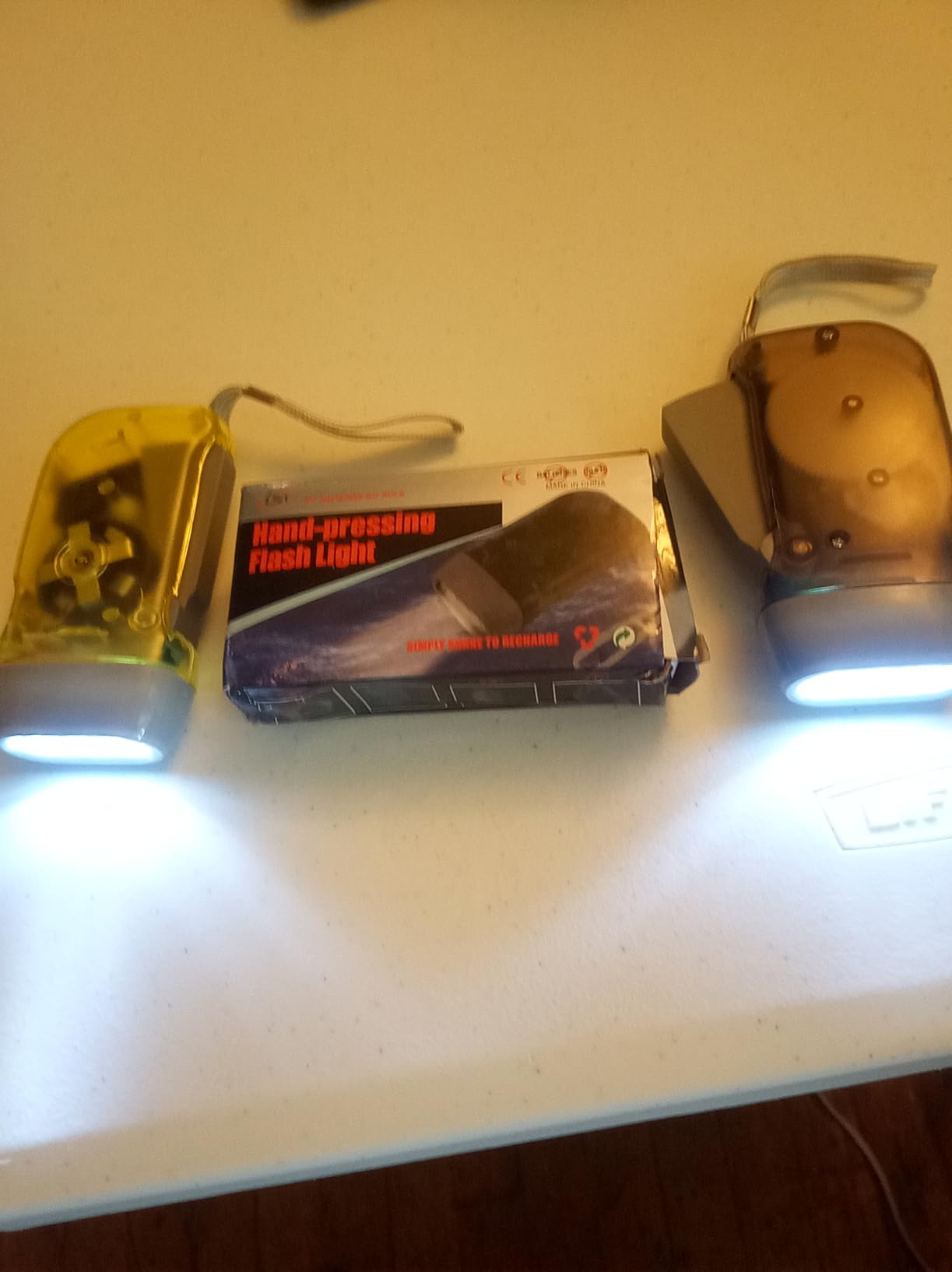
The build is where the compromise shows. Several reviewers find the post-crank runtime too short for anything beyond a quick check. There is no strobe or blink mode, which removes the signalling option that matters in a genuine emergency. And one reviewer reported a unit cracking open on the first press with internal elements coming loose.
The clear plastic shell is the most likely reason people buy it, since the colours are visible and the whole thing looks like a toy. It is also the most likely reason it breaks. Treat these as light-use lights, not as gear you will depend on in a serious event.
The warranty is 30 days, which is the shortest guarantee in this roundup. For a one-off emergency box light, that may be acceptable. For a light you plan to test annually for a decade, pick something with a multi-year warranty.
Where budget four-packs earn their place
The math is simple. When you need eight or twelve lights to distribute across a building, cars, and bags, per-unit cost decides the decision, and at this level the BFVV is hard to argue with. Buy several packs, distribute them, and accept that each one is disposable in quality terms.
Children’s rooms, a hall table, a caravan, a shed, and a first-aid kit are all sensible destinations for a light you are not relying on for anything critical.
When to spend more instead
Spend more if this light is your only emergency light, if you need a strobe for signalling, or if you intend to store it for years and test it occasionally. A 30-day warranty and a reported first-press failure do not support that plan.
For a single dependable unit, the Simpeak at the top of this list or the Coghlan’s is the better spend.
Crank-to-Runtime: The Math Nobody Else Publishes
Almost every listing for this product class advertises a runtime figure and almost none of them tell you what it costs to produce that runtime in crank minutes. Here is the honest ratio, taken from the manufacturer figures above.
One minute of cranking buys you roughly this: Simpeak and Mudder, more than ten minutes of light. Oudain, one minute restores usable charge on a 40mAh cell. Leelosp, more than eight minutes, up to ten if you crank briskly, and a capacitor that holds usable light for about two hours. Coghlan’s, up to seven minutes from a smaller cell. Guyuyii, about thirty minutes of total runtime across the pack. BFVV, a brief burst. The VFAN runs on a 2600mAh cell for up to 18 hours of flashlight use, which is a different category entirely because the cell is a power bank first.
Now put that in context. If a blackout starts at 9pm and runs twelve hours, a light giving you ten minutes per crank minute needs roughly seventy minutes of continuous hard cranking to keep you lit all night. That is not a realistic plan with an injured hand, a panicked toddler, or numb fingers.
What solar actually does for you
Solar panels on these lights are trickle chargers, not emergency sources. The Oudain and Mudder reviewers are direct about it: a full day of direct sun adds an hour or two of strong light, and dim output carries the rest of the night. Leelosp is similar, with a full day of exposure needed for meaningful gain.
Solar earns its place in one specific way. A light sitting on a dorm windowsill or a car dashboard slowly topping itself off is a light that is still working in year three, whereas a light that has sat on a flat internal cell for two years may need several minutes of cranking before it does anything.
Why crank light is a backup, not a primary
Three things limit every unit in this roundup. Output tops out well below a decent lithium flashlight. Charging is slow and tiring, which is the worst possible task during a stressful event. And the plastic gearing and crank handles on budget models are the parts most likely to fail over years of storage, leaving you with a light that still turns on but can no longer be recharged.
On r/flashlight the most common consensus is exactly this: keep a good lithium flashlight with replaceable cells as the primary, and keep a crank light as the thing that cannot be dead. On r/camping, hikers describe crank lights as situational backup only.
How to Choose a Hand Crank Flashlight for an Emergency Kit
Decide the job first: never-dead backup or phone power
These are two different purchases and the SERP rarely separates them. If you want a light that works when the batteries are dead and nothing more, any of the packs above will do and a four-pack is the best value. If you want to charge a phone during an outage, you are in a much smaller group, and the VFAN is the only model here with a USB output.
Be honest with yourself about the phone scenario. A hand crank can keep a phone alive at a trickle if the phone accepts the input, and many will not. Test your actual phone and your actual cable.
How many lumens an emergency light actually needs
Most people overestimate this badly, which is why crank lights disappoint them. The useful ranges are much lower than a hiking forum suggests.
Fifty to one hundred lumens covers indoor movement: finding a light switch, checking a fuse box, walking a hallway, looking in a drawer. Two hundred to four hundred lumens covers moving outdoors at night and searching a yard or car park. Four hundred lumens and above is where you get beam throw for signalling, and no hand crank light in this roundup reaches it.
Every product here sits in the bottom band, which is another way of saying they are for finding your way, not for illuminating a scene.
Reading water resistance ratings without getting misled
IPX4 means splashing water from any direction, which covers a rainy walk and a bathroom. IPX6 means heavy rain and powerful water jets. IPX7 means temporary submersion to one metre. IPX8 is continuous submersion at a manufacturer-defined depth.
In this roundup, Coghlan’s, Mudder, and Oudain are water resistant. Everything else is listed as not water resistant, including the most popular packs by review count. If you have real storms, buy the sealed one and keep the others indoors.
Two cautions. A listing that says water resistant is making a narrower claim than waterproof, and the Oudain owners who used theirs through a ten-day hurricane still bagged them. Do not leave a non-rated light in a car through a wet winter.
Rotary crank, squeeze plunger, or solar: three different mechanisms
A rotary crank stores its energy in an internal cell, giving you ten or more minutes of steady light per crank minute. This is the mechanism we recommend for adults and for any light you expect to use for more than a glance.
A squeeze or plunger light generally powers the LED directly while you press. The Mudder 8-pack is the clearest example, and reviewers specifically note that the output pulses with the plunger rhythm and that the generator is not wired to charge the cells. It is fast, it is simple, and it is a poor choice for a long task.
Solar is the third mechanism and the least important of the three for outages. Treat it as a slow top-up that keeps a stored light alive between emergencies.
Test it before you need it: a five step routine
Do this twice a year, and once before storm season. It takes ten minutes and it is the only way to know a light actually works in your hands.
First, crank for a full sixty seconds at normal effort, not maximum. Second, switch it on and confirm the beam is steady rather than flickering. Third, leave it off for ten minutes and switch it back on to confirm the cell is holding charge. Fourth, check the crank handle and the plastic gearing for cracks or free play. Fifth, if it has a carabiner, clip it to a bag and walk with it, because a clip that snaps under load is a clip that fails when you need both hands.
If it has a USB output, add a sixth step: charge your actual phone from it for ten minutes and confirm the phone shows it is receiving power.
Storage, heat, and the lithium swelling question
This is the concern that makes people hesitate to put one of these in a kit at all, and it deserves a straight answer. The forum consensus is that internal lithium ion cells can swell when stored long-term in a hot car or a warm closet, and swelling in a sealed housing is a safety issue rather than an inconvenience.
Three habits reduce the risk. Store the light indoors in a cool, dry drawer rather than in a car or a loft. Do not leave it cranked to full in a hot place. And give it a few minutes of cranking every few months, which keeps the cell partly cycled and lets you notice swelling before it becomes a problem.
If any crank light in a kit has a bulging or misshapen body, stop using it and dispose of it through your local battery recycling. Do not squeeze it and do not charge it again.
Where to place crank lights in a student apartment or dorm
Placement beats specifications in a domestic outage. In a small unit, the useful map is simple: one light per sleeping room, one in the kitchen, one in the hallway or stairwell, and one in the car. In a dorm, the same logic applies with one addition, which is a light near the door so you can find your shoes and your keys without turning on a phone battery.
For a shared apartment, the common-room light and each roommate’s own room matter more than any single impressive torch. This is the whole argument for a four-pack over one good unit, and it is why the four-packs dominate the reviews on this page.
What to pair a crank light with in a 72 hour kit
A crank light covers one layer of preparedness. Add a high-lumen flashlight on replaceable batteries as your primary, a headlamp with a strap for hands-free work, a power bank already charged for your phone, and a battery or crank radio for local information. A crank light that also carries a radio is worth more than two separate devices if you can find one, which is why radio-equipped crank units dominate the wider market even though few of them are in this roundup.
If you are reading this because you are putting a kit together on a budget, the order that gets the most safety per pound is: spare batteries for a light you already own, then a four-pack of crank lights, then a better primary flashlight. Not the other way around.
Frequently Asked Questions
Are hand crank flashlights any good?
As a backup, yes. As a primary light, no. Most crank flashlights produce between 10 and 200 lumens, take a minute or two of hard cranking to build a useful charge, and use plastic gearing that can wear over years. The best emergency kit pairs one with a good high-lumen flashlight that runs on replaceable batteries, so the crank light is the one that still works when the batteries are dead.
What is the best hand crank flashlight?
For most emergency kits, the Simpeak 2-Pack at 4.5 stars from more than 5000 reviews is the strongest all-round choice, with 200 lumens, over 10 minutes of light per crank minute, solar plus crank charging, an 86 gram body, a carabiner and a 2-year warranty. For a phone-charging function specifically, the VFAN is the only reviewed model with a USB output.
Does a hand crank flashlight work without an energy source?
It does not create energy from nothing, but it does not need batteries or wall power either. Turning or squeezing the crank spins a small motor backward as a dynamo generator, and that output charges an internal rechargeable cell which then powers the LED. You supply the energy with your arm, which is why cranking is tiring and why the charge is stored rather than continuous.
How many lumens should an emergency light have?
Fifty to one hundred lumens covers indoor movement, such as finding a light switch or checking a fuse box. Two hundred to four hundred lumens covers moving outdoors and searching a yard. Above four hundred lumens is where beam throw for signalling begins, and no hand crank flashlight reaches it. Every crank light in our roundup sits in the bottom band, so plan on using it to find your way rather than to light a scene.
How long do hand crank flashlights last, and how much cranking do they need?
Most models in this roundup deliver roughly eight to ten minutes of light per minute of hard cranking, and Coghlan’s manages about seven. The Simpeak, Mudder and Oudain all rate above ten minutes per crank minute. A twelve hour outage therefore needs well over an hour of continuous cranking, which is exactly why these are backup lights and not primary ones. Longer stored runtime comes from bigger cells, not faster cranking.
Do hand crank flashlights charge phones?
Some do, and you should assume yours might not. Only the VFAN in this roundup has a USB output, rated at 5 volts and 600mA, which is a trickle rather than a wall charger. Reviews are split, with several buyers reporting an iPhone would not charge at all during a real outage. If phone charging is a priority, buy a dedicated hand-crank power bank and test the pair together before you need it.
What is the best non-battery flashlight for an emergency kit?
For most households the answer is a four-pack of hand crank flashlights, one per room, because distribution matters more than brightness in a domestic outage. If you want one dependable unit, choose a rotary crank model with a multi-year warranty rather than the cheapest squeeze light, because a stored cell and a crank mechanism both need testing. Glow-in-the-dark strips and chemical light sticks are worth adding as zero-maintenance extras.
Are solar hand crank flashlights worth it?
The solar panel is worth having, but not for the reason most listings imply. A full day of direct sun typically adds only an hour or two of strong light, so solar is useless as an outage source. Its real value is keeping a stored cell topped up on a windowsill, which means the light is still working after two years of sitting in a drawer. Cranking remains the faster and more reliable charging method.
Bottom Line: Our Top Pick for an Emergency Kit in 2026
After working through ten hand crank flashlights, the Simpeak 2-Pack is our pick for the best hand crank flashlights for emergency kits. It has the largest verified review base at over 5000 ratings, a 200-lumen output that is genuinely useful indoors, more than ten minutes of light per crank minute, solar as a second charging path, an 86 gram body with a carabiner, and a 2-year warranty that almost nothing else in this category offers.
If your kit is one light in one room, buy that. If it is an apartment with several people, a four-pack is the smarter buy and the Mudder 4-Pack or the Evelots 4-Pack will serve you better. If you need to keep a phone alive, look at the VFAN and test it before the outage. And whatever you buy, pair it with a good high-lumen flashlight on replaceable batteries, because a crank light is the backup that cannot die, not the light that does all the work.