
Photoelectric smoke detectors are the right call for bedrooms, because a slow smouldering fire in bedding, curtains or upholstery produces exactly the kind of light smoke that a photoelectric sensing chamber catches fastest. Pair that sensor with a sealed 10-year lithium battery and you also remove the 3 a.m. low-battery chirp that pulls students out of sleep every single night. Those two decisions drive every pick in our roundup of the best smoke detectors for bedrooms in 2026.
Most bedroom shopping goes wrong in one of two directions. Students buy the cheapest alarm on the shelf and end up replacing 9V batteries twice a year, or they buy a hardwired unit for a room they do not own and discover the breaker, the wiring and the landlord are all a problem. Our team compared eight bedroom alarms across sensor type, power source, sound output, certification and installation reality, and we only recommend units you can mount yourself in under ten minutes with a screwdriver.
One thing first: no smoke alarm makes a room fireproof. Alarms buy you minutes, nothing more, and roughly two-thirds of home fire deaths happen while people are asleep. Every pick below is built to wake you, not to replace judgement, escape planning or common sense about candles and space heaters.
Table of Contents
Our Top 3 Bedroom Smoke Detector Picks (October 2026)
We will not bury the answer. Here is the short list before the detail: the X-Sense SD2J0AX is the one we would put in a dorm room, the First Alert SMI100 two-pack is the strongest all-rounder if you want a bedroom and hallway covered at once, and the X-Sense SC07 is the pick when carbon monoxide is part of the risk picture.


First Alert SMI100
- Precision Detection sensor
- Two per pack
- Front access 9V battery
- End-of-life warning

X-Sense SC07 Combo
- Smoke and CO sensors
- Sealed 10-year battery
- LCD display
- UL 217 and UL 2034
All 8 Bedroom Alarms Compared in 2026
Every alarm in the table below is a real bedroom candidate rather than a general-purpose house alarm. Read the power source column first, because it is the decision that most affects whether the alarm is realistic in a room you rent.
| Product | Specs | Action |
|---|---|---|
| X-Sense SD2J0AX |
|
Check Latest Price |
| First Alert SMI100 2-Pack |
|
Check Latest Price |
 First Alert SMI100-AC First Alert SMI100-AC |
|
Check Latest Price |
| X-Sense SC07 Combo |
|
Check Latest Price |
 Kidde 10SDR Kidde 10SDR |
|
Check Latest Price |
 Kidde 20SDR Kidde 20SDR |
|
Check Latest Price |
 SITERWELL GS525A SITERWELL GS525A |
|
Check Latest Price |
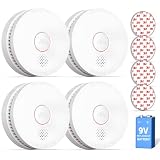 SITERWELL GS509A SITERWELL GS509A |
|
Check Latest Price |
1. X-Sense SD2J0AX – Photoelectric with a sealed 10-year battery
X-Sense Smoke Detector, 10-Year Battery, UL 217 Certified, SD2J0AX, 1-Pack
Photoelectric sensor
Sealed 10-year lithium battery
ETL Listed to UL 217
4.8 inch body, 6.24 oz
Pros
- Sealed 10-year battery removes battery changes and night chirps
- Photoelectric sensor cuts cooking and steam nuisance alarms
- ETL Listed to UL 217 standard
- No wiring needed and installs in minutes
Cons
- Standalone unit with no wireless interconnection
- Fixed 85 dB horn cannot be turned down for light sleepers
- Bright always-on status LED can be distracting in a dark room
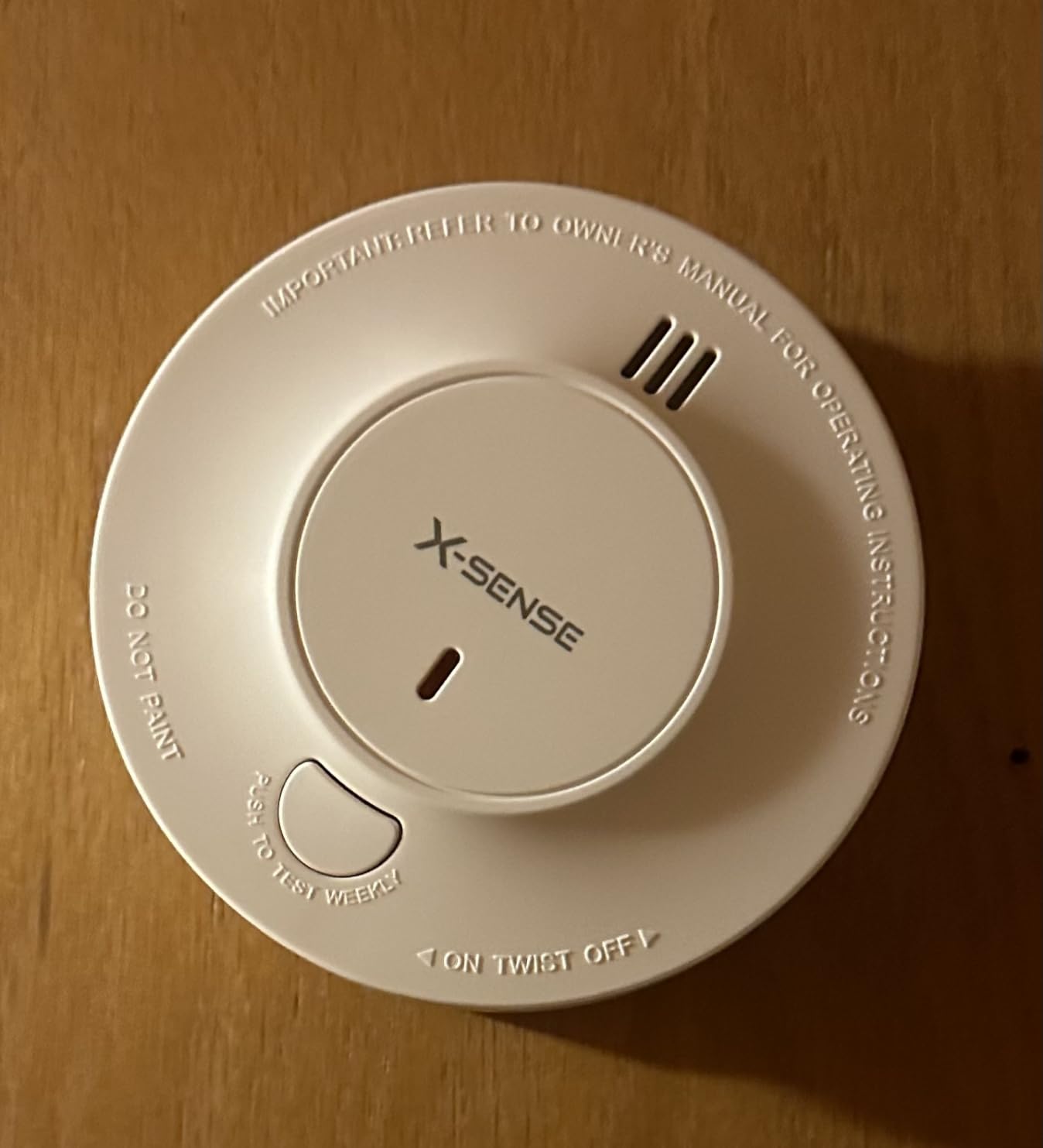
This is the alarm we keep coming back to for dorm rooms and shared flats. It weighs 6.24 ounces, it mounts to a ceiling or a wall with the screws in the box, and it will still be running in ten years without anyone touching a battery. For a student who is not going to schedule a battery check, that single fact removes the most common reason bedroom alarms get ignored.
The photoelectric chamber is the other half of the appeal. Reviewers consistently credit it with cutting down on cooking-related false alarms compared with older units, which matters enormously in a flat where the kitchen is one doorway away from the bedroom. Press the single button to test, press it again to silence a nuisance alarm, and the built-in self-test checks both the sensor and the battery condition.
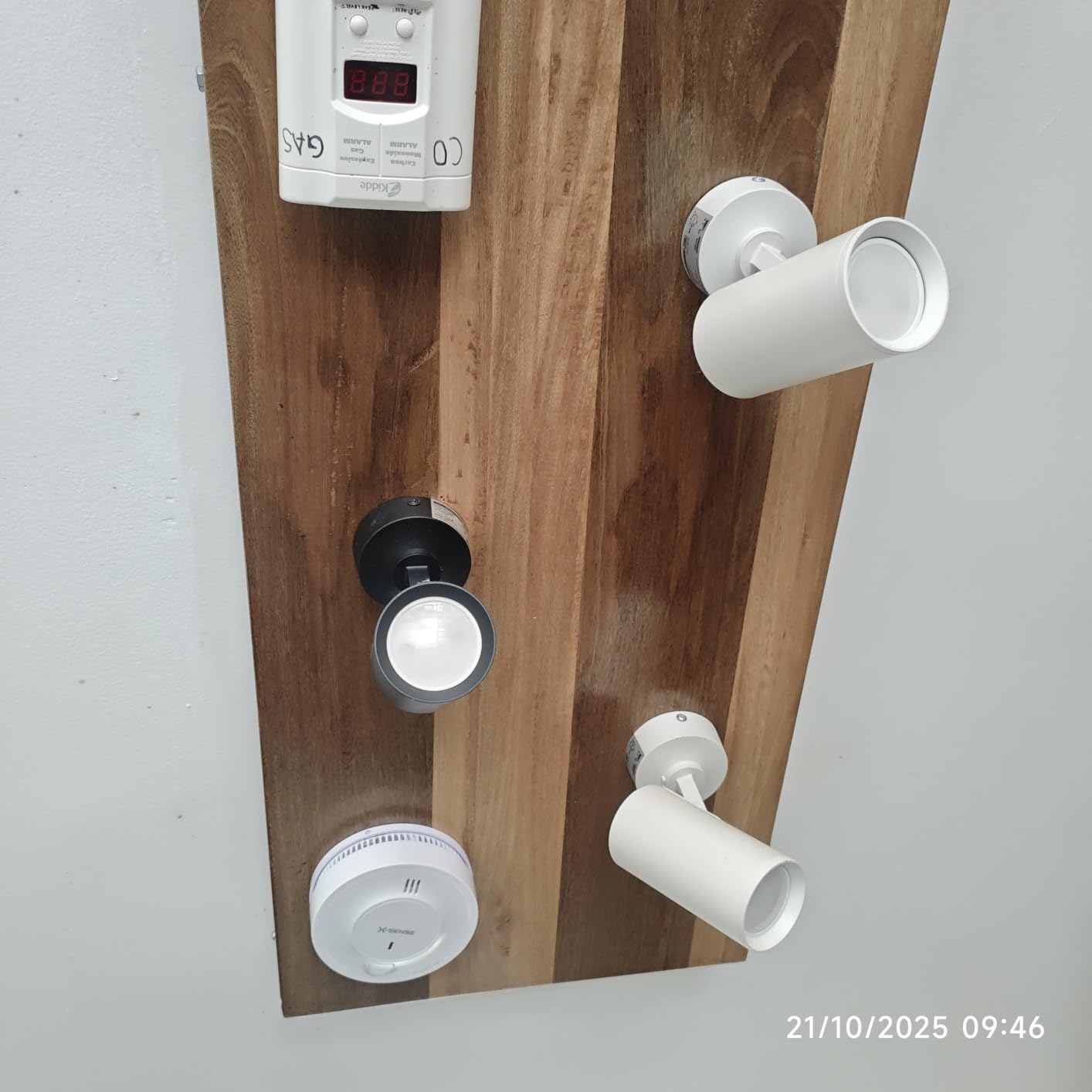
What you give up is the smart layer. There is no app, no Wi-Fi pairing and no wireless interconnect, so this alarm will not notify your phone or link to a hallway detector. In practice that is a fair trade for a room you sleep in, because you want the siren to wake you and not a server to tell you about it.
The operating range is 10% to 85% relative humidity, which is a little narrower than some competitors. In a genuinely steamy room, keep it out of the direct path of bathroom vapour rather than pushing it to the wettest corner of the ceiling.
What to check before you buy
Check that the fixings suit your ceiling. It comes with screws and anchors for a standard ceiling or wall mount, which is what you want in a room you do not own, because no wiring and no chasing channels means no landlord conversation.
Look at the LED, not just the siren. The status light is a small green dot that pulses once a minute, and in a pitch-black room that can be enough to wake a light sleeper. Owners have reported covering it with removable LED tape, which is a fair fix because the alarm keeps working either way.
Where it is the wrong choice
Skip it if your flat already has an interconnected system and you want your bedroom to join it. A standalone photoelectric alarm sounds locally, and if you want one alarm to trigger the whole flat, this is not the one.
It is also the wrong pick for anyone who wants carbon monoxide coverage in the same box. This is a smoke-only alarm, so a fuel-burning heater or a faulty appliance in the room needs a separate CO alarm nearby.
2. First Alert SMI100 2-Pack – Precision Detection on a 9V battery
First Alert Battery Smoke Alarm
Ionization Precision Detection
Two alarms per pack
9V battery with front access
End-of-life warning
Pros
- Precision Detection cuts cooking false alarms versus older models
- Front access battery compartment makes swaps painless
- Two alarms cover a bedroom and the hallway outside it
- End-of-life warning signals when to replace
- Low-profile 5.6 inch body blends into a ceiling
Cons
- 9V battery must be replaced periodically rather than sealed for a decade
- Fixed alarm volume with no night-silence option
- Ionization sensing is more prone to humidity and steam nuisance alarms
Out of more than five thousand owner reviews, this is the highest rated and most heavily reviewed alarm in our group, and the two-pack format solves a bedroom problem neatly: one alarm inside, one in the hallway or the room you cook in, both with the same hardware.
First Alert calls the sensing system Precision Detection, which is an ionization chamber tuned to the current industry standards for reducing cooking-triggered false alarms. It is not the same as a photoelectric chamber, and it will still be more sensitive to steam and humidity than the X-Sense above. In exchange you get an alarm that reacts quickly to fast-flamming fires, which is the one profile a photoelectric unit is weaker on.
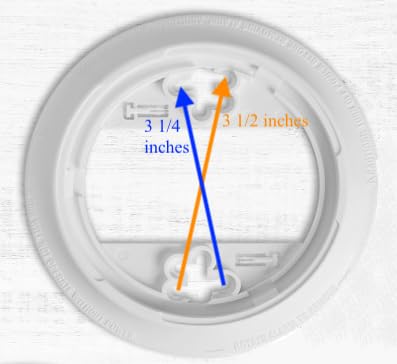
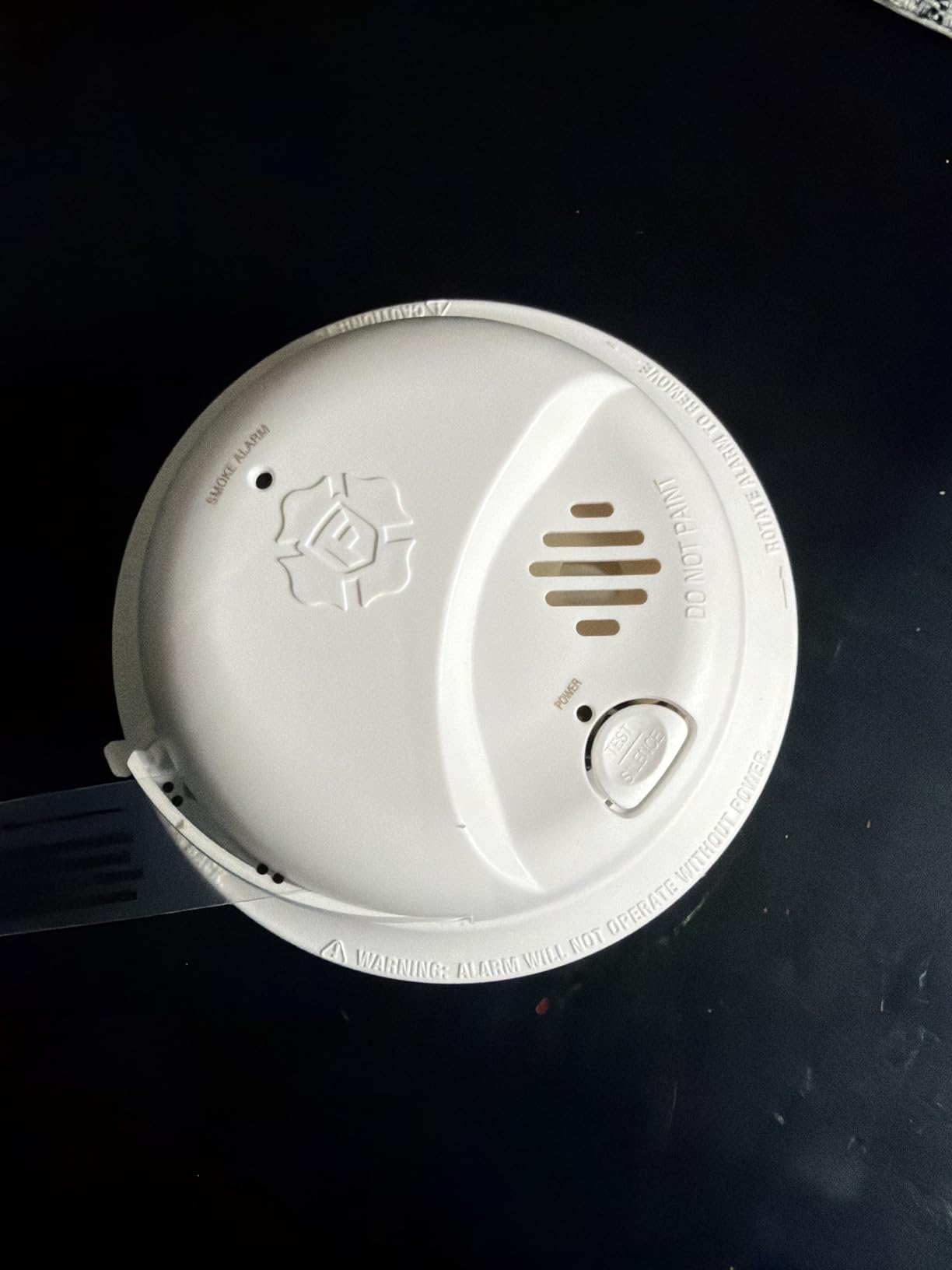
Mechanically it is the friendliest of the battery units here. The 9V sits behind a front-access door, so you change it without unscrewing the alarm or standing on a chair, and the test and silence button handles both weekly checks and short nuisance events. The end-of-life warning chirps when the sensing electronics reach the end of their service life rather than pretending a fresh battery fixed everything.
At 5.6 inches across and 1.9 inches deep, it is a fairly standard ceiling disc. It is not the slimmest option in this roundup, but it disappears into a white ceiling without looking industrial.
What to check before you buy
Budget for batteries as a recurring line item. A 9V swap roughly once a year, times two alarms, is a small cost but a real chore, and it is the one thing that separates this pick from a sealed-battery model.
Count the nuisance-alarm risk in humid rooms. If your bedroom has an open bathroom door, poor ventilation or a clothes-drying rack nearby, an ionization chamber will cry wolf more often than a photoelectric one.
Where it is the wrong choice
It is wrong for anyone who will not touch the batteries. If a flat battery goes unnoticed, the unit gives you no protection, and the failure mode is silent until the alarm is needed.
It also cannot connect to other alarms, and it does not detect carbon monoxide. If your building has a gas boiler, a gas cooker or a wood-burning heater, add a separate CO alarm instead of assuming this one covers you.
3. First Alert SMI100-AC – Interconnected hardwired unit with 9V backup
First Alert Hardwire Smoke Alarm
Hardwired AC with 9V backup
Interconnect linkable
Quick Connect plug
85 dB siren
Pros
- Interconnect capability sounds every linked alarm at once
- 9V battery backup keeps protection alive during outages
- Quick Connect plug makes retrofits fast on existing wiring
- Originating-unit indicator shows which alarm triggered
- Meets common hardwired and interconnected codes
Cons
- Bright always-on green LED can disturb sleep in a dark bedroom
- Hardwired install requires electrical work and a breaker shutoff
- Thin wire leads need suitably small wire nuts
This is the pick for anyone who owns the wiring, and specifically for anyone whose flat already has a hardwired interconnected system. When one compatible alarm detects smoke, the interconnect line makes every linked alarm sound together, which is the behaviour local codes expect in shared and multi-room housing.
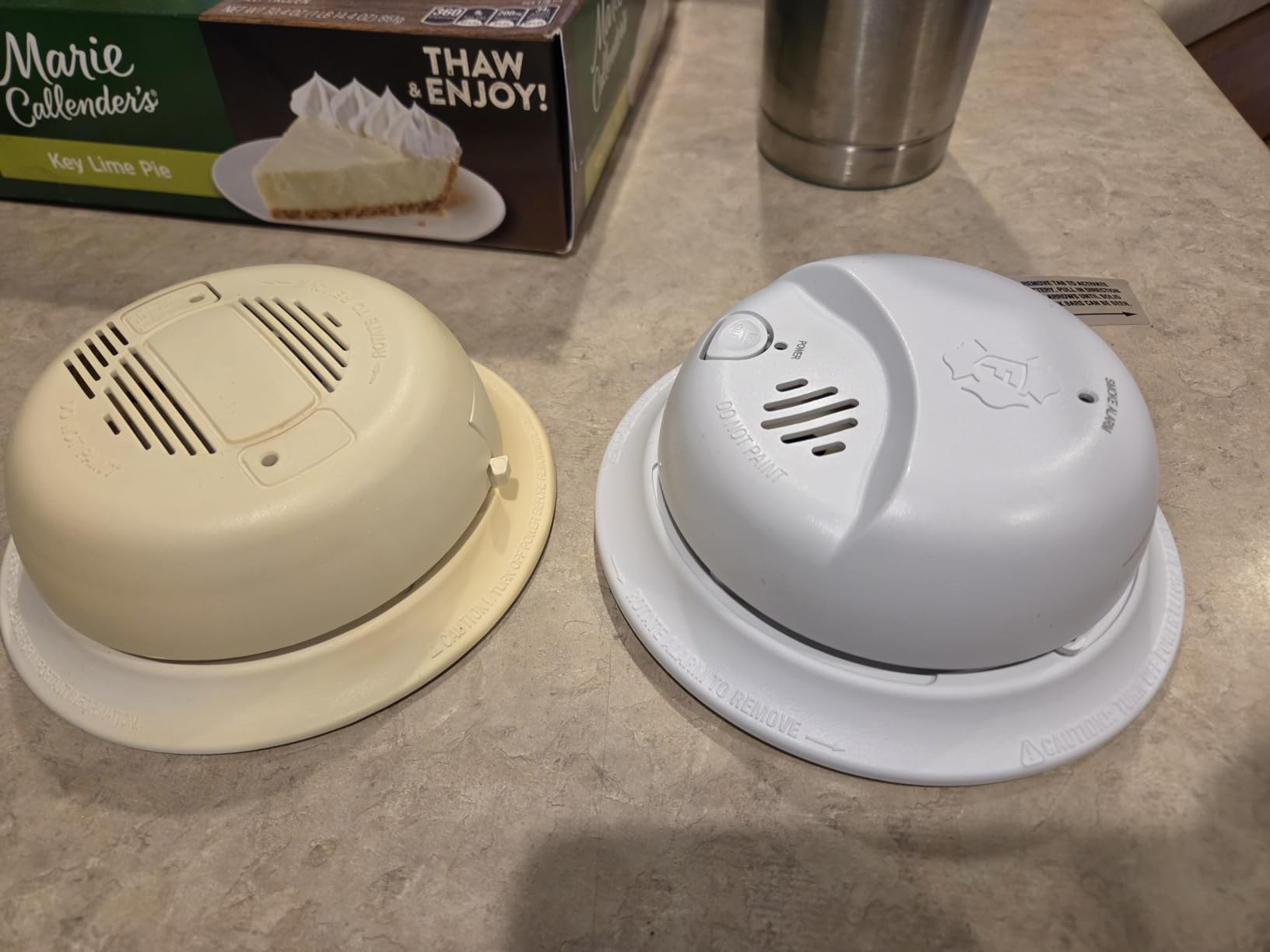
The Quick Connect plug is the reason this is a realistic upgrade rather than a rewiring job. Owners replacing builder-grade units report a clean swap onto existing wiring using the included adapter, and the alarm indicator light identifies which unit initiated the alarm so you know where to look first.
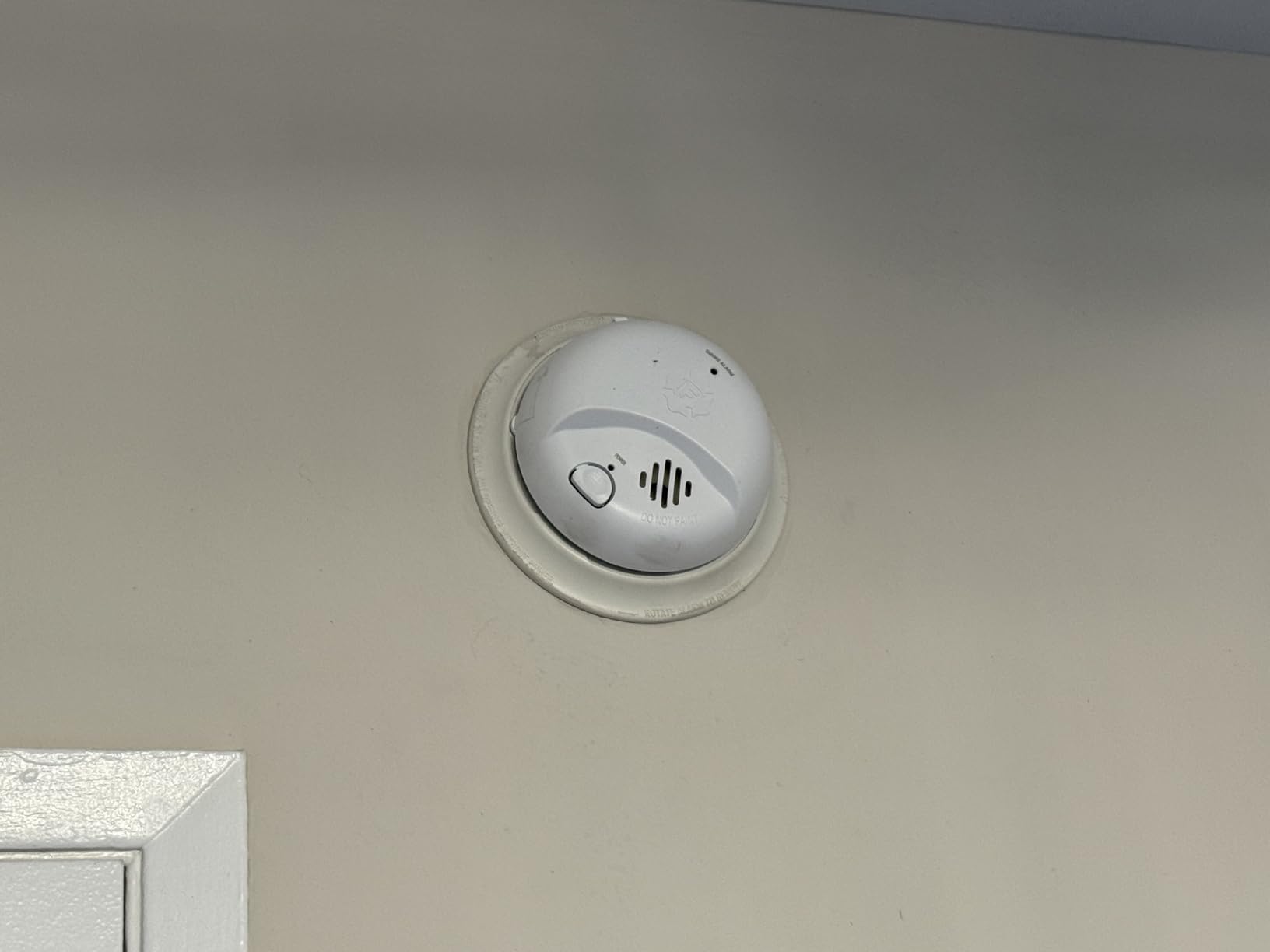
Power comes from the mains with a 9V alkaline as backup, so a power cut does not silently disarm the ceiling. The siren is a fixed 85 dB, which is the level aimed at waking a sleeping person and is deliberately not adjustable downward.
Two practical warnings. The green LED is always on, and bedroom users complain about it more than anything else on this alarm. And the wire leads are thin, so have small wire nuts and a stripper ready before you start.
What to check before you buy
Check that a junction box or existing alarm base is already in place. This unit is designed to sit where a hardwired alarm already lives, not to run new cable across a ceiling you do not own.
Check your lease and your local rules. Hardwiring a new alarm in rented or student housing is usually not permitted, and doing it without telling anyone is a fast way to lose room standing.
Where it is the wrong choice
It is the wrong pick for dorm rooms and first-year flats, full stop. If you are not allowed to touch the fixed wiring, the battery options earlier in this list do the same job with a screwdriver.
It is also the wrong pick for a single occupant who only needs to be woken in one room. Interconnect only pays off when you have several compatible alarms, so on its own it is paying for a feature you cannot use yet.
4. X-Sense SC07 – Smoke and carbon monoxide in one 10-year alarm
X-Sense Smoke Detector Carbon Monoxide Detector Combo, SC07, 1-Pack
Photoelectric smoke plus CO sensor
Sealed 10-year lithium battery
LCD status display
UL 217 and UL 2034
Pros
- One alarm covers both smoke and carbon monoxide
- Sealed 10-year battery means no overnight low-battery chirps
- Photoelectric sensor reduces cooking-related false alarms
- LCD display shows CO level and battery status
- Certified to UL 217 and UL 2034 standards
Cons
- Standalone model with no wireless interconnection
- 85 dB volume is fixed and cannot be turned down
- Larger 5.7 inch body is bulkier than slim bedroom models
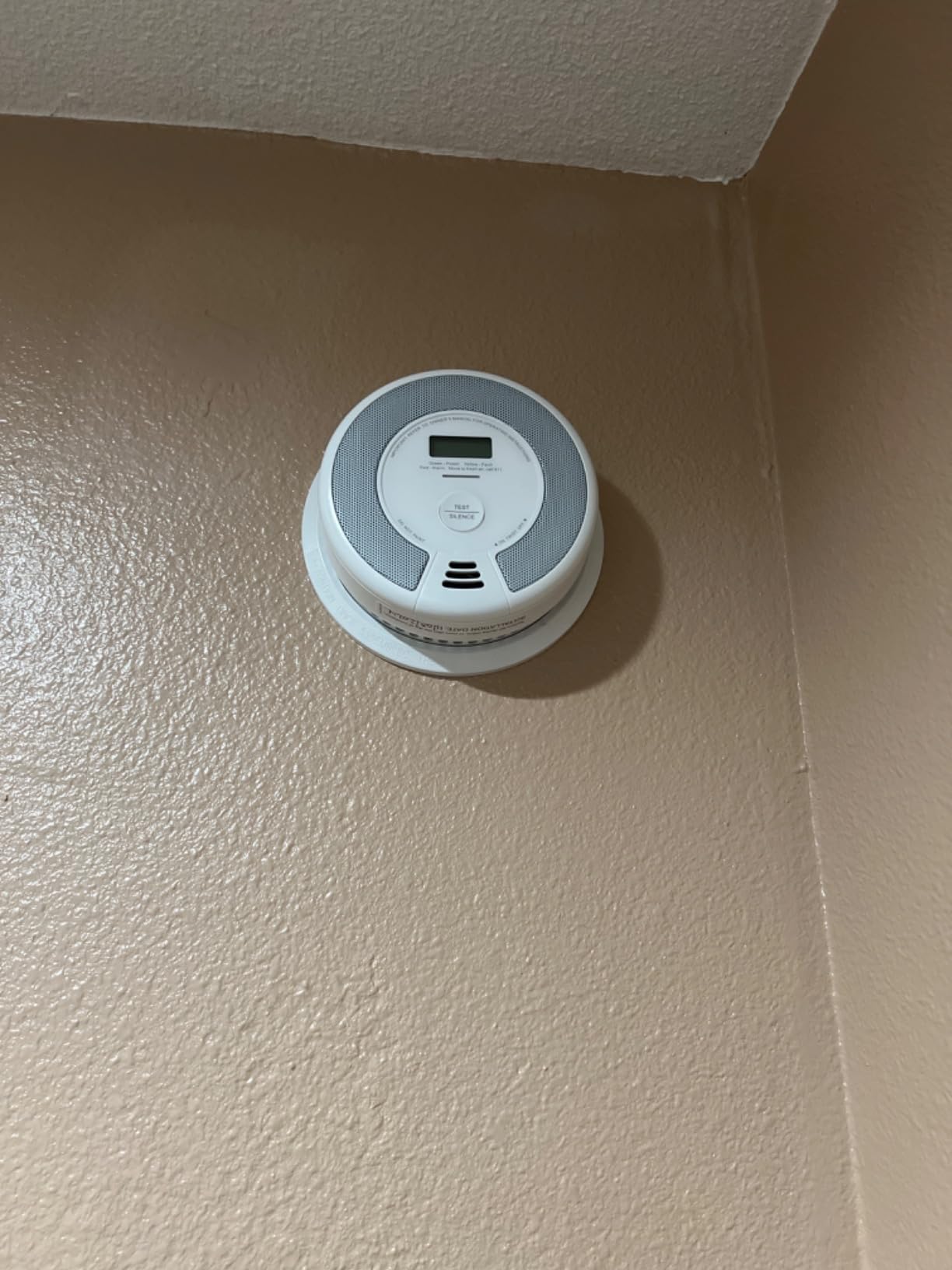
If your room has any combustion appliance in it, this is the pick we would choose. The SC07 pairs a photoelectric smoke chamber with an electrochemical carbon monoxide sensor, so a single ceiling device covers both risks and both share the same sealed 10-year lithium battery.
The LCD is more than decoration. It shows the carbon monoxide reading and the battery status without opening the unit or pressing anything, which means a tenant can check the thing is alive in ten seconds instead of guessing. Certification to UL 217 for smoke and UL 2034 for CO means the unit is independently tested against both standards, which matters if an inspector ever asks.
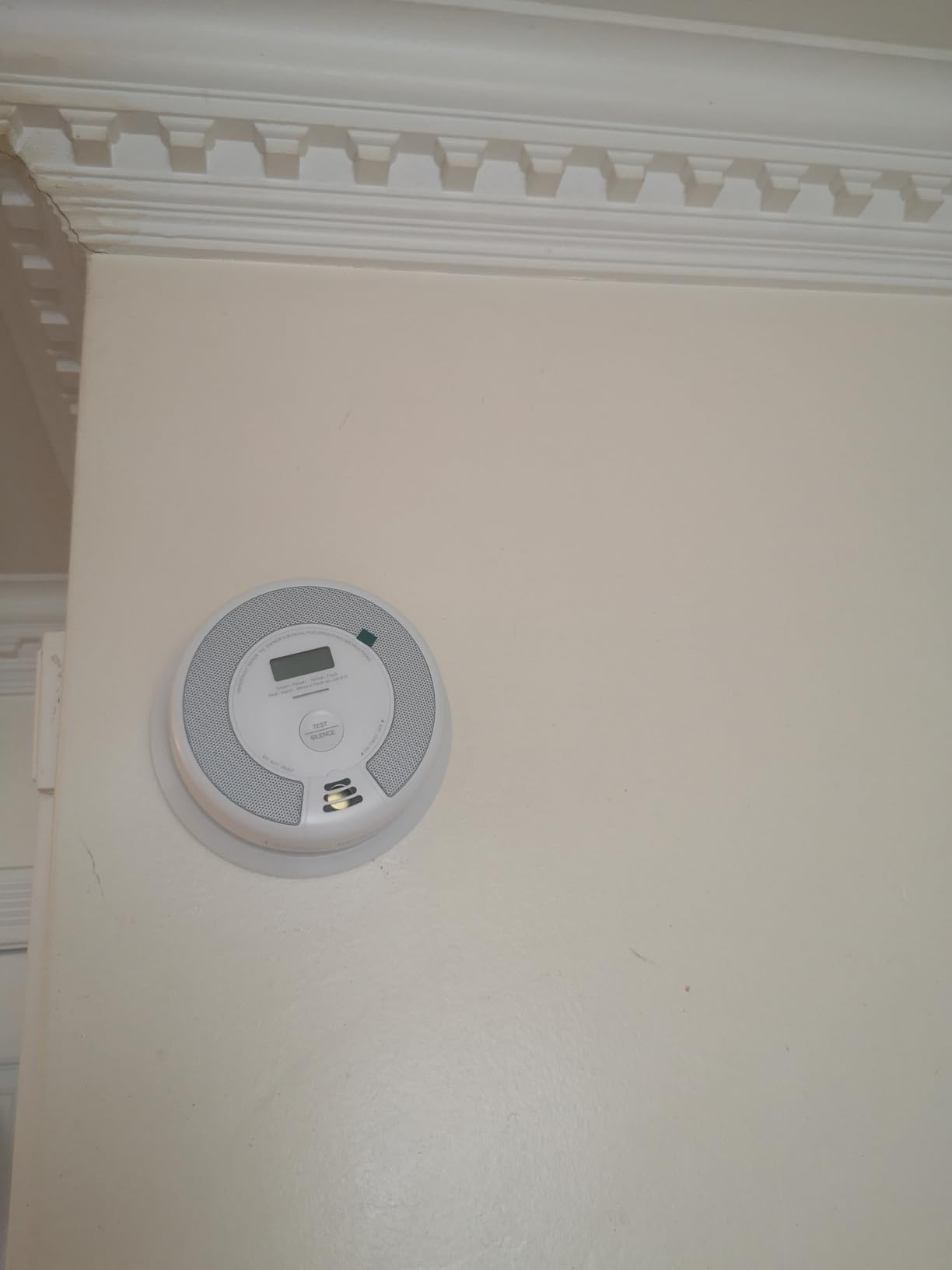
The photoelectric chamber responds faster to slow smouldering fires, which is the failure mode that matters while you are asleep in a small room with fabric everywhere. The sealed battery removes the annual swap and, more importantly for a shared room, removes the chance of your roommate hearing a low-battery chirp at 2 a.m.
One limitation to read carefully: the manufacturer states plainly that this is a basic standalone model. There is no wireless interconnection, no Wi-Fi and no base station on this version, so it will not link to other alarms in a flat.
What to check before you buy
Check whether your housing already has an interconnect system. If it does, buying a standalone alarm is fine for coverage but you gain nothing network-wise, and the linked version of this product is the one to look at instead.
Check the body size. At 5.7 inches across, it is the bulkiest alarm in this roundup and noticeably larger than a slim bedroom unit, so placement on a small ceiling needs a little thought.
Where it is the wrong choice
Skip it if your building is fully electric. Adding carbon monoxide detection you will never use just moves you to a heavier, more expensive ceiling fixture for no practical gain in a dorm with no gas supply.
It is also not ideal for light sleepers who find an 85 dB horn harsh. The volume is fixed at 85 dB, and the hush controls here manage nuisance events rather than lowering the alarm volume.
5. Kidde 10SDR – Compact 4 inch body for tight ceilings
Kidde Compact Smoke Detector, AA Battery-Powered, 10SDR
Photoelectric sensing
Two AA batteries included
85 dB alarm with red LED
4 inch body, 6.24 oz
Pros
- Smallest footprint here at 4 inches for a bedroom ceiling
- Two AA batteries included so it runs out of the box
- Photoelectric sensing reduces cooking and steam false alarms
- UL 217 10th Edition and FCC tested
- 10-year limited warranty
Cons
- AA batteries need periodic replacement rather than a sealed pack
- No test or hush button listed among the features
- Fixed 85 dB volume cannot be lowered for light sleepers
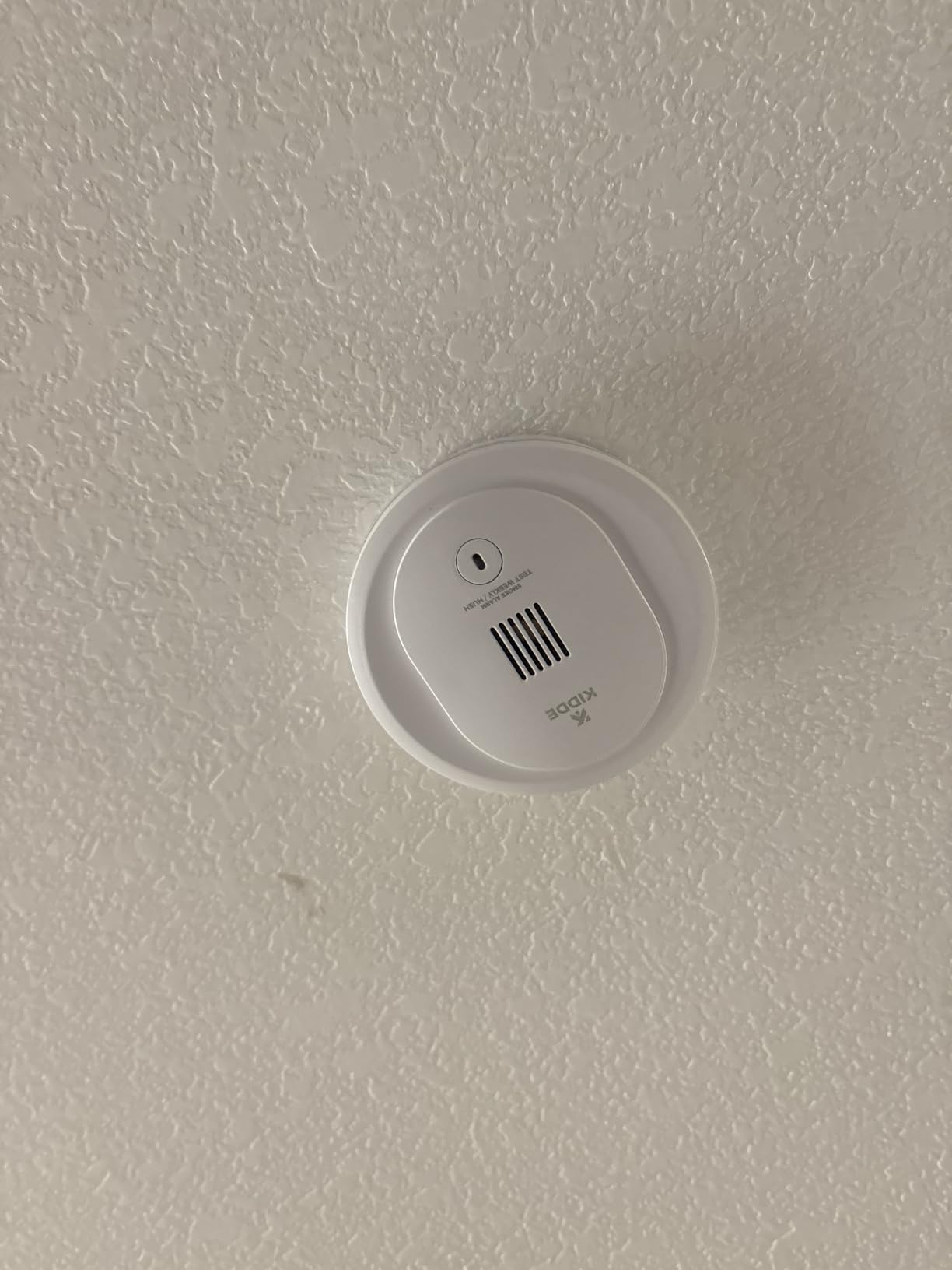
Size is the whole argument here. At 4 inches across and 1.88 inches deep, this is the smallest body in the roundup, and in a small bedroom ceiling where the alarm competes with a light fixture, that footprint makes placement easier to get right.
It runs on two AA batteries, which are included, and the photoelectric sensor is tuned to reduce the everyday cooking and steam false alarms that make people disable bedroom alarms in the first place. Kidde states detection is over 25% faster than its prior generation, and the unit is tested to UL 217 10th Edition with an FCC test on record.
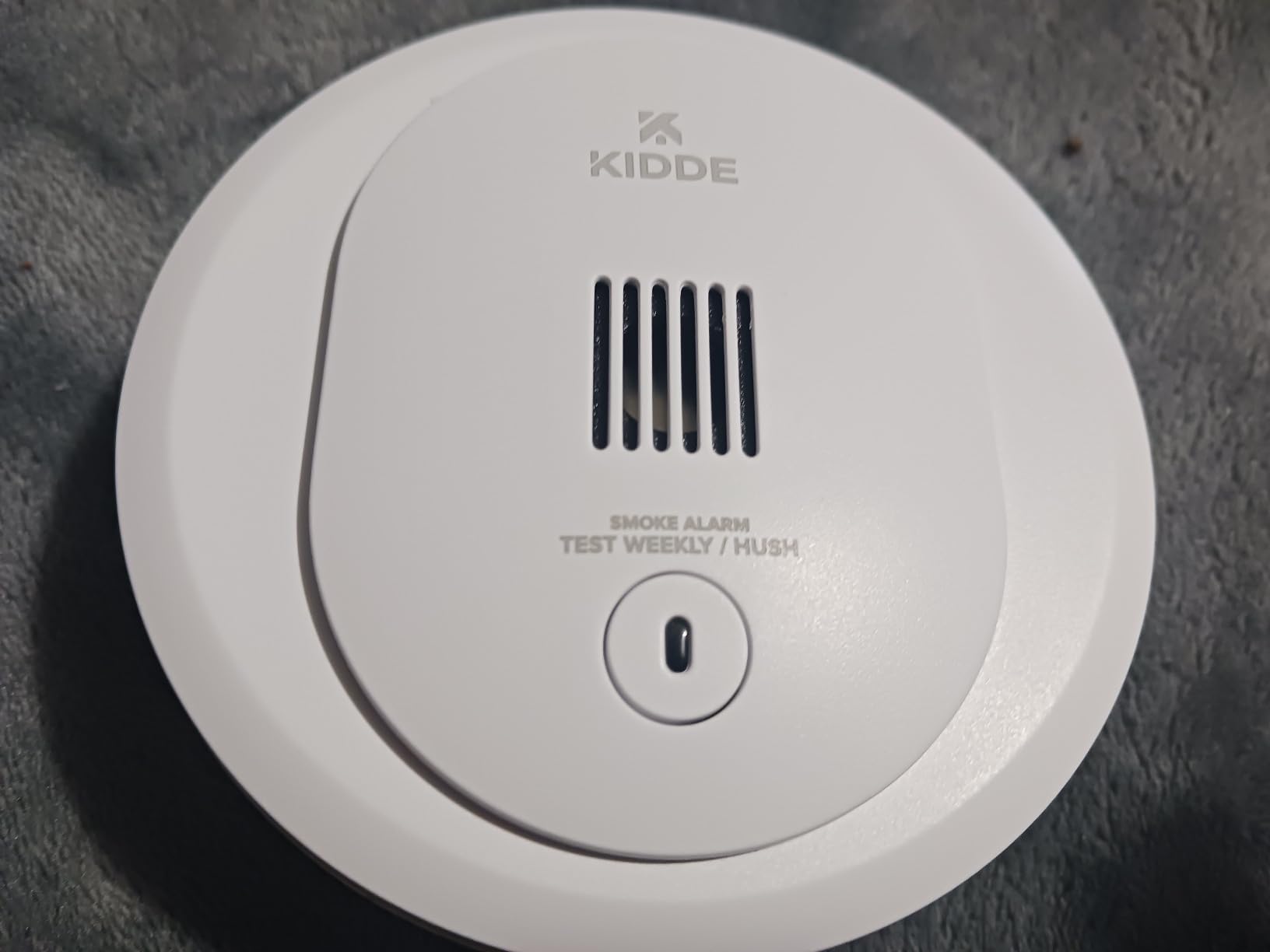
Two AA cells is a genuine improvement over a 9V in convenience terms, because AA batteries are cheaper, easier to find in a campus shop and last considerably longer between changes. The listed operating humidity goes up to 95% relative humidity non-condensing, which makes it a sensible choice for a room that gets steamy in summer.
The 10-year limited warranty from the purchase date is a stronger commitment than most compact budget alarms offer, and it means you are not budgeting for a swap in four or five years.
What to check before you buy
Check that you are comfortable testing it monthly. The feature list for this model does not include a test and hush button, and owners specifically note the absence of a quick way to check the unit or silence a nuisance event.
Check your battery habit. Without a sealed pack, this alarm depends on you remembering to swap two AA cells before the low-battery warning becomes a nightly soundtrack.
Where it is the wrong choice
It is the wrong pick for shared rooms where one person needs to silence an alarm without waking everyone else. With no hush control, the only options are waiting it out or taking the battery out, and taking the battery out is not a fix.
It is also smoke-only. If a gas boiler or a portable heater is part of your room setup, this needs a CO alarm beside it.
6. Kidde 20SDR – Test and hush button you can actually reach
Kidde Smoke Detector, AA Battery-Powered, 20SDR, 1 Pack
Photoelectric sensing
Test and hush button
Two AA batteries included
85 dB alarm with LED
Pros
- Test and hush button mutes a false alarm without disabling detection
- Photoelectric sensor reduces cooking and steam nuisance alarms
- Batteries and mounting hardware included for an immediate install
- Loud 85 dB output that carries through a bedroom
- UL 217 10th Edition and FCC tested
Cons
- Some owners report random three-beep chirping that battery changes did not fix
- Always-on status LEDs can attract insects that trigger false alarms
- Bigger and heavier than the compact 10SDR model
The reason this model exists is that single button on the front. Press it to test the unit on a schedule you choose, press it to temporarily silence a nuisance alarm, and the detector keeps sensing throughout, which is the correct behaviour for a room other people share.
Everything else is a conventional photoelectric package: two AA batteries in the box, a 5 inch body, a loud 85 dB siren with red LED status, and testing to UL 217 10th Edition with a 10-year limited warranty. Detection is advertised as over 25% faster than the previous generation.
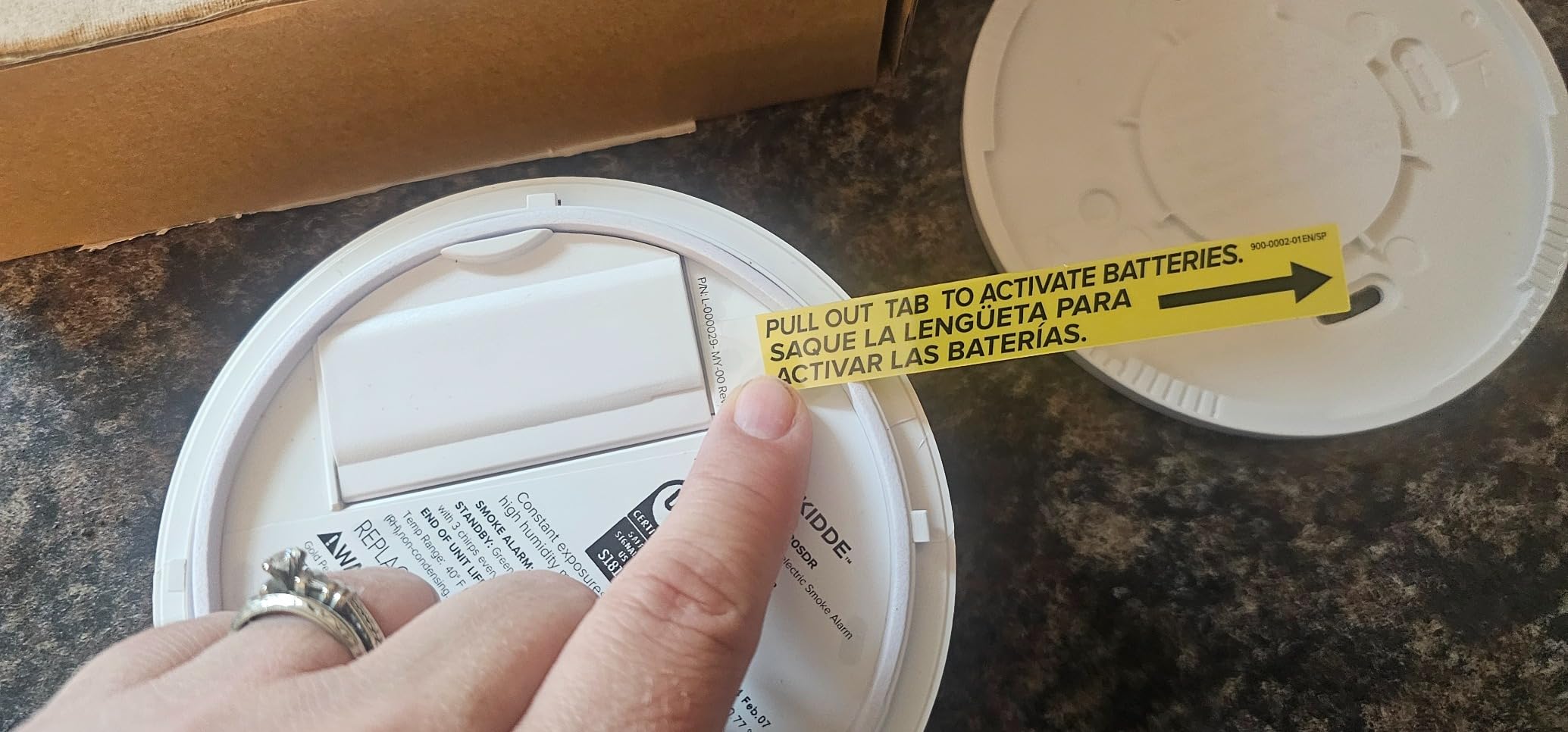
Being straight about the weaker spots: this is the lowest-rated alarm in our group at 4.3, and the one-star share is noticeably higher than the other models. The specific complaint that shows up in reviews is random three-beep chirping a few months after installation that persisted through battery changes, which points at the electronics rather than the power source.
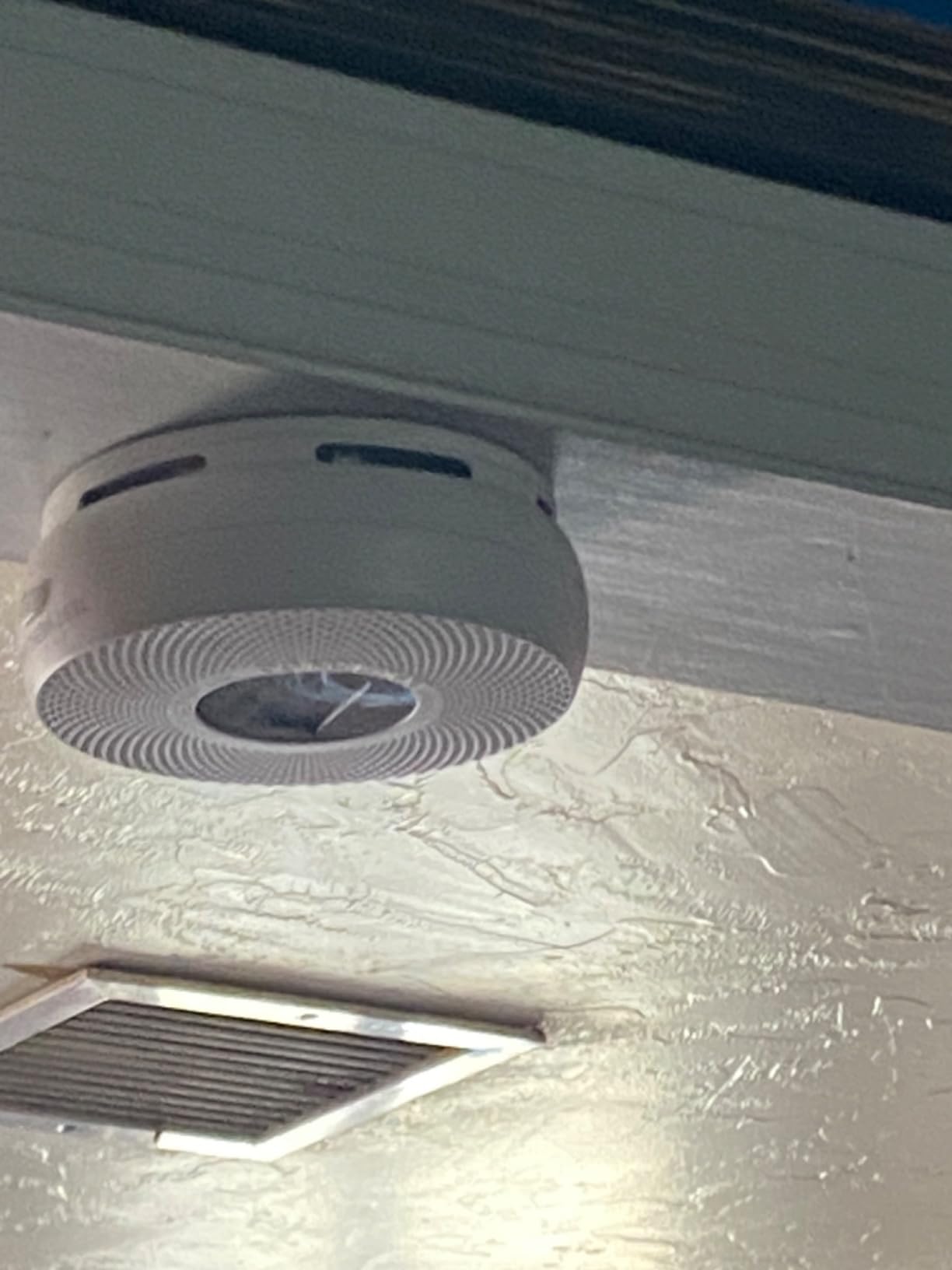
A second pattern worth knowing: owners have traced recurring night alarms to the always-on status LED attracting insects that crawl into the sensing chamber. Keeping the ceiling around the alarm clear of crumbs and lint reduces the chance.
What to check before you buy
Check that the hush button is what you actually need. It handles a nuisance event; it does not reduce the alarm volume during a real fire, and that volume stays fixed at 85 dB.
Check the body size against your ceiling space. At 5 inches across and 13.44 ounces, it is a step up in size and weight from the compact Kidde model, which matters in a low room.
Where it is the wrong choice
It is the wrong pick if you want a decade of hands-off operation. Two AA batteries means a recurring job, and this unit’s feedback on electronic reliability makes that job worth scheduling rather than ignoring.
It is also the wrong pick for a room where you need carbon monoxide detection, because it senses smoke only.
7. SITERWELL GS525A – AI logic that learns your room
SITERLINK Smoke Detectors 10 Year Battery Backup,GS525A 1 Pack
Sealed 10-year lithium battery
Photoelectric sensor
AI false-alarm reduction
3.94 inch body
Pros
- 10-year sealed battery eliminates swaps and low-battery chirps
- AI logic adapts to the room to cut dust and steam false alarms
- Slim 3.94 inch body suits bedroom walls and ceilings
- Magnets and screws both included for a wiring-free install
- Photoelectric sensor tuned to slow smouldering fires
Cons
- Fewer ratings than the major-brand options
- Fixed alarm volume with no low-volume night mode
- Smaller body without an LCD gives less at-a-glance status
The interesting claim here is the AI logic, which the manufacturer describes as learning the environment of the home over time so it can stop reporting dust and steam as danger. In a student room, where the same alarm sees cooking vapour, laundry steam and a fair amount of dust, that is exactly the failure mode you want tuned out.
Underneath is a photoelectric sensor aimed at slow smouldering fires, powered by a sealed 10-year lithium battery. That battery choice is what puts this unit in contention with the X-Sense at the top of the list rather than with the AA-battery budget models.
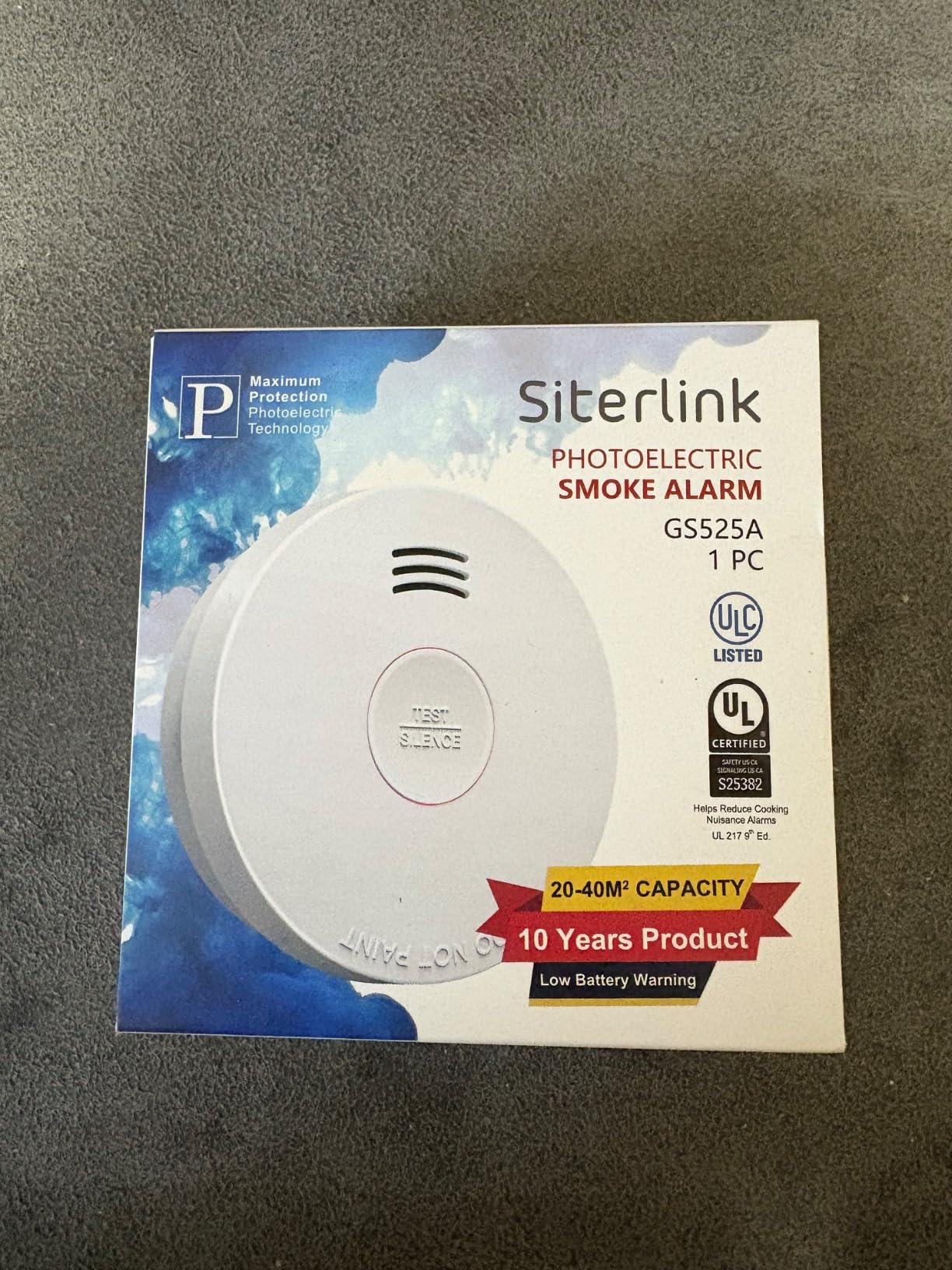
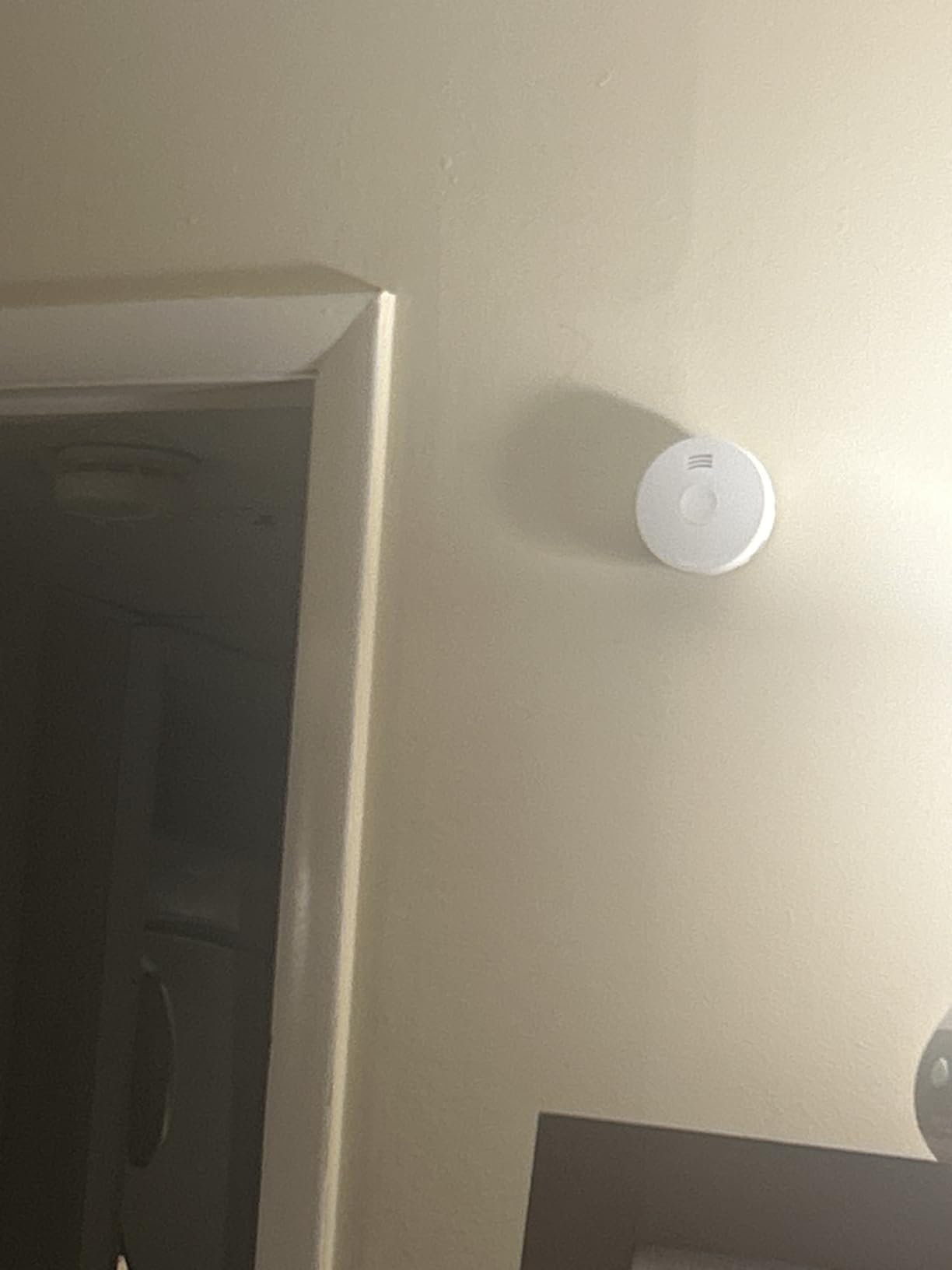
Installation is the easiest in the roundup. At 3.93 inches across it is one of the two smallest bodies we tested, and it comes with both magnets and screws, so you can stick it to a steel ceiling tile or a clean metal plate for a rental that will not let you drill, and still fix it properly wherever drilling is allowed.
The test and silence button sits on the face with LED indicators for status, which is the feature set you would want from a dorm-room alarm where you may need to quiet it at short notice.
What to check before you buy
Check the review volume rather than the star average. The 4.4 rating comes from 576 ratings, which is a much thinner base than the First Alert units in this list, so individual experiences carry more weight.
Check your ceiling material. Magnetic mounting is a genuine convenience, but a magnet needs a steel surface; on plaster or drywall you are using the screws and anchors, same as everyone else.
Where it is the wrong choice
It is the wrong pick if you want visible status at a glance. There is no LCD here, so confirming battery and sensor health means pressing the test button rather than reading a screen.
It is also smoke-only, with no carbon monoxide channel and no interconnection, so it will not link to other alarms in a flat.
8. SITERWELL GS509A – Quiet test and mute for light sleepers
SITERWELL Smoke Detector, 10 Year Product Life Fire Alarm Detectors
Photoelectric sensing
Test and mute button
Replaceable 9V battery
UL 217 listed, 10-year product life
Pros
- Test and mute button keeps the unit quiet during normal rest
- Photoelectric sensing tuned to slow smouldering fires
- 10-year product life with routine battery swaps
- Low battery warning prompts a change before failure
- Wall or ceiling mounting with a magnetic fastening kit
Cons
- 9V battery needs annual replacement rather than a sealed decade
- Thinnest review base in this group at 259 ratings
- Smoke only with no carbon monoxide channel
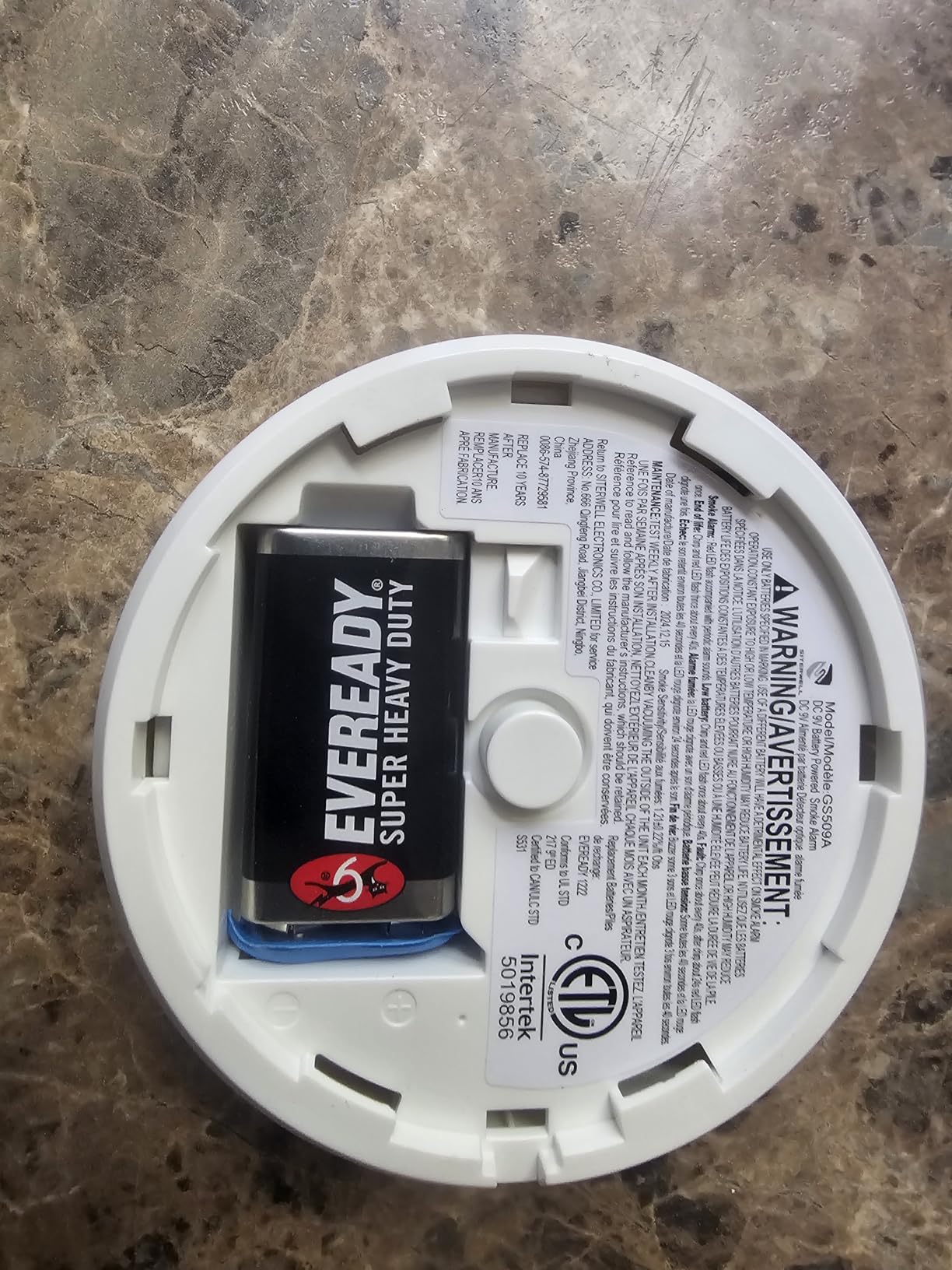
This one is designed around a specific bedroom problem: a room where an unexpected noise is genuinely disruptive. The manufacturer describes the test and mute button as intended to keep the unit quiet during normal rest, so you can confirm the alarm works and silence a nuisance event without a clattering conversation at 2 a.m.
The sensing side is photoelectric, tuned to slow smouldering fires that produce light smoke and little heat, and the audible output is over 85 dB when a real event occurs. Installation is stated to follow NFPA 72, and the unit is UL 217 listed with a 10-year product life.
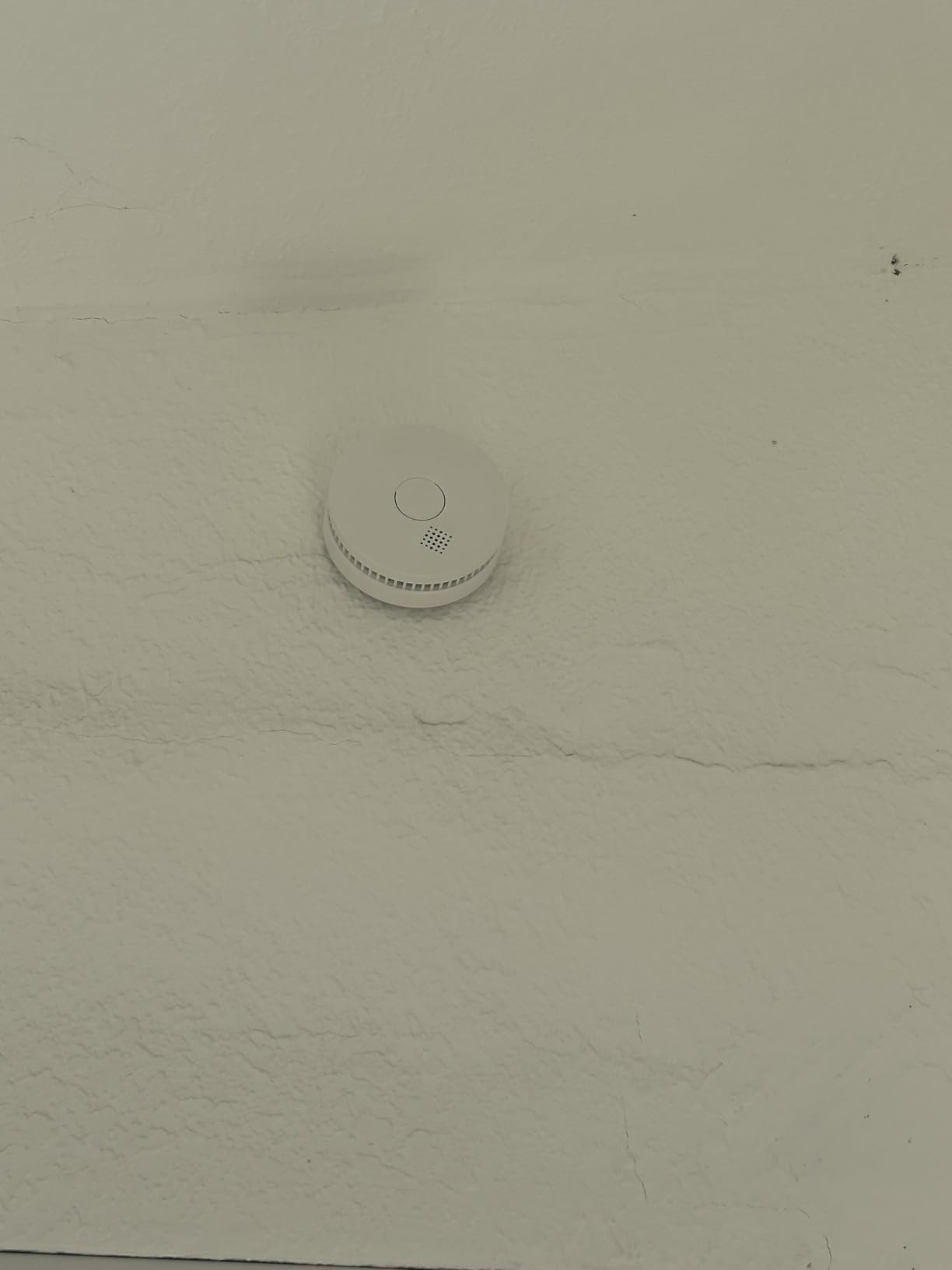
The trade-off here is the power source. This is a replaceable 9V design with roughly a year of battery life per cell, so the alarm itself can stay in a ceiling for a decade while the battery changes. That is a different commitment from a sealed pack, and it is the honest reason we did not rank it higher.
The body is a compact 3.93 inch disc, roughly the same footprint as the GS525A, and it mounts on a wall or ceiling with the included fastening kit. A low battery warning chirp gives you notice before the unit goes quiet.
What to check before you buy
Check how much owner feedback you feel comfortable leaning on. At 259 ratings this is the smallest sample in the roundup, which makes every individual review more significant than it would be for a heavily reviewed unit.
Check that a yearly battery swap fits your routine. If you already know you will forget, a sealed 10-year model solves the problem before it starts.
Where it is the wrong choice
It is the wrong pick for a shared suite where one alarm should be heard everywhere. This is a local siren only, with no interconnection and no app, so it will not wake anyone beyond the room it is mounted in.
It is the wrong pick for a room with a fuel-burning heater, a gas appliance or a garage, since there is no carbon monoxide sensing in this unit.
How to Choose a Smoke Detector for a Bedroom?
Start with the sensor type, because it is the only decision that cannot be changed later without replacing the unit. Everything else is a preference you can live with.
Photoelectric vs ionization vs dual-sensor
A photoelectric alarm passes a beam of light across a sensing chamber and triggers when smoke particles scatter that light. That makes it fast at catching slow smouldering fires, which is the fire type most likely to start in a mattress, a duvet, a curtain or a laundry pile while you sleep. An ionization alarm works differently, detecting combustion particles, and it reacts faster to fast-flamming fires but generates far more nuisance alarms from dust, steam and aerosol.
For a bedroom, the balance favours photoelectric. Fire safety technicians and defenders consistently recommend photoelectric sensing in sleeping areas specifically to reduce nuisance alarms, and a long-running discussion on the Garage Journal forum put the same conclusion bluntly: ionization units are the false-alarm culprit in humid spaces, photoelectric is the preferred sensor. Dual-sensor or multi-criteria models carry both chambers and cost more and draw more power, and none of the alarms in our roundup use one.
Hardwired vs battery in a room you do not own
Hardwired alarms are more reliable because they do not depend on a battery you forget, they are what most local codes require, and they can be interconnected so one alarm sounds all of them. In a dorm, a rented room or a student flat, hardwiring is usually not an option at all and frequently not permitted by your lease. Technicians on homeowner forums run eight or more linked alarms because code demands interconnection, but that is advice for people who control the wiring.
For anyone renting, a sealed 10-year battery alarm is the realistic answer. It removes the maintenance that makes people ignore their detectors, needs only a screwdriver, and can be removed when you move out without leaving a hole in the ceiling.
What causes nuisance alarms in a bedroom
Humidity absolutely can cause a false alarm, and it is one of the most common causes along with dust, cooking aerosol, hairspray, scented candles, incense, vaping and steam drifting in from a shower or a kettle. An alarm sitting directly above a steamy bathroom doorway or in the path of a hot air vent will learn to be trigger-happy, because that is exactly what it is being asked to do.
Some of those triggers are specific to student life. Air fryers and toaster ovens produce enough airborne particles to set off a sensitive alarm when they are close by, and candles and incense produce combustion particles that most alarms, photoelectric or ionization, will treat as a fire. The practical fixes are distance, ventilation and cleaning, not turning the alarm off.
What UL 217, UL 2034 and UL 1469 actually mean
UL 2034 is the standard for single-criterion smoke alarms, meaning the device is certified to detect smoke only. UL 1469 is the multi-criteria standard, which applies to combination units that respond to more than one hazard, such as smoke plus carbon monoxide. UL 217 is the standard covering residential smoke detectors, and an ETL listing to UL 217 means the same tests were run by a different accredited lab.
Why it matters in practice: the UL 2034 marking tells you a combo alarm has been tested for both halves of the job. Look for both markings on a unit that claims to detect smoke and carbon monoxide, and do not be impressed by a certification number printed without the standard it belongs to.
How many alarms a bedroom needs and where
NFPA guidance calls for an alarm inside every sleeping room, outside each sleeping area in the hall or corridor, and on every level of a home including the basement. For a dorm or a shared flat, the practical reading is simple: one alarm in the bedroom you sleep in, one just outside the bedroom door, and one in any room where you cook or run a heater.
On placement, mount on the ceiling where smoke collects, or on a wall no more than six inches below the ceiling. Keep it at least three inches away from corners and edges, and roughly a foot clear of air vents, bathroom doors and kitchen doorways. On a sloping ceiling, mount high on the slope. In a room with a ceiling fan, mount away from the direct airflow path. Follow the instructions that come with the unit, because they override generic advice where the two differ.
The 30-second monthly routine
Press the test button once a month and confirm you hear the siren. A sealed 10-year unit needs nothing more than that plus a gentle dust clean of the vents every six months, using a dry cloth or a soft brush. Never use a vacuum directly on the sensing chamber, and never leave the battery out to stop a chirp.
What to do when it chirps at 2 a.m.
A low-battery chirp is a warning, not a nuisance, and the correct response is to replace the battery, not the alarm. In a hardwired unit, trip the breaker before touching the backup battery. If a fresh battery does not stop the chirp, the unit has reached end of life and needs replacing, which most alarms will tell you about with a specific pattern. Press the test or hush button once and it may run for a few minutes while the sensor stabilises; if it resumes, treat it as a fault rather than a mood.
Dorm and Student Housing Rules, Chirps and False Alarms
Almost every question we get about bedroom alarms is really a question about who owns the alarm. Here is the part no competitor page covers properly.
Does my dorm already have an alarm?
Almost certainly yes, in most halls, and it is normally wired into the building fire panel rather than being a standalone device. That is why students in dorm and student-housing forums describe dorm alarms as extremely sensitive and why a single incident can trigger a full-building evacuation. Your own alarm does not replace the building system, and it does not silence it.
Check whether you are even allowed to add one. Some halls permit a listed personal alarm, some forbid anything fixed to the ceiling, and some let you use removable mounts. Ask your housing office in writing before drilling anything, and keep the answer.
Will candles, an air fryer or vaping set it off?
Yes to all three, in practice. Candles and incense produce combustion particles that a normal detector will treat as smoke, and a hot air fryer nearby can push enough floating particles into a sensing chamber to trigger an alarm. The community consensus in fire-safety forums is blunt: the fire panel will catch it, and the building treats it as a real activation regardless of intent.
Nobody wakes up wanting to be the reason a hundred people stand outside in the rain. Keep open flames and fryers away from the room, never leave a candle burning unattended, and if a personal alarm sounds in your own room, treat it as real until you have checked.
When the alarm goes off, what do I do?
Treat every alarm as real. Get out, stay out, and do not wait to see if it stops, because smoke makes you sleep through a slow fire. Once you are outside, stay outside. Call the emergency services from a safe location and let building staff direct the evacuation, because they will know whether it is a device fault or a genuine incident.
Only after the building has stood down should you raise the alarm chirping in a way that gets it fixed. Document the date, the time and what the pattern was.
Who replaces a failed building alarm?
Usually the building, and never you, unless your hall has told you otherwise. Photograph the alarm, note the date and the fault pattern, and submit it in writing through your hall or housing portal so there is a record. The one thing you must not do is remove the battery or cover the unit to stop the noise, because that turns a maintenance complaint into a safety violation and a disciplinary one.
For sound sensitivity, a student with a sensory processing disorder asked about fire-alarm noise before enrolling, which is a reasonable thing to raise with disability services. A personal alarm with a hush or mute control, placed inside your room, gives you a level of control the building panel does not offer.
Frequently Asked Questions
What type of smoke detector is best for bedrooms?
A photoelectric smoke alarm is the best type for a bedroom. It reacts fastest to the light smoke thrown off by slow smouldering fires in mattresses, bedding and curtains, which are the fires most likely to start while you sleep. Add a sealed 10-year lithium battery so the alarm never chirps overnight, and mount it on the ceiling or high on a wall.
Are there smoke detectors in college dorms?
Yes, in almost every dorm and student hall, and it is normally wired into the building fire panel rather than being a standalone device. Building alarms are deliberately sensitive and are treated as real activations by the system, even when the cause is a candle, an air fryer or vaping. Your own alarm does not replace the building system. Check your housing rules in writing before adding or fixing anything to a ceiling.
Can humidity cause a false smoke alarm?
Yes, and it is one of the most common causes of nuisance alarms in a bedroom, alongside dust, cooking aerosol, scented products and steam from a shower or kettle. An alarm positioned near a bathroom door, above a cooker or in the path of a heating vent will trip more often. Moving it at least a foot away from vents and doorways, and ventilating the room, removes most of the problem.
Will an air fryer or a candle set off a smoke alarm in a dorm?
Yes, both can. An air fryer or toaster oven close to a detector releases airborne particles that a sensitive chamber will treat as smoke, and a candle or incense stick produces combustion particles that trigger a standard detector. A building panel will register it as a real activation and call for an evacuation. Keep fryers and open flames away from your room, and never leave a candle burning unattended.
Is it safe to stay in my dorm when the fire alarm sounds?
No. Get out immediately and stay out, even if the alarm stops within seconds or you cannot smell smoke. Treat every activation as real until building staff confirm otherwise, because smoke wakes people far more slowly than they expect. Once outside, stay outside, call the emergency services from a safe location, and follow the direction of hall staff who will know whether it is a device fault or a genuine fire.
Why are ionisation smoke alarms being phased out?
Ionisation alarms detect combustion particles, which makes them sensitive to ordinary household particles like dust, steam and cooking aerosol, so they produce far more nuisance alarms. Because repeated false alarms train people to ignore or disable their detectors, regulators have been moving away from ionisation technology and toward photoelectric and multi-criteria alarms. A long-running forum debate among technicians reached the same conclusion for sleeping areas, where photoelectric sensing is recommended.
The Verdict: Which Bedroom Alarm to Buy in 2026
The X-Sense SD2J0AX is our pick for best smoke detectors for bedrooms in 2026. It is a photoelectric alarm on a sealed 10-year lithium battery, it is ETL Listed to UL 217, it installs with a screwdriver in a room you do not own, and 4057 owner ratings at 4.6 stars say the same thing the specification does.
Add the X-Sense SC07 if your room has any fuel-burning appliance, because the carbon monoxide channel and the LCD readout are worth the extra weight. Add the First Alert SMI100 two-pack if you want a bedroom plus hallway covered and would rather swap a 9V once a year than think about batteries at all. The Kidde 20SDR is the pick when a reachable hush button matters more than everything else, and the SITERWELL GS525A is the one to try if your alarms have been crying wolf.
Whichever you choose, mount it today, press the test button, and put a reminder in your calendar for the same date next month. An untested alarm is decoration, and in a building full of space heaters, candles and shared kitchens, that is the one risk you cannot afford.
Smoke alarms reduce fire risk but do not eliminate it. Follow your local fire code and NFPA guidance, and if you are in doubt about a specific installation, ask your housing office or a local fire safety professional.