
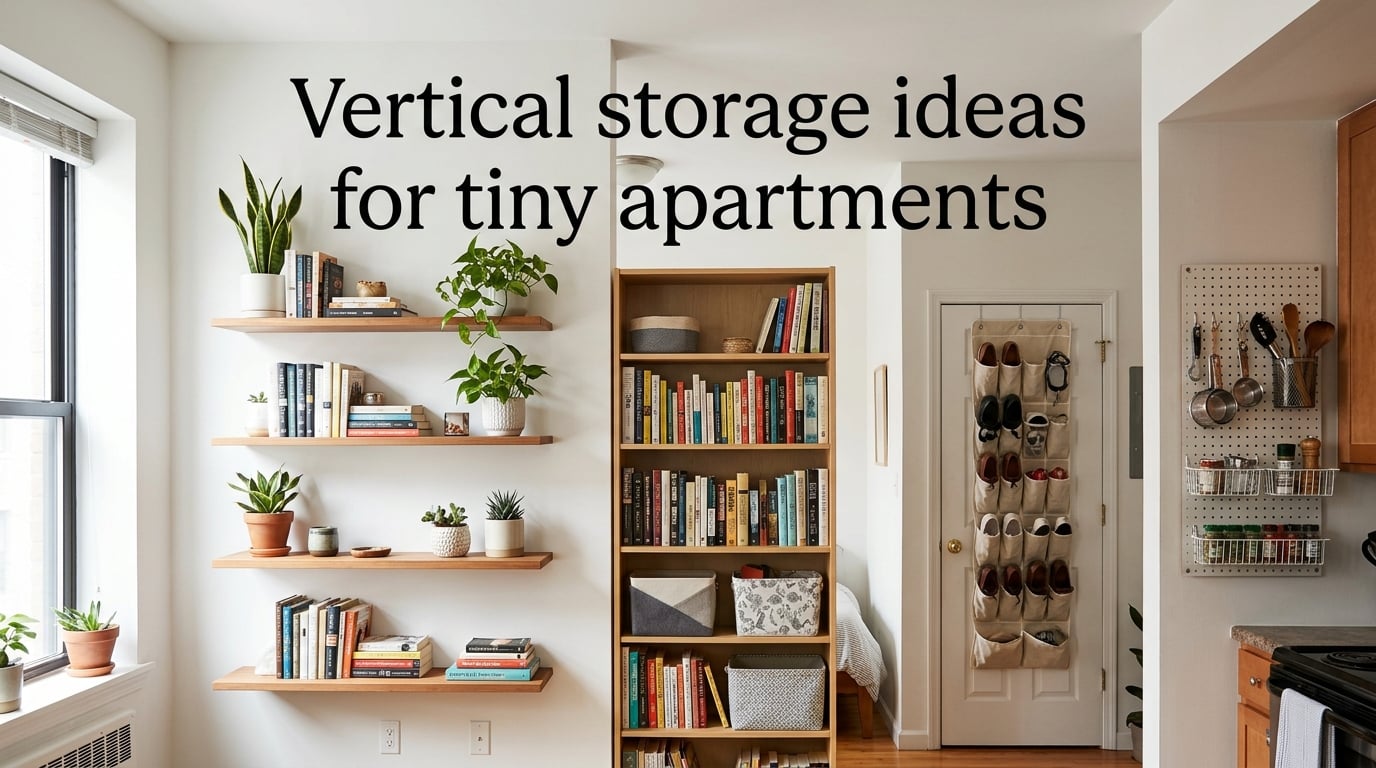
Vertical storage is the single most effective strategy for maximizing space in a tiny apartment. By using walls, doors, and overhead areas instead of precious floor space, you can increase your storage capacity by two to three times without making the room feel cramped. For student renters especially, vertical storage ideas for tiny apartments offer a deposit-safe, no-renovation way to keep belongings organized in shared housing and small studios.
In this guide, I’ll walk you through the best vertical storage solutions organized by room and difficulty level. Whether you’re working with a tiny bedroom that has no closet or a shared bathroom with zero personal shelf space, these ideas will help you reclaim every inch of vertical real estate.
Table of Contents
Vertical Storage Ideas for Tiny Apartments
Here are the most effective vertical storage solutions you can start using today:
- Install floating shelves above desks, beds, and doorways to create instant display and storage zones
- Hang over-the-door organizers on bedroom, bathroom, and closet doors for shoes, toiletries, and accessories
- Mount a pegboard in your kitchen or home office for flexible, reconfigurable wall storage
- Use adhesive hooks and command strips to hang bags, hats, keys, and kitchen utensils without drilling
- Add a tall freestanding bookshelf as both storage and a room divider in studio apartments
- Stack clear pantry bins inside cabinets to double your kitchen and bathroom shelf space
- Hang a garment rack in bedrooms without closets to create an open wardrobe
- Mount an over-toilet shelf unit to use wasted bathroom vertical space
- Attach magnetic strips to kitchen walls for knives, spice jars, and metal utensils
- Use tension rods under sinks and inside cabinets for hanging spray bottles and cleaning supplies
- Install a wall grid panel for a modular display and storage system you can reconfigure anytime
- Raise your bed on risers to create hidden under-bed storage for seasonal items
- Hang a shoe organizer on the wall to store small items like scarves, socks, and craft supplies
- Stack magazine files vertically on shelves for mail, notebooks, and small electronics
- Use ceiling hooks for hanging plants, bikes, or lightweight storage baskets
How to Plan Your Vertical Storage Strategy
Before buying a single shelf or hook, take thirty minutes to plan. This prevents wasted money and ensures every vertical surface earns its keep.
Step 1: Declutter first. Sort your belongings into keep, donate, and discard piles. Storage solutions work best when you’re not trying to organize things you no longer need.
Step 2: Measure your vertical space. Walk through each room with a tape measure. Note the height of your walls, the space above your doors, windows, and furniture, and any awkward corners. Write down the dimensions of every usable surface.
Step 3: Pick one system per room. Rather than scattering random hooks everywhere, choose a primary vertical storage method for each space. A pegboard in the kitchen, floating shelves in the living room, and an over-the-door rack in the bedroom creates a cohesive, clutter-free look.
Wall-Mounted and Floating Shelves
Floating shelves are the foundation of any vertical storage strategy. They turn blank wall space into functional display and storage areas for books, decor, kitchen items, and bathroom essentials.
For renters who cannot drill into walls, adhesive floating shelves have improved dramatically in recent years. Look for shelves rated to hold at least 10 pounds with strong 3M adhesive strips. They work best on smooth, flat surfaces like painted drywall or tile.
If your landlord permits drilling, standard floating shelf brackets offer significantly more weight capacity. A single properly anchored shelf can hold 30 to 50 pounds, enough for a row of hardcover books or a collection of storage baskets. Space shelves 12 to 16 inches apart vertically to maximize storage without looking crowded.
Install shelves above doorways, above windows, and along the wall space above your bed. These overlooked zones are prime real estate in a tiny apartment, and most people leave them completely empty.
Freestanding Tall Shelving Units
Tall freestanding shelves are the go-to solution for renters who want maximum vertical storage with zero wall damage. A six-foot tall bookshelf adds roughly 50 percent more storage capacity than a standard three-foot unit, and it requires no drilling whatsoever.
Look for narrow tower-style shelving units that fit in tight corners, beside refrigerators, or between furniture pieces. Open-back designs keep the room feeling airy, while units with adjustable shelves let you customize spacing for tall items like vases or small appliances.
A tall bookcase also works beautifully as a room divider in studio apartments. Position it perpendicular to a wall to separate your sleeping area from your living space. The open shelves let light pass through while creating a clear visual boundary between zones.
Over-the-Door Storage Solutions
Over-the-door organizers are among the easiest vertical storage wins in a tiny apartment. They require no installation, leave zero marks, and instantly add storage to the back of any door.
A standard over-the-door shoe rack holds 12 to 24 pairs, but these organizers are far more versatile than their name suggests. Use them for toiletries in the bathroom, cleaning supplies in the kitchen, scarves and accessories in the bedroom, or snacks and small pantry items in a studio kitchen.
For bathroom doors specifically, look for organizers with a mix of pockets and hooks. The pockets hold hair tools, skincare bottles, and first-aid supplies, while hooks handle towels and robes. This eliminates the need for a bulky bathroom cabinet entirely.
In entryways without a coat closet, an over-the-door hook rack provides a landing spot for bags, keys, and jackets. Choose a style with padded hooks to prevent damage to the door surface, and verify the door still closes properly with the organizer attached.
Pegboards and Wall Grid Systems
Pegboards and wall grids offer the most flexible vertical storage available. Unlike fixed shelves, you can rearrange hooks, baskets, and shelves on a pegboard anytime your needs change, which makes them perfect for evolving spaces like home offices and craft areas.
A standard 24-by-36-inch pegboard mounted above a desk can hold an entire home office worth of supplies: pen cups, file holders, small shelves for books, and clips for notes and calendars. In the kitchen, the same pegboard stores pots, utensils, and spice jars.
Wall grid panels have become increasingly popular as a more decorative alternative to traditional pegboards. They come in black, white, and gold finishes that double as wall art. Attach small shelves, clips, and hanging baskets to create a storage display that looks intentional rather than purely functional.
For student accommodation, pegboards mounted with adhesive strips or lean-to frames avoid drilling entirely. When it’s time to move, the pegboard comes down cleanly and travels to your next apartment.
Hooks, Rails, and Command Strips
Hooks and adhesive strips are the cheapest way to start going vertical, and they’re surprisingly effective. A single command hook rated for five pounds can hold a tote bag, a set of keys, a hat, or a kitchen utensil rail.
Group adhesive hooks in rows along a wall to create a makeshift coat rack, or line them up inside a closet door for belts, scarves, and jewelry. The key is spacing them at least four inches apart to prevent items from tangling.
Adhesive rails work especially well in kitchens and bathrooms. Mount a metal rail near the stove to hang spatulas and ladles, or attach one inside the shower for shampoo and soap. Rails distribute weight more evenly than individual hooks, which makes them safer for heavier items.
A word of caution: adhesive hooks lose grip on textured walls, freshly painted surfaces, and humid bathrooms. For those spots, consider small nail-in picture hooks, which leave only a tiny hole that’s easy to fill when you move out.
Bedroom Vertical Storage Without a Closet
Many studio and student apartments have no built-in closet, which makes vertical bedroom storage essential. The most practical solution is a freestanding garment rack paired with a tall dresser or tower shelving unit.
A sturdy garment rack holds 40 to 60 hanging garments and takes up only about two feet of floor width. Look for styles with a bottom shelf for shoes or storage boxes, and hang a fabric organizer from the top bar for folded items like sweaters and jeans.
Tall narrow dressers maximize vertical space while keeping the footprint small. A five-drawer vertical tower provides as much storage as a wide three-drawer dresser but occupies half the floor area. Place it beside the bed to double as a nightstand.
Wall-mounted floating shelves above the bed create a headboard-style storage zone for books, alarm clocks, and decorative items. Add under-bed storage bins on risers to complete the bedroom vertical strategy from floor to ceiling.
Bathroom Vertical Storage Ideas
Bathrooms in tiny apartments are notorious for lacking storage, but vertical solutions can transform even the smallest space. The over-toilet area alone provides roughly three feet of unused wall height that’s perfect for shelving.
An over-toilet ladder shelf or etagere adds two to three tiers of storage for towels, toiletries, and decorative baskets. Freestanding versions require no drilling and can be moved easily when you relocate. For a more permanent solution, adhesive-mounted over-toilet shelves offer a sleek, built-in look.
Inside the shower, adhesive corner caddies keep shampoo, conditioner, and body wash off the floor. Suction-cup versions work on smooth tile, while adhesive caddies with stronger bonds suit textured surfaces. Hang a mesh shower caddy from the showerhead for a renter-friendly alternative.
Under the sink, tension rods create instant hanging space for spray bottles and cleaning cloths. Stackable drawers and small bins on the cabinet floor double the usable storage in that cramped space. A magnetic strip mounted inside the cabinet door holds bobby pins, tweezers, and small metal grooming tools.
Kitchen Vertical Storage Solutions
Kitchen vertical storage is where you’ll see the biggest impact per dollar spent. Most tiny apartment kitchens have more wall space than cabinet space, and using that vertical area can effectively double your storage capacity.
A wall-mounted spice rack or magnetic spice strip frees up an entire cabinet shelf. Mount it at eye level near the stove for easy access while cooking. Pair it with a small wall shelf for oils, vinegars, and frequently used condiments.
Inside cabinets, stackable clear bins and shelf risers create instant second layers. A shelf riser inside a standard cabinet adds 50 percent more usable space for plates, bowls, and mugs. Clear stackable bins work well for snacks, baking supplies, and tea bags.
A tension rod mounted horizontally under the sink creates a hanging bar for spray bottles, freeing up the cabinet floor for larger items. Add adhesive hooks on the inside of cabinet doors for measuring cups, pot lids, and small cutting boards.
For student kitchens in shared accommodation, a narrow rolling cart between the fridge and the wall provides two to three extra shelves that roll out of the way when you need floor space. Keep your personal items on the cart so they stay separate from shared kitchen supplies.
Vertical Zoning in Studio and Shared Apartments
In studio apartments and shared student housing, vertical storage does double duty as a room divider. A tall bookcase or open shelving unit positioned in the middle of the room creates distinct zones for sleeping, working, and relaxing without blocking natural light.
The best room divider shelves are open on both sides, allowing you to access stored items from either zone. Place the unit perpendicular to the longest wall, leaving at least three feet of clearance on either side for easy movement. Use one side for bedroom items like books and alarm clocks, and the other side for living area essentials.
A freestanding ladder shelf makes an excellent room divider because its open design keeps the space feeling connected. Hang lightweight curtains from the top shelf to add privacy to the sleeping side while maintaining the airy feel of the living area.
For shared apartments where each tenant needs personal storage, assign vertical zones by room. Mount a pegboard or wall shelf above each person’s designated desk or bed area. This prevents clutter from migrating across shared spaces and gives everyone a sense of ownership over their zone.
Vertical Storage Solutions by Room
This comparison table shows which vertical storage solutions work best in each room of a tiny apartment:
| Room | Wall-Mounted | Over-the-Door | Freestanding | Adhesive/Hooks |
|---|---|---|---|---|
| Bedroom | Floating shelves above bed | Shoe organizer, accessory rack | Garment rack, tall dresser | Hooks for bags and hats |
| Bathroom | Adhesive caddy, towel rail | Toiletry organizer | Over-toilet shelf | Shower caddies, hooks |
| Kitchen | Spice rack, magnetic strip | Pantry organizer | Rolling cart, shelf risers | Utensil rail, pot hooks |
| Living Area | Floating shelves, wall grid | Blanket organizer | Bookshelf room divider | Hooks for keys and bags |
| Entryway | Key shelf, coat hooks | Hook rack | Narrow tower shelf | Command hooks for bags |
Renter-Friendly Rules to Protect Your Deposit
When adding vertical storage to a rental apartment, the goal is maximizing space without losing your security deposit. Follow these guidelines to stay deposit-safe while going vertical.
Choose adhesive over drilling whenever possible. Modern adhesive strips hold up to 7.5 pounds per strip, and heavy-duty versions support up to 16 pounds. They remove cleanly when you follow the manufacturer’s instructions: pull the tab straight down slowly rather than yanking the strip off the wall.
Test adhesive on an inconspicuous spot first. Textured walls, newly painted surfaces, and wallpaper can react differently to adhesive. Apply a single strip to a hidden area, wait 24 hours, then remove it to check for damage before committing to a full installation.
Fill and paint any drill holes before moving out. If you do drill, use wall anchors rated for your wall type. When it’s time to leave, fill holes with lightweight spackle, sand smooth, and touch up with matching paint. Keep a small container of your landlord’s wall color for quick repairs.
Avoid permanent fixtures in shared spaces. In student housing or shared apartments, freestanding and adhesive solutions are easier to move and less likely to cause disputes with housemates or landlords. Save drilling for your private bedroom if permitted.
Document everything before and after. Take photos of all walls before installing storage and after removing it. This gives you clear evidence of the condition before and after your tenancy, which is invaluable if a deposit dispute arises.
Frequently Asked Questions
What are some clever storage ideas for a small apartment?
The most effective small apartment storage ideas use vertical space: floating shelves above furniture, over-the-door organizers for shoes and toiletries, pegboards for flexible wall storage, and tall freestanding shelving units. Hooks, tension rods, and stackable bins also add storage without taking up floor space.
How do I add storage to my apartment without drilling?
Use adhesive hooks and command strips rated for the weight you need, over-the-door organizers that hang without hardware, freestanding shelving units, and tension rods under sinks and inside closets. Adhesive floating shelves with strong 3M strips also work well on smooth, flat walls.
How do you maximize vertical storage in a small apartment?
Start by measuring all available wall height, including space above doors, windows, and furniture. Install floating shelves in these unused zones, mount a pegboard for flexible storage, add a tall bookshelf as a room divider, and use the back of every door with over-the-door racks.
How do you store things vertically in a studio apartment?
Use a tall freestanding bookshelf as a room divider to create separate sleeping and living zones while adding storage on both sides. Mount floating shelves above the bed and desk area, hang a garment rack for an open wardrobe, and use vertical wall grids for display and small-item storage.
What can I put on my walls to save space in a small apartment?
Floating shelves, pegboards, wall grid panels, adhesive hooks, magnetic strips, and wall-mounted spice racks all save floor space by using vertical wall area. Choose adhesive-mounted options for rental apartments and properly anchored brackets if drilling is permitted.
How do I organize a tiny apartment with no storage?
Start by decluttering to reduce what you need to store. Then add vertical storage: a tall freestanding wardrobe or garment rack replaces a missing closet, over-the-door organizers use hidden door space, floating shelves create storage above furniture, and under-bed bins on risers use the area beneath your bed.
Conclusion
Vertical storage transforms tiny apartments from cluttered and cramped into organized and livable. By focusing on walls, doors, and overhead space instead of floor area, you gain two to three times more storage without adding a single piece of furniture to the ground. The fifteen vertical storage ideas for tiny apartments covered in this guide range from zero-cost command hooks to full shelving systems, so you can start with whatever fits your budget and landlord restrictions today.
Begin with the quick-win solutions like over-the-door organizers and adhesive hooks, then work up to floating shelves and freestanding units as your needs and confidence grow. Measure your vertical space, pick one system per room, and enjoy the difference that going vertical makes in your daily life.