
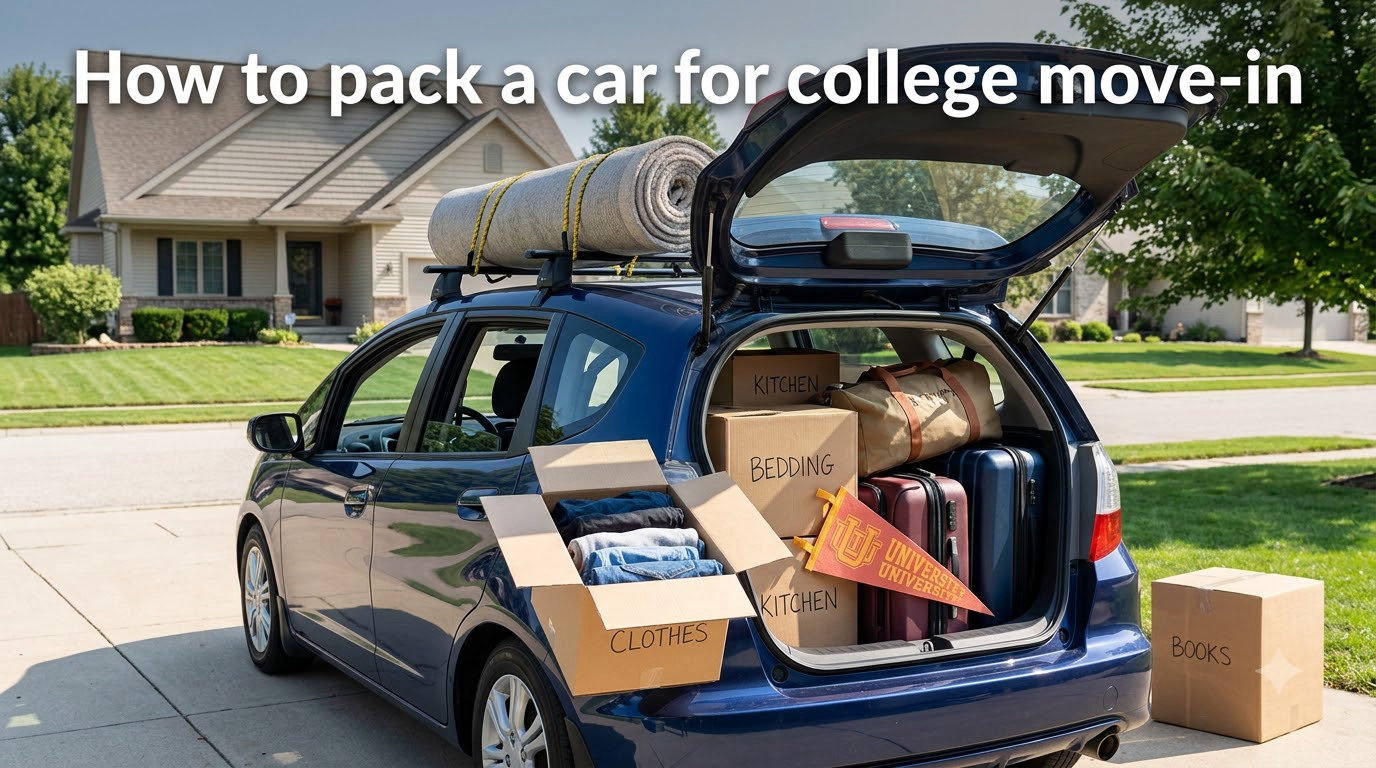
Knowing how to pack a car for college move-in can save you hours of stress on one of the most exciting days of your life. After helping hundreds of students move into their dorms and packing our own vehicles more times than we can count, we’ve figured out exactly what works and what doesn’t.
This guide walks you through a proven strategy to fit everything you need into your car — whether you’re driving a compact sedan or a full-size SUV. You’ll learn the loading order that maximizes space, what to pack first versus last, and which items you should absolutely leave at home.
Table of Contents
Step-by-Step: How to Pack a Car for College Move-In
Follow this loading sequence to maximize every inch of space in your vehicle:
Step 1: Declutter before you pack. Go through your items the week before move-in and remove anything you won’t actually use. Most dorms provide basic furniture, so skip duplicates.
Step 2: Gather your containers. Use a mix of clear storage bins, duffle bags, and packing cubes. Clear bins stack better and let you see contents without opening them.
Step 3: Load heavy items into the trunk first. Storage bins, mini fridges, and heavy boxes go in first, positioned flat against the back of the trunk. This keeps weight low and centered.
Step 4: Fill gaps with soft items. Bedding, pillows, and clothing bags fill the spaces between hard containers. Nothing should shift during the drive.
Step 5: Stack the back seat floor to ceiling. Place bins on the floor, then stack lighter items on top. Use the seatbelt to secure tall stacks if needed.
Step 6: Use the passenger seat for essentials. Keep your first-night bag, important documents, snacks, and anything you’ll need immediately in the front seat.
Step 7: Secure everything before driving. Nothing should be able to slide, tip over, or fly forward during a sudden stop. Test this by gently pushing items.
Step 8: Take a photo of your loading setup. You’ll want to remember how you fit everything for the return trip after winter break.
Students on Reddit frequently mention that they wish they had started packing earlier. One common regret is bringing too much stuff — most dorms provide more than freshmen expect.
Car Organization by Section
Trunk
Your trunk is prime real estate for heavy and bulky items. Load storage bins, a mini fridge (if allowed), and heavy boxes here first. Place the heaviest items against the back seat to keep weight centered over the rear axle for better handling.
Use bungee cords or a trunk organizer to prevent items from sliding. If your trunk has a false floor, use that hidden compartment for smaller items like toiletries or school supplies.
Back Seat
The back seat is your second-largest cargo area. Stack clear bins on the floor and layer softer items like bedding and pillows on top. If you’re traveling alone, fold down one side of the back seat to create more flat storage space.
Duffle bags and laundry baskets work well here because they conform to the seat shape better than rigid boxes.
Passenger Seat
Reserve this space for items you’ll need first: your first-night bag, important paperwork, chargers, medications, and snacks for the drive. Push the seat all the way back to create maximum floor space in front of it.
A small backpack or tote on the passenger seat keeps essentials within arm’s reach without creating a mess.
Roof and Exterior
If you have a roof rack or cargo box, this is ideal for bulky lightweight items like bedding, sleeping bags, or seasonal clothing. Make sure everything is waterproof and securely strapped down.
Bikes can attach to a rear-mounted rack, freeing up valuable interior space. Just check your dorm’s bike policy before bringing one.
What to Pack First vs Last
The loading order matters more than most people realize. Here’s the sequence that works best:
Pack First (Bottom Layer):
- Heavy storage bins and boxes
- Mini fridge (if permitted)
- Desk supplies and school materials
- Seasonal items you won’t need immediately
Pack Last (Top Layer and Accessible):
- First-night essentials bag
- Bedding and pillows (you’ll set up your bed first)
- Cleaning supplies for dorm setup
- Important documents and IDs
The principle is simple: everything you need on night one should be the last thing loaded and the first thing you grab. Pack backwards from how you’ll unload.
Packing by Vehicle Type
SUV or Crossover
SUVs offer the most cargo flexibility. Fold down the rear seats to create a flat loading floor that can handle bins, small furniture, and bulky items. The higher roofline means you can stack taller without worrying about clearance.
Most mid-size SUVs can fit 8-10 large storage bins plus bedding and personal items. Use the cargo cover or a blanket over your items for security during stops.
Sedan
Sedans require more strategic packing, but they can still handle a full dorm load. The trunk typically holds 4-6 bins, and the back seat adds another 3-4. Use vacuum storage bags for clothing and bedding to compress everything by 50-75%.
Consider a small hitch-mounted cargo carrier if your sedan has a hitch. This adds external storage without needing a roof rack.
Hatchback
Hatchbacks are surprisingly good for college moves. The rear cargo area expands when you fold the seats, creating a continuous load space. The opening is wider than a sedan trunk, making it easier to load awkward items.
Stack bins vertically and use the back seat for overflow. Hatchbacks work best when you pack in organized layers.
Small Cars and Compacts
If you’re driving a compact car, you’ll need to be more selective about what you bring. Focus on essentials only and consider shipping larger items or buying them after arrival. A vacuum bag system is essential — it can reduce bedding and clothing volume by 75%.
Rent a small trailer or borrow a larger vehicle for move-in day if possible. Many colleges offer move-in assistance with carts and dollies once you arrive on campus.
Essential Items Checklist
Here’s what experienced college students recommend bringing:
Bedding and Bath:
- Twin XL sheets (most dorm beds are Twin XL)
- Pillows and pillowcases
- Lightweight comforter or duvet
- Bath towels and washcloths
- Shower caddy with toiletries
- Flip flops for the shower
Academic Supplies:
- Laptop and charger
- Notebooks, pens, and highlighters
- Backpack or messenger bag
- Desk lamp
- Power strip with surge protection
Living Essentials:
- Laundry hamper or bag
- Detergent pods (easy to carry)
- Basic cleaning supplies
- First aid kit
- Reusable water bottle
Personal Items:
- Important documents (ID, insurance cards, medical records)
- Prescription medications
- Phone charger and power bank
- Small toolkit (screwdriver, pliers)
- Command strips and hooks
What NOT to Bring to College
Overpacking is the most common mistake freshmen make. Leave these items at home:
Items the dorm usually provides:
- Bed frame and mattress
- Desk and chair
- Dresser or closet space
- Basic overhead lighting
Items you can buy after arrival:
- Large bottles of shampoo or detergent (buy travel sizes first)
- Bulk snacks (buy what you need locally)
- Extra furniture (wait until you see your room layout)
- Seasonal clothing for later in the year
Items that take up too much space:
- Multiple sets of sheets (two is plenty)
- Your entire book collection
- Large gaming setups or monitors
- Off-season sports equipment
We’ve found that students who bring fewer items report less stress during move-in and keep their dorm rooms more organized throughout the semester.
Space-Saving Packing Hacks
These techniques can increase your effective cargo space by 30-50%:
Use packing cubes for clothing. Rolling clothes into packing cubes compresses them and keeps everything organized. You can fit 7-10 days of clothing into a single cube.
Vacuum storage bags are essential. These bags compress bulky items like comforters, pillows, and winter coats to a fraction of their size. A queen comforter can shrink to the size of a throw pillow.
Pack inside other items. Stuff socks inside shoes, roll belts and accessories inside shoes, and fill empty spaces in bins with small items.
Use clear bins instead of cardboard boxes. Clear bins stack more securely, protect against moisture, and let you see contents without opening. They also double as storage in your dorm room.
Roll soft items, fold hard items. Clothes, towels, and bedding should be rolled tightly. Books, electronics, and flat items should be packed flat to prevent damage.
Move-In Day Timeline
One Week Before:
- Finalize your packing list and check it twice
- Confirm your dorm’s move-in date and time slot
- Check your vehicle’s tire pressure and fluid levels
- Print directions or download offline maps
Day Before:
- Pack all bins and bags (leave out only what you’ll use overnight)
- Charge all electronics fully
- Prepare a cooler with drinks and snacks for the drive
- Set multiple alarms — you don’t want to oversleep
Morning Of:
- Load the car in the order outlined above
- Do a final walkthrough of your house to check for forgotten items
- Take photos of your packed car for reference
- Leave early to avoid traffic and get the best unloading spot
At the Dorm:
- Unload essentials first (bedding, first-night bag, toiletries)
- Set up your bed before anything else
- Organize items by category as you unpack
- Break down boxes and packaging immediately
Frequently Asked Questions
How do you pack a car for college move-in day?
Start by loading heavy items like storage bins and a mini fridge into the trunk first. Fill gaps with soft items like bedding and pillows. Stack the back seat floor to ceiling with lighter items on top. Keep your first-night essentials bag in the passenger seat for easy access. Secure everything so nothing shifts during the drive.
What should I pack first when moving to college?
Pack heavy and bulky items first — storage bins, school supplies, and seasonal clothing. These go into the trunk and form the base layer. Save your first-night essentials (bedding, toiletries, medications) for last so they’re the first things you grab at the dorm.
How many bags should I bring to college?
For a typical dorm move-in, plan on 4-6 large storage bins or duffle bags plus 1-2 suitcases for clothing. Add a backpack for daily essentials and a small tote for first-night items. Most freshmen find that 6-8 bags total is sufficient for a semester.
What should you not bring to college move-in day?
Leave behind items the dorm already provides (bed frame, desk, dresser), things you can buy after arrival (bulk toiletries, extra furniture), and oversized items that take up too much space (full book collections, large gaming setups). Overpacking is the number one regret of college freshmen.
Should I use boxes or bags for college move-in?
Use a combination of both. Clear plastic bins work best for heavy items, electronics, and things you’ll store long-term. Duffle bags and packing cubes are better for clothing, bedding, and soft items. Avoid cardboard boxes — they’re harder to stack and don’t protect against moisture.
How early should I start packing for college?
Start gathering items 3-4 weeks before move-in. Begin packing non-essentials (seasonal clothing, extra supplies) two weeks out. Pack everything except overnight items the day before. This staged approach prevents last-minute panic and ensures you don’t forget anything important.
Final Thoughts
Knowing how to pack a car for college move-in comes down to three principles: pack strategically, prioritize essentials, and leave behind what you don’t need. The students who have the smoothest move-in days are the ones who plan their loading order, use the right containers, and resist the urge to bring everything they own.
Start your packing list now, gather your supplies early, and follow the step-by-step loading sequence in this guide. You’ll arrive at your dorm with everything you need, in perfect condition, and ready to start one of the best chapters of your life.