
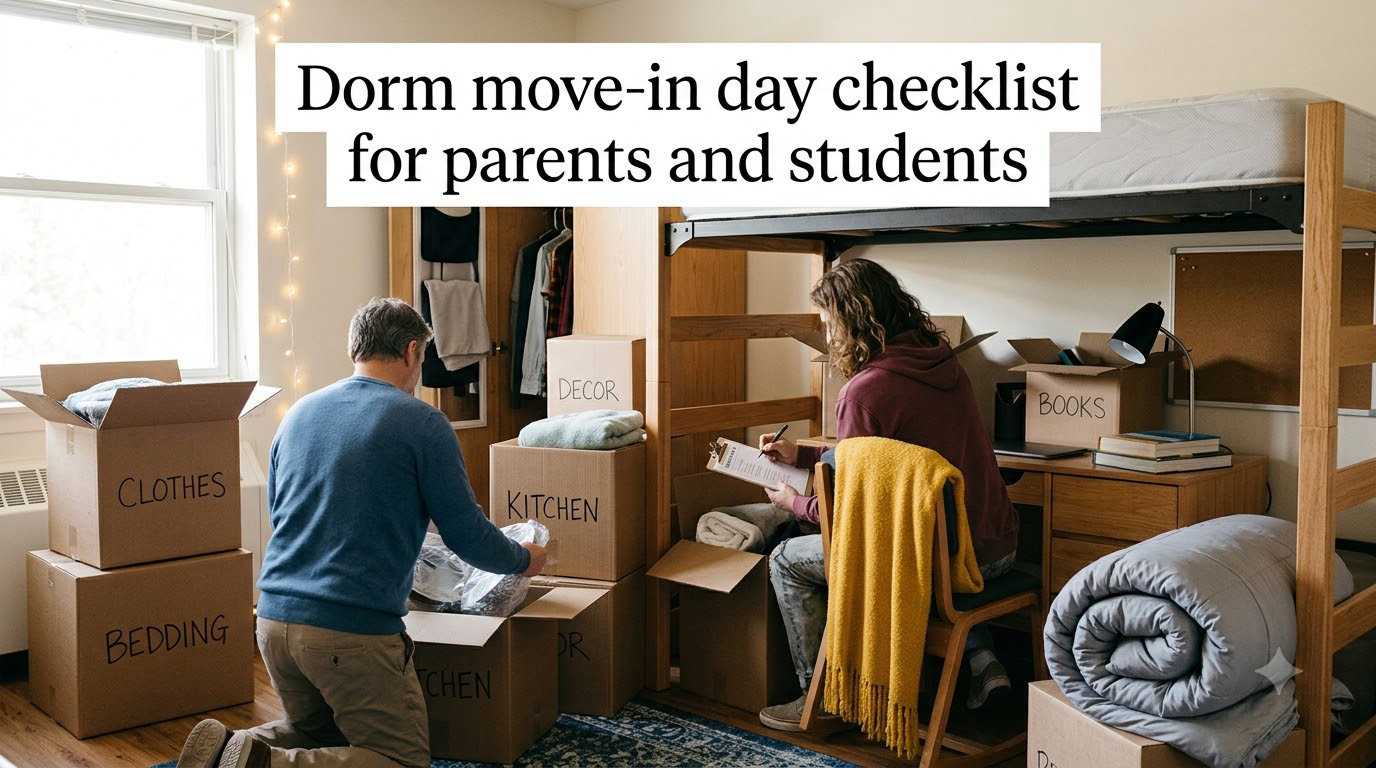
College move-in day is equal parts excitement and chaos. After helping my own kids move into three different dorms and talking with dozens of other parents, I’ve learned that having a solid dorm move-in day checklist makes the difference between a smooth transition and a stressful scramble. Whether you’re a parent trying to keep it together emotionally or a student wondering what actually fits in a tiny dorm room, this guide covers everything you need to know.
I put together this checklist based on real move-in experiences—what worked, what we forgot, and what we wish someone had told us beforehand. You’ll find preparation timelines, packing lists organized by category, tips from parents who’ve been through it, and advice for handling the emotional side that nobody talks about enough.
Table of Contents
What to Do Before Move-In Day: The Pre-Move Preparation Checklist
Good move-in days are built weeks before you ever pack a box. These early steps prevent headaches later and set you up for success when the big day arrives.
Check Your University’s Rules and Room Details
Every residence hall has its own set of rules about what you can and can’t bring. Some schools ban certain appliances, limit the number of power strips, or prohibit specific types of wall adhesive. Check your housing portal for the prohibited items list and room dimensions before you buy anything.
Most universities publish a list of built-in furniture—typically a bed, desk, chair, and dresser. Knowing this upfront prevents you from bringing duplicate items that just take up space. If the room dimensions are available, measure your storage bins and organizers at home to make sure they actually fit.
Coordinate With Your Roommate
Reach out to your roommate at least two weeks before move-in. A quick conversation prevents duplicate purchases of shared items like a mini fridge, microwave, rug, or TV. Decide who brings what, and split the cost of larger shared items if that works for both of you.
Ask about bed preferences too. Some dorm rooms have bunkable beds, and deciding early who wants top or bottom saves awkward conversations when you’re both standing in the room with armfuls of bedding.
Book Your Move-In Timeslot
Most universities assign specific move-in time windows to manage traffic flow. Book yours as soon as registration opens because early morning slots fill fast. Earlier arrivals mean less competition for elevator access, parking spots, and unloading zones.
If your school doesn’t offer timeslots, aim to arrive when doors first open. Midday is the busiest window at almost every campus, and forum discussions from real parents confirm that late arrivals lead to parking nightmares and long waits.
Prepare Important Documents
Gather these documents and keep them in a folder you can grab quickly:
- Student ID or acceptance letter
- Housing assignment and room number
- Move-in timeslot confirmation
- Emergency contact information
- Insurance cards (health and renter’s)
- Vehicle registration if bringing a car
- Power of attorney documents if desired
Some families also set up a power of attorney for healthcare and financial matters once a student turns 18. It’s not exciting paperwork, but it’s practical if an emergency comes up during the school year.
Start Packing Two Weeks Early
Begin with non-essentials—seasonal clothes, extra towels, decorative items. Save daily-use items for last. Create a packing timeline working backward from move-in day so you’re not throwing everything into bags the night before.
Dorm Room Essentials: The Complete Packing Checklist
This is the main checklist, broken down by category so you can shop and pack systematically. I’ve marked items that are easy to forget with a star—you’ll thank yourself later for remembering these.
Bedding Essentials
Dorm beds use Twin XL mattresses, which are five inches longer than standard twin. Regular twin sheets won’t fit. Buy Twin XL specifically—most college supply stores and online retailers carry them in early summer.
- Twin XL sheet sets (buy at least two sets for easy laundering)
- Twin XL mattress topper (memory foam makes a huge difference on dorm mattresses)
- Twin XL mattress protector or encasement
- Pillows and pillow protectors
- Lightweight blanket or comforter
- Throw blanket for studying on the bed
A mattress topper is one of the most recommended items from parents who’ve been through move-in. Dorm mattresses get heavy use, and a quality topper can be the difference between decent sleep and miserable nights.
Bathroom and Toiletries
What you bring depends on whether you have a private or communal bathroom. Communal bathrooms require a shower caddy to carry supplies back and forth—don’t skip this one.
- Shower caddy (mesh dries faster than plastic)
- Bath towels and washcloths (at least two sets)
- Shower shoes or flip flops
- Shampoo, conditioner, body wash
- Toothbrush, toothpaste, floss
- Hair dryer and styling tools
- Deodorant and personal care items
- Bathrobe (makes communal bathrooms less awkward)
- Over-the-door hooks for towels
Laundry supplies deserve their own mention. Pack a laundry bag or hamper that’s easy to carry, detergent pods (they’re less messy than liquid), stain remover, and a drying rack or clothesline for items that can’t go in the dryer.
School Supplies and Electronics
College coursework requires more tech than high school. Start with the essentials and add more once you see what your classes actually demand.
- Laptop and charger
- Surge protector with USB ports (dorms often have limited outlets)
- Power strip with a long cord
- Headphones or earbuds (essential for studying with a roommate)
- Desk lamp (LED stays cool and uses less energy)
- Notebooks, pens, and highlighters
- Planner or calendar (digital or paper)
- Calculator if your major requires one
- External hard drive or cloud storage setup
A quality surge protector is non-negotiable. Power surges can fry expensive electronics, and most dorms have old wiring. Look for one with at least six outlets and built-in USB charging ports.
Storage and Organization
Dorm rooms are small—typically 130 to 180 square feet shared between two people. Smart storage solutions help you use every available inch of space.
- Under-bed storage bins (check bed height first)
- Over-the-door organizer
- Stackable drawer units
- Desk organizer for supplies
- Closet organizer or hanging shelf
- Slim velvet hangers (save closet space)
- Command strips and hooks (most dorms ban nails and screws)
- Drawer liners
- Vacuum storage bags for bulky seasonal items
Command strips are your best friend in a dorm. They hold posters, fairy lights, mirrors, and small shelves without damaging walls. Bring more than you think you need—you’ll always find another spot that needs hanging.
Cleaning Supplies
Dorm rooms don’t come with housekeeping. A small cleaning kit keeps your space livable and helps you pass room inspections if your school does them.
- Disinfecting wipes
- All-purpose cleaner spray
- Small broom and dustpan or handheld vacuum
- Microfiber cloths
- Trash bags (small size for room trash can)
- Stain remover pen or spray
A handheld vacuum is worth the investment. Crumbs, dust, and small debris accumulate fast in a small shared space, and dragging a full-size vacuum down the hall gets old quickly.
Snacks and Convenience Items
The first week of college is hectic, and dining hall hours don’t always line up with your schedule. Having snacks on hand prevents hangry decision-making during orientation week.
- Reusable water bottle
- Water filter pitcher
- Non-perishable snacks (granola bars, nuts, crackers)
- Microwave-safe bowls and utensils (if microwaves are allowed)
- Coffee maker or electric kettle (check school rules first)
- Paper towels
- First aid kit with basic medications
What NOT to Bring to Your College Dorm
Saving space is just as important as packing the right items. Leave these things at home—they’re either prohibited, impractical, or simply not worth the limited room you have.
Prohibited at Most Schools
- Candles and incense (fire hazard—almost universally banned)
- Space heaters and heating coils
- Halogen lamps
- Hot plates and toaster ovens (check your specific school’s list)
- Weapons of any kind, including pocket knives on some campuses
- Extension cords (use surge protectors instead)
Takes Up Too Much Space
- Full-size iron and ironing board (use a steamer or the dorm laundry room)
- Excessive clothing (you’ll re-wear favorites—pack less than you think)
- Large gaming setups (monitor and console yes, full entertainment center no)
- Multiple pairs of shoes (limit to what you actually wear weekly)
- High school textbooks and notebooks (you won’t need them)
- Large furniture pieces
One of the biggest mistakes first-time movers make is bringing too much stuff. Real parents on forums consistently report that students come home at Thanksgiving break with bags of items they never touched. Start lean and have family mail extras later if needed.
Commonly Forgotten Dorm Items That Save the Day
These are the items that parents and students consistently wish they’d packed. They’re small, inexpensive, and easy to overlook on a standard checklist.
- Rubber mallet for lofting or adjusting bed frames
- Small tool kit (screwdriver, pliers, hammer, measuring tape)
- Step stool or small step ladder (dorm beds sit high, especially when lofted)
- Lint roller
- Sewing kit for quick repairs
- Extra-long phone charging cable
- Earplugs and a sleep mask
- Portable door lock or doorstop for move-in day
- Duct tape
- Batteries
- Extension cord rated for dorm use (not a basic extension cord)
- Clipboard for filling out forms during orientation
A doorstop is surprisingly useful on move-in day itself. Propping the door open while carrying loads of boxes makes the whole process faster. Just remember to close it once you’re done moving in—most schools require doors to stay closed during the year.
Move-In Day Tips for Parents and Students
The packing is done. The car is loaded. Now comes the actual day. Here’s how to make it run as smoothly as possible based on what experienced families recommend.
Car Packing Strategy
Load the car in reverse order of what you’ll need first. Items for the room go in last so they come out first at the dorm. Here’s a proven loading sequence:
- First in (comes out last): Seasonal storage bins, extra supplies, items that won’t be needed immediately
- Middle: Bedding, towels, clothing bags
- Last in (comes out first): Cleaning supplies, immediate essentials, school supplies for desk setup
Leave a small bag with snacks, water, phone chargers, and important documents accessible from the passenger seat. You’ll need these without unpacking the entire trunk.
Arrival and Logistics
Arrive during your assigned timeslot, but if you have flexibility, go early. Experienced families on Reddit and college forums consistently recommend arriving right when the window opens. You get better parking, shorter elevator waits, and more help from orientation volunteers.
Limit your moving crew to three or four people maximum. Dorm rooms are small, and too many helpers create congestion in hallways and rooms. One parent on the college subreddit put it well: “The room fits two people comfortably while unpacking. Any more and you’re tripping over each other.”
Bring a dolly or collapsible cart if you have one. Many schools provide them, but they run out quickly during peak hours. Having your own means you don’t have to wait or compete for equipment.
Set Up the Room Before Decorating
Resist the urge to hang posters and arrange photos first. Start with the functional setup:
- Clean surfaces with disinfecting wipes before placing anything
- Set up the bed with mattress topper and sheets
- Position furniture and storage units
- Organize school supplies at the desk
- Set up electronics and test outlets
- Then add personal touches and decorations
This order prevents having to move decorative items around while you’re setting up the more important functional pieces.
Emotional Support: What Nobody Tells You
Move-in day is emotional for everyone involved, and that’s completely normal. Parents experience the reality of their child leaving home. Students feel the pressure of independence mixed with homesickness before they’ve even unpacked.
Give yourselves permission to feel all of it. Don’t rush the goodbye, but don’t linger so long that your student feels they can’t start settling in. Many families find it helpful to plan a short goodbye activity—grabbing lunch together off campus or walking around the quad one more time before you leave.
Parents, have a plan for the drive home. Whether it’s calling a friend, listening to a podcast, or just letting yourself cry, knowing what you’ll do helps. And keep communication lines open—text first, don’t wait for them to reach out in those first few days. Students, don’t feel guilty about being excited to be on your own. That’s the whole point.
Budget-Smart Dorm Shopping Strategies
Dorm essentials add up fast. Between bedding, storage solutions, electronics, and toiletries, many families spend between several hundred and over a thousand dollars. Here are proven ways to cut costs without sacrificing quality.
Shop Strategically
- Start at thrift stores and Facebook Marketplace for storage bins, lamps, and decorative items
- Wait for back-to-school sales in July and August for bedding and electronics
- Check if your school has a dorm essentials sale or move-in pop-up shop
- Buy store-brand basics for cleaning supplies and toiletries
- Use student discounts through Amazon Prime Student or UNiDAYS
Split Costs With Your Roommate
Shared items like a rug, microwave, mini fridge, or TV don’t need two of each. Coordinate purchases and split the cost. Some roommates create a shared Venmo or spreadsheet to track who bought what and how to settle up.
Borrow Before You Buy
Ask family members and friends if they have extra bedding, storage containers, or electronics you can borrow for the year. Many households have spare items collecting dust that work perfectly fine in a dorm.
Frequently Asked Questions
What should I bring to my dorm on move-in day?
Bring all your packed essentials, plus a small carry bag with snacks, water bottles, phone chargers, important documents (student ID, housing assignment, move-in confirmation), and cleaning wipes. You’ll want cleaning supplies accessible first so you can wipe down surfaces before unpacking. A doorstop is also helpful for keeping the door open while you carry items in.
What are some tips for parents on college move-in day?
Limit your moving crew to three or four people since dorm rooms are small. Arrive during your assigned timeslot, preferably early. Let your student take the lead on room setup decisions. Bring snacks and water for everyone. Have a plan for the goodbye—it’s emotional, and that’s okay. Don’t linger too long, but don’t rush out either. Text your student later that evening to check in.
How do you prepare for college move-in day?
Start preparing two to four weeks before move-in. Check your university’s prohibited items list and room dimensions. Coordinate with your roommate to avoid duplicate purchases. Book your move-in timeslot early. Begin packing non-essentials first, leaving daily-use items for last. Gather important documents, set up any needed insurance, and create a car packing plan so loading and unloading go efficiently.
Do parents go to college move-in day?
Yes, most parents attend college move-in day. It’s a major milestone for the family, and parents typically help carry items, set up furniture, and handle logistics. Some universities limit the number of people who can enter the residence hall, so check your school’s policy in advance. If you can’t attend in person, coordinate with family friends or ask if the school offers move-in assistance volunteers.
Final Thoughts
A great dorm move-in day doesn’t happen by accident. The families who have the smoothest experiences are the ones who start preparing weeks in advance, communicate with roommates, and pack smart rather than packing everything. This dorm move-in day checklist covers the logistics, but the emotional side matters just as much. Give yourselves grace on the big day—things will go wrong, you’ll forget something, and that’s completely fine.
Print this checklist, share it with your student, and start crossing items off together. The more prepared you both feel going in, the more you can actually enjoy the moment. College move-in day marks the start of something incredible for your family. Make it a good memory.