
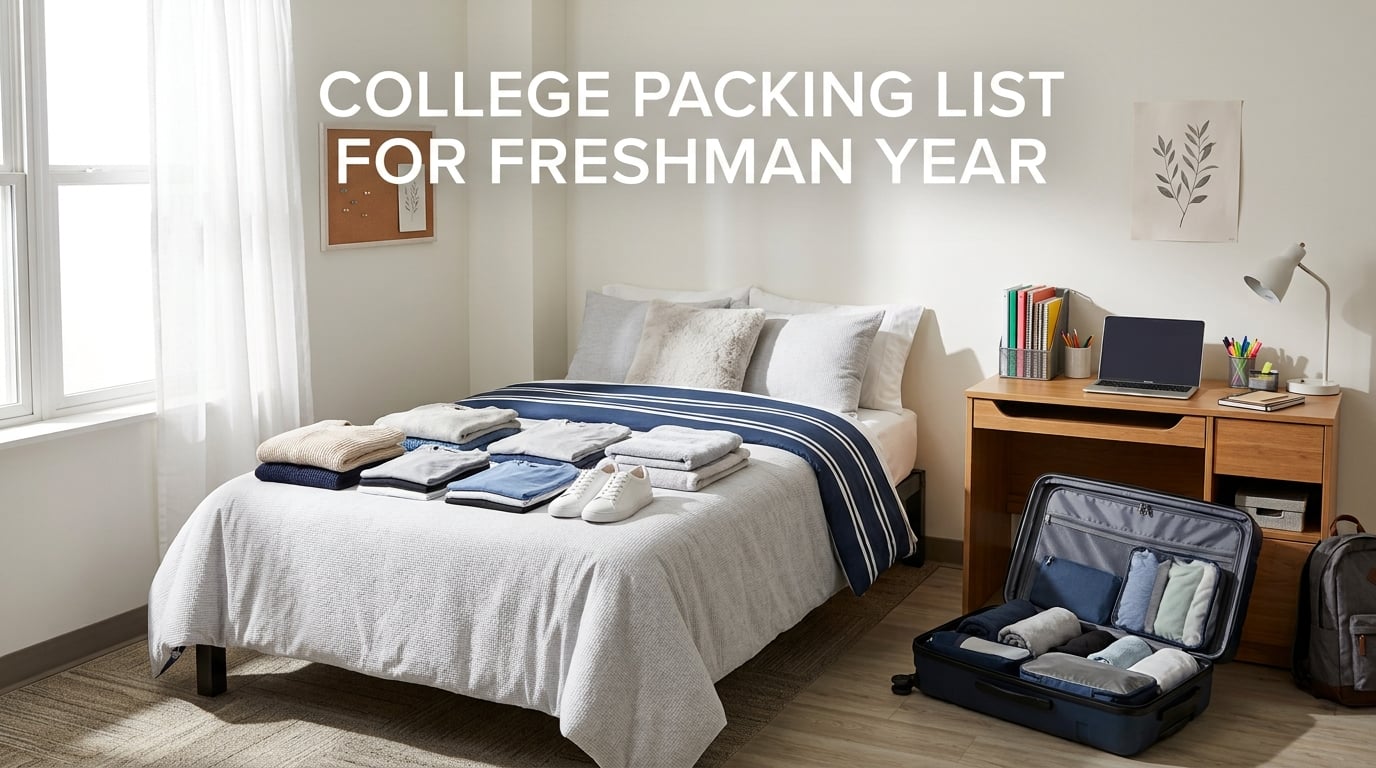
Starting college is one of life’s biggest transitions, and having the right college packing list for freshman year can mean the difference between a smooth move-in day and a stressful scramble to buy forgotten essentials. After helping hundreds of students prepare for dorm life, we’ve built this guide to cover every category — from bedding and bathroom supplies to documents and tech gear — so you arrive prepared without overpacking a tiny dorm room.
This checklist is organized by category so you can shop and pack room by room. Whether you’re moving across town or across the country, this list covers dorm essentials that real freshmen and Reddit users actually recommend. We’ve included items most people forget, plus a full section on what NOT to bring (and why).
If you’re a parent reading this, you’ll find this list tackles the items your student needs AND the items that waste money and dorm space. We’ve incorporated real feedback from Reddit’s r/college community, tips from university housing offices, and insights from students who’ve been through move-in day themselves.
Let’s get into it.
Table of Contents
College Packing List for Freshman Year: Before You Start
Before you toss a single item into a box, take these steps. Skipping this phase is the number-one reason students show up with banned items or duplicates their roommate already bought.
Check Your Dorm Rules
Every residence hall has a list of prohibited items. Candles, hot plates, space heaters, and certain types of extension cords are commonly banned. Download your housing contract and read it thoroughly — this takes 15 minutes and saves you from having to throw things away on move-in day.
Contact Your Roommate
Coordinate big-ticket shared items before buying anything. A mini fridge, microwave, TV, and rug are items you only need ONE of in the room. Most housing portals provide roommate contact info. A quick text or email now prevents duplicate purchases and wasted money.
Review Your Housing Contract
Your contract tells you what furniture is provided (usually a bed, desk, chair, and dresser), the bed size (typically Twin XL), and whether you’re in a communal or suite-style bathroom. This changes your packing list significantly.
Pro tip: Some dorms provide a micro-fridge unit. If yours does, you don’t need to buy or rent one separately.
Bedding and Dorm Room Essentials
Your bed is the centerpiece of your dorm room and where you’ll spend roughly 8 hours a night. Getting the right bedding makes a massive difference in sleep quality — and dorm mattresses are notoriously uncomfortable.
The Twin XL Sizing Note
Most dorm beds are Twin XL (extra long), which is 5 inches longer than a standard Twin. Regular Twin sheets will not fit. Always look for “Twin XL” on the label. This is the single most important fact on any college packing list for freshman year.
What to Pack for Bedding
Twin XL sheets (2 sets) — Get two sets so you always have a clean set while the other is in the wash. Cotton or cotton-blend works well for most climates.
Twin XL mattress topper — This is the most recommended item on every dorm packing list and forum thread. Dorm mattresses are thin and worn. A 2-3 inch memory foam or gel topper transforms your sleep.
Pillows (2-3) — Bring your preferred pillow from home plus one extra for propping up while studying in bed.
Comforter or duvet (Twin/Twin XL size) — A comforter that’s easy to wash is ideal. Skip dry-clean-only options.
Lightweight blanket or throw — For layering in varying temperatures and for movie nights on the common room couch.
Bed risers — These lift your bed 3-6 inches, creating valuable under-bed storage space. Some dorms provide adjustable-height beds, so check first.
Roommate tip: Coordinate sheet colors or patterns if you want a cohesive room look. This matters more than you’d think when you’re sharing a 12-by-15-foot space.
Dorm Room Storage Hacks
Dorm rooms average just 150-200 square feet, and every inch counts. Over-the-door organizers work for shoes, accessories, and toiletries. Under-bed storage bins are perfect for seasonal clothes, extra bedding, and bulk supplies. Command hooks (not nails — most dorms ban wall damage) let you hang bags, towels, hats, and decorations without losing floor space. Stackable drawer units fit inside closets and give you extra organization that the provided dresser can’t match.
A small bedside caddy that clips to your bed frame keeps your phone, charger, water bottle, and a book within arm’s reach. This is especially useful if your bed is on risers and the floor isn’t easily accessible.
Bathroom and Shower Essentials
Whether you have a communal bathroom down the hall or a suite-style bathroom you share with 3-4 people, your bathroom setup needs to be portable and organized.
Must-Have Bathroom Items
Shower caddy — A waterproof, mesh or plastic caddy that carries all your toiletries to and from the bathroom. This is non-negotiable for communal bathrooms.
Shower shoes (flip-flops) — Wear these every time you use a communal shower. Fungal infections are real. Get a cheap pair of rubber flip-flops.
Bath towels (3-4) — Enough so you’re not doing laundry every two days. Quick-dry microfiber towels save space.
Hand towels and washcloths (2-3 each) — For your room and for the bathroom.
Bathrobe — Walking back from a communal bathroom in a robe is far easier than balancing clothes and a caddy.
Over-the-door towel hook or rack — Dorm rooms have limited towel-drying space. This solves the problem immediately.
If you’re in a suite-style bathroom, you may also want a small bathroom cleaning caddy with your own supplies. Don’t assume your suitemates will clean on the same schedule you do.
Toiletries and Personal Care
Pack a month’s supply of toiletries to start. You can buy more locally — don’t stockpile a year’s worth in a tiny dorm. Here’s what to bring:
Shampoo and conditioner
Body wash or soap
Toothbrush, toothpaste, and floss
Deodorant
Razor and shaving cream
Skincare basics (face wash, moisturizer, sunscreen)
Hairbrush or comb and hair ties
Nail clippers and tweezers
Lip balm
Prescription medications (bring enough for the semester plus a copy of the prescription)
First Aid Kit
This is one of the most commonly forgotten items. Pack a small kit with band-aids, pain relievers (ibuprofen and acetaminophen), antacid, allergy medication, cold medicine, a digital thermometer, and any personal medications. When you’re sick at 11 PM, you don’t want to walk to a drugstore.
Clothing, Shoes and Accessories
The biggest clothing mistake freshmen make is bringing too much. Dorm closets are small — typically 2-3 feet of hanging space and a few shelves. Bring what you’ll actually wear and plan to swap seasonal items when you visit home.
What to Pack
Everyday class clothes (2 weeks’ worth) — T-shirts, jeans, shorts, casual dresses, or whatever your style is. You’ll do laundry weekly.
Professional or business casual outfit (1-2) — For career fairs, presentations, interviews, or club events.
Workout clothes and athletic shoes — If you plan to use the campus gym or play intramural sports.
Sleepwear and loungewear — Comfortable clothes for studying and sleeping.
Weather-appropriate outerwear — A rain jacket, winter coat, or windbreaker depending on your campus climate.
Formal outfit (1) — For formal dances, banquets, or special events.
Comfortable walking shoes — You’ll walk more in college than you expect. Most campuses require 15-20 minutes of walking between classes.
Climate Considerations
If you’re attending school in a colder climate, invest in a quality winter coat, waterproof boots, warm socks, and layering pieces. If your campus is warm year-round, you can skip heavy layers but should still bring a light jacket for over-air-conditioned classrooms.
Laundry tip: Pack a laundry hamper or bag that’s easy to carry. You may be walking to a laundry room on another floor.
School Supplies and Desk Organization
Your desk is your study space, lecture prep station, and sometimes your dining table. Set it up for productivity from day one.
Essential School Supplies
Notebooks or a binder with loose-leaf paper — Even if you take notes on a laptop, many students find handwriting helps retention.
Pens, pencils, highlighters, and sticky notes — Basic supplies you’ll reach for daily.
Planner or calendar — Digital or paper. College deadlines stack up fast, and there’s no teacher reminding you daily.
Laptop and charger — This belongs on both the school supplies and electronics lists. It’s that important.
Desk organizer or pencil cup — Keeps your small supplies from sprawling across your workspace.
Desk lamp — Dorm overhead lighting is often harsh and dim. A good LED desk lamp with adjustable brightness protects your eyes during late-night study sessions.
Bookends or small shelf — For textbooks you don’t want falling over.
Skip the printer unless your school specifically requires one. Most campuses offer free or low-cost printing in libraries and computer labs. Reddit users consistently report that their dorm printer collected dust.
Documents and IDs You Must Bring
Forget these and you can’t move in, set up a bank account, or get your student ID. Keep them in a folder in your carry bag — never pack them in a box that goes in the trunk.
Essential Documents Checklist
Government-issued photo ID (driver’s license or passport)
Social Security card
Health insurance card (and a copy of your policy)
Immunization records — many universities require proof of certain vaccinations
Financial aid documents and award letters
Bank account information and debit card
Car registration and parking permit (if bringing a vehicle)
Housing assignment and move-in instructions
Emergency contact list (written down, not just in your phone)
Copy of your class schedule
International Students
If you’re coming from abroad, you’ll also need your passport, visa, I-20 or DS-2019 form, SEVIS fee receipt, and copies of all admission documents. Carry these on your person during travel — never in checked luggage. Open a U.S. bank account as soon as possible after arrival.
International students should also bring a folder with translated academic records, medical records (translated if needed), and any scholarship or sponsorship documentation. Having digital copies stored in cloud storage provides a backup in case physical documents are lost during travel. It’s wise to contact your school’s international student office before arrival to confirm exactly which documents they need on day one.
Electronics and Tech Gear
Technology is central to college life. You’ll use it for coursework, communication, entertainment, and staying organized. Here’s what to pack:
Must-Have Electronics
Laptop and charger — The single most important tech item. Check your major’s requirements; engineering and design students may need more powerful machines.
Surge protector (not just a power strip) — Dorm electrical systems are old and unreliable. A surge protector with 6-8 outlets and USB ports protects your devices and gives you enough outlets for everything.
Extension cord — Dorm outlets are often in inconvenient spots. A heavy-duty extension cord gives you flexibility.
Headphones or earbuds — Essential for studying with a roommate in the room, attending online lectures, and blocking out dorm noise.
Phone and charger — Bring an extra charging cable for your backpack.
Portable battery pack — For long days on campus when outlets aren’t available.
Nice-to-Have Electronics
Streaming device (Roku, Fire Stick) — If you’re bringing a TV. Coordinate with your roommate first.
USB flash drive or external hard drive — For backing up important files.
Ethernet cable — Some dorm Wi-Fi is unreliable. A wired connection is faster and more stable for exams and video calls.
Small fan — Many older dorms don’t have great air conditioning. A desk or clip-on fan helps with sleep.
Cleaning and Laundry Supplies
You’re responsible for keeping your space clean now. Nobody’s going to tidy up after you. These items keep your room livable and your clothes fresh.
Laundry Essentials
Laundry hamper or bag (collapsible ones save space)
Laundry detergent pods or liquid (pods are easier to carry)
Dryer sheets or wool dryer balls
Stain remover pen or spray
Drying rack for delicates
Cleaning Supplies
Disinfecting wipes — for surfaces, desk, and doorknobs
All-purpose cleaner spray
Small broom and dustpan or handheld vacuum
Paper towels
Trash bags (small, for your room’s trash can)
Roommate coordination: You don’t need two vacuums. Split shared cleaning supplies with your roommate and agree on a basic cleaning schedule.
Kitchen Basics and Snacks
If you’re on a meal plan, you won’t need much kitchen gear. But having some basics for your room saves money on late-night cravings and gives you breakfast options when the dining hall isn’t open.
Kitchen Items to Consider
Reusable water bottle — Stay hydrated. A filtered bottle like a Brita or Brita-style bottle is popular on campuses with older plumbing.
Microwave-safe dishes and utensils — A bowl, plate, mug, and a few pieces of silverware. Keep it minimal.
Mini fridge — Coordinate with your roommate. Most dorms allow one per room. Stock it with drinks, yogurt, fruit, and snacks.
Microwave — If allowed. Some dorms provide one or have a communal kitchen with one available.
Coffee maker or electric kettle — A single-serve coffee maker or kettle saves money on daily coffee runs. Check if your dorm allows them.
Reusable bags — For grocery runs and carrying items to the dining hall.
Smart Snacking
Stock up on shelf-stable snacks: granola bars, nuts, dried fruit, crackers, instant oatmeal, and popcorn. These keep you fueled during study sessions without requiring a trip across campus. Having snacks on hand also helps when the dining hall is closed or when you need a quick bite between classes.
Sustainability Tip
Consider choosing reusable items where possible: a reusable water bottle, beeswax wraps instead of plastic wrap, and bamboo utensils instead of disposable ones. You’ll reduce waste and save money over the semester. A set of reusable grocery bags also makes shopping trips easier and cuts down on plastic bag clutter in your room.
What NOT to Bring to College (and Why)
This section is just as important as what to pack. Overpacking is the most common freshman mistake, and dorm rooms are typically 150-200 square feet. Every item needs to earn its space.
Items to Leave at Home
Candles and incense — Banned in nearly every dorm due to fire hazards. Battery-operated LED candles work as a substitute.
Space heaters and hot plates — Almost universally prohibited. Your dorm has heating.
Too many clothes — Reddit users consistently say they brought twice as many clothes as they needed. Pack for two weeks and swap seasonal items when you visit home.
Your entire book collection — Bring a few favorites. You’ll accumulate new books and won’t have time to reread old ones. Use the campus library.
Expensive jewelry or irreplaceable items — Dorm rooms aren’t the most secure environment. Leave valuable or sentimental items at home.
Large furniture — The room comes furnished. Bean bag chairs, large shelving units, and extra desks don’t fit. Wait until you’ve measured the space.
Printer (usually) — Most campuses have free printing. If your major requires a printer, wait until you know for sure.
Bulky winter gear (if far from home) — Ship it later or have your family bring it during a visit. Don’t sacrifice half your car space for a parka you won’t need for three months.
Iron and ironing board — A handheld steamer is smaller and works better. Or just use the wrinkles-release spray.
TV (if you have a laptop) — Many students find they never use a separate TV. Stream on your laptop until you know you want one.
The Overpacking Test
Before packing any item, ask yourself: “Will I use this at least once a week?” If the answer is no, leave it behind. You can always buy things after move-in once you know what you actually need.
Move-In Day Tips and Logistics
The day itself can be chaotic. A little planning turns a stressful day into a smooth one.
Before You Leave Home
Label everything — Boxes, bins, and bags should have your name, room number, and phone number.
Pack strategically — Put items you’ll need first (bedding, toiletries, cleaning supplies) in separate, clearly marked bags.
Check arrival time slots — Most schools assign move-in time slots. Arrive during yours to avoid long waits.
Bring a tool kit — A basic toolkit with a screwdriver, hammer, and pliers helps with bed risers, shelving assembly, and hanging items.
What to Pack Last (So It’s Accessible First)
These items should be the last ones loaded and the first ones out:
Cleaning supplies and paper towels (clean the room before unpacking)
Bedding (make the bed first — you’ll be tired later)
Toiletries and shower caddy
Phone charger and extension cord
Snacks and water bottle
Arrival Day Strategy
Get to campus early if you can. Parking and elevator access are easier in the morning. Bring a wagon or cart if your school doesn’t provide them — carrying items from a distant parking lot gets exhausting fast. And don’t forget to eat breakfast. Move-in day is a marathon, not a sprint.
One last tip: Be friendly to your RA and neighbors on day one. These relationships make your entire freshman year better. Your RA is your first resource for roommate conflicts, campus questions, and emergency situations. Introduce yourself, learn their name, and attend the first floor meeting. Building that connection early pays off all year.
Frequently Asked Questions
What to buy for freshman year of college?
Start with the absolute essentials: Twin XL bedding (sheets, comforter, mattress topper), a shower caddy and shower shoes, toiletries, a surge protector, school supplies (notebooks, pens, planner), and your documents (ID, insurance card, financial aid paperwork). Everything else can wait until you’ve moved in and know what you actually need.
How far in advance should I start packing for college?
Begin making a list 4-6 weeks before move-in day. Start buying big items (bedding, electronics, storage bins) 3-4 weeks out. Pack clothing and personal items 1-2 weeks before. Save labeling, organizing, and loading the car for the final 2-3 days. This timeline prevents last-minute panic and gives you time to coordinate with your roommate.
What not to bring to a dorm?
Leave behind candles, incense, space heaters, hot plates (usually banned), excessive clothing, large furniture, expensive jewelry, and bulky items you won’t use weekly. Dorm rooms are 150-200 square feet, so every item must earn its space. Most freshmen overpack — bring two weeks of clothes, not your entire closet.
What is a normal outfit to wear to class for a college freshman?
Most college campuses are casual. Jeans, t-shirts, sneakers, and hoodies are completely normal. You don’t need a new wardrobe. Pack what you’re comfortable in, add one business-casual outfit for career events, and one formal outfit for special occasions. Comfortable walking shoes matter more than style — you’ll be walking 15-20 minutes between classes.
What do college freshmen need most that they forget?
The most commonly forgotten items are a first aid kit with basic medicines, a mattress topper (dorm mattresses are uncomfortable), shower shoes for communal bathrooms, a surge protector with enough outlets, and a laundry hamper that’s easy to carry. Many students also forget to bring their immunization records and health insurance card.
Conclusion
A solid college packing list for freshman year takes the stress out of one of the biggest transitions you’ll ever make. Use this checklist as your starting point, coordinate with your roommate, check your dorm’s specific rules, and remember — you can always buy things after you move in. The goal isn’t to bring everything; it’s to bring the right things so your first semester starts smoothly.