
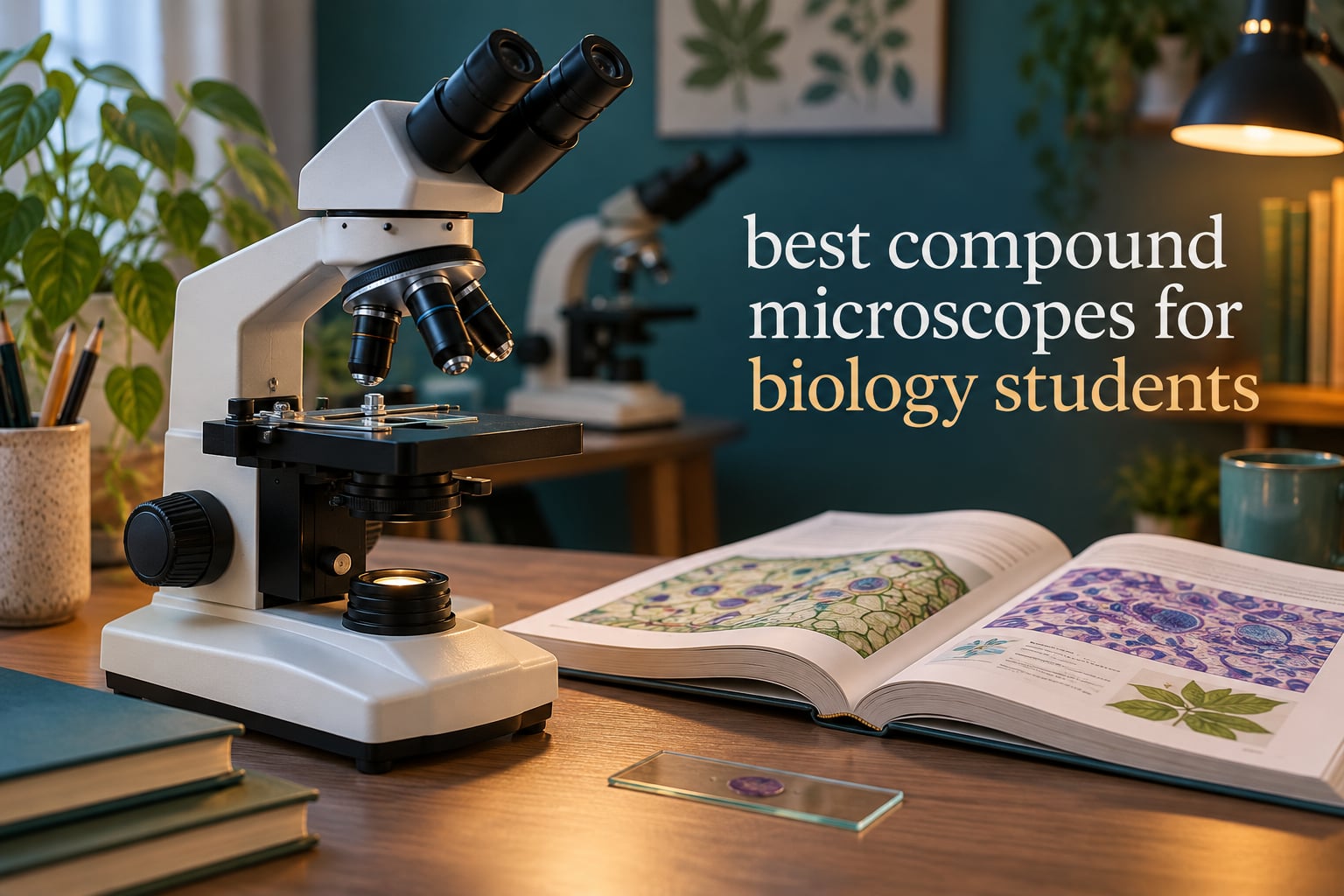
The instrument sitting in almost every biology classroom and undergraduate lab is a compound light microscope: a two-lens system where a revolving nosepiece of objectives multiplies a 10X eyepiece to give a total magnification of roughly 40X to 1000X. If you are shopping for the best compound microscopes for biology students, that four-objective set of 4X, 10X, 40X and 100X is the baseline every pick below clears or deliberately does not.
Owning a personal scope is not about replacing department equipment. It is about removing the queue. Forum threads about microscope buying keep circling the same frustration: shared lab scopes are booked, shared lab scopes are broken, and shared lab scopes belong to the person who got there first. A personal instrument in your room is the fix, and it is also the only way to photograph a specimen for a lab report at 11pm.
We compared ten compound microscopes across objective sets, head type, stage design, condenser, illumination and included consumables to build this 2026 roundup. We also flagged the two things that get new students into trouble: advertised magnification that is just eyepiece multiplication, and a missing Abbe condenser that leaves first-year students blaming their own technique for blurry slides.
Table of Contents
Top 3 Compound Microscopes for Biology Students (October 2026)

TOMLOV 40X-2000X Student Scope
- Achromatic 4X/10X/40X objectives
- Coaxial coarse and fine focus
- Dual LED top and bottom
- Prepared and blank slides
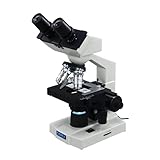
OMAX M82ES Binocular 2000X
- 100X oil objective included
- NA1.25 Abbe condenser
- Double layer X-Y mechanical stage
- 5 year warranty
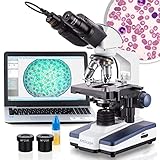
AmScope B120C-E1 LED Binocular
- Binocular head with diopter adjustment
- Abbe condenser with dimmable LED
- Bundled 1.0 MP USB camera
- 5 year warranty
All 10 Compound Microscopes Side by Side in 2026
| Product | Specs | Action |
|---|---|---|
| TOMLOV 40X-2000X Student Scope |
|
Check Latest Price |
| OMAX M82ES Binocular 2000X |
|
Check Latest Price |
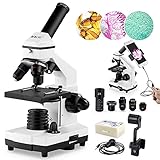 BEBANG 2000X Student Kit BEBANG 2000X Student Kit |
|
Check Latest Price |
 PalliPartners 100X-2000X Kit PalliPartners 100X-2000X Kit |
|
Check Latest Price |
| AmScope B120C-E1 LED Binocular |
|
Check Latest Price |
 SWIFT SW380T Trinocular SWIFT SW380T Trinocular |
|
Check Latest Price |
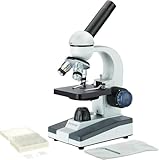 AmScope M150C-PS25 Portable AmScope M150C-PS25 Portable |
|
Check Latest Price |
 AmScope M158C-E Rotating Head AmScope M158C-E Rotating Head |
|
Check Latest Price |
 JECONE 40X-2500X JECONE 40X-2500X |
|
Check Latest Price |
 Celestron CM800 Monocular Celestron CM800 Monocular |
|
Check Latest Price |
1. TOMLOV 40X-2000X Student Scope: Our First Pick for a Reason
TOMLOV Compound Microscope with Coarse & Fine Focus for Students, 40X-2000X
40X-2000X
Monocular head
4X/10X/40X achromat
LED top and bottom
2.7 lb
1 year warranty
Pros
- Coaxial coarse and fine focus makes focusing smooth
- Dual LED illumination handles slides and surface objects
- Three achromatic objectives reduce color fringing
- 6-position disc diaphragm with color filters
- Five prepared and five blank slides included
Cons
- Usable magnification is far below the advertised figure
- Monocular head tires you during long sessions
- Focus tension loosens with use
Our first recommendation is decided by the review record rather than the spec sheet. It carries a 4.5 rating across more than 2200 ratings, the largest review volume of any 4.5-star model here, and buyers with biology backgrounds describe the optics as genuinely good for locating and inspecting specimens. The coaxial coarse and fine focus knobs are integrated, so the fine knob sits in the same axis as the coarse knob instead of on a separate rail, and that one design choice does more for a beginner than any extra advertised magnification.
Dual LED illumination covers both worlds: the bottom light handles prepared slides and pond water mounts, while the top light lets you look at a leaf, a hair, a coin or an insect without making your own slide. The 6-position disc diaphragm adds clear, yellow, purple, blue, green and red positions to dial contrast on pale or stained samples. Reviewers with lab experience do caution that the high-power settings are marketing rather than usable resolution, so at 2.7 pounds with a monocular head and a one-year warranty, treat this as the training wheel that teaches you proper technique before you buy a scope with an oil objective.
Who this scope suits
Suited to an intro biology course, a high school lab, a homeschool family, or anyone who wants to learn the workflow: find at 40X, centre, switch to 10X, then 40X. The included prepared and blank slides plus round coverslips mean you can run a real first session the day it arrives, with no extra purchase, and at 2.7 pounds and 11.81 inches tall it stores upright between terms without becoming a lifting problem when you carry it back to campus.
Who should skip it
Skip it if your course list includes microbiology or you need to document specimens, because there is no 100X oil objective and no camera port, and there is no Abbe condenser either, so contrast control is limited. Anyone planning three or four hours at the scope in one sitting should also look elsewhere, since a monocular head means one eye is closed throughout.
2. OMAX M82ES Binocular 2000X: The Full Lab-Technique Value Pick
Awarded Best Compound Microscope 2016 – OMAX 40X-2000X Lab LED Binocular Microscope with Double Layer Mechanical Stage w Blank Slides Covers and Lens Cleaning Paper
40X-2000X
Binocular head
DIN 4X/10X/40X/100X oil
NA1.25 Abbe condenser
9.6 lb
5 year warranty
Pros
- 100X oil immersion objective plus WF20X eyepieces
- Binocular head with interpupillary and diopter adjustment
- Double layer X-Y mechanical stage with scales
- NA1.25 Abbe condenser with iris diaphragm
- Solid metal frame with 5 year warranty
Cons
- Heavier and bulkier than student scopes
- No camera included for documentation
- Field of view changes when switching eyepiece pairs
This is the pick we send people to when they ask which scope teaches real laboratory technique without a used Olympus. The optical path is complete: achromatic DIN 4X, 10X, 40X(S) and 100X(S, oil) objectives on a revolving quadruple nosepiece, paired with WF10X and WF20X eyepieces. That means oil immersion is in the box, which is the single most common gap in the cheaper picks on this list.
The 45-degree inclined binocular head swivels through 360 degrees, with a sliding interpupillary distance of 55-75mm and diopter adjustment on both eyetubes, so two people of different builds can share the instrument and a single user can correct for differences between their own eyes.
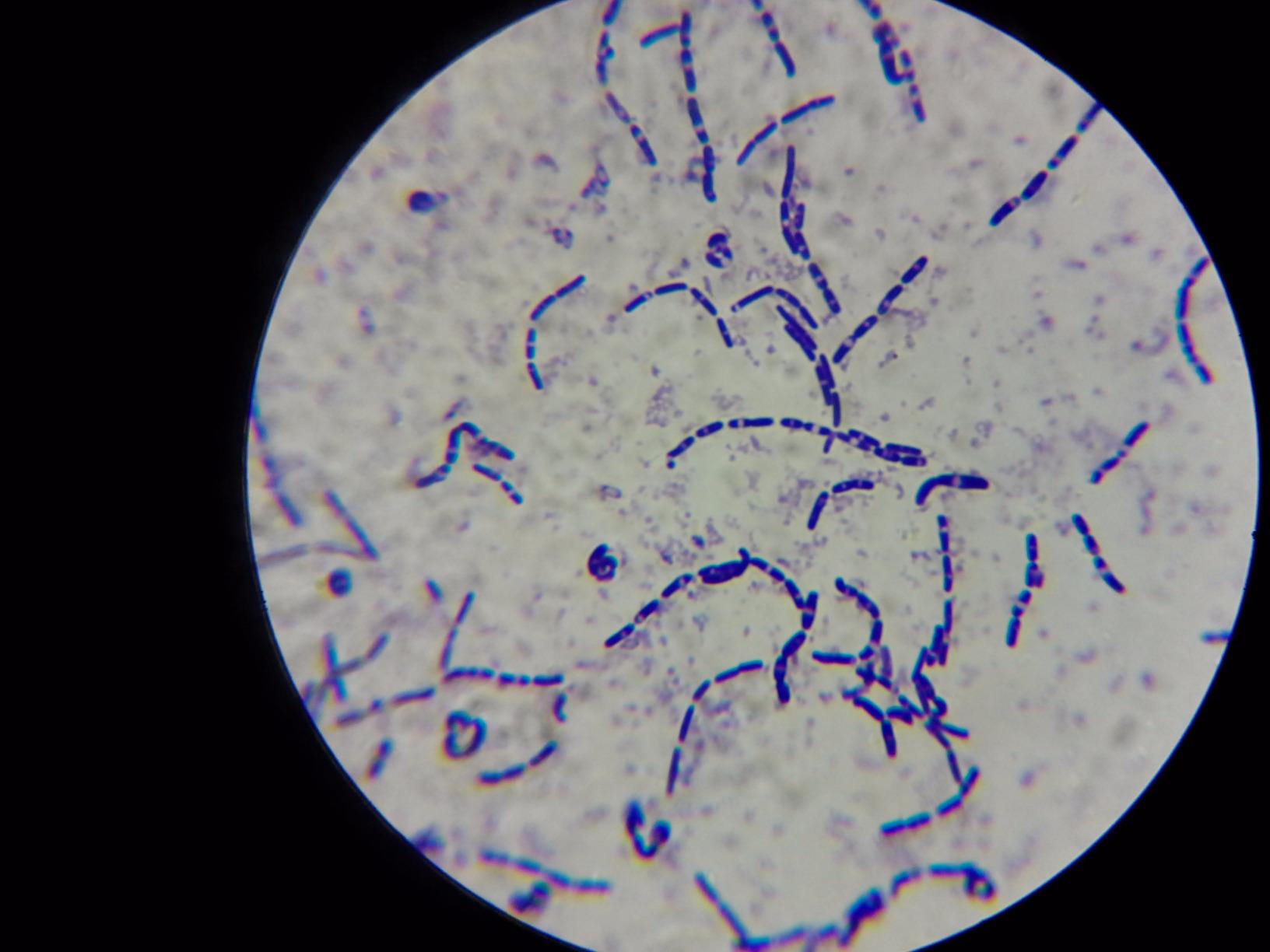
The double layer X-Y mechanical stage is 115mm x 125mm with a 70mm x 30mm translation range and a stage lock, which is the difference between hunting for a cell across the slide and sliding it into the field deliberately.
Light control is textbook: an NA1.25 Abbe condenser with iris diaphragm and adjustable transmitted LED illumination. The NA1.25 figure matters because a condenser with a lower numerical aperture cannot deliver the light cone the 100X objective needs, and a scope without a real Abbe condenser is the classic reason students think their slides are bad.
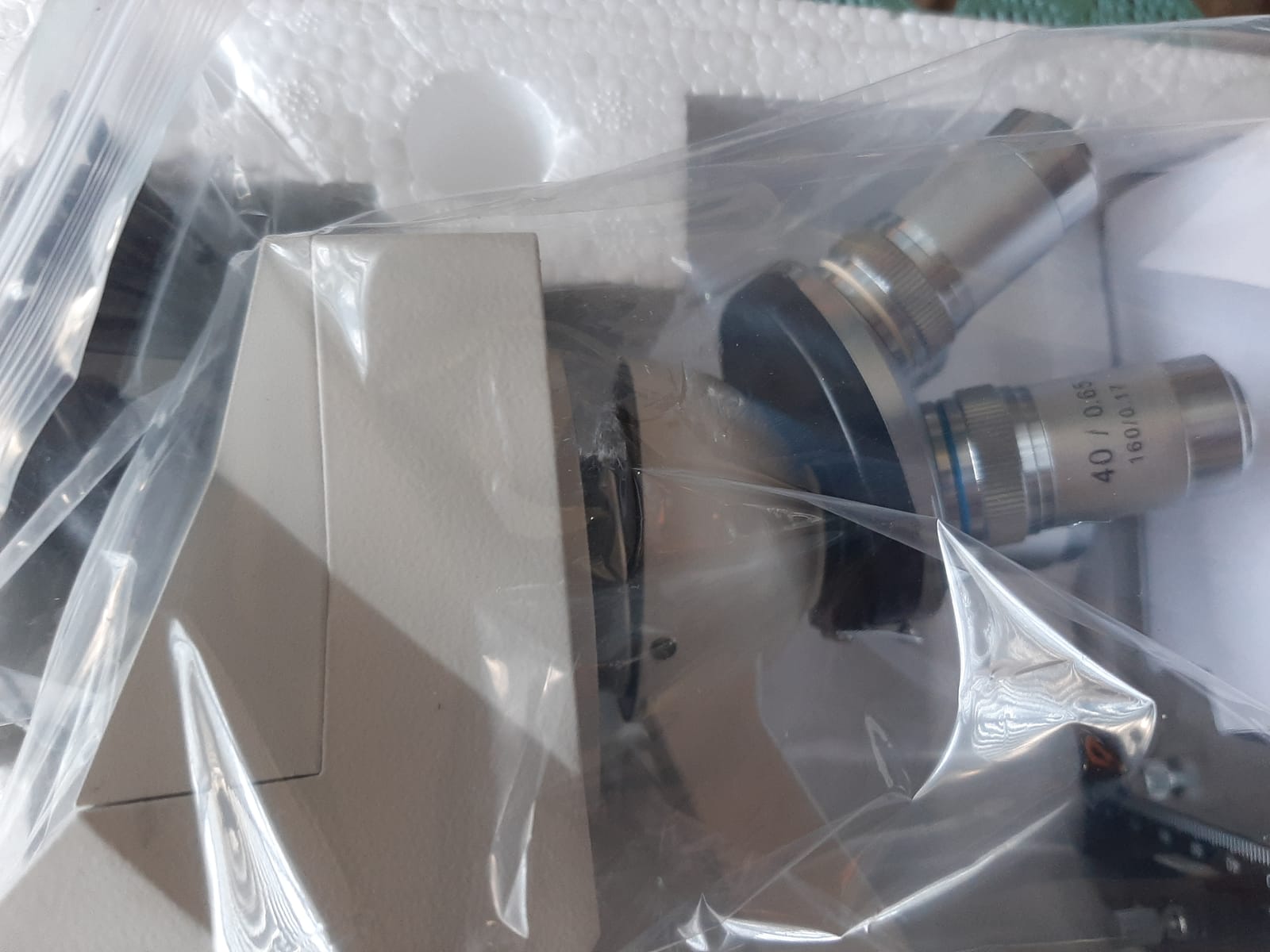
What you get in the box
Unusually generous for a lab instrument: 100 blank glass slides, 100 cover slips and 50 sheets of lens cleaning paper, plus a 5-year manufacturer warranty covering defects in material and workmanship. A Reddit user in r/biology picked up an OMAX 40X-2000X LED binocular and called it good value while admitting it was far from perfect, and that matches what we see.
Where it falls short
At 9.6 pounds and 13 inches tall, this is the heaviest of the ten scopes here. It is a bench scope, not a carry-around scope, so plan a permanent spot rather than a dorm shelf. There is no camera included, and switching between the WF10X and WF20X eyepieces changes the field of view enough that you refocus every time.
3. BEBANG 2000X Student Kit: A Real Microscope Instead of a Plastic Toy
2000X Compound Microscope for Kids Adults: Microscope for Biology Education
100X-2000X
Monocular head
4X/10X/40X objectives
0.65 NA condenser
2.4 lb
1 year warranty
Pros
- An accessible first real microscope for students and families
- Coarse and fine focus on a solid metal frame
- Dual top and bottom LED with condenser
- Phone adapter and 15-piece slide set
- AC and battery power
Cons
- 0.65 NA condenser gives weak resolution
- 2000X figure is eyepiece multiplication
- Some scopes report a coarse focus lacking fine control
This model carries more ratings than any other scope in the group and a 4.3 average, which tells you something useful about the entry tier. Buyers consistently describe it as a solid first real microscope for kids and students that clearly outperforms plastic toy scopes. The frame is metal, not injection-moulded plastic, and both coarse and fine knobs are present.
Six magnification settings are listed, from 100X to 2000X, built from 4X, 10X and 40X objectives with a WF25X eyepiece and a 2X add-on lens. The accessories are the real story: a phone adapter, a wire shutter, 10 operating accessories, a 15-piece slide set and a carrying bag. That kit is what makes it attractive to a family buying for a child.
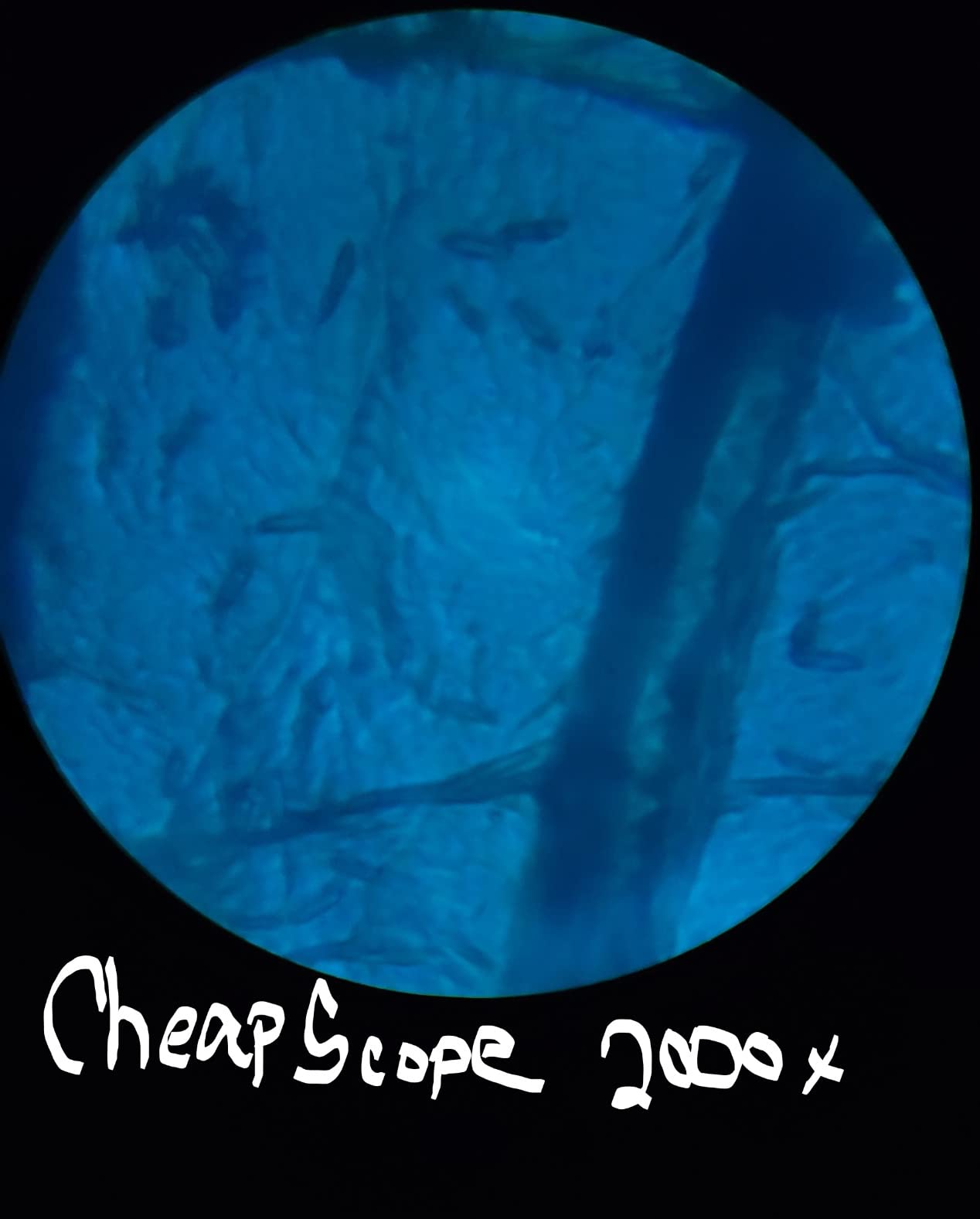
Dual top and bottom LED illumination covers prepared slides and opaque objects, and the condenser is a 0.65 NA single lens with a disc diaphragm. Power comes from AC or battery, so it works for field work and home use without hunting for an outlet. At 2.4 pounds it moves between a dorm room and a biology lab without any real effort.
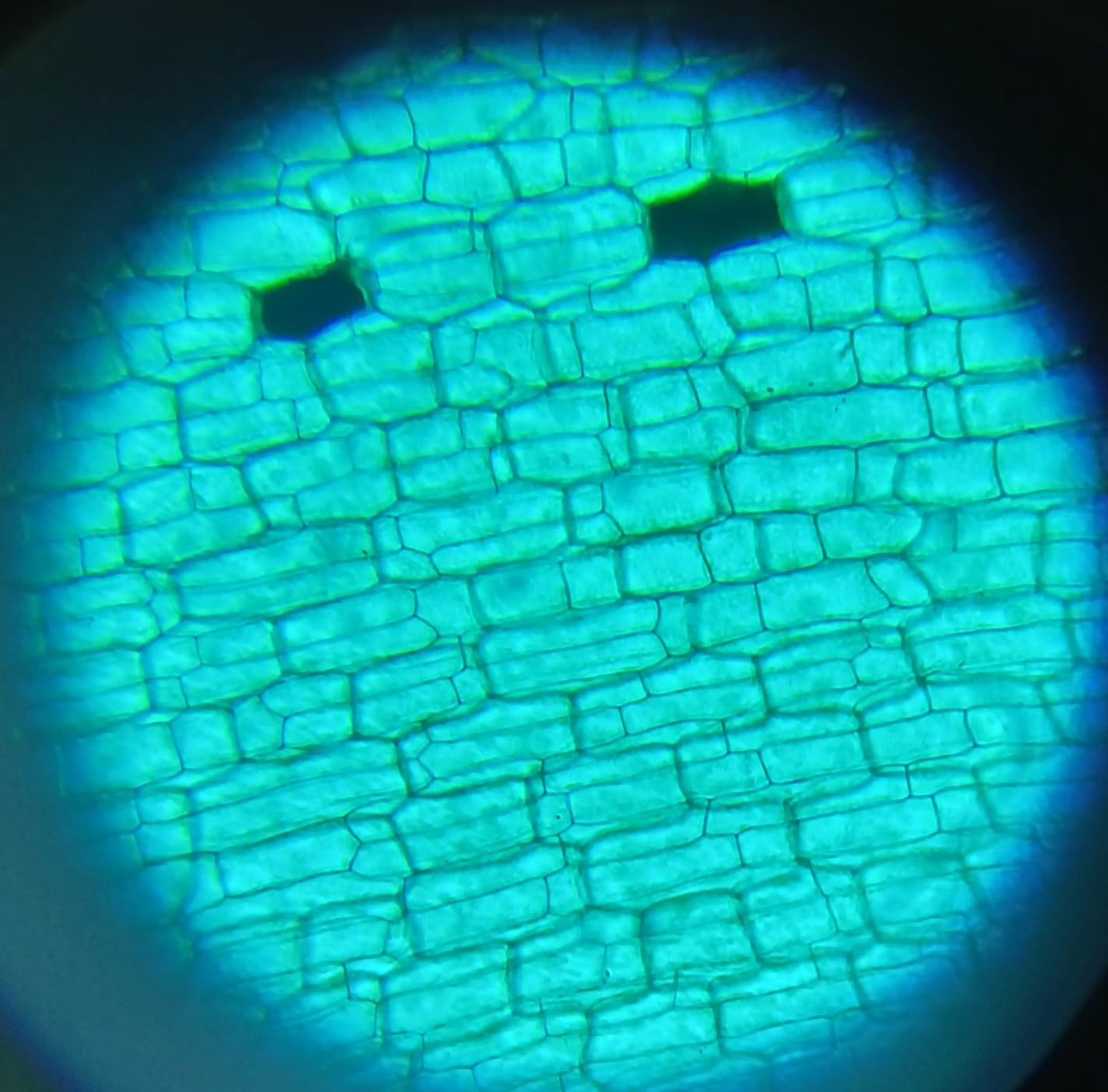
Now the honest part. A 0.65 NA condenser is a basic component, and that number is why fine detail on a stained smear will not hold up. The stated 2000X maximum comes from eyepiece and lens multiplication rather than resolving power, so the useful ceiling is far lower. Some examples also report stage movement that is not smooth and a coarse focus without real fine control.
Who should buy it
Buy it if you are a parent, a teacher running a classroom set, or a student who wants a real microscope before committing to a lab-grade one. The 15-piece slide set and carrying bag mean the first session needs no other purchase, and the metal frame takes the punishment that kills toy scopes in a shared room.
Who should look elsewhere
If your coursework includes microbiology, cell biology staining labs or anything where you need to resolve bacteria, look for a scope with a 100X oil objective and a higher-NA Abbe condenser. The 4X, 10X and 40X objective set stops short of the full four-power set that most biology courses assume, and documentation is thin enough that beginners may need outside help to understand the eyepieces.
4. PalliPartners 100X-2000X Kit: The Phone-Photography Favourite
PalliPartners Compound Microscope for Adults & Students, White
100X-2000X
Monocular head
4X/10X/40X achromat
Dual LED
Battery powered
SGS certified
Pros
- Largest slide bundle in this roundup with 28 slides
- Phone clip adapter and Bluetooth remote shutter
- Top and bottom LED plus coaxial fine focus
- Compact and light for small rooms
- SGS safety certification
Cons
- 40X objective and 30 degree angle limit high power detail
- Light plastic body racks under focus pressure
- Fixed stage rather than a mechanical stage
- Power supply may not match non-240V outlets
The reason this scope sits at number one in its lab compound monocular microscope category is the box contents. You get 28 slides: 10 pre-prepared specimen slides and 18 blank slides, plus a universal phone clip adapter, a Bluetooth remote camera shutter and a dedicated power adapter. No other kit in this roundup ships that much sample material, and for a student building a lab report portfolio it removes a whole shopping trip.
Coaxial coarse and fine focus knobs are standard here, which more than a few similarly priced kits manage. Top and bottom adjustable LED illumination covers prepared slides and surface objects, and the 30-degree viewing angle suits a student working at a desk rather than a bench. The SGS certification for non-toxic materials and electrical safety gives parents and schools a documented answer for younger users.
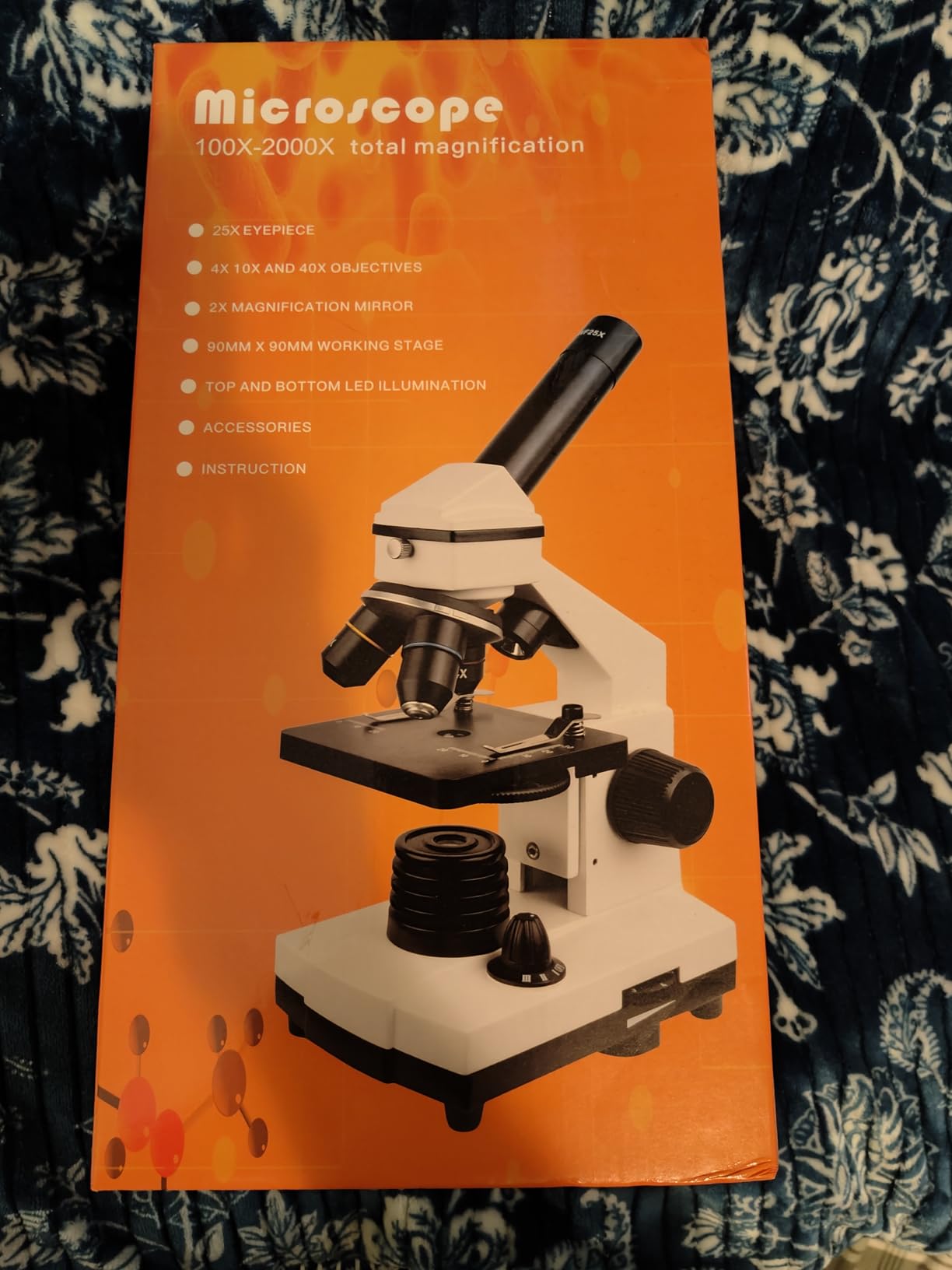
Buyers rate the combination of phone integration and slide supply as the standout, and experienced reviewers put the same caution on it: usable magnification is closer to 400X than the advertised 2000X. The 40X objective is achromatic but the viewing geometry is a 30-degree angle, and experienced buyers note both limit real resolving power at the top of the range.
Two physical limits are worth weighing before you buy. The body is polycarbonate and polyethylene rather than metal, and users report it feels less rigid and can rack under focus pressure. The stage is fixed rather than a mechanical stage, so locating a specimen takes noticeably longer than on a mechanical-stage scope.
Best used for
It is genuinely good for a homeschool family or a first-year student whose lab reports are photographed rather than examined at oil immersion power, and at 1.65 kg and under 10 inches tall it moves around a small room without effort.
Not the right choice for
It is the wrong instrument for a microbiology course, a research lab, or anyone who will be doing stained blood smears and bacteria counts. A fixed stage and a 40X ceiling objective will frustrate you within a term, and the plastic frame will flex if you press hard on the focus at high power.
5. AmScope B120C-E1 LED Binocular: The Student-to-College Transition Scope
AmScope B120C-E1 LED Binocular Compound Microscope, 40X-2500X
40X-2500X
Siedentopf binocular head
Abbe condenser
Dimmable fly-eye LED
5 year warranty
Pros
- Sturdy frame and smooth mechanical stage
- Abbe condenser with pivoting blue lens and dimmable LED
- Rotating turret makes magnification changes simple
- Bundled camera and software display the image on screen
- 5 year warranty with responsive parts support
Cons
- 1.0 MP camera gives soft images with limited depth of field
- Stage knobs can be coupled so movement shifts the slide
- Oil immersion at 2500X takes practice
- Documentation minimal
This is the scope r/microscopy keeps naming as a value benchmark, alongside the used Olympus BH-2. It carries a 4.4 rating across more than 800 ratings, and reviewers call it the step-up instrument between a first student scope and a lab platform. The binocular head and metal construction are the two upgrades that matter most over the kits above.
Illumination is unusually well thought out for a student scope: an LED source with a fly-eye lens producing bright, daylight-balanced light, feeding an Abbe condenser with a pivoting blue lens and a dimmable control. Blue field staining is standard practice in histology, and having the blue lens built in removes a step most students only meet in a shared lab.
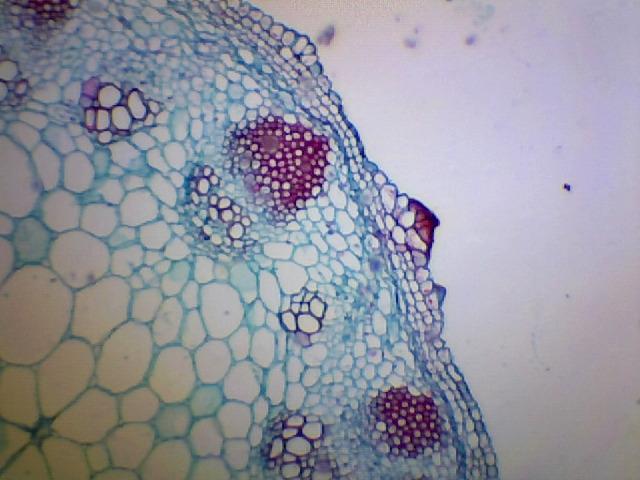
The bundled 1.0 MP USB camera with Windows microscopy software is the reason many students pick this model. It puts the image on screen, which helps with lab report documentation and makes the instrument usable for low-vision users. The rotating turret and interchangeable eyepiece pairs make magnification changes straightforward.
Two recurring weaknesses temper that. The 1.0 MP sensor produces soft images with limited depth of field and does not come close to matching what the optics can resolve, so treat it as a documentation tool rather than an imaging system. The stage control knobs can be coupled, meaning a horizontal move also shifts the slide vertically.

Where it earns its place
This is the scope for a student who has finished a first year of biology and is now taking microbiology or anatomy, and it also works as an accessibility instrument, which is an under-discussed reason to own a personal scope with a camera. The 5-year manufacturer warranty is repeatedly cited in owner communities as a genuine differentiator against lesser-known brands with no service centre.
Where it falls down
Oil immersion at the top of the range takes real practice to bring into focus, so budget time for it before your first stained slide. Documentation is minimal, and some examples arrived missing the correct manual. If your imaging needs are serious, plan to replace the bundled camera later rather than expecting it to hold up to lab photography.
6. SWIFT SW380T Trinocular: The Best Head for Imaging and Sharing
Swift SW380T 40X-2500X Magnification, Siedentopf Head, Research-Grade Trinocular Microscope Compound Lab with Wide-Field 10X/25X Eyepieces, Mechanical Stage, Ultra-Precise Focusing, Camera-Compatible
40X-2500X
Trinocular Siedentopf head
10X and 25X eyepieces
4 DIN achromats
Mechanical stage
4.3 kg
Pros
- Trinocular head keeps parfocal focus while a camera runs
- 30 degree Siedentopf head reduces neck strain
- Interchangeable 10X and 25X wide-field eyepieces
- Smooth stage and ultra-precise fine focus
- Stage and focus controls grouped for right handed use
Cons
- LED dims at high power with the diaphragm wide open
- Very short working distance above 400X
- Objectives sit in a casing that blocks side lighting
- Thin dust cover is too small for the instrument
The trinocular head is the reason to choose this scope, and it is a reason that pays off every single session. Two people can view the same image at once, or a C-mount camera can sit in the third port while you keep working through the eyepieces with focus unchanged. Pathology trainees, hobby researchers and homeschool families consistently describe it as a genuine upgrade from a single-tube student scope.
The head is a fully rotatable Siedentopf design with interchangeable wide-field 10X and 25X glass eyepieces at a 30-degree tilt and adjustable interpupillary distance. At 4.5 stars with 719 ratings this sits at the top of the rating range in this group. The four DIN achromatic objectives on the revolving turret give 40X, 100X, 250X, 400X, 1000X and 2500X, and the coaxial coarse and fine system is described as ultra-precise.
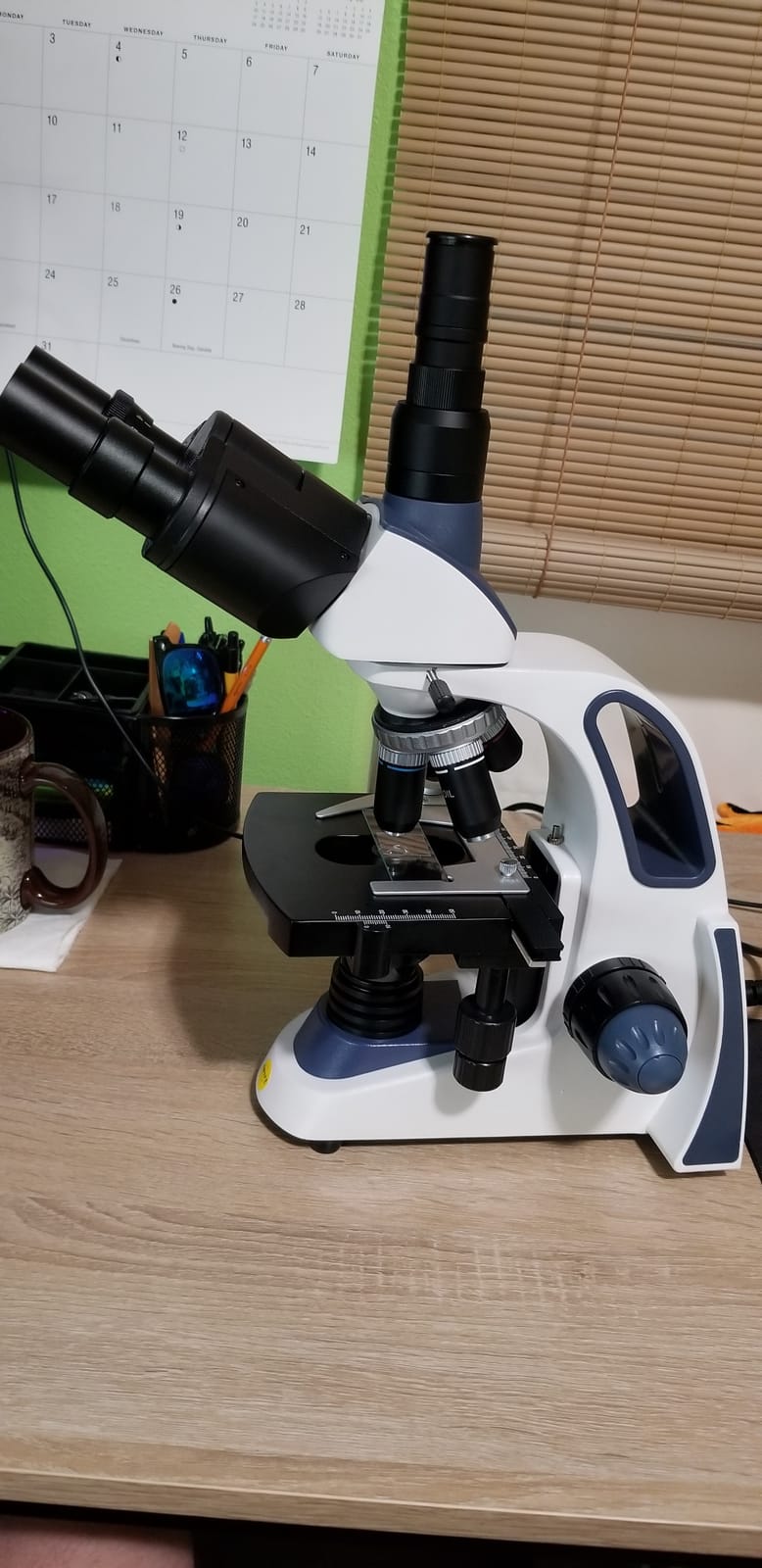
Owners who checked the optics against a stage micrometer report a wide, sharp field of view through both eyepiece pairs, and the smooth mechanical stage makes specimen navigation predictable. The stage and focus controls sit together on the right, which is a small ergonomic decision you notice after an hour of work.
Illumination is where the complaints concentrate. The built-in LED becomes dim at higher magnifications with the diaphragm wide open, and there is no front illumination for opaque samples above 100X, so thick or dense samples will not resolve well at high power.
Who it suits
It suits a student who needs to photograph specimens for documentation, a lab assistant who wants two people at one instrument, and anyone whose coursework includes long sessions at high power. Several owners in r/microscopy post photos taken with this model and describe it as their step up from an entry scope, and that is the honest positioning.
Who it does not suit
It does not suit a first-year student who has never focused a slide. Working distance above 400X is very short, which makes thick samples tricky, and the objectives sit in a thick safety casing that blocks external side lighting. The included dust cover is thin plastic and too small, so buy a proper cover separately if you plan to store it between terms.
7. AmScope M150C-PS25 Portable: The Most Honest Magnification Claim
AmScope M150C-PS25 Series Portable Monocular Compound Microscope – 1000X
40X-1000X
Monocular head
Achromatic objectives
LED ring light
25 prepared slides
3.3 lb
Pros
- Sturdy build that survives heavy use by children
- Magnification ratings match what users observe
- 25 prepared slides included for immediate use
- Portable flat form factor is easy to store and carry
- 5 year manufacturer warranty
Cons
- Some scopes arrive with dirty lenses
- Listing imagery implies a camera that is not included
- Stops at 1000X with no oil immersion objective
- Monocular head closes one eye
The thing that separates this model is that it does not inflate its numbers. It claims 40X to 1000X, and users report that what they observe matches the claim. That honesty is rare in this category, where advertised 2000X and 2500X figures usually come from multiplying a 40X objective by a 25X eyepiece and an add-on lens.
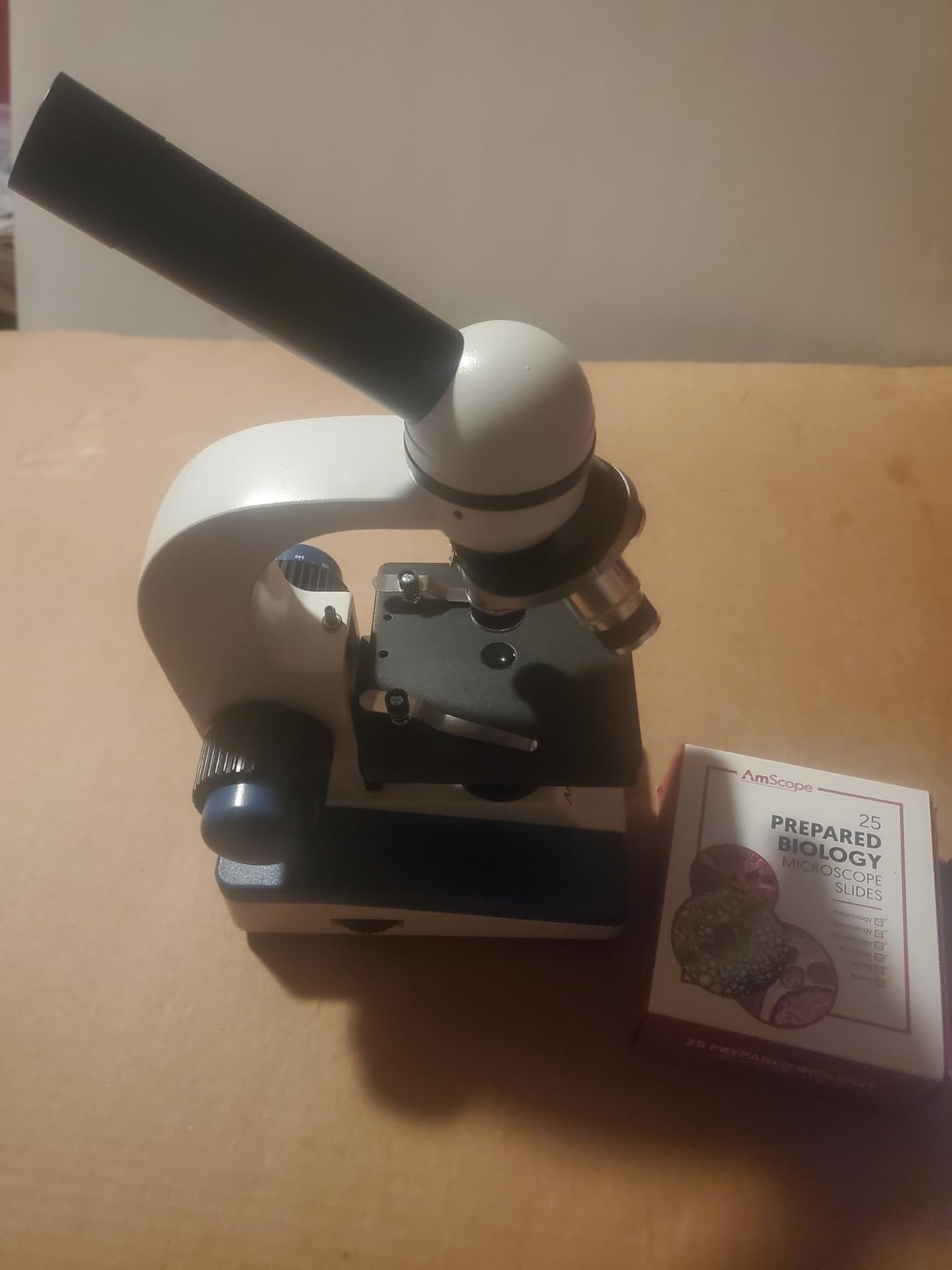
Optics are achromatic objectives with an LED ring light and fly-eye lens for even, daylight-balanced brightness across the field. At 3.3 pounds with a flat, portable form factor, it stores between terms and carries back to campus without a dedicated shelf. The 25 prepared sample slides make it useful the day it arrives.
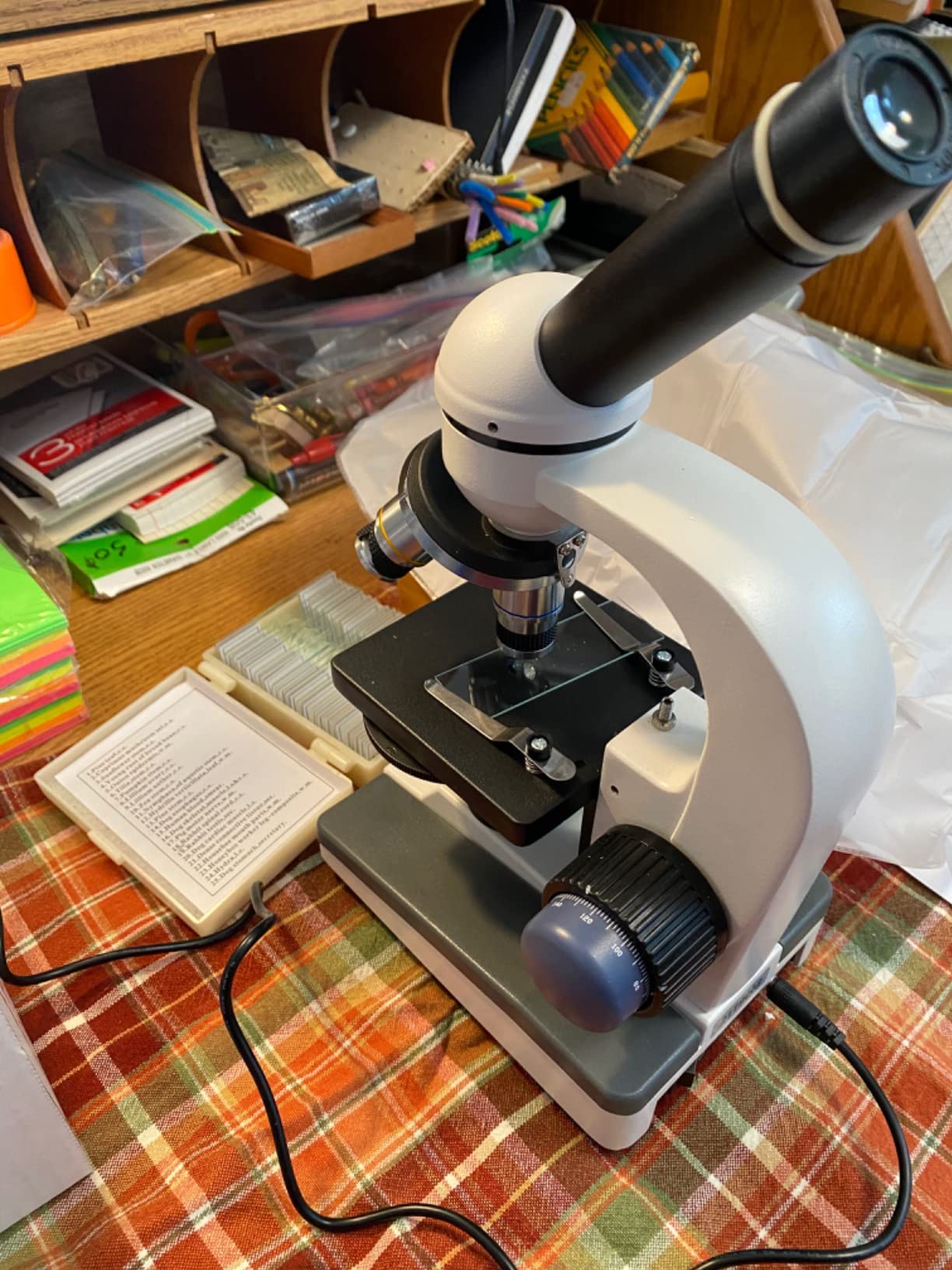
Owners consistently call it better than toy-grade kids microscopes and good value, and the 5-year manufacturer warranty is part of why. Parents and teachers mention it survives heavy use by children, which matters if the instrument is shared in a household or a classroom corner.
Two recurring complaints are worth knowing. Some scopes arrive with dirty lenses, which is a bad first impression and a genuine image quality problem until you clean them. And the listing imagery suggests a computer camera attachment that is not actually in the package, so do not plan around a bundled camera.
Why students pick it
This suits a high school biology course, an intro college lab, or a student who wants a dependable instrument without a binocular head commitment, and it is the honest option for a parent who has been shown inflated magnification numbers and wants a scope that tells the truth about what it delivers. The flat footprint means it does not claim a whole dorm desk, which is the practical constraint most students underestimate before buying.
What you give up
It tops out at 1000X, so there is no oil immersion objective for bacteria work. The monocular head closes one eye during use, which is fine for short sessions and tiring for long ones. And the 40-degree to 45-degree viewing geometry is less comfortable at a bench than a Siedentopf head.
8. AmScope M158C-E Rotating Head: Best for a Shared Classroom Microscope
AmScope Rotating Monocular Compound Microscope, 40X-1000X Magnification
40X-1000X
360 degree rotating head
All metal frame
Single lens condenser
USB 2.0 camera
3 lb
Pros
- 360 degree rotating head suits students of different heights
- All metal frame gives a durable stable base
- Bundled USB camera with free measurement software
- LED runs from outlet or batteries
- Achromatic objectives cover standard high school work
Cons
- 640x480 USB camera is low resolution
- Single lens condenser limits contrast and resolution
- Stitching and EDF software features described as Windows only
- Monocular design tires you faster than binocular
A rotating head sounds like a minor feature until you put four students in a room with one microscope. The 360-degree rotating monocular head with optical glass lenses means a short student and a tall student can both look through the instrument without swapping it around, and a teacher can swing the head to point at the slide while explaining. That is why this is our pick for a shared classroom bench.
The frame is all metal with a single glass lens condenser and a 6-hole disc diaphragm, and achromatic objectives run to 1000X. LED illumination works from an outlet or from batteries, so the scope can move to a table without a cable. The bundled 640×480 USB 2.0 camera supports photos and video on Windows and Mac.
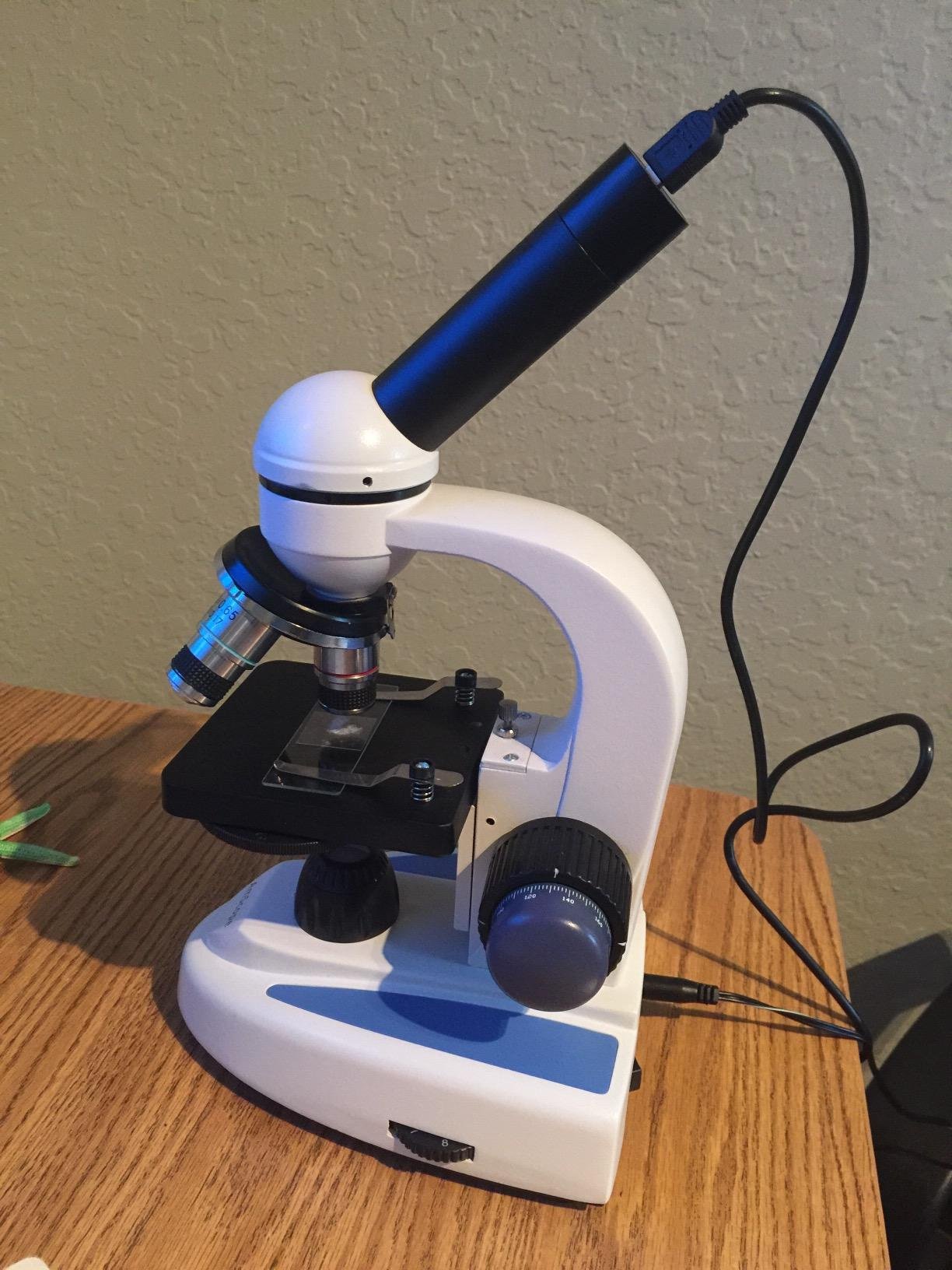
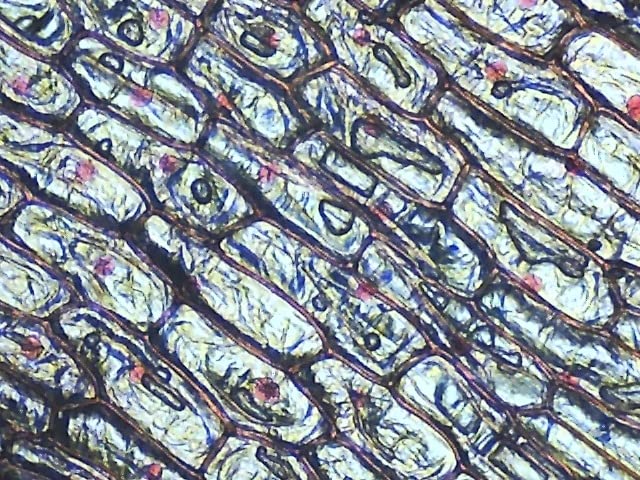
The software is the sleeper feature here. It offers stitching, EDF, video recording and measurement functions, and it is free with the scope. For a student doing a school assignment that requires measuring a cell or a pollen grain and submitting a figure, having measurement built in removes a real cost and a real time sink.
The camera is the weak point. At 640×480 the images are low resolution and do not reflect the optical quality of the scope, so it works as a capture and measurement tool rather than as an imaging system. The single-lens condenser also limits contrast and resolution compared with an Abbe condenser, and the advanced software features are described as Windows only.
Where it earns its slot
It suits a classroom, a homeschool room with more than one user, or a lab that wants a durable instrument at 3 pounds that will not slide across a bench, and it also suits a student who wants to document work and cares more about measurements and diagrams than about image quality.
Where it falls short
It does not suit a microbiology course. A single-lens condenser, no oil immersion objective and a monocular head all limit what you can do, and the ergonomics of a monocular head get tiring quickly in a long lab session. If your course includes stained smears, keep looking.
9. JECONE 40X-2500X: The Best Middle-School and First-Year Starter
Microscope for Adults & Kids, 40X-2500X High-Power Compound Microscope for Students, School Lab & Home Schooling,Equiped with Slides Set & Phone Holder (White)
40X-2500X
Monocular head
4X/10X/100X objectives
Dimmable dual LED
5 color filter wheel
1.59 kg
Pros
- Separate coarse and fine knobs are a step up from single knob scopes
- Dimmable dual LED for slides and opaque objects
- 5 color filter wheel improves contrast without reagents
- Phone holder and 360 degree rotating eyepieces
- Compact metal construction
Cons
- 2500X figure comes from eyepiece power not resolving power
- No mechanical stage so specimens are found by hand
- Small footprint and light weight make the stand less stable
- Some scopes report focus drift and an uneven stage
Among the entry-level models, this one makes the fewest compromises on the controls that matter. The dual control focusing system has separate coarse and fine knobs, which is the single feature that separates a scope you can learn technique on from one you will fight with. Dimmable incident and transmitted LED sources let you handle both prepared slides and opaque objects, and a dimmer knob is rarer at this tier than you would expect.
The 5-color filter wheel under the stage, with yellow, red, blue, green and purple positions, improves contrast on transparent samples without staining the slide or adding a reagent. The phone holder and 360-degree rotating eyepieces make sharing and photographing straightforward. The accessory kit includes five specimen slides, five blank slides, tweezers, droppers, a phone holder and a manual.
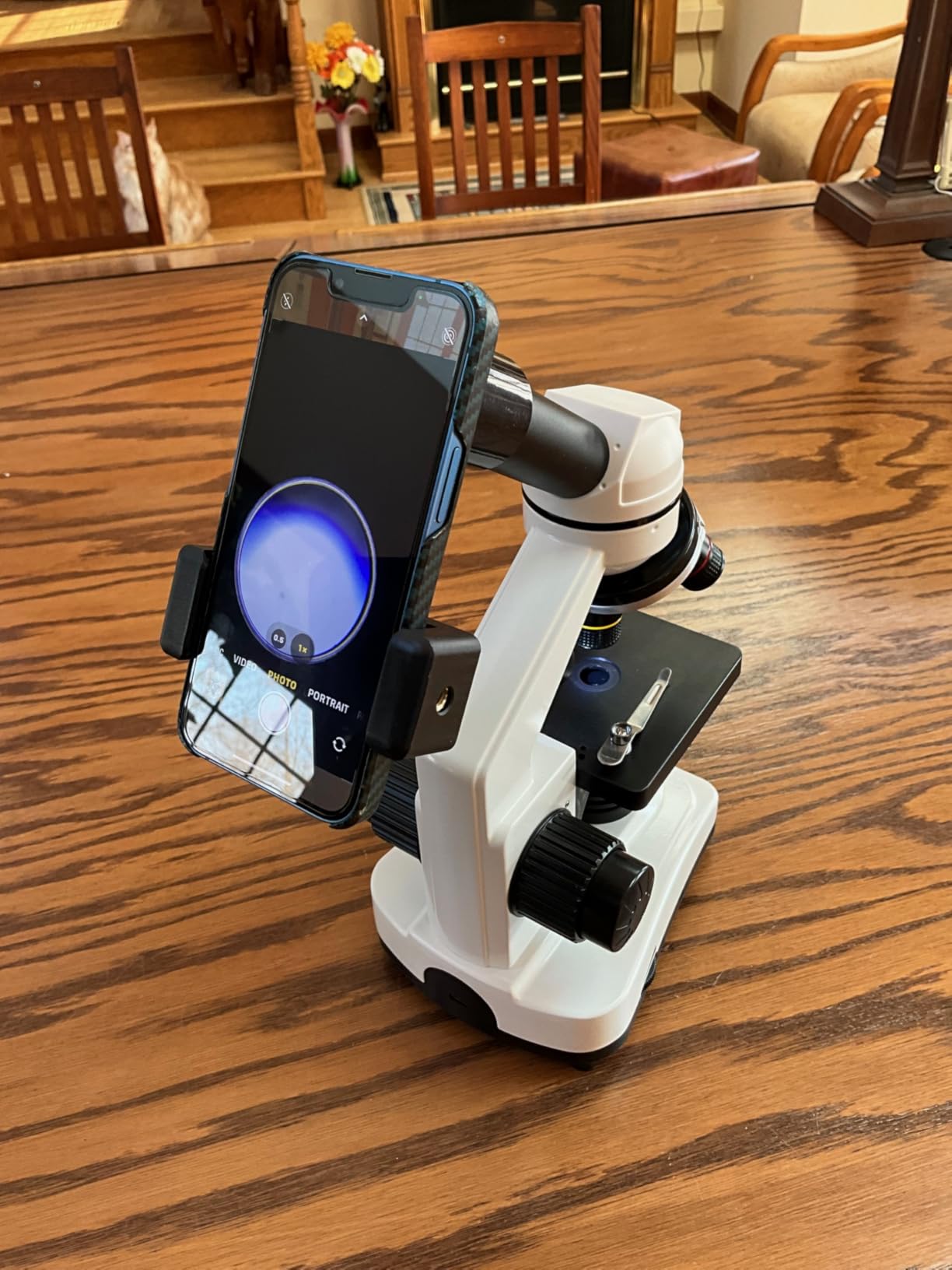
Reviewers consistently rate the separate fine focus knob, the dimmable dual lighting and the color filter wheel as genuinely useful rather than decorative. At 1.59 kg the instrument is light enough to carry in one hand, and the compact metal construction holds up for a student moving between rooms.
What it is not is a resolution instrument. The advertised 2500X comes from eyepiece magnification rather than resolving power, so real detail caps out far below that. There is no mechanical stage, which means you find specimens by moving the slide by hand, and the small, light footprint makes the stand less stable when you set a box of slides down on it.
Good for younger students
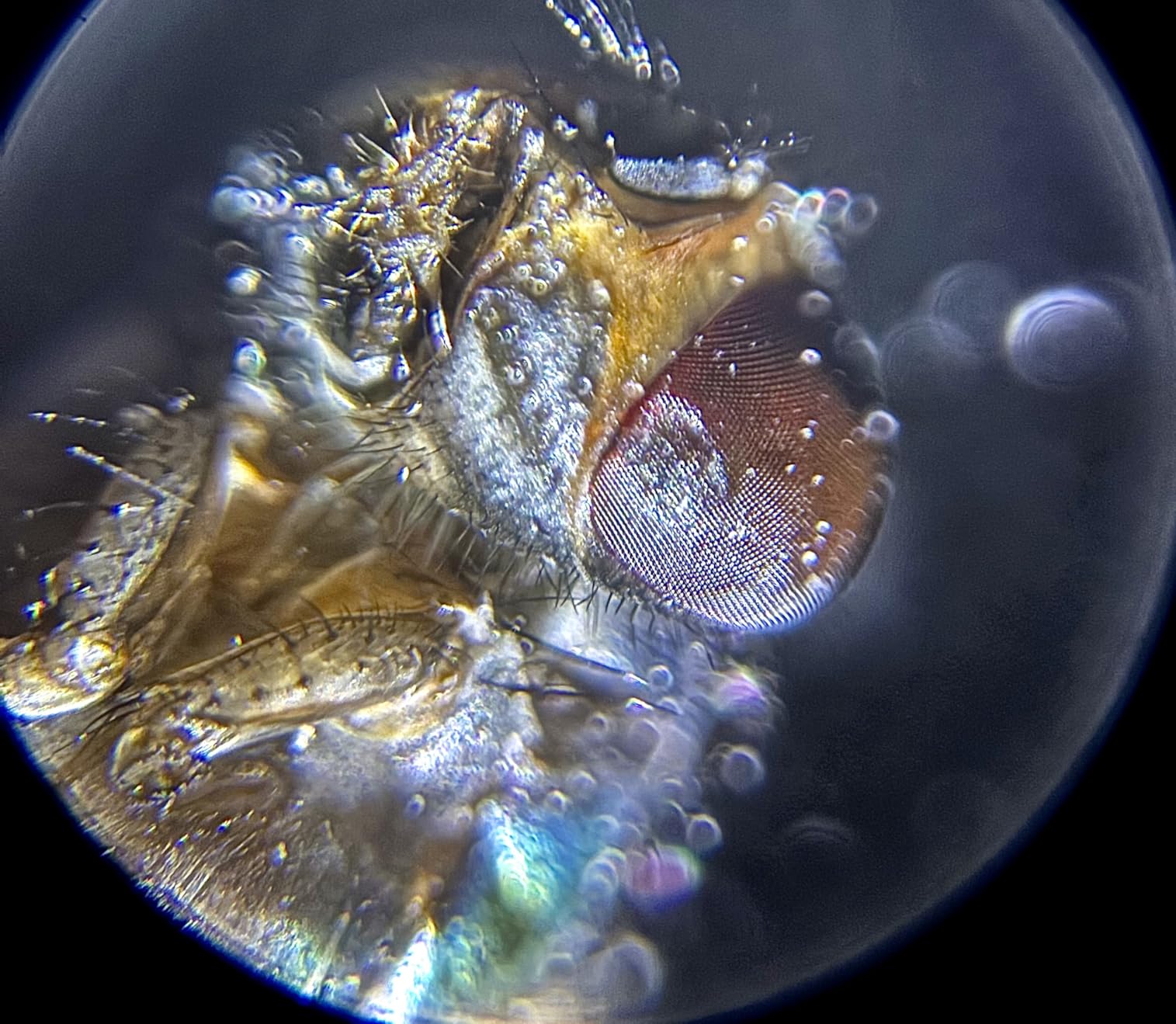
This suits a middle schooler, a first-year biology student, or a family starting out together. The dimmer and the color filters are teaching tools, not laboratory tools, and they make it easy to show a younger student why contrast matters. The phone holder means lab reports start on day one.
Users report focus drift on some examples and a stage that is not perfectly level, so check it early and tighten anything loose.
Not for college lab work
Skip it once you are past general biology. With no mechanical stage, no oil immersion objective and an eyepiece-driven magnification ceiling, it cannot support a microbiology, histology or anatomy course. It is a learning instrument, and treating it as a research tool is where buyers get disappointed.
10. Celestron Labs CM800: The Battery-Powered Scope for Field and Travel
Celestron Labs CM800 Compound Monocular Microscope for Student Science
Up to 800X
Monocular head
4X/10X/40X achromats
10X and 20X eyepieces
3 AA batteries
1.43 kg
Pros
- Compact and light enough for field work on batteries
- Upper and lower LED covers translucent and opaque specimens
- Wide field 10X and 20X eyepieces give flexibility
- 10 prepared slides plus battery and AC power included
- 2 year US warranty with US based support
Cons
- 800X ceiling puts single celled organisms out of reach
- Some examples arrive with dirty or hazy lenses
- Fewer accessories than competing kits
- Achromatic optics look soft at 400X and 800X
This is the one to buy if your microscope has to travel. At 1.43 kg, battery powered from three AA cells, and supplied with an AC adapter, it is the instrument in this roundup you can take to a pond, a classroom or a family home without planning around a power outlet. Ten prepared slides are included, so it is usable immediately.
Optical flexibility is better than the 800X headline suggests. You get 10X and 20X wide-field eyepieces paired with 4X, 10X and 40X achromatic objectives, giving 40X, 100X, 250X, 400X and 800X. Upper and lower adjustable LED illumination covers both translucent prepared slides and opaque objects, and the 20X eyepiece gives you a useful in-between step that many kits skip.
The 2-year US warranty and support from a US-based team are a real advantage over lesser-known brands with no service presence, and owners frequently cite the solid build for classroom teaching. It handles basic plant and drop-of-water observation comfortably, which is exactly what a school science kit needs.
The hard ceiling is the problem. At 800X, single-celled organisms such as amoeba are effectively out of reach, and for a biology student that is a real limitation rather than a detail. Owners also report some examples arriving with visibly dirty or hazy lenses and a finish that looks cheap.
Where it earns its place
It suits a teacher running demonstrations, a student who studies outside a dorm, or anyone who needs a microscope that can live in a backpack between terms. The 20X eyepiece and 800X ceiling are perfectly matched to plant cells, pollen, pond water and fabric, which is where field microscopes earn their keep anyway.
Where it will frustrate you
It will frustrate anyone whose course includes microbiology or protist work, because the resolution ceiling rules amoeba out. You will also need to buy slides and coverslips separately, since the accessory bundle is thinner than competing kits, and you should expect to clean the optics before your first session.
Biology Students Need 400X to 1000X, and Resolution Beats Raw Numbers
Total magnification is objective power multiplied by eyepiece power. A 100X oil objective with a 10X eyepiece gives 1000X. A 40X objective with a 10X eyepiece gives 400X. That is the whole math, and once you can do it in your head, the advertising stops working on you.
For a 100X objective you need oil immersion. That is not optional; it is how the lens gets the numerical aperture it needs to resolve fine detail. Without a drop of immersion oil between the coverslip and the objective, you are looking at a blurred version of the same slide. The OMAX and the AmScope B120C-E1 both include a 100X oil objective. The budget kits here do not.
Resolution is the limit that actually matters, and light microscopes bottom out around 200 nanometres. That is why a microscope tops out at useful magnification, and why a 2500X claim on a 40X objective is arithmetic rather than optics. It is also why viruses stay invisible on a light microscope: they sit well below the limit and need an electron microscope.
For bacteria, the answer is 1000X with oil. A 1000X total magnification with a 100X oil objective and a good Abbe condenser is the standard microbiology setup. Lower powers, down to 400X, handle plant cells, cheek cells, onion root mitosis slides and blood smears comfortably.
Biology Class Needs Compound, While Dissections Need Stereo
Compound microscopes view thin, transparent specimens mounted on slides. That is what cells, bacteria and tissue sections are, which is why the compound light microscope is the standard instrument in biology classrooms and undergraduate labs. A biologist examining a blood smear or a stained section is using a compound scope.
A stereo or dissecting microscope does something different: it gives a three-dimensional, upright view of an object too large or too opaque to mount. It is the right instrument for a frog dissection, a flower, an insect, a circuit or a soldering joint. It is also the right answer if your course is anatomy and dissection rather than cell biology, and it costs less.
A digital USB microscope is a third option, useful for demonstrations and for projecting an image to a class, but the optics are typically fixed and the resolution is far below a compound scope. If your work needs a 400X to 1000X view of a stained slide, a digital scope is not a substitute.
Binocular or Trinocular Wins for Serious Student Work, Monocular Saves Money
Monocular means one eyepiece, so you close one eye and work with a single image. It is the cheapest configuration and the easiest to share, because there is nothing to adjust. For short sessions and first courses it is genuinely fine, and most of the kits in this roundup use it.
Binocular means two eyepieces with independent diopter adjustment and an interpupillary distance control, so you get a stereoscopic, three-dimensional view and can correct for differences between your own eyes. It is the meaningful upgrade for anyone spending hours at the scope, and it is the configuration most college labs assume.
Trinocular adds a third port, usually a C-mount, for a camera. The advantage is that focus stays parfocal through the eyepieces while the camera runs, so you keep working while images capture. The warning is straightforward: a trinocular head without a camera is you paying for a feature you may never use, and the camera is almost always a separate purchase.
An NA1.25 Abbe Condenser and LED Light Are the Two Specs That Matter Most
The condenser focuses light up through the slide and controls contrast through the iris diaphragm. An Abbe condenser rated NA1.25 is what a 100X oil objective expects. Scopes that ship with a plain single lens or a 0.65 NA condenser cannot deliver the light cone that objective needs, and the result is a dim, low-contrast image that students routinely blame on their slides.
This is why the condenser, not the magnification number, is the spec to check first. The forum consensus in r/microscopy is blunt about budget scopes shipping without a proper Abbe condenser, and it is the fastest way to separate a training instrument from a teaching instrument.
LED illumination has effectively replaced halogen in student scopes. It runs cool, does not need a replacement bulb, switches instantly and costs almost nothing to run. The one weakness appears at high power: some LED illuminators, including the one in the SWIFT SW380T, dim at higher magnifications with the diaphragm wide open.
Aim for achromatic or plan DIN objectives. Achromatic lenses correct for two colour wavelengths, which is enough for routine student work and much cheaper than the full plan achromats used on research instruments.
Weights Run From 2.4 to 9.6 Pounds, So Plan Your Space First
Most of these instruments are far more manageable than a department scope, but the spread is real. Listed weights run from about 2.4 pounds for the BEBANG to 9.6 pounds for the OMAX, and the tallest body here is the SWIFT SW380T at 17.72 inches. That is the difference between a scope that lives on a desk and one that gets a shelf of its own.
Footprint matters as much as weight in a dorm room. The Celestron CM800, the JECONE and the BEBANG are all under 12 inches tall and narrow enough to leave working space for a notebook. The OMAX at 13 inches tall and the SWIFT SW380T at 17.72 inches are bench instruments and want a permanent position.
On whether to buy personally or rely on shared equipment, the honest answer for most students is: buy personally if your course runs microscopy labs, because the queue is the real cost. Buy a shared or departmental scope only if your timetable is fixed and you can book ahead.
Between terms, a microscope in student housing is a theft risk and a dust risk. A scope with a proper dust cover, stored closed and dry, survives a dorm room far better than one sitting open on a desk. The thin plastic covers included with some models here are not enough on their own.
AmScope and SWIFT Lead the Value Tier, With OMAX and Celestron Close Behind
The recurring question in student forums is which of the two big names to buy. The short answer is that both occupy the same practical tier: metal-framed instruments with achromatic optics, real stages, serviceable parts and multi-year warranties, at a fraction of institutional distributor pricing.
AmScope, sold by United Scope, appears three times in this roundup and is the most consistent of the value brands. The 5-year manufacturer warranty is repeatedly cited in owner communities as a genuine differentiator, and the range covers everything from the portable 40X-1000X monocular up to the binocular B120C-E1 with a bundled camera. On whether AmScope scopes are of good quality, owners describe them as metal-framed instruments that outlast plastic toys, with the usual caveat about bundled cameras.
SWIFT occupies the same tier with a narrower range and a reputation for head design. The Siedentopf trinocular head on the SW380T is the one in this roundup that stays parfocal while a camera runs. OMAX sits alongside them with a binocular scope whose bundled consumables and 5-year warranty make it the value leader on paper.
Worth being blunt about: these are Chinese-manufactured instruments sold largely direct, which is why the pricing looks nothing like an institutional distributor. That is not automatically a problem, but it is why warranty length and the existence of a real service centre matter more than the brand badge. Celestron sits close by with a 2-year US warranty and US-based support, at a lower optical ceiling.
Seven Checks That Decide Whether a Student Microscope Fits Your Coursework
First, the head. Binocular or trinocular if you will sit at the scope for more than an hour at a time; monocular is fine for a first course and for shared classroom viewing.
Second, the objective set. Look for 4X, 10X, 40X and 100X, with the 100X marked as oil immersion. A 4X, 10X and 40X set is the community minimum bar, and a kit that stops at 40X will not carry a microbiology course.
Third, the stage. A mechanical stage with X-Y control and a slide holder pays for itself the first time you work with a specimen smaller than a printed full stop. A fixed stage means hand-searching every slide.
Fourth, the condenser. Confirm an Abbe condenser with an iris diaphragm, ideally NA1.25, and confirm the diaphragm actually opens and closes. This is the spec most often quietly omitted.
Fifth, illumination. Dimmable LED with both top and bottom sources covers prepared slides and opaque objects, and dimming is close to essential for stained and transparent samples.
Sixth, camera capability. Decide whether you need images. A bundled USB camera is convenient; a trinocular port plus a separately purchased C-mount camera is better if imaging becomes a serious part of your work. Do not pay for a trinocular head you will not use.
Seventh, warranty and consumables. A multi-year warranty signals a real service centre, and a generous bundle of slides, coverslips and lens paper saves you a real first purchase. Check whether immersion oil and a dust cover are included, because they often are not.
Frequently Asked Questions
What type of microscope is commonly used in biology classrooms?
A compound light microscope is the standard instrument in biology classrooms and undergraduate labs. It uses two lens systems, a 10X eyepiece and a revolving nosepiece of objectives, to magnify thin transparent specimens mounted on slides. Typical total magnification runs from 40X to 1000X using a 4X, 10X, 40X and 100X objective set, with light passing up through the slide through a condenser and then through the objective and eyepiece.
Is 1000X enough to see sperm?
Yes. Sperm cells are roughly 50 micrometres long, so they are easily visible at 400X total magnification and far more clearly at 1000X. For 1000X you need a 100X oil immersion objective, a drop of immersion oil and a coverslip over the sample. Even so, sperm are right at the resolution limit of a light microscope, so stained or phase contrast preparations show far more than a wet mount.
Is Swift or AmScope better?
Both sit in the same practical tier, and the honest answer is that the specific model matters more than the name. SWIFT stands out for head design, with a Siedentopf trinocular option that stays parfocal while a camera runs. AmScope covers a wider range, from portable monocular scopes to binocular models with a bundled USB camera, and its 5-year manufacturer warranty is repeatedly cited by owners as a real advantage.
Are AmScope microscopes of good quality?
Owners generally describe AmScope instruments as solid, metal-framed equipment that clearly outlast plastic toy scopes, with achromatic objectives, mechanical stages and multi-year warranties. The common complaints concern bundled cameras rather than the optics, since a 1.0 MP or 640×480 sensor does not match what the lenses resolve. A few examples also arrive with dirty lenses, so check the optics on arrival.
What magnification do I need to see bacteria?
You need 1000X total magnification, which means a 100X oil immersion objective paired with a 10X eyepiece. Oil is not optional, because the objective only reaches full numerical aperture with immersion oil between the coverslip and the lens. A good Abbe condenser rated NA1.25 and a stained smear will then let you see cocci and bacilli clearly. Below 1000X, bacteria appear as indistinct specks.
Should a student buy a monocular or binocular microscope?
Buy monocular for a first course, short sessions, or a microscope that several people share, since there is nothing to adjust between users. Buy binocular once you will sit at the scope for an hour or more, because two eyepieces give a stereoscopic view and independent diopter correction for each eye. Binocular heads also suit courses where you need to describe depth in a specimen, such as anatomy and histology slides.
Can I see viruses with a compound microscope?
No. A light microscope resolves objects down to roughly 200 nanometres, and most viruses are smaller than that, so they appear as blur or not at all. Viruses require an electron microscope, which works with beams rather than visible light and reaches nanometre and sub-nanometre detail. What you can see on a compound scope are the cells that viruses infect, along with the larger bacterial forms that sit above the resolution limit.
The TOMLOV Leads Our Best Compound Microscopes for Biology Students in 2026
If you want one answer, the TOMLOV 40X-2000X student scope is the one we would put on a first-year student’s desk. It holds a 4.5 rating across more than 2200 ratings, pairs coaxial coarse and fine focus with three achromatic objectives, lights specimens from both top and bottom, and comes with prepared and blank slides so you can work on day one.
Once you are past general biology, the OMAX M82ES is the smarter buy, because it is one of only two scopes here that includes a 100X oil immersion objective alongside an NA1.25 Abbe condenser and a mechanical stage. If your work is image-based, the AmScope B120C-E1 adds a binocular head and a bundled USB camera, and the SWIFT SW380T is the instrument to choose when you need a trinocular port for a C-mount camera or a second viewer.
Whichever you pick, check the condenser before you check the magnification number, and buy a proper dust cover for wherever it will live between terms. These are the best compound microscopes for biology students in 2026 because each one tells you honestly where its limits are.