
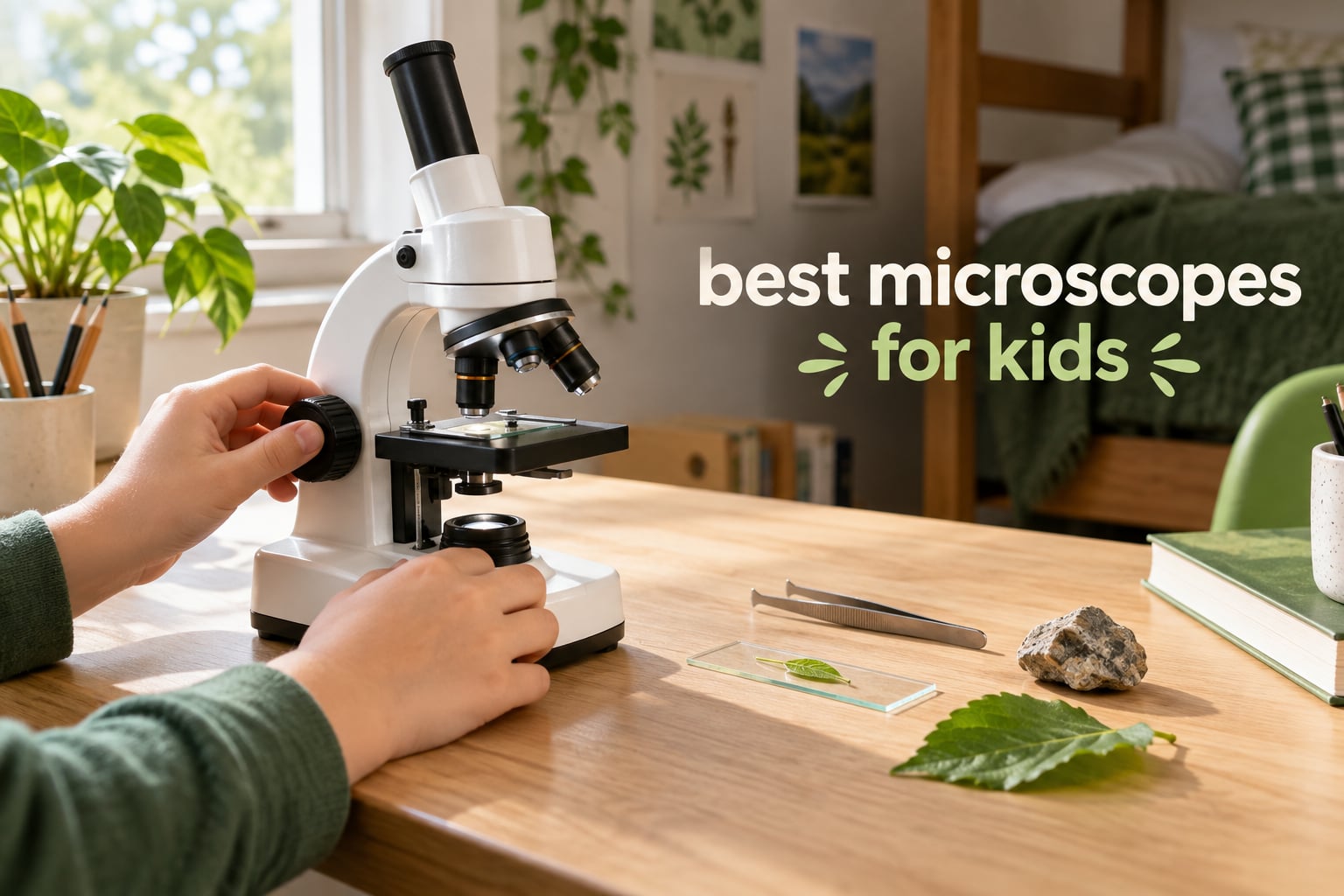
The best microscopes for kids depend on two things: how old the child is and what they want to look at. Preschoolers do best with a plastic body and a low focus knob, tweens want real glass optics, and anyone pointing a scope at pond water needs a compound light microscope. There is no single winner, so here is how each type fits a specific age band and a specific specimen.
We compared 10 of the highest-rated microscopes currently on the market, weighing magnification against what is genuinely visible through the lens, the eyepiece layout, lighting, build quality and how much a child can do without an adult stepping in. Ratings and review counts are the current published figures, and every pick comes with a candid line on who it is not for.
Table of Contents
Top Microscope Types for Kids
Handheld digital microscope (ages 5 to 12): A built-in screen replaces the eyepiece, so there is no squinting and no eye strain. Photo capture makes it the easiest type for documenting a science project. The Ashfly 500X is our example.
Stereo and dissecting microscope (ages 6 and up): Low magnification and a 3D view let you turn an insect, a coin or a leaf over in your hands. The National Geographic Dual LED kit covers both this and slide work.
Compound light microscope (ages 8 and up): The classic school instrument with glass optics, brightfield illumination and a rotating nosepiece of objective lenses. The BEBANG 2000X is the affordable entry point.
Pocket field microscope (all ages): A hand-sized tube with an aspheric lens and an LED, small enough for a nature walk. The Carson Pocket Micro is the cheapest credible one in this roundup.
Preschool talking scope (ages 3 to 5): No real focusing, just pre-printed full-color cards and narration that walks a child through what they are looking at. The Educational Insights GeoSafari Talking Microscope is the clearest example.
One point up front: advertised magnification is marketing, not optics. A scope printed with 2000x may show you nothing beyond 400x of true detail, and a digital unit claiming 1000x is not a substitute for glass lenses. We flag that gap on every pick below.
Top 3 Picks for the Best Microscopes for Kids (October 2026)

GeoSafari Talking Microscope
- Narrated by Bindi Irwin
- 60 full-color images across 20 slides
- Quiz mode plus fact mode
- Ages 4-8

National Geographic Dual…
- 20x and 50x glass optics
- Lights above and below the stage
- Over 50 accessories
- Brine shrimp and mini geode
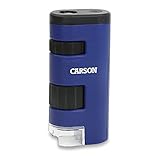
Carson Pocket Micro 20x-60x
- 20x-60x variable zoom
- Aspheric lens with less distortion
- Built-in LED
- Pocket-sized body
The Best Microscopes for Kids at a Glance in 2026
Every model below appears in this table with the specs that actually change what your child can see. Read across the row before you read the review, because two of these look identical in a thumbnail and behave nothing alike in the hand.
| Product | Specs | Action |
|---|---|---|
| Educational Insights GeoSafari Talking Microscope |
|
Check Latest Price |
 Carson MicroFlip 100x-250x Carson MicroFlip 100x-250x |
|
Check Latest Price |
 Educational Insights GeoSafari My First Microscope Educational Insights GeoSafari My First Microscope |
|
Check Latest Price |
| National Geographic Dual LED Microscope Kit |
|
Check Latest Price |
| Carson Pocket Micro 20x-60x |
|
Check Latest Price |
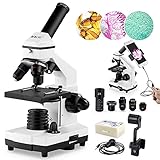 BEBANG 2000X Compound Microscope BEBANG 2000X Compound Microscope |
|
Check Latest Price |
 National Geographic 400x Microscope National Geographic 400x Microscope |
|
Check Latest Price |
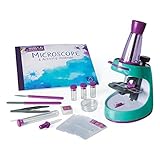 Nancy B’s Science Club Microscope Nancy B’s Science Club Microscope |
|
Check Latest Price |
 Ashfly 500X Digital Microscope Ashfly 500X Digital Microscope |
|
Check Latest Price |
 BEBANG Kids Digital Microscope Kit BEBANG Kids Digital Microscope Kit |
|
Check Latest Price |
Microscope Types Explained: Stereo, Compound, Digital and Pocket
Most parents can name a microscope but not a scope type, and the vocabulary decides what you should buy. Four types cover essentially everything in this roundup, and each solves a different problem.
Stereo and dissecting microscopes
A stereo microscope gives you a low, three-dimensional view with light bouncing off the top of the specimen instead of passing through it. That means you can look at a coin, a fingertip, a beetle leg or a leaf directly, turn it in your hands, and work with tweezers while you look. It is the most forgiving first real microscope for a child.
Compound light microscopes
A compound scope stacks an eyepiece above a rotating set of objective lenses and shines light up through a thin specimen on a glass slide. This is the type used in almost every school science classroom, and it is the only category that resolves plant cells, onion skin, blood smears and pond water. Parents often equate a real microscope with this design for good reason.
Digital and handheld microscopes
A digital microscope replaces the eyepiece with a camera and a screen, either built in or connected to a laptop or tablet. It removes the hardest part for young children, which is holding their head perfectly still and steady, and it makes every view shareable and recordable. The tradeoff is that digital magnification is a software number, not an optical one.
Pocket and field microscopes
A pocket microscope is a hand-sized tube with an aspheric lens and an LED, sized for a nature walk rather than a desk. It is the cheapest way to make outdoor observation feel scientific, and it handles stamps, fabric, coins and leaf surfaces beautifully. It will not show you cells.
Matching the scope to the specimen
Bugs and leaves are best on a stereo scope or a pocket scope, because the specimen is opaque and large. Coins, rocks and crystals need reflected light, which again points to stereo. Prepared plant cells, blood smears and bacteria need transmitted light through a thin glass slide, which only a compound scope gives you. Yeast, pond water and brine shrimp are the classic first compound specimens, and every scope in this roundup ships with at least a few slides or a starter slide to get you there.
1. Educational Insights GeoSafari Talking Microscope – Narrated Slides for Ages 4-8
Educational Insights GeoSafari Talking Microscope
Ages 4-8
60 full-color images on 20 slides
10.1 x 8.1 x 5.6 inch body
Pros
- Holds a 4-year-old's attention for long stretches
- Sturdy enough for unsupervised use
- Good slide variety spanning insects and plants
- Narration reads like a friendly guide
Cons
- Slides look identical on both sides so they seat wrong easily
- No true focusing function
- Narration is English only
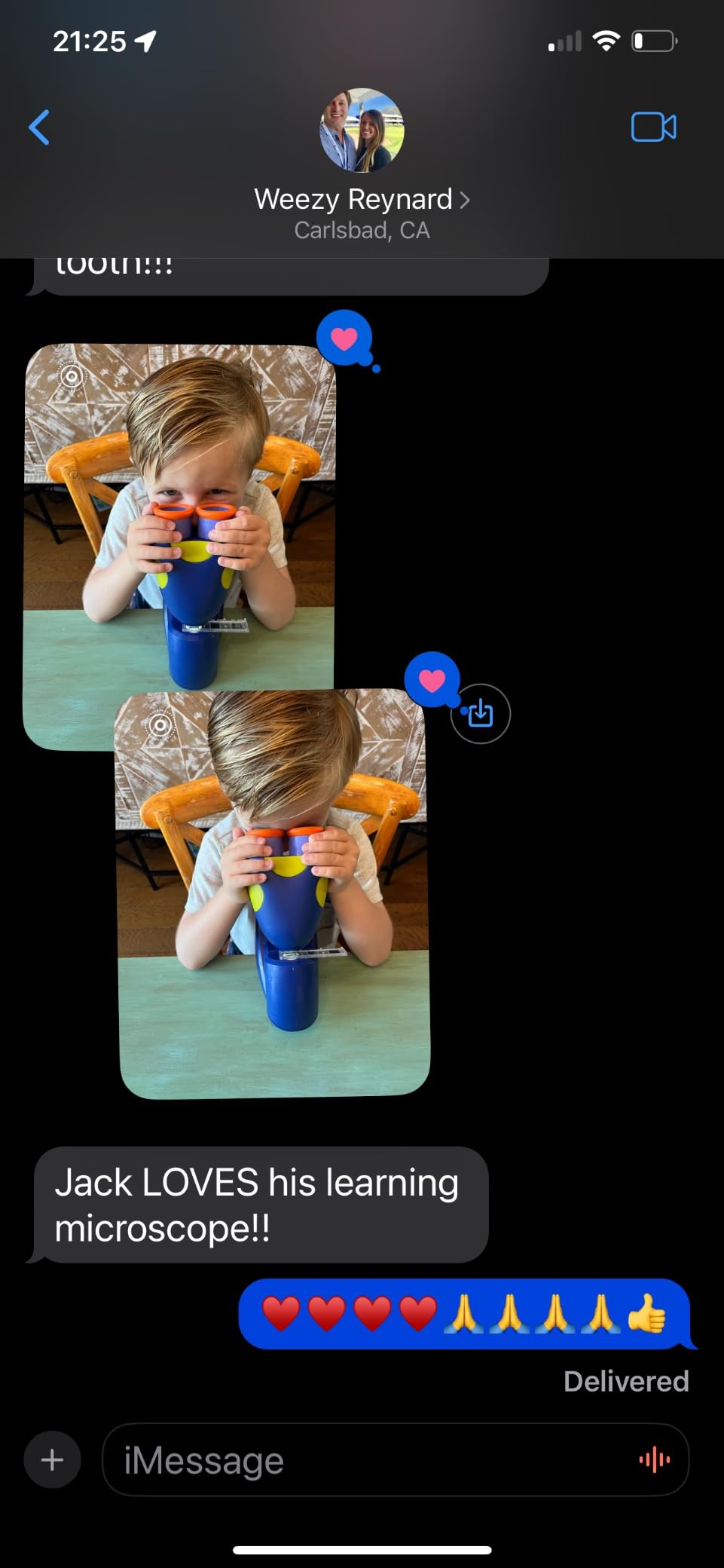
With the highest review count in this entire roundup at nearly 12k ratings, this is the scope most families in our comparison have actually lived with. The idea is simple and it works: you load a printed card into the slot, put your eye to one of two eyepieces, and a narrator with the voice of Bindi Irwin walks you through what is on the card, then quizzes you at the end.
What surprised us most is how long it holds a preschooler. Reviewers consistently describe a four-year-old returning to it on their own, which is exactly the behavior a first microscope needs to produce. The plastic body is chunky, the buttons are large, and the two eyepieces mean a child is not asked to close one eye.
It is worth being blunt about what this is. There is no real focusing function, because there is no real lens doing optical work on a specimen. It is a narrated card viewer that happens to be shaped like a microscope, and it will bore a child who wants to put their own leaf under the lens.

The two recurring frictions are mechanical rather than conceptual. First, each slide has a flat side and a grooved side that look almost identical, so young children seat them backwards and get no narration at all until an adult shows them the difference.
Second, a number of owners report that the slide storage compartment on some units does not latch fully, and cards fall out when the case is tilted. The manufacturer lists a one year warranty against defects, so a broken drawer is a support call rather than a loss.
Batteries are not included and the unit takes three AAA cells, so keep a spare set in the box. The narrated content is also English only, which matters if your child is learning in another language and you were counting on the voiceover.
Who this scope suits
This is the right pick for a child between three and five who is not ready to manage a focus knob, and for any family that wants a low-pressure first instrument. It is also the easiest of the ten to hand to a child while an adult cooks dinner, because nothing can be broken or misfocused.
It works well as a shared birthday gift for a group of similar-aged cousins, since each unit has its own narration and the activity is repeatable.
Who this scope does not suit
Skip it if your child has already shown interest in examining real objects, or if the goal is a homeschool curriculum. Once a child discovers that a real lens can resolve a leaf vein, the card-based approach tends to lose them quickly.
It is also a poor fit for a child over eight who wants to prepare their own slides from pond water or onion skin.
2. Carson MicroFlip 100x-250x – Pocket Scope That Clips to a Phone
Carson MicroFlip 100x-250x, LED UV Pocket Microscope with Smartphone Clip, STEM Education (MP-250)
100x-250x variable magnification
LED plus UV illumination
2.5 oz body with wrist strap
Pros
- Compact and light for fieldwork
- LED and UV cover varied conditions
- Flip-down slide base holds specimens
- Phone clip documents and shares findings
Cons
- 250x ceiling leaves cells and bacteria blurry
- Mirror-reversed image confuses new users
- Narrow field of view makes the specimen easy to lose
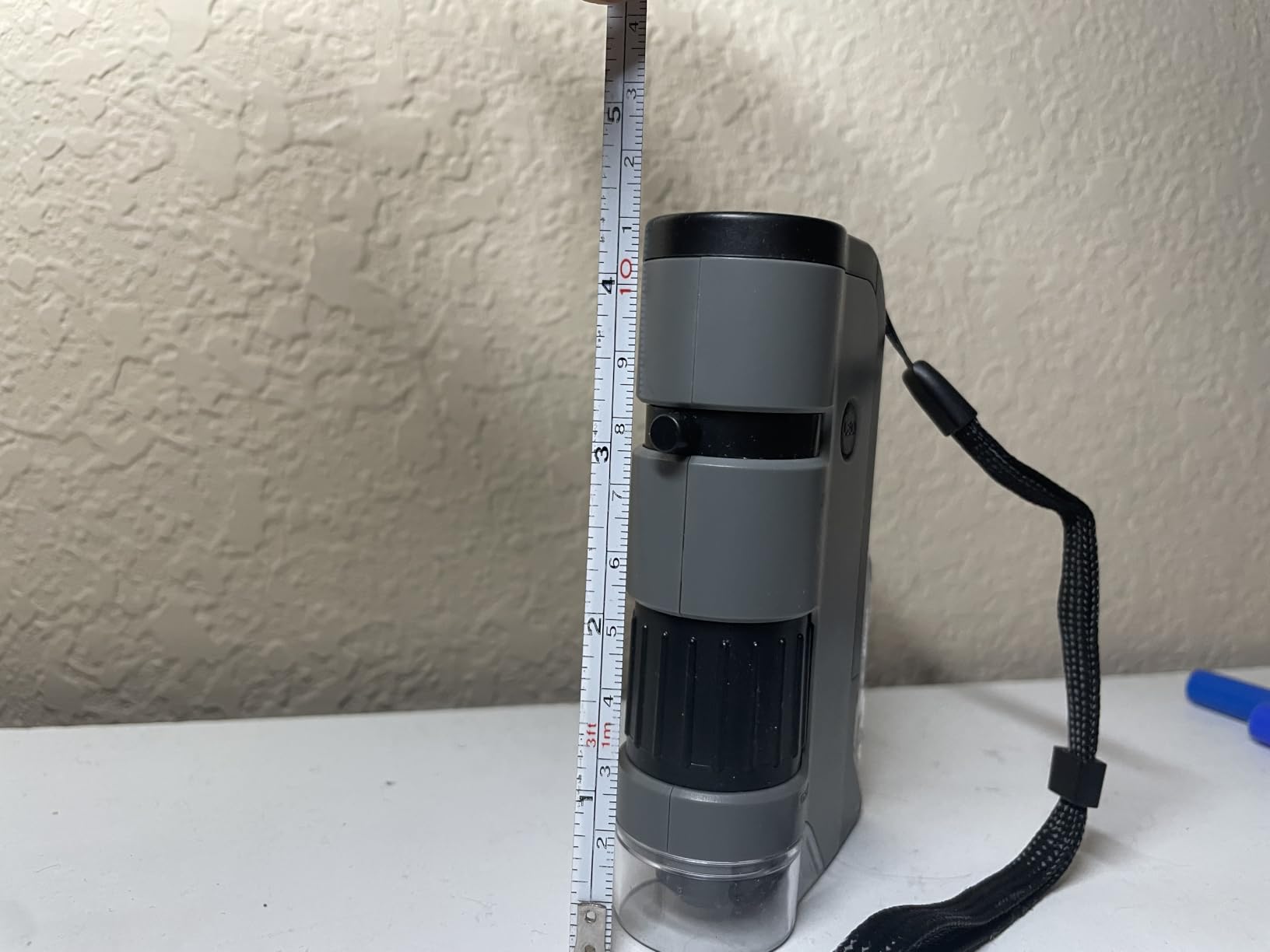
This is the microscope we would hand a child before a nature walk, because the whole package weighs about two and a half ounces and has a wrist strap. The MicroFlip uses a variable magnification lens rather than a stepped zoom, which reduces distortion and keeps the image cleaner as you dial in.
What separates it from a cheap loupe is the phone clip. A child can mount the scope over a smartphone camera, take a photo, and send it to a cousin or add it to a school project. That documentation habit is what turns a walk into an actual science activity, and reviewers call it out as the reason the scope earns repeat use.
The flip-down slide base is a small piece of engineering that matters more than it sounds. It holds a specimen steady while you line it up, which is otherwise the single hardest part of working with a handheld scope.
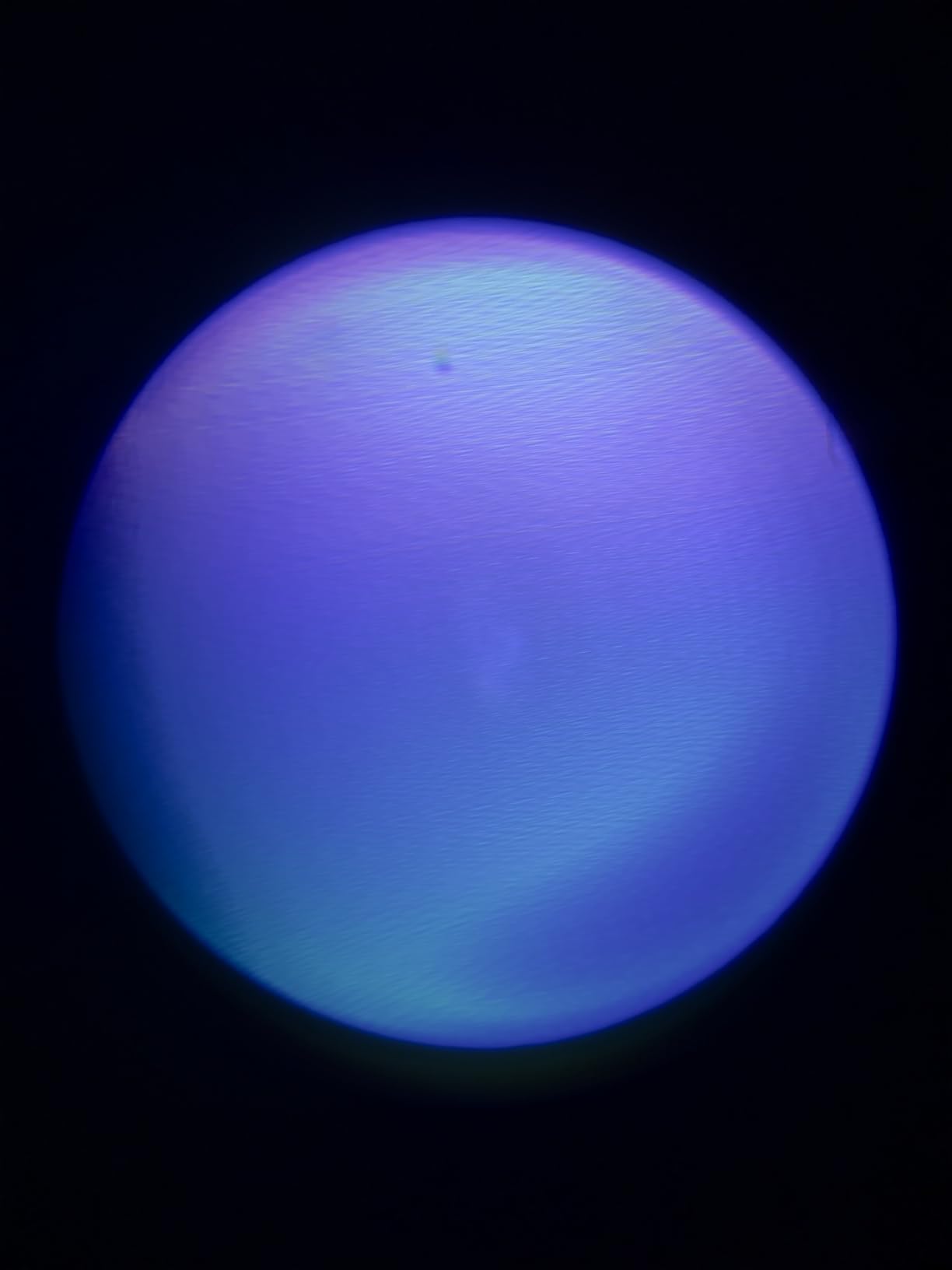
Now the honest limitation. At a 250x ceiling you are firmly in the detail-insufficient zone for cells. Plant cells, cheek cells and anything from pond water will look like a soft blur, and no amount of steady handling fixes it, because the optics simply do not carry that magnification.
Many adults, though, find it perfectly capable for stamps, fabric weave, coin detail, soil grains and pond water at low power. If your child is seven or under and wants to look at the world rather than at cells, that is exactly the right envelope.
The other friction point is the image orientation. Handheld scopes produce a picture that is not what your eye expects, and new users often think something is broken. Mention it once and it stops being a problem. The narrow field of view also means beginners lose the specimen quickly when they drift.
Who this scope suits
This is our pick for outdoor use and for a child who learns by collecting things. The phone connection also makes it the most shareable option in the roundup, which matters if the child has siblings or a class group that all want a look at the same specimen.
It is a genuinely portable instrument for a small dorm room or a shared apartment, where desk space for a full stand is limited.
Who this scope does not suit
It is the wrong tool for cell work of any kind, and it is not a substitute for a compound scope in a homeschool curriculum that covers biology topics. Children who want a projected image for a whole class should look at a screen-based unit instead.
It is also fiddly for very young children, who tend to lose the specimen before they find the focus.
3. Educational Insights GeoSafari My First Microscope – Starter Scope for Ages 3-5
Educational Insights GeoSafari My First Microscope
Ages 3-6
2.5x-8x magnification
8.1 x 10 inch plastic body
Kid-sized focus knob with overhead LED
Pros
- Two oversized eyepieces keep both eyes open
- Single focus knob a 3-year-old can operate
- Survives being knocked off a table
- Works on any small object
- Overhead LED improves clarity
Cons
- 8x maximum is closer to a loupe than a microscope
- No narration or content to sustain interest
- Some units arrive with the viewfinder support snapped
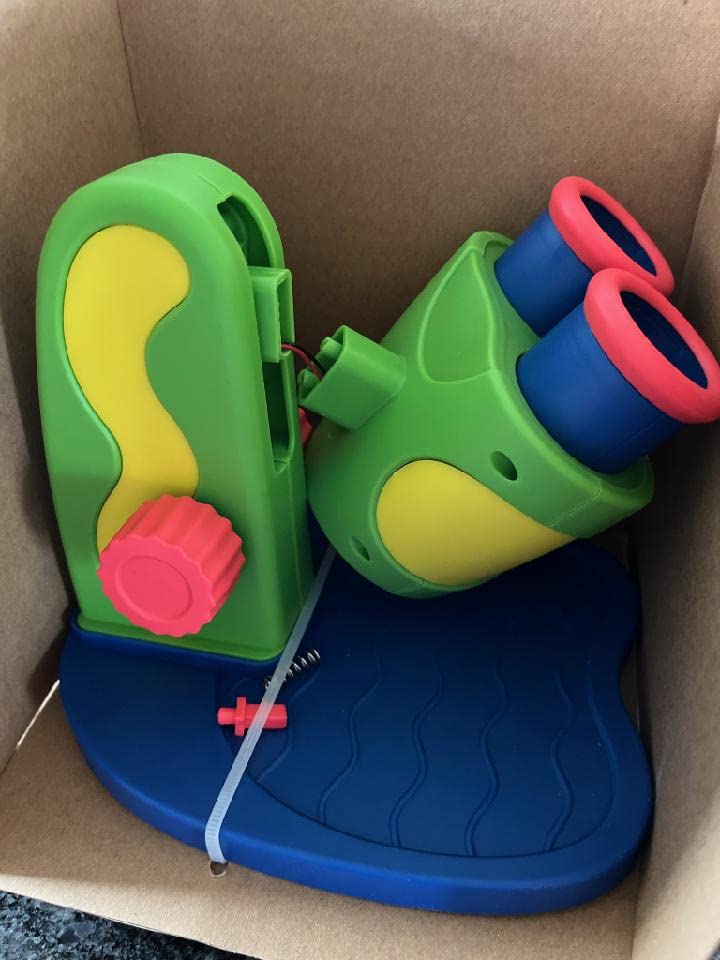
This is the smallest, simplest instrument in the roundup and the one built for the youngest age band. It runs from 2.5x to 8x, which sounds underwhelming until you understand what that range is for: a wide field of view where a whole leaf, a coin or a printed circuit board fits in frame and stays sharp.
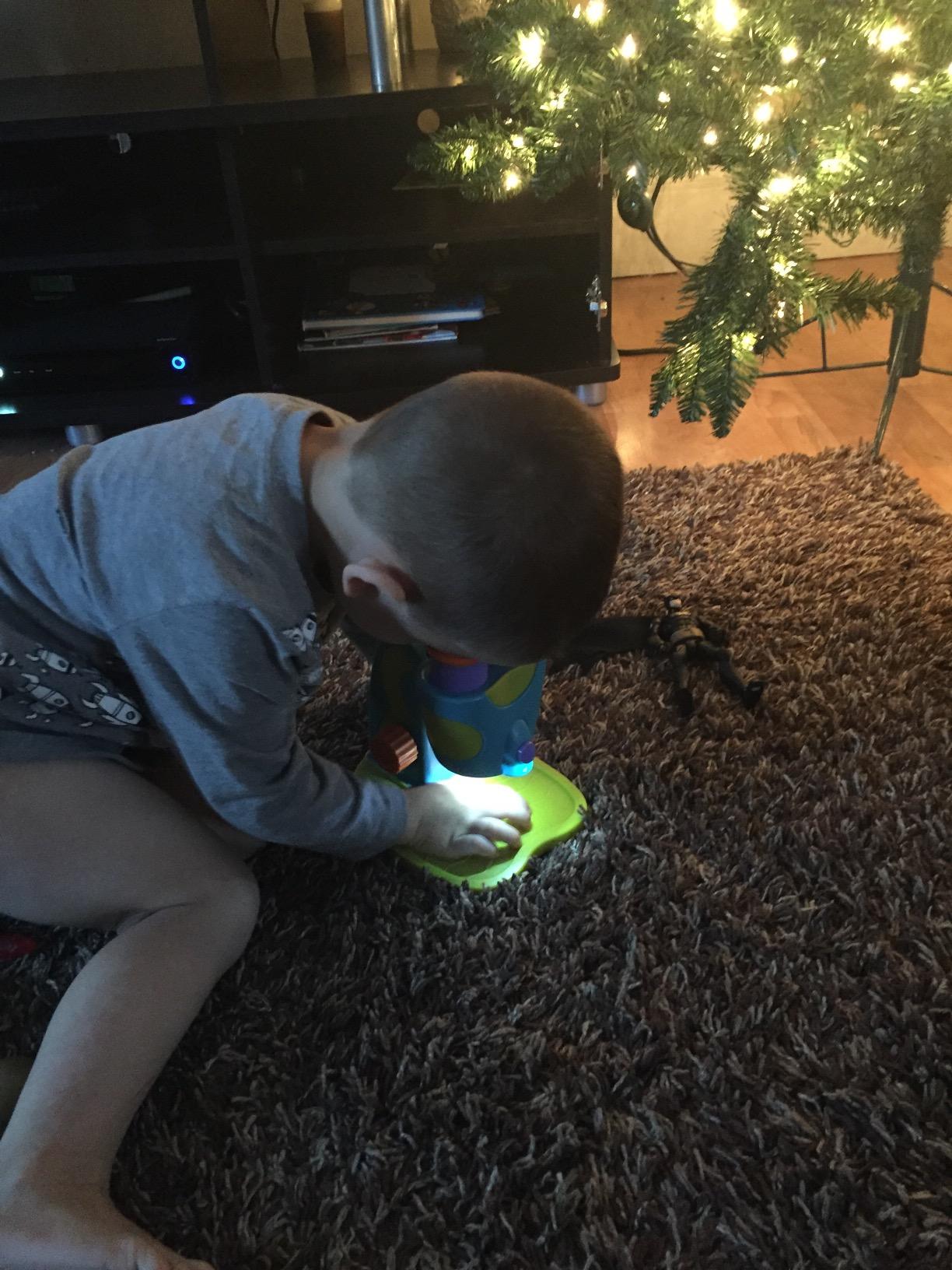
The design decisions are all about a three-year-old’s hands. Two extra large eyepieces mean no squinting or closing one eye, a single large focusing knob is the only control that matters, and non-skid feet keep it from sliding when a small hand grabs at it. The overhead LED is a real upgrade over the mirrors found in childhood microscopes of previous generations.
It also includes 12 prepared slides with storage, so a parent can hand it over fully stocked on day one. We found that this scope does not limit you to slides. It works on anything small you put on the sample tray, which is how most four-year-olds actually use it.
The recurring complaint is honest and worth stating plainly. Eight times magnification is closer to a jeweler’s loupe than a microscope, and an older child who puts their eye to it and sees a slightly larger leaf will be unimpressed. That is a fine outcome for a four-year-old and a disappointing one for a nine-year-old.
There is also no learning content here. Unlike the narrated scope, this one gives you glass and nothing else, so sustaining interest over more than a few weeks is entirely on the parent or the kit that comes with it.
A smaller but real quality note: a recurring number of buyers report units arriving with the plastic viewfinder support already snapped off from shipping. Check the eyepiece arm before your child opens the box, and keep the box because parts are hard to source.
Who this scope suits
This is the right first instrument for a three to five year old, and for any parent who wants a durable plastic microscope that a small hand can operate without help. The wide field of view is what makes a preschooler say the word microscope rather than lose interest in a minute.
It also works as a second scope for a sibling in the same age band, since the two eyepieces make sharing at a glance possible.
Who this scope does not suit
It is not a choice for a child over seven who has read about cells. Anyone expecting to look at a prepared onion slide in detail will find 8x underwhelming and there is no path upward from this unit.
It is also the wrong choice for a child who wants to make their own slides, since there is no blank slide or coverslip included.
4. National Geographic Dual LED Microscope – Real Glass Optics for Ages 8-12
National Geographic Dual LED Microscope Science Kit for Kids Ages 8-12
Ages 8-12
20x and 50x glass optics
Upper and lower LED illumination
Over 50 accessories, padded case
Pros
- Dual lighting switches between slides and solid objects
- Sharper images than typical toys at this tier
- Long working distance protects the lens
- Metal and glass build
- Brine shrimp and mini geode experiments
Cons
- Glass stage and slides break easily
- Under-lamp can be too bright
- Eyepieces do not lock in
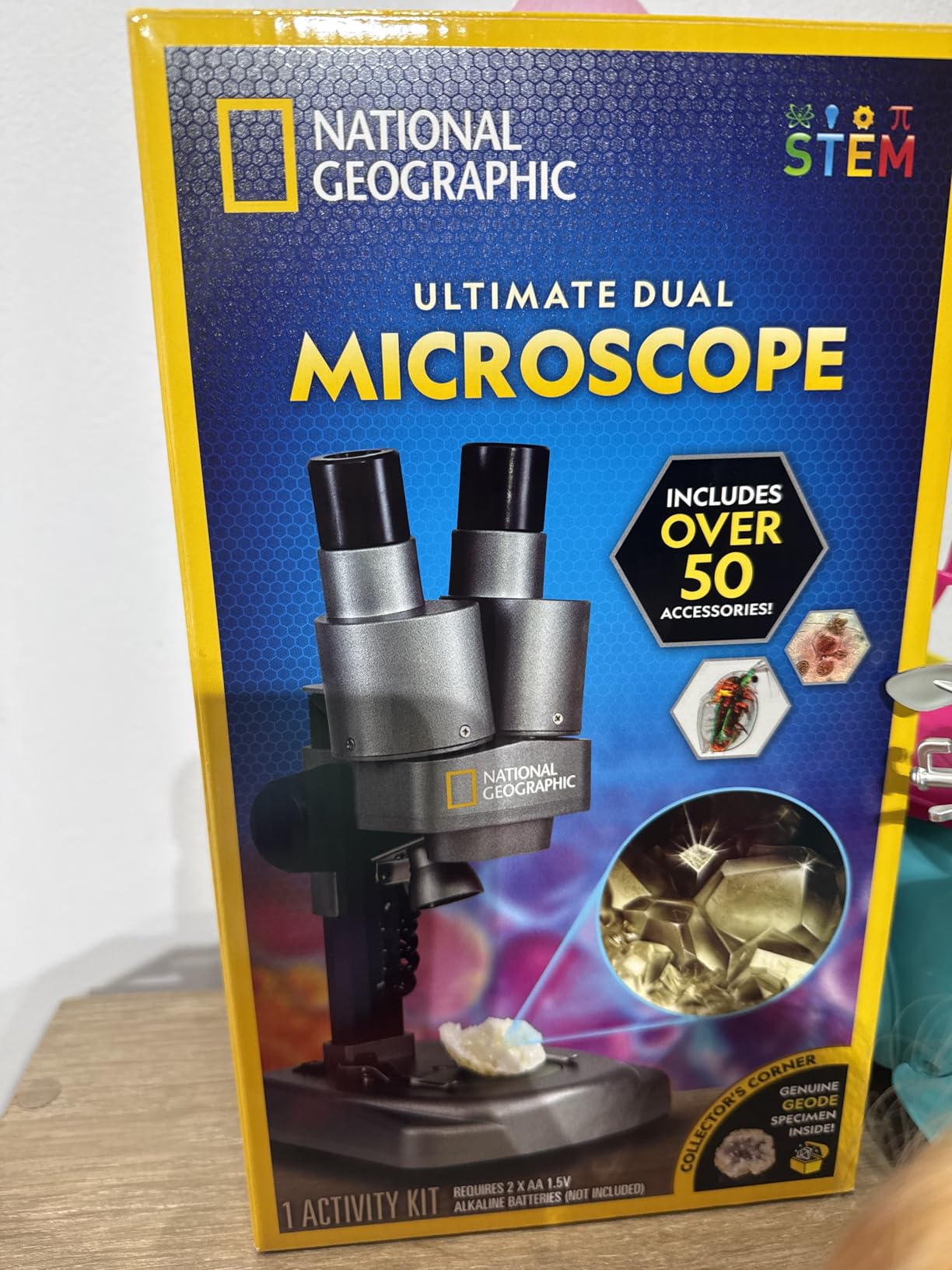
This is the step-up model in the roundup and the one we would call the best all-round buy for a child moving from a plastic toy to real observation. The optics are achromatic glass at 20x and 50x, which is a genuine quality jump from molded plastic lenses, and the 12 degree real angle of view is a real number rather than a marketing one.
The dual illumination is the feature families mention most. The lower lamp shines up through a slide for prepared specimens, and the upper lamp illuminates a solid object so you can look at a coin, a leaf or a rock without preparing anything. Having both in one instrument removes the biggest reason kids give up, which is having the wrong tool for the thing in front of them.
The accessory count is genuinely large. You get 10 prepared slides, blank slides and covers, tweezers, an eye-dropper and a mini geode to crack open, plus brine shrimp eggs for a multi-day experiment. The padded storage container matters more than it sounds if the scope lives in a small room and gets packed away between sessions.
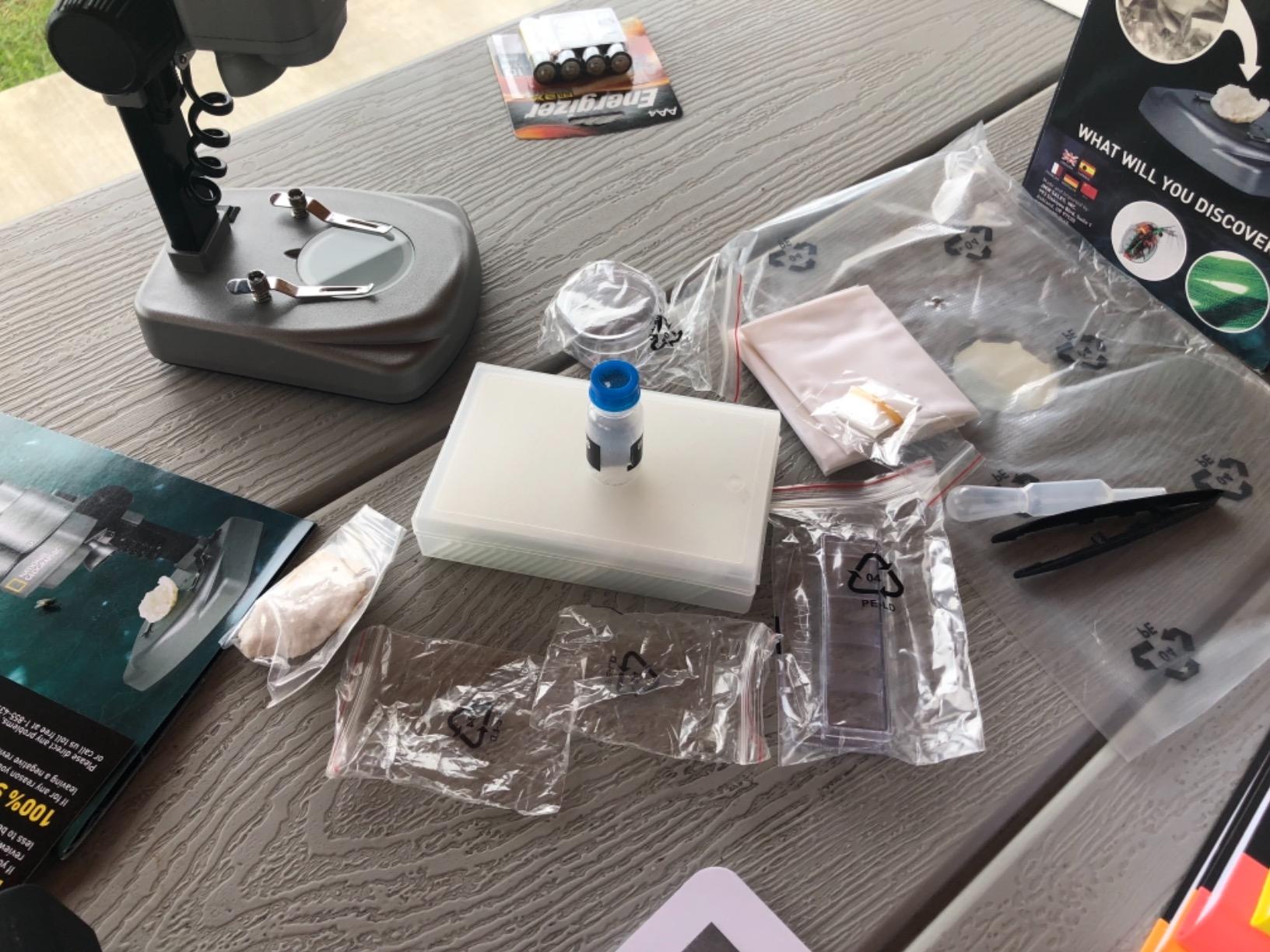
Durability is the trade-off. Glass stages, glass slides and glass eyepieces are exactly what gives you real optics, and they are also exactly what breaks when a seven-year-old sweeps a bench. Several reviewers report cracked slides, and replacement parts for a kit like this are not always easy to source.
The eyepieces do not lock into the head, so they can be pulled out if the scope is carried from behind, which is a habit young children have. Keep a finger on them during transport.
One practical lighting note: the lower lamp can be bright enough to wash out a prepared slide, and the common workaround in our testing is to slip a thin layer of wax paper between the lamp and the stage. It diffuses the light without dimming the specimen.
Who this scope suits
This suits a child between seven and twelve who is ready to be introduced to real glass optics, and any homeschool family that wants one instrument covering both solid objects and prepared slides. The brine shrimp and geode experiments are what keep the kit interesting after the first week.
It is also a solid choice as a shared family instrument, since the accessory set supports multiple children working at once.
Who this scope does not suit
It is not for a child under seven, who will struggle with the glass components rather than learn from them. It is also not a substitute for a true compound scope if your child is heading toward cell biology, since 50x stops well short of where the interesting detail lives.
Households prone to losing small parts should skip it in favor of an all-plastic unit.
5. Carson Pocket Micro 20x-60x – Best Value Field Microscope
Carson Pocket Micro 20x-60x LED Pocket Microscope Handheld STEM Toy (MM-450)
20x-60x variable zoom
1.8 x 1.1 x 3.9 inch body
Aspheric lens with integrated LED
Pros
- Pocket-sized and durable over years of use
- 20x already resolves fabric fibers and ink dots
- Stiff wheels resist bumps once set
- LED lights the subject evenly
Cons
- Wheels are stiff and hard to turn
- Very short depth of field
- Image is inverted
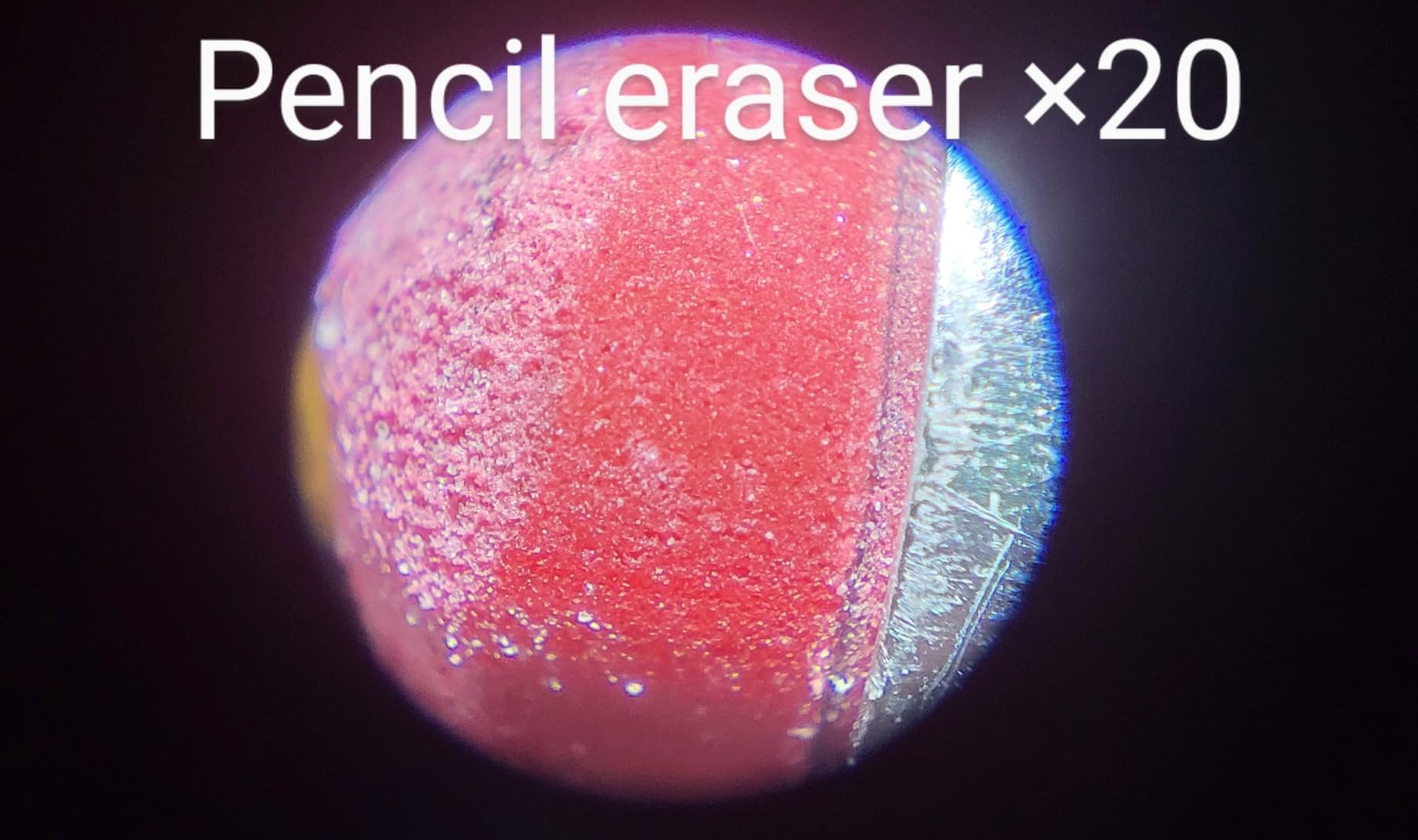
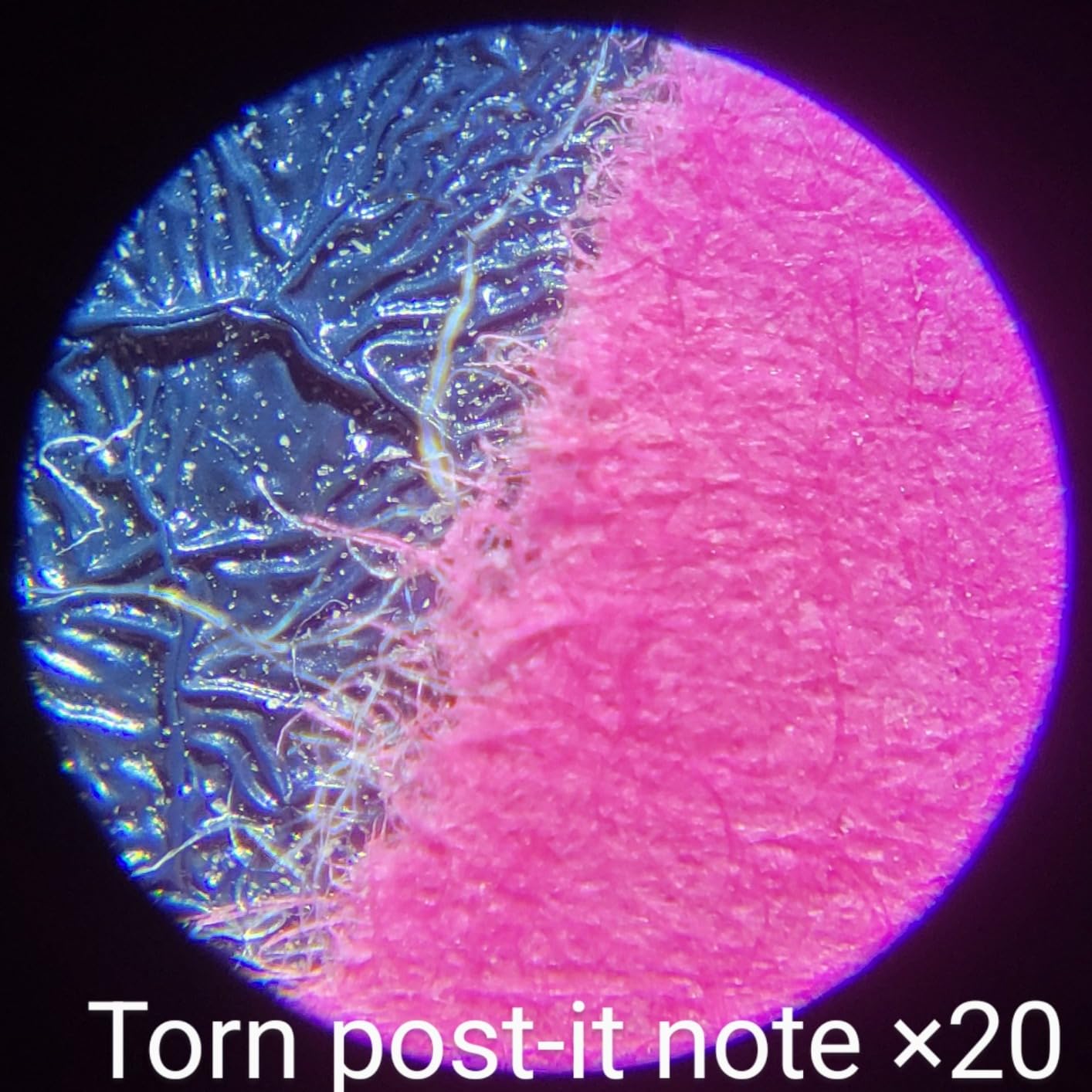
This is the cheapest credible pocket microscope in the roundup and the one most often recommended to adults who already own a jeweler’s loupe. The surprise is that at 20x it resolves fabric fibers and the dots of printed ink, which many pricier loupes struggle to do.
The aspheric lens system is the reason for that. It reduces distortion across the zoom range compared with a simple convex lens, so the image holds together as you turn the top wheel instead of collapsing at the edges.
Two wheels do the work, and the layout is worth memorizing. The top wheel adjusts magnification and the bottom wheel adjusts focus. Once you set the focal point, the stiffness of those wheels is an advantage rather than a flaw, because a knock from a backpack strap will not throw the image out of focus.
The honest weaknesses are all handling issues. The wheels take real effort to turn, which frustrates small hands, and the long working distance means you have to bring the scope further away from a small subject than you expect, which makes lining up fiddly for a young child.
Depth of field is very short, so only a thin slice of a specimen is sharp at once. That is normal for this class of instrument, but a child who does not know it will keep adjusting focus forever.
The image is also inverted, which needs a sentence of explanation up front. And there is no lens or travel cover included, which for a pocket tool that lives in a jacket pocket is a genuine gap. Owners report years of regular use, so the build itself is not the concern.
Who this scope suits
This suits a family that wants a first instrument for outdoor observation, and any adult who wants a compact second scope for stamps, coins, minerals and fabric inspection. The aspheric lens makes it a strong performer for the price tier, and durability reports are consistently good.
It is a natural fit for a dorm or a small apartment, since it takes almost no storage space at all.
Who this scope does not suit
It cannot do cells or anything requiring transmitted light, so it is the wrong choice for a biology curriculum. It is also a poor match for a child under six, who will find the stiff wheels and short depth of field a poor experience.
Anyone needing a long working distance for dissection work should look at a stand-mounted stereo scope instead.
6. BEBANG 2000X Compound Microscope – Best Step Up to Real Optics at Ages 9-12
2000X Compound Microscope for Kids Adults: Microscope for Biology Education
100x-2000x compound optics
5.51 x 3.94 x 11.42 inch metal frame
Top and bottom LED with condenser
15 slides, phone adapter, bag
Pros
- True compound optics with coarse and fine focus
- Reaches 2000x for cells and pond water
- Metal frame feels far sturdier than plastic
- Dual illumination plus condenser improves color
- 15 slides and a carrying bag included
Cons
- Monocular viewing means closing one eye
- Setup takes practice for younger kids
- Sample quality varies between slides
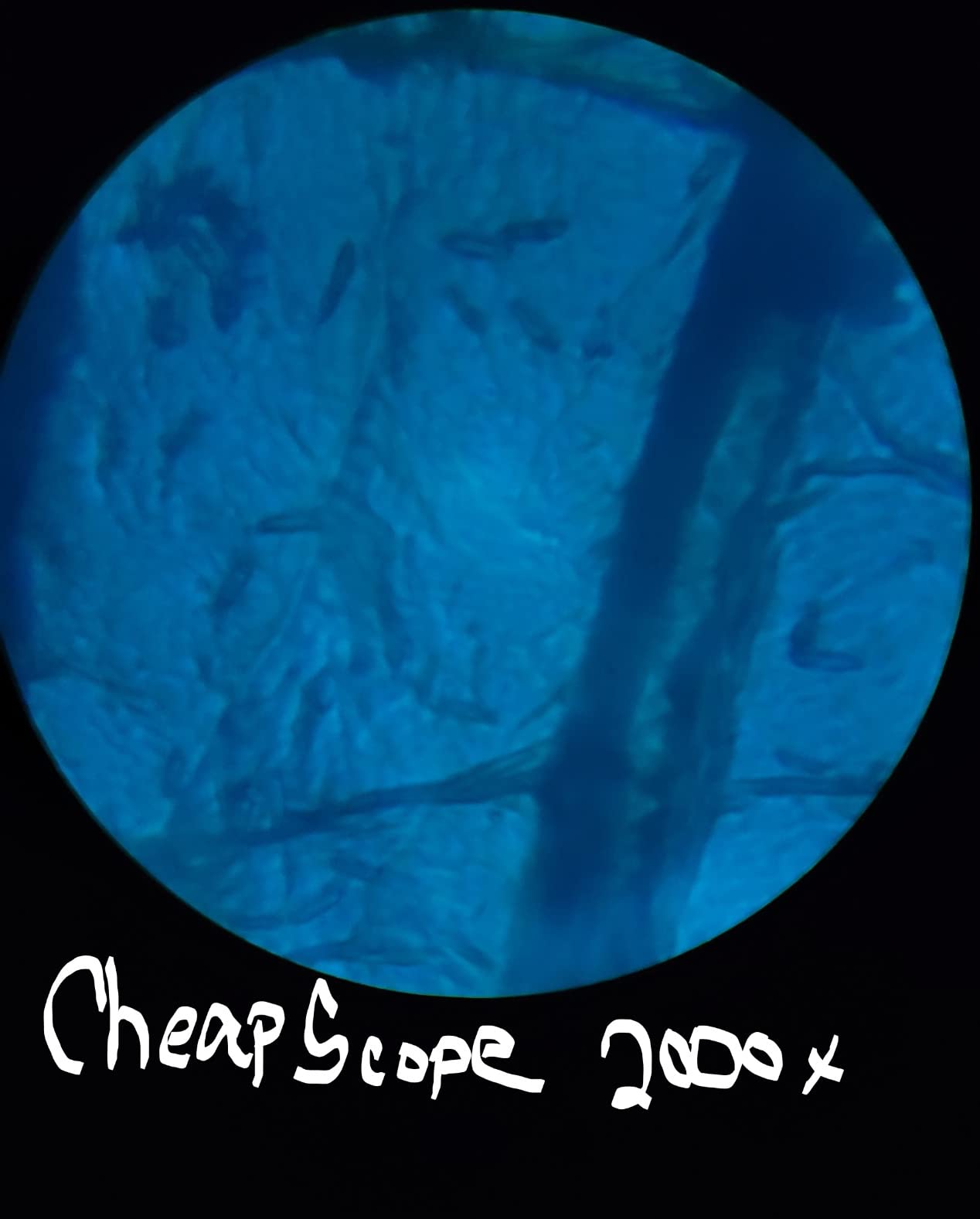
This is the only true compound light microscope in the roundup, and that makes it the instrument a parent should buy if the word real microscope matters to them. A 25x wide-field eyepiece stacks with 4x, 10x and 40x achromatic objectives to give six settings, from 100x through 2000x.
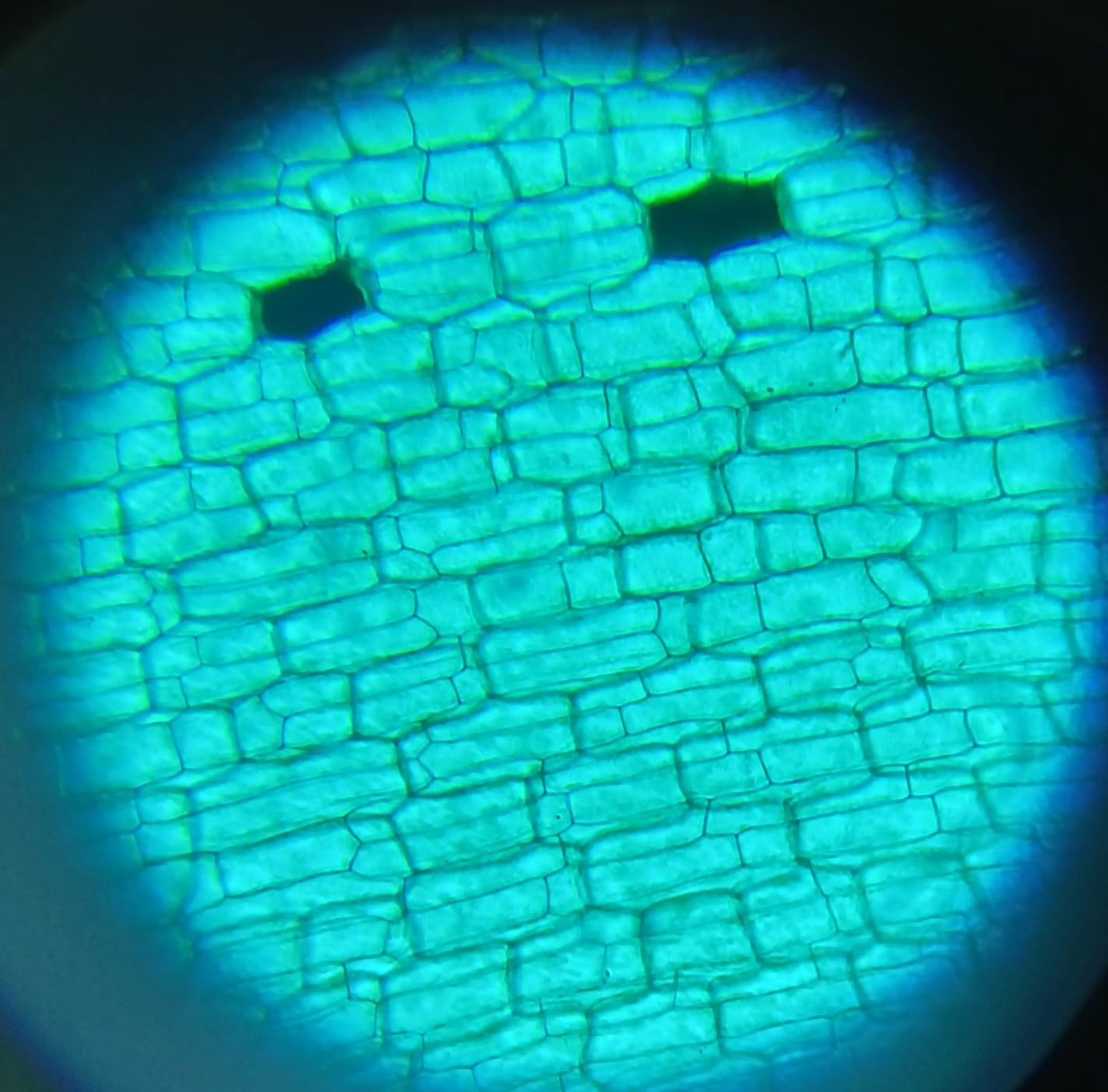
Use the honest reading of those numbers. The 100x and 200x settings are the ones a child will use most, and the 2000x figure is the top of the range rather than a daily setting. Even so, this is the first unit in the roundup where a child can meaningfully resolve a cell wall or look at a pond water drop and see organisms moving.
The coarse and fine focus knobs on a solid metal frame are the difference between this and a plastic school scope. Fine focus lets a child bring an image sharp slowly instead of slamming the stage and losing the specimen, and that single control is what keeps a nine-year-old engaged for a full session.
Illumination is handled properly, with top and bottom LED brightfield lighting, a single-lens condenser and a disc diaphragm. Those components are what separate a usable image from a washed-out one, and reviewers consistently credit the condenser for better brightness and color.
The main limitation is the monocular head. Children look through a single eyepiece with one eye closed, which is uncomfortable for younger users and tiring over a long session. Parents in online microscopy communities frequently report that monocular is actually easier for a child to learn on, because there is no binocular alignment to confuse, so the trade is not as one-sided as it first looks.
A smaller quality note: reviewers report that sample quality varies, meaning some included slides need more careful preparation than others. Bring your own blank slides and coverslips and make your own onion skin, which is where the real learning happens anyway.
Who this scope suits
This suits a child from about nine upward, and any homeschool family planning to go past elementary science. The metal frame and fine focus control make it the instrument most likely to survive being handed between two children and several grade levels.
It is also the only pick here that handles pond water, yeast and brine shrimp properly, and the included carrying bag suits a small-space setup.
Who this scope does not suit
It is not for a child under nine. The monocular head, the stage movement and the multi-knob focusing all add friction before a young child has the patience for them, and the setup curve is the reason reviewers flag it as a learning curve.
It is also not the right choice if the goal is looking at solid objects such as coins or leaves, which need a stereo scope rather than transmitted light.
7. National Geographic 400x Microscope – Easiest First Scope for Ages 6-8
National Geographic Microscope for Kids with Up to 400x Magnification
Up to 400x in three steps
11 x 6.7 x 12 inch plastic body
Lights above and below the stage
Lab guide with game and merit badges
Pros
- Intuitive enough for a 5-year-old to operate alone
- Above and below lighting handles slides and solids
- Blank slides with pipette and tweezers for self-prep
- Activity guide with a game and merit badges
- Durable plastic build
Cons
- Focus knobs are clunky and imprecise
- Plastic feels light in the hand
- 400x ceiling makes slides look plain
- Some younger children lose interest fast
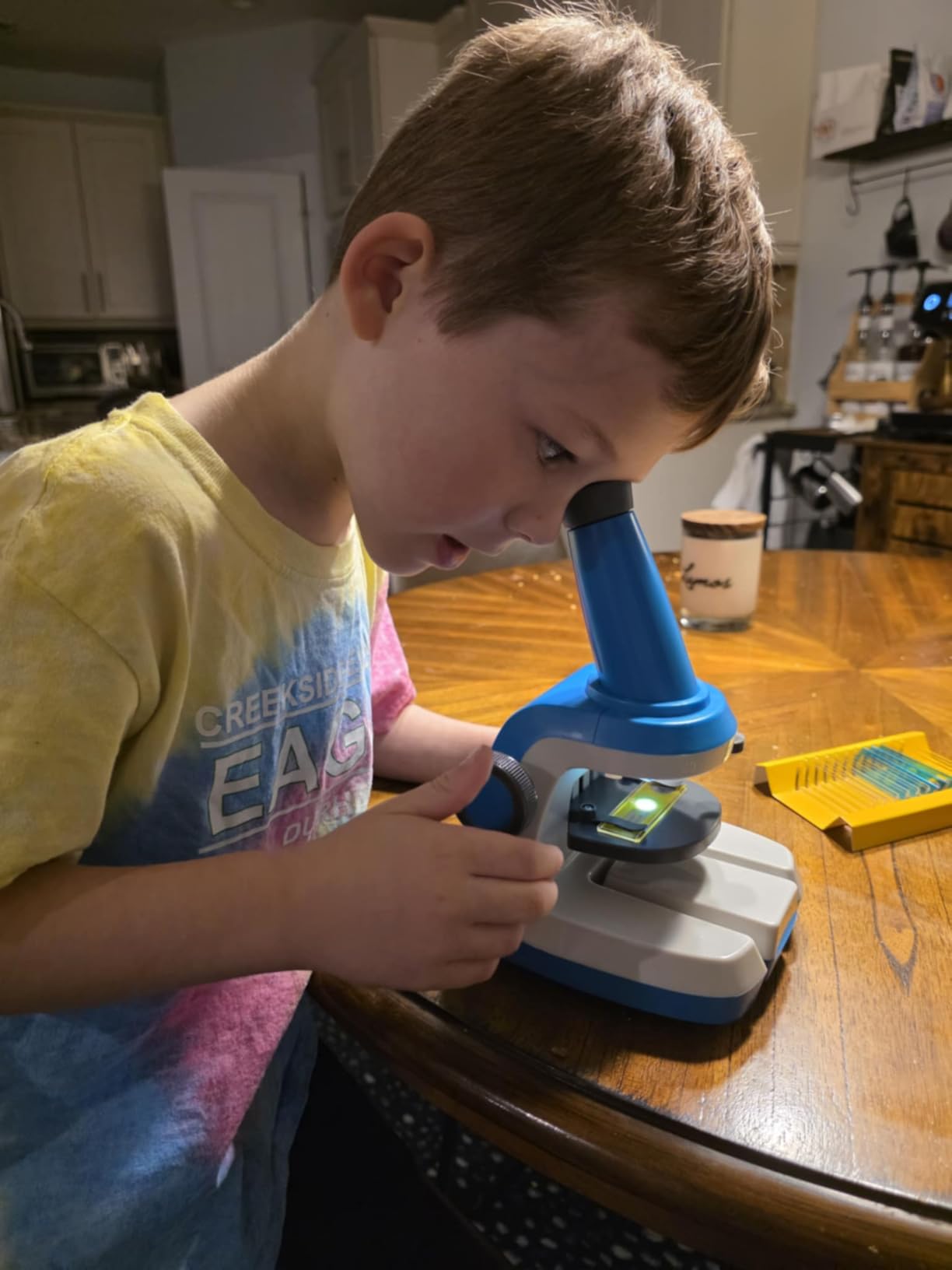
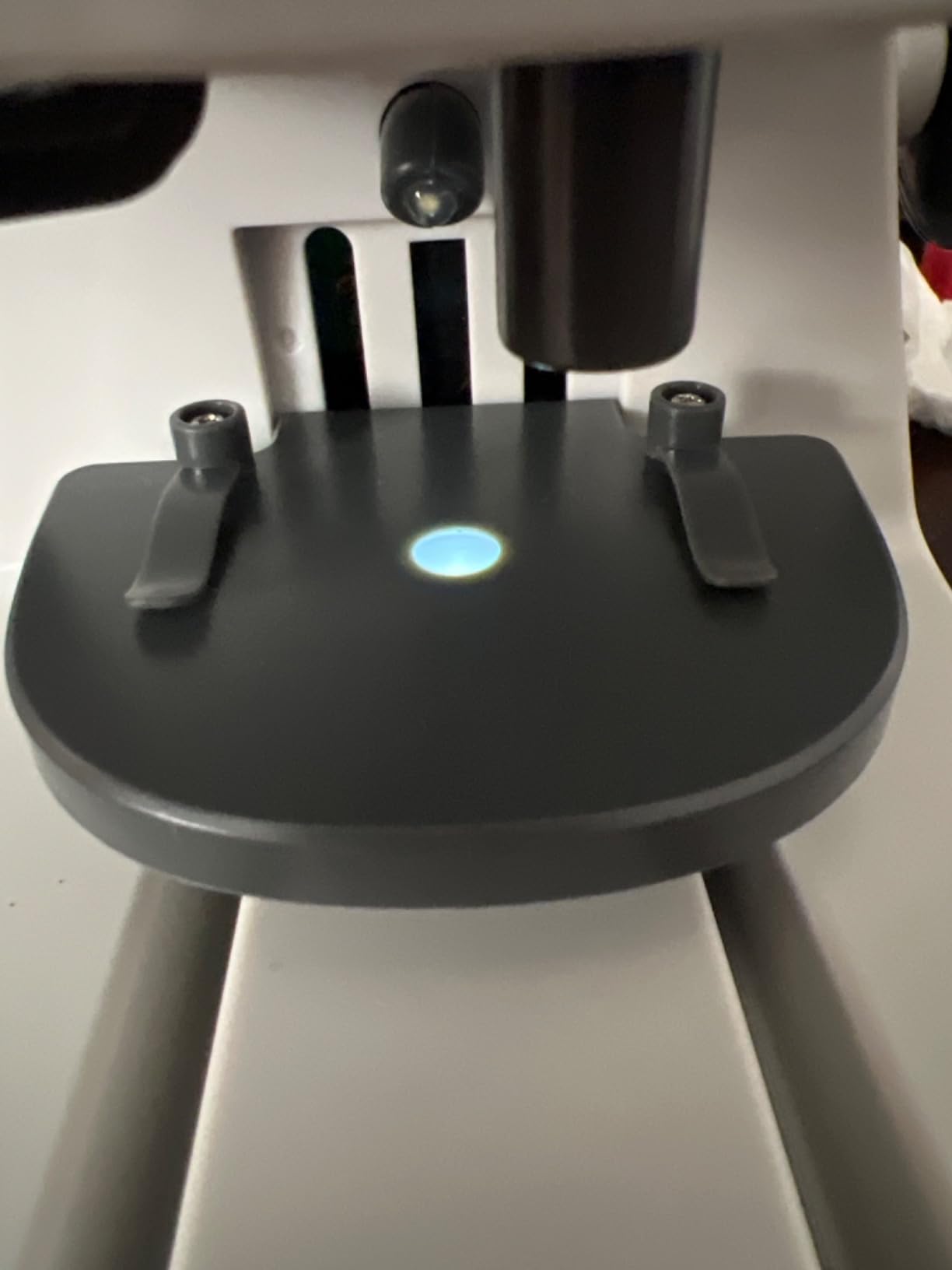
This is the first microscope in the roundup that a five to seven year old can genuinely run without an adult, and reviewers describe exactly that. The large focus knobs, the soft-touch eyepiece and the adjustable platform are sized for small hands rather than for a lab.
Three magnification levels up to 400x cover a useful range for a beginner, and the lighting above and below the stage means it handles both a prepared slide and a solid object without a second instrument. The 45 degree real angle of view is one of the more comfortable sight lines in this group.
The accessory set is the part families praise most after the operability. You get 6 prepared plant slides, 6 rocks and minerals, 6 blank slides, a pipette, a specimen dish and tweezers, which is enough to make your own onion skin or peel on day one rather than working only from what is in the box.
There is also a lab guide with viewing activities, a super scientist game and merit badge stickers, which is a retention tool rather than a gimmick. It gives a child a reason to come back to the scope after the first novelty wears off.
The honest drawback is the focusing mechanism. Reviewers describe the knobs as clunky and imprecise, sticking and then jumping, so a child can lose a slide while trying to bring it sharp. This is the single most common complaint, and it is worth mentioning to your child before they start.
The second drawback is the ceiling. At 400x through plastic optics, a prepared plant slide looks flatter and less interesting than families expect, and adults or children over seven quickly outgrow it. The plastic body also feels light in the hand, which reads as inexpensive.
Who this scope suits
This suits a child between six and eight, especially one who is ready to make their own slides but not ready for a compound scope. The rocks and minerals in the box also make it a good birthday gift for a kid who collects things.
It is a strong choice for a shared household, since the accessory budget supports two children working at the same time.
Who this scope does not suit
It is a poor choice for a child who has already been through two plastic microscopes and wants cell detail, or for a teen heading into biology. The imprecision of the focus knobs also makes it frustrating for an adult who wants to use it themselves.
If your child is under five, the simpler preschool scope is a better match.
8. Nancy B’s Science Club Microscope – Guided Activity Kit for Ages 8-12
Educational Insights Nancy B’s Science Club Microscope for Kids, Microscope Kit, Gift for Boys & Girls, Ages 8-12
30x-400x two-in-one scope
9.2 x 8.7 x 4.3 inch plastic body
Top and bottom LED
Rubber eye cup, 26-piece tool set
Pros
- 22-page activity journal gives guided structure
- Two-in-one light and dissecting design
- Three magnification settings from 30x to 400x
- 26-piece tool set for making slides
- Self-illuminated rather than a mirror
Cons
- Focusing is janky: adjusting the knob makes the slide shift on all three axes
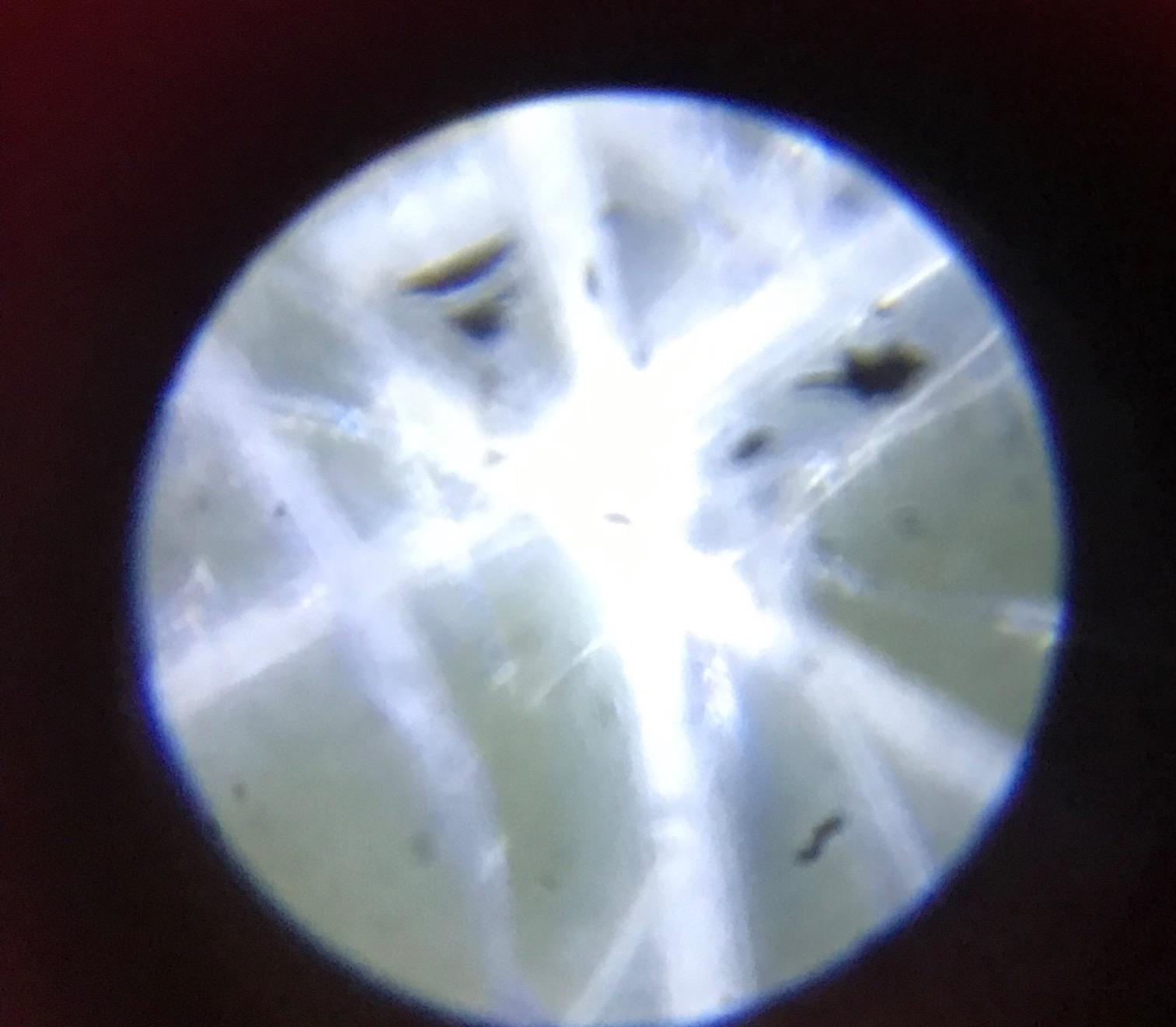
- Optics are plastic and images are fuzzy especially at higher magnification
- Very light build which several buyers read as flimsy
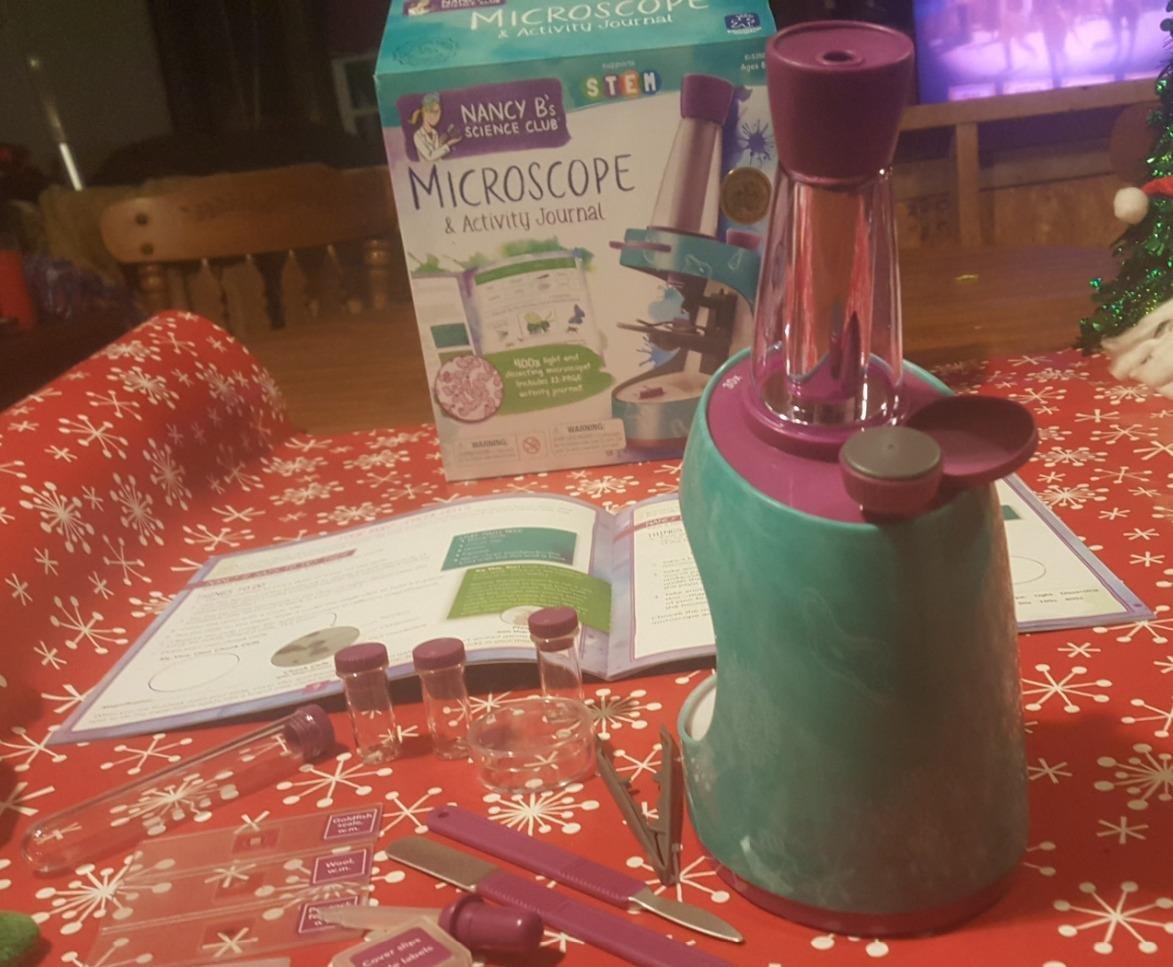
What separates this kit is the 22-page keepsake activity journal. Almost every other microscope in this roundup hands your child a box of parts and leaves the rest to you, and this one lays out a sequence of experiments with space to record results. For a child who loses interest quickly, that structure is often the deciding factor.
The scope itself is a two-in-one design rated from 30x to 400x across three settings, with top and bottom illumination and a rubber eye cup. The rubber cup matters more than it sounds, because it blocks stray light and stops a child pressing their eye hard against the plastic.
Because it works as both a light and a dissecting microscope, children can examine solid objects as well as slides without a second instrument. Reviewers report the tool set supporting slide making from the very first session, which is the right order of operations.
Owners report a wide age range in practice, with some families running from a five-year-old up through a homeschooled fourteen-year-old, and the Parents Choice Gold Award recognition reflects that. That flexibility makes it a good single-instrument buy for a family with kids spread across several ages.
The focusing is the weak point. Adjusting the knob shifts the slide on all three axes, so a child has to fight the instrument to bring an image sharp, and that is the most repeated complaint in the reviews.
The optics are plastic, so images stay fuzzy at the higher settings, and the 400x label overstates what you will see. The build is also very light, which several buyers read as flimsy. A few children under seven find the whole thing too complex without an adult nearby.
Who this scope suits
This suits a family with a wide age spread who wants one instrument that works from early elementary into the early teens, and parents who want the experiments written down for them. It is a strong birthday or holiday gift for that reason alone.
It also suits a child who likes documenting what they see, since the journal gives them somewhere to put it.
Who this scope does not suit
It is a weak choice for a child under seven without adult help, and a poor choice for anyone who cares about optical clarity, because plastic lenses never deliver the detail the 400x figure suggests.
Families already running a compound scope will find this redundant, since it cannot substitute for real glass optics on cell work.
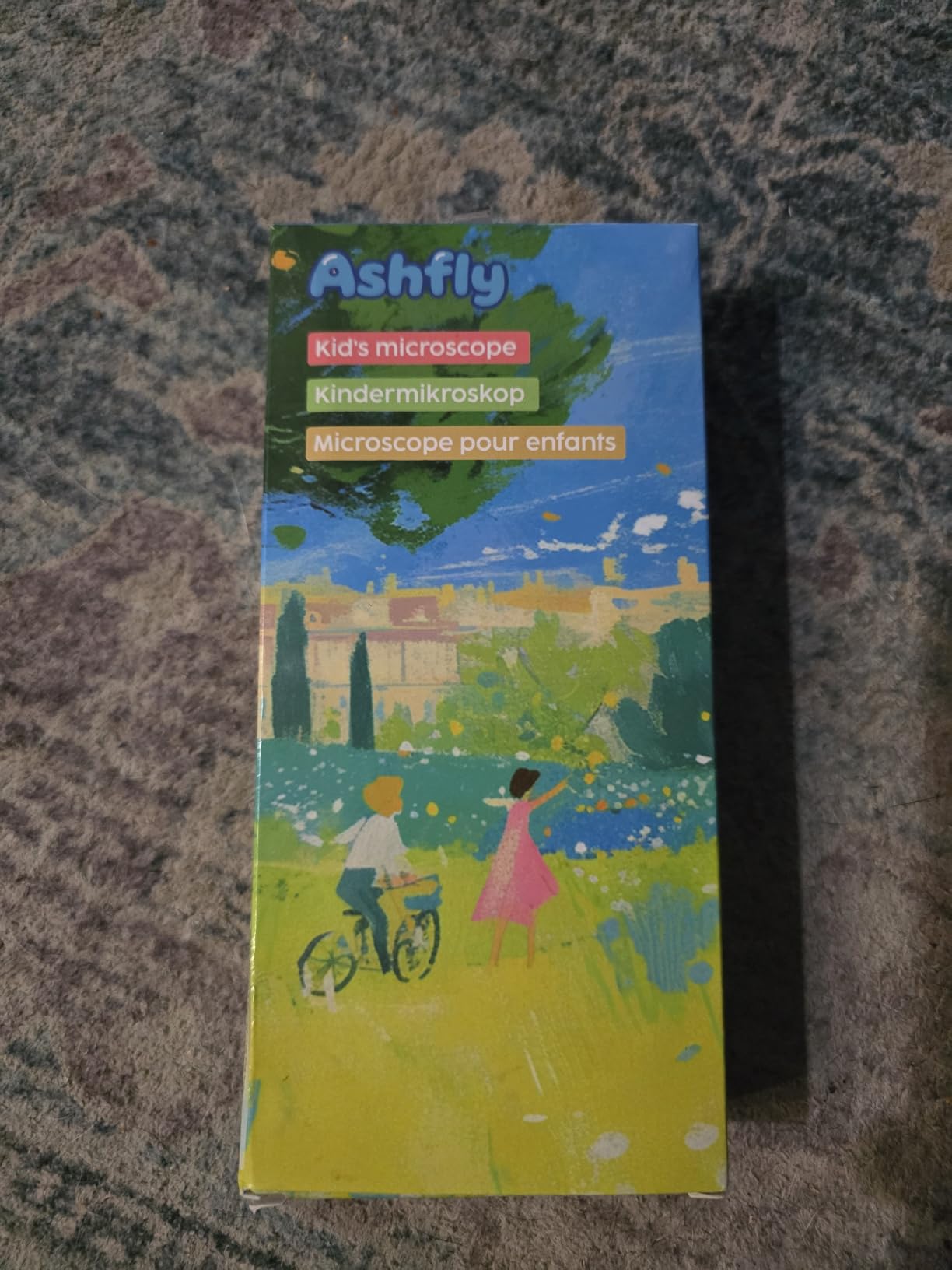
9. Ashfly 500X Digital Microscope – Screen-Based Scope for Ages 5-12
Ashfly Kids Microscope, 500X Digital Magnifying Glass, STEM Toy, Purple
Ages 5-12
500X digital with macro autofocus
7 x 2 x 3 inch body, 4.9 oz
2-inch IPS screen, 8 adjustable LEDs
Pros
- Macro autofocus removes the fiddly focus wheel
- Screen viewing is easier on the eyes
- 8 adjustable LEDs give even lighting
- Photo capture supports comparison and projects
- USB-C rechargeable and one-handed
Cons
- 2-inch screen is small for detail and sharing
- Memory card not included for video
- Digital magnification claims are unreliable
This is the most approachable digital scope in the roundup, and the reason is one word: autofocus. The macro autofocus brings the rear lens close to the object automatically, which removes the focus wheel that causes more early frustration than any other single feature on a kids microscope.
It is also a screen-up design, so a child never presses their face into an eyepiece. Reviewers note that this is easier on the eyes and, just as importantly, easier to hand to a second child who wants to see what the first one is looking at.
The eight adjustable LEDs are the detail that gets overlooked. Plants, coins, feathers and fabric all have very different surfaces, and being able to dial the lighting rather than accept whatever you get is what keeps the image usable across a whole collection of specimens.
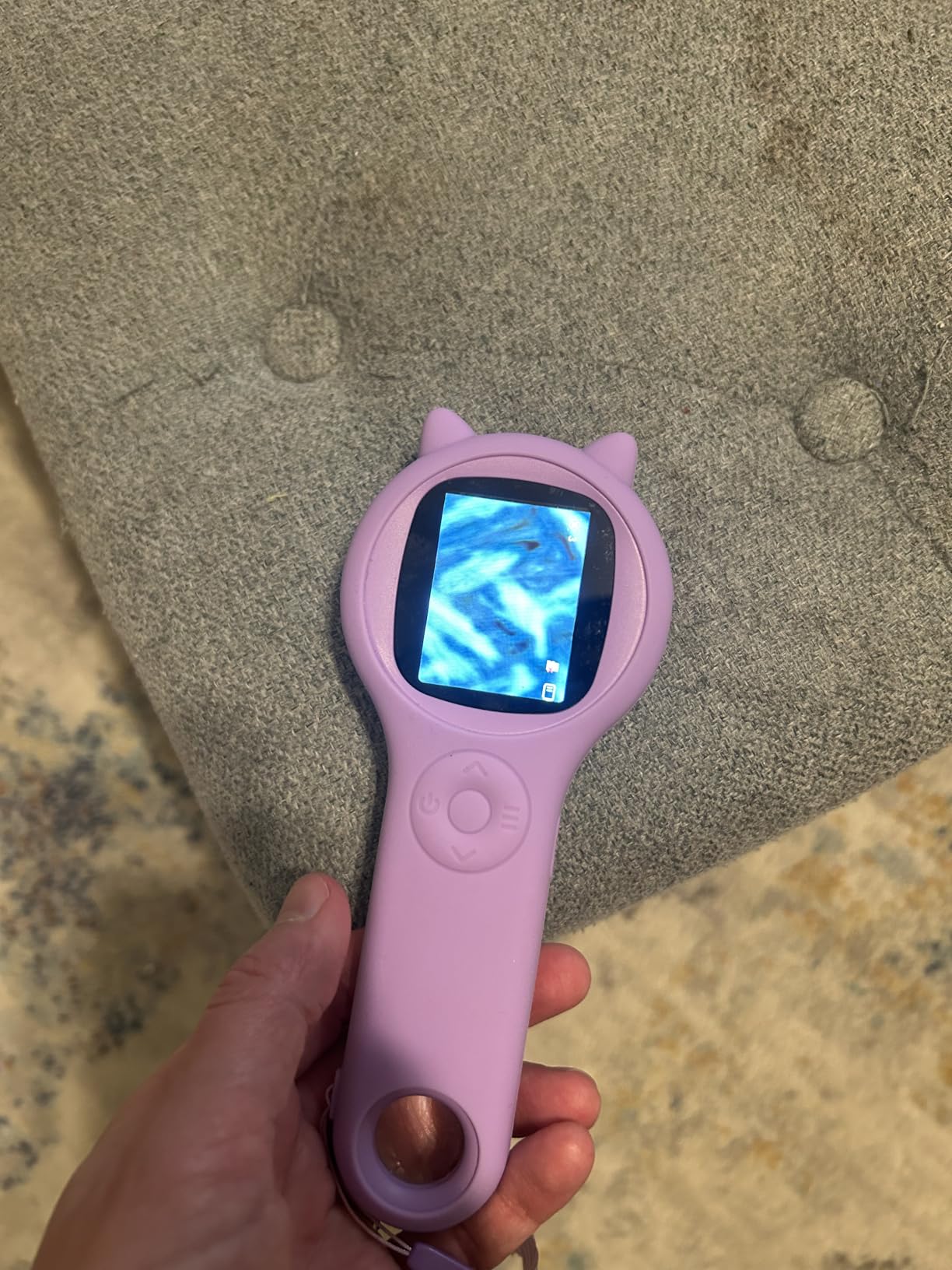
Photo capture is built in, with memory for up to 200 photos and expansion to a 64GB microSD card for video. Storing images is what lets a child compare a leaf from one walk against a leaf from the next, which is a genuine step toward real scientific thinking.
It also switches to a traditional magnifying glass mode for quick viewing and connects to a Windows PC for a larger live image, which is a useful free upgrade on a desk. At 4.9 ounces with a USB-C rechargeable battery, it is the easiest unit here to carry outside one-handed.
The limitations are real. A 2 inch screen is small for detailed inspection and for adults sharing the view, and the memory card is not included, so video recording requires a separate purchase. As with all digital units, the 500X figure is a software number rather than an optical one.
Who this scope suits
This suits a child between five and twelve who has been frustrated by focus knobs, and any family that wants to photograph specimens for a science fair project or a shared family album. The screen design also makes it the easiest of the ten to use in a room where several children want to look at once.
It is a strong outdoor pick given the one-handed body and rechargeable battery.
Who this scope does not suit
It is the wrong tool for cell work. A digital sensor cannot deliver the resolution of glass optics on a prepared slide, and a child in a biology curriculum will outgrow it quickly.
It is also unsuited to a group of older students sharing one view, since everyone crowds around a small display.
10. BEBANG Kids Digital Microscope – Complete Travel Kit for Ages 4-12
Kids Digital Microscope STEM Toy: Complete Science Gift Kit for Ages 4-12
Ages 4-12
200X-1000X across five levels
3 x 1.8 x 4 inch body, 0.34 lb
32GB card, glass slides, EVA case
Pros
- 32GB memory card included so capture works out of the box
- Five lab-grade real glass prepared slides
- Widened 3mm slide slot passes glass smoothly
- Fitted EVA case keeps everything together
- Rechargeable battery gives about 2.5 hours
Cons
- Digital magnification falls well short of a compound scope
- High-level focusing still takes practice
- One small screen means sharing rather than looking together
This kit stands out because it closes the two gaps that make most digital kids microscopes feel unfinished. A 32GB memory card is in the box, so photo and video capture works the moment you turn it on, and the five prepared slides are real lab-grade glass rather than printed plastic cards.
Those glass slides matter more than they should. Plastic slides scratch and cloud over time, and once they do, the image never gets clear again. Starting with real glass means a child learns what a proper slide looks like from the beginning.
The widened 3mm slide slot is a small upgrade that solves a real problem. Standard narrow slots catch on the edges of glass slides, and the frustration of a jammed slide is a fast route to a microscope being abandoned.
The custom EVA hard-shell case holds the scope, slides, cable and strap in fitted slots, and the wide neck strap makes it easy to carry on a walk. In a small shared room, a kit that packs into one box is meaningfully easier to store than a scope with loose parts, and it protects the glass when it does get moved.
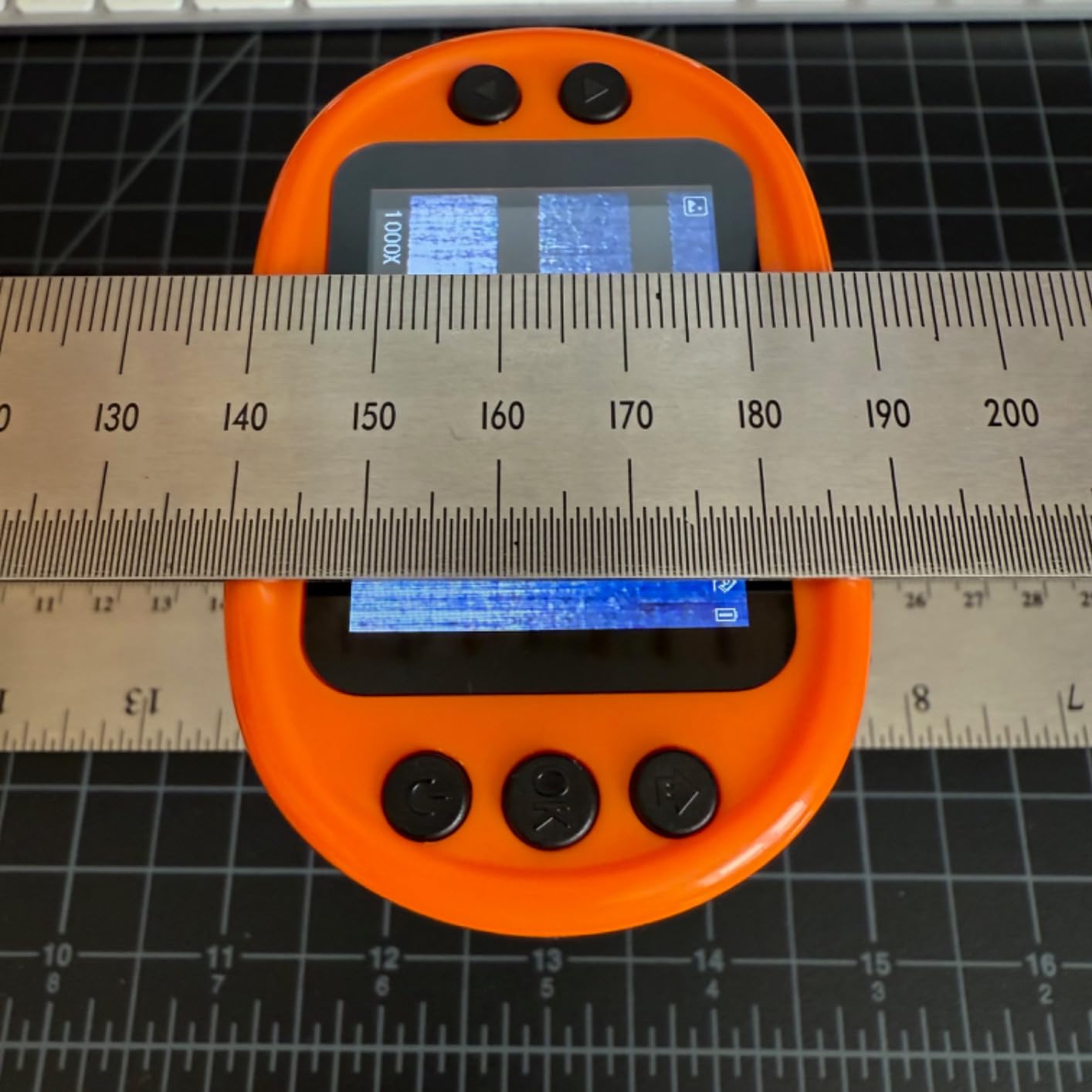
Magnification runs from 200X to 1000X across five adjustable levels on a 4K screen. The rechargeable battery gives roughly 2.5 hours of continuous use, which lines up well with a long afternoon of collection and viewing rather than a single sitting.
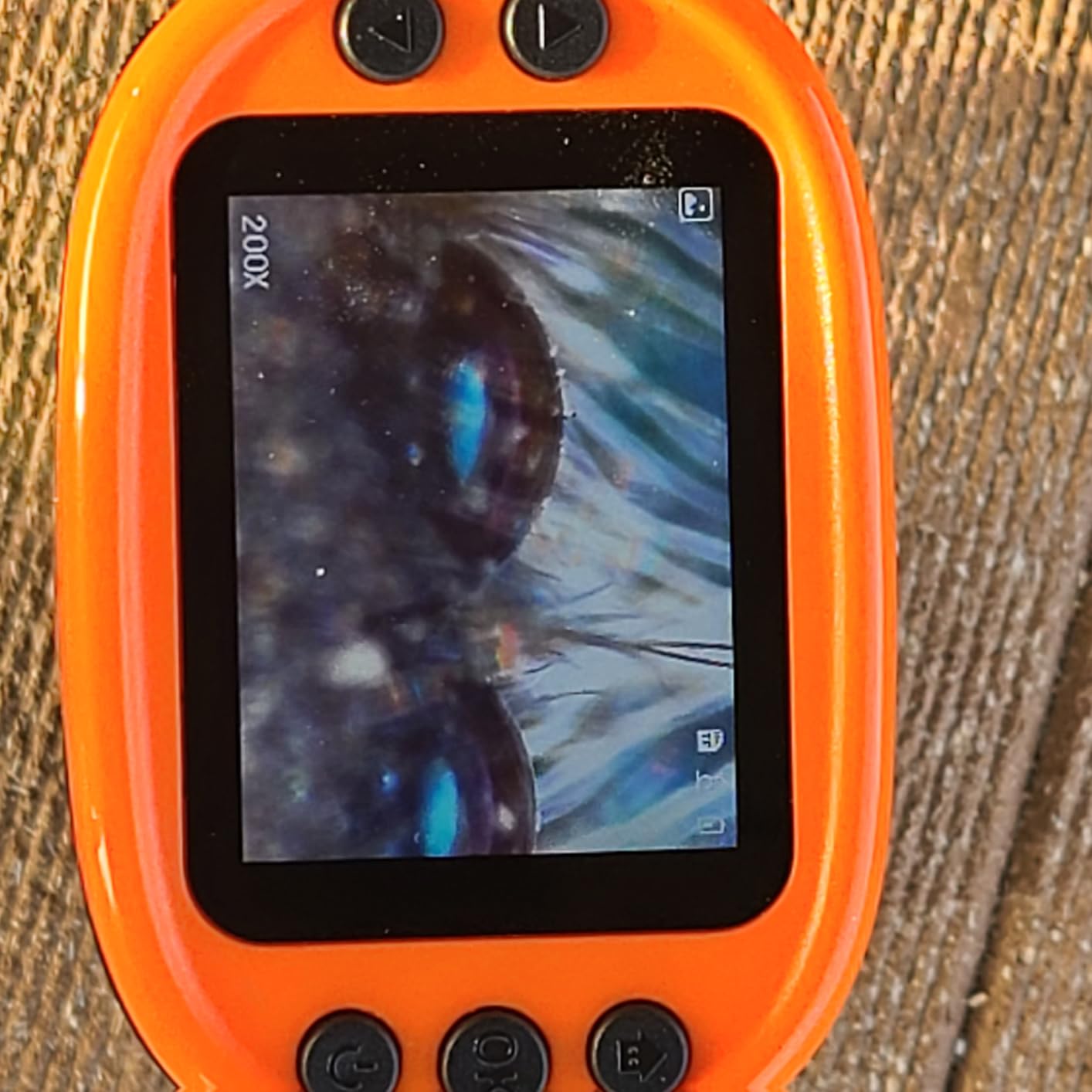
The limitation owners name most is straightforward: digital magnification cannot substitute for a compound scope on fine specimens. Even at the top of the range, cells stay soft. And because the view is on one small screen, children share it rather than looking through it together, which changes the social feel of the activity.
Who this scope suits
This suits a family buying a complete gift for a child anywhere from four to twelve, and it is the best stocked kit in the roundup. It is also a good fit for a child who travels or studies in a small space, since the fitted case keeps the whole experiment in one place.
It works well for a first science fair project because photo and video capture is ready to go.
Who this scope does not suit
It is a poor choice for a child already studying cells or microbiology, and it will not satisfy a teen who wants real glass optics. The single shared screen also limits it for a group of children in a classroom setting.
Anyone wanting the lowest-cost entry into microscopy should start with a pocket scope instead.
How to Choose a Microscope for Kids: Buying Guide
Four questions decide the purchase: how old is the child, what do they want to look at, what is the realistic budget, and will more than one child use it. Answer those honestly and the model choice takes about thirty seconds. Ignore them and you will buy twice, which is the most common complaint in parent communities.
Choosing by age band
Ages three to five need a plastic body, a low or nonexistent focus requirement, and large controls. Ages six to eight can manage a focus knob and benefit from blank slides so they can prepare their own specimens. Ages nine to twelve can handle a monocular compound head and are ready for real cell work. Teens and adults should look at glass optics with achromatic objectives and a proper condenser.
At what age can children really use a microscope? Around three for a screen-based or narrated scope, around six for a standard focus knob, and around nine for a compound light microscope with slides.
The upgrade path so you do not buy twice
The cheapest mistake is buying a high-magnification compound scope for a five-year-old. It will sit unused. The second mistake is buying a preschool scope for a ten-year-old, which gets outgrown within a term. A sensible path runs from a pocket or digital scope at six, to a 400x kit with blank slides at nine, to a compound light microscope with glass objectives at twelve or thirteen.
Magnification numbers versus usable detail
Read the objective lenses, not the box. A scope printed with 2000x that carries 4x, 10x and 40x objectives can genuinely reach that range. A digital unit printed with 1000x is a software upscale of a small sensor. Resolution comes from glass, and no marketing number changes that.
Monocular, binocular or trinocular eyepieces
Monocular means one eyepiece and one open eye, which is uncomfortable but easier for a child to learn because there is no alignment step. Binocular means two eyepieces and a comfortable two-eyed view, and it is the right choice for long sessions. Trinocular adds a third port for a camera, which is what a homeschool family with a science fair project ahead wants.
Optical versus digital
Optical gives you true resolution and a shared physical eyepiece. Digital gives you a screen, photo and video capture, and much easier handling for young children. Many families in parent forums end up owning one of each, because they solve genuinely different problems rather than competing.
Accessories that actually matter
Blank slides, coverslips, a pipette or eye-dropper and tweezers matter far more than the number printed on the box. Those four items are what let a child make their own specimens, and making specimens is where the learning happens. A brine shrimp hatchery and a hand lens are the two other items that extend a microscope past the first hour.
Durability, storage and shared rooms
In a small or shared living space, weight and footprint decide whether the microscope gets used. Pocket scopes take no shelf at all, a digital unit with a fitted case packs into a drawer, and a full compound stand needs a dedicated corner. Check that the eyepieces lock into the head, since loose eyepieces are the most common loss on any model with a removable head.
Keep slides in their box rather than loose, and store glass units away from where a chair leg can reach them. Adults should supervise any staining chemicals and any handling of collected insects.
What You Can Actually See at Each Magnification
Magnification is the number parents fixate on and the number that most often disappoints them. A practical ladder looks like this.
20x: The edge of a leaf, the weave of fabric, the printed dots of a coin and the overall shape of a small insect. This is where a stereo or pocket scope spends most of its useful life.
40x to 100x: Individual cells in onion skin or cork, the segments of a small wing, surface texture on a mineral. This is the range where prepared slides start to look genuinely interesting.
200x to 400x: Cheek cells, plant cell walls with visible internal structure, and the first organisms moving in a pond water drop. A good plastic 400x scope reaches the bottom of this range.
1000x and above: Bacteria and fine internal detail, which is genuinely only reliable on a compound scope with 40x glass objectives and a working condenser. A digital unit advertised at 1000x will not get you here.
Frequently Asked Questions
What is the best microscope for a 5-year-old?
For a 5-year-old, pick a low-frustration instrument that a small hand can operate. The Educational Insights GeoSafari Talking Microscope suits ages four to eight because it needs no focus adjustment, while the GeoSafari My First Microscope works if you want your child looking at real objects on a tray rather than printed cards. Both have plastic bodies, large controls and a wide field of view that keeps a whole leaf or coin in frame.
What is the best microscope for a 10-year-old child?
At ten, children can handle a real focus knob and prepared slides, so the National Geographic Dual LED kit at 20x and 50x is a strong fit, with lights above and below the stage for both slides and solid objects. If cell detail is the goal, move up to a compound light microscope with 4x, 10x and 40x glass objectives. Avoid plastic optics with high magnification labels, since the image stays soft.
Are kids microscopes worth it?
Yes, when the instrument matches the child and the specimen. A plastic scope that is left unused because focusing frustrates the child is a waste, while a pocket or digital scope that gets carried on every nature walk is excellent value. The single biggest predictor of whether a kids microscope gets used is whether your child can operate it without an adult intervening.
Which type of microscope is most commonly used in schools?
The compound light microscope is the standard classroom instrument. It uses an eyepiece above a rotating set of objective lenses, with light passing up through a thin specimen on a glass slide. That transmitted-light design is what lets students resolve plant cells, cheek cells and pond water, which is why most school and homeschool setups are built around it.
What is the difference between a stereo and a compound microscope?
A stereo microscope bounces light off the top of a specimen and gives a low, three-dimensional view, so you can look at coins, leaves, rocks and insects directly and work with tweezers while viewing. A compound microscope shines light up through a thin slide and resolves fine detail in cells at much higher magnification. Choose stereo for solid objects and compound for specimens on glass slides.
What magnification is needed to see bacteria?
You generally need 1000x, which means a compound microscope with a 40x objective and a 10x eyepiece, plus a working condenser for enough light. Bacteria are near the limit of what a light microscope can resolve, so you will see stained cells and general shapes rather than detailed internal structure. No digital kids microscope reaches this reliably, regardless of the number on the box.
The Bottom Line on the Best Microscopes for Kids
The best microscopes for kids are not one product, they are four different answers to four different needs. For a preschooler, the Educational Insights GeoSafari Talking Microscope wins on attention span and durability. For a child in a small or shared space who explores outdoors, the Carson Pocket Micro is the strongest value in the roundup.
For a six to eight year old ready to make their own slides, the National Geographic 400x kit is the easiest starting point, and the Nancy B’s Science Club microscope is the pick when you want the experiments written down for you. For a nine-year-old moving toward real biology, the National Geographic Dual LED kit uses genuine glass optics, and past that, the BEBANG compound scope is the only true light microscope here.
Whichever you choose, the deciding factor is not the magnification number on the box. It is whether your child can work the controls on their own and whether the tool matches the thing they are excited to look at. Start low, keep blank slides in the box, and buy the instrument the child will actually reach for.
Updated for October 2026. This roundup reflects the current published ratings and review counts for all ten products, and we refreshed the list as the 2026 buying season opened.