
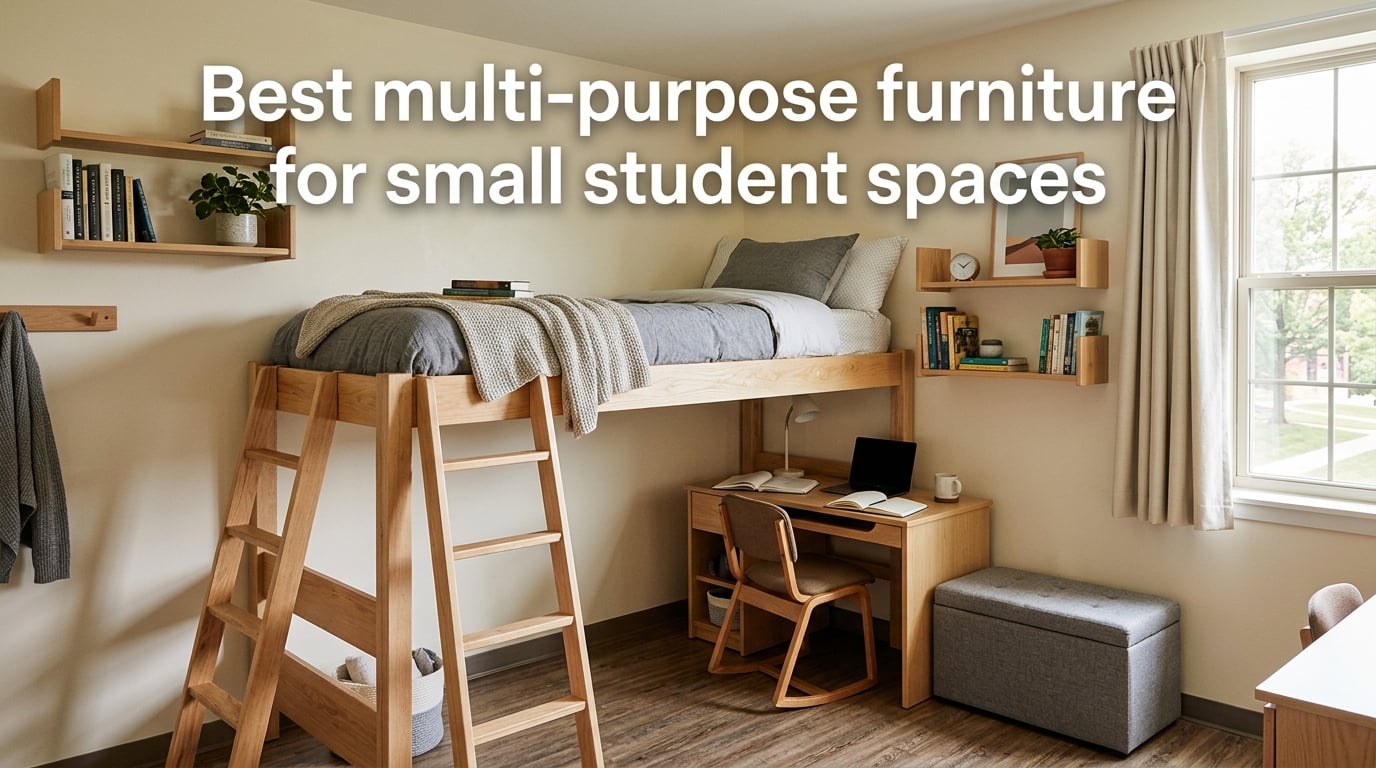
Living in a small student space doesn’t mean you have to choose between studying, sleeping, and socializing. Multi-purpose furniture for small student spaces solves the biggest challenge college students face in 2026: fitting a full life into a room the size of a parking spot. I’ve spent years helping students furnish dorm rooms and tiny apartments, and I can tell you that the right multifunctional pieces make a cramped space feel twice as large.
In this guide, I’ll walk you through every type of space-saving furniture worth considering, from storage ottomans to Murphy beds, and help you figure out exactly what works for your situation. Whether you’re moving into a dorm room for the first time or furnishing an off-campus apartment, you’ll find practical solutions that don’t sacrifice comfort for function.
Table of Contents
Why Multi-Purpose Furniture Matters for Student Spaces
The average college dorm room is around 130 square feet. A typical studio apartment for students ranges from 300 to 500 square feet. In that amount of space, you need a bed, a desk, seating, storage, and ideally some room to breathe. That’s where multi-purpose furniture comes in.
Multi-purpose furniture is any piece designed to serve two or more functions in a single item. A storage ottoman works as seating, a footrest, and a hidden compartment for textbooks or blankets. A sofa bed gives you a couch during the day and a sleeping surface at night. These pieces eliminate the need for multiple single-function items that would overcrowd your room.
For students specifically, space-saving furniture solves three critical problems:
- Limited square footage: Every piece you add eats into walkable space. Furniture that does double duty means fewer pieces overall.
- Tight budgets: Buying one item that replaces two or three costs less than purchasing each separately.
- Frequent moves: Students relocate often. Fewer pieces mean easier packing and lower moving costs.
Forum users on Reddit’s r/femalelivingspace and r/Apartmentliving consistently report that modular, multi-purpose pieces rank among their best small-space purchases. The sentiment is clear: quality matters, and every piece should earn its footprint.
Top Multi-Purpose Furniture Types for Small Student Spaces
The best multi-purpose furniture for small student spaces falls into three main categories: storage seating, convertible beds, and transformable workstations. Each category addresses different needs, but they all share one trait—they do more than one job in the same footprint.
Storage Ottomans and Benches
Storage ottomans are the Swiss Army knife of small-space furniture. They provide seating, serve as a footrest, work as a coffee table with a tray on top, and hide clutter inside. For students, they’re ideal for stashing extra blankets, textbooks, cables, or anything else that doesn’t have a home.
When shopping for a storage ottoman, look for these features:
- Sturdy hinge mechanism: The lid should open smoothly and stay open on its own so you can use both hands to grab items.
- Weight capacity: A good ottoman supports at least 200 pounds for seating use.
- Removable lid: Some ottomans have lids that double as serving trays, adding yet another function.
- Fabric choice: Leather or faux leather wipes clean easily. Fabric options feel cozier but stain faster.
Storage benches work similarly but offer more seating length. Place one at the foot of your bed or under a window. You’ll gain seating for guests, a place to put on shoes, and hidden storage all at once. Bench-style options typically hold more than round ottomans, making them better for bulkier items like extra bedding or seasonal clothes.
Sofa Beds, Futons, and Convertible Seating
Convertible seating solves the biggest furniture dilemma in small spaces: where do guests sleep when your bed is in the only room you have? A sofa bed, futon, or convertible chair gives you daytime seating that transforms into nighttime sleeping.
Each option has trade-offs:
- Sofa beds: Most comfortable for sitting and sleeping. The mattress folds inside the frame, so you don’t need extra storage. They’re heavier and harder to move, though.
- Futons: Lighter and more affordable than sofa beds. The back folds down to create a flat sleeping surface. They’re easier to move but less comfortable for long-term sleeping.
- Convertible chairs: These unfold from a single chair into a small bed. Perfect for very tight spaces where a full sofa won’t fit. Best for occasional guest use rather than nightly sleeping.
Reddit users frequently mention the IKEA Friheten as a practical, affordable sofa bed for small apartments. Forum discussions emphasize that comfort for daily use matters more than occasional guest sleeping, so test the sitting position before buying. If you’ll sleep on it every night, invest in a model with a thicker mattress.
Beds with Built-In Storage
Your bed is the largest piece of furniture in your room. Making it work harder is one of the smartest space-saving moves you can make. Several bed types add significant storage or flexibility without increasing the footprint.
Platform beds with drawers replace the need for a dresser. The frame sits low to the ground with built-in drawers along the sides or at the foot. You can store clothes, linens, or shoes underneath without needing extra furniture. These beds work well in both dorms and apartments because they don’t require wall mounting.
Loft beds elevate your sleeping surface and free up the entire area below. Use that space for a desk, a seating area, or additional storage. Loft beds are especially popular in dorm rooms where floor space is at a premium. Many universities offer loft bed rentals or have specific height restrictions, so check your housing guidelines before purchasing.
Murphy beds fold up against the wall when not in use, reclaiming your entire floor space during the day. They’re the ultimate space saver but come with trade-offs. Murphy beds require secure wall mounting, which may not be allowed in dorms or rental apartments. They’re also more expensive, typically ranging from several hundred to a few thousand dollars depending on quality and features. Forum users note that while Murphy beds are popular, they can be expensive and require proper installation.
Daybeds function as a sofa during the day and a bed at night. They’re deeper than regular sofas, giving you a comfortable seating nook, and they use standard twin mattresses. Some daybeds include a trundle underneath that pulls out for a second sleeping surface—perfect for hosting a friend overnight.
Desks, Tables, and Workstations That Adapt to Your Space
Study space is non-negotiable for students, but a full-size desk can dominate a small room. The solution: desks and tables that adjust to your needs rather than forcing you to work around their footprint.
Convertible and Foldable Desks
A wall-mounted fold-down desk mounts to the wall and folds flat when you’re done studying. It takes up zero floor space when folded, making it ideal for rooms that need to serve multiple purposes throughout the day. Many models include a small shelf for supplies that stays flat against the wall even when the desk is folded.
Drop-leaf desks offer a similar concept in a freestanding design. The work surface folds down when not in use, shrinking the desk to half its size or less. This works well if you need a desk that can tuck into a corner or fit beside your bed without blocking walkways.
Standing desk converters sit on top of an existing surface and adjust height. If your dorm provides a basic desk, a converter adds ergonomic functionality without replacing the whole piece. Look for models with cable management slots to keep charging cords organized.
Transformable Tables
Transformable tables change size or function depending on what you need right now. A lift-top coffee table raises to dining or working height, then lowers back down for living room use. During the day it holds your laptop; at dinner it becomes your eating surface.
Extendable dining tables start compact and expand when you have guests. A table that seats two in everyday mode can expand to seat four or six when friends come over. Nesting tables offer a similar flexibility: stack them together when you need floor space, separate them when you need more surface area.
Drop-leaf dining tables are particularly useful in narrow spaces. One or both leaves fold down, letting you push the table against a wall to save space. When both leaves are up, you get a full dining surface for meal prep or group study sessions.
Maximizing Vertical Space in Small Student Rooms
When floor space runs out, look up. Vertical space is the most underused area in student rooms, and tapping into it can effectively double your storage capacity without adding a single piece of floor furniture.
Wall-mounted shelving turns blank wall space into storage. Install floating shelves above your desk for books and supplies. Use a wall-mounted bookshelf beside your bed as a nightstand alternative. The key is placing shelves at heights you can actually reach comfortably.
Over-door organizers use the back of your door for shoes, toiletries, or accessories. They require no drilling and no permanent installation—perfect for dorms and rentals.
Tall, narrow shelving units make better use of vertical space than short, wide ones. A bookcase that reaches close to the ceiling stores more than two shorter units side by side, and it leaves more floor space open for walking.
Vertical wall hooks and pegboards keep frequently used items accessible without taking up shelf or drawer space. Hang bags, hats, keys, or headphones on hooks. Use a pegboard above your desk to organize supplies, cables, and small items you reach for daily.
Stackable storage cubes let you build upward as your needs change. Start with two or three cubes and add more over time. Many cube systems work as both storage and room dividers, helping you create distinct zones in a studio apartment.
Dorm Room vs. Off-Campus Apartment: Furniture Differences
The furniture you need depends heavily on where you’re living. Dorm rooms and off-campus apartments have different constraints, and understanding those differences saves you from buying pieces that won’t work in your space.
Dorm room constraints:
- Most universities provide a bed, desk, and dresser. You’re adding to existing furniture, not starting from scratch.
- Wall mounting is usually prohibited. Murphy beds and heavy shelving that require drilling won’t work.
- Room dimensions are standardized and small. Loft beds are popular because they transform the provided bed frame.
- You’re sharing the room. Privacy and noise solutions matter as much as storage.
- Moves happen twice a year. Everything needs to be portable or easy to disassemble.
Off-campus apartment advantages:
- You choose all the furniture from scratch. This gives you more flexibility but also more decisions to make.
- Wall mounting may be possible (check your lease). Murphy beds and wall-mounted desks become viable options.
- Rooms are generally larger. You might have separate bedroom and living areas, changing what furniture you need.
- Kitchen and bathroom furniture enter the picture. Bar carts, bathroom storage, and kitchen islands become relevant.
- Longer tenure means you can invest in heavier, more permanent pieces.
For dorm rooms, prioritize portable, lightweight, no-drill furniture. Think storage ottomans, over-door organizers, clip-on shelves, and freestanding loft kits. For off-campus apartments, you can go bigger and heavier—platform beds with drawers, wall-mounted desks, and full-size sofa beds all make more sense when you won’t move them every semester.
Rental-Friendly Multi-Purpose Furniture Tips
If you’re renting an apartment, you need furniture that won’t damage walls, floors, or fixtures. Security deposits are real, and getting dinged for wall holes or floor scratches is frustrating. Here’s how to furnish smart without risking your deposit.
Choose freestanding over wall-mounted when possible. A freestanding bookshelf stores just as much as a mounted one without requiring a single screw in the wall. Freestanding desks, shelving units, and mirrors eliminate the risk of wall damage entirely.
Use adhesive mounting strips for lightweight items. Command strips and similar products hold hooks, small shelves, and decor without leaving marks. They work well for organizing cables, hanging bags, or mounting lightweight organizers.
Add felt pads under all furniture legs. This simple step prevents scratches on hardwood and tile floors. Felt pads cost almost nothing and save you from deposit deductions for floor damage.
Look for furniture with hidden casters. Some storage ottomans, desks, and shelving units have wheels tucked under the base. These let you rearrange without dragging furniture across the floor, protecting both the furniture and your rental surfaces.
Consider portability for your next move. Forum users consistently mention ease of assembly and portability as top priorities. Before buying any piece, ask yourself: Can I carry this down a flight of stairs? Does it break down into manageable parts? Will it fit in a car or moving van? Flat-pack furniture that assembles with basic tools is ideal for student life because it moves easily and reassembles without professional help.
How to Choose Multi-Purpose Furniture: A Student Buying Guide
Choosing the right multi-purpose furniture comes down to four factors: your space dimensions, your daily routines, your budget, and your move timeline. Here’s a framework for making smart decisions.
Step 1: Measure your space. Know the exact dimensions of your room, including door swings, window placements, and outlet locations. A sofa bed that fits your room on paper might block a door or cover an outlet you need for your desk setup.
Step 2: List your daily activities. Write down everything you do in your space: sleep, study, eat, entertain guests, exercise, store clothes, store supplies. Rank them by frequency. Your furniture should optimize for the activities you do most.
Step 3: Set a realistic budget. Multi-purpose furniture costs more upfront than single-function pieces, but it costs less than buying two or three separate items. Focus spending on the pieces you’ll use most—usually your bed and your desk.
Step 4: Check your lease and housing rules. Before buying anything that mounts to walls or changes the room structure, verify what’s allowed. This one step prevents wasted money and deposit disputes.
Avoid these common mistakes:
- Buying too much furniture: In small spaces, less is more. Start with essentials and add pieces only when you’re sure you need them.
- Prioritizing looks over function: A beautiful piece that doesn’t serve multiple purposes wastes precious square footage.
- Ignoring weight and portability: You’ll move at least once a year during college. Heavy furniture that doesn’t disassemble becomes a burden.
- Skipping the measurement step: Returns are expensive and time-consuming. Measure twice, buy once.
Where to shop matters too. IKEA remains a popular choice for affordable, flat-pack furniture that assembles easily. Online retailers offer wider selection but make it harder to test comfort and quality in person. If possible, visit a showroom to sit on sofa beds, open storage ottomans, and test desk height before ordering. For budget-conscious students, second-hand furniture from campus sales, Facebook Marketplace, or thrift stores can yield quality pieces at a fraction of retail cost.
Frequently Asked Questions
What is the best multi-purpose furniture for small spaces?
Storage ottomans are consistently rated as the best multi-purpose furniture for small spaces because they provide seating, serve as a footrest, work as a table with a tray, and hide clutter inside. Sofa beds and platform beds with built-in drawers are close seconds, each combining two essential functions into one footprint.
How do I maximize space in a small student apartment?
Start with furniture that serves multiple purposes, such as a storage ottoman instead of a coffee table or a platform bed with drawers instead of a standard frame. Use vertical space with wall-mounted shelves and tall shelving units. Choose fold-down desks or wall-mounted desks that reclaim floor space when not in use.
What furniture is best for a college dorm room?
For dorm rooms, prioritize lightweight, no-drill furniture that works alongside university-provided pieces. Storage ottomans, over-door organizers, clip-on shelves, under-bed storage bins, and freestanding loft bed kits are top choices. Everything should be easy to move and reassemble between semesters.
Are sofa beds good for small apartments?
Sofa beds work well in small apartments when you need seating and sleeping in the same room. They’re more comfortable than futons for daily use but heavier and harder to move. If you’ll sleep on one every night, invest in a model with a thicker mattress and test the sitting position before buying.
Is a Murphy bed worth it for a small space?
Murphy beds are worth considering if you have permission to mount them to the wall and you need to reclaim floor space during the day. They’re more expensive than other bed options and require proper installation. For dorm rooms or strict rental apartments, they’re usually not viable due to wall-mounting restrictions.
How do I make a small room feel bigger with furniture?
Choose furniture with visible legs to create a sense of openness underneath. Use light-colored pieces that reflect natural light. Select multi-purpose furniture that reduces the total number of items in the room. Keep pathways clear by pushing furniture against walls and using vertical storage instead of spreading horizontally.
What furniture should I avoid in a small apartment?
Avoid oversized sectional sofas, large entertainment centers, heavy armoires, and any single-purpose furniture that takes up significant floor space. Bulky pieces that don’t disassemble make moving difficult. Pieces without storage potential waste the space they occupy.
Conclusion
Finding the best multi-purpose furniture for small student spaces comes down to choosing pieces that do more than one job. Storage ottomans hide clutter while providing seating. Platform beds with drawers replace dressers. Fold-down desks reclaim floor space when you’re done studying. Every piece should earn its footprint by serving at least two functions.
Start by measuring your space, listing your daily activities, and setting a budget. Then pick the furniture types that match your needs—whether that’s a sofa bed for a studio apartment, a loft bed for a dorm room, or wall-mounted shelves for an off-campus rental. The right multi-purpose furniture doesn’t just save space. It makes your small student room feel like a real home.