
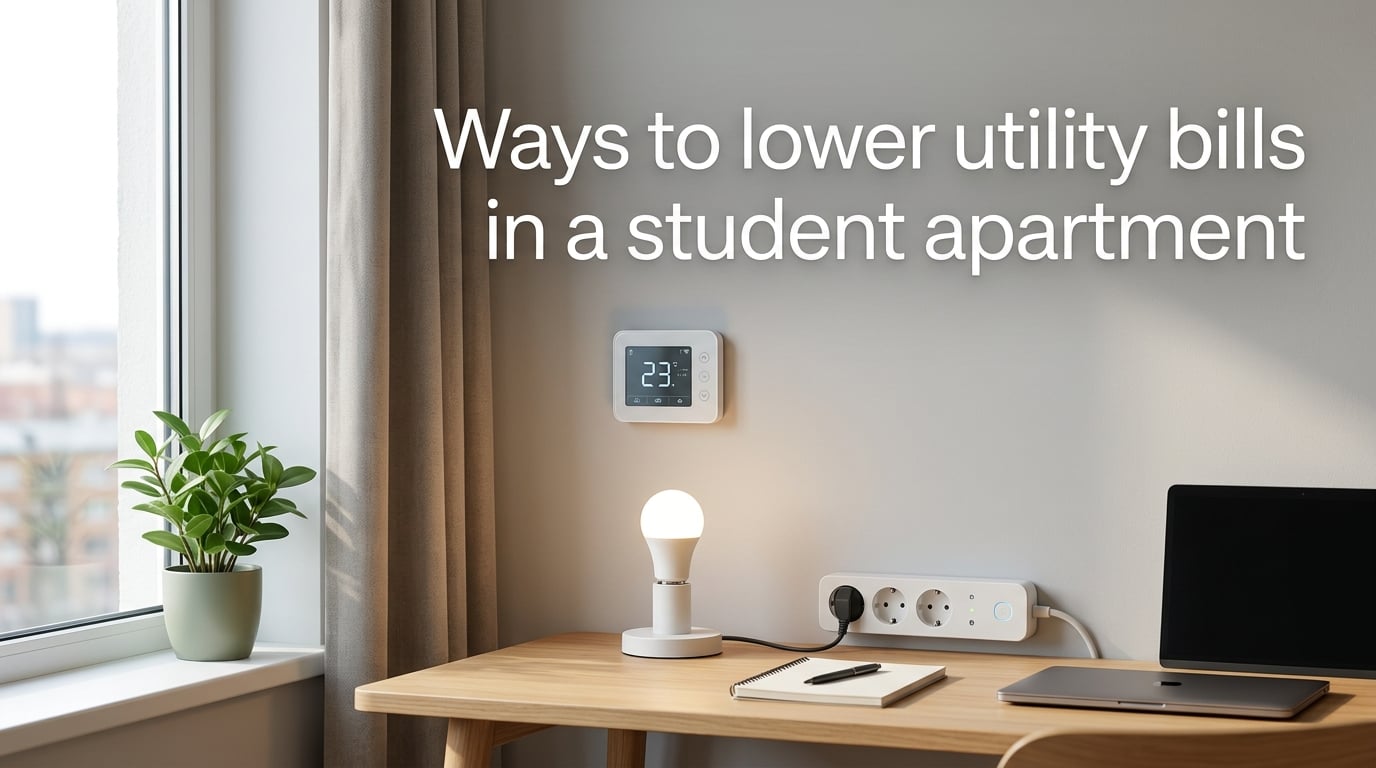
Moving into your first student apartment is exciting, but that first utility bill can feel like a punch to the wallet. We have been there. After helping thousands of students navigate their first leases and monthly bills, our team has learned that small, consistent changes to how you run your apartment can shave real money off your costs without sacrificing comfort.
This guide covers practical ways to lower utility bills in a student apartment, from the single biggest cost driver (your thermostat) down to the small habits that add up over a semester. We will walk through HVAC settings, lighting swaps, water heating, laundry, kitchen tricks, insulation, and the student-specific strategies like splitting bills with roommates that most other guides skip. You will also get a quick-reference temperature cheat sheet, a seasonal strategy breakdown, and answers to the four most common questions students ask.
Table of Contents
HVAC and Thermostat: Your Biggest Utility Cost Driver
Heating and cooling is the single largest line item on most apartment utility bills, accounting for roughly 32 to 44 percent of total energy use. If you only change one habit after reading this guide, make it your thermostat.
Set the Right Temperature Year-Round
The Department of Energy recommends keeping your thermostat at 68 degrees Fahrenheit in winter and 78 degrees Fahrenheit in summer when you are home. Each degree you raise or lower the thermostat can shift your bill by a noticeable margin, so resist the urge to push the AC to 65 in July. Programmable or smart thermostats handle the day-to-day adjusting for you, but a basic manual thermostat works fine if you remember to nudge it before leaving for class.
Use Ceiling Fans the Smart Way
Ceiling fans are one of the cheapest ways to feel more comfortable without touching the thermostat. In summer, run them counterclockwise to push cool air down. In winter, switch the direction to clockwise on the lowest setting so the fan pulls cool air up and pushes warm air back down the walls. Most fans have a small toggle switch on the motor housing for this exact purpose.
Never Fully Turn Off Your AC
One piece of advice we have heard from property managers and energy auditors alike: do not turn the AC completely off on a hot day when you leave. Letting the apartment get much hotter than the outdoor temperature forces the system to work overtime to cool the space back down. Instead, raise the thermostat 5 to 7 degrees while you are out, then lower it again when you return. The same logic applies in reverse for winter heat.
Change Air Filters Regularly
A clogged air filter makes your HVAC system work harder, burn more energy, and wear out faster. Check your filter once a month and replace it when it looks grey or dusty. Most standard 1-inch filters cost a few dollars at any hardware store. If your apartment has a central air handler in a closet, the filter usually slides out from the side of the unit.
Kill Phantom Power and Energy Vampires
Even when you are not using them, electronics continue to sip electricity. This is called phantom power or standby power, and it accounts for roughly 5 to 10 percent of residential electricity use.
What Are Energy Vampires?
Energy vampires are electronics that draw power 24/7 even when switched off. The usual suspects include TVs, game consoles, cable boxes, computer monitors, phone chargers, microwaves, coffee makers, and anything with a wall wart transformer. The little standby light is a giveaway: if it glows when the device is off, the device is still drawing power.
Smart Power Strips: The Cheap Fix
Smart power strips cut power to multiple devices at once with a single switch, which makes unplugging an entire entertainment setup painless. Plug your TV, console, and soundbar into one strip, your computer gear into another, and flip the switch off when you are done. Basic models are inexpensive, and they pay for themselves within a few months.
Unplug the Big Offenders
Focus first on the largest energy vampires: desktop computers, gaming PCs, space heaters, window AC units, and older refrigerators. Anything that runs hot or has a fan is a top candidate for unplugging when not in use. Phone and laptop chargers can stay plugged in, since modern chargers draw negligible power when no device is attached.
Switch to LED Lighting and Use Natural Light
Lighting accounts for around 15 percent of an average apartment’s electricity bill. Swapping incandescent bulbs for LEDs is one of the easiest ways to lower utility bills in a student apartment because the bulbs last for years and use a fraction of the wattage.
Why LEDs Make a Real Difference
A 60-watt incandescent bulb can be replaced with a 9 or 10-watt LED that produces the same amount of light. Over its lifetime, a single LED saves enough electricity to power a laptop for months. If your apartment still has old bulbs in the fixtures you use most, those are the priority swaps. Many utility companies also offer free or discounted LED bulbs, so check your provider’s website before buying.
Smart Lighting Habits for Students
Get in the habit of turning lights off every time you leave a room. Open blinds during the day to use free sunlight instead of lamps. Put a small lamp on your desk instead of lighting the entire room while studying. If you rent a place with track lighting, only run the heads you actually need.
Save Hot Water and Cut Your Water Heating Bill
Water heating is the second-largest energy expense in most apartments, accounting for about 14 to 18 percent of household energy use. Reducing how much hot water you use has an outsized impact on your bill.
Shorten Your Showers
Cutting a 10-minute shower down to 5 minutes can save hundreds of gallons of hot water per month. If you have a roommate, the savings compound quickly. A simple shower timer or a playlist that lasts about the length of your target shower makes the new habit easier to stick with.
Lower Your Water Heater Temperature
Most water heaters come from the factory set to 140 degrees Fahrenheit, but 120 degrees is hot enough for showers, dishwashing, and laundry while reducing standby losses and scald risk. If your landlord controls the water heater, this is a polite request worth making. If you have a small under-sink unit, you can usually turn a dial on the front to adjust it.
Fix Leaks and Report Drips
A single leaky faucet can waste hundreds of gallons per month. A running toilet can waste thousands. Report leaks to your landlord or property manager the moment you spot them. Most leases require landlords to handle plumbing repairs, and a quick email creates a paper trail in case the issue drags on.
Laundry Habits That Actually Save Money
If your student apartment includes a washer and dryer (or you use a shared laundry room), a few small changes can shrink your electric and water bills without affecting how clean your clothes get.
Wash in Cold Water
Around 90 percent of the energy used by a washing machine goes to heating water. Switching from hot to cold water for most loads cuts that energy use almost entirely. Modern detergents are formulated to work well in cold water, so you will not sacrifice cleanliness. Reserve hot water for towels, sheets, and heavily soiled items.
Run Full Loads Only
A washing machine uses about the same amount of water and energy whether it is half full or packed. Wait until you have a full load before running it. The exception is when you would otherwise overload the machine, which causes poor cleaning and extra wear. If you have more clothes than fit comfortably, split it into two properly sized loads.
Air Dry When You Can
Dryers are one of the most energy-hungry appliances in any home. Use a drying rack or clothesline whenever the weather and your living situation allow. If you must use the dryer, clean the lint trap before every load so air flows freely, and use the moisture-sensor setting if your machine has one. Running two consecutive loads keeps the dryer warm and lets the second load finish faster.
Kitchen Efficiency: Cook Smarter, Not Harder
Kitchen appliances quietly add up on your bill. Microwave ovens use about 50 to 70 percent less energy than conventional ovens because they heat food directly instead of heating the air around it.
Use the Microwave Over the Oven
For reheating leftovers, cooking frozen vegetables, boiling water for one or two cups of tea, or making quick meals, the microwave wins every time on energy. Reserve the oven for dishes that genuinely need it, like roasting or baking. Toaster ovens and air fryers also use less energy than full-size ovens for smaller meals.
Match Your Pot to the Burner
A small pot on a large burner wastes heat around the edges. Match the pot diameter to the burner size, and always use a lid. Water boils up to 25 percent faster with a lid on, which means less time on the stove and less energy used.
Run the Dishwasher at Night
Some utility companies charge more for electricity during peak daytime hours. Running the dishwasher, washing machine, and dryer late in the evening or overnight can put those cycles on cheaper off-peak rates. Check your utility’s time-of-use plan, and if off-peak is available, schedule your biggest appliance loads accordingly.
Keep Your Fridge Efficient
Keep your refrigerator set between 36 and 38 degrees Fahrenheit and your freezer at 0 degrees Fahrenheit. Anything colder wastes energy without keeping food safer. Clean the coils on the back of the fridge once or twice a year, and make sure the door seals are tight. A packed freezer actually runs more efficiently than an empty one because the frozen food mass holds the cold.
Insulation Tricks: Curtains, Seals, and Weather Stripping
Most student apartments are not well insulated, which means heat leaks out in winter and in during summer. A few low-cost fixes can dramatically reduce the load on your HVAC system.
Curtains and Blackout Blinds
Closing curtains on south-facing windows during summer afternoons blocks a meaningful share of solar heat. In winter, opening those same curtains during the day lets free sunlight warm your apartment, then closing them at night traps that heat inside. Blackout curtains are particularly helpful in older buildings with single-pane windows. Forum users consistently report noticeable differences in comfort and bills after installing them.
Seal Drafts Around Windows and Doors
Removable weather stripping, foam tape, and draft stoppers are inexpensive and renter-friendly. Run your hand along window edges and door frames on a windy day to feel drafts. Seal gaps with foam tape, and lay a draft stopper along the bottom of exterior doors. For leaky sliding windows, a strip of pool noodles or rolled-up towels along the sill is a no-cost temporary fix.
Quick Reference: Optimal Temperature and Setting Cheat Sheet
This table pulls together the recommended settings we have covered so you can print it out and stick it on the fridge.
| Appliance or Setting | Recommended Setting |
|---|---|
| Thermostat (winter, home) | 68 degrees Fahrenheit |
| Thermostat (winter, away) | 60 to 65 degrees Fahrenheit |
| Thermostat (summer, home) | 78 degrees Fahrenheit |
| Thermostat (summer, away) | 82 to 85 degrees Fahrenheit |
| Water heater | 120 degrees Fahrenheit |
| Refrigerator | 36 to 38 degrees Fahrenheit |
| Freezer | 0 degrees Fahrenheit |
| Ceiling fan (summer) | Counterclockwise |
| Ceiling fan (winter) | Clockwise, low speed |
| Air filter | Check monthly, replace when dusty |
Student-Specific Strategies: Roommates, Leases, and Seasonal Tips
The general energy-saving advice above works in any apartment. The strategies below are tailored to the realities of student life: shared spaces, fixed budgets, and leases you may not have read line by line.
Coordinate With Your Roommates
If utility costs are split among roommates, set a quick house meeting at the start of the semester. Agree on a target temperature, a thermostat curfew, and a few simple habits like turning off lights in common rooms. Splitting a smart thermostat or a few smart power strips between roommates costs very little per person and removes the awkwardness of asking someone to turn off the TV. Our team has found that the apartments with the lowest bills are the ones where everyone agrees on the basics from day one.
Understand Your Lease Utility Clauses
Before signing, ask which utilities are included in rent and which are your responsibility. Some student apartments bundle water and trash but bill electricity and internet separately. Others include a utility cap, after which excess usage is charged back. Knowing this upfront helps you budget and avoids surprise charges at the end of the lease. If your landlord controls the thermostat or water heater, document the existing settings in your move-in checklist.
Seasonal Strategies: Summer vs Winter
Energy use in student apartments swings hard with the seasons. In summer, the focus is keeping heat out: close blinds during the day, run fans instead of cranking AC, and avoid using heat-producing appliances like the oven during peak afternoon hours. In winter, the focus flips: open curtains during sunny days, seal drafts, and lower the thermostat a degree or two before bed. Adjusting your habits to the season has a bigger impact than any single appliance swap.
Off-Peak Hours and Budget Billing
Many utility companies offer budget billing plans that average your annual cost into 12 equal payments, which is helpful for students with irregular income. Others offer time-of-use rates that charge less for electricity used overnight and on weekends. Combining budget billing with off-peak scheduling removes bill shock and trims the total at the same time. Check your provider’s website or call customer service to ask which programs are available in your area.
Frequently Asked Questions
What wastes the most electricity in an apartment?
Heating and cooling typically accounts for 32 to 44 percent of an apartment’s electricity use, making the thermostat your single biggest lever. After HVAC, water heating is the next largest expense at roughly 14 to 18 percent, followed by lighting at around 15 percent and major appliances like refrigerators and dryers. Phantom power from electronics on standby adds another 5 to 10 percent on top of that.
How to make your utility bill lower?
Start with your thermostat, since heating and cooling is the largest cost driver. Lower it a few degrees in winter or raise it in summer, and use ceiling fans to stay comfortable. Switch every incandescent bulb you can to LED, unplug electronics when you are not using them, and run washing machines and dishwashers only on full loads. Shorter showers, cold water laundry, and air drying clothes round out the most impactful changes for student renters.
What runs up the electricity bill the most in apartments?
Air conditioning in summer and electric heat in winter are the biggest bill drivers in most apartments. After that, the top offenders are electric water heaters, clothes dryers, older refrigerators, and space heaters. Phantom power from TVs, game consoles, and computer equipment can add another 5 to 10 percent even when those devices are technically off.
Why is my electric bill so high when I live in an apartment?
Most high apartment electric bills trace back to one of three causes: HVAC running harder than it should because of bad settings or a dirty filter, an older inefficient appliance like a 15-year-old refrigerator, or phantom power from electronics left plugged in around the clock. A sudden spike can also mean a faulty appliance, a leaking hot water pipe, or a billing error. Check your usage history in your utility account portal, and if nothing lines up with your habits, call the utility to ask about a billing audit.
Final Thoughts
Lowering utility bills in a student apartment is mostly about habits, not big purchases. Start with your thermostat, switch to LEDs, and unplug the worst energy vampires. From there, shorten your showers, run laundry on cold, air dry when you can, and coordinate with your roommates so the savings compound. These ways to lower utility bills in a student apartment work because they target the largest cost drivers first and layer small wins on top of each other.
Pick two or three changes from this guide and stick with them for a month. Check your next utility statement, and we are confident you will see a difference. Money saved on bills is money you can put toward textbooks, groceries, or a weekend trip with friends, which is the real goal of student budgeting in the first place.