
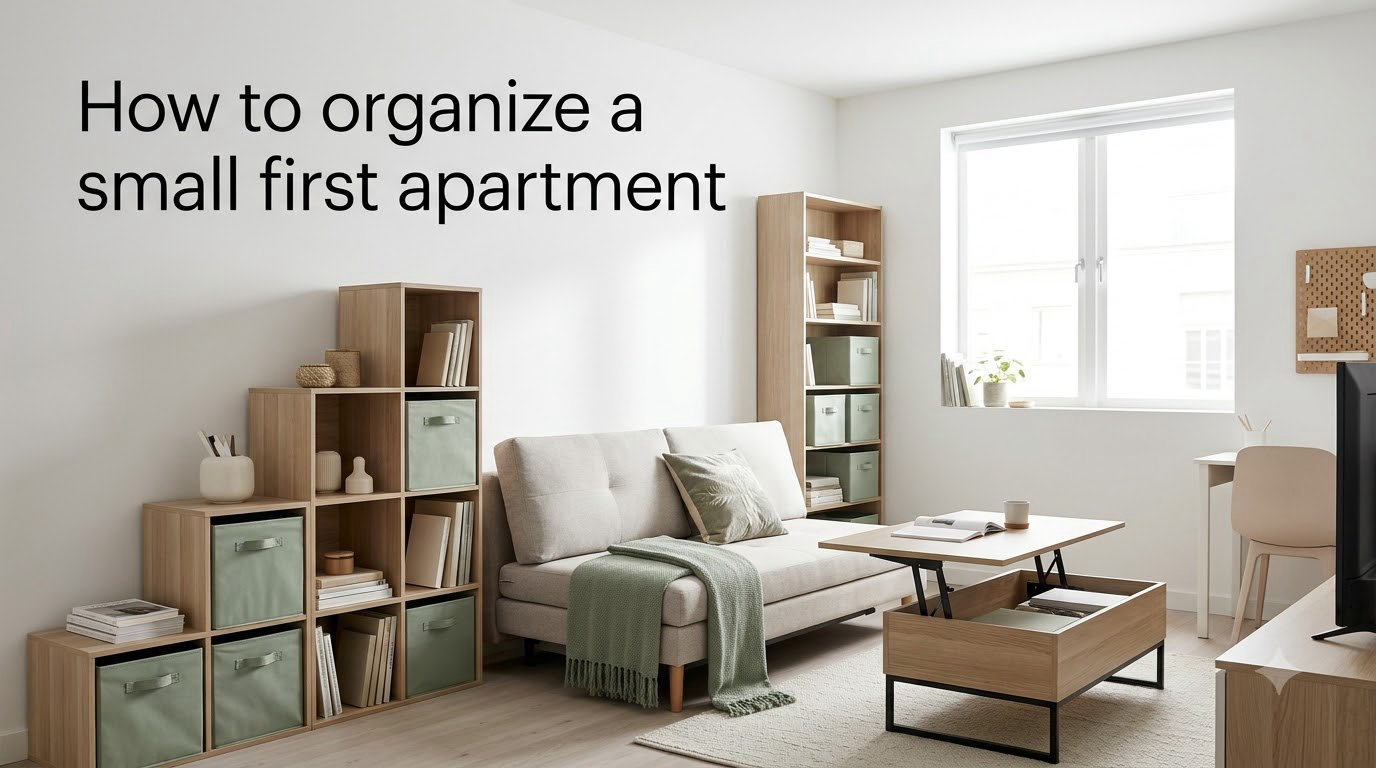
Standing in the middle of your first apartment, surrounded by boxes, you’re probably wondering how everything is going to fit. I remember that feeling — staring at 450 square feet and wondering where my entire life was supposed to go. Here’s the good news: organizing a small first apartment is a learnable skill, not a talent you’re born with. This guide walks you through every step, from the pre-move purge to the daily habits that keep clutter from creeping back.
Learning how to organize a small first apartment comes down to three principles: purge what you don’t need, use every inch of vertical and hidden space, and build simple maintenance routines. Whether you’re moving into a studio, a shared one-bedroom, or a tiny college apartment, the strategies below work at any budget level. I’ve organized my own spaces using these exact methods and helped friends set up theirs — the difference between a cramped apartment and a comfortable one is almost always organization, not square footage.
Table of Contents
Quick Answer
The best way to organize a small first apartment is to start by decluttering — remove anything you haven’t used in six months. Then assign every remaining item a specific “home” using vertical storage (shelves, hooks), multi-functional furniture (storage ottomans, beds with drawers), and hidden storage (under-bed bins, over-door racks). Maintain the system with a daily five-minute reset and a monthly purge.
Before You Organize: Declutter First
Organizing clutter is just rearranging clutter. Before you buy a single bin or shelf, you need to reduce what you own. This is the step most first-time renters skip — and it’s the reason most organization systems fail within weeks.
What to Remove First
Start with the easy wins. Grab a trash bag and a donation box, then move through your belongings in this order:
- Expired items: Old makeup, medications, pantry goods, and anything past its use-by date.
- Duplicates: You don’t need three spatulas or four sets of sheets for a one-bedroom apartment.
- Things from your childhood bedroom: Be honest — if you haven’t touched it since high school, you won’t start now.
- Clothes that don’t fit or haven’t been worn in a year: If you didn’t reach for it this past season, let it go.
- Broken items you’re “going to fix”: You’re not. Toss them.
The Decluttering Rules: 10-10-10, 3-3-3, 5-5-5, and 12-12-12
If you struggle with decision fatigue while decluttering, these four rules give you a framework so you don’t have to agonize over every item.
The 10-10-10 Rule asks three questions about each item: Will I care about this in 10 minutes? Will I care in 10 months? Will I care in 10 years? If the answer to all three is no, it goes. This rule is especially useful for sentimental items that don’t serve a practical purpose.
The 3-3-3 Rule is a fast sorting method. Go through a room and pick three items to keep in that space, three to donate, and three to throw away. Repeat until the room is done. It works because it forces you to make quick decisions without overthinking.
The 5-5-5 Rule is built for people who get overwhelmed easily. Spend five minutes decluttering one area, pick five items to remove, then do a five-day check-in to see if you miss anything. It’s slow but sustainable — perfect if you’re not naturally organized.
The 12-12-12 Rule turns decluttering into a monthly habit. Each month, find 12 items to throw away, 12 to donate, and 12 to put back in their proper place. Over a year, that’s 432 items processed. For a first apartment where you’re still figuring out what you actually need, this is a great maintenance tool.
Move-In Day Setup: A Realistic Timeline
The biggest mistake first-time renters make is unpacking everything at once without a plan. Here’s a move-in day checklist that keeps you from living out of boxes for three weeks:
- Clean before you unpack. The apartment is never as clean as you think. Wipe down shelves, inside cabinets, the fridge, and bathroom surfaces before anything comes out of a box.
- Set up the bed first. You will be exhausted by the end of day one. Having a made bed ready is non-negotiable.
- Unpack the kitchen essentials. Get out the coffee maker, a pot, a pan, dishes for two, and basic utensils. You don’t need the full kitchen unpacked — just enough to eat and drink.
- Hang shower curtains and set up bathroom basics. Toilet paper, soap, towels, and a shower curtain. That’s day-one bathroom setup.
- Label boxes as you go. If you’re still living out of some boxes after day one, label them with their contents and destination room. Future-you will thank present-you.
- Set up one “landing zone.” Pick a spot near the door for keys, wallet, mail, and bags. Even a small tray on a shelf works. This one habit prevents the daily “where are my keys?” spiral.
- Leave the rest for the weekend. You don’t need to finish everything on move-in day. Prioritize function over perfection.
How to Organize a Small Kitchen in a First Apartment
The kitchen is usually the smallest room in a first apartment and the one where clutter accumulates fastest. Our team found that focusing on three zones — counters, cabinets, and the fridge — makes the biggest difference.
Counter and Cabinet Hacks
Keep counters clear by storing appliances you use less than once a week inside cabinets. A rolling cart tucked next to the fridge or stove gives you extra prep space and storage without taking up permanent counter real estate.
Inside cabinets, use a lazy susan for oils, spices, and condiments. It turns dead corner space into accessible storage. Shelf risers double your vertical capacity in tall cabinets — you can stack mugs or bowls without creating a precarious tower. A tension rod under the sink creates a hanging spot for spray bottles, freeing up the cabinet floor for bins.
Drawer dividers are another simple upgrade. One Reddit user in r/ApartmentHacks called them “the single best thing I bought for my kitchen” — and I agree. They turn a junk drawer into an organized system where you can actually find the spatula.
Renter-Friendly Kitchen Tips
Adhesive hooks on the inside of cabinet doors hold measuring cups, pot lids, or oven mitts. A magnetic knife strip mounted with heavy-duty adhesive strips eliminates a bulky knife block. Over-the-door organizers on pantry or closet doors add storage for snacks, foil, and plastic wrap without drilling.
How to Organize a Small Bedroom in a First Apartment
Your bedroom is where you sleep, get dressed, and — let’s be honest — probably study or work from home. Making it functional means maximizing three areas: the bed zone, the closet, and the walls.
Under-Bed Storage
The space under your bed is prime real estate. Low-profile rolling bins work for shoes, off-season clothes, and extra bedding. If your bed sits too low, bed risers lift it four to six inches and instantly create usable storage. Vacuum bags compress bulky items like winter coats and comforters to half their size.
Closet Organization
If you’re working with a small closet — or barely-there closet — here’s what helps: slim velvet hangers save inches compared to plastic or wood ones. A hanging shelf organizer adds five or six compartments for folded clothes, bags, or accessories without taking up rod space. Over-the-door shoe racks hold 12 to 24 pairs and keep the floor clear.
One item per shelf is a habit multiple forum users describe as transformative. Instead of stacking things into piles, each shelf holds one category: jeans, sweaters, workout clothes. It prevents the “avalanche effect” where pulling one item collapses everything else.
Renter-Friendly Bedroom Tips
Command hooks behind the door hold tomorrow’s outfit, bags, or scarves. A floating shelf above the headboard replaces a nightstand if floor space is tight. Tension rods inside the closet create a second hanging tier for shorter items like shirts and skirts.
How to Organize a Small Bathroom in a First Apartment
First-apartment bathrooms are almost always tiny, with minimal counter space and often no shelving. The key is using vertical space and the backs of doors.
An over-the-toilet shelf unit adds two or three tiers of storage for towels, toiletries, and a small plant. Adhesive shower caddies stick to tile and hold shampoo, conditioner, and body wash without drilling. A tension rod under the sink creates hanging storage for cleaning supplies.
Over-the-door racks work on bathroom doors too. Rolling carts that fit between the toilet and wall are a forum favorite — multiple Reddit users report they “changed their life” for bathroom organization. A small turntable (lazy susan) on the counter keeps daily-use items accessible without creating clutter.
How to Organize a Small Living Room in a First Apartment
The living room does triple duty in a small apartment: it’s your TV room, your study space, and often your dining area. Multi-functional furniture is the answer.
A storage ottoman serves as a coffee table, extra seating, and hidden storage for blankets, board games, or books. Nesting tables give you surface space when you need it and stack flat when you don’t. A TV stand with built-in drawers or shelves eliminates the need for a separate media console.
Use floating shelves to display books and decor without eating up floor space. A blanket ladder leans against the wall and holds throws and quilts decoratively. If you work from home, a wall-mounted fold-down desk disappears when you’re done — no permanent desk footprint required.
How to Organize Your Entryway in a Small Apartment
Most first apartments don’t have a dedicated entryway, so you need to create one. A small tray or bowl on a shelf near the door catches keys and mail. Command hooks at eye level hold bags, jackets, and leashes.
A narrow shoe rack or shoe bench keeps footwear off the floor and gives you a spot to sit while putting on shoes. If your door opens into the living room, a bookshelf or cubby unit can double as a room divider that also serves as entryway storage. The goal is simple: every item you grab on your way out the door should have a designated spot within arm’s reach of the entrance.
Vertical Storage and Wall Space: The Biggest Lever You Have
If there’s one strategy that separates a cramped apartment from a comfortable one, it’s using vertical space. Most first-time renters fill the floor and ignore the walls — that’s a mistake.
Floating shelves above doorways, along hallways, and above furniture create storage without touching the floor. Pegboards in the kitchen hold utensils, pots, and mugs. Wall-mounted baskets near the entryway catch gloves, sunglasses, and mail.
Tension rods in closets, under sinks, and between walls create instant hanging storage for clothes, cleaning spray bottles, or curtain dividers. Over-door hooks and racks on every door — bedroom, bathroom, closet, front — add storage in otherwise wasted space. Apartment Therapy’s storage guide calls vertical space “the most underused resource in any small apartment,” and I’ve found that to be true every single time.
Renter-Friendly Storage Solutions That Require No Drilling
If you’re renting, you probably can’t drill into walls without losing your security deposit. Here’s the renter-friendly toolkit that works:
- Command hooks and strips: Hold up to 7.5 pounds per large hook. Use them for towels, bags, keys, picture frames, and kitchen utensils. They remove cleanly without damage.
- Adhesive strips and mounting tape: Heavy-duty versions hold shelves, mirrors, and small organizers on smooth surfaces like tile and painted walls.
- Tension rods: Fit inside cabinets, closets, and between walls. No hardware needed. Use them for hanging curtains as room dividers or for extra closet rod space.
- Freestanding furniture: Bookshelves, storage cubes, rolling carts, and over-toilet shelving units need no mounting and move with you when you leave.
- Over-the-door organizers: Hooks, racks, and shoe organizers hang on standard doors without any installation.
These solutions protect your deposit and work in any apartment, whether you’re there for one year or five.
How to Stay Organized: Maintenance Routines That Actually Work
Here’s where most guides stop — and where most first apartments fall apart. The initial organization is the easy part. Keeping it that way requires simple routines that take minutes, not hours.
The Daily 5-Minute Reset
Before bed, spend five minutes putting things back in their homes. Hang up clothes. Wash the dishes in the sink. Clear the counter. Put shoes on the rack. This single habit prevents the slow slide into chaos that most first-time renters experience within the first month.
The Weekly 15-Minute Refresh
Once a week — pick a consistent day — do a quick walkthrough of every room. Wipe down surfaces, take out recycling, check for items that have migrated out of place, and restock anything that’s running low. Think of it as a reset button for your apartment.
The Monthly 30-Minute Purge
Once a month, grab a donation bag and walk through your apartment. The 12-12-12 rule applies here: 12 items to throw away, 12 to donate, 12 to put back where they belong. This prevents the slow accumulation that turns an organized apartment into a cluttered one. First apartments tend to collect things fast because everything feels new and necessary — the monthly purge keeps that in check.
Frequently Asked Questions
What is the best way to organize a small apartment?
Start by decluttering to remove items you don’t use. Then assign every remaining item a specific storage spot using vertical shelving, multi-functional furniture, and hidden storage areas like under-bed bins. Maintain the system with a daily five-minute reset and a monthly purge to prevent clutter from building back up.
What is the 10-10-10 rule for decluttering?
The 10-10-10 rule asks three questions about each item: Will I care about this in 10 minutes? Will I care in 10 months? Will I care in 10 years? If the answer to all three is no, the item should be donated or discarded. It’s especially useful for sentimental belongings that don’t serve a practical purpose.
What is the 3-3-3 rule for decluttering?
The 3-3-3 rule is a fast sorting method: go through a room and pick three items to keep in that space, three to donate, and three to throw away. Repeat until the room is finished. It works because it forces quick decisions without overthinking each item.
What is the 5 5 5 rule for decluttering?
The 5-5-5 rule works for people who get overwhelmed easily. Spend five minutes decluttering one area, pick five items to remove, then do a five-day check-in to see if you miss anything. It’s a slow but sustainable approach for anyone who isn’t naturally organized.
What is the 12-12-12 rule for decluttering?
The 12-12-12 rule is a monthly habit: find 12 items to throw away, 12 to donate, and 12 to put back in their proper place. Over a year, that processes 432 items. For a first apartment where you’re still figuring out what you need, it’s an excellent maintenance tool.
How do I keep my small apartment organized long term?
Build three simple routines: a daily five-minute reset before bed to put things back, a weekly 15-minute walkthrough to wipe surfaces and return misplaced items, and a monthly 30-minute purge using the 12-12-12 rule. These small habits prevent the slow slide into clutter that most first-time renters experience.
What should I buy first for my first apartment?
Start with the essentials that do double duty: a storage ottoman (coffee table plus hidden storage), drawer dividers for the kitchen, slim velvet hangers for the closet, and Command hooks for walls and doors. These four items make the biggest impact for the lowest cost and require no drilling.
What are the first things to do when moving into a new apartment?
Clean before you unpack anything. Then set up the bed first, unpack kitchen essentials (coffee maker, one pot, one pan, dishes for two), hang the shower curtain and set out bathroom basics, and create a landing zone near the door for keys and mail. Leave the rest for the weekend.
Final Thoughts
Figuring out how to organize a small first apartment doesn’t require a design degree or a big budget. It requires three things: clearing out what you don’t need, using vertical and hidden storage to multiply your space, and building the simple daily habits that keep everything in its place. The decluttering rules — 10-10-10, 3-3-3, 5-5-5, and 12-12-12 — give you a framework for decisions that would otherwise feel overwhelming. The room-by-room strategies give you a plan for every square foot. And the maintenance routines make sure your apartment stays organized past the first week.
Start with the move-in day checklist. Declutter before you organize. Use renter-friendly solutions that won’t cost you a security deposit. Your first apartment is supposed to feel like a fresh start — and with the right system, it will.