
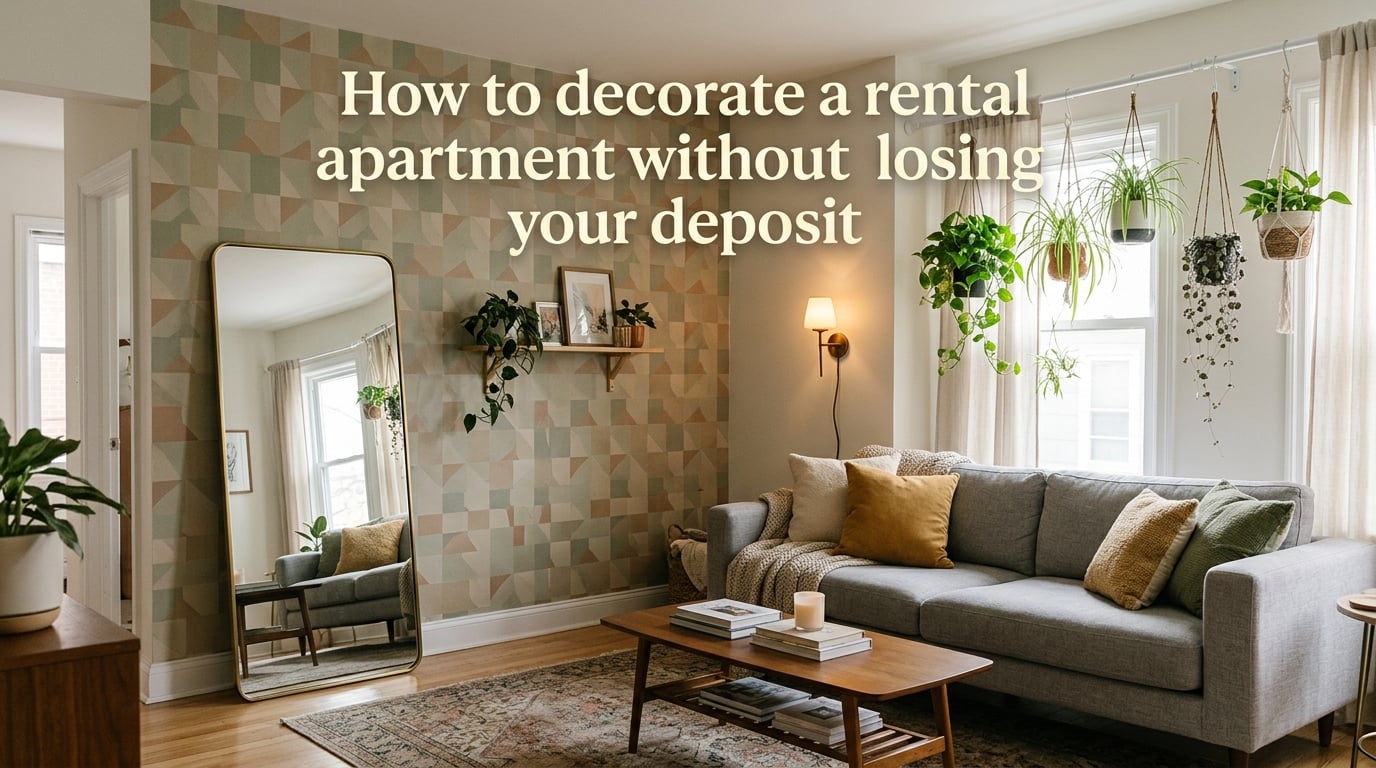
Renting an apartment doesn’t mean living in a bland, cookie-cutter space. You can absolutely make it feel like home without kissing your security deposit goodbye. I’ve helped dozens of friends and fellow students transform their rentals using damage-free methods that peel right off at move-out.
The secret is swapping permanent modifications — paint, nails, built-ins — for reversible alternatives. Think removable adhesives, plug-in fixtures, freestanding furniture, and textiles you can take with you. Below, I’ll walk you through every renter-friendly decorating method, a budget breakdown for students, and a move-out checklist to protect every penny of your deposit.
Table of Contents
Quick Answer: How to Decorate a Rental Apartment Without Losing Your Deposit
Renter-friendly decorating means personalizing your leased space using removable, damage-free methods — peel-and-stick wallpaper, command strips, plug-in lighting, textiles, and thrifted furniture — so you can reverse every change before move-out. The goal: leave the unit in the same condition you found it, get your full deposit back, and take your decor investments with you to your next place.
Read Your Lease First: What to Look For
Before you buy a single adhesive hook, open your lease. This step alone saves more deposits than any product recommendation I can give you.
Look for clauses about alterations, painting, hanging, and fixture changes. Some leases ban any wall damage; others allow small nail holes under a certain size. Many include a “wear and tear” allowance — normal fading, minor scuffs, and carpet wear from everyday use shouldn’t cost you.
Common Deposit Deductions to Watch For
Understanding what landlords typically deduct helps you avoid those traps:
- Unfilled nail holes: Even tiny holes count as damage in strict leases
- Paint changes without approval: Repainting to the original color isn’t always enough if the landlord’s painter charges more
- Adhesive residue: Cheap stickers and low-grade tape leave sticky patches that require cleaning or repainting
- Wall damage from heavy items: Shelves, TV mounts, and large frames that pull drywall
- Fixture modifications: Swapping light fixtures or faucets without returning the originals
- Floor damage: Peel-and-stick tile that lifts finish or leaves adhesive behind
The key takeaway: most deductions happen because renters didn’t restore the unit to its original condition. Every method below is designed to be fully reversible.
How to Decorate a Rental Apartment Without Losing Your Deposit
Here’s the framework: focus on five damage-free categories — walls, floors, lighting, textiles, and furniture. Each one gives you maximum personality with zero permanent marks. I’ll cover them all in detail below, starting with the walls.
No-Drill Wall Solutions
Damage-free hanging is the foundation of renter-friendly decorating. You have several options, each with different weight limits and surfaces they work on.
Command Strips and Adhesive Hooks
Command strips are the most consistently praised solution in renter communities. Standard strips hold up to 16 lbs and remove cleanly without paint damage. Velcro-style command strips work better for heavy items you want to hang long-term — they distribute weight more evenly than the snap-off versions.
Adhesive hooks come in various weight ratings. Use small hooks for keys and lightweight art, and heavy-duty versions for mirrors and shelving. Always check the weight rating on the package and match it to your item.
Mounting Putty and Poster Strips
Mounting putty is perfect for posters, photos, and lightweight frames under 2 lbs. It’s reusable and leaves zero residue on most painted walls. Poster strips work similarly but grip more aggressively on textured surfaces.
Tension Rods
Tension rods are your best friend for curtains, room dividers, and hanging plants. They fit inside window frames without screws and can hold surprising weight. Use them for curtains in any room — they’re especially useful in studio apartments where you need to define separate areas.
Hanging Methods Compared by Weight Capacity
Mounting putty holds up to 2 lbs and is best for posters and small photos — it peels off with no residue. Poster strips support up to 4 lbs and suit frames and lightweight art, removing cleanly via a pull tab. Standard command strips hold up to 16 lbs for medium frames and decor, released using the stretch tab. Heavy-duty command strips support up to 20 lbs for mirrors and large art, also using the stretch tab. Adhesive hooks carry up to 7.5 lbs for coats, bags, and plants, peeling right off the wall. A tension rod varies by rod size, works for curtains and room dividers, and is simply removed when you leave.
Removable Wallpaper and Wall Decals
Removable wallpaper transforms blank white walls into accent features without a single brushstroke. Modern peel-and-stick wallpaper peels off cleanly from most painted surfaces — just test a small patch first in a closet or behind furniture.
For a bold statement, cover one accent wall behind your bed or sofa. Full-room coverage works in small spaces like bathrooms and entryways. Wall decals offer a lighter touch — think geometric patterns, botanical shapes, or quote art scattered across a wall.
Paintable Temporary Wallpaper
Here’s a trick most competitors miss: paintable temporary wallpaper lets you apply a layer of color on top, then peel the whole thing off at move-out. You get the painted look without touching the actual wall. It’s ideal for renters who want a specific paint color but can’t commit to repainting later.
What to Watch Out For
Not all removable wallpaper is created equal. Cheap brands can tear during removal or leave adhesive residue. Always read reviews specifically about removal, not just application. Test in a hidden area first, and avoid applying over freshly painted walls (wait at least 4-6 weeks for paint to cure).
Peel-and-Stick Tile: Floors, Backsplashes, and Stairs
Peel-and-stick tile can transform ugly rental floors, dated backsplashes, and worn stairs. It’s one of the most dramatic before-and-after upgrades available to renters.
However, I need to be honest: this method comes with real risks. Forum users on Reddit and Emily Henderson’s blog have documented failures — tiles that lift at edges, trap dirt in seams, or leave adhesive residue that damages the original surface underneath. One commenter described a complete failure in a high-traffic kitchen.
When Peel-and-Stick Works Well
- Low-traffic areas: Laundry rooms, spare bedrooms, closet floors
- Backsplashes: Behind sinks and stoves (away from heavy splashing)
- Rental stairs: Individual stair treads get less foot traffic than open floors
- Short-term leases: If you’re there for one year, the risk is lower than a three-year lease
When to Skip It
Avoid peel-and-stick tile on high-traffic floors, in bathrooms with heavy moisture, or on surfaces with existing damage. If your lease specifically bans floor modifications, this one’s off the table entirely.
Lighting Swaps Without Wiring
Lighting changes the entire mood of a room. Fortunately, you don’t need an electrician to upgrade your rental lighting.
Plug-In Sconces and Wireless LED Lights
Plug-in wall sconces mount with screws or adhesive and plug into standard outlets. They add ambient lighting beside beds and sofas without hardwiring. Wireless LED sconces run on batteries or rechargeable packs — they’re truly zero-installation.
Smart Bulbs and Lamps
Smart bulbs screw into existing fixtures and let you control brightness and color temperature from your phone. Floor lamps and table lamps add layered lighting without touching the ceiling fixtures. Swap out existing bulbs for warmer tones to instantly make a space feel cozier.
Switch Plate Covers
Replacing plain white switch plates with decorative ones (wood, metal, colored) is a tiny change with outsized visual impact. Keep the originals in a drawer and swap them back at move-out — it takes five minutes.
Textiles, Hardware, and Furniture Swaps
These three categories let you add color, texture, and personality without touching the walls or floors.
Textiles
Rugs cover ugly carpet or scratched hardwood while adding warmth and pattern. Curtains on tension rods soften any room and hide plain blinds. Throw pillows and blankets are the fastest way to inject your style — swap them seasonally to keep things fresh.
Hardware Swaps
Cabinet pulls, door knobs, and drawer handles are surprisingly easy to swap. Unscrew the originals, store them in a labeled bag, and install your own. This works in kitchens, bathrooms, and bedrooms. Just make sure the new hardware uses the same screw spacing as the originals.
Furniture
Thrifted and secondhand furniture is the most common personalization route among renters. Facebook Marketplace, Craigslist, and local thrift stores offer unique pieces at student-friendly prices. Open shelving units lean against walls without mounting, and they provide both storage and display space.
Plants, Mirrors, and Art for Instant Personality
These three elements add life and dimension to any rental without a single hole or adhesive.
Plants
Plants bring color, texture, and fresh air to sterile rental spaces. Freestanding planters work anywhere. Hanging planters on tension rods in front of windows create a dramatic effect. If you lack natural light, low-maintenance varieties like pothos, snake plants, and ZZ plants thrive in dim conditions.
Mirrors
Large leaning mirrors make small rooms feel twice the size. Place one opposite a window to bounce natural light deeper into the space. Leaning mirrors require zero installation — just add felt pads to the bottom to protect the wall and floor.
Art Without Nails
Lean framed art against walls on mantels, shelves, and dressers. Create a gallery wall using command strips rated for your frame weight. Washi tape offers a colorful, damage-free way to mount lightweight prints and photos directly to the wall.
Renter Starter Kits by Budget
You don’t need a big budget to personalize your rental. Here’s what each tier gets you — perfect for students and first-time renters.
The Essentials Kit
This covers the basics of damage-free decorating with minimal investment. You’ll get a few packs of command strips for hanging art and hooks, mounting putty for posters and photos, a set of throw pillow covers to refresh your sofa, and a tension rod for your curtains. Total items: 4-5 pieces that transform your most visible surfaces.
The Upgraded Kit
Step up to removable wallpaper for an accent wall, a set of adhesive hooks for entryways and bathrooms, smart bulbs for your main fixtures, decorative switch plate covers, and a small plant with a freestanding planter. This tier gives you one dramatic focal point plus smaller details that add up.
The Full Transformation Kit
Go all in with removable wallpaper for a full room, plug-in wall sconces for ambient lighting, a large leaning mirror for depth and light, a set of new cabinet pulls for the kitchen, and a quality area rug. This kit transforms a room from generic to genuinely yours, and every piece comes with you when you leave.
Move-Out Checklist: Getting Your Full Deposit Back
The best decorating advice in the world means nothing if you lose your deposit at move-out. This checklist — which zero competitors provide — walks you through exactly what to do in your final weeks.
2-4 Weeks Before Move-Out
- Photo-document everything: Photograph every room, wall, floor, and fixture in current condition. Use timestamps. Compare to your move-in photos.
- Remove all adhesive products: Pull command strips using the stretch tab (never yank). Clean residue with rubbing alcohol or a magic eraser.
- Peel off wallpaper and decals: Work slowly from a corner at a 45-degree angle. If residue remains, use a hair dryer on low heat to soften adhesive.
- Restore original fixtures: Reinstall original switch plates, cabinet pulls, light fixtures, and door knobs. Label storage bags so you match the right hardware to the right room.
1 Week Before Move-Out
- Fill and patch holes: Use lightweight spackle for small nail holes. Sand smooth when dry. Touch up with matching paint if your lease requires it.
- Clean thoroughly: Wipe all walls, baseboards, and fixtures. Vacuum and mop floors. Clean inside appliances if applicable.
- Check closets and storage: Remove all hooks, shelves, and organizers. Check behind doors and inside cabinets for forgotten adhesive.
Move-Out Day
- Walk through with the landlord: If possible, do a joint walkthrough. Point out the condition and reference your move-in photos.
- Return all keys: Including mailbox, storage, and amenity keys. Get a receipt for key returns.
- Document final condition: Take one more round of timestamped photos after everything is empty and clean.
Communicate early with your landlord. If you made changes (even reversible ones), let them know in advance. Many landlords appreciate transparency and are more lenient with tenants who communicate proactively. Some smaller landlords have even offered to split paint costs when asked nicely — it’s always worth a conversation.
Frequently Asked Questions
What is the 3-5-7 rule in decorating?
The 3-5-7 rule suggests using odd numbers of decorative items grouped together — three objects on a shelf, five throw pillows on a sofa, or seven items on a gallery wall. Odd groupings look more natural and visually appealing than even ones, which can feel rigid. This rule works especially well in rentals where you’re working with limited decor options and need each arrangement to count.
What are things apartments don’t give your deposit back for?
Landlords commonly deduct for unfilled nail holes, unauthorized paint changes, adhesive residue on walls, damage from heavy items pulling drywall, modified fixtures not returned to original condition, and floor damage from peel-and-stick products. Excessive cleaning beyond normal wear and tear, broken blinds, and carpet stains also frequently trigger deductions. The best protection: document everything at move-in, use only truly removable products, and restore the unit to its original condition before move-out.
How to cheaply decorate an apartment?
Start with textiles — throw pillow covers, blankets, and curtains on tension rods add color and pattern for minimal cost. Use command strips and mounting putty to hang art and photos without buying frames. Shop thrift stores and Facebook Marketplace for unique furniture and decor. Swap cabinet pulls and switch plates for quick kitchen and bathroom upgrades. Even a single removable wallpaper accent wall can transform a room for under the cost of a takeout meal.
Can I use temporary wallpaper in a rental?
Yes, modern peel-and-stick wallpaper is designed specifically for renters. It adheres to most painted surfaces and removes cleanly when you peel it slowly from a corner. Always test a small patch in a hidden area first, and avoid applying over freshly painted walls — wait at least four to six weeks for paint to cure. Higher-quality brands remove more cleanly than budget options, so read removal reviews before buying.
How can I hang art or photos without nails in an apartment?
Command strips hold up to 16 pounds and remove cleanly using a stretch tab. Mounting putty works for lightweight items under 2 pounds, like posters and small frames. Adhesive hooks support coats, bags, and hanging plants. Washi tape adds color while holding lightweight prints. For larger pieces, heavy-duty command strips support up to 20 pounds. Always check the weight rating and match it to your item.
What options are available for lighting upgrades in a rental?
Plug-in wall sconces mount with adhesive or screws and plug into standard outlets — no electrician needed. Wireless LED sconces run on batteries for truly zero-installation lighting. Smart bulbs screw into existing fixtures and let you control brightness and color from your phone. Floor and table lamps add layered lighting without touching ceiling fixtures. Decorative switch plate covers are a five-minute swap that adds visual polish.
Final Thoughts
Learning how to decorate a rental apartment without losing your deposit comes down to one principle: choose everything removable. Command strips instead of nails. Plug-in sconces instead of hardwired fixtures. Tension rods instead of curtain rods. Thrifted furniture instead of built-ins.
Start with the Read Your Lease checklist, pick your budget tier, and tackle one room at a time. Photo-document your move-in condition, communicate with your landlord when in doubt, and follow the move-out checklist to restore everything. Your apartment should feel like yours — and your deposit should come back in full.