
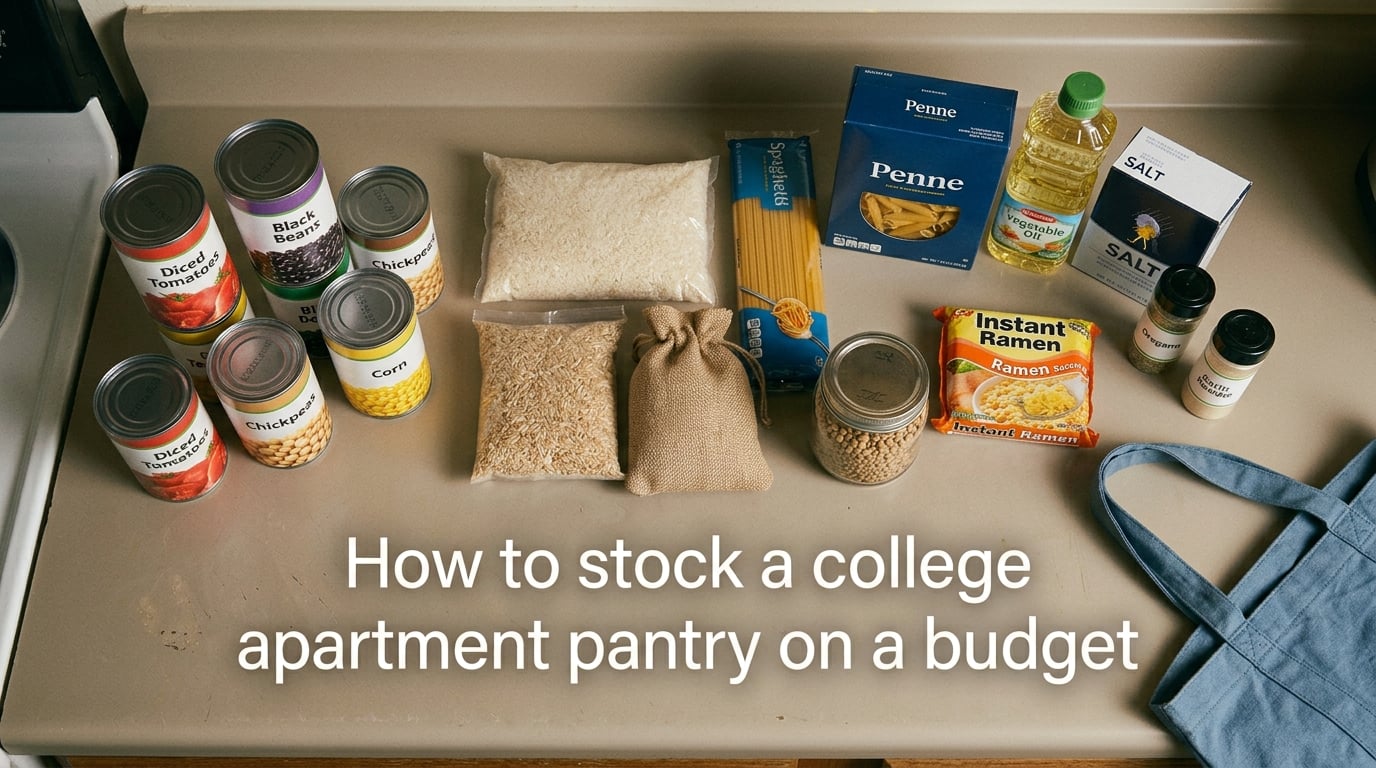
Moving into your first college apartment is exciting until you realize the kitchen is empty and you have no idea what to buy. The sheer number of grocery options is overwhelming, your budget is tight, and you don’t want to waste money on food that goes bad before you touch it. If you’re wondering how to stock a college apartment pantry on a budget, you’re in the right place.
This guide breaks down exactly what to buy, what to skip, and how much you should realistically spend. We’ll cover shelf-stable pantry staples, fridge and freezer essentials, storage hacks for tiny kitchens, and the shopping strategies that actually save money. By the end, you’ll have a complete grocery checklist you can take straight to the store.
Whether you’re a freshman in your first off-campus apartment or a returning student who wants to stop living on takeout, stocking a budget-friendly pantry is the single best thing you can do to eat well without breaking the bank.
Table of Contents
Pantry Staples Every College Student Needs
Pantry staples are shelf-stable, versatile, low-cost ingredients that form the backbone of most meals. They last for months, cost very little per serving, and combine into dozens of different dishes. Start here and you’ll always have something to eat.
Grains and Starches
These are your cheapest calories and the foundation of almost every meal.
- Rice (white or brown): A 5-lb bag costs very little and makes 20+ servings. White rice cooks in 15 minutes; brown rice takes longer but has more fiber.
- Pasta: Dried pasta is one of the most affordable foods on the planet. Grab spaghetti, penne, or rotini and pair with jarred sauce for a 10-minute meal.
- Oats: Old-fashioned oats make breakfast for weeks. Use them for overnight oats, oatmeal, or even blend into smoothies.
- Bread: Keep a loaf in the freezer and pull out slices as needed so it doesn’t mold.
- Tortillas: Versatile for wraps, quesadillas, burritos, and tacos. They last longer than bread.
Canned and Shelf-Stable Proteins
Protein is where many students overspend. These options are cheap, shelf-stable, and require zero cooking skill.
- Canned beans (black, kidney, chickpeas): Rinse and add to rice, salads, or tacos. One can provides roughly 7 grams of protein per serving.
- Peanut butter: A jar lasts weeks and goes on toast, oatmeal, bananas, or straight off the spoon. It’s one of the highest-calorie-per-dollar foods you can buy.
- Canned tuna or chicken: Mix with mayo or mustard for sandwiches. Look for cans packed in water for a healthier option.
- Lentils: Dried lentils cook in 20 minutes with no soaking needed. They’re packed with protein and fiber.
- Eggs: Technically a fridge item, but worth mentioning here because they’re one of the cheapest protein sources available and work for any meal of the day.
Sauces, Oils, and Seasonings
Plain rice and beans gets boring fast. These flavor-builders turn basic ingredients into actual meals.
- Cooking oil: A bottle of vegetable or canola oil lasts months and is essential for any stovetop cooking.
- Soy sauce: The backbone of stir-fries, fried rice, and marinades. On Reddit’s r/college, soy sauce plus rice plus frozen vegetables plus eggs is the most-repeated budget meal.
- Jarred pasta sauce: A cheap shortcut to pasta night with zero effort.
- Hot sauce: Makes everything taste better for almost no cost.
- Salt, pepper, garlic powder, and chili flakes: These four seasonings cover most basic recipes. Add cumin and paprika when your budget allows.
- Canned tomatoes: Crushed or diced tomatoes form the base of chili, pasta sauce, and soups.
Quick-Meal Add-Ons
These aren’t essentials, but they make meal prep faster on busy school nights.
- Instant ramen: Upgrade it with an egg, frozen vegetables, and a splash of soy sauce.
- Mac and cheese boxes: Cheap comfort food that takes 10 minutes.
- Popcorn kernels: Cheaper than microwave bags and you control the seasoning.
- Trail mix or nuts: Good study snacks that don’t need refrigeration.
Fridge and Freezer Essentials That Stretch Your Budget
A well-stocked freezer and a few key fridge items turn your shelf-stable pantry into complete meals. These items give you variety without blowing your budget.
Fridge Staples
- Butter: Lasts weeks and is used in cooking, on toast, and for frying eggs.
- Cheese: A block of cheddar is more versatile and cheaper per ounce than pre-shredded bags.
- Milk or plant-based milk: For cereal, oatmeal, coffee, and cooking.
- Plain Greek yogurt: Higher protein than regular yogurt. Use it in smoothies, as a sour cream substitute, or with oats and fruit.
- Fresh produce that lasts: Onions, potatoes, carrots, and apples keep for weeks in the fridge. Avoid leafy greens until you know you’ll eat them in time.
Freezer Staples
The freezer is a college student’s best friend. It prevents food waste and gives you variety on demand.
- Frozen vegetables: Broccoli, mixed stir-fry blends, peas, and spinach are just as nutritious as fresh and never spoil before you use them. This was the single most-recommended item across Reddit college cooking threads.
- Frozen fruit: Perfect for smoothies, oatmeal toppings, or a quick dessert. Cheaper than fresh fruit and no spoilage risk.
- Frozen chicken breasts or thighs: Buy a bag and defrost individual portions as needed.
- Bread: Freeze the whole loaf and pull slices as you go. It toasts straight from frozen.
- Leftover portions: Cook a big batch of chili, soup, or pasta sauce on the weekend and freeze portions for exam week when you have no time to cook.
Storage Hacks for Tiny Apartment Pantries
One of the biggest challenges nobody talks about is storage. Many college apartments either have no pantry at all or a tiny closet that barely fits a cereal box. Here’s how to make it work.
- Over-the-door shoe organizer: Hang one on your pantry or bedroom door and fill the pockets with spice packets, granola bars, seasoning mixes, and other small items.
- Stackable bins on top of the fridge: The top of your refrigerator is prime real estate for items you don’t reach for daily. Canned goods, extra pasta boxes, and cooking oil fit perfectly up there.
- Under-bed storage bins: If your bedroom has space under the bed, use flat bins for backup canned goods, extra rice bags, and bulk snacks.
- Tension rod shelf dividers: Use cheap tension rods inside cabinets to create extra levels and double your shelf space.
- Lazy Susans: A spinning turntable inside a deep cabinet lets you reach items in the back without knocking everything over.
- Clear containers for bulk items: Pour rice, pasta, oats, and flour into clear airtight containers. They stack neatly, keep food fresh, and let you see when you’re running low.
- Wall-mounted spice rack: If you have wall space near the stove, a small rack frees up a whole cabinet shelf.
The key principle from experienced apartment dwellers on Reddit’s r/LivingAlone is: buy shelf-stable items first, then add fresh produce once you know your storage situation and eating habits.
A Realistic College Student Grocery Budget
Most guides throw around vague phrases like “budget-friendly” without telling you actual numbers. Here’s what a realistic grocery budget looks like for a college student in 2026.
The $50-Per-Week Starter Plan
A reasonable starting budget for one person is around $50 to $75 per week, which works out to $200 to $300 per month. This assumes you’re cooking most meals at home and shopping at affordable stores like Aldi or Walmart.
Here’s how a $50 week might break down:
- Proteins: Eggs, canned beans, peanut butter, one pack of chicken thighs – roughly $12
- Grains: Rice, pasta, bread, tortillas, oats – roughly $8
- Frozen and canned goods: Frozen vegetables, canned tomatoes, pasta sauce – roughly $8
- Fresh produce: Onions, potatoes, bananas, one or two other items – roughly $6
- Dairy: Milk, butter, cheese or yogurt – roughly $7
- Snacks and extras: Popcorn, hot sauce, seasoning, or a treat – roughly $5
- Buffer: A few dollars for anything you forgot – roughly $4
This gets you three meals a day with enough variety to avoid burnout. The first grocery run will cost more because you’re buying pantry staples that last weeks. After that initial stock-up, your weekly cost drops significantly.
Scaling Up or Down
If $50 feels too tight, $75 per week gives you more room for fresh produce, better cuts of meat, and occasional treats. If you’re in survival mode at $25 or $30 per week, focus entirely on the cheapest staples: rice, beans, eggs, oats, peanut butter, frozen vegetables, and bananas. You can eat adequately on that amount while you get your finances sorted.
The key insight from Reddit’s r/budgetfood community is that the first two weeks cost the most because you’re building a base. After that, you’re mostly topping up items as they run out, which brings the weekly average down.
Budget Shopping Strategies That Actually Work
Knowing what to buy is only half the battle. How you shop determines how much you actually spend. These strategies come from college students who’ve figured it out the hard way.
Store Brands Over Name Brands
Store-brand products (also called generic or private label) are almost always identical to name brands at 20% to 40% less cost. This applies to canned beans, pasta, rice, frozen vegetables, spices, and pantry basics. Reddit’s cooking communities consistently say store brands are “just as good” for nearly every staple.
Where to Shop
Not all grocery stores are equal when you’re on a budget.
- Aldi: Consistently the cheapest for staples, produce, and dairy. Their store brand is excellent quality.
- Walmart: Great prices, especially on pantry staples and frozen items. Pickup orders save time.
- Trader Joe’s: Good for unique frozen meals and specialty items, but not always the cheapest for basics.
- Costco or Sam’s Club: Worth it if you can split bulk purchases with roommates (more on that below).
- Avoid regular-priced Whole Foods: It’s fine for one or two specialty items, but it’s not where you build a budget pantry.
Timing and Bulk Buying with Roommates
Buying in bulk saves money, but only if you can use everything before it expires. If you have roommates, split the cost and the contents of large bags of rice, pasta, canned goods, and frozen items. A $15 bag of rice at Costco becomes $5 each for three people, and nobody has to store a 20-lb bag in a tiny apartment.
Also pay attention to sales cycles. Most grocery stores run weekly specials. Stock up on non-perishable items when they go on sale, not when you run out. Clip digital coupons through store apps – most major chains have them now.
Student-Specific Discounts
Your student ID is more valuable than you think. Many grocery stores near campuses offer student discount days. Apps like UNiDAYS and Student Beans occasionally feature grocery deals. Check whether your campus has a food pantry – many universities now run them openly, and using one is nothing to be ashamed of when you’re stretching a tight budget.
What NOT to Buy: Foods That Waste Your Budget
Some foods look cheap but end up costing you more because they spoil, require expensive add-ons, or don’t fill you up. Learning what to skip is just as important as knowing what to buy.
- Pre-cut fruit and vegetables: You’re paying double for someone else’s knife work. Buy whole produce and cut it yourself.
- Fresh herbs: A bunch of cilantro or basil looks cheap but wilts within days. Buy dried herbs or grow a small pot on your windowsill.
- Individually wrapped snacks: A box of 10 granola bars costs more per ounce than a bag of bulk oats or nuts. Portion them into reusable bags yourself.
- Sugary cereals: They’re expensive per serving and don’t keep you full. Oatmeal is cheaper, more filling, and more versatile.
- Single-use kitchen gadgets: That avocado slicer or garlic press seems handy until it takes up drawer space you don’t have. A good knife does the same job.
- Fresh fish and expensive cuts of meat: These are the fastest way to blow a grocery budget. Stick with chicken thighs, canned tuna, eggs, and beans for protein.
- Bottled water: A reusable water bottle and a filter pitcher save hundreds per semester.
Kitchen Equipment That Pays for Itself
You don’t need a fully equipped kitchen to cook well on a budget. A few key tools make cooking possible, and the money you save by cooking at home pays for them within the first few weeks.
- A good chef’s knife: The single most important tool in any kitchen. You can prep vegetables, cut meat, and handle 90% of kitchen tasks with one decent knife. Reddit’s r/cookingforbeginners unanimously calls this the number-one purchase.
- One large skillet or frying pan: For stir-fries, eggs, sauteed vegetables, grilled cheese, and one-pan meals.
- A medium pot: For pasta, rice, soups, oatmeal, and boiling water. If you can only afford one pot, get a medium-sized one with a lid.
- A cutting board: Protects your counters and your knife edge. A basic plastic one costs very little.
- A rice cooker (optional): Not essential, but if you eat rice multiple times a week, a cheap rice cooker frees up stovetop space and makes perfect rice with zero effort. It pays for itself quickly when rice is a pantry staple.
- A baking sheet: For roasting vegetables, baking chicken thighs, and making sheet-pan dinners. Easy cleanup with foil or parchment paper.
Skip the blender, air fryer, and stand mixer for now. They’re nice-to-haves, not need-to-haves. Focus on the basics first and add specialty items when your budget allows.
Your Complete College Apartment Grocery Checklist
Here’s your consolidated checklist. Print it out or save it to your phone before your first grocery run.
Pantry Staples: Rice, pasta, oats, bread (freeze it), tortillas, canned beans, peanut butter, canned tuna or chicken, lentils, cooking oil, soy sauce, jarred pasta sauce, hot sauce, canned tomatoes, salt, pepper, garlic powder, chili flakes.
Fridge Items: Eggs, butter, cheese (block, not shredded), milk or plant milk, Greek yogurt, onions, potatoes, carrots, bananas.
Freezer Items: Frozen vegetables (broccoli, stir-fry blend, peas, spinach), frozen fruit, frozen chicken, bread (backup loaf).
Optional Upgrades: Instant ramen, mac and cheese boxes, popcorn kernels, trail mix, cumin, paprika, rice cooker.
This list covers breakfast, lunch, dinner, and snacks for one person for roughly two to three weeks once you’ve built up your pantry base.
Frequently Asked Questions
What is the 5-4-3-2-1 rule for groceries?
The 5-4-3-2-1 rule is a simple grocery planning framework: buy 5 fruits and vegetables, 4 proteins, 3 carbohydrate sources, 2 sauces or spreads, and 1 treat or snack. It helps ensure you’re getting balanced nutrition without overspending or overbuying in any single category.
What is a realistic grocery budget for a college student?
A realistic grocery budget for a college student is $200 to $300 per month, or roughly $50 to $75 per week. The first grocery run costs more because you’re stocking pantry staples that last weeks. After the initial stock-up, weekly spending typically drops to $40 to $60.
What are the best pantry staples for college students?
The best pantry staples for college students are rice, pasta, oats, canned beans, peanut butter, canned tomatoes, cooking oil, soy sauce, and lentils. These items are shelf-stable, affordable, and combine into dozens of different meals without requiring advanced cooking skills.
What should I buy first for my college apartment?
Start with rice or pasta, canned beans, peanut butter, eggs, frozen vegetables, cooking oil, salt, and one pan. These eight items let you make stir-fries, rice and beans, peanut butter toast, and scrambled eggs. Add more staples each week as your budget allows.
How much should a college student spend on groceries per month?
Most college students spend between $200 and $300 per month on groceries. Shopping at budget-friendly stores like Aldi or Walmart, buying store brands, and cooking at home instead of eating out can keep you at the lower end of that range.
What groceries last the longest for college students?
Dried rice, dried pasta, dried lentils, canned beans, peanut butter, cooking oil, honey, and most spices last 6 months to 2 years when stored properly. Canned goods typically have a shelf life of 2 to 5 years. These long-lasting items form the foundation of a budget pantry.
How do I stock a small pantry on a budget?
Use vertical storage like stackable bins, over-the-door organizers for small items, and clear containers for bulk staples like rice and pasta. Keep frequently used items at eye level and store backup supplies under your bed or on top of the fridge. Buy shelf-stable items first and add fresh produce once you understand your space and eating habits.
Final Thoughts
Learning how to stock a college apartment pantry on a budget is a skill that pays off every single week you’re in school. Start with the shelf-stable essentials – rice, pasta, canned beans, peanut butter, oats, and eggs – and build from there. Shop at stores like Aldi or Walmart, choose store brands, and don’t be afraid to split bulk purchases with your roommates.
Your first grocery run will feel expensive because you’re building a base. After that, you’re just topping up. Stick to the checklist, avoid the foods that waste money, and you’ll be eating well for $50 to $75 a week. That’s a skill that serves you long after graduation.