
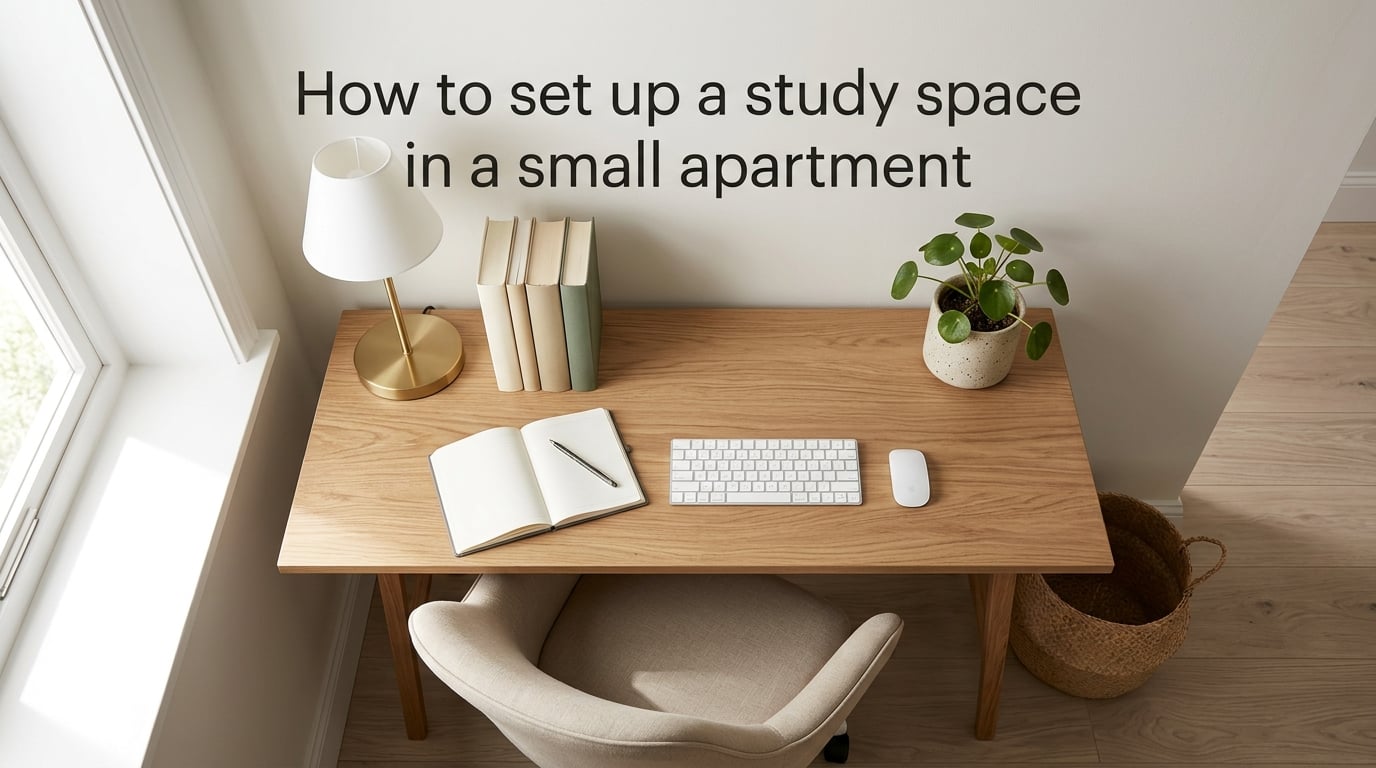
Living in a small apartment doesn’t mean you have to study on the couch or in bed. I know the struggle — when I was finishing my degree in a 380 square foot studio, I shared my “office” with my bed, my kitchen, and a very opinionated roommate who liked to vacuum at 9 p.m. The good news is that learning how to set up a study space in a small apartment is mostly about smart choices, not square footage. In this guide, I’ll walk you through every decision I had to make (and a few I wish I’d made sooner) so you can build a productive corner that actually fits your life in 2026.
You’ll find a step-by-step checklist, room-by-room setup ideas, a desk comparison, lighting tips, and a list of renter-friendly upgrades that won’t risk your security deposit. By the end, you’ll have a clear plan you can finish in a single weekend.
Table of Contents
How to Set Up a Study Space in a Small Apartment: Quick Start Checklist
Before we dive into the details, here is the short version. If you only have ten minutes, follow these seven steps and you’ll have a working study zone by tonight.
- Pick one corner and commit to it. Even 3 ft by 5 ft is enough for a desk and chair.
- Place your desk perpendicular to a window so you get natural light without screen glare.
- Choose a compact desk — wall-mounted, folding, or a narrow writing desk — that fits the spot.
- Add an ergonomic chair with lumbar support, or use a cushion on a hard chair for now.
- Layer your lighting: overhead light for general use, plus a desk lamp with a daylight bulb (5000K to 6500K).
- Hide cables with adhesive clips, a cable box, or a simple zip-tie bundle behind the desk.
- Block distractions: phone in a drawer, noise-cancelling headphones on, sign on the door.
That checklist is the spine of this article. Every section below explains one of these steps in depth, plus the extras that turn a corner into a study nook you’ll actually want to use.
How to Choose the Best Location for Your Study Zone
The first real decision is the spot itself, and it matters more than the desk you put in it. A great desk in a bad location will always feel like a punishment. Choose the area that gets the most natural light, the least foot traffic, and is as far as possible from your bed and the TV. If your “study zone” is also where you sleep, your brain will never fully switch into work mode.
Best Spots in a Studio Apartment
In a studio, you create rooms with rugs, lighting, and furniture placement rather than walls. The corners that tend to work best are the one furthest from your front door (so deliveries and roommates don’t interrupt), a short wall away from the bed, and any alcove or closet nook you can claim. A bookshelf placed perpendicular to your living space acts as a soft divider and signals to your brain that work is happening on the other side.
Avoid placing your desk directly behind the sofa. You’ll slouch to look at your laptop, and your neck will pay for it within a week. I shifted my desk 90 degrees and the difference in my evening study sessions was immediate.
Room-by-Room Setup Ideas
If you have a separate bedroom, the classic move is the bedroom corner desk near the window. If you share an apartment, a dining table nook can double as a daytime study area and reset each evening. Even a wide hallway closet with the door removed and a curtain rod added can become a 2 ft deep study pod.
In a one-bedroom apartment, the living room corner farthest from the TV is usually the quietest spot. A kitchen nook works for short study sprints if you keep food smells out with a small candle and your laptop charged.
Picking a Compact Desk and Ergonomic Chair
You do not need a big desk. You need the right desk. The sweet spot for most small apartments is a surface that is at least 24 inches deep and 36 to 48 inches wide, with enough legroom underneath so your knees sit at 90 degrees. Anything bigger eats your room; anything smaller will have your elbow hanging off the edge within an hour.
Desk Types Compared
Here is the comparison I wish someone had handed me before I bought my first desk. Each option has tradeoffs in cost, footprint, and how renter-friendly it is.
- Wall-mounted (fold-down) desk: folds flat when you don’t need it. Best for studio apartments where the desk doubles as a hallway. Needs solid wall studs or it will sag.
- Folding table: cheap, portable, and storable. Great for renters who move often. The downside is wobble during long typing sessions.
- Standing desk converter: sits on top of an existing surface. Ideal if you already have a table but want to alternate between sitting and standing.
- Compact traditional desk: the most stable option. Look for one with a modesty panel and at least one drawer for chargers and notebooks.
If you can, sit at the desk before you buy it. Your forearms should rest parallel to the floor, and your eyes should land on the top third of your monitor without tilting your head.
Choosing a Chair That Protects Your Posture
A proper ergonomic chair is the single biggest upgrade for long study sessions. Look for adjustable lumbar support, a seat that tilts, and armrests that let your shoulders stay relaxed. If a full ergonomic chair is out of reach right now, a seat cushion and a small lumbar pillow on a sturdy dining chair will tide you over.
Avoid gaming chairs with hard bolsters if you tend to study for three or more hours at a stretch — the side wings can press into your thighs and cut off circulation.
Getting the Lighting Right for Long Study Sessions
Lighting is the most underrated factor in study focus. Poor lighting doesn’t just cause eye strain — it tells your brain it’s time to wind down, which is the opposite of what you want at 8 p.m. with an exam in the morning.
Natural Light and Window Placement
Place your desk perpendicular to your largest window. You’ll get soft side lighting that reduces screen glare and shadows on your page. If the only window is behind your monitor, the backlight will make you squint. If it’s in front of you, you’ll fight glare on your screen all day.
In apartments where the window is on a busy street, thermal curtains help on two fronts: they block drafts and they diffuse harsh midday sun so your screen stays readable.
Adding Task Lighting Without a Renovation
Aim for two light sources: a warm ambient bulb in the room (2700K) and a daylight desk lamp (5000K to 6500K) pointed at your work surface. Plug-in swing-arm lamps clamp to the desk edge with no tools, and adhesive LED strip lights under a shelf brighten the whole area for under twenty dollars in most cases.
If you study at night, switch your overhead bulb to a warm dimmable one an hour before bed so your body winds down. Keep the desk lamp on the cool side — it helps you stay alert without straining.
Cutting Distractions and Managing Noise
Distractions are the silent killer of a small apartment study space. The TV three meters away, the doorbell, the group chat pinging on your phone — every one of them feels louder when your desk is the size of a postage stamp. The fix is a combination of physical barriers and intentional habits.
Start with the phone. Put it face down in a drawer, or leave it in another room during deep work blocks. A simple flip clock on the desk removes the temptation to check the time on your lock screen. If you live with roommates, agree on a signal (a closed door, a “do not disturb” sign, headphones on) so they know not to interrupt.
For noise, layered solutions work better than a single heroic one. A thick rug absorbs the echo in a small room. A door draft stopper blocks hallway sound and keeps the temperature steady. Noise-cancelling headphones are worth every penny if you study during the day, and a small white noise machine or a fan at low speed masks unpredictable neighbor noise at night. Many students swear by looping rain or coffee shop soundscapes at moderate volume — it covers voices without becoming its own distraction.
Storage, Organization and Decluttering Strategies
Clutter builds up fast in small apartments because every horizontal surface becomes fair game. The trick is to give every item a fixed home and to use the vertical space you probably forgot you have.
Vertical shelving along the wall above your desk triples your storage without eating floor space. Over-the-door organizers work for notebooks, chargers, and small supplies and leave zero marks when you move out. Under-bed storage bins are perfect for archived notes and textbooks you only need before exams.
On the desk itself, a small organizer tray for pens and a single mug for cables keeps the surface calm. Run a cable clip down the back leg of the desk and bundle cords with a Velcro strap — five minutes of work makes the whole setup look intentional. Reviewers in r/simpleliving and r/ApartmentHacks consistently say the visual calm of a clean desk translates directly into better focus, and from my own experience I agree.
Renter-Friendly Upgrades, Plants and Personal Touches
You don’t have to own your apartment to make the space feel like yours. Renter-friendly simply means anything that comes off cleanly with no spackle, no paint touch-ups, and no angry email from your landlord.
Renter-Friendly Hacks That Don’t Damage Walls
Command strips and removable hooks hold up surprisingly heavy items — picture ledges, small shelves, even lightweight pegboards. Freestanding room dividers create the illusion of a study room without a single nail. Washi tape lets you mark a “study zone” outline on the floor that peels off at move-out. For renters worried about their security deposit, these are the safest bets and they cost very little.
Best Plants for a Small Study Area
Plants soften a study corner and several species genuinely help with air quality and focus. Snake plants are almost impossible to kill and release oxygen at night. Pothos tolerates low light and grows fast enough to feel rewarding. A small peace lily adds humidity, which helps during long reading sessions in dry winter air. If you want something fragrant, a tiny eucalyptus stem in a vase gives your brain a clean reset without the essential oil diffuser.
Personal Touches That Keep You Motivated
A cork board above the desk with your semester goals, a printed photo from a trip you loved, or a single piece of art you actually chose — these small signals make the corner feel yours. Avoid filling the wall with motivational quotes you don’t connect with; one meaningful object beats ten generic posters every time. A soft throw on the back of your chair is also a small comfort that signals “this is a place I want to sit.”
Common Mistakes to Avoid When Building Your Study Space
Most students I’ve talked to (and definitely me, the first time around) make the same handful of mistakes. Avoiding them saves you a weekend of regret.
- Studying in bed or on the couch. It feels cozy for ten minutes and then you fall asleep. Keep study and sleep in separate zones, even if the zones are only a meter apart.
- Buying furniture before measuring the spot. A desk that is two inches too wide will make the whole corner feel cramped. Measure twice, order once.
- Hanging heavy shelves on drywall without anchors. They will come down — usually at 2 a.m. with a loud thud. Use proper anchors or a freestanding shelf instead.
- Ignoring cable management on day one. Tangled cables make a small space look chaotic and are a fire risk if you stack a charger under papers.
- Setting up near the kitchen. Cooking smells will soak into your notebooks, and the fridge becomes a constant temptation.
Frequently Asked Questions
What is the best layout for a small study room?
The best layout for a small study room places the desk perpendicular to a window for natural side light, with the chair backed against a solid wall for focus. Add a small shelf above the desk, a rug to define the zone, and a floor lamp in the corner you read in. This setup works in rooms as small as 4 m by 3 m and keeps the rest of the space free for movement.
How do you utilize space in a small apartment for studying?
Use vertical wall space with shelves and pegboards, fold-down desks that close when not in use, and over-the-door organizers for supplies. Choose a corner with the most natural light and least foot traffic, then define the zone with a small rug. Under-bed bins and stackable drawer carts keep textbooks and notes accessible without taking up floor space.
How do you set up a study space step by step?
Pick a corner away from your bed and the TV. Place a compact desk perpendicular to a window and add an ergonomic chair. Add a daylight desk lamp, organize cables, and store supplies vertically. Finally, block distractions by putting your phone in a drawer, wearing headphones, and posting a simple do-not-disturb sign if you live with others.
What are some ideas for a small study room?
Try a closet-conversion study pod with the door removed and a curtain hung in its place. A Murphy-style fold-down desk against a wall works well in studios. A bar cart turned mobile supply station, a wide hallway nook with a slim desk, or a corner of the living room separated by a bookshelf are other popular small apartment study ideas.
Final Thoughts on Building a Study Space That Actually Works
Learning how to set up a study space in a small apartment is less about square footage and more about intention. Pick a real spot, give it the right desk, layer your lighting, and protect it from distractions with simple habits. Add a plant, a rug, and one personal object that makes you smile, and you’ll find yourself actually wanting to sit down and study. Start with the seven-step checklist at the top of this guide this weekend, and within a week you’ll notice the difference in focus, posture, and even sleep. Your small apartment has more room than you think — it just needs a little direction.