
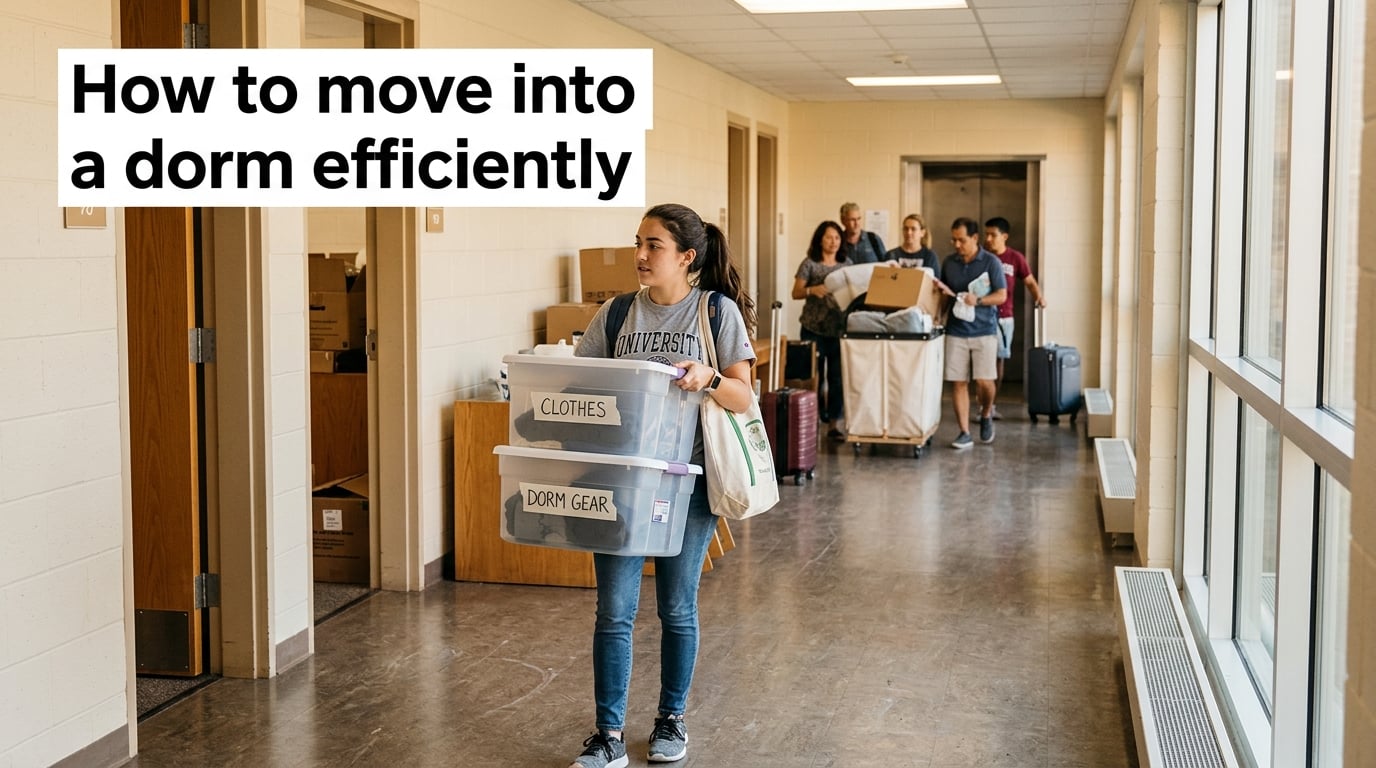
Learning how to move into a dorm efficiently can turn one of the most stressful days of your college experience into something genuinely exciting. After helping dozens of students through move-in day and gathering tips from Reddit threads, professional organizers, and moving companies, we put together this complete guide. You’ll learn exactly what to pack, when to arrive, how to set up your room fast, and what to skip entirely.
A smooth dorm move-in starts weeks before you load the car. The students who breeze through move-in day are the ones who planned ahead, coordinated with their roommates, and packed with purpose. This guide walks you through every phase so you can settle in without the chaos.
Whether you’re a freshman heading to campus for the first time or a returning student moving to a new hall, these strategies work for every dorm move-in situation in 2026 and beyond.
Table of Contents
Pre-Move-In Preparation: Set Yourself Up for Success
Preparation starts the moment you receive your housing assignment. Read every detail your school sends you, including room dimensions, what furniture is provided, and any restrictions on items like candles or space heaters. Most dorms supply a bed, desk, chair, and dresser, so you don’t need to bring those.
Coordinate With Your Roommate
Reach out to your roommate before buying anything major. You don’t need two mini-fridges, two microwaves, or two rugs for the same 12-by-15-foot room. A quick text conversation about who’s bringing what saves money and precious floor space.
Discuss shared items like a TV, futon, or coffee maker. One person brings the item, the other can contribute to the cost or bring something else. This coordination alone prevents the most common move-in day frustration: duplicate stuff with nowhere to put it.
Create a Packing Checklist by Category
Organize your packing list into categories: bedding, toiletries, school supplies, clothing, electronics, and cleaning supplies. Write everything down rather than relying on memory. Reddit users consistently recommend bringing less than you think you need, and they’re right.
Check if your school publishes a recommended packing list. Many residence halls provide one that includes room-specific details like bed size (usually twin XL) and whether you need your own shower curtain for suite-style bathrooms.
Schedule Your Move-In Slot Early
If your school offers time slots for move-in, grab the earliest one. Early arrivals get better parking, shorter waits for elevators and carts, and cooler morning temperatures. Moving company professionals and experienced parents all agree: arriving early is the single best logistical decision you can make.
Packing Strategy: How to Pack for Dorm Move-In Day
How you pack matters as much as what you pack. The right containers and labeling system cut your move-in time in half. Professional organizers recommend using bins and bags with built-in handles because you’ll be carrying everything up stairs or down long hallways.
Use the Right Containers
Plastic storage bins with snap lids and handles work perfectly for dorm moves. They stack in your car, protect your items, and double as under-bed storage once you’re unpacked. Large tote bags and duffel bags handle soft goods like bedding and clothing.
Avoid oversized boxes that become too heavy to carry. Smaller, lighter containers mean more trips but less strain and fewer dropped items. If you’re flying to college, vacuum-seal bags compress clothing to fit in suitcases.
Label Everything
Write your name, room number, and phone number on every container and bag. Move-in day is hectic, and items get mixed up or set down in the wrong hallway. A bold permanent marker on packing tape works better than stickers that peel off.
Label by category too: “bedding,” “kitchen,” “desk supplies.” When you’re standing in a pile of identical bins, this saves enormous time figuring out what goes where.
Pack an Essentials Bag
Keep one separate bag with everything you’ll need in the first two hours: phone charger, water bottle, snacks, basic toiletries, a change of clothes, important documents, and any medications. This bag stays with you, not in the trunk. When unpacking takes longer than expected, you won’t be digging through bins for your toothbrush.
Remove Packaging Before Move-In Day
Take everything out of its retail packaging at home. Remove tags from clothes, unwrap bedding, unbox electronics, and break down cardboard. This alone saves 30-45 minutes on move-in day and produces far less trash to deal with in your new room.
Move-In Day Timeline: An Hour-by-Hour Schedule
Having a timeline transforms move-in day from reactive scrambling into a structured process. Here’s a schedule that moving professionals and experienced families use to stay on track.
Two Hours Before Leaving Home
Load the car in reverse order: items you need first go in last so they come out first. Cleaning supplies, bedding, and the essentials bag should be the last things loaded and the first things you grab at the dorm. Do a final checklist review before pulling out of the driveway.
Arrival and Check-In (First 15 Minutes)
Park in the designated move-in area, grab a cart if available, and head to your check-in station. Have your student ID and housing confirmation ready. Pick up your room key, student ID if needed, and any orientation materials. This part moves fast, so have documents accessible.
First 30 Minutes in the Room
Before unpacking anything, open windows if possible and plug in a fan. Move-in day is typically hot, and airflow makes everything easier. Next, do a quick clean of surfaces: wipe down the desk, dresser, shelves, and closet with disinfectant wipes. Photograph any existing damage to walls, floors, or furniture for your protection.
Setup Sequence (Next 1-2 Hours)
Set up the bed first because you’ll need a place to rest and sort items. Put on the mattress pad and fitted sheet immediately. Then tackle the desk area, followed by closet organization. Unpack by zone rather than by box, moving systematically around the room.
Final Hour
Break down all boxes and packing materials. Take trash to the designated area. Do a walkthrough to make sure everything has a place. Then step outside, take a breath, and handle the goodbye with your family.
How to Move Into a Dorm Efficiently: Step-by-Step
The most efficient dorm move-in follows a specific sequence that experienced students and organizers recommend. Skipping steps or unpacking randomly adds hours to the process.
Step 1: Arrive as early as possible. Beat the crowds for elevator access, parking, and cart availability. Mid-morning arrivals hit peak congestion with long waits at every turn.
Step 2: Clean before you unpack. Wipe down every surface with disinfectant. Previous occupants may not have been thorough, and you don’t want to put your belongings on dusty or sticky surfaces.
Step 3: Set up the bed immediately. Make the bed with clean sheets, pillow, and mattress pad. Reddit users consistently say this is the most important first step because you’ll want somewhere comfortable to sit and eventually sleep.
Step 4: Organize by zones. Divide the room into sleeping zone, study zone, and storage zone. Place items in their zones as you unpack rather than spreading everything out randomly.
Step 5: Keep your door open while unpacking. This is one of the most repeated tips from current college students. An open door signals friendliness and helps you meet hallmates who are also moving in. It turns a stressful chore into a social opportunity.
Step 6: Set up your fan or air circulator first. Multiple experienced students recommend plugging in a fan immediately upon entering the room. Dorm rooms get stuffy fast, especially during late-summer move-in, and airflow makes the entire process more bearable.
What NOT to Bring to Your Dorm
Knowing what to leave behind is just as important as knowing what to pack. Overpacking is the most common move-in day mistake, and dorm rooms don’t have storage space for items you won’t use.
Skip these items: ironing boards, full-size lamps (use a clip-on desk lamp instead), excessive kitchen supplies (most dorms ban cooking appliances beyond a microwave), more than two weeks of clothing (you’ll do laundry), and large electronics you won’t have room for.
Leave at home: valuables you’d worry about losing, anything your school’s prohibited items list mentions, bulky winter gear if you can swap it out during a visit home, and duplicate items your roommate is bringing.
Buy after arrival: cleaning supplies (they’re heavy and might leak), food and snacks (no room to store extras initially), and any decor items after you’ve measured your wall space and seen the room layout in person.
Common Move-In Day Problems and How to Solve Them
Even the best plans hit snags. Here’s how to handle the most common move-in day issues that experienced students and parents report.
Hot Weather
Late August move-in means heat. Wear moisture-wicking clothes, bring a large water bottle, and pack a portable fan to plug in immediately. Take breaks in air-conditioned common areas. Schedule your heaviest lifting for morning hours before peak temperatures.
Elevator and Cart Waits
At high-rise dorms, waits of 20-30 minutes for elevators and carts are normal during peak hours. Arrive early to get ahead of the rush, or bring a folding hand cart or collapsible dolly to bypass the cart line entirely. Some families bring a wagon for multiple lighter trips.
If you’re on a lower floor, consider using the stairs. It’s faster than waiting for the elevator during peak move-in, and you won’t be stuck standing in a crowded hallway.
Small Room Reality Check
Dorm rooms look bigger in photos than they are in person. When you see the actual space, be ready to make quick decisions about what stays and what goes back home or into storage. Prioritize functional items over decorative ones during setup.
Missing Items
Forgetting something happens to everyone. Most colleges have stores nearby or on campus where you can grab essentials. Don’t panic over a forgotten shower caddy or extension cord. Focus on what you have and fill gaps later.
Your First Days After Move-In
The move-in process doesn’t end when the last box is unpacked. Your first 48 hours in the dorm set the tone for your entire semester.
Post-Move-In Checklist
Test all electronics and outlets to make sure everything works. Locate the nearest laundry room, trash area, and recycling bins. Find your RA and introduce yourself. Put your RA’s contact information and campus emergency numbers in your phone.
Register your devices on the campus Wi-Fi network and test your connection. Set up any streaming services or academic software you’ll need. Make your bed properly if you rushed through it on move-in day.
Get Oriented
Walk your class routes before the first day. Find the dining hall, library, health center, and student union. Time how long it takes to get from your dorm to each building so you’re not late during the first week.
Document Room Condition
Take detailed photos and video of your room’s condition, including walls, floors, furniture, and any pre-existing damage. Submit these to your housing office if required. This protects you from damage charges at move-out and is one of the most commonly overlooked steps.
Tips for Parents on College Move-In Day
Parents play a crucial role on move-in day, but the balance between helping and hovering can be tricky. Here’s what experienced parents recommend.
Do help with heavy lifting and setup. Carrying bins, assembling furniture, and running errands are genuinely useful contributions. Focus on physical tasks your student can’t easily do alone.
Don’t rearrange everything after your student sets it up. This is their space, and they need to feel ownership over it from the start. Offer suggestions if asked, but let them make the final call on organization.
Plan your goodbye in advance. Know when you’re leaving and have a plan for it. An extended, emotional farewell in the hallway makes things harder for everyone. A brief, warm goodbye followed by a text later that evening works best.
Bring snacks and water for everyone. You’ll work up an appetite, and having food ready prevents the need to leave campus to find a meal. Pack sandwiches, fruit, and plenty of drinks. Several parents recommend having a special meal planned for after the goodbye as a comforting tradition.
Frequently Asked Questions
What are some tips for college dorm move-in day?
Arrive early to beat crowds and get carts, clean the room before unpacking, set up the bed first, pack in labeled bins with handles, bring an essentials bag with chargers and toiletries, and keep your door open to meet hallmates. Wear comfortable clothes and bring plenty of water.
What is the easiest way to move into a dorm?
The easiest way to move into a dorm is to pack everything in labeled plastic bins with handles, arrive at your earliest available time slot, and follow a systematic unpacking order: bed first, then desk, then closet, then decor. Removing all retail packaging at home saves significant time on move-in day.
What is the best time to move into a dorm?
Early morning is the best time to move into a dorm. You get cooler temperatures, better parking availability, shorter waits for elevators and carts, and more time to set up before the evening rush. If your school assigns time slots, choose the earliest one available.
What should I wear for a dorm move-in day?
Wear lightweight, moisture-wicking clothes and comfortable closed-toe shoes with good support. Avoid sandals or flip-flops since you will be carrying heavy items up stairs and through hallways. Dress in layers so you can adjust to temperature changes between the hot outdoors and air-conditioned rooms.
Do parents go to college move in day?
Most parents do attend college move-in day, especially for freshmen. Parents help with heavy lifting, furniture assembly, and running errands for forgotten items. However, some students choose to move in independently, and many schools offer early move-in programs designed specifically for students whose families cannot attend.
Are bedbugs common in dorms?
Bedbugs are not common in most well-maintained dorms, but they can occur. Before making your bed, inspect the mattress seams and bed frame for any signs of bedbugs, including small dark spots or shed skins. If you find anything suspicious, report it to your housing office immediately before unpacking your belongings.
How do I coordinate with my roommate before move-in?
Contact your roommate through social media or your school’s housing portal to discuss shared items like a mini-fridge, microwave, or rug. Agree on who brings what to avoid duplicates and wasted space. Also discuss cleaning schedules, guest policies, and quiet hours so expectations are clear from day one.
Final Thoughts
Knowing how to move into a dorm efficiently comes down to three things: prepare thoroughly before move-in day, follow a logical unpacking sequence when you arrive, and stay flexible when things don’t go exactly as planned. The students who enjoy move-in day most are the ones who packed smart, arrived early, and treated the process as the start of an adventure rather than a chore.
Every college move-in is different, and you’ll adapt these tips to your specific situation. But the fundamentals work universally: label your bins, coordinate with your roommate, clean before you unpack, and keep that door open. Your dorm is about to become your home, and a smooth move-in day makes that transition so much easier.