
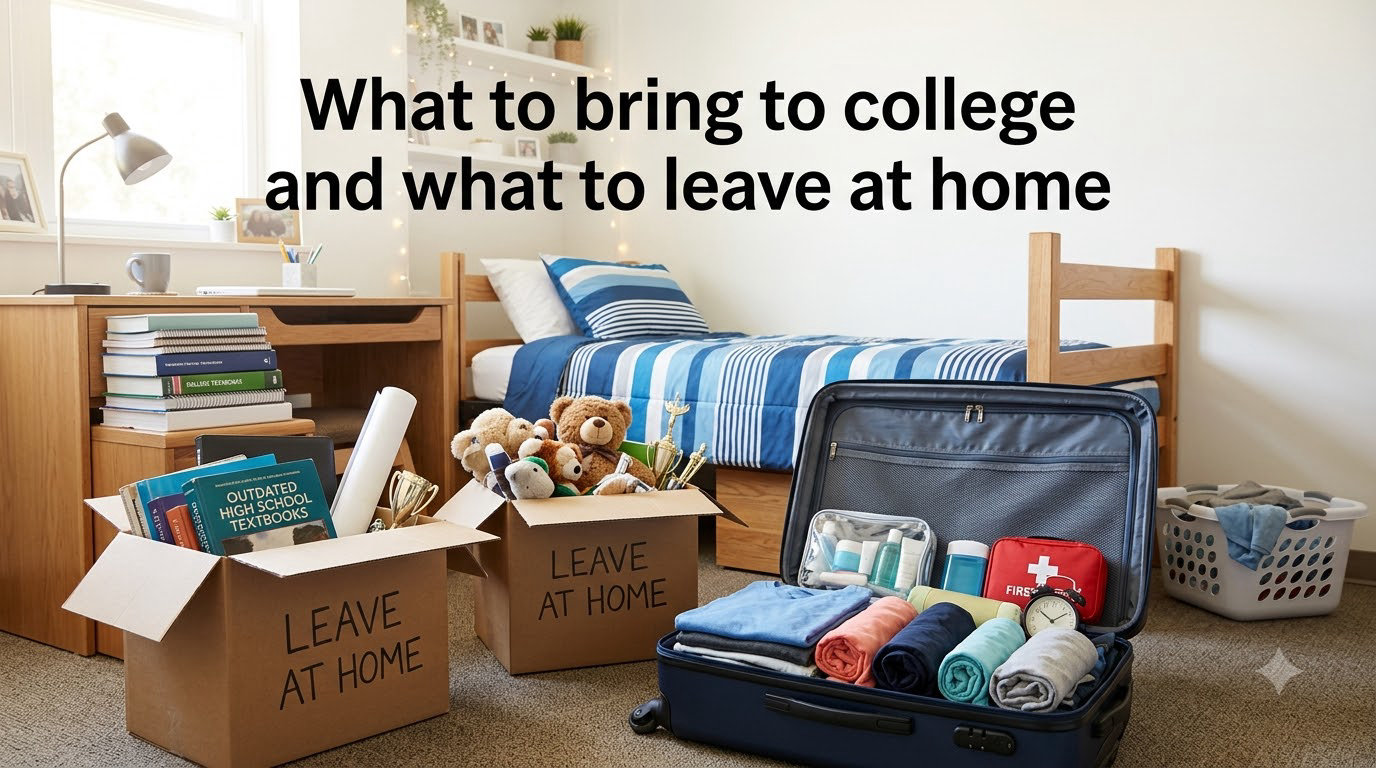
Packing for college is one of those tasks that looks straightforward until you are standing in your childhood bedroom surrounded by a mountain of stuff, wondering whether your childhood teddy counts as a “comfort item” or an “unnecessary emotional support object.” I have helped friends pack for university three times now, and I have watched every single one of them either overpack by about 40% or forget the one thing they really needed on the first night.
This guide answers the exact question most students type into Google: what to bring to college and what to leave at home. We will walk through every category – bedding, electronics, kitchenware, documents – and call out the items you genuinely do not need. The advice is written with UK halls of residence and student houses in mind, because most lists online are heavily American and assume an XL twin mattress that simply does not exist in British accommodation.
By the end, you will have a clear packing list, a short list of items to leave behind, and a first-night bag that means you are not digging through boxes at midnight looking for your phone charger.
Table of Contents
What to Bring to College: The Complete Room Essentials Checklist
Your dorm room essentials come down to four things: somewhere to sleep, somewhere to store things, somewhere to study, and a few personal touches that make a tiny room feel like yours. In most UK halls, your room will arrive with a bed, mattress, desk, chair, wardrobe or shelving, and a noticeboard or pinboard. That base level of furniture changes everything about what you actually need to pack.
Bedding and Pillows
UK halls use a standard single mattress, which is roughly 90cm x 190cm. That is different from the US XL twin, so do not buy sheets from an American checklist without measuring first. You will need:
- 2 sets of single fitted sheets (white or neutral so they can go in a shared wash with anything)
- 2 single duvet covers plus 1 duvet (10.5 tog for winter, 4.5 tog for summer, or a year-round 10.5 tog)
- 2 standard pillows and 2 pillowcases
- A mattress protector – halls mattresses are clean but plastic-feeling, and a protector makes a real difference
- A mattress topper if you want comfort (a 4cm memory foam one fits most single frames)
Two sets is enough. You wash one, you sleep on the other, and you do not have to pack a third wardrobe full of spare linen.
Storage and Organisation
Storage is the single biggest pain point in a small dorm room. Students on the r/college subreddit repeatedly say the same thing: under-bed space is gold, and you should treat it like a second wardrobe.
- 2-3 under-bed storage boxes or drawers (clear plastic so you can see what is inside)
- An over-the-door shoe organiser for toiletries, snacks, or accessories
- Command hooks and a small pack of Command strips (do not bring nails – UK halls often forbid them and you will lose your deposit)
- A laundry hamper with a lid, because open baskets turn into a smell problem in a small room
- A small desk organiser for pens, paper, and charging cables
Decor and Comfort Items
This is where the “cool things to bring to college” PAA question lives. A few touches make a room feel less like a prison cell:
- String lights or LED strip lights with an adhesive backing (no naked flames, ever)
- Photos of friends, family, or pets – print them or use a small corkboard
- A throw blanket for the end of the bed
- A small plant – a pothos or succulent copes with low light and irregular watering
- A doormat for inside your room (saves the carpet and quiets footsteps downstairs)
Bathroom and Personal Care Items to Pack
If you are in catered halls, your en-suite is yours alone. If you are in self-catered halls or a shared house, you almost certainly share a bathroom, which means you need a shower caddy that travels. I learned this the hard way watching a friend carry toiletries in a plastic bag that split on day two.
Pack these:
- Plastic shower caddy with drainage holes (mesh ones dry faster)
- 2 bath towels and 2 hand towels – again, two is plenty
- Shampoo, conditioner, body wash or soap (travel sizes until you know what storage you have)
- Toothbrush, toothpaste, floss
- Razor and shaving cream
- Deodorant, face wash, moisturiser, SPF
- Hair dryer, straighteners, or curlers if you use them – and a heat protectant
- Flip flops for the shower if you are sharing
- A small first-aid kit: plasters, paracetamol, ibuprofen, antihistamines, plasters, thermometer
- Period products if relevant, plus a small stock of cold and flu remedies
Skip bulky spa products for now. You can top up during your first weekly shop once you know what the local chemist or supermarket stocks.
Clothing and Laundry Supplies
The single most common packing mistake students make is bringing their entire wardrobe. You will wear about 20% of what you pack, and the rest will live in suitcases under the bed for nine months. Aim for one week of clothing with laundry access, plus seasonal layers.
Clothing to Pack
- 7 days’ worth of underwear and socks (more if you run a tight laundry cycle)
- 5-7 t-shirts or tops
- 2-3 jumpers or hoodies
- 2 pairs of jeans or trousers
- 1-2 smarter outfits for presentations, formals, or nights out
- Activewear – leggings or shorts and a couple of sports tops
- Pyjamas or sleepwear
- Underwear and sports bras (no one ever packed enough socks)
- A waterproof jacket – the UK will test you
- Seasonal extras: a warm coat, gloves, and a scarf for winter; swimwear and sunglasses if you are starting in summer
For shoes, five pairs covers nearly everyone: everyday trainers, smarter shoes, wellies or waterproof boots, sliders or shower shoes, and one dressier pair. You can rotate seasonally and swap things out at half-term.
Laundry Supplies
- Laundry basket or hamper with handles
- Laundry detergent (a small bottle to start; buy more locally when you know whether you have access to a machine)
- Fabric conditioner if you use it
- Stain remover pen or spray for the inevitable coffee incident
- Foldable drying rack – far better than draping clothes on radiators, which most halls forbid anyway
- A set of mesh laundry bags for delicates and a separate bag for sportswear
Electronics and Tech Accessories for Your Dorm
Electronics are where the “limited outlets” pain point bites. UK student rooms typically have one or two double sockets, which is not enough for a laptop, phone, lamp, kettle, fan, and anything else you might want to charge. Plan for it.
- Laptop and charger (check your course requirements before buying anything new)
- Phone and a long charging cable – 2 metres is the sweet spot for a wall socket you cannot reach from bed
- Power strip with surge protection and at least 4 sockets – the single item students on r/dormrooms say they wish they had brought earlier
- A small extension lead
- Wireless earbuds or headphones for the library or shared study areas
- A desk lamp if your room is dim (many halls lights are harsh overhead fluorescents)
- USB hub if your laptop is short on ports
- HDMI cable if you plan to plug a laptop into a TV or monitor
- External hard drive or cloud storage subscription – do not rely on a single laptop for everything
- E-reader if you prefer one for course texts
Skip the desktop PC unless your course genuinely requires it. Skip a printer – your library will have one, and printing costs are usually included. Skip a personal speaker bigger than a small Bluetooth one out of courtesy to your flatmates.
School Supplies and Study Essentials
Resist the urge to buy the full stationery haul before you arrive. Half of what you think you need will be wrong for your course. Wait until you have your first week of classes, then top up. That said, a starter pack makes week one easier:
- Notebooks or a refillable pad
- A folder or two for handouts
- Pen case with pens, pencils, highlighters, and a sharpener
- Sticky notes and page flags
- A planner or calendar app for assignment deadlines
- A scientific calculator if your course requires one
- A small stapler and hole punch
- A rucksack or backpack with a laptop sleeve
- A reusable water bottle – the UK tap water is fine and you will save a fortune
Textbooks can usually wait. Many courses use library copies, and buying early means risking the wrong edition. After your first lecture, check the reading list before spending anything.
Kitchen Supplies for Self-Catered Halls and Student Houses
If you are in catered halls, you only really need a mug, a glass, a bowl, and cutlery for snacks in your room. If you are in self-catered halls or a shared student house, your kitchen is shared, and the rule is: coordinate, label, and store.
The Basics for Your Room
- Mug, glass, water bottle
- Bowl, plate, knife, fork, spoon – one of each to start
- Tea towel and small dish cloth
- Tin opener and bottle opener
- Sharp knife plus a small chopping board
For a Shared Kitchen
- A labelled food container or two for dry goods
- One saucepan and one frying pan – do not bring a full set
- A baking tray if you actually bake
- A small kettle if your room does not have one (many halls forbid them in bedrooms)
- A microwave-safe bowl with a lid for leftovers
Skip air fryers, toastie makers, sandwich presses, and George Foreman grills unless your accommodation explicitly allows them. Most self-catered halls cap wattage or ban certain appliances, and your hall handbook will tell you. Always check before you plug anything in.
Coordinate with your flatmates before move-in. A shared Google sheet with columns for “who is bringing what” prevents the nightmare of three kettles, two microwaves, and no can opener.
Cleaning Supplies Every Student Needs
You do not need a full cleaning cupboard. You need enough to keep your room and any shared bathroom or kitchen hygienic between deeper cleans.
- Antibacterial surface wipes for quick daily wipe-downs
- A small bottle of all-purpose spray
- Bin bags – small for your room, larger for kitchen or recycling
- Dish soap and a sponge
- A small handheld vacuum or a decent handheld dustbuster
- Toilet roll and paper towels if your bathroom does not stock them
- A mop if you are in a student house and want to claim floorspace
- Laundry detergent, as above
Skip a full-size vacuum unless your house rules require it. They take up an entire cupboard, and a £20 handheld will sort crumbs and pet hair.
Important Documents and the First-Night Essentials Bag
If I had to nominate one thing students forget more than anything else, it is the small admin pile. By that I mean the documents, IDs, and medication that no one thinks about until they actually need them. The “most forgotten thing to pack” PAA question keeps surfacing online because students keep arriving without the basics.
Documents to Bring
- Passport or photo ID, plus a photocopy or photo on your phone
- Driving licence if you have one
- National Insurance number or Student Finance paperwork
- University offer letter, accommodation contract, and any tenancy agreement
- Health and dental registration details if you have switched GP or dentist
- Prescription medication, with a copy of the prescription, in original packaging
- Insurance documents for any belongings you are insuring
- Bank card and a small amount of cash for the first few days
- Emergency contact list, including family, GP, and university wellbeing services
The First-Night Essentials Bag
This is the bag you do not unpack on arrival. It goes on the bed, not under it, and contains everything you might need in the first 24 hours while the rest of your boxes are still taped up.
- Phone charger and power bank
- Toiletries and a clean towel
- One change of clothes including pyjamas
- Any daily medication
- Important documents (passport, ID, contracts)
- Reusable water bottle and a couple of snacks
- Earplugs and a sleep mask if you need them
- A pen and small notebook for emergency notes
- Headphones for a quieter first night
Do not skip this step. Searching through ten boxes at 11pm for a phone charger is a rite of passage nobody wants.
What NOT to Bring to College: Prohibited Items and Safety Rules
Every residence hall has its own handbook, and the rules vary slightly. Read yours before you pack, because prohibited items will be confiscated at move-in or, worse, become a fire risk. The list below covers what almost every UK halls of residence will not allow.
Fire and Safety Hazards
- Candles, incense, and any open flames
- Plug-in air fresheners with heating elements (most are banned)
- Space heaters and electric blankets that do not have current safety certification
- Halogen lamps and some high-wattage desk lamps
- Deep fat fryers, oil-filled radiators, and certain high-wattage cooking appliances
Other Common Prohibitions
- Weapons of any kind, including replicas and airsoft
- Drugs and excessive alcohol (most halls ban storage of large quantities)
- Personal Wi-Fi routers that interfere with the campus network
- Nail holes, screws, or anything that damages the wall
- Pets, with the exception of assistance animals – even fish tanks are often restricted
What to Leave at Home: Items That Just Take Up Space
This is the half of the question most checklists skip. Knowing what not to bring is just as important as knowing what to pack. Overpacking is the most common student mistake, and most of it lands in a suitcase that never gets unpacked.
Skip These Items
- More than 2 sets of sheets and towels – you will not have storage
- More than 5-6 pairs of shoes
- Your entire wardrobe – you will wear the same handful of items
- Bed risers – modern UK dorm beds adjust by height already
- A full-size vacuum cleaner
- An iron and ironing board – a mini steamer or a damp-towel-and-dryer trick works better
- A personal printer – your library has them
- Suitcases – they eat space. Use them to bring your stuff, then store them under the bed or send them home
- Duplicate appliances – if your flatmate is bringing a microwave, do not bring another
- Sentimental valuables – heirloom jewellery, large amounts of cash, irreplaceable keepsakes. Theft and accidents happen
- Excess school supplies you can buy on arrival
- Large pieces of furniture – your room is already furnished
Things You Can Buy After You Arrive
You do not need to bring everything on day one. Plan to shop for these locally once you have settled in:
- Bulk cleaning supplies
- Extra kitchenware if you misjudged what you needed
- Seasonal clothing swaps (you will want a winter coat eventually)
- Decor upgrades once you know your room layout
- Course-specific textbooks
Smart Packing Tips and Move-In Day Strategy
Packing smart is less about hacks and more about reducing friction on day one. The aim is to arrive with everything labelled, nothing broken, and a clear sense of what goes where.
Coordinate with Roommates Early
The single best packing tip on any UK student forum is to set up a shared spreadsheet two to three weeks before move-in. Columns for “kitchen”, “cleaning”, “shared living”, and “bathroom” with rows for each flatmate prevents the three-kettles, two-microwaves problem. Most halls provide shared items in a kitchen pack anyway, so check your inventory list first.
Pack by Room, Not by Item Type
When you pack your boxes, pack by where things will live. A “bathroom” box with all your toiletries, towels, and shower caddy means you are not hunting across five boxes on arrival. Label every box on at least two sides with your name and the destination room. Move-in day is noisy and crowded, and you will not remember which box had your extension lead.
Use Vacuum Bags for Bulky Items
Winter coats, spare bedding, and hooded jumpers compress to a third of their size in a vacuum bag. They fit under a bed or in the back of a wardrobe and save precious space. You can buy cheap ones from any homeware shop.
Plan Move-In Day Logistics
Check your university’s move-in slot times and parking rules. Many halls restrict cars to a drop-off zone, and you will need to ferry boxes from the car park to your room. A folding trolley or sack truck is worth its weight in gold for a three-floor walk-up. Wear something you can lift in, and bring water and snacks.
Take Photos of Everything on Arrival
Photograph your room when you arrive, especially any existing marks on walls, carpets, or furniture. When you leave, this protects your deposit and prevents disputes. Most UK student accommodation providers run an inventory check-in for exactly this reason.
Frequently Asked Questions
What are college dorm must haves?
College dorm must-haves include bedding for a standard single bed (UK halls), a power strip with surge protection, a shower caddy, towels and toiletries, important documents such as ID and insurance, a laptop and chargers, a laundry basket, command hooks, and a first-night essentials bag with the basics for your first 24 hours.
What is the most forgotten thing to pack for college?
The most commonly forgotten items are extension cords and power strips because UK dorm rooms have few outlets, prescription medication in original packaging, important documents like passports and insurance cards, shower caddies for shared bathrooms, hangers, laundry detergent, and reusable water bottles.
What is the 5 4 3 2 1 rule for packing?
The 5 4 3 2 1 packing rule is a simple framework: 5 sets of socks and underwear, 4 tops, 3 bottoms, 2 pairs of shoes, and 1 accessory such as a hat or belt. It is designed to stop overpacking by capping each category at a small number that you can rotate through with weekly laundry.
What are some cool things to bring to college?
Cool items students enjoy include LED strip lights or string lights, command hooks for hanging decor, a Bluetooth speaker, a comfy throw blanket, a small low-maintenance plant, photos of friends and family, a reusable water bottle, and a quality mattress topper. Avoid candles and incense as they are usually prohibited.
What should I include on my college packing list?
Your college packing list should include bedding and pillows for a standard single, bathroom essentials and a shower caddy, clothing for the season, laundry supplies, a laptop and chargers, a power strip, basic kitchenware, important documents and ID, prescription medication, cleaning supplies, and a first-night bag with the essentials for your first 24 hours.
What are some unexpected things to bring to college?
Unexpected items students forget include command hooks and a putty knife for removing them without damage, a small tool kit, reusable mesh laundry bags, earplugs and a sleep mask, a small desk fan, flip flops for shared showers, a stain remover pen, a small first-aid kit, and photos or comfort items from home to ease homesickness.
How do I share items with my roommate at college?
Set up a shared Google sheet or spreadsheet two to three weeks before move-in. Divide items into kitchen, cleaning, bathroom, and shared living categories. Assign one person per item, then check what your accommodation already provides so you do not double up on things like kettles or microwaves.
Final Thoughts on Your College Move-In
The question of what to bring to college and what to leave at home really comes down to two habits: pack less than you think you need, and prepare for the first 24 hours more than you think you have to. Most students overpack clothes and underpack admin. Most students forget chargers and bring too many shoes.
Start with the categories in this guide, coordinate with your flatmates before you buy anything, and check your accommodation provider’s prohibited items list. Build your first-night essentials bag, label your boxes, and leave the suitcase at home once it is empty. By the time you are unpacking, you will know exactly where everything is, and you will have avoided at least three of the most common student packing mistakes.
For more practical advice on choosing, furnishing, and settling into your student accommodation, browse our other guides. Move-in week is busy, but a little preparation now saves a lot of stress in your first week at university.