
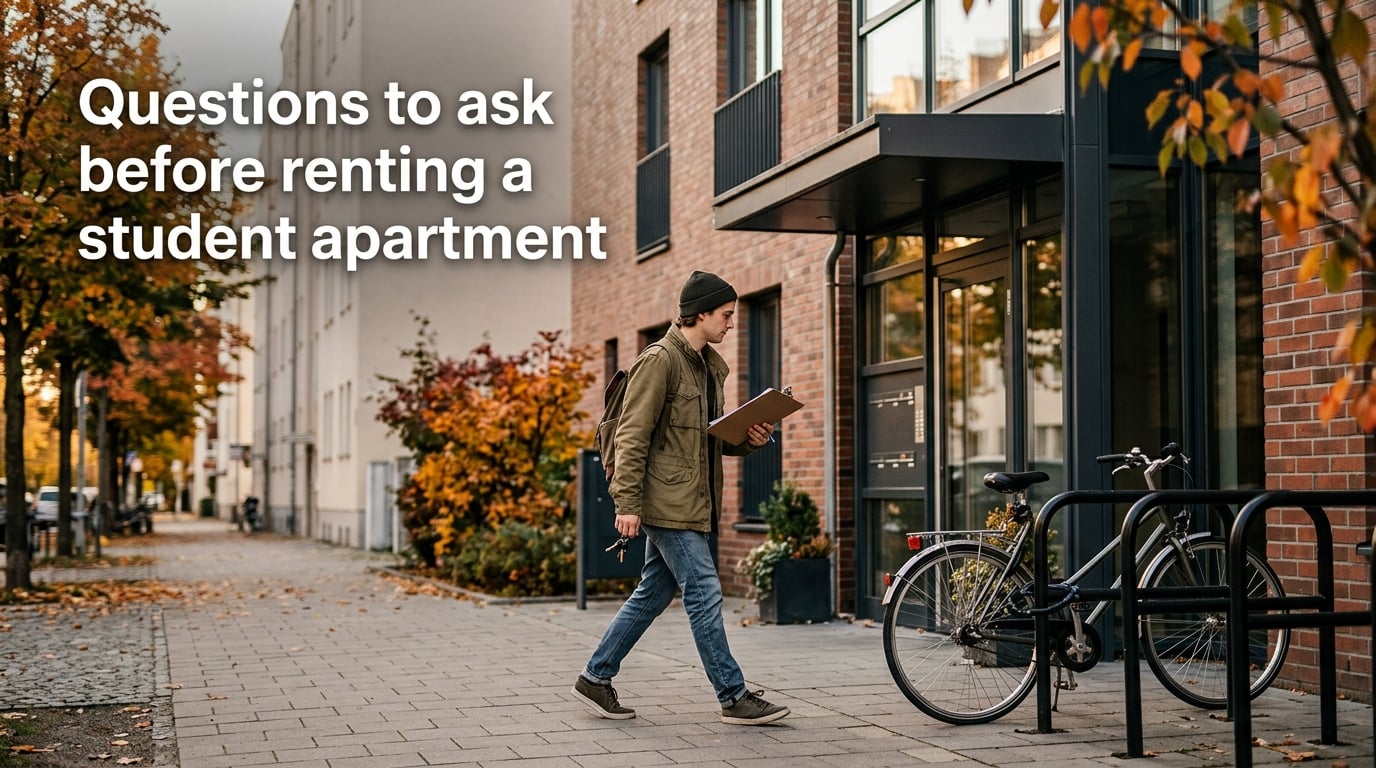
Renting your first student apartment is exciting, but it’s also where small print costs students thousands. I put together this checklist after helping three cousins sign leases in two countries and losing a deposit on my own first place. These are the questions to ask before renting a student apartment that cover rent, leases, hidden fees, utilities, roommates, safety, and tour-day red flags, so you can sign with your eyes open.
Whether you’re a first-year undergraduate, an international student, or a postgraduate moving off-campus, the same principles apply: get the total cost in writing, see the unit in person, and never pay a penny before you’ve read the lease.
Table of Contents
Quick Checklist: Top Questions Before You Sign
Before you book a viewing, run through this grouped checklist. It mirrors what landlords and letting agents expect serious applicants to ask, and it matches the categories Google rewards in featured snippets.
- Rent and move-in costs: What is the monthly rent, when is it due, what payment methods are accepted, and what is the total upfront cost (deposit + first month’s rent + last month’s rent + admin + application fees)?
- Lease terms: How long is the lease, what are the exact start and end dates, is renewal automatic, and what is the break-lease penalty?
- Utilities and WiFi: Which utilities are included in the rent (water, electric, gas, trash, WiFi), and is there a usage cap on “all bills included” listings?
- Roommates and liability: Is the lease joint or individual, how is rent split if one person moves out, and is roommate matching available?
- Safety and maintenance: Are smoke detectors and CO alarms working, what is the maintenance response time, and is there a 24/7 emergency line?
- Policies: What is the pet policy, guest policy, subletting policy, and is renter’s insurance required?
- Move-in inspection: Will you receive a written inventory, and can you photograph the condition on day one to protect your deposit?
Questions to Ask Yourself Before You Start Searching
The best questions to ask before renting a student apartment start with you, not the landlord. Sorting your own situation first prevents you from falling for a flat that looks great but doesn’t actually fit your life.
How much can you genuinely afford? A common rule is the 50/30/20 budget: 50% of your income or student loan on needs (rent, bills, food), 30% on wants, 20% on savings or debt repayment. Another quick check is the 3x rent rule: your gross income (or documented guarantor income) should be at least three times the annual rent.
Solo, shared, or studio? Living alone costs more per square foot but removes roommate conflict. A shared house is usually cheaper and includes furnished common areas. A studio gives you privacy but no buffer if your income dips mid-term.
How close to campus do you actually need to be? A 20-minute bus ride can drop rent dramatically, but adds commute cost and time. Walk the route at the time of day you’ll actually commute, not at a quiet Sunday lunchtime.
Short-term or full academic year? If you’re on a one-semester exchange or summer research placement, a 12-month lease traps you. Ask about 6-month, month-to-month, or sublet-friendly options before signing.
Who is paying, and how? If a parent or guardian is funding rent, get that conversation done before you view. Surprises on move-in day about who is wiring the deposit are a top cause of stress.
Questions About Rent, Deposits and Hidden Move-In Costs
Move-in day is where students get hit hardest. The advertised rent is rarely the full cost. Ask these questions and demand every figure in writing.
What is the total upfront cost? Add up application fee, admin fee, holding deposit, security deposit, first month’s rent, and last month’s rent. In some cities this totals three to four months of rent before you get the keys.
What payment methods are accepted? Bank transfer, standing order, or a landlord’s preferred portal are normal. Anyone demanding cash, wire transfer to an overseas account, or cryptocurrency is a red flag.
Is there a late fee, and how much? A typical late fee is 5 to 10% of rent, but some contracts charge per day. A late fee per day adds up fast on a student budget.
How is the security deposit protected? In the UK it must go into a government-backed deposit protection scheme. In the US, many states cap deposits at one or two months’ rent and require a separate, itemised move-out inspection. Ask which scheme, and ask for the certificate.
Is there a holding deposit? A holding deposit is a small sum to take the property off the market while you sign. It should be refundable and deducted from your first month’s rent. If a landlord keeps both a holding deposit AND a security deposit, walk away.
Is rent prorated for a mid-month move-in? If your lease starts on the 15th, you should only pay for 15 days, not a full month. Get this in writing before you sign.
Questions About the Lease: Length, Renewal and Breaking It
The lease is the contract that decides whether you’ll lose a deposit, get stuck with an empty room, or face a penalty for leaving early. Read it line by line, and ask these questions before you commit.
What is the exact lease term and start date? Many student leases run 9 August to 31 August, or 1 September to 31 August the following year. Confirm the dates match your academic calendar to the day.
Does the lease auto-renew? Some leases roll into month-to-month after the term ends. Others auto-renew for a full year unless you give 60 days’ written notice. Both can trap students who forget to opt out.
What is the break-lease penalty? Most leases allow you to leave early if you find a replacement tenant, but charge one or two months’ rent as a fee. Ask for the exact clause and the exact figure.
Is the lease joint and several, or individual? On a joint lease, every roommate is liable for the full rent if one person moves out. On an individual lease, your liability ends when you leave. Joint leases are cheaper per person but financially riskier.
Can I sublet during summer or a study-abroad term? Some landlords ban subletting outright. Others allow it with written approval. If summer subletting matters to you, get this clause confirmed before you sign.
How much notice do I need to give if I do not renew? Thirty, sixty, or ninety days is standard. Miss the notice window and you can be liable for an extra month or two of rent.
Questions About Utilities, WiFi and Furnishings
The biggest billing surprises for students come from utilities and WiFi. Here’s what to clarify before you sign.
Which utilities are included in the rent? Water, electric, gas, trash, internet, and even cable are sometimes bundled in. Equally often nothing is included, and you set up accounts yourself. Ask for a written list.
Is there a usage cap on “all bills included”? Reddit threads on r/college and r/Apartmentliving are full of students who saw “bills included” and then got hit with a huge winter electric bill because the monthly cap was too low. Confirm the cap, the unit (per flat or per room), and what happens if you go over.
What is the average monthly utility cost? Ask the current tenants if you can. Landlords sometimes quote the cheapest month, not the winter average. Heating type matters hugely: electric baseboard heat is expensive, gas or district heating is usually cheaper.
What furniture and appliances are in the unit? Beds, desks, sofas, washing machines, dishwashers, and even kettles vary wildly. A “furnished” apartment in one building may be empty in another. Get the inventory in writing.
How is the heating and hot water system? Central heating, individual boilers, electric storage heaters, or district heat each have different running costs and reliability. Ask how old the boiler is and how often it breaks.
Is the WiFi reliable for video lectures? Ask about provider, average speed, and whether it’s a dedicated line or shared. Shared WiFi in a student building often collapses at 9pm when lectures end.
Questions About Roommates, House Rules and Joint Liability
Most student apartments come with roommates. Conflicts over bills, chores, and quiet hours are the #1 cause of students breaking leases early. Ask these questions before you sign, and ideally write the answers into a roommate agreement.
How are roommates matched? Some buildings match by course, year, or lifestyle questionnaire. Others just pair whoever applies. Ask how the matching works and what happens if you don’t get along.
What is the joint and several liability clause? This clause means each tenant is on the hook for the entire rent if one person defaults. Confirm whether this is the case, and confirm what the landlord does to recover lost rent from a defaulting tenant.
Are there house rules? Quiet hours, guest policy, smoking, alcohol, and party frequency vary by building. Get a copy of the rules and read them, especially if you have online lectures from home.
How do we split bills fairly? A bill-splitting app like Splitwise or Monzo splitting keeps things transparent. Agree upfront whether rent is split equally or by room size, and whether bills come from a shared account.
What happens if a roommate moves out mid-term? Ask the landlord whether you must cover their share, whether they help find a replacement, and whether the lease is restructured. Get it in writing.
Questions About Safety, Maintenance and Renter’s Insurance
Safety and maintenance questions protect your belongings, your health, and your ability to recover a deposit. Landlords who answer these questions clearly are usually the ones who fix things quickly.
What security does the building have? Buzzer entry, key fob, CCTV in common areas, well-lit car park, and individual bedroom locks are the basics. A ground-floor flat with a flimsy lock is a higher risk.
How is maintenance handled? Ask the average response time for non-urgent repairs and the turnaround for emergencies. A 24/7 emergency line for leaks, no heat, or lockouts is the standard you should expect.
Are smoke detectors and CO alarms working and tested? Don’t take “yes” at face value. Ask to see the test certificates or to hear them beep during the tour. Mould, smoke alarms, and gas safety are the three most common deposit dispute triggers.
Is renter’s insurance required? Many landlords require it. Ask whether you must use a specific provider (a red flag if so), what the minimum coverage is, and whether it must include liability.
Who is responsible for pest control? Mice, ants, and bed bugs can move in from neighbouring units. Ask whether the landlord covers pest control or whether you do. The answer often predicts how responsive the property manager will be.
Tour Day Checklist: Questions to Ask On the Walkthrough
The viewing is your one chance to spot problems the listing photos hid. Bring this numbered list and tick items off as you go.
- Is there any visible mould, damp, or water staining? Check window frames, bathroom ceilings, and behind furniture. Sniff for a musty smell.
- Do all the locks work, including the deadbolt? Test every door. A broken lock on day one means a slow repair.
- Is the water pressure strong? Run the shower and the kitchen tap simultaneously. Low pressure signals old plumbing.
- Are the smoke and CO alarms functional? Press the test button. No test button, no alarm.
- How is the mobile signal inside the unit? Walk to where your desk will be. Dropped calls during online lectures are a deal-breaker for many students.
- How loud is the street and the neighbours? Visit at the time of day you’ll be home, not at a quiet 10am slot.
- How old is the boiler, and when was it last serviced? Ask for the service record. A boiler that breaks in January can take days to fix.
- Where is the fuse box, and are there enough sockets? Students run a lot of electronics. Two outlets per room is the minimum.
- Is the furniture in the advertised condition? Photograph any damage. Send it to the landlord in writing the same day.
- Are the windows double-glazed? Single-glazed windows in a student flat mean winter heating bills double.
- Where do you park or store a bike? Confirm whether parking is included, assigned, or waitlisted, and whether there’s secure bike storage.
- What is the bin and recycling setup? Skip access, bin store location, and weekly collection day.
Red Flags and Rental Scams Targeting Students
Students are prime targets for rental scams because landlords know you have a hard move-in deadline and often no rental history. Watch for these warning signs, and walk away if you see more than two.
- Pressure to sign within 24 hours (“Someone else is viewing tomorrow”) is a classic urgency tactic. Legitimate landlords give you time to read the lease.
- Large cash deposits before you’ve seen the lease A small holding deposit is normal; multiple months in cash before you have a contract is not.
- Refusal to share the lease in advance A landlord who won’t email a draft lease before you pay is hiding something.
- Overseas-only landlord with no local agent Common in scam listings targeting international students. Ask for video verification.
- Rent far below the local average If the city average for a comparable flat is much higher than the listing price, it’s almost certainly fake.
- “Bills included” with no usage cap and no contract clause Vague promises get reversed at move-out.
- No inventory or move-in inspection offered This almost guarantees you won’t get your deposit back.
International Student and Guarantor Questions to Ask
If you’re renting from outside the country, or have no local credit history, expect a few extra requirements. Asking these up front avoids a wasted application fee.
Do I need a UK- or US-based guarantor? Most landlords require a guarantor who earns a multiple of the rent, often 3x annual rent, and who lives in the same country. International students often need a parent to act as guarantor.
What ID and documents are required? Passport, visa, university admission letter, proof of funding, and a reference from a previous landlord (or your university’s housing office) are standard.
Can I pay rent in advance for the whole lease? Some landlords accept 6 or 12 months upfront in lieu of a guarantor. This is a workaround but ties up cash. Confirm the landlord will refund any overpayment if you leave early.
Is there a cultural or language orientation? Some buildings run welcome sessions, others leave you to figure out trash day and bus routes. Ask what support is provided.
What happens if my visa is delayed or withdrawn? Get a written clause on visa-related early exit. Without it, you could owe rent for a flat you never moved into.
Frequently Asked Questions
What is the 50/30/20 rule for rent?
The 50/30/20 rule splits your monthly income into 50% for needs including rent and bills, 30% for wants like eating out and entertainment, and 20% for savings or debt repayment. If your rent alone exceeds 30% of your income, you’re overpaying for your budget.
What are red flags when renting an apartment?
Red flags when renting include pressure to sign within 24 hours, large cash deposits before a written lease, landlords who refuse to share the lease in advance, overseas-only contacts with no local agent, rents far below the local average, no move-in inspection offered, and vague bills-included promises with no usage cap.
What is the 3x rent rule?
The 3x rent rule says your gross annual income, or your guarantor’s, should be at least three times the annual rent. A flat renting at a typical mid-market rate per month typically requires documented income of roughly three times the annual rent from you or a guarantor.
What are some important questions to ask about student housing?
Important questions to ask about student housing cover total move-in cost including deposit and fees, lease length and break-lease penalty, which utilities are included, roommate matching and joint liability, maintenance response times, subletting policy, renter’s insurance requirement, and on-site security like buzzers and CCTV.
Can a 17 year old college student rent an apartment?
In most jurisdictions a 17-year-old can sign a tenancy agreement but the contract may be voidable, and landlords often require a parent or guardian to co-sign. Some student housing providers only accept tenants aged 18 and over. Check your local tenancy law and the provider’s age policy before applying.
Do student apartments require a guarantor?
Most purpose-built student apartments require a guarantor who lives in the same country and earns at least three times the annual rent. Private landlords may accept multiple months of rent upfront instead. International students should plan for a parent guarantor months before move-in.
Final Thoughts
The questions to ask before renting a student apartment boil down to three habits: get every cost in writing before you pay a penny, walk through the unit at the time of day you’ll actually live there, and walk away from any landlord who pressures you to skip either step.
Your move-in week checklist: read the full lease, photograph every scratch and stain, test every lock and alarm, and share the bills with a Splitwise-style app from day one. Those four habits protect your deposit, your friendships with roommates, and your grades.