
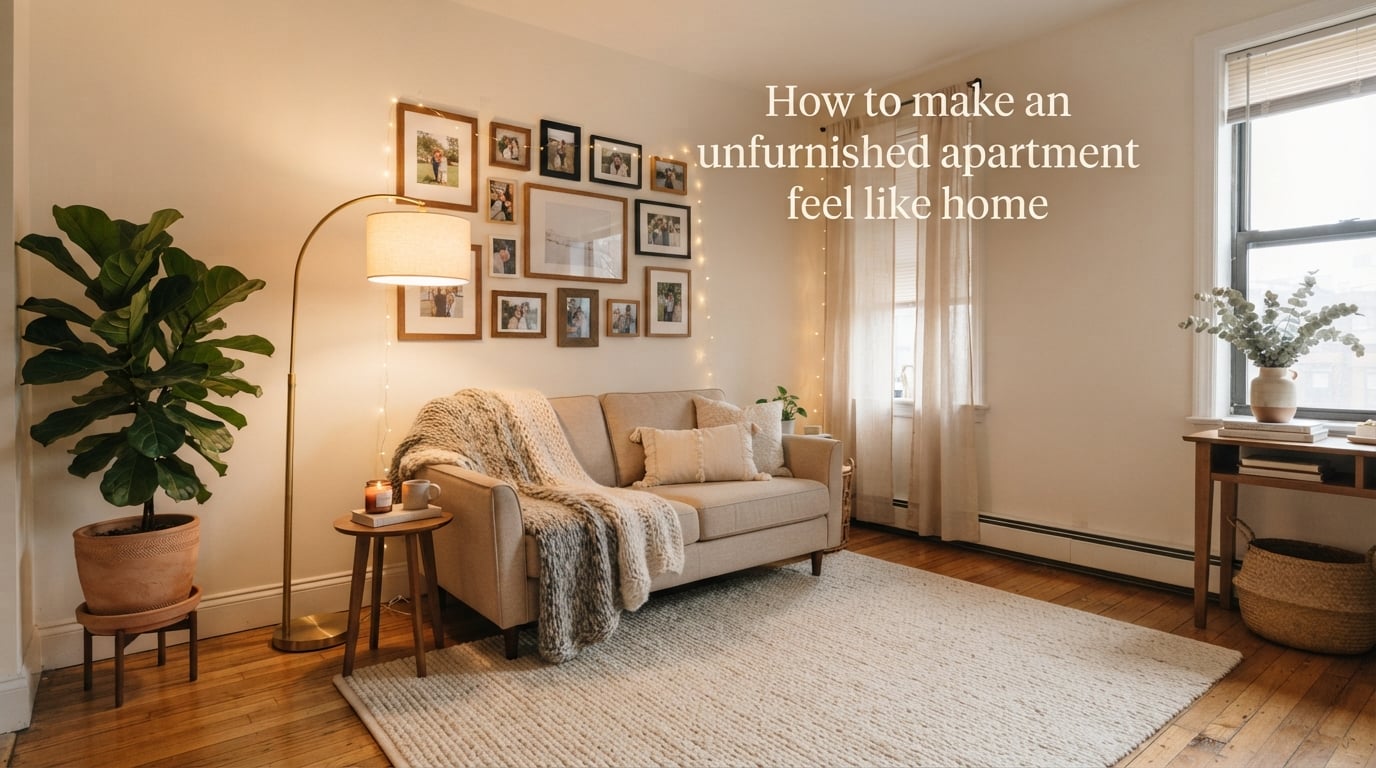
Walking into an empty apartment for the first time can feel overwhelming. The bare walls, echoing rooms, and unfamiliar layout might make you wonder if you made the right choice. But here’s the good news: you can learn how to make an unfurnished apartment feel like home faster than you think. We’ve spent years helping students and first-time renters transform blank boxes into personal sanctuaries. The difference between a space that feels temporary and one that feels truly yours often comes down to just three things. We call it the Rule of Three: Light, Ground, and Life. This guide walks you through every step, from the quick wins you can do on day one to the deeper personalization that happens over months. Whether you’re dealing with strict lease rules, a tight budget, or those infamous grey-floored new-builds, you’ll find practical solutions here.
Table of Contents
The Quick-Start Rule of Three: Light, Ground, Life
The fastest way to make an unfurnished apartment feel like home is to focus on three pillars: Light, Ground, and Life. This framework works because it addresses the three senses that create the strongest emotional connection to a space. Light means replacing harsh overhead bulbs with warm-toned alternatives and adding multiple light sources at different heights. A single ceiling fixture creates flat, institutional lighting. Two or three lamps at varying heights create warmth and dimension. Ground means anchoring each room with a rug or textile layer. Bare floors amplify the empty, echoey feeling. A rug under your seating area or bed instantly defines the space as yours. Life means adding something living or meaningful. This could be a plant, a photo collection, or even just a favorite mug on display. It’s the difference between a furnished space and a personal one. Start with these three elements on your first day. Everything else builds from this foundation.
Upgrade Your Lighting (The Single Biggest Impact)
If you do only one thing to make your unfurnished apartment feel like home, change the lighting. Interior designers and Reddit users agree: lighting is the number one factor that transforms a space. The simplest upgrade is swapping your bulbs. Standard LED bulbs often emit a cool, bluish light that feels clinical. Replace them with 2700K warm white bulbs. This color temperature mimics natural evening light and creates a cozy, inviting atmosphere. A pack of four costs very little and makes an immediate difference. Beyond bulb swaps, add layered lighting. This means having at least three light sources per room at different heights. A floor lamp in one corner, a table lamp on a side table, and a small accent light on a shelf creates depth that a single overhead fixture can’t match. For renters who can’t install permanent fixtures, plug-in options are your best friend. Plug-in wall sconces mount with adhesive strips. Rechargeable LED motion-sensor bars stick under cabinets. Clip-on desk lamps don’t require any surface space. Battery-operated puck lights brighten dark closets and corners. If your apartment has no overhead fixtures at all (common in older buildings), string lights or a large floor lamp can fill the gap. Just avoid relying solely on one light source, as that creates harsh shadows and an unwelcoming feel.
Layer in Textiles and Soft Furnishings
Bare apartments feel cold and echoey because hard surfaces reflect sound and create visual emptiness. Textiles absorb sound, add color, and make a space feel lived-in. They’re also one of the most budget-friendly ways to transform a room. Start with a rug. An 8×10 rug anchors a living room seating area. A 5×7 works under a twin or full bed. Even a small 3×5 entryway rug signals “home” the moment you walk in. Layering rugs (a smaller patterned rug over a larger neutral one) adds depth and personality. Curtains make a bigger impact than most people realize. Swap out the standard blinds for fabric curtains using adhesive curtain rod brackets. Hang the rod 4-6 inches above the window frame and extend it 6-8 inches past each side. This makes windows appear larger and the room feel taller. Light, airy fabrics in white or cream work in almost any space. Throw blankets draped over couch arms or folded at the foot of a bed add instant warmth. Mix textures: a chunky knit throw paired with smooth cotton pillows creates visual interest. Aim for two to three different textures per seating area. Pillows are the easiest way to add color without commitment. Choose two to three complementary colors and vary the sizes. A 20-inch square pillow, an 18-inch square, and a lumbar pillow in different textures but a cohesive color palette looks intentional rather than random.
Treat Your Walls Without Losing Your Deposit
Blank white walls are the number one complaint from people living in unfurnished apartments. They’re also the easiest problem to solve without painting, which most leases prohibit. Gallery walls create visual interest and let you display meaningful items. Use adhesive picture hanging strips instead of nails. They hold surprising weight (up to 16 pounds for the large strips) and remove cleanly when you move out. Mix frame sizes and styles for a collected, personal look rather than a matching set. Peel-and-stick wallpaper transforms an accent wall in an afternoon. Modern options come in sophisticated patterns: subtle textures, botanical prints, and geometric designs. They peel off cleanly from most surfaces. Apply a single wall in your bedroom or behind your couch for a focal point. Leaning frames and art against walls create a relaxed, intentional look. A large frame (24×36 or bigger) leaning on a console table or directly on the floor against the wall makes a statement without any wall damage. This works especially well in living rooms and bedrooms. For a more temporary approach, washi tape creates geometric patterns, faux frames, or accent lines directly on the wall. It removes cleanly and comes in dozens of colors. Some renters create entire accent walls using tape patterns. Woven tapestries, macrame hangings, and fabric wall art add texture that framed prints can’t. They also help with sound absorption in echoey rooms. Command hooks rated for the weight can hold most textile pieces.
Bring in Life: Plants and Greenery (Even for Plant Killers)
Plants add color, texture, and a sense of life that nothing else replicates. Research consistently shows that indoor plants reduce stress and improve mood. But if you’ve killed every succulent you’ve ever owned, don’t worry. There are options for every skill level. Start with nearly indestructible varieties. Pothos thrives in low light and only needs water when the soil feels dry. Snake plants survive weeks without water and tolerate almost any light condition. ZZ plants are drought-tolerant and grow slowly, so they don’t need frequent repotting. If you genuinely cannot keep plants alive, high-quality faux plants have come a long way. A realistic faux fiddle-leaf fig or eucalyptus arrangement adds the same visual benefits. Place them in spots where you’d naturally want greenery: a corner of the living room, a windowsill, or a bathroom shelf. Dried arrangements work beautifully and require zero maintenance. Dried eucalyptus, pampas grass, or lavender in a simple vase adds natural texture and a subtle scent. They last for months and can be refreshed with a few drops of essential oil. For the smallest apartments, trailing plants on high shelves or hanging planters draw the eye upward and make rooms feel larger. A single pothos trailing from a bookshelf creates a focal point without taking up floor space.
Display Personal and Sentimental Items
The fastest way to make any space feel like yours is to surround yourself with items that have meaning. This goes beyond decorative objects to include things that connect you to your history, relationships, and identity. Photos are the most obvious starting point. Print your favorites and frame them. A gallery wall of personal photos costs very little but creates an immediate emotional connection to your space. If framing feels like too much work, a simple photo ledge or shelf with framed and unframed pictures mixed together works just as well. Collections and hobbies deserve display space. Books stacked on a coffee table, vinyl records in a crate, a shelf of travel souvenirs, or a collection of mugs on display tells visitors (and yourself) that a real person lives here. Meaningful objects from home reduce the feeling of displacement. A family quilt on the couch, your grandmother’s mixing bowls in the kitchen, or a childhood stuffed animal on the bed might not be “decor,” but they ground you in your personal history. The key is intentionality. Don’t scatter everything randomly. Group related items together: a small collection of three to five objects on a shelf, a curated gallery wall, or a meaningful vignette on your nightstand. Clutter feels chaotic; intentional display feels personal.
Engage Your Senses: Scent, Sound, and Touch
Most decorating advice focuses on visual elements, but your other senses play a huge role in making a space feel like home. A familiar scent can transport you emotionally faster than any piece of furniture. Scent is particularly powerful. Light a candle you used at your parents’ house. Use the same laundry detergent you grew up with. A reed diffuser with a warm vanilla or fresh cotton scent creates a consistent, welcoming atmosphere. Essential oil diffusers let you change scents based on your mood. Sound matters too. A small Bluetooth speaker playing background music, a white noise machine for better sleep, or simply leaving a podcast on while you unpack makes the space feel inhabited rather than empty. Touch points throughout the space reinforce comfort. A soft throw blanket within reach of your couch. A plush bath mat instead of the standard thin one. Cozy slippers waiting by the door. These small tactile details accumulate into an overall feeling of comfort.
Room-by-Room Essentials Checklist
Breaking the process down by room helps you prioritize your time and budget. Here’s what to focus on in each space. Living Room: This is where you’ll spend the most waking time, so prioritize it first. An area rug anchors the seating arrangement. At least two light sources (floor lamp plus table lamp) create layered lighting. A throw blanket and pillows on the couch add softness. A coffee table or ottoman gives you a surface for daily life. Personal items on display make it yours. Bedroom: Good bedding is the single most important investment here. Quality sheets, a comforter you love, and two to three pillows create a sleep sanctuary. A bedside lamp provides warm light for reading. Blackout curtains or shades improve sleep quality. A rug beside the bed gives you something soft to step onto in the morning. Kitchen: Even minimal kitchens benefit from personal touches. A few favorite mugs on display. A small herb garden on the windowsill (basil and mint are easy starters). A dish towel with a pattern or color you like. A small fruit bowl on the counter. These tiny additions make the kitchen feel like yours rather than a generic cooking space. Bathroom: Upgrade the shower curtain first. A fabric curtain in a pattern or color you like replaces the standard plastic liner and instantly elevates the space. A matching bath mat and towel set in a cohesive color. A small plant (pothos thrives in bathroom humidity). A nice soap dispenser instead of the plastic pump bottle.
The Move-In Timeline: What to Do First
Trying to do everything at once leads to decision fatigue and burnout. A phased approach lets you settle in naturally while steadily making the space yours. Week 1: The Foundation. Unpack essentials. Set up your bed with good bedding. Install basic lighting (swap bulbs, add at least one lamp). Put up window coverings for privacy. Place rugs in key areas. This week is about making the apartment functional and comfortable for daily life. Month 1: Personal Touches. Hang art and photos on the walls. Organize your entryway with a landing strip (a small tray or bowl for keys, a hook for your bag). Add plants or greenery. Set up your main living area seating arrangement. Start cooking regular meals in your kitchen to establish routines. Month 3: Refinement. You’ll know by now what’s working and what isn’t. Replace the items you settled for with better versions. Add the decorative touches you’ve been thinking about. Rearrange furniture based on how you actually use the space. This is when the apartment truly starts to feel like home. Research suggests it takes about two to three months for a new space to feel emotionally like home. Give yourself permission to let the process unfold gradually.
Student-Specific Tips for Lease-Safe Decorating
Student apartments come with unique constraints: strict leases, tight budgets, and sometimes roommates with different tastes. Here’s how to navigate those challenges. Most student leases prohibit painting, drilling, and permanent modifications. The good news is that the most impactful changes (lighting, textiles, personal items) require none of those. Adhesive strips, removable hooks, and freestanding furniture solve almost every decorating challenge without damaging walls. Campus thrift stores, Facebook Marketplace, and end-of-semester move-out sales are goldmines for affordable furniture and decor. Students leaving their apartments often sell or give away perfectly good items. Check dorm move-out dates for the best selection. Shared spaces require compromise. Focus your personalizing energy on your bedroom, which you fully control. For common areas, suggest one shared investment (a rug, a better lamp) and keep personal items in your private space. Budget-stretching strategies that work: buy the cheapest version of functional items (a basic lamp) and invest in what you see and touch daily (good bedding, a comfortable pillow). Dollar stores carry surprisingly good candles, storage baskets, and basic frames. IKEA’s as-is section has discounted items with minor cosmetic damage.
Common Mistakes That Make an Apartment Look Cheap
Avoiding common pitfalls is just as important as following good advice. Here are the mistakes that undermine your efforts. Relying on a single overhead light creates a flat, institutional look. Every room needs at least three light sources at different heights. This single change has more visual impact than almost any other. Leaving walls completely bare makes even well-furnished rooms feel temporary. One piece of art or a small gallery wall per room signals permanence and intentionality. Using only matching sets from the same store creates a catalog look rather than a collected, personal one. Mix sources, textures, and eras for a space that looks like it evolved naturally over time. Neglecting the entryway misses an important opportunity. The first thing you see when you walk in sets the emotional tone for the entire apartment. A small landing strip (tray, hook, mirror) takes five minutes to set up. Overloading small spaces with too much furniture makes rooms feel cramped and stressful. Leave clear pathways and breathing room. Floating furniture slightly away from walls (3-4 inches) actually makes rooms feel larger.
Frequently Asked Questions
How do I make my apartment feel like a home?
Start with the Rule of Three: Light, Ground, and Life. Replace harsh bulbs with warm 2700K lighting, add rugs and textiles to anchor each room, and display personal items that have meaning to you. These three changes have the biggest immediate impact on making any apartment feel lived-in and personal.
What is the 3-5-7 rule in decorating?
The 3-5-7 rule is a visual balance guideline: group decorative items in odd numbers, specifically 3, 5, or 7 pieces. Odd numbers create visual interest and feel more natural to the eye than even-numbered arrangements. For example, display three objects on a shelf, five items on a mantel, or seven frames in a gallery wall arrangement.
How long does it take for an apartment to feel like home?
Most people need two to three months for a new apartment to feel emotionally like home. The physical transformation can happen in days, but the emotional connection develops as you establish routines, accumulate personal touches, and create memories in the space. Be patient with the process.
What makes a home look cheap?
Common mistakes that make spaces look inexpensive include relying on a single overhead light source, leaving walls completely bare, using only matching furniture sets from one store, and skipping textiles like rugs and curtains. The fix is simple: add layered lighting, hang at least one piece of art per room, mix furniture sources, and include soft furnishings throughout.
Conclusion
Learning how to make an unfurnished apartment feel like home is really about giving yourself permission to make the space yours. You don’t need to do everything at once, and you don’t need a big budget. Start with the Rule of Three: good lighting, a rug under your feet, and something meaningful on display. Build from there. Two to three months from now, you’ll walk through your door and feel exactly what you’re supposed to feel when you come home: comfortable, relaxed, and completely yourself.