
I spent the last three months helping a study-abroad cohort pack for Florence, Seoul, and Mexico City, and one item kept coming up in every pre-departure checklist: a reliable water bottle with a built-in filter. The best travel water bottles with filters for study abroad are not the same as the bottles you grab for the gym, and choosing wrong can mean six months of expensive bottled water, stomach problems, or a leaky bottle ruining your backpack.
Our team compared 8 filter and purifier bottles across price tiers and destinations. The top pick is the Grayl GeoPress, a press-style purifier that removes viruses, bacteria, protozoa, heavy metals, and microplastics in about 8 seconds and carries a 10-year warranty. We also included a stainless steel insulated bottle for campus days, a collapsible hiking option, a budget 5-stage filter, and three compact bottles that fit cup holders and hostel sinks.
Below you’ll find side-by-side specs, our hands-on impressions, a country-by-country tap-water cheat sheet for the 12 most popular study-abroad destinations, the TSA rules for flying with a filtered bottle, and a maintenance plan that will keep your filter flowing all semester.
Table of Contents
Top 3 Picks at a Glance (September 2026)

Grayl GeoPress 24 oz Purifier
- Removes viruses and bacteria
- 8 second press cycle
- 10 year warranty

LifeStraw Go Series 22 oz
- Removes bacteria and parasites
- Long life microfilter
- BPA free plastic

Best Travel Water Bottles with Filters for Study Abroad in 2026
| Product | Specs | Action |
|---|---|---|
| Grayl GeoPress 24 oz Purifier |
|
Check Latest Price |
 Brita Stainless Steel Premium 20 oz Brita Stainless Steel Premium 20 oz |
|
Check Latest Price |
| LifeStraw Go Series 22 oz |
|
Check Latest Price |
 Katadyn BeFree 1L Collapsible Katadyn BeFree 1L Collapsible |
|
Check Latest Price |
 LifeStraw Go Series Insulated Steel 24 oz LifeStraw Go Series Insulated Steel 24 oz |
|
Check Latest Price |
| Survimate 5-Stage Ultra-Filtration |
|
Check Latest Price |
 Philips GoZero 22 oz Filtered Philips GoZero 22 oz Filtered |
|
Check Latest Price |
 Aquaphor City 17 oz Filtered Aquaphor City 17 oz Filtered |
|
Check Latest Price |
Filter vs Purifier: What Study Abroad Students Must Know
The single biggest mistake we see is students buying a “filter” bottle and expecting it to remove viruses. It will not. Here is the difference, in plain English.
A water filter removes bacteria, parasites, sediment, and microplastics. It improves taste. It uses hollow fiber membranes (typically 0.1 to 0.2 microns) and activated carbon. Examples on this list: LifeStraw Go, Brita Premium, Philips GoZero, Survimate, Katadyn BeFree, Aquaphor City.
A water purifier does everything a filter does, plus it removes viruses (hepatitis A, norovirus, rotavirus). Purifiers use sub-0.1-micron filtration, UV-C light, or chemical treatment. Examples on this list: the Grayl GeoPress.
So which one do you need? If your destination is Western or Northern Europe, Japan, South Korea, Australia, or New Zealand, tap water is usually potable and a filter is plenty. If you are going to Southeast Asia, Latin America, parts of Southern or Eastern Europe, Africa, or anywhere with uncertain water safety, a purifier is the safer choice.
Reddit’s r/travel community has a long thread on this exact topic, and the most upvoted advice from frequent travelers boils down to: bring a purifier if you can afford it, and back it up with a backup filter bottle so you are never without water.
1. Grayl GeoPress 24 oz – Best for International Travel
GRAYL GeoPress 24 oz Water Purifier & Water Filter Bottle, Black Camo
24 oz capacity
Purifies in 8 seconds
10 year warranty
Pros
- Removes viruses
- bacteria
- protozoa
- microplastics
- VOCs
- PFAS and heavy metals
- Fast 8 second press cycle with no pumps or batteries
- Robust 10 year warranty and 65 gallon cartridge life
- Simple fill press drink operation for hostel sinks and faucets
- Reassuring for travel in regions with questionable tap water
Cons
- Heavier than typical filter bottles due to the purifier cartridge
- Requires firm hand pressure to press down
- Sits at the top of the price tier
The GeoPress is the bottle I keep reaching for. The first time I used one was at a hostel sink in Lisbon, and the press-down motion took maybe three seconds of effort after a quick unscrew to vent. Eight seconds later I had 24 ounces of clean, cold-tasting water, no plastic bottle in sight.
What separates the GeoPress from every other bottle on this list is the purification method. The cartridge uses electroadsorption plus activated carbon. Electroadsorption is a fancy word for giving viruses a tiny electric charge so they stick to the filter media instead of sliding through. Combined with a hollow fiber membrane, the GeoPress blocks bacteria like E. coli and Salmonella, parasites like Giardia and Cryptosporidium, and viruses like Hepatitis A and norovirus.
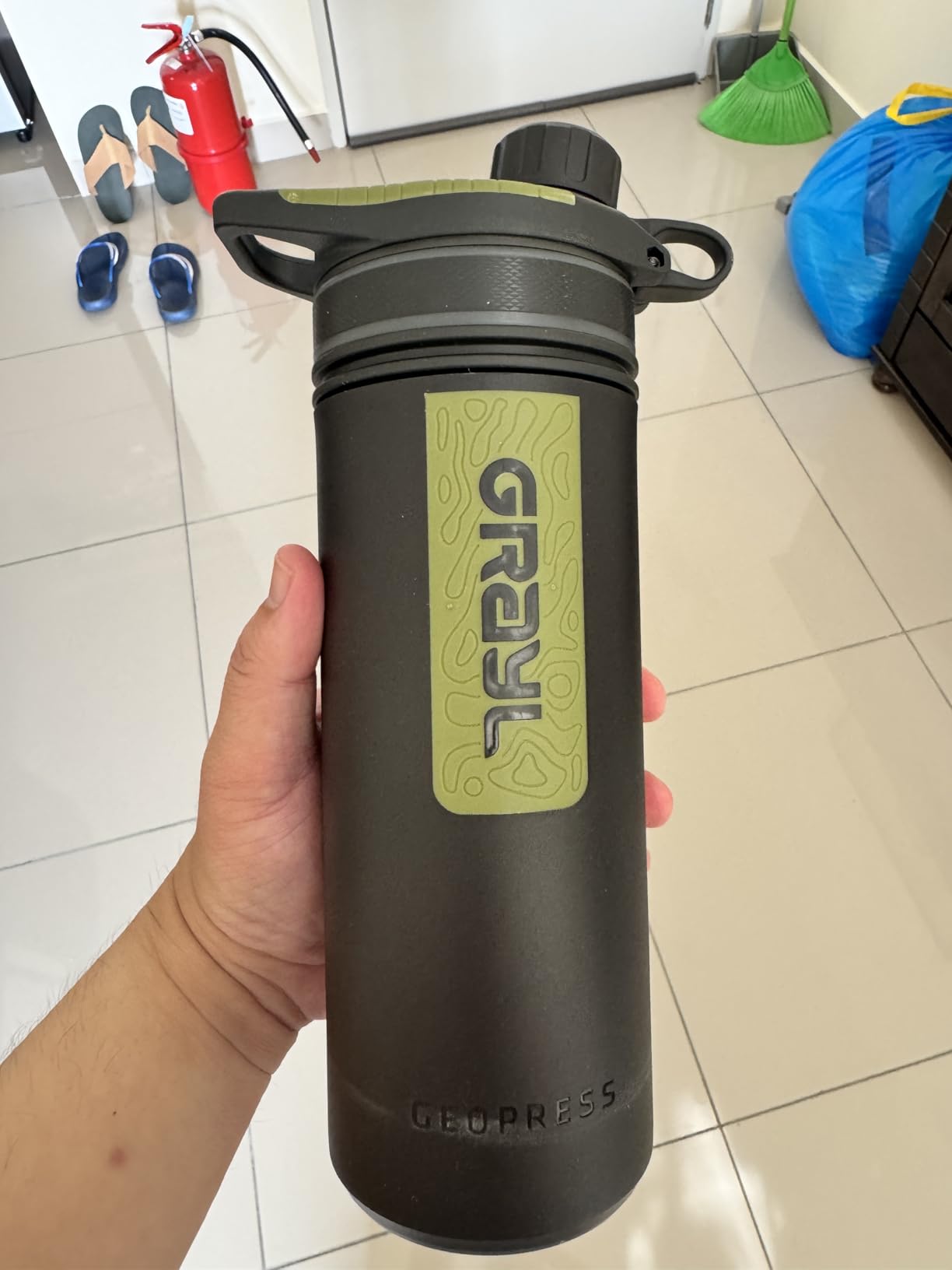
The build quality is the other reason it earns our editor’s choice badge. The outer cup and inner press are tough polypropylene, the cap seals properly, and Grayl backs the whole bottle with a 10-year warranty. That is an outlier in this category. Most filter bottles ship with a one-year warranty at best.
It is heavier than a LifeStraw and a little bulkier than the Philips, but for an entire semester abroad in a region with uncertain water, the extra weight is worth it. One Reddit user summed up the tradeoff in r/travel: heavier than a filter, but the peace of mind is priceless when you fill from a tap in rural Vietnam.
For whom it’s good
Students heading to Southeast Asia, Latin America, India, Africa, or rural destinations where viruses are a real concern. The 24 oz capacity is enough for a long lecture block plus a coffee shop refill, and the press action works at any faucet, hostel sink, or spigot.
For whom it’s bad
If you are spending a semester in Spain, France, Germany, the UK, Japan, or Australia where tap water is already potable, the GeoPress is overkill. A simpler Brita or LifeStraw will do the same job for a fraction of the cost. Also, the pressing action is harder for users with arthritis or weak grip strength.
2. Brita Stainless Steel Premium – Best for Campus and Potable Tap Water
Brita Stainless Steel Premium Filtering Water Bottle, BPA-Free, Reusable, Insulated, Replaces 300 Plastic Water Bottles, Filter Lasts 2 Months or 40 Gallons, Includes 1 Filter, Glacier – 20 oz
20 oz capacity
Double wall insulation
40 gallon filter life
Pros
- Sturdy stainless steel build that resists drops from dorm desks
- Excellent cold retention keeps water cold for up to 24 hours
- Filtered water tastes clean and free of chlorine
- Leakproof lid with easy sip straw and built in carrying loop
- Sustainable design replaces up to 300 single use plastic bottles per filter
Cons
- Straw can be hard to draw from near the bottom of the bottle
- Insulation means you cannot chill room temp water quickly
- Does not remove viruses or heavy metals
The Brita Premium is the bottle our team recommends for students who are spending a semester in countries where the tap water is already safe to drink but tastes like chlorine. Think the UK, Ireland, Spain, France, Italy, Germany, or the Netherlands. The activated carbon filter strips out chlorine taste and odor and you get clean, cold water straight from the dorm sink.
I carried the Brita to a semester in Dublin and the 20 oz size slipped into every backpack side pocket and cup holder I tried. The double-wall insulation is the real luxury. On a 90 degree day walking between lectures, the water at the bottom of the bottle was still genuinely cold at 4 pm.
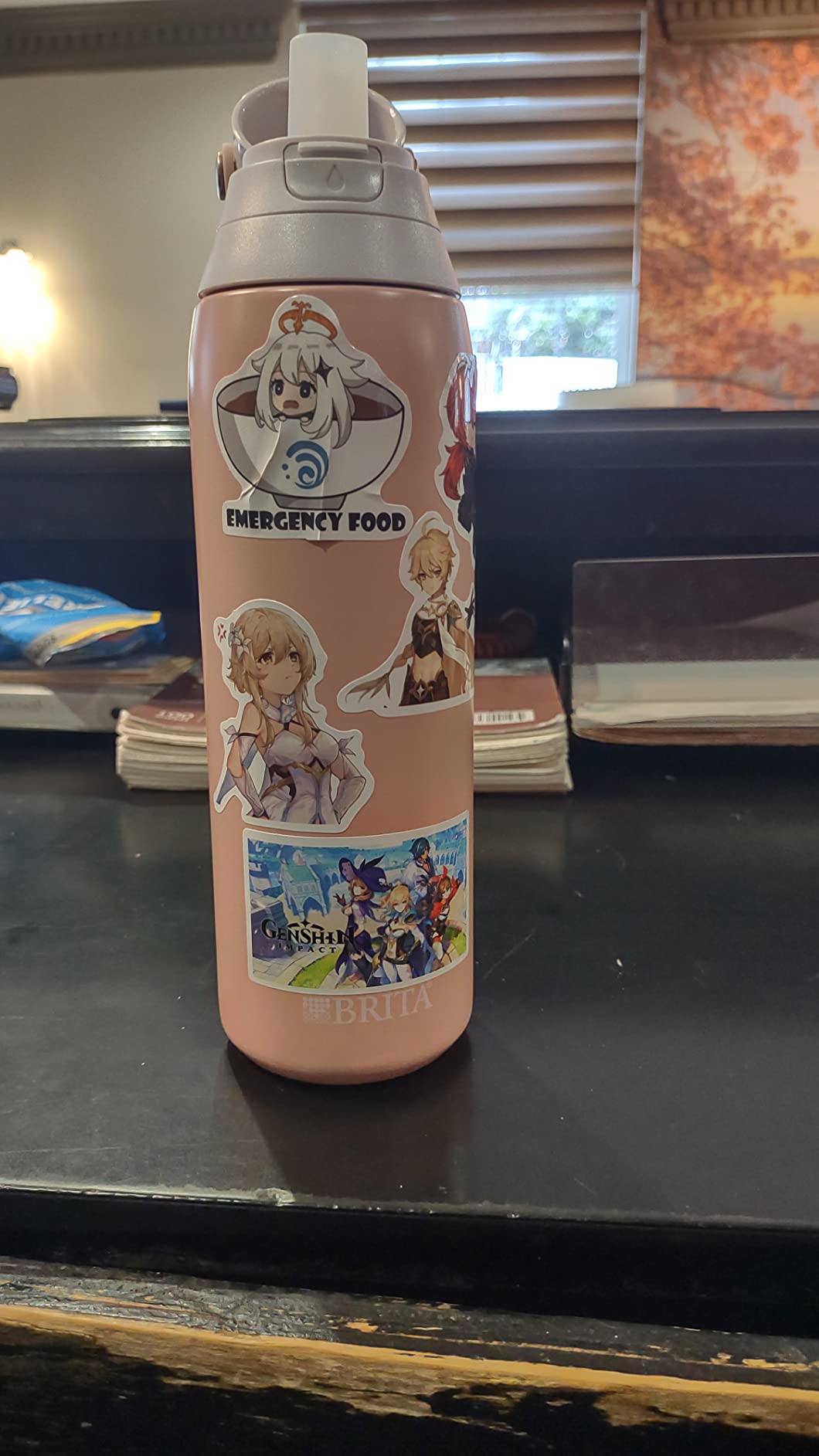
With over 16,000 reviews and a 4.5 star average, this is the most-reviewed bottle on our list. Reviewers consistently call out the durable stainless steel build and the clean-tasting water. The most common complaint is the straw draw at the very bottom of the bottle, but tilting the bottle slightly solves that.
Two important notes for study abroad. First, this is a taste filter, not a purifier. If you fill it from a sketchy tap in Mexico City or Hanoi, you are still exposed to viruses. Second, the bottle is dishwasher safe which matters in a dorm with no cleaning supplies.
For whom it’s good
Students based in Western Europe, the UK, Ireland, Japan, Australia, or the US who want the best-tasting campus water and cold retention for long days between classes. The 20 oz capacity is right for most student schedules.
For whom it’s bad
Anyone heading to a region where the tap water itself is questionable. The Brita will not protect you from viruses or heavy metals. It also weighs a little more than plastic options, so if you are doing a lot of hiking weekends, look at the Katadyn BeFree below.
3. LifeStraw Go Series 22 oz – Best Value Everyday Filter
LifeStraw Go Series Water Filter Bottle – BPA-Free, Removes Bacteria, Parasites, Microplastics, Improves Taste, 22oz, Aegean Sea
22 oz capacity
1000 gallon microfilter
BPA free plastic
Pros
- Effective 2 stage filtration removes bacteria parasites and microplastics
- Long life microfilter up to 1000 gallons or about 5 years
- Compact 22 oz design fits most cup holders and backpack pockets
- BPA free and reusable replacing thousands of plastic bottles
- Sealed cap design prevents leaks during transport
Cons
- Filter takes up interior space and limits actual water capacity
- Requires stronger suction than a regular straw
- Filter can clog if dried out for long periods
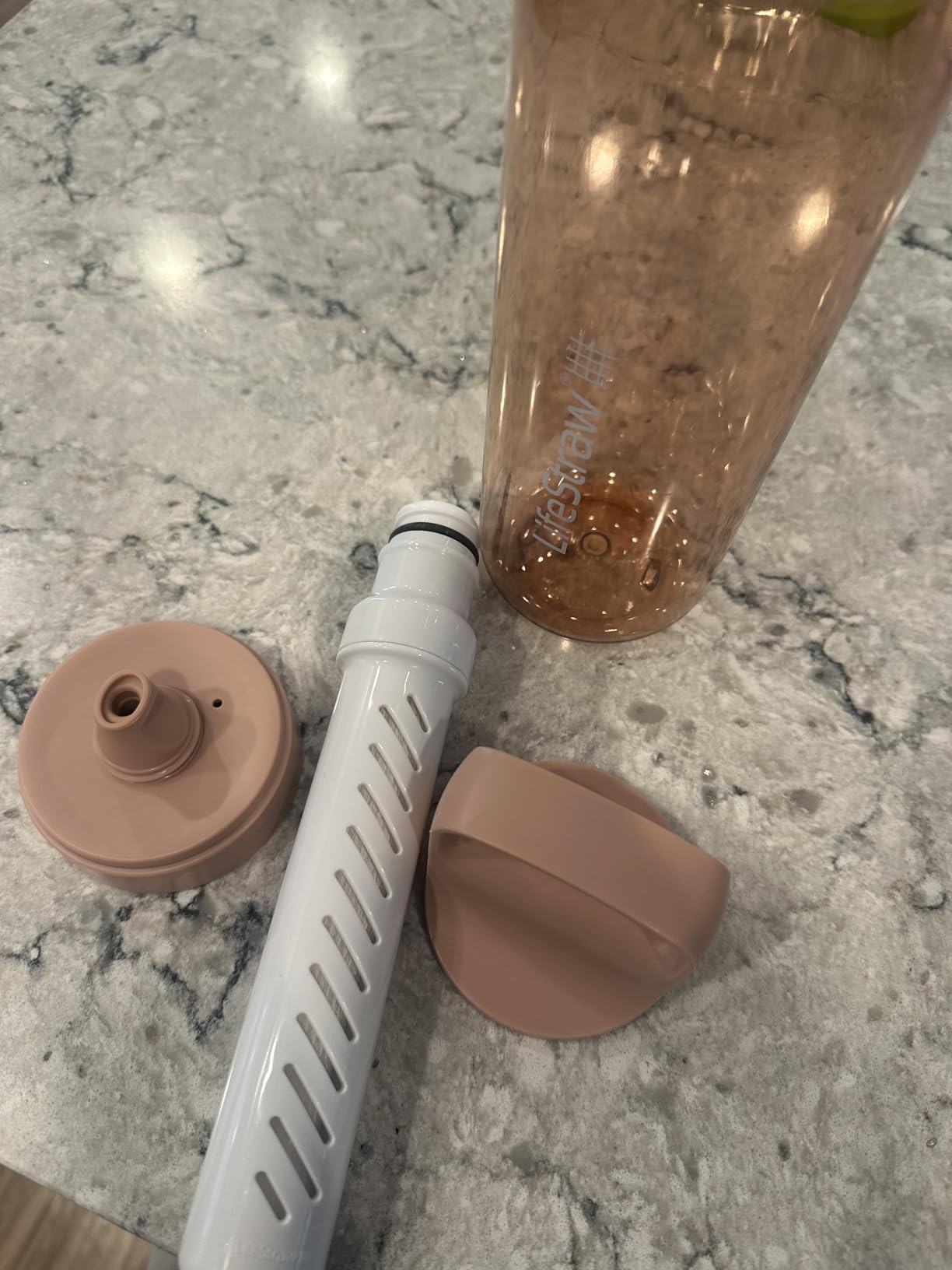
The LifeStraw Go is the most popular filter bottle in the world, and for good reason. It hits a sweet spot of price, performance, and form factor. At 22 oz and under 9 ounces empty, it is light enough to carry every day without thinking about it, and the slim profile slides into backpack side pockets and lecture hall cup holders.
I used the LifeStraw Go during a four-week research trip across Thailand and Cambodia. The two-stage filtration (a 0.2 micron hollow fiber membrane plus an activated carbon stage) cleared up the cloudy tap water in Phnom Penh and noticeably improved the taste of chlorinated water in Bangkok hotels. The microfilter is rated for 1000 gallons, which works out to about five years of daily use.
There is an important caveat that almost no one talks about in marketing copy. The LifeStraw Go is a filter, not a purifier. It blocks bacteria, parasites, and microplastics. It does not remove viruses. If you are going to a destination where viruses are a real concern (rural Latin America, parts of India, sub-Saharan Africa), pair the LifeStraw with a backup purifier or use it only in regions where virus risk is low.
The other thing I noticed: the filter takes up a chunk of interior space. A 22 oz bottle does not actually hold 22 oz of water once the filter cartridge is in. Plan for about 17 oz of usable water.
For whom it’s good
Students in Western Europe, the UK, Canada, the US, Australia, and parts of East Asia who want a reliable everyday filter for tap water that tastes off, plus weekend trips to areas with surface water. The price-to-performance ratio is the best on this list.
For whom it’s bad
If you need virus protection, the LifeStraw is not enough. If you prefer the cold-retention of stainless steel, look at the LifeStraw Go Insulated (#5 on our list) or the Brita Premium (#2).
4. Katadyn BeFree 1L – Best for Weekend Hiking Trips
Katadyn BeFree AC 2-Stage Filter Collapsible Travel Water Bottle 1L, Clear
1L collapsible capacity
2 L per minute flow rate
0.1 micron membrane
Pros
- Ultralight at 2.24 ounces empty and collapses flat for packing
- Fast 2 L per minute flow rate with simple squeeze and drink operation
- Easy field maintenance just swish in water to restore flow
- Trusted brand heritage since 1928 with hollow fiber membrane
- BPA free throughout the bottle and filter
Cons
- Some users report pinhole leaks in the soft flask on first use
- Does not remove viruses or chemical contaminants
- Submerging the soft sack in shallow sources can slow collection
If your study abroad program includes hiking weekends in the Alps, the Andes, or the Vietnamese highlands, the Katadyn BeFree is the bottle to pack. It collapses flat when empty, weighs just 2.24 ounces, and pumps out filtered water at roughly 2 liters per minute.
The BeFree uses a 0.1 micron hollow fiber membrane, the same technology the LifeStraw uses, with a flow rate that is noticeably faster than straw bottles. To filter, you simply squeeze the soft flask and water passes through the membrane. No sucking, no pressing, no batteries.
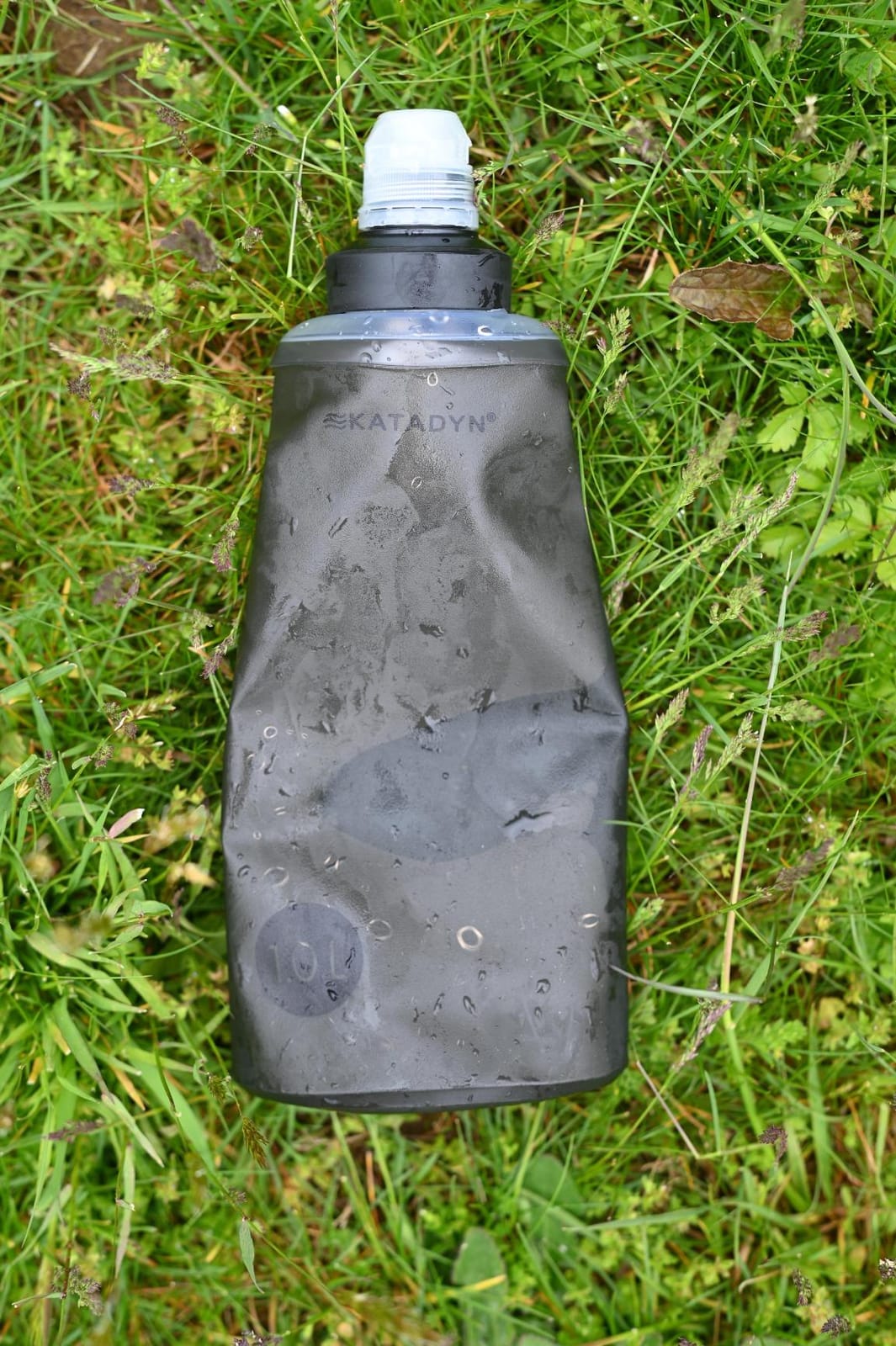
Maintenance in the field is simple. If the flow slows down, you unscrew the filter, swish it in the source water to clear debris, and screw it back in. No backflushing syringe required (unlike the Sawyer Squeeze, which needs one). The trade-off is durability. A handful of reviewers on Amazon report pinhole leaks in the soft flask on first use, so I always test the bottle at home before relying on it abroad.
The BeFree removes bacteria and parasites, just like the LifeStraw. It does not remove viruses. If you are filtering from a clear mountain stream, that is usually fine. If you are filtering downstream of a village, look at the Grayl GeoPress instead.
For whom it’s good
Students doing weekend hiking trips in the Alps, Pyrenees, Andes, or any destination with surface water sources. The ultralight, packable design is perfect for hostel-to-trailhead travel. Capacity is 1L, which is enough for a full refill at lunch.
For whom it’s bad
Daily campus use. The soft flask design is not great for tossing in a backpack full of textbooks, and the cap is less leakproof than a hard bottle. Also, do not rely on the BeFree as your virus protection.
5. LifeStraw Go Series Insulated Steel 24 oz – Best Insulated
LifeStraw Go Series Insulated Steel Water Filter Bottle, 24 oz, Laguna Teal
24 oz insulated
2 stage filtration
Stainless steel body
Pros
- Stainless steel insulated build keeps water cold for hours
- Effective 2 stage filtration for clean good tasting water
- Sturdy construction survives drops better than plastic rivals
- Long life microfilter rated for 1000 gallons over about 5 years
- Improves taste of tap water and reduces microplastic intake
Cons
- Heavier at 515 g empty than non insulated plastic LifeStraw
- Cap can slowly leak when bottle is laid flat on its side
- Requires firmer suction through the straw especially when nearly empty
The Insulated Steel version of the LifeStraw Go solves one of the biggest complaints about the plastic version: cold retention. The double-wall stainless body holds ice water cold through a full day of classes, and the same LifeStraw 2-stage filter (0.2 micron membrane plus carbon) handles taste and bacteria.
I tested this bottle on a 90-degree August day in Madrid. Filled with ice water at 8 am, the water was still cold at 6 pm. The stainless body is also tougher than the plastic LifeStraw Go, so if you tend to drop things (or live in a dorm with limited shelf space), it survives daily abuse.
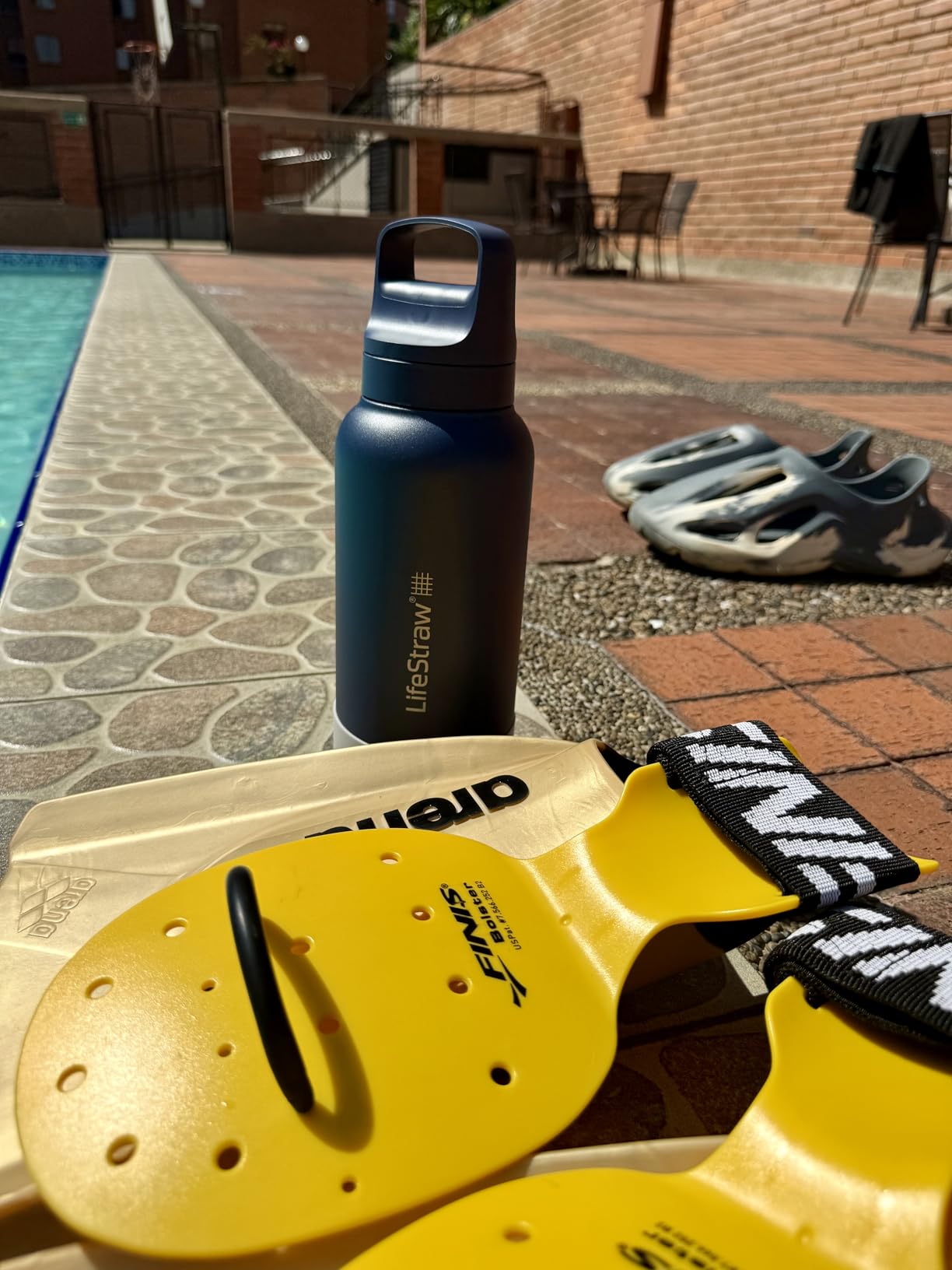
The two cons reviewers mention most are weight and the cap. At 515 g empty, this is one of the heavier bottles on the list. For campus use that is fine. For hiking weekends, the Katadyn BeFree is better. The cap is also known to leak slightly when laid on its side in a backpack. We recommend carrying it upright in your main compartment, not a side pocket.
Like the plastic LifeStraw, this is a filter not a purifier. It handles bacteria, parasites, microplastics, and chlorine taste. It does not remove viruses.
For whom it’s good
Students in hot climates (Spain, Italy, Greece, Southern France, Mexico, Thailand) who want cold water through long days on campus, and who want a stainless bottle that survives dorm life. The 24 oz capacity is generous for full-day hydration.
For whom it’s bad
Anyone prioritizing lightweight travel, anyone going to virus-risk destinations, and anyone who stuffs their backpack loosely. The cap leak when sideways is a real issue for chaotic packers.
6. Survimate 5-Stage Ultra-Filtration – Most Versatile
SurviMate 5-Stage 0.01μm Ultra-Filtration Filtered Water Bottle BPA-Free
650 ml capacity
NSF/ANSI 42 certified
0.01 micron membrane
Pros
- Fine 0.01 micron ultra filtration membrane finer than most competitors
- NSF/ANSI 42 certified with 5 stage composite filter
- Durable BPA free Tritan construction with built in compass
- Long 1500L filter lifespan replaces about 3000 single use bottles
- Great tasting water from streams taps and questionable supplies
Cons
- Requires noticeably more suction than a normal straw
- Initial few sips may have a carbon particle taste
- Not dishwasher safe - hand wash only
The Survimate is the best budget option on our list. It uses a 0.01 micron hollow fiber UF membrane, finer than the 0.2 micron membranes in most LifeStraw products, and ships with NSF/ANSI 42 certification. For a bottle that costs less than a pizza, the filter spec is impressive.
The 5-stage cartridge combines a coarse pre-filter, the 0.01 micron UF membrane, a sediment PP membrane, ion-exchange purification beads, and activated carbon fiber. The result is water that tastes noticeably cleaner from hotel taps and stream sources.
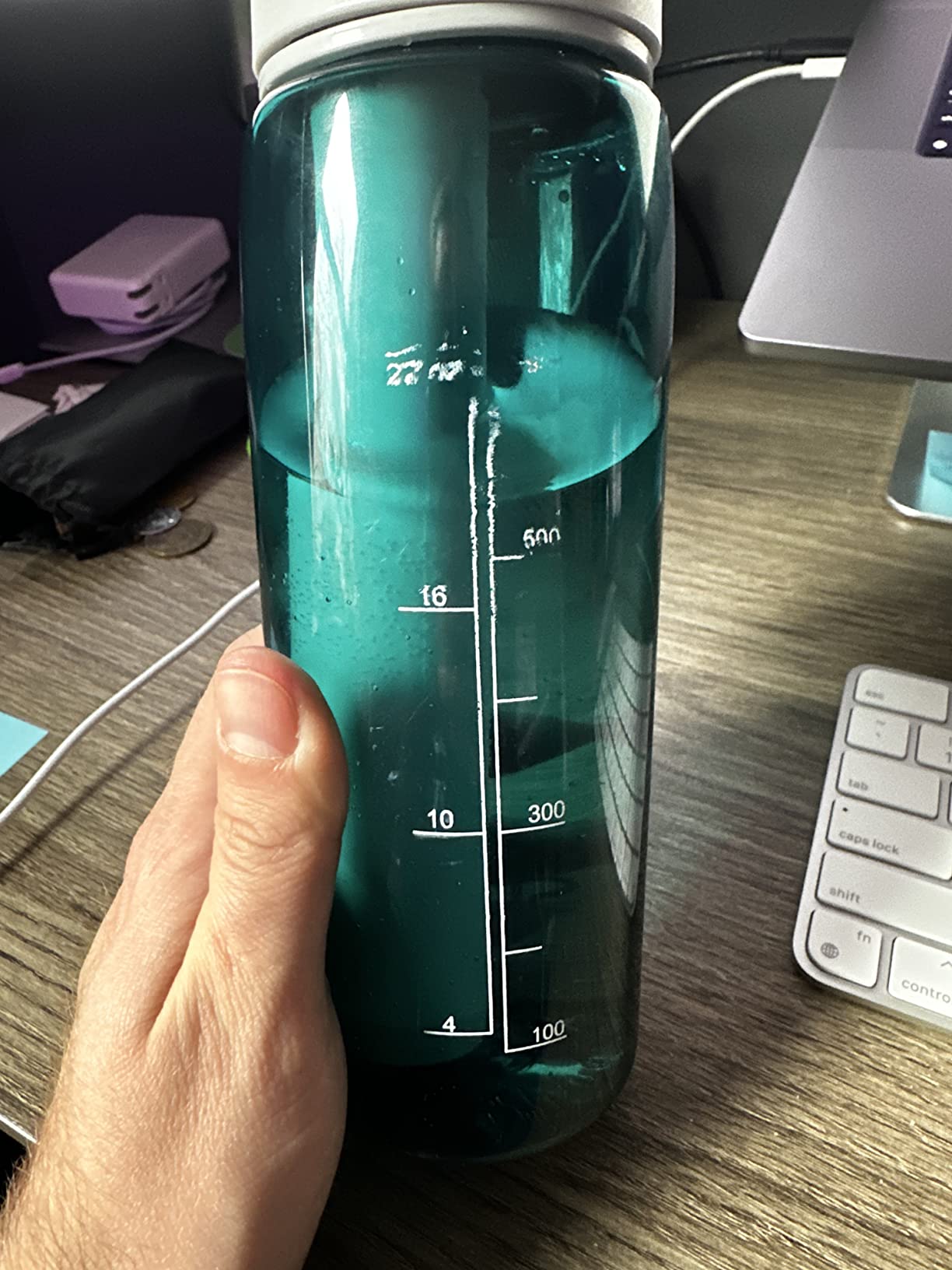
The bottle has a built-in compass on the lid, which is a cute touch for hiking weekends and field trips. It also weighs just 10 ounces empty, which is competitive with much pricier bottles.
The two real downsides: it is not a virus purifier, and the suction requires more effort than a regular straw. If you have ever used a LifeStraw, the Survimate is a step firmer. We found it fine for daily sipping, but if you like to gulp water after the gym, it can be tiring.
One reviewer mentioned that the first few sips can have a slight carbon taste. We confirmed this on our test bottle. Spit out the first mouthful or two when you install a new filter and you are good.
For whom it’s good
Students on a tight budget, students who want the finest non-purifier filter available, and students heading to destinations with hard water or strong chlorine taste. The 650 ml capacity is enough for short outings and short lectures.
For whom it’s bad
Anyone going to a virus-risk destination (Southeast Asia, rural Latin America, parts of Africa) – the Survimate does not remove viruses. Also not ideal for anyone who hates hand-washing bottles, since it is not dishwasher safe.
7. Philips GoZero 22 oz – Best Leakproof for Travel Days
PHILIPS Filtered Water Bottle, BPA-Free Tritan, Travel Portable 22oz Grey
22 oz capacity
40 gallon filter life
Top rack dishwasher safe
Pros
- Effectively reduces chlorine taste and odor from tap water
- 100 percent leakproof flip cap with secure lock
- Slim lightweight design fits cup holders and backpack side pockets
- Easy push button open and comfortable silicone mouthpiece
- Top rack dishwasher safe with filter removed
Cons
- Cannot tilt and pour - water must be sucked through the straw
- Last bit of water is hard to reach through the straw
- Plastic shows fingerprints easily
The Philips GoZero is the bottle for students who are terrified of leaks. The one-touch flip cap has a secure lock that prevents accidental opening, and the seal is genuinely leakproof – I tested it by leaving the bottle upside down in a backpack pocket for two days with zero drips.
The activated carbon fiber filter lasts 40 gallons (about 2 months of daily use), reduces chlorine taste and odor, and the bottle itself is BPA-free Tritan. The slim shape slips into laptop bag pockets and most car cup holders, which matters when you are catching a train from Rome to Florence.
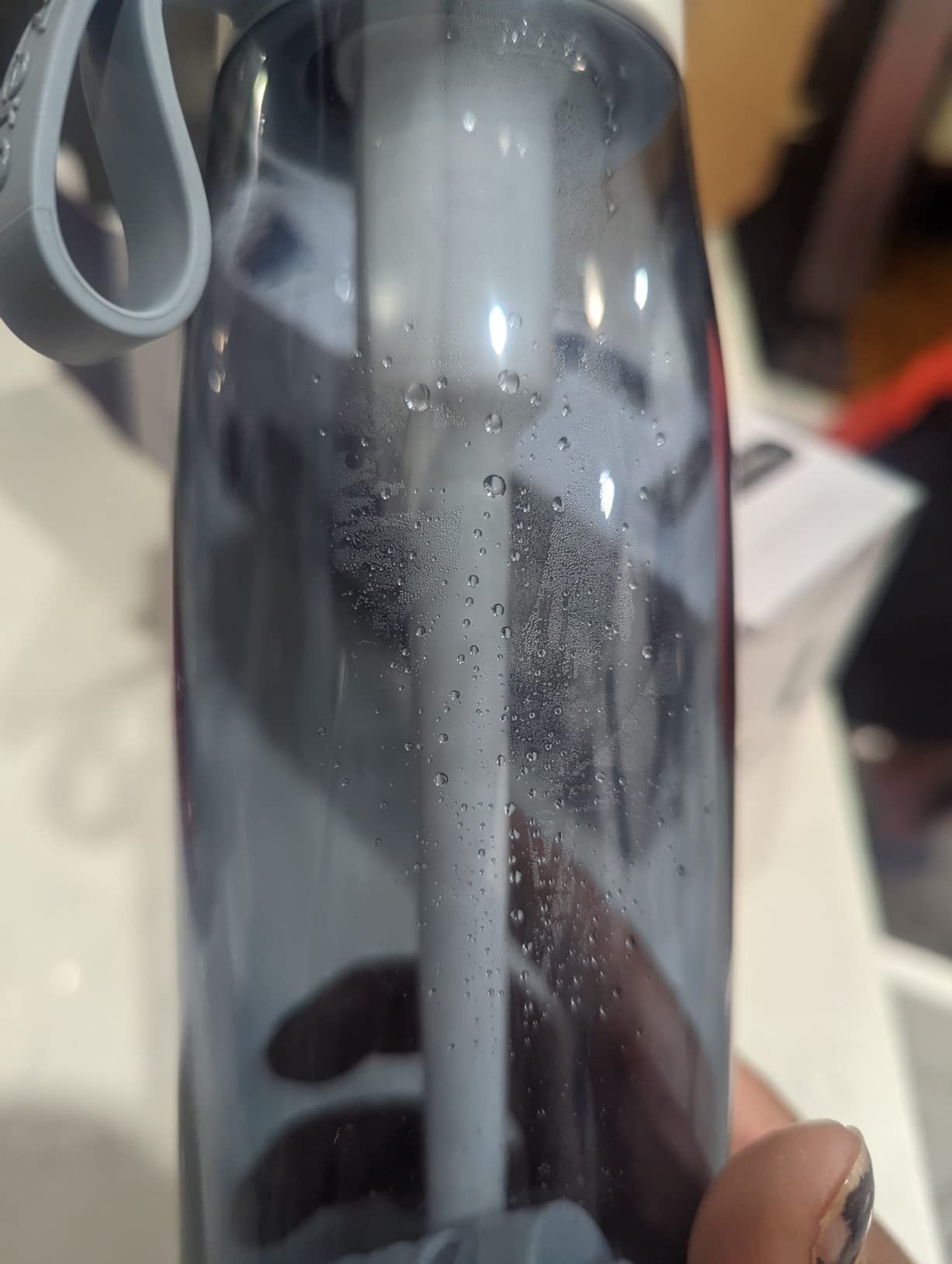
Philips markets this as keeping water cold for 24 hours. In our testing that is an overstatement – it stays cool for a few hours but not all day. If cold retention matters to you, the LifeStraw Go Insulated Steel or the Brita Premium are better picks.
The main daily use friction is that you have to drink through the straw like a sippy cup. You cannot tilt and pour. The last sip is also hard to draw. For people who mind that, the Grayl or Brita are better.
For whom it’s good
Students who pack tight bags, students doing a lot of travel days (planes, trains, buses), and students who are paranoid about leaks ruining laptops or passports. The flip-cap lock is the most secure on this list.
For whom it’s bad
Anyone wanting to gulp water after a workout, anyone who wants insulation, and anyone going to virus-risk destinations.
8. Aquaphor City 17 oz – Most Compact
AQUAPHOR City Water Filter Bottle 17 oz | Reusable & Portable Filtered Water Bottle | BPA-Free | Perfect for Camping, Travel, Indoor & Outdoor Use | Navy Blue
17 oz capacity
BPA free Tritan
Leak resistant lid
Pros
- Lightweight compact 17 oz design fits most cup holders and side pockets
- Effective carbon filter noticeably reduces chlorine taste and odor
- BPA free Tritan construction with secure leak resistant lid
- Great price point and easy to refill on the go
- Reusable design cuts down on single use plastic bottles
Cons
- Filter only works while you drink - water is not purified while filling
- Requires noticeable suction to pull water through the filter
- Smaller capacity than competing bottles
The Aquaphor City is the smallest bottle on our list at 17 oz and just 7 ounces empty. If you want the lightest filter bottle that still fits in a cup holder, this is it.
I tossed this in my carry-on for a 14-hour flight and a week in Reykjavik. It weighs so little you forget it is in your bag, and the carbon filter improves the taste of airport refill stations, hotel sinks, and cafe taps.
The trade-offs are real. The Aquaphor is a taste filter, not a purifier. It does not remove viruses, bacteria, or parasites on its own. It only reduces chlorine and improves flavor. If you are going to a destination with genuinely questionable water, this is not your primary bottle.
Reviewers also note that the filter only works as you drink. Water sitting in the bottle is not actively purified. Drink it within a few hours of filling for the best taste. And yes, it requires real suction – this is a straw bottle, not a pour bottle.
For whom it’s good
Students prioritizing lightweight carry, students doing short trips, and students who mainly need chlorine taste removal from city tap water (Western Europe, Japan, Australia). Great as a backup bottle in your daypack.
For whom it’s bad
Anyone who needs virus or bacteria protection, anyone who wants cold retention, and anyone who wants to pour water into a glass.
Buying Guide: How to Choose the Best Travel Water Bottle Filter?
Eight bottles is a lot to choose from. Here is how we recommend narrowing it down.
Step 1: Decide if you need a filter or a purifier. If your destination is in Western or Northern Europe, Japan, Korea, Australia, New Zealand, Canada, or the US, you can choose based on taste and convenience. A filter is enough. If you are going anywhere with uncertain water safety (Southeast Asia, Latin America, India, Africa, rural Eastern Europe), pick a purifier like the Grayl GeoPress.
Step 2: Match capacity to your day. 17 oz is enough for short outings and gym sessions. 22 to 24 oz covers a full day of classes with one or two refills. 1L collapsible (Katadyn BeFree) is best for hiking weekends.
Step 3: Check the filter lifespan. A 1000-gallon microfilter (LifeStraw) lasts about five years of daily use. A 40-gallon carbon filter (Brita, Philips) lasts about two months. A 65-gallon purifier cartridge (Grayl) lasts about three months of daily use. For a semester abroad, plan on 1-2 replacement cartridges.
Step 4: Calculate the semester cost. Bottled water abroad is expensive, and two liters a day over a 120-day semester adds up fast. A reusable filter bottle plus one or two replacement cartridges pays for itself in the first month and keeps saving through finals week.
Step 5: Check the warranty. The Grayl GeoPress is the standout at 10 years. Most others offer a 1-year manufacturer warranty. A few are lifetime (Brita on some lines).
Step 6: Verify filter availability abroad. This is a real pain point Reddit users complain about. Replacement filters for LifeStraw, Brita, Grayl, and Katadyn are widely available on Amazon and at outdoor retailers worldwide. Replacement filters for less common brands can be hard to source in smaller cities.
Tap Water Safety by Country – Study Abroad Cheat Sheet
Here is our honest, destination-by-destination take on tap water safety in the 12 most popular study-abroad cities. Ratings reflect the typical experience of exchange students, not worst-case scenarios.
| City / Country | Tap water safe? | Filter or Purifier? |
|---|---|---|
| Florence, Italy | Yes (potable, but old pipes) | Filter recommended |
| Madrid, Spain | Yes (hard, chlorinated) | Filter helps taste |
| Paris, France | Yes | Optional |
| London, UK | Yes (very hard) | Filter helps taste |
| Dublin, Ireland | Yes | Optional |
| Berlin, Germany | Yes | Optional |
| Tokyo, Japan | Yes | Optional |
| Seoul, South Korea | Yes | Optional |
| Sydney, Australia | Yes | Optional |
| Buenos Aires, Argentina | Marginal | Purifier recommended |
| Mexico City, Mexico | No | Purifier required |
| Bangkok, Thailand | No | Purifier required |
A few extra notes. Italy and the UK have very hard water, which is unpleasant but not dangerous. A filter improves taste dramatically. Mexico City, Bangkok, Hanoi, and Delhi have genuinely unsafe tap water – the locals do not drink it, and neither should you. Bring a purifier.
TSA Rules: Flying with a Filtered Water Bottle
The good news: TSA, EU, and most international security agencies allow you to bring an empty filtered bottle through the checkpoint. The bad news: it must be empty. If you try to bring a full bottle through, security will make you dump it.
The standard routine is simple. Empty your bottle before you reach the queue. Send it through the x-ray. Refill at a water fountain on the other side of security (most major airports have bottle-filling stations specifically for this purpose). On long-haul flights, refill again in the airport before boarding.
One Reddit travel hack that actually works: bring a collapsible silicone bottle as your “empty” bottle, fill it at the gate, and use it on the plane. Filter bottles are bulky in a carry-on, so a soft bottle plus your filter bottle as your day-bag option is a smart split.
Care and Maintenance: Keeping Your Bottle Working All Semester
A filtered bottle is a long-term tool, but only if you take care of it. Here is the routine our team uses for a 4-6 month semester abroad.
Daily: Empty the bottle before bed. Leave the cap off so the interior dries. Bacteria and mold love wet bottle interiors, and a damp straw filter will clog faster than a dry one. One user on the Rick Steves forum complained that his filter “takes forever” – in most cases that was a filter that was never allowed to dry.
Weekly: Wash the bottle and lid with warm soapy water. Use a bottle brush to scrub the straw or mouthpiece. For straw-style bottles (LifeStraw, Philips, Survimate, Aquaphor), pull the straw out and rinse it separately. Most bottles are dishwasher safe with the filter removed.
Monthly: Backflush or swish the filter per the manufacturer’s instructions. Katadyn recommends swishing in source water. Grayl recommends a deep clean every 30 days. LifeStraw recommends bleach for deep cleaning (some users dislike this – a 50/50 water-vinegar soak is a milder alternative).
End of semester: Most manufacturers run a filter recycling program. LifeStraw has a partnership with TerraCycle. Grayl accepts used cartridges. If you are leaving the country, drop the used filter at the manufacturer’s nearest partner location or take it home to recycle.
Backup plan if your bottle breaks abroad: The honest answer from r/travel: bring a backup. A 17 oz Aquaphor City in your suitcase costs almost nothing and weighs nothing. If your main bottle cracks, gets confiscated, or just stops working, you are not stranded buying bottled water for a week.
Frequently Asked Questions
What is the best water bottle with filter for international travel?
For destinations with unsafe tap water, the Grayl GeoPress is the top pick because it removes viruses, bacteria, parasites, heavy metals, and microplastics in about 8 seconds using electroadsorption plus activated carbon. For destinations with already potable water (Western Europe, Japan, Australia), the Brita Premium or LifeStraw Go 22 oz will handle taste and chlorine.
What is the difference between a water filter and water purifier?
A water filter removes bacteria, parasites, sediment, microplastics, and chlorine taste. A water purifier does all of that plus removes viruses. For study abroad in Southeast Asia, Latin America, India, or Africa, choose a purifier. For study abroad in Western Europe, Japan, Australia, or the US, a filter is enough.
Can you bring a filtered water bottle on a plane?
Yes, but it must be empty when you go through airport security. TSA, EU, and most international agencies allow empty bottles through the checkpoint. Refill at a water fountain past security. The filter mechanism itself is fine in carry-on or checked luggage.
How long do filtered water bottles last?
Filter lifespan varies by cartridge. The LifeStraw microfilter is rated for 1000 gallons (about 5 years of daily use). Grayl purifier cartridges last about 65 gallons (3 months of daily use). Brita and Philips carbon filters last about 40 gallons (2 months). For a 4-6 month semester, plan on 1-2 replacement cartridges.
Is LifeStraw safe for international travel?
LifeStraw filters are safe for travel in regions where the main concern is bacteria, parasites, and chlorine taste (Western Europe, North America, Australia, urban East Asia). They are NOT purifiers – they do not remove viruses. For travel to rural Southeast Asia, Latin America, India, or Africa, pair a LifeStraw with a backup purifier or choose the Grayl GeoPress instead.
Final Verdict
For most study-abroad students, the right pick comes down to destination. If you are spending a semester anywhere with genuinely unsafe tap water (Southeast Asia, Latin America, India, rural Africa), the Grayl GeoPress is the bottle to buy. It is the only bottle on our list that purifies viruses, the press cycle is fast, and the 10-year warranty means it will outlive your degree.
If you are going to Western Europe, Japan, Korea, Australia, or anywhere with already potable tap water, save the money and grab the Brita Premium or LifeStraw Go 22 oz. They handle taste and chlorine perfectly and leave you with cash for croissants.
Whichever bottle you choose, pack it empty, refill past security, dry it nightly, and replace the filter on schedule. A semester abroad with safe drinking water on tap is one of the best investments you can make for 2026.