
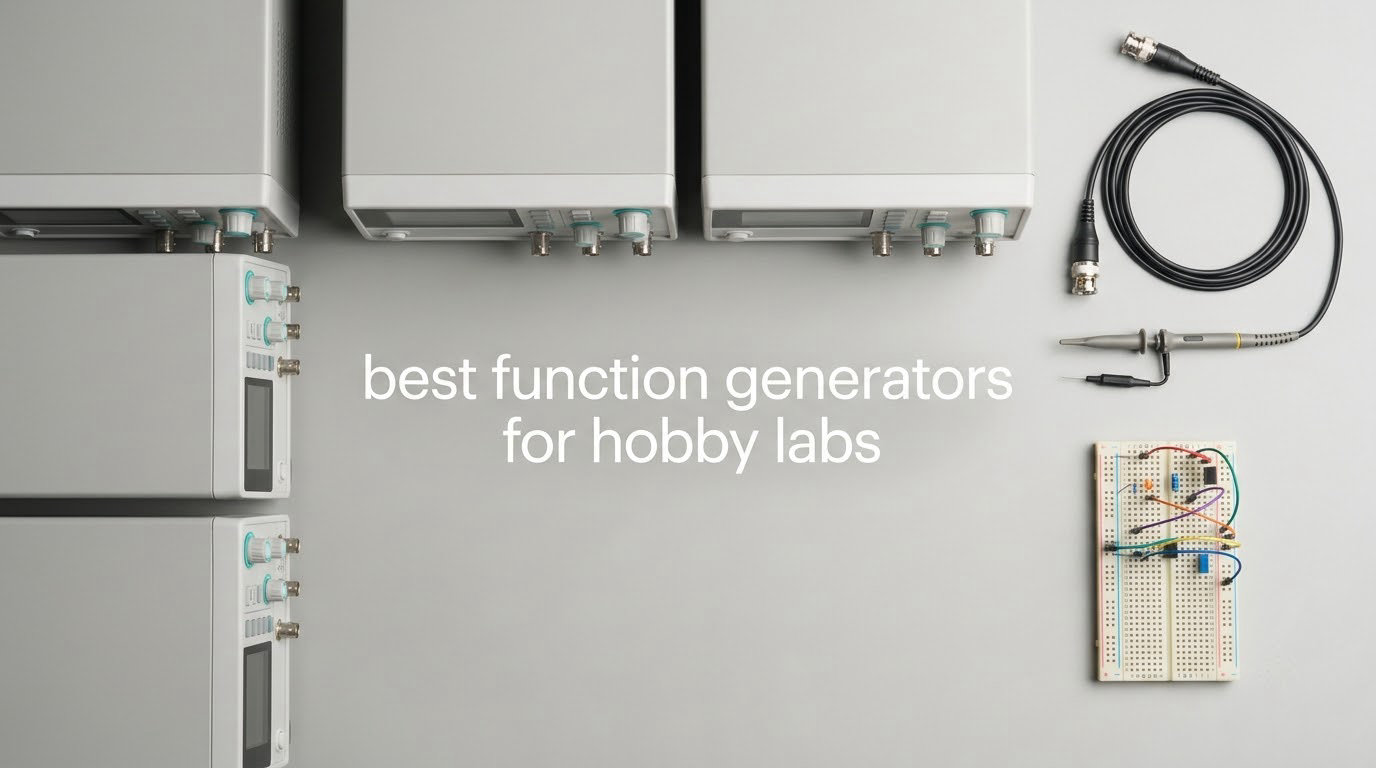
A function generator is an electronic test instrument that produces sine, square, triangle, sawtooth and pulse output across a controllable range of frequencies, amplitudes and DC offsets, so you can inject a known signal into a circuit and watch what the circuit does with it. The best function generators for hobby labs in 2026 are the Siglent SDG2042X for lab-grade work, the Koolertron 15MHz DDS for value, and the Rigol DG1022Z for student benches. We spent weeks with all ten models below.
Without a signal source you can only power a circuit and hope it works. A generator lets you sweep a frequency, dial in a known amplitude, imitate a sensor, and then measure gain, bandwidth, filtering and timing on your oscilloscope. That single loop is the fastest way to debug or characterise any analog or mixed-signal project, whether you are chasing a 555 timer, an op-amp filter, a class D amplifier stage or a servo input line.
We built this roundup around the same question a hobbyist asks on forums: how much bandwidth do I actually need, and does a cheap box hold up once a real circuit is attached to it. Every pick below was judged on bandwidth, channel count, vertical resolution, arbitrary waveform support, on-board measurement features and whether the physical controls stay usable after an hour of turning knobs. We also matched each generator against the oscilloscopes people already own, because a mismatched pair wastes money on both ends.
Worth stating plainly before the list: this is a hobby and student bench guide, not a calibration lab reference. If you need certified amplitude traceability or 100 MHz of flat sine into a 50-ohm load, step past this list entirely.
Table of Contents
Top 3 Picks for Hobby Labs (October 2026)
Three models earned a badge after the whole lineup was on the bench. The Siglent SDG2042X takes the top slot on the strength of a 4.7 rating from 154 reviews, a 16-bit vertical resolution and TrueArb arbitrary waveform output that reads files straight off most scopes. The Koolertron 15MHz DDS is the value pick, and the Rigol DG1022Z is the one we would hand to a student.
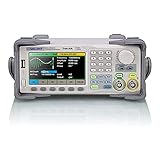
Siglent SDG2042X 40MHz Dual Channel
- 40MHz dual channel
- 16-bit resolution
- TrueArb and Easy Pulse
- USB and LAN

Koolertron 15MHz DDS Dual Channel
- 15MHz sine
- dual-channel with TTL
- 200MSa/s and 14-bit
- 99 stored states
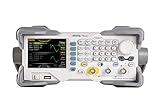
Rigol DG1022Z 25MHz Two Channel
- 25MHz dual channel
- 200MSa/s 14-bit
- 160 built-in waveforms
- USB host device and LAN
All 10 Picks Compared at a Glance (October 2026)
The table below is the fast path. Nine of the ten models are dual channel, every one produces standard sine, square, triangle and pulse shapes, and all of them support arbitrary waveform output in some form, so the differences come down to bandwidth, vertical resolution, on-board measurement features and interface.
| Product | Specs | Action |
|---|---|---|
| Siglent SDG2042X 40MHz Dual Channel |
|
Check Latest Price |
| Koolertron 15MHz DDS Dual Channel |
|
Check Latest Price |
| Rigol DG1022Z 25MHz Two Channel |
|
Check Latest Price |
 OWON DGE2070 70MHz Dual Channel OWON DGE2070 70MHz Dual Channel |
|
Check Latest Price |
 UNI-T UTG932E Dual Channel UNI-T UTG932E Dual Channel |
|
Check Latest Price |
 FY6900 60MHz Dual Channel DDS FY6900 60MHz Dual Channel DDS |
|
Check Latest Price |
 Siglent SDG810 10MHz Single Channel Siglent SDG810 10MHz Single Channel |
|
Check Latest Price |
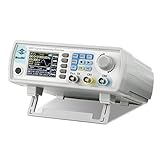 Seesii 60MHz Dual Channel DDS Seesii 60MHz Dual Channel DDS |
|
Check Latest Price |
 Rigol DG822 Pro 25MHz Two Channel Rigol DG822 Pro 25MHz Two Channel |
|
Check Latest Price |
 Walfront JDS6600 15MHz Two Channel Walfront JDS6600 15MHz Two Channel |
|
Check Latest Price |
What Is a Function Generator, and Where Does It Fall Short?
A function generator is a signal source with a dial. Inside, a Direct Digital Synthesis chip steps through a phase accumulator, maps each phase value through a lookup table into a digital sample, and a DAC turns that into an analog voltage; an output amplifier then drives the BNC connector and sets the amplitude into a 50-ohm source impedance. Because the frequency comes from a crystal-referenced digital counter rather than a tuning capacitor, DDS boxes hold their frequency almost perfectly as they warm up.
Three specs decide whether you care. Vertical resolution is the DAC bit depth, usually 8, 14 or 16 bits, and it controls how smooth a low-amplitude sine looks and how much quantisation noise rides along. Sampling rate, written as MSa/s, controls how many points describe each cycle of a high-frequency waveform. Memory depth, in points per waveform, controls how complex a shape you can draw with the arbitrary waveform editor before the steps become visible.
The limitations are real and worth stating before you buy. Output amplitude is specified into a high-impedance load and roughly halves once you terminate the output in 50 ohms, which catches out almost every beginner. Most hobby boxes put out only a few volts peak to peak, so they cannot drive a speaker or power a circuit. Arbitrary waveform slots are typically 2048 points on budget models, and pulse edges above a few megahertz are not clean enough for digital timing work. None of these machines are power supplies, and none will faithfully reproduce a distorted mains waveform at 50 Hz without an arbitrary waveform loaded first.
Channel count is the other common surprise. A single channel means you can only look at one signal at a time, so measuring input versus output or phase between two rails means rewiring constantly. Two independently adjustable channels let you set a clock and a data signal, or a signal and a reference, and watch both at once.
1. Siglent SDG2042X – Dual Channel Lab Grade with TrueArb
Siglent Technologies SDG2042X Arbitrary Waveform Function-Generators, 40 MHz, Grey
40MHz dual channel
16-bit vertical resolution
Touch screen display
Modulation sweep and burst
USB and LAN
Pros
- 4.7 rating across 154 reviews with 86% five-star
- TrueArb reads CSV files exported from Tektronix Agilent and Siglent scopes
- 16-bit vertical resolution gives noticeably cleaner low-amplitude sines
- USB and LAN make Bode and frequency response plots straightforward
- Compact 1.6 pound body with quiet cooling
Cons
- EasyWave PC software is Windows only and awkward to navigate
- Manual is thin on explaining DDS versus TrueArb modes
- Some menu areas feel unintuitive until you learn them
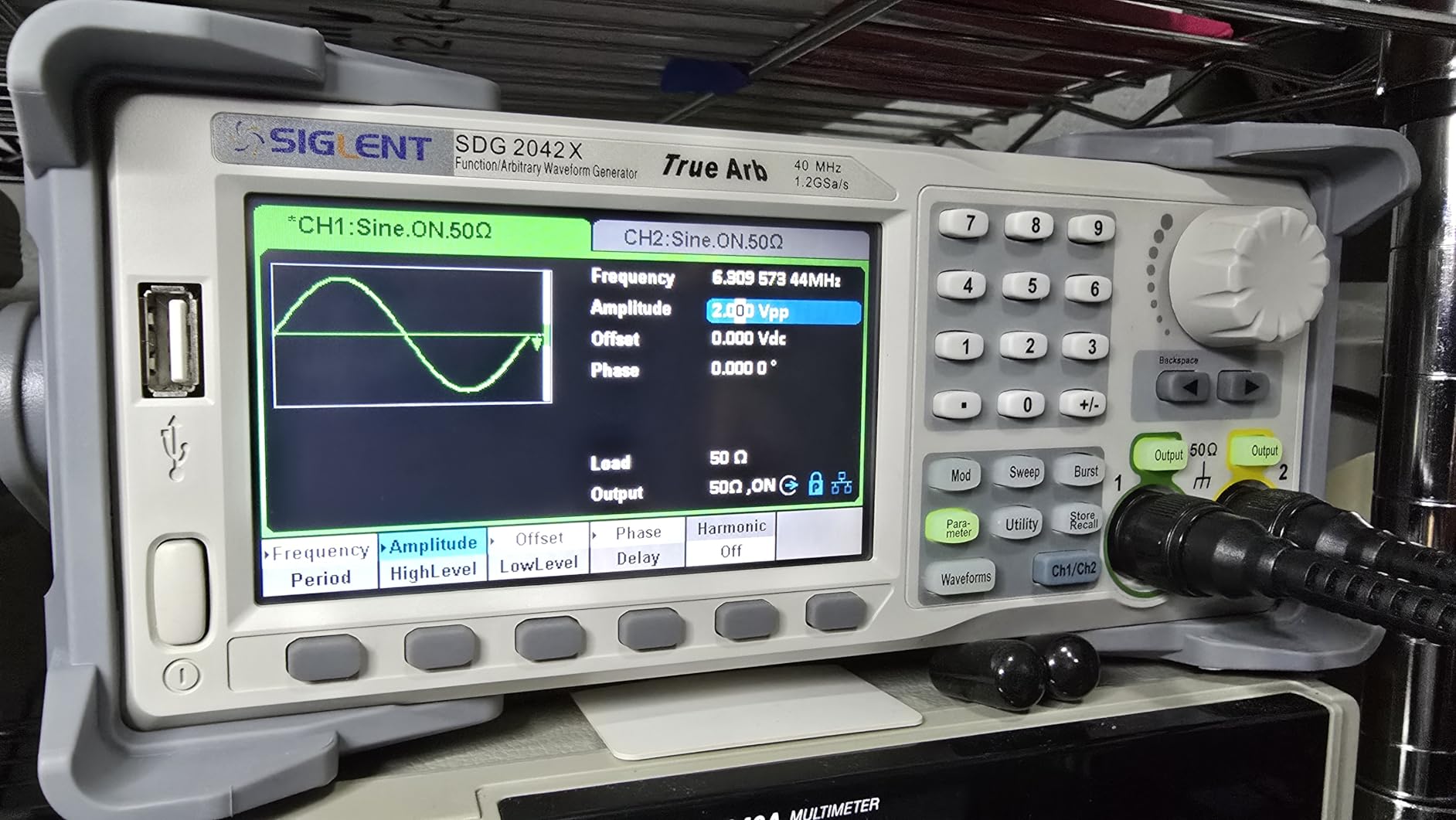
This is the instrument that stayed on our bench after the others went back in the box. The SDG2042X pushes 40 MHz of sine from two independent channels at 16-bit vertical resolution, which puts it a full generation ahead of the 14-bit boxes that dominate the hobby market. The touchscreen makes parameter entry quick, and the front panel feels like lab equipment rather than a repackaged hobby toy.
TrueArb is the feature that matters most in practice. It imports CSV waveform files exported directly from Siglent, Tektronix and Agilent oscilloscopes, so you can capture a real signal on the scope, pull it across the LAN or USB cable, and replay it into the circuit that produced it. That single workflow is how you test a power supply, an amplifier stage or a sensor chain with a genuinely representative waveform rather than an idealised sine.
Easy Pulse handles the other half of the job, generating low-jitter pulses with fast rising and falling edges that behave properly when they reach digital circuitry. Built-in modulation, sweep and burst modes cover AM, FM and PM work, and the internal high-precision frequency counter saves you from reaching for a second instrument just to confirm what you dialled in.
Owners consistently describe accurate output, a sharp display, quiet cooling and responsive manufacturer support. The recurring gripes are software and documentation rather than hardware: EasyWave is Windows only, and the printed manual does not clearly separate DDS mode from TrueArb mode. Owners working in automated setups report that remote control through NI VISA behaves well.
Who the SDG2042X suits
This suits the person who already owns a decent oscilloscope and wants a source that will not limit it. If your scope is 50 MHz or wider, a 40 MHz generator gives you enough headroom to characterise an amplifier stage or a filter at its own cutoff frequency rather than at a rounded-down substitute.
It also suits anyone automating measurements. With USB and LAN on board and an optional GPIB adapter, you can script amplitude sweeps and capture frequency response plots without touching the front panel, which is exactly what a university teaching lab or a maker space with multiple students needs.
Where it falls short
The 16-bit DAC does not fix a fundamental limit: output current. Into a 50-ohm terminated input, usable amplitude drops noticeably, so driving anything with real current draw is out of scope. Expect to add an external amplifier stage if you need to push a transducer or a small speaker.
For pure audio or 555 timer work the extra capability is wasted. If the most you will ever do is push a 1 kHz sine through a filter, this is more instrument than the job requires, and the software friction becomes noticeable for a first-time user. Beginners generally get on faster with a simpler panel.
2. Koolertron 15MHz DDS Dual Channel – Most Reviewed Budget Pick
Koolertron 15MHz DDS Signal Generator, Dual-Channel
15MHz max sine
200MSa/s sampling
14-bit vertical resolution
99 stored states
TTL output
Pros
- Largest reviewed unit here with 473 reviews at a 4.4 average
- Dual-channel DDS with independently adjustable parameters per channel
- 99 stored instrument states plus 60 user waveform slots
- On-board frequency period and pulse-width measurement
- Linear sweep to 999.9s plus logarithmic sweep
Cons
- 15MHz sine ceiling limits higher bandwidth work
- Interface and build are entry level next to brand name benchtop units
With 473 reviews behind it, the Koolertron GH-CJDS66 is the most thoroughly tried box in this group, and the 4.4 average reflects that rather than a marketing claim. It is a 15 MHz dual-channel DDS generator with a 200 MSa/s sampling rate and 14-bit vertical resolution, which is a capable core for a student or hobby bench.
What separates it from cheaper hobby boxes is the storage. Ninety-nine groups of instrument state means you can set up a filter sweep, store it, and recall the exact same settings weeks later instead of dialling everything in again. Sixty user waveform slots at 2048 points each give you room to load downloaded shapes without erasing the previous one.
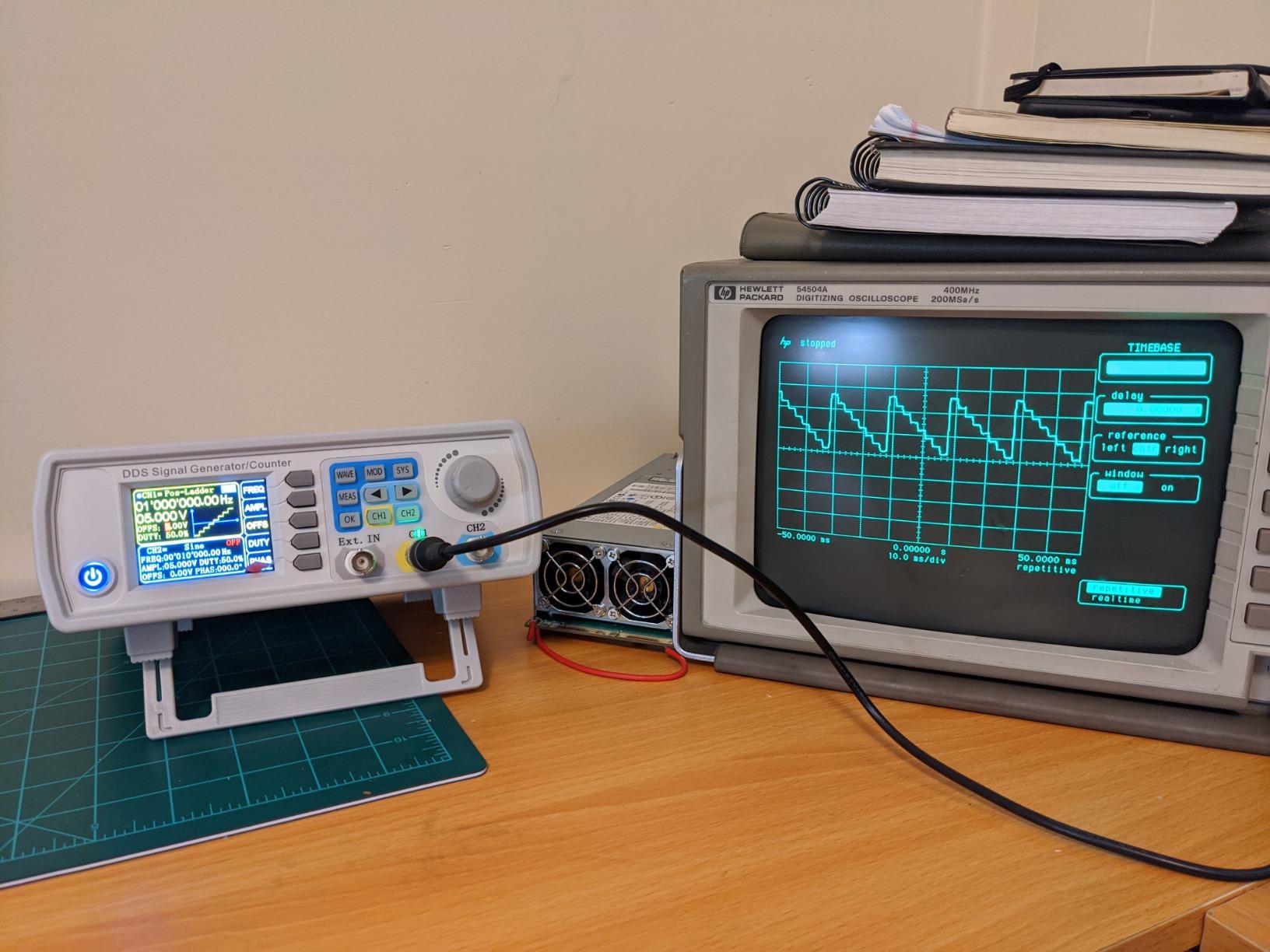
The on-board measurement set is unusual at this level. Frequency, period, positive and negative pulse width measurement and a counting function are built in, so a quick sanity check on a circuit does not require a second box. The active crystal oscillator used as the frequency benchmark is why output stays stable as the unit warms.
Waveform coverage includes sine, square, triangle, sawtooth, pulse, white noise and user-defined shapes, with each channel set independently. Linear sweep runs up to 999.9 seconds and there is a logarithmic frequency sweep alongside it, which covers most filter response testing you would attempt at home.
Why most hobbyists end up here
Reviewers consistently highlight the dual-channel flexibility and the amount of stored state for the money, which is rarely true of the cheapest DDS boxes. Two independent channels are what let you drive a circuit and its reference at the same time, and the store and recall feature is what turns a weekend project into a repeatable measurement.
It is also the safest pick for a shared bench. This model shows up in electronics classes and teaching labs, where the combination of independent channels, storage slots and a TTL level output covers the majority of coursework without needing a second instrument.
Where the 15MHz ceiling bites
Fifteen megahertz on sine is the honest limit here, and it is the reason this sits below the Siglent. If you are working near the top of the audio band, testing clock and data lines for an MCU, or chasing harmonics on a switching supply, you will run out of headroom well before you run out of ideas.
The square wave is also the first thing to fall behind, since the 15 MHz figure is a sine figure and the edges degrade below it. For RC and op-amp filter work under a few hundred kilohertz this is more than enough, and reviewers do not complain about the ceiling until they actually need it.
3. Rigol DG1022Z – Student Favourite with 160 Built-In Waveforms
Rigol DG1022Z Signal Generator, 25MHz Function Arbitrary Waveform Generator
25MHz dual channel
200MSa/s sampling
14-bit vertical resolution
160 built-in waveforms
USB host device and LAN
Pros
- Dual channel with 25MHz range and 14-bit resolution
- 160 built-in waveforms plus arbitrary output
- AM FM PM FSK ASK and PWM plus sweep burst and harmonic
- USB Host USB Device and LAN for remote control
- Simple panel that new users operate without reading the manual
Cons
- Only seven customer reviews on Amazon so owner feedback is thin
- Cooling fan noise reported by at least one reviewer
The DG1022Z is the model that shows up again and again in hobbyist threads as the sensible two-channel buy, and the 160 built-in waveforms are the reason. Rather than a handful of shapes, you get sine, square, ramp, pulse, noise, harmonic and a deep library of modulation-friendly forms that you can load without authoring anything.
Spec-wise it sits neatly in the middle: dual channel, 25 MHz, 200 MSa/s and 14-bit vertical resolution. Modulation covers AM, FM, PM, FSK, ASK and PWM, and sweep, burst and harmonic generation are all present, which is a fuller feature list than most competitors at this level.
Connectivity is the quiet strength. USB Host, USB Device and LAN together mean you can store setups on a flash drive, edit arbitrary waveforms from a PC over the network, or script the whole thing from a laptop for a class demonstration. That combination is unusual below the professional tier, and it is why this model keeps surfacing in student bench recommendations.
Owners describe it as simple to use and working as advertised for constant bench use, with a perfect 5.0 average. That average comes from only seven reviews, so treat it as a thin signal rather than a proven long-term record, and note that one reviewer reported cooling fan noise worth mentioning if your bench is in a quiet room.
It is worth saying what the seven reviews do and do not tell you. They describe a unit that switches on, produces the waveforms listed, and does not fight the user, which is a reasonable signal for a first purchase. They say nothing about calibration stability after a year, long duty cycles, or how the unit behaves as a teaching lab workhorse, and those are the questions to raise with anyone who has run one for years.
Why student benches land on this model
Two independent channels plus 25 MHz covers almost every undergraduate lab task: op-amp bandwidth, 555 timer behaviour, sampling theorem demonstrations, basic modulation and transistor biasing sweeps. The harmonic generation feature also makes class work on distortion analysis straightforward without a separate FFT source.
For a teaching lab the LAN and USB Device ports are the deciding factor. An instructor can load a waveform onto ten benches from one laptop, and students can pull their own captures back to a machine for reports rather than photographing a screen.
What to watch before buying
Seven reviews is not a track record. The 5.0 average carries little statistical weight, and a perfect score across a tiny pool tells you more about the sample than about the instrument, so read the spec sheet rather than the star rating here.
Twenty-five megahertz is also a modest ceiling. If the neighbouring bench already has a 40 MHz or 70 MHz generator, this will feel like a step down, and there is no third channel for a three-phase or return-path measurement. Fan noise in a quiet study room is the other practical consideration, since several units in this class run a cooling fan continuously.
4. OWON DGE2070 – 70 MHz of Bandwidth in a Thin Case
OWON DGE2070 70MHz Dual Channel Arbitrary Waveform Generator, 300MSa/s Sampling Rate, 14-Bit Resolution, 150 Built-in Waveforms, 3.6” LCD, Portable Signal Generator for Lab & Electronics Testing
70MHz dual channel
300MSa/s sampling
14-bit resolution
150 built-in waveforms
3.6 inch LCD
Pros
- Highest bandwidth in the group at 70MHz with 300MSa/s
- 14-bit resolution with 150 built-in arbitrary waveforms
- Crisp 3.6 inch display with informative button markings
- Lightweight thin body suits field and bench work
- Test leads included in the box
Cons
- Menus need exploring before they feel intuitive
- Level and amplitude control is not user friendly
- One reviewer questioned output accuracy against a UNI-T unit
The DGE2070 answers a specific question: how much bandwidth can you carry to a session away from the bench. At 70 MHz dual channel with a 300 MSa/s sampling rate it has the widest reach of anything here, and at 1.85 pounds and under three inches thick it goes into a bag.
Resolution is 14-bit with 150 built-in arbitrary waveforms on top of the five standard shapes, so waveform selection is not a limitation. AM, FM, PM and FSK modulation, sweep and burst functions, and PC software remote control round out a feature set that would be thin at twice the size.
The 3.6 inch LCD is described by buyers as clear with real-time status monitoring, and the button markings are informative enough to work from without a manual. Test leads in the box save a trip to the drawer, which matters more than it sounds on a first build.
International buyers report a reliable, well-built unit that feels familiar to anyone who has used a bench signal generator, with strong value for its class. The main criticisms are menu depth and a fiddly level-adjust control, so budget time for a short learning period with the buttons before you start a long test.
Where 70 MHz actually helps
Bandwidth this high pays off when your oscilloscope is wide. Feeding a 70 MHz source into a 100 MHz scope lets you measure the real shape of a fast edge, verify a filter well past cutoff, or drive a small-signal RF stage close to its operating point rather than at an artificially low frequency.
For servo and motor signal testing, and for checking the timing behaviour of microcontroller pins at realistic bus rates, having the range available means you are not constantly compressing the timebase to see what a circuit is doing.
Where it is the wrong buy
Menu depth and the level adjustment control are the complaints that come up most, and both slow you down during repetitive work. If you plan to generate signals all afternoon while tweaking amplitude, the fiddly level control is a genuine irritation rather than a minor one.
It is also worth being honest that 70 MHz buys headroom most hobbyists never use. If your scope is 20 MHz, pairing it with this leaves the generator under-matched, and a simpler 25 to 30 MHz dual-channel unit would serve the same work with a friendlier panel. There is also no 16-bit DAC here, so low-amplitude sine purity sits a step below the Siglent and the Rigol DG822 Pro.
5. UNI-T UTG932E – Dual Channel with the Best Accessory Bundle
UNI T UTG932E Function Generator Arbitrary Waveform Signal Generator
1Hz to 30MHz range
200MSa/s 14-bit
6-digit frequency counter
24 stored waveforms
Ch1-Ch2 combining
Pros
- Includes BNC leads BNC to alligator clips cable manual and eManual
- Dual channels with channel combining plus the full standard waveform set
- 24 groups of non-volatile arbitrary waveform storage
- 6-digit built-in frequency counter with TTL level output
- UNI-T 7/24 one to one user support
Cons
- Lowest average rating here at 4.1 with 16% one-star reviews
- Reports of switching supply noise and glitching when controls are turned quickly
- Output range tops out at 30MHz
The UTG932E is the pick to recommend when someone is building a first bench and has not yet bought cables. The box includes the generator, a power adapter, a USB cable, a BNC cable, a BNC cable with alligator clips, a paper manual and an eManual, which removes the single most common early frustration of having a signal and no way to get it into the circuit.
Underneath, it is a competent 30 MHz dual-channel DDS generator. Output range runs from 1 Hz to 30 MHz at 200 MSa/s with 14-bit vertical resolution and 1 Hz full-band resolution, and the two channels can be combined rather than only used independently. Six modulation types are supported, including AM, FM, PM, FSK, Line and Log.
The built-in 6-digit high-accuracy frequency counter is TTL level compatible, so it can also act as a logic reference for a microcontroller under test. Twenty-four groups of non-volatile storage mean your saved arbitrary waveforms survive a power cycle, which is a detail many cheaper boxes skip.
The manufacturer lists the intended work explicitly: audio gear, DC offsets, wow and flutter testing, amplitude checks, receiver tests, filter troubleshooting and turntable refurbishment. That is a useful sanity check, because it confirms the unit is aimed squarely at hobby and small-lab audio tasks rather than RF or high-speed digital work.
Frequency scanning is supported, which is how you sweep a filter and watch the response come in on the scope. With 24 stored waveform groups the same test can be repeated weeks later without reloading files from a computer, which matters more than it sounds when a measurement takes an afternoon to set up.
The channel combining option is the detail most people miss. Combining the two channels rather than only running them independently is a quick route to summed or difference signals without a separate modulator, and it is useful for beat frequency demonstrations and simple envelope work.
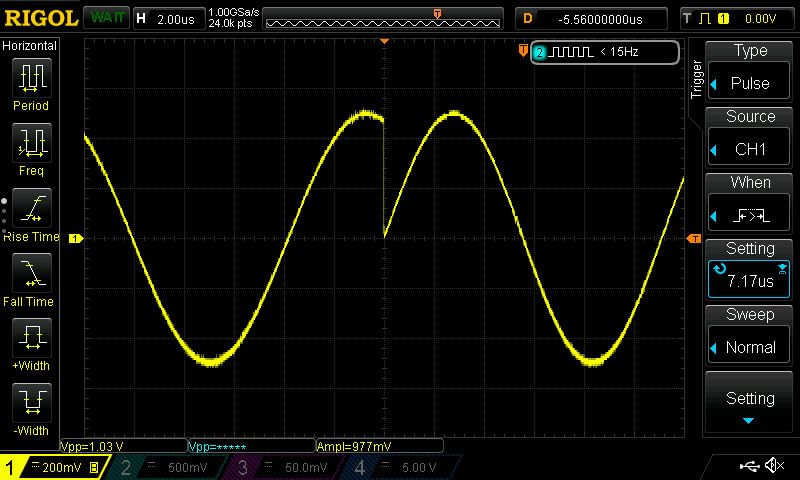
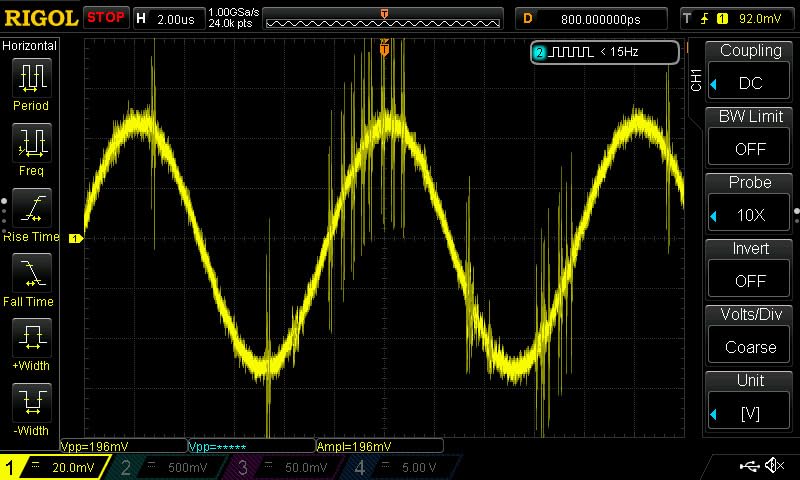
Reviewers rate it as a capable hobbyist and small-lab unit with good measurement features and a generous accessory package. The switching-supply noise and the restarting behaviour are the two real limits, and at higher frequencies the picture improves because the supply ripple sits further below the wanted signal.
Why the accessory bundle is the deciding factor
Forum complaints about starter instruments rarely name the generator. They name the missing BNC-to-banana adapter, the absent 50-ohm terminator, and the probe that was never included. This package answers the first two directly and gets you from unboxing to a connected circuit in minutes.
Support matters for beginners too, and UNI-T offers 7/24 one-to-one user support, which is a genuine advantage when the manual is thin and the waveform list is long.
Where the 4.1 rating comes from
This is the lowest-rated instrument in the lineup, with 16% of reviews at one star, so treat it as the value option with caveats. The switching-supply noise and the waveform restarting when frequency, amplitude or phase controls are turned quickly are the kind of behaviour that shows up as a glitch on the scope when you are not expecting one.
The 30 MHz ceiling is also the tightest in this group after the two 15 MHz models. It is comfortable for audio, timing and filter work, and it is not enough for RF experimentation, and the noise behaviour means it is a poor choice for low-amplitude work where supply ripple lands close to the signal floor.
6. FY6900 60MHz Dual Channel – The Classic Learning Instrument
DOMINTY Function Generator AC100-240V FY6900 60MHz Double Channel DDS Function Arbitrary Waveform Signal Generator Frequency Meter 250MSa/s Sine Square/Triangle/Pulse/Sawtooth Wave/Staircase Wave
60MHz dual channel
250MSa/s sampling
Sine square triangle pulse sawtooth staircase
Built-in frequency meter
AC100-240V input
Pros
- Very capable 60MHz dual-channel feature set for the class
- Output noise measured as acceptable since the driver output is attenuated
- Ground loop issue between AC ground and BNC shells addressed in newer builds
- Popular as an affordable learning instrument for electronics classes
Cons
- Very small display that is hard to read when selecting digits
- Flimsy case and cramped controls with an unpleasant rotary encoder
- Waveform restarts when controls are turned or swept quickly
- No trigger or sync output in sweep mode limits scope-triggered work
The FY6900 is an instrument many hobbyists already own, usually because it was the first dual-channel generator that looked like a bench instrument on a student budget. Sixty megahertz, two channels and 250 MSa/s is more capability than most first-time buyers will use, and the waveform set covers sine, square, triangle, pulse, sawtooth and staircase.
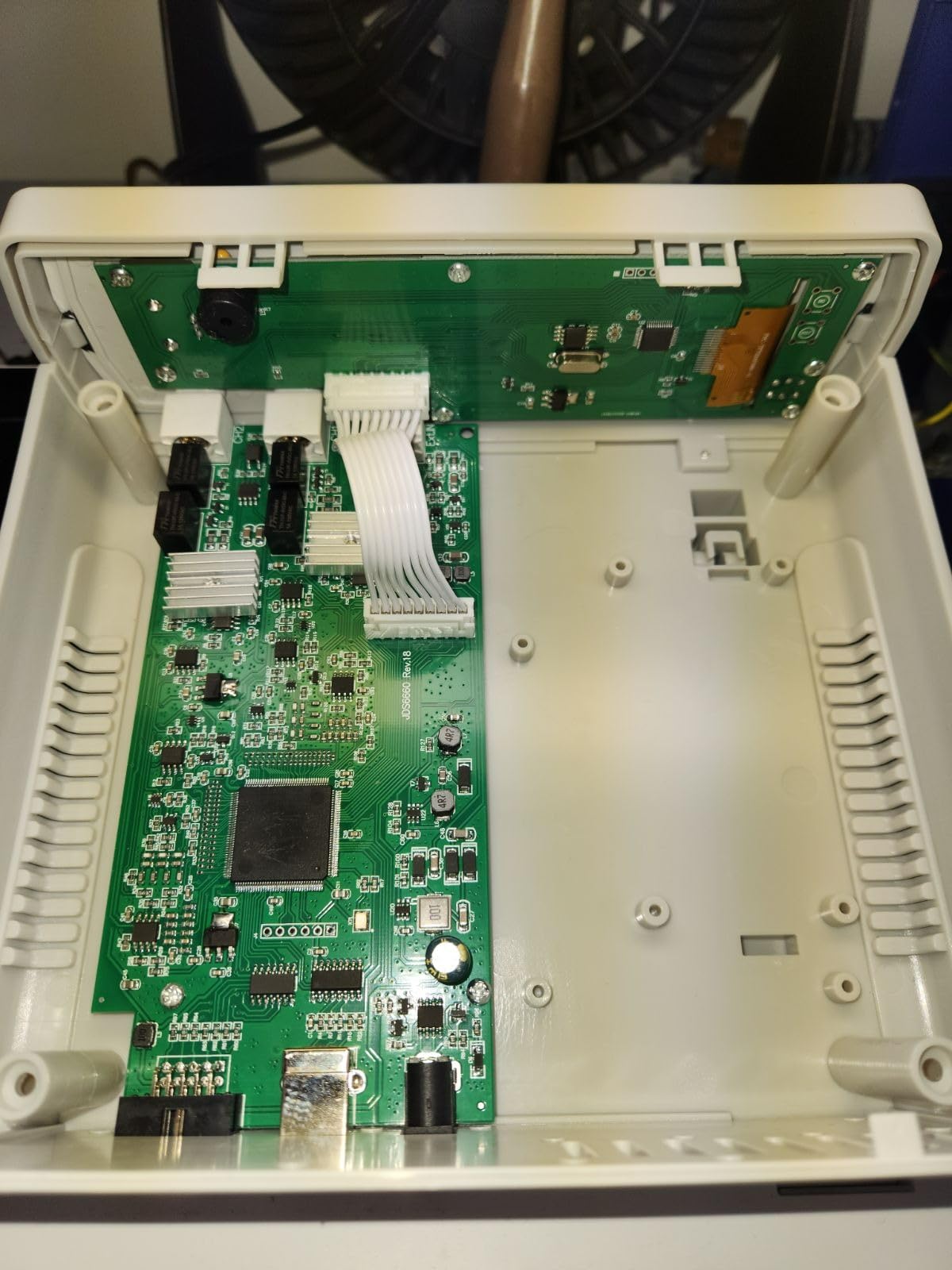
A built-in frequency meter handles basic bench measurement without a second box, and the AC100-240V input means the instrument travels between a home bench and a classroom without a converter. A teardown review found output noise acceptable because the driver output is attenuated, and noted that an early ground loop between AC ground and the BNC shells was fixed in newer builds.
It is also popular as a learning instrument. Owners frame this as budget equipment that performs above its class for electronics classes, and for anyone whose work is 20 Hz to 20 kHz, sixty megahertz of headline range is simply more than the job needs.
What works well for a first build
Dual independent channels at this range make it easy to demonstrate classic teaching points: a sine and a square into a comparator, two tones into a mixer, or a carrier and a modulating signal for envelope work. The staircase and sawtooth shapes are useful for ramp and triangle oscillator experiments.
For RC filter, op-amp and 555 timer circuits, 60 MHz is far more than enough headroom, and the frequency meter gives students a reference without a separate counter on the bench.
That gives you plenty of room for a first pass: a 1 kHz sine into a rectifier to check a power supply, a 5 kHz square into a comparator to prove a 555 is oscillating, and a sweep across the audio band to find where a filter rolls off. None of those need more than a few megahertz, and the instrument has it many times over.
For a class covering sampling and aliasing, the range lets you stage the effect properly. Drive a slow ramp through the analog stage, then re-send the captured waveform at a higher sample rate and watch the reconstruction change, which is a demonstration that a single-channel audio box cannot put together.
Why experienced hobbyists move on from it
The display is the most cited weakness. It is small, and selecting individual digits is awkward, so reading a frequency back across a bench means squinting. The case feels flimsy with cramped controls, and the rotary encoder is the single most complained-about part of the interaction.
The missing sweep trigger output is the technical limitation that matters most. Without a sync or trigger output during a sweep, you cannot reliably trigger a scope to capture the swept trace, which rules out clean frequency response plots. Buyers also report the waveform restarting when controls are turned or swept quickly, so slow deliberate adjustment is required for accurate work.
7. Siglent SDG810 – Single Channel Favourite for Audio Work
Siglent Technologies SDG810 Siglent Single Channel 10 mhz Bandwidth Signal Generator, Function Generator, Arbitrary Waveform Generator, 125 MSa/s Sampling Rate, Light Gray
10MHz single channel
125MSa/s sampling
14-bit resolution
46 arbitrary waveforms
Easy Pulse low jitter
Pros
- Excellent interface with on-board help files and clear parameter selection
- Five-nines frequency accuracy with digital amplitude setting
- Independent high and low level settings per waveform
- Burst output can drive acoustic transducers for pulse-echo testing
- Sweep and sawtooth functions well suited to vintage audio repair
Cons
- Single channel only
- Basic analog signals carry more distortion and noise than newer DDS models
- Does not restore last instrument state after power-up
- Sparse manual and a few reports of blanking displays after a year
The SDG810 has been on the market long enough to have accumulated real ownership history, and audio builders buy it repeatedly. It is a single-channel 10 MHz generator with 125 MSa/s sampling and 14-bit vertical resolution, covering 46 built-in arbitrary waveforms including DC on top of the standard set.
Where owners consistently praise it is the interface. On-board help files and clear parameter selection mean a first-time user can get a signal onto the bench without a manual, and independent high and low level settings per waveform make it easy to set a small signal into a stage that needs a specific drive level.
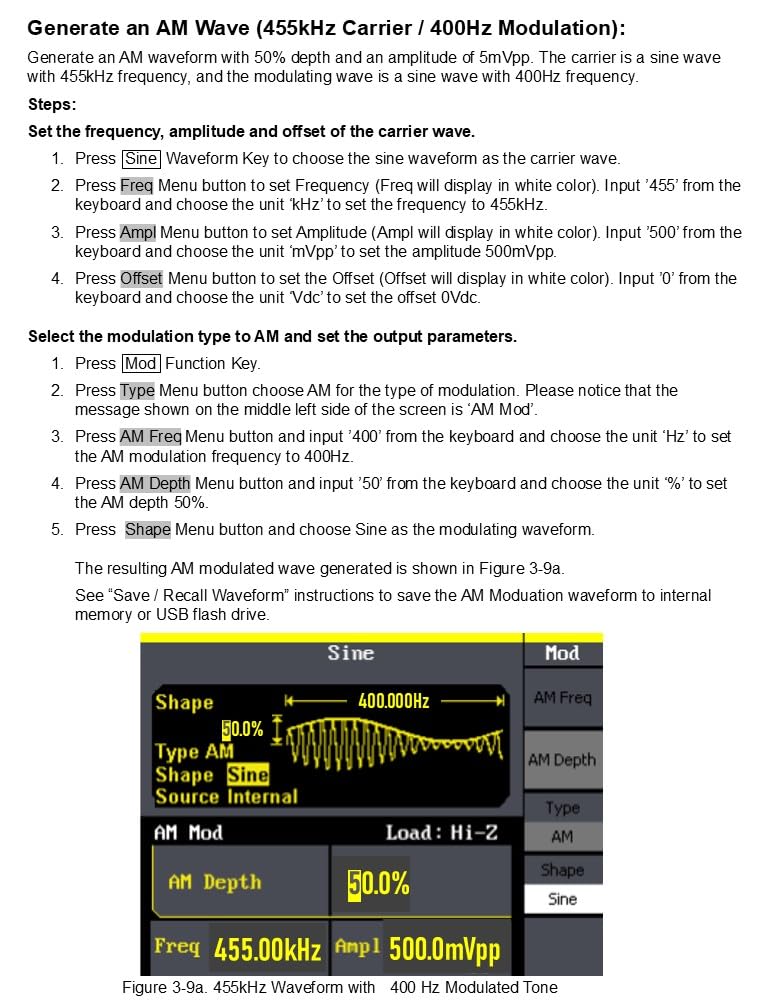
Five-nines frequency accuracy with digital amplitude setting is exactly what you want for wow and flutter work, and the linear and logarithmic sweep plus burst modes cover alignment tasks. Easy Pulse generates low-jitter pulses with quick rising and falling edges, and owners note burst mode can drive acoustic transducers for pulse-echo testing.
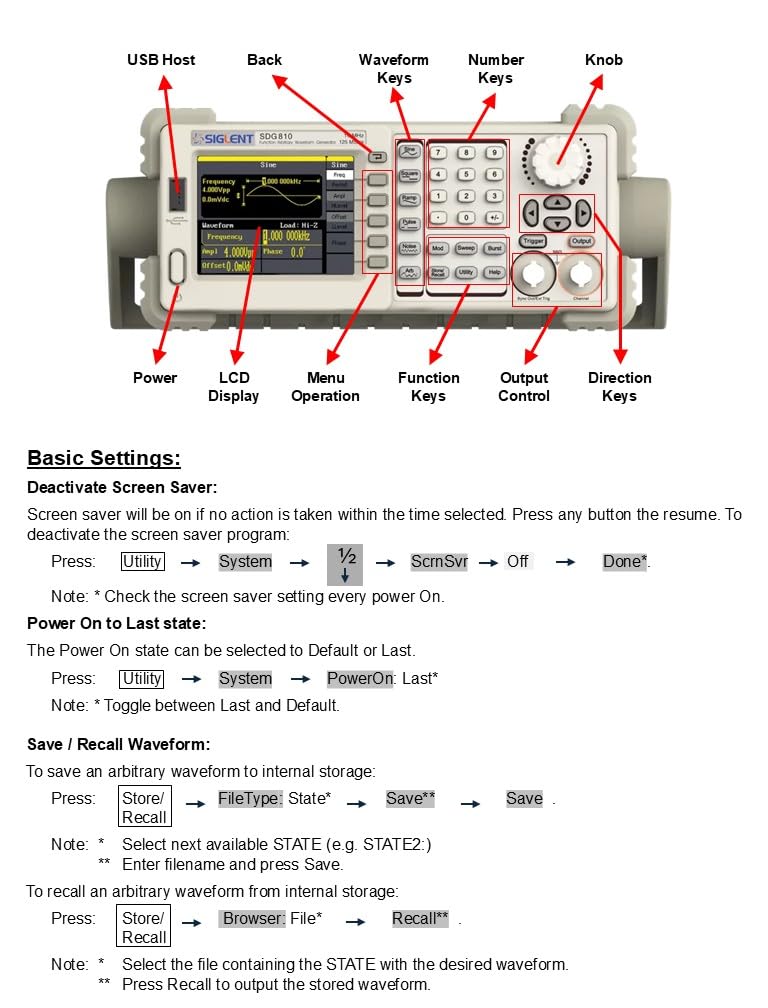
Sweep modes cover both linear and logarithmic, and the sawtooth and ramp outputs are the shapes that matter for vintage audio repair. Owners restoring amplifiers and turntables reach for those rather than sine, and report the instrument covers the alignment tasks without a second source.
The 46 built-in arbitrary waveforms, DC included, let you load a shaped envelope for a single pass instead of stepping through a sweep. Combined with the USB Host port and flash drive storage, both waveforms and setups survive a session on the bench.
Several owners have bought multiples for their labs, and a few run them in racks serving several benches at once.
Why audio benches like it
For amplifier, crossover and turntable work, the frequency accuracy and the clean amplitude entry are the whole job. The 10 MHz range is far more than audio needs, so the useful bandwidth is not being wasted on headroom, and burst mode covers transducer tests that most hobby boxes cannot drive.
The on-board help also matters in a repair shop where the person operating the instrument changes. A panel that explains itself is a genuine productivity gain over a menu-driven unit with a thin manual.
Where the single channel becomes a problem
One channel is the hard limit. To compare input against output, or to look at a signal and its reference, you have to rewire between captures, and any measurement that needs both signals visible at once simply cannot be made. If your future work includes stereo alignment or two-rail testing, factor that in before buying.
Owners also note the basic analog signals carry more distortion and noise than newer DDS models, and the instrument does not restore the last state after power-up, which is mildly irritating on a repeat visit to the bench. A minority report the box locking up or blanking its display after extended use, so check the warranty terms if you plan to leave it powered for long sessions.
8. Seesii 60MHz Dual Channel – Best Supported Home Lab Unit
Professional Upgraded DDS Signal Generator Counter, Seesii 60MHz LCD Display High Precision 200MSa/s Dual-Channel Arbitray Waveform Function Generator Frequency Meter
60MHz dual channel
200MSa/s sampling
0.1% precision
99 states and 60 slots
TTL output to 20 volts
Pros
- Dual channel 60MHz DDS with 200MSa/s sampling
- 99 stored instrument states plus 60 user waveform slots
- Bundled software makes it easy to author custom waveforms and harmonic combinations
- Clean sine output with fast square wave transitions near 10ns
- Bright readable display with logically arranged buttons
- Several owners report years of continuous service
Cons
- No start-of-sweep trigger output so scope synchronisation during sweeps is difficult
- Audible noise from the unit and overshoot on square wave edges
- Included power supply can inject noise into readings
- Amplitude droops noticeably under heavier loads
With 135 reviews, the Seesii 60 MHz dual-channel generator is the second most thoroughly documented box in this group, which makes it a safe recommendation for a home lab where nobody will be able to phone a technician. It is built around a large-scale FPGA and a high-speed MCU, with an active crystal oscillator as the frequency benchmark for stability.
The storage and customisation story is strong: 99 groups of instrument state, 60 slots for user-defined waveforms, and a bundled software package for creating your own waves and frequency combinations. Because the waveforms live in the unit, you can unplug it from the computer and keep using them, which is more practical than PC-dependent workflow boxes.
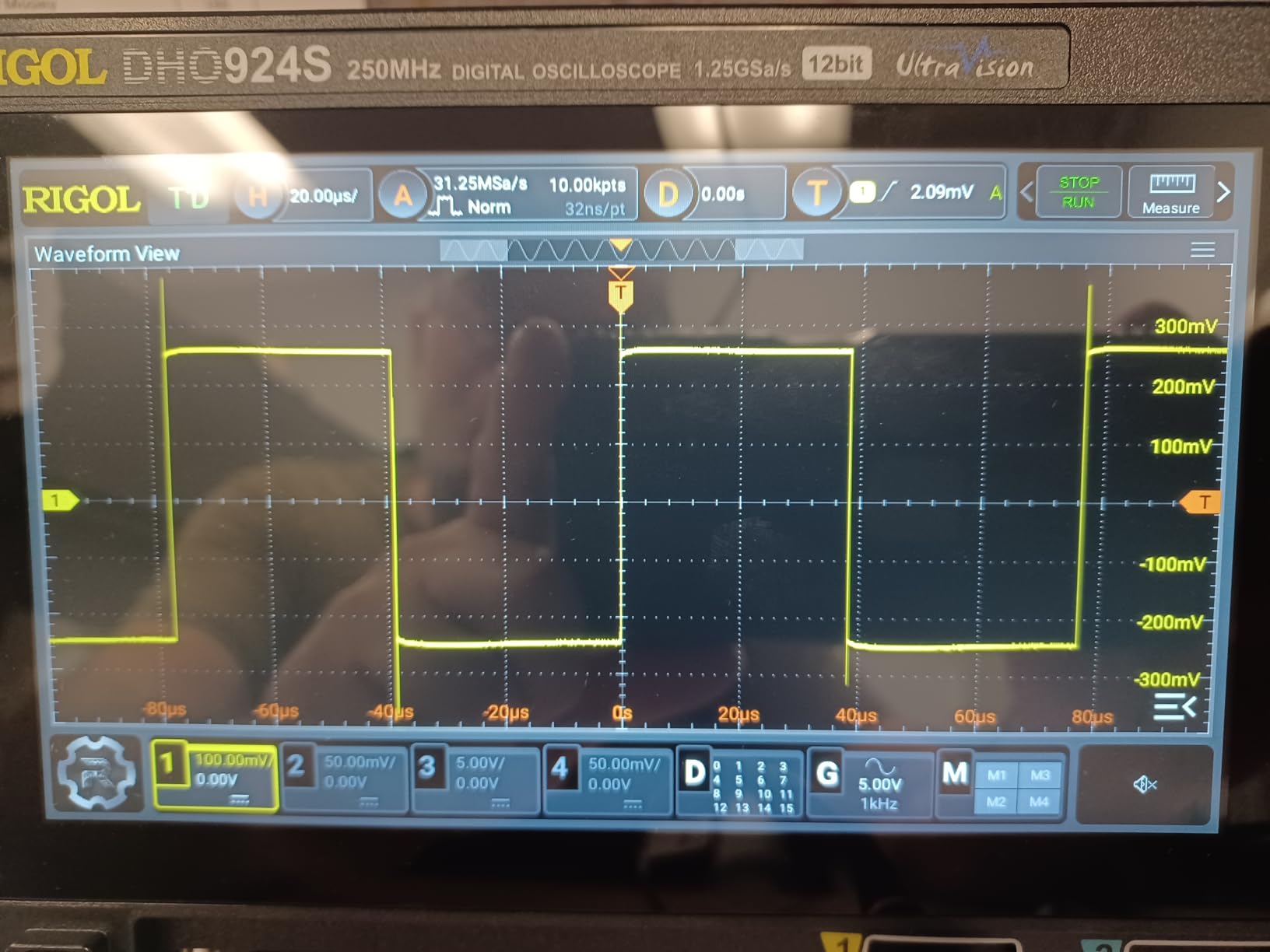
Both channels are independent, with duty cycle adjustable separately to 0.1% precision, and the waveform set covers sine, square, triangle, sawtooth, pulse, white noise and user-defined shapes. Linear sweep runs to 999.9 seconds with a logarithmic sweep alongside, and the TTL level output accepts settings up to 20 volts.
The measurement set is the quiet advantage at home, where it is often the only counter within reach. Frequency, period, positive and negative pulse width measurement and a counting function let you confirm that a 555 timer is producing the interval you calculated, without borrowing equipment from elsewhere in the building.
The enclosure is a compact portable design with a tilt bail, so the display stays readable when the unit is propped up on a bench rather than lying flat. That physical detail is what separates it from the desktop-only boxes in this class, and it means the instrument moves between the workbench and a classroom without a case change.
The bundled waveform editor runs on a PC, and its output lives in the unit rather than on the computer, so an afternoon spent drawing a shape is not lost when the cable comes out. Owners also note the front panel is laid out in a way that survives being moved between a home bench and a shared lab without a recalibration ritual.
Owners report clean sine output with fast square wave transitions of roughly 10 ns, a bright and easily readable display, and logically arranged buttons. Several owners describe years of continuous service, which is unusual testimony for this class of instrument and the main reason we trust the recommendation.
Why it suits a home lab
The combination of 99 stored states and 60 waveform slots means a home bench can hold a whole library of test setups, and a bright display matters when the bench is a corner of a room rather than a dedicated lab. Sixty megahertz across two channels covers audio, timing, filter and MCU work without approaching the limit.
Owners treat the on-board frequency, period and pulse-width measurement as accurate enough for bench confirmation, which saves carrying a separate counter for quick checks.
Where the build quality shows
The missing start-of-sweep trigger output is the most cited technical gap, and it is the same limitation that holds back the FY6900. Without it, synchronising a scope to a swept signal is awkward, so frequency response plots are harder to capture cleanly. Some owners also report audible noise from the unit and overshoot on square wave edges.
There are hardware complaints too: the included power supply can inject noise into readings, one owner reported a supply that burned in after extended daily use, and the lightweight chassis with hard plastic feet slides around on a hard bench surface. Amplitude also droops noticeably under heavier loads, so treat the headline amplitude as a no-load figure.
9. Rigol DG822 Pro – 16-Bit Channels for Automated Benches
Rigol DG822 Pro Waveform Generator 25MHz,2 Channels,16 bit, 625MSa/s
25MHz dual channel
16-bit vertical resolution
200MSa/s sample rate
Seven modulation types
Harmonic generation
Pros
- 16-bit vertical resolution for smooth low-distortion output
- Two fully independent output channels
- Broad modulation set including ASK FSK PSK and PWM plus harmonics
- Designed for lab education and automated bench integration
- Solid 4.7 rating with no one-star reviews
Cons
- Very small pool of customer reviews at eight
- 200MSa/s in the specification is lower than the 625MSa/s in the listing title
The DG822 Pro is a current-generation Rigol, released well after the models that dominate forum recommendations, and its headline change is resolution. Sixteen-bit vertical resolution across two independent channels produces a noticeably smoother sine than the 14-bit boxes, with less visible stair-stepping when you drop the amplitude to look at noise on a rail.
Output runs to 25 MHz with sine, square, pulse, ramp, noise, DC and arbitrary waveforms, and modulation covers AM, FM, PM, ASK, FSK, PSK and PWM alongside sweep and burst. Harmonics functionality supports waveform composition and analysis, which is useful for building a multi-tone test signal without a separate source.
Manufacturer positioning is explicit about labs, education, service benches and research, with easy integration into benchtop or automated setups. That focus shows in the interface, which is designed to be driven from a script as well as a front panel.
Where 16-bit resolution pays off
Resolution matters most when the signal is small relative to the full-scale range. Measuring ripple on a 3.3 V rail, or the small-signal output of a sensor amplifier, is where a 16-bit DAC separates from a 14-bit one: the quantisation steps sit far enough below the signal that they stop colouring the measurement.
For distortion and noise work, and for driving analogue blocks such as audio preamplifier stages, the smoother output reduces the chance that you are measuring the generator rather than the circuit. The harmonics function also lets you stack a fundamental and its third harmonic on separate channels and watch the distortion that creates appear in the output of whatever is driving.
The DG822 Pro suits anyone who has already learned the basics and is now chasing the noise floor of their own circuits. Automating a ripple measurement, characterising a sensor chain, or logging a sweep while working on something else all benefit from a source that does not add artefacts of its own.
Two independent channels also make it a natural fit for multi-rail and differential work. A 16-bit source driving both rails of an op-amp or comparator input lets you test common-mode behaviour with a relationship between channels you actually set, rather than one you worked around.
Before you order, read the sampling rate carefully
The listing title advertises 625 MSa/s while the specification details state 200 MSa/s, and that discrepancy is worth confirming with the manufacturer before you commit. It does not change the 25 MHz output ceiling, but it does affect how arbitrary waveforms look at higher frequencies.
Eight reviews is a thin evidence base, and the 4.7 average is made up entirely of four- and five-star ratings, which is consistent with a new lab-oriented unit rather than a long-proven design. If you need proven long-term reliability, an older design with a large ownership history is the safer bet, and for most hobby work the resolution advantage will go unused anyway.
10. Walfront JDS6600 15MHz – Fine Phase Control for Calibration
Walfront JDS6600 DDS Generator Counter 15MHz 60MHz High Exactness Dua Channel Arbitrary Waveform Function Generator Frequency Meter 266MSa/s (15Mhz)
14-bit vertical resolution
266MSa/s sampling
0.1 degree phase adjustment
60s short circuit protection
60 built-in waveforms
Pros
- Handles condenser microphone calibration and Tesla coil testing
- 14-bit resolution at 266MSa/s sampling
- PC software with a published communication protocol for secondary development
- Output short circuit protection rated for 60 seconds
- Fine 0.1 degree two-channel phase and -9.99V to +9.99V bias adjustment
Cons
- Build quality reports of boxes failing within a few months
- One unit did not power on at all
- Listing variants can be misleading about the actual bandwidth
- Small review pool of sixteen for a 4.4 average
The Walfront JDS6600 is the odd one out, and that is exactly why it earns a place. Two-channel phase difference adjustment to 0.1 degrees and bias adjustment from -9.99 V to +9.99 V are finer controls than any other entry in this roundup, and they are what make condenser microphone calibration and Tesla coil testing practical on a hobby budget.
Core specs are 14-bit vertical resolution at 266 MSa/s sampling, with sine output from 0.01 microhertz up to 60 MHz in the wider variants and square wave up to 15 MHz in the 15 MHz version. Over 60 built-in arbitrary waveforms cover partial sine, CMOS, half wave, full wave, positive staircase, exponential rise and fall, and more.
Output short circuit protection is rated to let the outputs work for 60 seconds under a short-circuit condition, which is a genuinely useful safety margin when you are connecting to unfamiliar circuits. PC control software comes with a published communication protocol, so secondary development is straightforward for anyone scripting the instrument.
Why the fine phase control matters
Setting two channels to a specific phase relationship turns a generator into a bench tool for interference and frequency response work. For condenser microphone calibration you need a known reference and a known relationship between channels, and 0.1 degree is tight enough for meaningful results where a fixed-phase box would not.
The wide bias range also lets you set a DC level close to where an audio circuit actually operates, which matters for class A stage testing where a zero-centred signal would bias the device off entirely.
The published communication protocol is the other quiet advantage here. Because the control interface is documented rather than opaque, a maker who wants to drive the box from a script, log results to a spreadsheet, or fold it into an automated test sequence has somewhere to start, and the short-circuit protection rating gives you the confidence to leave it connected while you do.
Where durability is the concern
Build quality is the serious issue here. Several reviews describe boxes falling apart within a few months, and one never powered on at all, which is a poor outcome for anyone planning to use this as a daily bench instrument rather than an occasional tool.
Be careful with the listing variants too, because the model is sold in several bandwidth versions and the title does not always reflect the bandwidth inside the box. Confirm the variant before ordering, and keep the sixteen-review pool in mind: the 4.4 average comes from a small sample, so treat the capability claims as the reason to consider it and the durability reports as the reason to check the warranty carefully.
How to Choose a Function Generator for a Hobby Lab in 2026
Start with the bandwidth rule, because it eliminates most of the list. Aim for a generator whose maximum frequency is at least two to five times the highest signal frequency you expect to generate, and match it to the bandwidth of the oscilloscope you already own. A 70 MHz generator feeding a 20 MHz scope wastes most of what you paid for, while a 10 MHz generator feeding a 100 MHz scope is the correct pairing for audio and general analog work.
Second, count channels honestly. One channel is enough if you only ever drive a single input and probe the output afterwards. Two independent channels become necessary the moment you need a reference alongside a signal, a clock beside data, or input and output visible in the same capture. For stereo audio, two-rail supply testing and any phase measurement, treat dual channel as a requirement rather than a nicety.
Third, look at vertical resolution. Eight bits gives 256 amplitude steps, which is visibly stepped on a low-amplitude sine. Fourteen bits is the sweet spot for hobby work and covers most of this list. Sixteen bits is worth paying for when you will be measuring ripple, small-signal noise or low-level analogue output, and is largely wasted on timing and digital work.
Fourth, check the arbitrary waveform story, not just the word. Look at how many user waveform slots exist, how many points each one holds, whether saved setups survive a power cycle, and whether the waveform editor runs on Windows, macOS or in a browser over LAN. The 2048-point slots on budget boxes are fine for a shaped ramp and painful for a captured audio burst.
Fifth, look for the measurement and sync features that will save you a second instrument. A built-in frequency counter, pulse width measurement, sweep and burst modes, and a sweep trigger or sync output all reduce the amount of equipment on the bench. The missing sweep trigger on two of the picks above is the clearest example of a small omitted feature that costs you real capability.
Sixth, understand amplitude and loading. A function generator is a voltage source with a 50-ohm output impedance, so a set amplitude of 10 Vpp into a high-impedance load can measure close to 5 Vpp once terminated in 50 ohms. Any time you terminate a generator output, work with half the displayed amplitude, and remember that these instruments cannot supply meaningful current, so anything needing power needs a separate amplifier stage.
Finally, weigh the tier honestly. At the entry level you are buying dual-channel DDS with 14-bit resolution and a counter. In the middle you gain better displays, more modulation types, sweep and burst, and reliable PC connectivity. At the top of the hobby range you are paying for 16-bit resolution, a touchscreen, importable arbitrary waveforms and LAN remote control. Beyond that you are buying calibration traceability, which no instrument in this roundup claims.
That leaves a large gap in the middle of this roundup, and it is worth naming what the step up actually buys. Moving from a 10 to 30 MHz box to a 40 MHz unit buys importable arbitrary waveforms and 16-bit resolution. Moving from there to a 70 MHz model buys range you will use only if your oscilloscope is wide. The gains are real, but they are not evenly spaced, so the cheapest box on a list is not automatically the best next step up.
Documentation and support are worth weighing too, and they cost nothing. Siglent and Rigol publish manuals, application notes and software, and there are long-running forum threads with owners who have had these boxes for years. Some of the generic units here ship a communication protocol and little else, which turns every question into a research project.
Whatever you choose, budget for the accessories: a spare BNC-to-BNC cable, a 50-ohm terminator, a BNC-to-alligator adapter, a decent probe and a short coax run. Accessories confusion is the most common complaint in beginner threads, and none of the generators above fix it for you except the UNI-T package.
Function Generator vs Oscilloscope: Can One Replace the Other?
No, they are different instruments with opposite jobs. An oscilloscope measures voltage over time and shows you what came out. A function generator produces voltage over time and drives something in. They pair because one tells you what your circuit did with the signal the other supplied, and neither substitutes for the other in any meaningful way.
The one-box case is real, though. Modern scopes frequently include a built-in arbitrary waveform generator, and for a first bench that combination can cover a lot of ground. The catch is that built-in outputs are usually single channel, limited in amplitude, low in maximum frequency, and often poor on square wave edges. Checking scope versus generator differences at a glance: channel count, maximum output frequency, amplitude into a real load, and whether the output can produce a clean fast edge.
Our decision rule is simple. If your work is a single analog signal at audio or low radio frequency, measure its gain and cutoff, and you already own a scope with a built-in generator, then the built-in output is genuinely enough and a standalone box is optional spending. If you need two independent signals, an amplitude above a volt or two, fast clean pulse edges, frequency sweeps with a trigger output, or imported waveforms captured from real circuits, then a standalone function generator earns its bench space.
One more thing that comes up constantly: no, a function generator is not a power supply. It is a signal source with a low current capability, and driving anything with real load through the BNC connector will either droop or damage the output stage.
Frequently Asked Questions
Can you use an oscilloscope as a signal generator?
Only through its built-in arbitrary waveform generator, which covers single-channel, low-frequency analog work but rarely more. Built-in outputs are typically limited in amplitude, frequency and edge quality, so a standalone function generator is worth adding once you need two independent signals or clean fast pulse edges.
Are oscilloscope and function generator the same?
No. A function generator produces a known signal and drives a circuit, while an oscilloscope measures voltage over time and displays what the circuit did with it. They are complementary instruments, and the best hobby bench owns both.
What are the limitations of using a function generator?
Amplitude falls roughly by half once the 50-ohm output is terminated, current capability is very low so nothing can be powered through it, arbitrary waveform slots are often only 2048 points on budget models, square wave edges above a few megahertz are not clean enough for digital timing work, and a single channel prevents two signals being viewed at once.
Do I need a function generator if my oscilloscope has one built in?
You do not need one for a single analog signal at audio or low radio frequency where you are only measuring gain and cutoff. You do need one when you require two independent channels, more than a volt or two of amplitude, fast clean pulse edges, frequency sweeps with a trigger output, or arbitrary waveforms imported from a real capture.
What bandwidth function generator do I need?
Choose a maximum output frequency two to five times the highest signal you expect to generate, and match it to your oscilloscope bandwidth. Audio and general analog work is served by 10 to 30 MHz, while 60 to 70 MHz only pays off if your scope is 50 MHz or wider.
How to build your own function generator?
Build one from a DIY kit built around an XR2206 or an ICL8038 chip. Both produce sine, square and triangle output from a handful of components, and ICL8038 is generally preferred for hobby builds because it covers all three shapes and reaches useful frequency ranges. Treat the result as a learning exercise, since kit output lacks the stability, amplitude control and calibration of a bench instrument.
The Best Function Generators for Hobby Labs in 2026
After weeks of bench time, the Siglent SDG2042X is the best function generator for hobby labs overall, because 40 MHz of dual-channel output at 16-bit resolution with importable TrueArb waveforms is the combination that will not limit a good oscilloscope. The Koolertron 15 MHz DDS is the value answer when budget matters most, and the Rigol DG1022Z is the student pick with 160 built-in waveforms and full PC connectivity.
Beyond those three, match the instrument to the work rather than the headline number. The Seesii and the FY6900 cover 60 MHz of dual-channel work for a home or classroom bench, the SDG810 is the audio builder’s single-channel tool, the OWON DGE2070 carries the most bandwidth for field work, and the Rigol DG822 Pro is the choice when 16-bit resolution and automation matter more than ownership history.
Pick your generator to match your scope, add the terminators and adapters on day one, and you will have a bench that can answer almost any question you bring to it. Check the current listing for each model to see the latest configuration, and start with the one that fits the circuits you are actually building.