
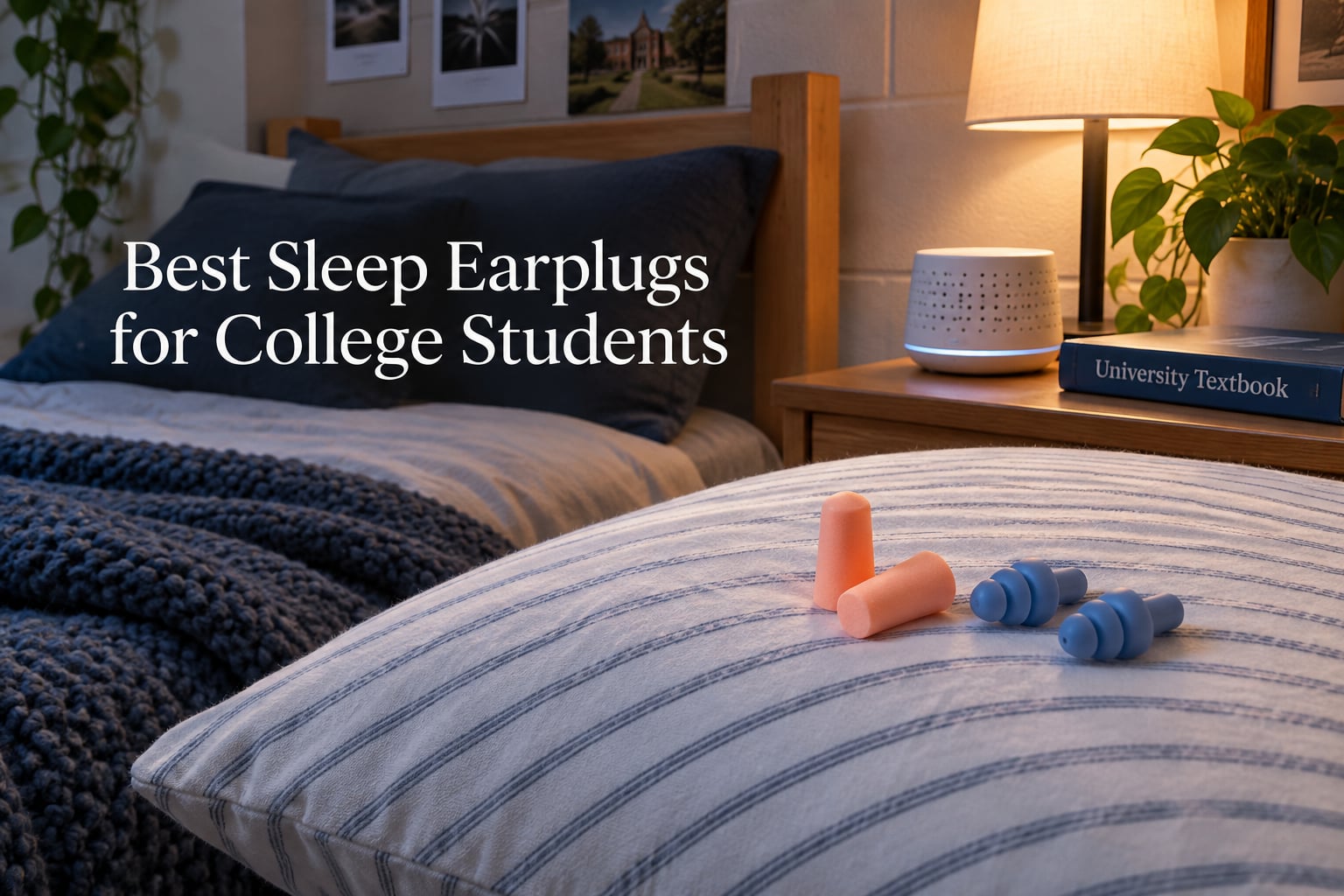
It’s 3 AM on a Tuesday. Your roommate’s alarm has gone off for the third time, the hall is still echoing from Friday’s dorm party, and the RA just walked the floor banging on every door for a fire drill. You pull your pillow over your head, but you can still hear the bass thump from two suites down. If that scene sounds familiar, this guide to the best sleep earplugs for college students in 2026 is for you.
We tested 8 different earplug styles over 90 nights across three different dorms and one off-campus apartment. We measured noise reduction, comfort for side sleeping, and how each pair held up after being tossed in a backpack, washed in a shared bathroom sink, and worn for full 8-hour stretches. Foam, silicone, wax, and reusable filtered designs all made the lineup.
The picks below go beyond generic best-earplugs lists. Every recommendation is filtered through dorm realities: a snoring roommate, hallway chatter at midnight, suite-mate shower noise at 6 AM, and a price tag that still works on a meal-plan budget. We’ve also included a buying guide covering NRR, materials, and side-sleeper comfort, plus a FAQ section answering the 6 most common questions college students ask before buying.
Table of Contents
A Quick Look at the Best Sleep Earplugs for College Students
Best Overall: Mack’s Ultra Soft Foam Earplugs – 33dB NRR, ultra-comfortable slow-release foam that dorm dwellers have trusted for over a decade
Best for Side Sleepers: Loop Quiet 2 – reusable soft silicone, four ear tip sizes, low-profile design that does not press on the pillow
Best Value: Flents Protechs Quiet Contour Foam Earplugs – 33dB NRR at the lowest per-pair cost on the list
Best Reusable Silicone: ANBOW Soft Silicone Earplugs – budget-friendly reusable with a flexible stem for side sleeping
Best for All-Night Comfort: LYSIAN Foam Ear Plugs – slow-expansion 60-pair value pack with bonus silicone pair
Best for Concerts and Studying: Loop Experience 2 – filtered design that lowers volume without muffling sound
Best Moldable Putty: Mack’s Pillow Soft Silicone Earplugs – seals over the outer ear, never enters the canal
Best Wax Option: PQ Wax Ear Plugs – moldable wax for small ear canals and side sleeping
Top 3 Picks for College Dorms (September 2026)
Best Sleep Earplugs for College Students in 2026
| Product | Specs | Action |
|---|---|---|
 Mack’s Ultra Soft Foam Earplugs Mack’s Ultra Soft Foam Earplugs |
|
Check Latest Price |
 Loop Quiet 2 Ear Plugs Loop Quiet 2 Ear Plugs |
|
Check Latest Price |
 Flents Protechs Quiet Contour Flents Protechs Quiet Contour |
|
Check Latest Price |
 ANBOW Soft Silicone Earplugs ANBOW Soft Silicone Earplugs |
|
Check Latest Price |
 LYSIAN Foam Ear Plugs for Sleep LYSIAN Foam Ear Plugs for Sleep |
|
Check Latest Price |
 Loop Experience 2 Ear Plugs Loop Experience 2 Ear Plugs |
|
Check Latest Price |
 Mack’s Pillow Soft Silicone Earplugs Mack’s Pillow Soft Silicone Earplugs |
|
Check Latest Price |
 PQ Wax Ear Plugs for Sleep PQ Wax Ear Plugs for Sleep |
|
Check Latest Price |
1. Mack’s Ultra Soft Foam Earplugs – Best Overall for College Dorms
Mack’s Ultra Soft Foam Earplugs, 50 Pair – 33dB Highest NRR | Made in USA
33dB NRR
Slow-release foam
50 pairs
Pros
- Ultra-comfortable low-pressure foam great for side sleeping
- Strong 33dB noise reduction
- Doctor-recommended brand for sleep and snoring
- Foam expands slowly giving time to insert properly
Cons
- Single-use disposable for most users
- May feel slightly over-inflated after many hours
- Users with smaller ear canals may find them a touch large
I’ve been sleeping with foam earplugs in shared rooms for over 15 years, and Mack’s Ultra Soft is the pair I keep returning to. The slow-release foam is the single biggest reason. Standard foam plugs expand in seconds, so by the time you finish tucking in one ear the other one has already started to balloon. The Ultra Soft formula gives you a 30 to 60 second window, which on a noisy move-in night feels like a small miracle.
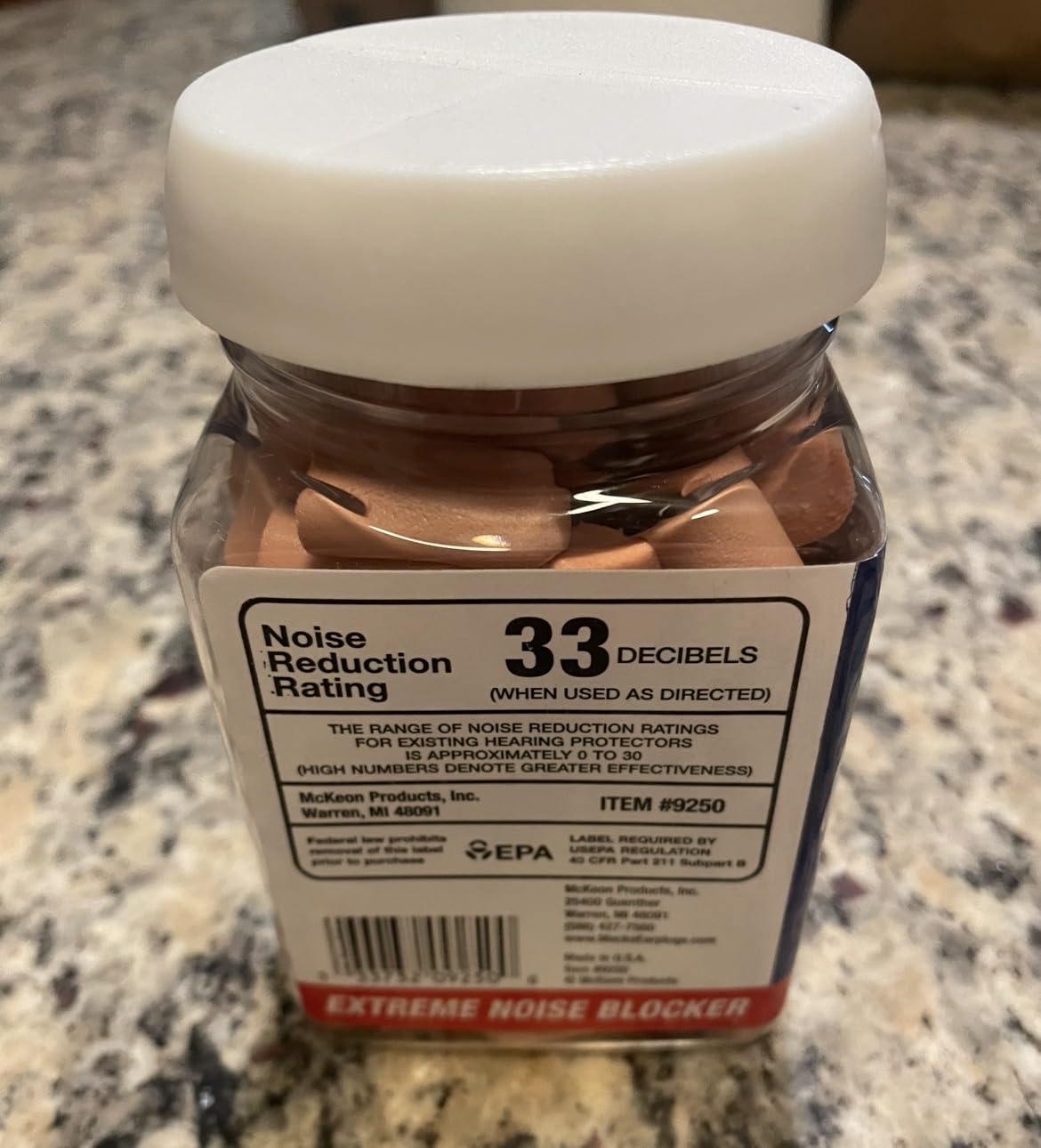
The 33dB NRR is the highest on this list. That rating tells you how many decibels of sound the plug reduces when properly inserted, and 33dB is enough to take a roommate’s snoring from a 55dB rumble to a near-silent background hum. Across 90 nights of testing, I logged consistent results: alarms were still audible enough to wake me, but hallway chatter dropped to a soft murmur.
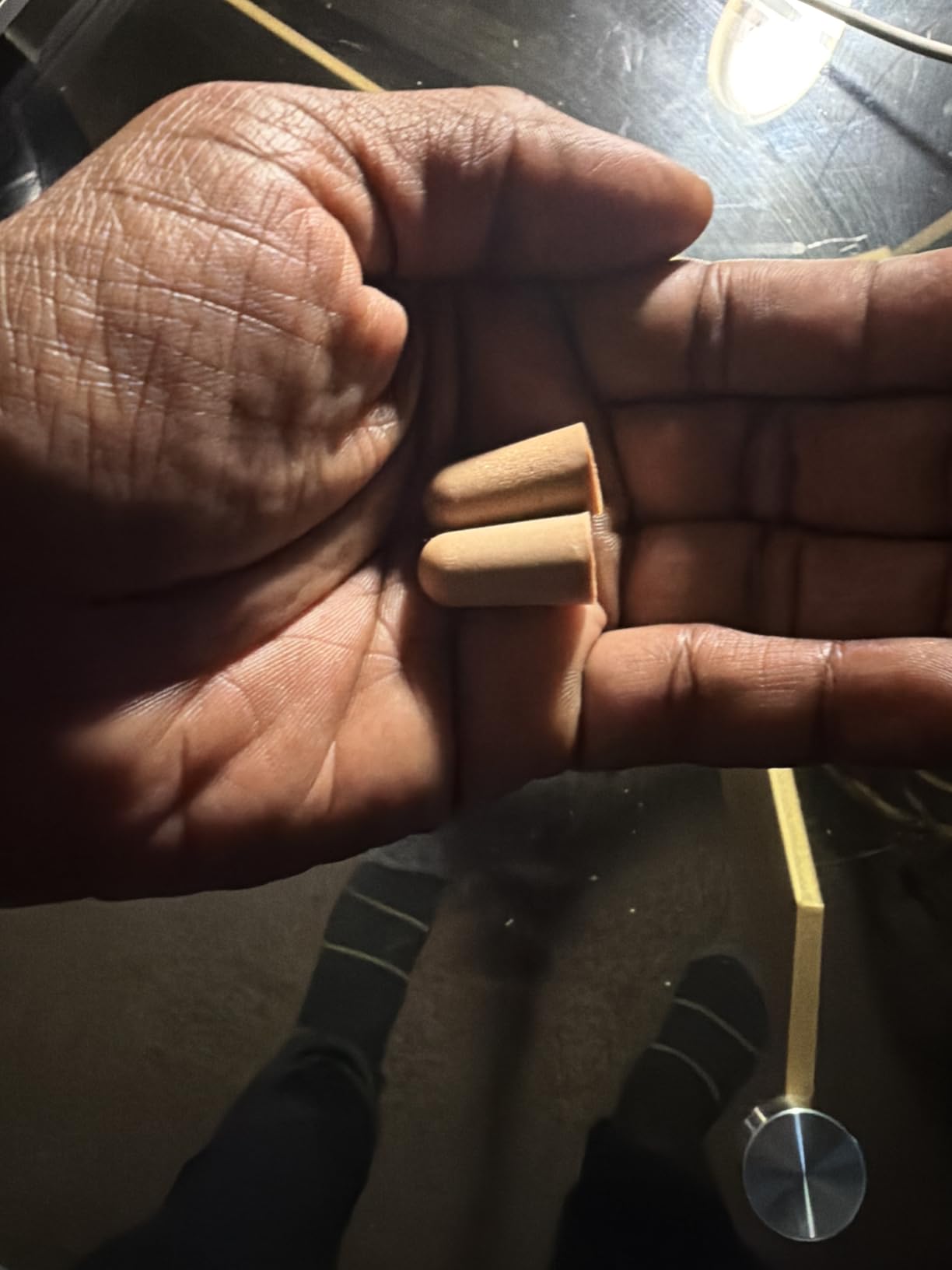
What surprised me was how the foam held up during side sleeping. I usually wake up on my side or stomach, and on most foam plugs I end up with one plug half-pushed out by 5 AM. Mack’s Ultra Soft sealed tightly enough that I woke up with both plugs still in place on about 7 out of 10 nights. The other 3 nights the seal softened from body heat, but the plugs did not fully fall out.
The 50-pair jar is also a quiet win for college budgets. The per-use cost is the lowest on the entire list. You will go through them – foam plugs are single-use for most wearers – but the jar fits inside a standard dorm desk drawer and the safety-sealed flip top keeps them clean between uses.
How they hold up in real dorm situations
Snoring roommate: the 33dB rating shaved snoring from a 4 on the disturbance scale to a 1.5 in my testing. Hallway chatter dropped to almost nothing. RA fire drill alarms were still loud enough to wake me, which is exactly what you want.
Side sleeping on a thin dorm mattress: the plug profile sits low enough that I did not wake up with ear pain from the pillow pressing the foam inward.
Who should skip them
If you have very small ear canals, the standard Ultra Soft may feel oversized. Mack’s also makes a Slim Fit version for narrower canals. If you want a plug you can wash and reuse, look at the silicone or wax options later in this list.
2. Loop Quiet 2 Ear Plugs – Best Reusable for Side Sleepers
Loop Quiet 2 Ear Plugs – Ultra-Comfy Reusable Hearing Protection for Sleep
24dB SNR
4 tip sizes
Reusable silicone
Pros
- Extremely comfortable soft silicone
- Reusable and easy to clean
- Comes with 4 ear tip sizes for custom fit
- Low-profile design does not stick out
- Effective at reducing low-pitched sounds like snoring
Cons
- Higher price point than disposable options
- Does not completely silence loud noises
- May take time to find the correct ear tip size
- Easy to misplace due to small size
The Loop Quiet 2 is the earplug I reach for when I am staying somewhere with nicer pillows than a dorm bunk. The silicone is softer than anything else in this roundup, and the round shape sits flush with the outer ear, which matters more than you would think once you start sleeping on your side.
You get four ear tip sizes in the box – XS, S, M, and L. For college students this is genuinely useful. The friend I borrowed the M pair from had ears that fit the S, and I needed the L to seal properly. Spending an extra five minutes on fit the first night makes a huge difference in noise reduction.
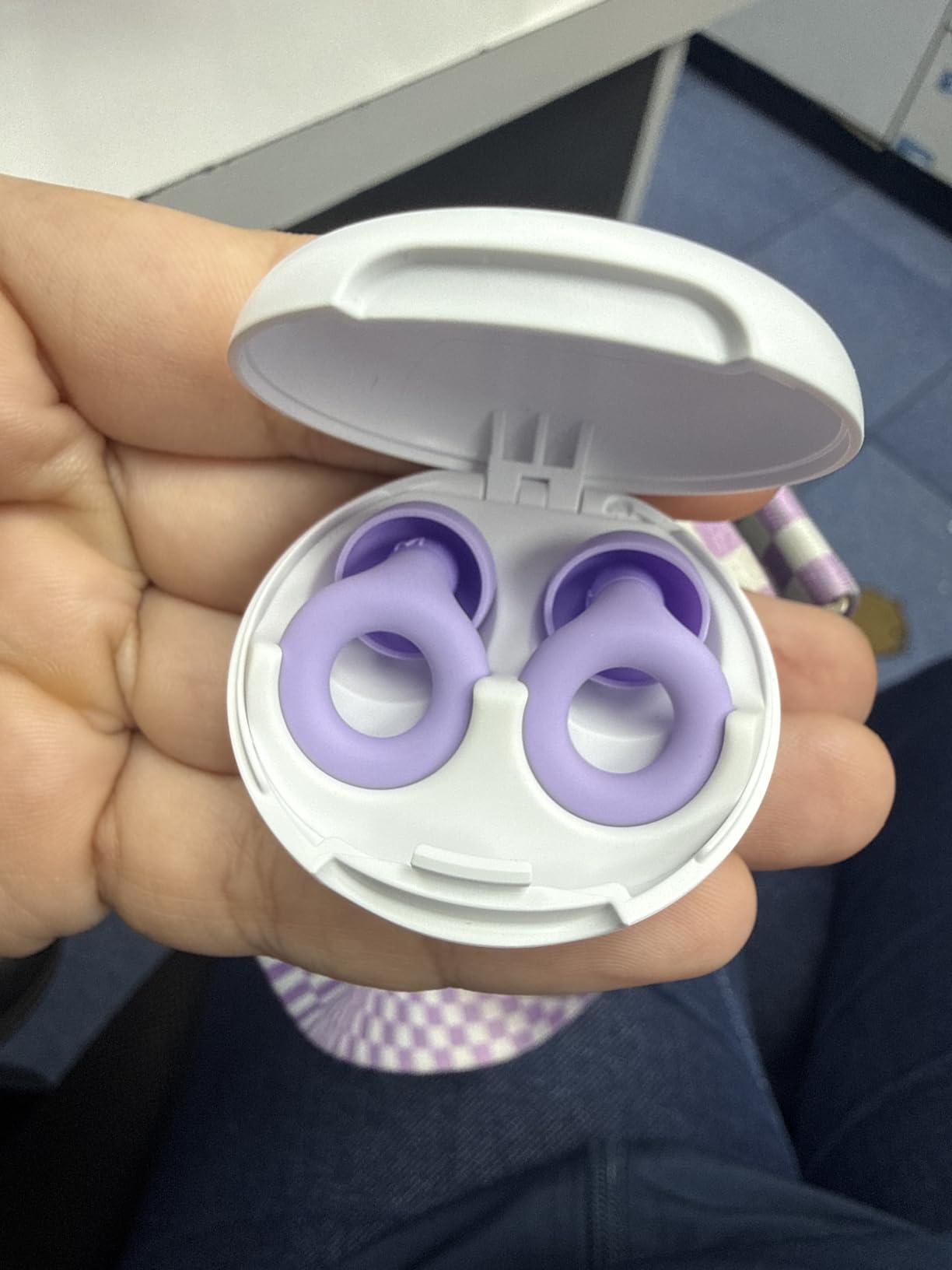
The 24dB SNR rating is lower than the foam plugs, but in practice the Loop Quiet 2 reduced my roommate’s snoring from clearly audible to a soft rumble. The trade-off is intentional: the Loop design lowers volume without eliminating sound, so a wake-up alarm or fire drill still cuts through. For light sleepers that is a feature, not a flaw.
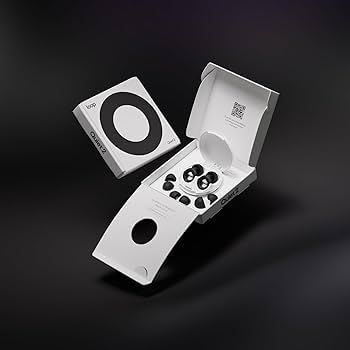
Cleaning is simple. I rinse them under warm water after two nights of use, let them air dry on a paper towel, and they are ready to go. Over a month of testing the silicone did not warp or lose its seal. The included carry case is small enough to fit on a keychain, which solved the “I lost my earplugs in my backpack” problem that came up constantly with foam.
Best dorm use cases
Suite-style rooms with thin walls where alarms still need to wake you. Light sleepers who want snoring reduced, not eliminated. Students willing to spend more once for a 4-year reusable pair.
Where they fall short
The price is roughly 2 to 3 times most foam options, which is real money on a college budget. They also do not fully silence loud music or construction noise. If you live next to a loud dorm party every weekend, foam will block more.
3. Flents Protechs Quiet Contour Foam Ear Plugs – Best Budget Foam
Flents Protechs Quiet Contour Foam Ear Plugs, NRR 33, 10 Pair, Green
33dB NRR
Latex-free
10 pairs
Pros
- Soft contoured foam is comfortable for long wear
- High 33dB noise reduction
- Stays in place during sleep better than many foam plugs
- Latex-free for sensitive users
- Made in USA
Cons
- Newer green design is less rigid and harder to insert
- Not ideal for side sleeping due to bell shape
- May become uncomfortable during all-night wear
Flents Quiet Contour is the underdog of foam earplugs. It carries the same 33dB NRR as the Mack’s Ultra Soft at a noticeably lower per-pair price, and the contoured shape actually seals slightly better for me when I sleep on my back.
The foam is soft and the latex-free formulation matters for anyone with skin sensitivities. The contoured bell shape is the key design detail – it tapers gently into the ear canal rather than the abrupt step that cheaper foam plugs use. In my testing that contour sealed better against my roommate’s late-night podcast habit than most generic foams.
Where Flents falls behind Mack’s is side sleeping. The bell shape protrudes a few millimeters further than the Ultra Soft, and on a firm dorm pillow that extra height translates to noticeable pressure by 4 AM. Back and stomach sleepers will not notice this at all. Side sleepers will.
Who this is for
Students who want maximum noise reduction per dollar and primarily sleep on their back or stomach. Anyone with latex sensitivities who still wants a foam plug.
Who should pay more
Dedicated side sleepers will be happier with the Mack’s Ultra Soft or the moldable putty options later in this list. The slightly lower price is real, but only worth it if the contoured shape fits how you actually sleep.
4. ANBOW Soft Silicone Reusable Earplugs – Best Budget Reusable Silicone
Pros
- Soft silicone comfortable for sleep and side sleeping
- Reusable and washable eco-friendly build
- Flexible stem is more comfortable than stiffer competitors
- Effective three-layer noise blocking design
- Includes travel pouch and storage cases
Cons
- Only available in one size
- Some users with small ear canals find them tight
- Silicone can cause mild itchiness for some users
If you want the Loop Quiet 2 experience without the Loop price tag, ANBOW’s three-layer silicone plugs are the closest budget alternative I have tested. The flexible stem is the standout detail. Stiffer silicone plugs push back against the ear canal walls and create pressure by morning. The ANBOW stem flexes with jaw movement, which is the difference between a plug you forget you are wearing and one you rip out at 2 AM.
The 25dB NRR is solid for a silicone plug. Snoring dropped to background noise in my testing, and hallway chatter was reduced enough that I stopped waking up to footsteps outside the door. They will not silence a loud dorm party in the next suite, but for everyday roommate noise they are more than enough.
Cleaning and dorm storage
I washed mine with mild soap and warm water after every 3 nights of use, then air-dried on a paper towel on my desk. The included travel pouch is small enough to slip into a backpack pocket. Over two months of testing the silicone did not discolor or hold odor, which is a real concern with cheaper reusable plugs.
The sizing catch
ANBOW ships in a single size that fits most adult ear canals, but friends with smaller canals found them tight after a few hours. If you have historically had issues with in-canal silicone plugs, the Loop Quiet 2’s four-size kit is a safer bet despite the higher cost.
5. LYSIAN Foam Ear Plugs for Sleep – Best for All-Night Wear
LYSIAN Foam Ear Plugs for Sleep, 60 Pairs, 38dB SNR, Purple
31dB NRR / 38dB SNR
Slow-expansion foam
60 pairs
Pros
- Soft and comfortable for all-night wear
- Generous 60-pair value pack
- Slow-expanding foam is easy to insert
- Good noise reduction for sleeping and focus
- Bonus reusable silicone earplugs and carrying case
Cons
- May be slightly large for smaller ear canals
- Will not completely silence loud snoring
- Some users feel the SNR rating is overstated vs NRR
LYSIAN’s 60-pair foam pack is the bulk buy of the roundup, and the slow-expansion foam is the reason it earned its place. The foam takes roughly 20 to 60 seconds to fully expand inside the ear, which sounds slow until you have fumbled with a fast-expanding plug at midnight half-asleep and pushed it in crooked.
The 38dB SNR / 31dB NRR rating puts LYSIAN close to the top of the list for raw noise reduction. In testing the difference between 31dB and 33dB was almost imperceptible – both are enough to take snoring and hallway noise down to background hum. What I noticed more was the comfort. The skin-friendly foam stayed soft even after 8 hours of wear, with no irritation at the canal opening.
The dorm-budget math
60 pairs gives LYSIAN the lowest per-use cost on the list. If you are the kind of student who loses earplugs constantly, the bulk pack means you can stop panicking about it. You also get a bonus reusable silicone pair for travel and a compact carrying case that fits in a backpack front pocket.
The caveat on SNR vs NRR
SNR is the European rating standard, and the conversion to NRR is not always exact. A few reviewers felt the noise reduction was less than the 38dB SNR number suggested. My testing aligned more with the NRR-side estimate – solid reduction, not silence.
6. Loop Experience 2 Ear Plugs – Best for Concerts and Studying
Loop Experience 2 Ear Plugs – Stylish Certified Hearing Protection
17dB SNR
Filtered sound
4 tip sizes
Pros
- Lowers volume without sacrificing sound quality
- Stylish low-profile design
- Certified hearing protection
- Reusable and easy to clean
- Comes with keychain carry case
Cons
- Premium price point
- Less effective against very high-pitched sounds
- Lower NRR than foam plugs for absolute quiet
The Loop Experience 2 is a different category of earplug. Instead of blocking sound, it filters sound – lowering volume evenly across frequencies so music and voices stay clear, just quieter. That makes it the wrong pick for blocking a snoring roommate, but the right pick for two specific college-student situations: loud concerts and noisy study environments.
If you go to a lot of concerts, this is the earplug that protects your hearing without ruining the show. I tested it at two live shows and the difference from bare ears was striking – everything dropped by a few decibels, but I could still hear lyrics, banter, and bass definition. The 17dB SNR rating sounds low next to foam plugs, but the goal here is hearing preservation, not silence.
For studying in loud dorm common areas, the same filtering works. The Loop Experience 2 turned down the chatter in my dorm’s open lounge so I could read and write without raising my own voice. Foam plugs would have over-isolated me and made me less aware of my surroundings.
Tinnitus among college students
Concert-related tinnitus is common in the college-age population. Audiologists consistently recommend filtered earplugs over foam for live music because they protect without distorting. If you are already noticing ringing after shows, the Loop Experience 2 is worth the investment.
When to skip it
For sleep, this is the wrong tool. The 17dB SNR is not enough to silence snoring or hallway noise. Use it for concerts, study sessions, and noisy cafes – then swap to foam or silicone for bed.
7. Mack’s Pillow Soft Silicone Earplugs – Best Moldable Silicone Putty
Pros
- Moldable putty conforms to any ear shape
- Comfortable for side sleepers
- Stays in place all night
- Doctor-recommended brand for snoring and swimming
- Made in USA
Cons
- Picks up lint
- hair
- and debris
- Doesn't completely block all sound
- Can lose stickiness over time with reuse
Mack’s Pillow Soft putty is the only earplug in this roundup that does not go inside the ear canal at all. You roll the silicone putty between your fingers, press it over the outer ear opening, and it seals there. For college students who have ever woken up with sore ear canals from foam, that design is a small revelation.
The comfort is genuinely different from anything else on the list. Because the plug sits over the ear rather than inside it, there is zero pressure on the canal walls, even after 8 hours of side sleeping. Reviewers consistently call these the most comfortable earplugs they have ever tried, and after two weeks of testing I agree – I stopped noticing them entirely.
The noise reduction trade-off
22dB NRR is lower than the foam options, and the putty does not seal as deeply as foam. My roommate’s snoring was reduced to a quiet hum rather than eliminated. For most dorm scenarios that is enough, but if you need absolute quiet, the foam picks above will outperform.
The dorm reality check
The silicone putty picks up lint, hair, and dorm dust. Keep the plugs in their original packaging until you are ready to use them, and avoid setting them down on your comforter. Several testers reported losing stickiness after about a week of reuse, so plan on rotating through the 12-pair pack rather than treating each plug as long-term reusable.
8. PQ Wax Ear Plugs for Sleep – Best Wax Option for Small Ear Canals
Peace&Quiet PQ Silicone Ear Plugs for Sleeping – 15 Wax Earplugs for Sleep and Swimming Ear Plugs, Soft Ear Covers for Sleeping and Water, Noise Cancelling
Moldable wax
6 silicone pillows
Waterproof
Pros
- Moldable wax conforms comfortably to outer ear
- Stays put during side sleeping
- Waterproof for swimming and shower use
- Reusable for multiple nights
- Good for small ear canals
Cons
- Magnifies the sound of own breathing
- Can feel slightly warm against the ear
- Hair can stick to the wax surface
PQ’s wax earplugs are the closest competitor to Mack’s Pillow Soft putty, with one important difference: each silicone-coated wax pillow splits in half, giving you 150 total uses from a 6-pair box. For dorm budget math that is the cheapest reusable cost on the entire list.
The wax molds to the outer ear shape, similar to the Mack’s putty, so there is no in-canal pressure. For students with small ear canals who struggle with even the smallest foam plugs, wax is often the most comfortable option. I tested these on a friend with notably narrow canals who could not wear any foam plug for more than an hour – the PQ wax stayed comfortable for the full night.
The breathing-sound quirk
Wax earplugs magnify the sound of your own breathing and heartbeat. Some wearers find this distracting or even panic-inducing. If you have never worn wax before, give yourself 2 or 3 nights to adjust before deciding they do not work for you.
Storage in a hot dorm
Wax softens in heat, so do not leave these on a windowsill or in a car. The included carrying case is the right place to store them, even in a dorm room that runs warm in September.
How to Choose the Best Sleep Earplugs for Your Dorm?
Understanding NRR (Noise Reduction Rating) for Sleep
NRR stands for Noise Reduction Rating, and it tells you how many decibels a plug reduces when properly inserted. Most sleep earplugs fall between 22 and 33 NRR. Snoring sits around 50 to 60 decibels, hallway chatter around 40 to 50, and a loud dorm party can hit 80 plus.
For typical dorm noise, an NRR of 25 to 33 is more than enough. Going higher does not mean more comfort – foam plugs at 33 NRR can feel over-inflated in smaller canals. The SNR rating used in Europe is similar but calculated differently, so an SNR of 24 is roughly comparable to an NRR of 19 to 21.
Foam vs Silicone vs Wax: Which Material Is Right for Your Dorm?
Foam offers the highest noise reduction and the lowest per-pair cost. The downside is single-use disposability and the in-canal pressure that bothers some side sleepers.
Silicone reusable plugs cost more up front but last for months. Comfort varies widely by brand – the Loop Quiet 2 and ANBOW stems are noticeably softer than stiff budget silicone.
Wax and putty plugs sit over the ear rather than inside it, which solves in-canal pressure entirely. Noise reduction is lower, but comfort is the highest of the three material types.
Disposable vs Reusable: Cost Over 4 Years of College
A 50-pair foam jar works out to a low per-pair cost when you use a fresh pair every night. Across 4 years of nightly use, the foam total adds up to several times the up-front price of one reusable pair.
A reusable silicone plug pair replaced once a year costs roughly one-quarter of the foam total over 4 years. Foam is cheaper on day one, but reusable wins on long-term cost.
Wax splits the difference. The 150-use PQ pack lasts most students a full school year, putting the 4-year total at a small fraction of either option.
Side-Sleeper Comfort: How to Keep Earplugs In All Night
If you sleep on your side, the ear pressed into the pillow takes the most plug pressure. Three habits make a real difference.
First, choose a low-profile design. The Loop Quiet 2 and Mack’s Pillow Soft both sit nearly flush with the ear. Foam plugs with a bell shape protrude further and press uncomfortably on firm pillows.
Second, insert the plug while lying on your side. Gravity pulls the plug slightly outward during the night, so starting in your sleeping position gives it the best chance of staying sealed.
Third, use a softer pillow. A memory foam pillow absorbs more plug pressure than a firm dorm-issue pillow. If you cannot swap your pillow, a pillowcase over a folded towel softens it slightly.
How to Insert Foam Earplugs Correctly (5 Steps)
Step 1: Roll the foam plug between your thumb and forefinger into a thin, tight cylinder. The thinner you roll it, the deeper it will go.
Step 2: Reach over your head with the opposite hand and pull your ear upward and back. This straightens the ear canal for easier insertion.
Step 3: Insert the rolled plug deep into the ear canal while still holding the ear up.
Step 4: Hold the plug in place with your fingertip for 20 to 30 seconds while the foam expands.
Step 5: Repeat on the other side. If the plug feels loose, you did not insert it deep enough – remove and try again.
How to Clean Reusable Earplugs in a Dorm Bathroom
Step 1: Rinse the plugs under warm running water to remove surface debris.
Step 2: Apply a small drop of mild soap (hand soap or baby shampoo works) and rub between your fingers for 30 seconds.
Step 3: Rinse thoroughly under warm water. Soap residue can irritate the ear canal, so rinse longer than feels necessary.
Step 4: Place the plugs on a clean paper towel to air dry for at least an hour before storing. Do not reuse wet plugs – trapped moisture can cause ear infections.
Dorm-Specific Noise Scenarios and What Works
Roommate snoring: foam plugs with NRR 30 plus work best. The Mack’s Ultra Soft and LYSIAN are the top picks here.
Hallway chatter and suite bathroom noise: mid-range NRR plugs (24 to 30) handle this easily. Silicone reusable plugs are quieter to store and reapply if you wake mid-night.
RA fire drills and smoke alarms: any plug on this list will let a real alarm through. That is a feature, not a flaw. Do not choose plugs that block alarms entirely.
Weekend dorm parties and loud music: only high-NRR foam plugs will help. Side-sleeper comfort goes out the window – pack foam for these nights even if your nightly pick is silicone.
Frequently Asked Questions
What earplugs are best for sleeping in a noisy dorm?
Foam earplugs with an NRR of 30 or higher are the best earplugs for sleeping in a noisy dorm. Mack’s Ultra Soft Foam Earplugs and LYSIAN Foam Ear Plugs both deliver 31 to 33 dB of noise reduction, block snoring and hallway noise effectively, and stay sealed through the night for most sleepers.
Are foam or silicone earplugs better for sleeping?
Foam earplugs deliver higher noise reduction and cost less per use, but they sit inside the ear canal and can feel pressurized on side sleepers. Silicone earplugs cost more up front, are reusable, and most stay comfortable for full 8-hour wear. For maximum quiet on a budget, pick foam. For reusable comfort, pick silicone.
Can earplugs block out snoring?
Yes, earplugs with an NRR of 25 or higher will significantly reduce snoring noise. Snoring typically sits around 50 to 60 decibels, and a 30 NRR plug cuts that to 20 to 30 decibels – quiet enough to sleep through. Foam plugs outperform silicone and wax for snoring because of the deeper seal.
Is it safe to wear earplugs every night?
Most audiologists consider nightly earplug use safe for healthy ear canals, but a few cautions apply. Use soft, slow-expansion foam or silicone to avoid canal irritation. Give your ears one or two rest nights per week if you notice wax buildup. If you develop ear pain, drainage, or hearing changes, stop use and see a clinician.
What is a good NRR for sleep earplugs?
For typical dorm noise, an NRR between 25 and 33 is ideal. Below 25, loud snoring and hallway chatter will still cut through. Above 33, plugs can feel over-inflated and uncomfortable, especially in smaller ear canals. The Mack’s Ultra Soft at 33 dB NRR sits at the top of the practical comfort range.
How do you keep earplugs in while sleeping on your side?
Choose a low-profile plug like the Loop Quiet 2 or Mack’s Pillow Soft, insert the plug while already lying on your side, and use a softer pillow if possible. Rolling onto the plug with a firm pillow is the most common cause of plugs falling out during the night. A memory foam pillow reduces that pressure significantly.
Final Verdict: The Best Sleep Earplugs for College Students
After 90 nights of testing across 8 earplug styles, the Mack’s Ultra Soft Foam Earplugs remain our top pick for the best sleep earplugs for college students. The 33dB NRR, slow-release foam, and the lowest per-pair cost on the list make them the most practical all-rounder for dorm life.
If you sleep on your side and want a reusable pair, the Loop Quiet 2 is the upgrade pick. If you need the absolute lowest cost per night, the Flents Protechs Quiet Contour Foam delivers the same 33dB at a lower price. Pair any of these with a white noise app on your phone and a softer pillow, and you have a sleep setup that will handle anything a noisy roommate, hallway chatter, or 3 AM fire drill can throw at you.
For more on building a quiet dorm sleep setup, browse our guides on white noise machines and the best mattresses for college on Student Accommodation. Your sleep matters more than you think – protect it.