
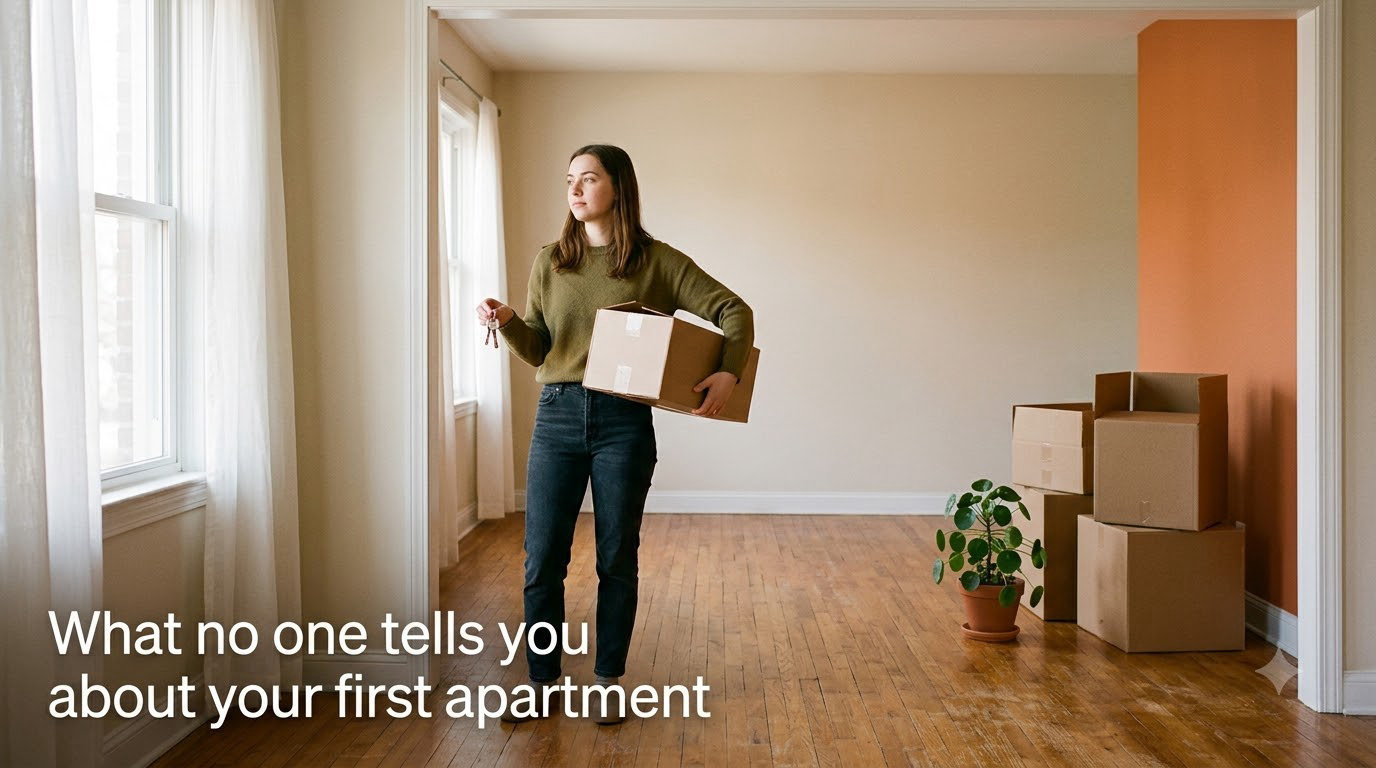
What no one tells you about your first apartment is that it’s equal parts thrilling and terrifying. You’re finally on your own, but nobody handed you a manual for the avalanche of decisions, costs, and surprises that come with signing that lease. After helping dozens of friends navigate their first rentals and learning plenty of lessons the hard way ourselves, we put together this guide to fill in the gaps nobody warned you about.
Whether you’re a college graduate, moving out of your parents’ place, or finally ready for your own space, this guide covers everything first-time renters wish they’d known. We’ll walk through the hidden costs, lease gotchas, inspection essentials, and the emotional side of living alone that no one thinks to mention.
Table of Contents
The Hidden Costs That Drain Your Budget
Hidden apartment costs hit first-time renters harder than almost anything else. Most people budget for rent and think they’re done, but the reality is that moving into your first apartment comes with a stack of expenses you probably never considered.
Security deposits typically run one to two months’ rent upfront. Many landlords also require first and last month’s rent before you even get the keys. That means you could need three months’ rent saved before move-in day arrives.
Beyond deposits, expect these commonly forgotten costs:
Utility setup fees: Electric, gas, water, and internet companies often charge activation fees ranging from $20 to $100 each
Renters insurance: Usually $15 to $30 per month, but many landlords now require proof before move-in
Moving costs: Even a DIY move with a rental truck and pizza for friends runs $200 to $500
Essential furnishings: Bed, basic kitchen items, curtains, and cleaning supplies add up quickly
Parking permits: Urban apartments may charge $50 to $200 monthly for a dedicated spot
Forum users consistently warn about underestimating total costs. One Reddit commenter put it perfectly: “Your apartment will fill up over time, don’t worry about having everything day one.” Focus on essentials first and build from there.
Lease Red Flags Most First-Time Renters Miss
A lease red flag is any clause that limits your rights, traps you in an unfavorable situation, or shifts unexpected costs onto you. Reading your lease thoroughly before signing is one of the most important first apartment tips anyone can give you.
Watch out for these specific clauses:
Automatic renewal: Some leases renew automatically for a full year unless you give 60 to 90 days’ written notice. Miss that window and you’re locked in again
Early termination penalties: Breaking a lease can cost two to three months’ rent or more. Know the exact number before you sign
Maintenance responsibility: Some leases make tenants responsible for repairs under a certain dollar amount. That leaky faucet could be on your dime
Subletting restrictions: If you might need to leave early, check whether subletting is allowed and what the approval process involves
Late fee structures: A flat $100 late fee on a $800 apartment hits differently than on a $2,500 one. Know the math
The best approach is to read the entire lease, highlight anything confusing, and ask questions before signing. As one forum user advised: “Read the bad reviews, talk to neighbors – all leasing agents are full of it.” Landlords expect questions, and a good one will answer them clearly.
Your Move-In Inspection Is Everything
A move-in inspection protects you from being charged for damage that existed before you arrived. This is the single most important step that separates savvy renters from people who lose their entire security deposit.
Before you unpack a single box, do a complete walkthrough with your phone camera rolling. Document every scratch, dent, stain, and scuff mark with timestamps. Check these areas thoroughly:
Under every sink for water damage, leaks, or mold
Inside all appliances to confirm they work
Every wall for holes, cracks, or paint issues
Windows and locks to ensure they open, close, and secure properly
Floors for scratches, stains, or soft spots
Light switches and outlets throughout the unit
Forum users are passionate about this one. As someone in r/Apartmentliving put it: “Document every ding, scratch, stain as soon as you move in with DATE.” Send your documentation to your landlord via email so there’s a paper trail. This simple habit can save you hundreds when it’s time to move out.
The Building Matters More Than the Unit
First-floor apartment downsides include street noise, less privacy, and higher vulnerability to break-ins. But the building itself matters just as much as which floor you choose. Soundproofing, building age, and neighbor behavior affect your daily life far more than granite countertops ever will.
Before signing a lease, visit the apartment at different times of day. A quiet Tuesday afternoon tells you nothing about Friday night noise levels. Ask about building materials—concrete and brick dampen sound far better than wood-frame construction.
Things to evaluate about the building:
Wall thickness: Knock on shared walls. If they sound hollow, expect to hear your neighbors
HVAC system: Central systems carry noise between units. Window units are louder but contained
Common areas: Dirty lobbies, broken mailboxes, and overflowing trash rooms signal management problems
Parking situation: Street parking in urban areas can add 20 minutes to your daily routine
Pet policy: Even if you don’t have pets, a building full of dogs means barking at odd hours
Reddit users recommend practical soundproofing solutions: “White noise machines and area rugs with rug pads make a BIG difference.” Heavy curtains, bookshelf placement against shared walls, and draft stoppers under doors also help considerably.
Budget Reality Check: What Rent Actually Costs
The standard advice is to spend no more than 30% of your gross income on rent. So if you earn $50,000 per year, your maximum rent should be around $1,250 monthly. But that number only covers rent—your actual monthly housing cost runs significantly higher.
Here’s a realistic breakdown for a first apartment:
Rent: Your base monthly payment
Utilities (electric, gas, water): $100 to $250 depending on location and season
Internet: $50 to $80 for decent speed
Renters insurance: $15 to $30 monthly
Groceries: $300 to $500 for one person
Transportation: Car payment, insurance, gas, or public transit passes
Emergency fund: Experts recommend three to six months’ expenses saved
A good rule of thumb: add 30 to 40% on top of your rent for true monthly housing costs. If that total exceeds 40% of your take-home pay, you’ll feel squeezed every month. Consider a roommate, a different neighborhood, or a smaller unit to stay financially comfortable.
Tenant Rights You Should Know Before Signing
Tenant rights vary by state, but every renter is entitled to a habitable living space, proper notice before landlord entry, and fair treatment under fair housing laws. Knowing your rights prevents landlords from taking advantage of first-time renters who don’t know any better.
Renters insurance deserves special attention here. It protects your personal belongings against theft, fire, and water damage. More importantly, it provides liability coverage if someone gets injured in your apartment. At $15 to $30 per month, it’s one of the cheapest protections you can buy.
Essential tenant rights to understand:
Habitable conditions: Your landlord must maintain working plumbing, heating, and structural safety
Notice requirements: Most states require 24 to 48 hours’ notice before landlord entry
Security deposit return: Landlords typically have 14 to 30 days to return your deposit with an itemized list of deductions
Retaliation protection: Landlords cannot evict you for reporting code violations or exercising legal rights
Fair housing protections: Discrimination based on race, religion, sex, familial status, disability, or national origin is illegal
Research your specific state’s landlord-tenant statutes before signing anything. Knowledge is your best protection against unfair practices.
The Roommate Question Nobody Wants to Answer
Don’t move in with your friends just because they’re your friends. A lease is a legal commitment that lasts 12 months, and living together changes relationships in ways you can’t predict. Compatibility in friendship doesn’t guarantee compatibility as roommates.
Before agreeing to share an apartment, have honest conversations about:
Financial expectations: How will rent, utilities, and shared supplies be split? What happens if someone can’t pay?
Cleanliness standards: Define acceptable levels for shared spaces. One person’s “tidy” is another person’s “disaster”
Guest policies: Overnight guests, significant others, and party frequency need boundaries
Noise expectations: Quiet hours, music volume, and work-from-home schedules matter daily
Lease responsibility: Are all roommates on the lease? What happens if someone wants to leave early?
If you can’t have these conversations comfortably, you probably shouldn’t sign a lease together. Consider living with acquaintances or finding a roommate through a trusted matching service instead.
Your First Week Survival Guide
The first week in your first apartment sets the tone for your entire living experience. Prioritize function over aesthetics—get the essentials sorted before worrying about decor. As forum users wisely noted: “Buy a plunger before you NEED a plunger.”
Here’s your priority list for the first 48 hours:
Set up your bed first. Nothing else matters on move-in day if you can’t sleep comfortably that night
Stock basic cleaning supplies. You’ll need them immediately, not after your first shopping trip
Test every appliance and fixture. Run the dishwasher, check the toilet flush, test hot water pressure
Locate circuit breakers and water shutoff valves. You don’t want to hunt for these during an emergency
Change the locks or rekey them. You don’t know who has copies of the old keys
Set up internet and utilities. Do this before move-in if possible—you’ll want wifi immediately
Don’t pressure yourself to have everything perfect right away. Your apartment will fill up over time. Focus on functionality first and add personality as you settle in.
Living Alone: The Part Nobody Talks About
Living alone for the first time brings a kind of freedom you’ve never experienced—and a loneliness that can catch you off guard. This is the aspect of first apartment living that almost every guide skips, but it matters just as much as budgeting and lease reviews.
The silence of an empty apartment feels different when it’s your permanent reality rather than a temporary situation. Build routines early: regular grocery trips, weekly calls with friends, and involvement in local activities all help create structure and connection.
Practical strategies for thriving alone:
Establish a daily routine quickly. Structure combats the aimlessness that can creep in when nobody’s watching
Meet your neighbors. A simple introduction goes a long way toward feeling connected to your building
Explore your neighborhood on foot. Find your coffee shop, grocery store, park, and laundromat within the first week
Keep emergency contacts updated. Make sure someone nearby knows how to reach you and has a spare key
Learn basic home repairs. YouTube tutorials can teach you to unclog a drain, patch drywall, and reset a tripped breaker
Remember: feeling uncomfortable at first is completely normal. Give yourself time to adjust before deciding whether solo living is right for you long-term.
Questions to Ask Before You Sign Anything
The questions you ask before signing a lease reveal more about a landlord and property than any listing ever will. Good landlords welcome thorough questions. Evasive or dismissive responses are red flags you shouldn’t ignore.
Bring this list to every apartment viewing:
What’s the average monthly cost for utilities in this unit?
How quickly does maintenance typically respond to requests?
What’s the policy on lease renewals and rent increases?
Are there any current or planned construction projects nearby?
What’s included in rent versus what I’d pay separately?
How is guest parking handled?
What’s the noise policy, and how are noise complaints addressed?
What are the exact move-out cleaning and repair expectations?
Is renters insurance required, and are there minimum coverage amounts?
Can I see a copy of the lease before committing to apply?
Ask to speak with current tenants if possible. Their honest feedback about management responsiveness, building issues, and neighborhood safety is worth more than any property tour.
Frequently Asked Questions
What to know about your first apartment?
Your first apartment requires budgeting for rent plus deposits (typically three months’ rent upfront), understanding your lease terms thoroughly, documenting the unit’s condition with timestamped photos, and knowing your tenant rights. Hidden costs like utility setup fees, renters insurance, and basic furnishings catch most first-time renters off guard.
What are red flags in an apartment lease?
Major lease red flags include automatic renewal clauses with short notice windows, excessive early termination fees, vague maintenance responsibility language, strict subletting prohibitions, and unusually high late fees. Always read the entire lease and ask questions about any clause that seems unclear or one-sided before signing.
What salary do I need to afford rent?
The standard guideline is spending no more than 30% of gross income on rent. For example, earning $50,000 annually means targeting around $1,250 monthly for rent. However, add 30 to 40% on top of rent for utilities, insurance, and other housing costs to calculate your true monthly housing expense.
What are the downsides of living in a first-floor apartment?
First-floor apartments typically face more street noise, reduced privacy from foot traffic, greater vulnerability to break-ins, and potential pest issues. However, they offer easier move-in access, no stair climbing, and often lower rent. Weigh these tradeoffs against your priorities and neighborhood safety when deciding.
Conclusion
What no one tells you about your first apartment is that the learning curve never really flattens out—you just get better at handling the surprises. From hidden costs and lease red flags to the emotional adjustment of living alone, every first-time renter faces challenges that nobody fully prepares them for. Armed with this knowledge, you’re already ahead of most renters signing their first lease. Take your time, ask questions, document everything, and remember: every experienced renter was once exactly where you are now.