
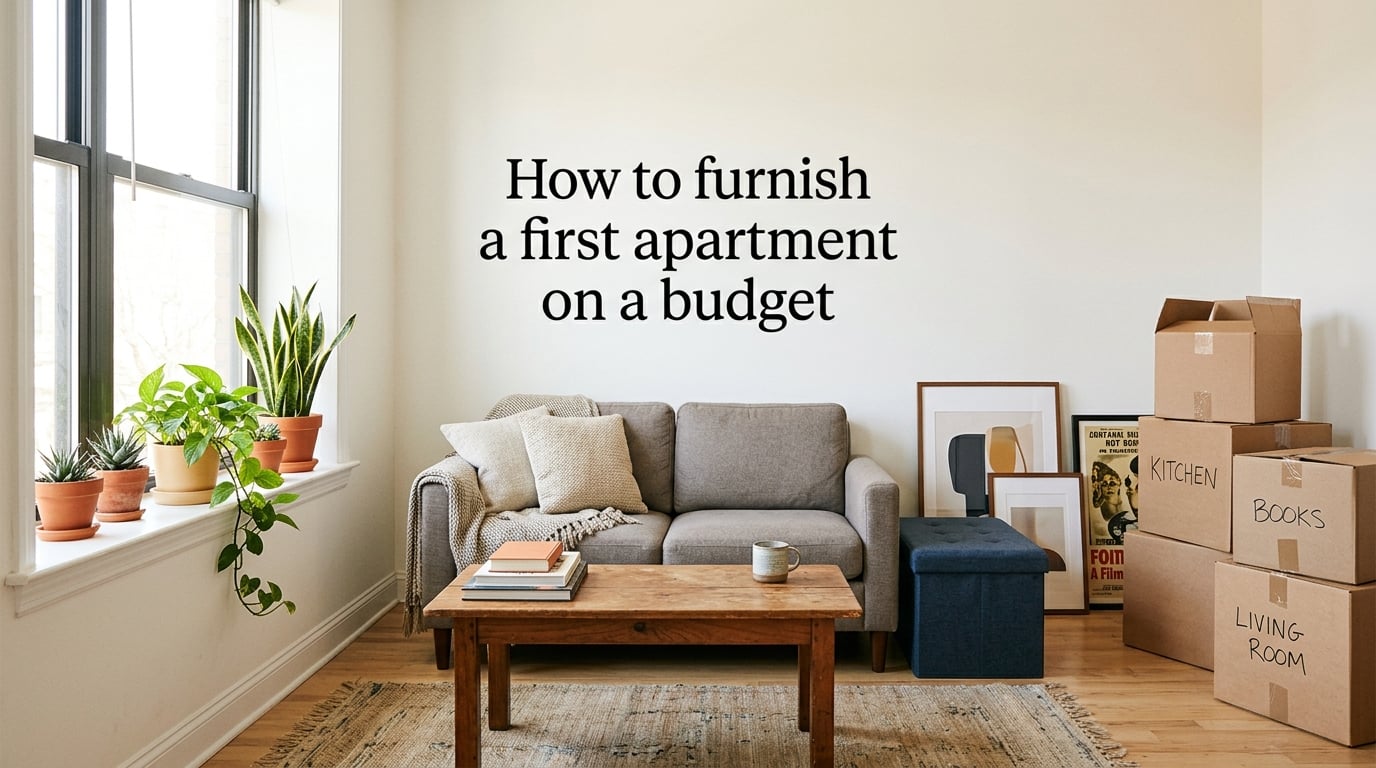
Learning how to furnish a first apartment on a budget comes down to three decisions: set a realistic total, start with the bedroom, and spread purchases over 2-3 months instead of buying it all in one weekend. Most first-time renters furnish a one-bedroom apartment for a moderate mid-range total using a mix of new and secondhand pieces, with secondhand shopping and multi-functional pieces doing the heaviest budget lifting.
I moved into my first studio with a duffel bag and very little cash to my name, so I know how overwhelming this feels. This guide gives you the same phased plan I wish I’d had, plus a furniture checklist, budget-tier table, and student-specific tips that most articles skip.
- Budget range: Starter tier for the bare minimum, all the way up to an established tier that fully furnishes a one-bedroom with quality pieces
- Start here: Bedroom first (mattress + bed frame), then living room, then dining and décor
- Shop in this order: Family hand-me-downs, then Facebook Marketplace and thrift stores, then IKEA and budget retailers
- Timeline: Week 1 survival kit → Month 1 essentials → Month 2-3 finishing touches
- Biggest money-saver: Multi-functional furniture (storage bed, sleeper sofa, lift-top coffee table)
Table of Contents
How Much Does It Cost to Furnish a First Apartment on a Budget?
Most first-time renters furnish a one-bedroom apartment using a moderate mid-range budget when buying new furniture, or a much smaller budget if you lean heavily on secondhand pieces and family hand-me-downs. A studio apartment typically costs 20-30% less because you’re buying fewer pieces, while a two-bedroom runs 40-60% more. The exact total depends on your city, whether you already own a mattress, and how patient you can be.
Is a generous budget enough to furnish an apartment? Yes, easily. A new, full setup for a one-bedroom in 2026 averages a moderate mid-range total when you mix budget retailers with one or two investment pieces. That kind of budget gives you breathing room for higher-quality sofas, a decent mattress, and enough left over for décor.
Budget Tier Breakdown: What You Get at Each Level
| Budget Tier | Total Spend | What You Get | Best For |
|---|---|---|---|
| Starter | Bare minimum | Mattress (if needed), air mattress or floor bed, one secondhand sofa, lamp, kitchen basics, no dining table | Short-term sublets, furnished-first situation, students stretching every dollar |
| Essentials | Low-mid range | Bed frame + new mattress, secondhand sofa, kitchen table with two chairs, lamp, basic storage, some secondhand décor | First 6 months in a new city, one-bedroom renters |
| Comfortable | Mid-range | Everything above plus a new sofa, proper dining set, multi-functional coffee table, full bedding set, rugs, wall art | One- or two-bedroom renters staying 1+ years |
| Established | High range | Full setup with quality investments: solid bed frame, good mattress, new sectional or quality sofa, dining set, full décor package, accent furniture | Long-term renters, couples, anyone furnishing without a budget ceiling |
These tiers come from averaging real renter reports on r/Apartmentliving and r/Frugal, then layering in current IKEA and Amazon price ranges. Your mileage will vary by city, but the tier structure holds across most US and UK markets.
First Apartment Furniture Checklist: Essentials vs Nice-to-Haves
A solid first apartment furniture checklist splits into three buckets: must-haves for daily function, week-1 essentials for move-in day, and nice-to-haves you can add over months 2-3. Most first-time renters try to buy everything in the must-have bucket at once and run out of money before they get to the fun stuff.
Must-Haves (Buy First)
- Bedroom: Mattress, bed frame, one set of sheets, pillow, comforter, bedside lamp or reading light
- Kitchen: Plates, bowls, cutlery, glasses, mugs, one pot, one pan, cooking utensils, can opener, dish soap and sponge
- Bathroom: Shower curtain, bath mat, towels (2 sets), toilet paper, plunger, trash bin
- Living room: One seating option (sofa, large armchair, or floor cushions), small table or TV tray
- General: Vacuum or broom, mop, laundry basket, full-length mirror, doormat, basic first aid kit
Week-1 Essentials (Move-In Day Survival Kit)
- Toilet paper, paper towels, trash bags
- Bedding for the first night (sheets, pillow, blanket)
- Towels for the first shower
- Phone charger and extension cord
- Multi-tool or basic screwdriver
- Snacks and water (the fridge will be empty)
- Cleaning supplies so you can scrub before unpacking
- Toiletries bag (toothbrush, soap, shampoo for one night)
Nice-to-Haves (Add in Months 2-3)
- Dining table and chairs
- Coffee table and side tables
- Rugs, curtains, throw pillows
- Wall art and mirrors
- Bookshelf or storage cube
- Desk and office chair
- Bedside table and dresser
- Plants or planters
Most checklists I’ve seen online bury the week-1 essentials inside the full list. Keeping them separate means you can move in with a tiny starter kit and furnish the rest over the next 90 days without living out of boxes.
What Room to Furnish First in a First Apartment
Start with the bedroom, then the kitchen, then the living room. The bedroom comes first because you sleep there every night and a bad mattress destroys your energy and back within a week. The kitchen is second because buying takeout for every meal blows through your furniture budget in a month. Living room and décor come last because they’re nice-to-haves, not survival.
This order is also what r/simpleliving and r/Apartmentliving users consistently recommend. People who tried to furnish the living room first ended up with a great couch and nowhere comfortable to sleep, then bought a rushed mattress at full price. Reverse the order and you skip that trap.
The Exception: If You Work From Home
If you work remotely, set up your desk and chair in week 1. A bad work setup causes posture issues within days, and replacing a cheap desk after a month is more expensive than getting a decent one first.
Where to Shop on a Budget: IKEA, Thrift Stores, and Marketplaces
The smartest shopping order for a first apartment is family hand-me-downs first, then Facebook Marketplace and Buy Nothing groups, then thrift stores and moving sales, then IKEA and budget retailers, and specialty stores only for items you can’t get cheaper elsewhere. Skipping a tier costs you money; rushing to IKEA before checking your parents’ garage is the most common budget mistake I see.
Tier 1: Free or Near-Free
- Family and friends: Ask everyone in your network. Parents, aunts, grandparents, and older cousins often have spare furniture sitting in storage they’d love to give away just to clear space.
- Buy Nothing groups: Local Facebook groups where people give away items for free. Search “[your neighborhood] Buy Nothing” on Facebook.
- Curbside finds: In college neighborhoods especially, people leave furniture on the curb during move-out weekends. It sounds gross, but a curbside wooden dresser just needs a wipe-down.
Tier 2: Cheap Secondhand
- Facebook Marketplace: Best for sofas, dining tables, dressers, and bookshelves. Filter by location and check listings daily because the good stuff disappears in hours.
- Thrift stores: Goodwill, Salvation Army, and local thrift shops are great for lamps, side tables, frames, and small décor.
- Estate and moving sales: Often have entire apartment setups from older renters downsizing. Bring measuring tape.
- Consignment shops: Slightly pricier than thrift but the furniture is usually better quality and already inspected.
Tier 3: New Budget Retailers
- IKEA: The default for a reason. Strong on multi-functional pieces (storage beds, sleeper sofas, modular shelving) and small-space solutions.
- Walmart and Target: Better for bedding, kitchen basics, lamps, and small décor than big furniture.
- Wayfair: Mid-range online option. Watch for sales and always measure before ordering.
- Amazon: Best for last-mile items like kitchen gadgets, organizers, and small appliances.
Forum users on r/ApartmentHacks consistently named IKEA, Walmart, Target, Wayfair, and Facebook Marketplace as the cheapest acceptable-quality stores for an empty apartment. The pattern is consistent enough that it’s worth following.
Multi-Functional Furniture Tips for Small Apartments
Multi-functional furniture is the single biggest budget lever for small apartments because one well-designed piece replaces two or three single-purpose ones. A storage bed replaces a bed frame plus a dresser. A sleeper sofa replaces a sofa plus a guest bed. A lift-top coffee table replaces a coffee table plus a desk. If you’re working with under 600 square feet, every piece should do at least two jobs.
High-Impact Multi-Functional Furniture
- Storage bed or bed with drawers: Replaces a separate dresser in studios and small bedrooms. IKEA’s MALM and BRIMNES lines are classic picks.
- Sleeper sofa or daybed: Essential if you host friends or family. Skip the cheapest ones because the mattress inside is usually poor.
- Lift-top coffee table: The top raises to desk height so it doubles as a work surface, and the inside holds laptops, blankets, and remotes.
- Storage ottoman: Hidden storage plus extra seating. Works in living rooms, bedrooms, and entryways.
- Modular sofa: Configurable sections that adapt to your space. Great if you move frequently because you can rearrange instead of buying new.
- Expandable dining table: Stays compact for daily use, expands for guests. Game-changer in studios.
- Wall-mounted shelves: Vertical storage that doesn’t eat floor space, ideal for renters who can’t drill much.
Modular sofas get specific praise on r/Frugal for reconfiguring in small spaces, but users warn against the very cheapest options because the replacement cost adds up. Spend slightly more on the pieces you touch daily (bed, sofa, desk chair) and save aggressively on décor.
Phased Buying Strategy: Week 1, Month 1, and Month 2-3
Buying everything in one weekend is the most expensive way to furnish an apartment. A phased plan spreads purchases across 90 days so each piece gets a fair comparison, you can grab sales as they appear, and you don’t blow your full budget before discovering what you actually need day-to-day. The phased approach also reduces stress dramatically. Moving in becomes a series of small tasks instead of one massive spending spree.
Week 1: Move-In Day Survival Kit
Focus on absolute essentials only. Sleeping, eating, basic hygiene.
- Bedding (even if it’s a basic set from Target)
- Towels, toilet paper, basic toiletries
- Plates, cutlery, one pot, one pan
- Cleaning supplies
- Phone charger, extension cord, lamp
Month 1: Core Furniture
Once you’ve lived in the space for a few days, you’ll know exactly what you need.
- Bed frame (if you don’t have one)
- Quality mattress if you didn’t start with one
- One seating option for the living room
- Kitchen table with two chairs (or a drop-leaf option)
- Laundry basket and basic storage bins
Months 2-3: Finishing Touches
Now you can prioritize based on real life, not guesswork.
- Décor: rugs, curtains, throw pillows, wall art
- Storage solutions: bookshelves, dressers, organizers
- Desk and office chair if you work or study from home
- Plants, mirrors, lighting upgrades
- Guest bed (sleeper sofa or air mattress if you skipped earlier)
r/MoneyDiariesACTIVE users specifically recommend a 3-month phased plan to balance furnishing speed against lifestyle creep. The phased approach also gives you time to check Facebook Marketplace daily for the specific pieces you want.
Money-Saving Tips: Secondhand, Rewards, and Student Discounts
Here are 8 money-saving tips our team has used across multiple first-apartment moves. None of them are complicated, but stacking 3-4 of them together is what gets you into a furnished apartment for far less than the typical first-time budget.
- Ask family first. Every family has a garage, basement, or spare room with “extra” furniture. You save hundreds and your relatives get rid of clutter.
- Use credit card rewards strategically. Put your biggest furniture purchases on a rewards card and apply the cashback toward décor. Harvard FCU specifically recommends this for big-ticket items.
- Shop end-of-season and holiday sales. Memorial Day, Labor Day, Black Friday, and back-to-school season are peak furniture sale windows. Plan your bigger purchases around these.
- Buy sets, not individual pieces. Bedroom sets, dining sets, and living room sets run significantly cheaper than buying each piece separately, even at IKEA.
- Use student discounts. Student Beans, UNiDAYS, and the .edu verification at retailers like Apple and Best Buy unlock 5-15% off. Even IKEA has student programs in some regions.
- Negotiate on Facebook Marketplace. Sellers often list well above their bottom price. A polite “would you take a lower offer?” works more often than you’d think.
- Skip décor for now. Empty walls are fine for the first 90 days. Décor is where budgets quietly bleed out.
- Use the Buy Nothing Project. Free stuff from your neighbors. Search “Buy Nothing [your area]” on Facebook.
Side Hustles to Fund Your Furniture
If your budget is tight and you have a few weeks before move-in, picking up a small side hustle can fund your entire starter kit. Selling old stuff on Facebook Marketplace, picking up weekend gig work, or tutoring in your strongest subject are common options students use. Even an extra few hundred dollars makes a massive difference when you’re starting from zero.
What NOT to Buy Secondhand and Renter-Friendly Décor Tips
Some items should always be bought new for hygiene, safety, or durability reasons. Mattresses top the list because used mattresses can carry bed bugs, mold, and allergens even when they look clean. Pillows and bedding are a close second for the same reasons. Helmets, bike seats, and car seats are also a hard no for secondhand.
Secondhand-Safe vs Always-Buy-New
- Always buy new: Mattress, pillows, bed sheets, towels, underwear, helmets, anything fabric that touches your body directly
- Safe to buy secondhand: Bed frames, dressers, bookshelves, dining tables, sofas (with removable, washable cushion covers), lamps, mirrors, wall art, kitchen utensils that can be sanitized
- Inspect before buying: Check wooden furniture for bed bugs in crevices, sniff upholstery for smoke or pet odors, and test all drawers and doors open smoothly
Renter-Friendly Décor That Won’t Lose Your Deposit
Most leases prohibit drilling, painting, or permanent alterations. Use these renter-friendly décor moves instead:
- Command strips and removable hooks: Hold up to 20 pounds and peel off cleanly. Perfect for frames, mirrors, and small shelves.
- Tension rods: Hang curtains without drilling brackets.
- Freestanding furniture: Bookshelves, room dividers, and coat racks stand on their own.
- Rugs and curtains: Add color and warmth without touching the walls.
- Removable wallpaper: Available at most hardware stores, peels off when you move out.
- Floor lamps: Provide ambient lighting without rewiring.
Student-Specific Tips: Meal Plans, Campus Swaps, and Roommate Cost-Splitting
If you’re a student moving into your first off-campus apartment, you have access to resources most renters don’t. Use them. Meal plans, campus swap groups, and family hand-me-downs can shave hundreds off your furniture budget, and they’re exactly the resources that no general-purpose furnishing guide talks about.
Student Resource Checklist
- Campus furniture swap groups: Most universities have Facebook groups where graduating students give away furniture free. Search “[your university] furniture swap” before move-in week.
- Residence hall leftover sales: At the end of each semester, students dump bookshelves, desks, and chairs for next to nothing.
- Meal plan extension: If your campus meal plan covers the first month off-campus, lean on it for kitchen items and only buy what you actually need for cooking.
- Student discounts: UNiDAYS, Student Beans, and SheerID verification unlock 10-15% off at major retailers.
- International student shipping: If you’re moving from another country, check whether your university consolidates shipments or has partnerships with freight companies. Container shipping is dramatically cheaper than sending individual boxes.
Sharing Costs With Roommates
If you’re sharing an apartment, split shared furniture before you start shopping. A couch, TV stand, coffee table, kitchen island, and dining table are all candidates. The most common split is 50/50 for two roommates, but if one roommate has a bigger bedroom or private bathroom, weight the split accordingly. Always put shared purchases in writing, even if it’s just a text message, so there’s no dispute when move-out comes.
Items that should NOT be shared: mattresses, pillows, bedding, towels, and personal electronics. Buy these separately.
Frequently Asked Questions
What is a good budget for furnishing my first apartment?
A good budget for furnishing a first apartment falls into one of four tiers: a starter tier for the bare minimum, a low-mid essentials tier, a comfortable mid-range tier, or a high-end established tier. Most first-time renters land in the low-mid to mid-range tier for a one-bedroom. Studios typically cost 20-30% less, and two-bedrooms run 40-60% more. The right number depends on your city, how long you will stay, and whether you already own a mattress.
Is a high-end budget enough to furnish an apartment?
Yes, a high-end budget is more than enough to fully furnish a one-bedroom apartment in 2026. That budget covers a solid bed frame, quality mattress, new sofa, dining set, kitchen basics, multi-functional pieces like a storage ottoman or lift-top coffee table, and a full décor package. You will have money left over for higher-quality investments or future upgrades.
What should I include in my first apartment budget?
Your first apartment budget should include must-have furniture (bed, sofa or seating, kitchen basics, bathroom basics), week-1 essentials for move-in day (bedding, towels, cleaning supplies), nice-to-have items spread over months 2-3 (decor, dining table, desk), and a 10-15% buffer for unexpected items like shelving or organizers.
How do I furnish a new apartment for cheap?
Furnish a new apartment for cheap by shopping family hand-me-downs first, then Facebook Marketplace and Buy Nothing groups, then thrift stores, and only then IKEA and budget retailers. Use multi-functional furniture to replace multiple single-purpose pieces, buy sets instead of individual pieces, time bigger purchases around holiday sales, and spread purchases across 2-3 months instead of buying everything at once.
What room should I furnish first in a first apartment?
Furnish the bedroom first in your first apartment because you sleep there every night and a bad mattress affects your health within a week. The kitchen comes second because takeout for every meal will drain your furniture budget fast. Living room and decor come last because they are nice-to-haves, not survival items. If you work from home, set up your desk and chair in week 1 instead.
The Bottom Line on How to Furnish a First Apartment on a Budget
Furnishing a first apartment on a budget works when you treat it like a 90-day project, not a weekend shopping spree. Set a realistic tier (the low-mid essentials range is the sweet spot for most first-time renters), start with the bedroom, shop secondhand first, choose multi-functional pieces, and let the rest of the apartment fill in over the next two months. You’ll save significantly, get better-quality furniture, and avoid the regret of buying a dresser you don’t actually need.
If you’re moving soon, start tonight: post in your family group chat asking if anyone has spare furniture, join your local Buy Nothing Facebook group, and bookmark Facebook Marketplace with alerts for “sofa” and “dining table.” Those three moves alone will save you more than any single tip in this guide.