
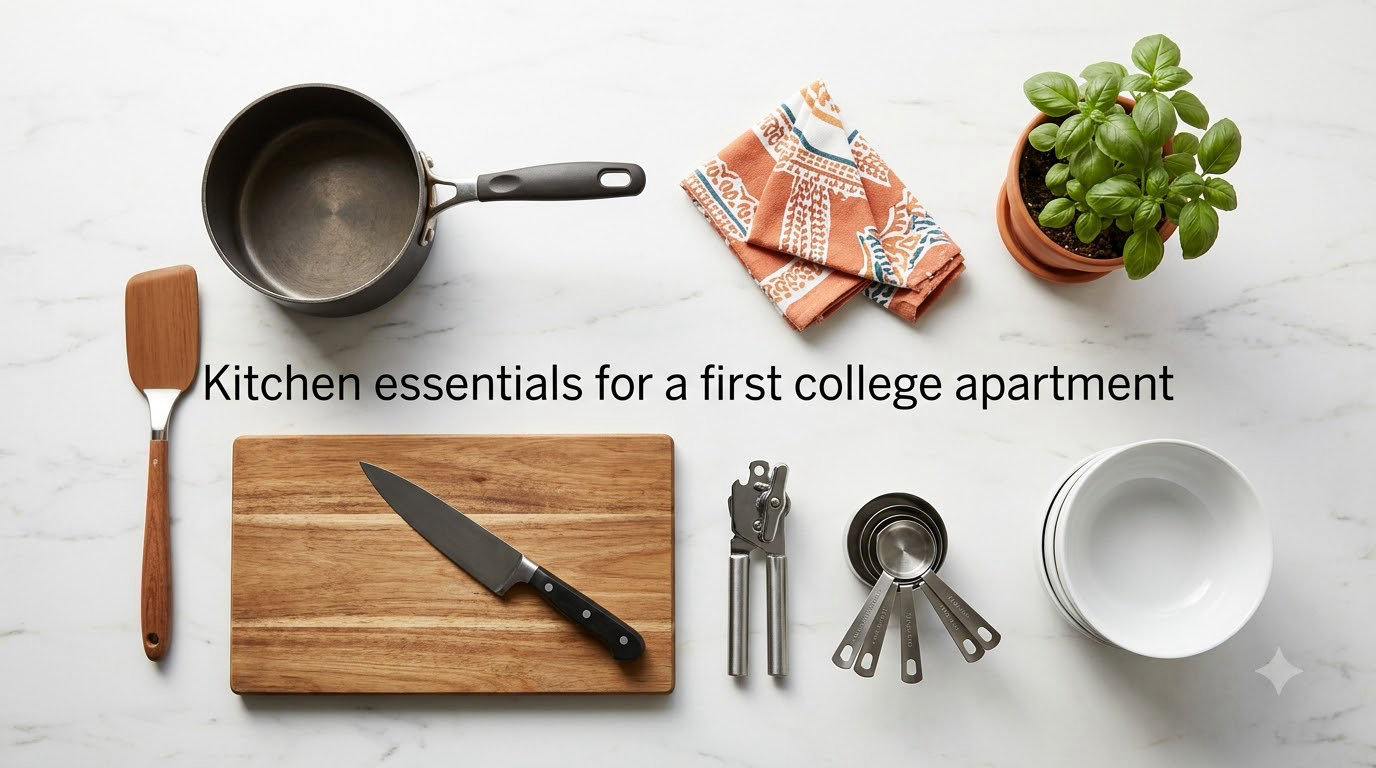
Moving into your first college apartment is exciting, but staring at an empty kitchen can feel overwhelming. After helping dozens of friends set up their kitchens and learning from my own mistakes, I’ve put together this complete guide to kitchen essentials for a first college apartment that actually makes sense for student life.
You don’t need every gadget on the market. What you do need are a few quality basics that’ll handle 90% of your cooking without breaking the bank or cluttering your limited counter space.
Table of Contents
Why Having the Right Kitchen Essentials Matters
Having the right kitchen essentials for a first college apartment saves you serious money in the long run. The average college student spends over $3,000 per year on dining out, but cooking at home with basic equipment cuts that number dramatically.
Good kitchen tools also make cooking enjoyable instead of frustrating. A sharp knife and a quality pan turn meal prep from a chore into something you actually look forward to. And let’s be honest—learning to cook is one of those life skills that pays off forever.
Reddit users in r/cookingforbeginners consistently recommend investing in a decent chef’s knife and sharpener as the single most impactful purchase. As one user put it: “It makes cooking so much easier.”
Essential Cookware for Your College Kitchen
Start with these four pieces of cookware, and you can make almost anything.
10-Inch Skillet or Frying Pan
A non-stick skillet is your workhorse for eggs, stir-fries, grilled cheese, and sautéed vegetables. Go for a 10-inch size—it’s big enough for cooking for two but not so large it hogs your limited burner space.
Non-stick coatings make cleanup easy, which matters when you’re tired after a long study session. Look for one that’s oven-safe up to 400°F so you can start dishes on the stovetop and finish them in the oven.
2-Quart Saucepan
A medium saucepan handles pasta sauces, soups, oatmeal, rice, and reheating leftovers. The 2-quart size is the sweet spot for one or two people without taking up too much cabinet space.
Stainless steel or hard-anodized options last longer than cheap aluminum pans. If you can only afford one, skip the small saucepan and get this size instead.
Stock Pot or Dutch Oven
A 5-6 quart stock pot or Dutch oven is perfect for making pasta, chili, soup, and one-pot meals. Reddit’s cooking community frequently recommends a Dutch oven as “great for curries, pasta, and one-pot meals.”
If you’re tight on budget, a basic stainless steel stock pot works fine. If you can invest a bit more, a cast-iron Dutch oven lasts decades and goes from stovetop to oven.
Rimmed Baking Sheet
A rimmed baking sheet is surprisingly versatile. Use it for roasted vegetables, sheet pan dinners, cookies, and even as a makeshift tray for carrying food. Get a half-sheet size (18×13 inches) that fits standard ovens.
Line it with parchment paper or a silicone baking mat for easy cleanup and to protect the surface.
Must-Have Kitchen Utensils and Tools
The right utensils make prep work faster and safer. Focus on quality over quantity.
Chef’s Knife (8-Inch)
This is the single most important tool in your kitchen. An 8-inch chef’s knife handles chopping vegetables, slicing meat, mincing garlic, and pretty much every cutting task you’ll encounter.
Skip the fancy colored knife sets—they’re hard to sharpen and chip easily, according to experienced cooks. Instead, invest in one good knife and a simple sharpener. Your fingers will thank you.
Cutting Board
Get at least one large cutting board, preferably two (one for meat, one for everything else). Plastic boards are dishwasher safe and easy to sanitize. Wood boards are gentler on knife edges but require hand washing.
A board that’s at least 12×18 inches gives you room to work without food falling off the edges.
Spatulas, Wooden Spoons, and Tongs
You need a silicone spatula for scrambling eggs and scraping bowls, a wooden spoon for stirring sauces, and a pair of tongs for flipping meat and serving salads. These three tools cover most cooking tasks.
Silicone utensils are ideal because they won’t scratch non-stick surfaces and can handle high heat. Get a set that includes a turner-style spatula for flipping pancakes and burgers.
Measuring Cups and Spoons
Even if you cook by feel, you’ll need measuring tools for following recipes, especially baking. A set of dry measuring cups and a liquid measuring cup (Pyrex-style) covers your bases.
Measuring spoons are often forgotten essentials. Get a set that includes 1/4 teaspoon through 1 tablespoon.
Small Appliances Worth the Counter Space
Counter space is precious in a college apartment, so choose appliances that earn their spot.
Electric Kettle
An electric kettle boils water faster than a stovetop and uses less energy. Perfect for tea, coffee, oatmeal, ramen, and even speeding up pasta cooking by starting with boiling water.
This is one of those items that seems optional until you have one—then you can’t imagine living without it.
Blender
A basic blender handles smoothies, protein shakes, sauces, and soups. You don’t need a high-end model—a simple countertop blender or even a personal-sized bullet blender works for most student needs.
If counter space is tight, a stick/immersion blender stores in a drawer and does most of the same jobs.
Coffee Maker
If you drink coffee daily, a simple drip coffee maker or French press saves you hundreds per semester compared to coffee shop visits. A French press takes up almost no space and makes excellent coffee with zero filters needed.
Cold brew makers are another compact option that produces smooth, low-acid coffee overnight.
Pantry Staples Every College Kitchen Needs
Stock these basics, and you’ll always be able to throw together a meal.
Oils and Seasonings
Start with olive oil for cooking and finishing, vegetable oil for high-heat cooking, salt, black pepper, garlic powder, and Italian seasoning. These six items cover most basic recipes.
Add soy sauce, hot sauce, and your favorite spice blend as your cooking develops. Buy small quantities at first—you won’t finish large bottles before they lose flavor.
Grains and Pasta
Keep rice, pasta, and bread on hand as cheap, filling bases for meals. A 2-pound bag of rice stretches across dozens of meals. Pasta is ready in 10 minutes and pairs with almost any sauce or protein.
Oats are another essential—they’re cheap, filling, and work for breakfast or baking.
Canned and Jarred Goods
Canned beans, tomatoes, and broth are the foundation of quick soups, chilis, and sauces. They’re shelf-stable, cheap, and nutritious. Peanut butter, salsa, and a basic pasta sauce round out your pantry.
Stock up when these items go on sale—they rarely expire before you’ll use them.
Dorm Room vs Apartment Kitchen: What’s Different?
If you’re moving from a dorm to an apartment, or wondering what to bring, here’s how the setup differs.
Dorm kitchens typically only allow microwave-safe items and maybe a mini-fridge. You’re limited to a microwave, perhaps a communal kitchen down the hall. Focus on microwave-safe containers, a mug, and utensils.
Apartment kitchens give you a full stove, oven, and more storage. That’s when you need the full cookware setup described above. The investment makes sense because you’ll use these items for years.
If you’re in a dorm now but planning for an apartment next year, buy quality basics gradually instead of cheap sets all at once. That way you’re not replacing everything when you move.
Space-Saving Organization Tips for Small Kitchens
College apartment kitchens are notoriously tiny. These strategies help you maximize every inch.
Use vertical space with stackable containers and shelf risers. A pot rack or wall-mounted magnetic knife strip frees up cabinet space. Nesting bowls and measuring cups store inside each other instead of taking up separate spots.
Keep your most-used items within arm’s reach of the stove. Store rarely used items (like that baking sheet) in harder-to-reach spots. A lazy Susan in the corner cabinet makes everything accessible.
Hooks on the inside of cabinet doors hold measuring spoons, pot holders, and small tools. Over-the-sink cutting boards create extra prep space when you need it.
What to Skip (And Save Your Money)
Not every kitchen gadget is worth your limited budget. Here’s what experienced cooks say you should skip:
Unitaskers—gadgets that only do one thing—are almost never worth it. Garlic presses, avocado slicers, egg separators, and herb scissors all sound useful but end up cluttering drawers. A good knife handles all these tasks.
Full knife sets look impressive but you’ll only use two or three knives regularly. Buy individually instead. Similarly, matching pot and pan sets often include sizes you’ll never use.
Fancy small appliances like panini presses, waffle makers, and fondue sets seem fun but collect dust after the first use. Stick to the essentials and add specialty items later if you actually need them.
Cheap non-stick pans from discount stores warp quickly and the coating flakes off within months. It’s better to buy one quality pan than three that need replacing.
Budget-Friendly Buying Strategies
Setting up your first college apartment kitchen doesn’t require a massive budget. Here’s how to get quality without overspending:
Shop at thrift stores and garage sales first. You can often find quality cookware, especially cast iron and stainless steel, for a fraction of retail price. Estate sales are goldmines for kitchen equipment.
Big-box stores like Target and Walmart carry affordable house-brand options that work well for starter kitchens. IKEA is another solid choice for basic utensils and storage solutions.
Check Facebook Marketplace and college buy/sell groups at the end of each semester. Graduating students often sell or give away perfectly good kitchen equipment. Ask family members if they have duplicates they’d pass along.
Wait for sales events like Black Friday and back-to-school season for small appliances. Many stores offer student discounts during August and September.
Frequently Asked Questions
What are the essentials for a first-time apartment kitchen?
The absolute essentials include a 10-inch skillet, 2-quart saucepan, stock pot, chef’s knife, cutting board, spatula, wooden spoon, tongs, measuring cups, and a rimmed baking sheet. Add basic pantry staples like oil, salt, pepper, pasta, and rice, and you can cook almost anything.
What are some good food ideas for a college apartment?
Easy meals for college apartments include pasta with jarred sauce, stir-fries with frozen vegetables, sheet pan dinners with chicken and roasted vegetables, rice bowls with beans and salsa, scrambled eggs with toast, and soup made from canned broth and frozen vegetables. These meals require minimal equipment and cooking skills.
What are the essential kitchen items for university students?
University students need a good chef’s knife, cutting board, one skillet, one pot, cooking utensils (spatula, spoon, tongs), measuring tools, a can opener, and basic pantry items. An electric kettle and coffee maker are highly recommended for saving money on drinks and quick meals like oatmeal and ramen.
What are some essential supplies for a dorm kitchen?
Dorm kitchens are typically limited to microwave-safe items. Essential dorm supplies include microwave-safe bowls and plates, a mug, basic utensils, food storage containers, dish soap, and a sponge. If your dorm allows it, a mini fridge and electric kettle expand your options significantly.
How much should I spend on college kitchen essentials?
You can set up a functional college kitchen for $150-300 if you shop smart. Prioritize spending on a good chef’s knife ($30-50) and one quality skillet ($25-40). Save money on utensils, measuring tools, and pantry items by shopping at discount stores and thrift shops. Avoid buying everything at once—start with basics and add items as needed.
Conclusion
Setting up your kitchen essentials for a first college apartment doesn’t have to be complicated or expensive. Focus on the core pieces—a good knife, quality skillet, basic pot, and essential utensils—and build from there as you discover what you actually use. The items on this list will handle everything from quick weeknight dinners to meal prep for busy weeks, helping you eat better, save money, and enjoy the independence of cooking in your own space.