
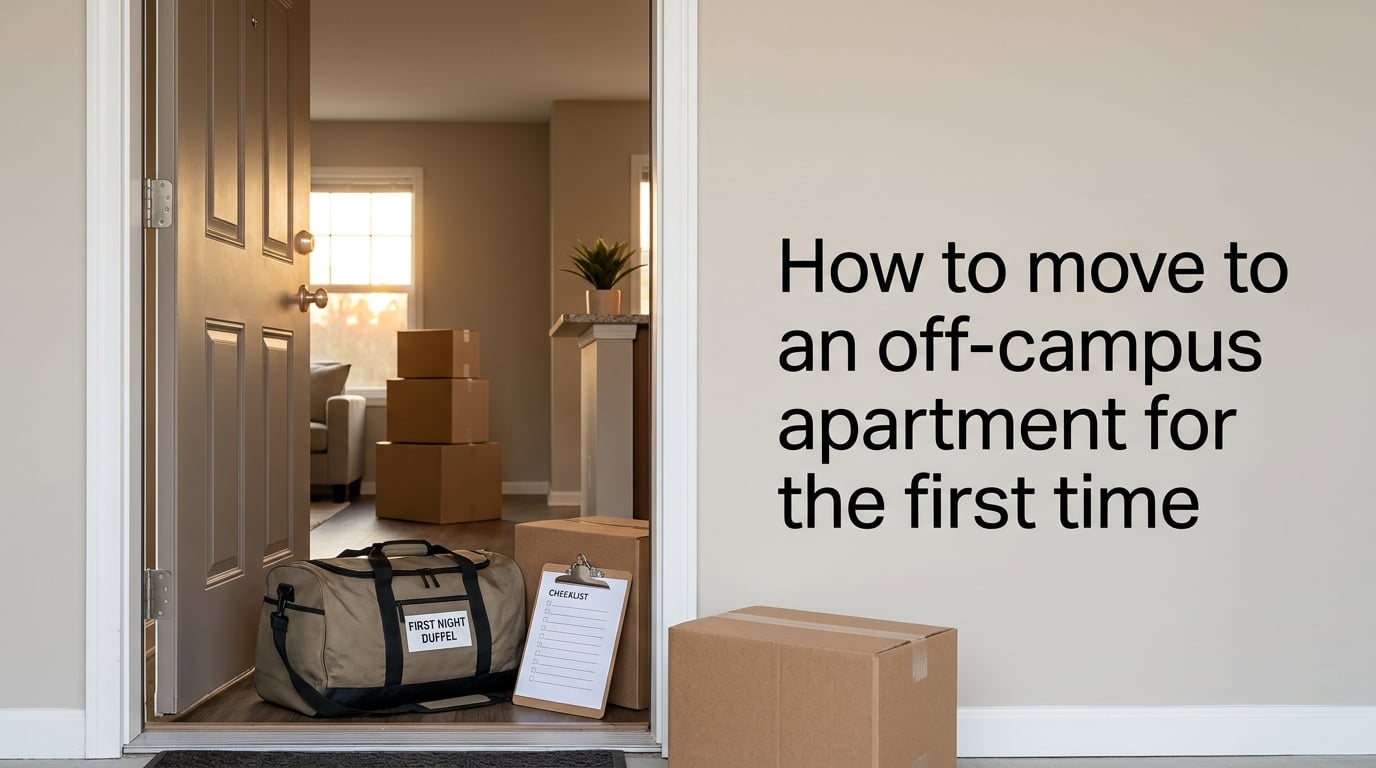
Moving to an off-campus apartment for the first time is a milestone moment that mixes excitement with a heavy dose of “I have no idea what I’m doing.” Between lease terms, security deposits, utility setup, and figuring out which roommates you can actually live with, the to-do list grows faster than your moving boxes.
I remember my first off-campus move like it was yesterday. I signed a lease I barely read, forgot to photograph a cracked window during my walk-through, and learned what “co-signer” meant only after my application was rejected. After talking with dozens of students and housing counselors, our team built this guide so you don’t repeat my mistakes.
This is the exact roadmap we wish someone had handed us. You’ll learn how to budget beyond rent, what to look for in a lease, how to pass a credit check with no history, and what to do the moment you get your keys. By the end, you’ll have a complete timeline, a printable walk-through checklist, and answers to the questions every first-time renter asks.
Table of Contents
Start Planning 3 to 6 Months Before Your Move-In Date
Starting early is the single biggest advantage a first-time renter has. Most competitive apartments in college towns get snapped up 4 to 6 months before the lease starts, especially August and September move-ins.
Reddit users in r/college consistently warn that waiting until a month before classes start means choosing from the leftovers. One student wrote, “I started looking two months before fall semester and ended up in a place with mold problems because it was the only thing left in my budget.” Starting early gives you leverage on price, location, and unit condition.
The 12-Week Countdown Timeline
- Weeks 12 to 10: Set your total housing budget. Calculate rent, utilities, food, transportation, and a 10% buffer for surprises. Start checking your credit score so you know where you stand.
- Weeks 9 to 8: Tour at least 5 to 8 apartments. Photograph every unit, even the ones you don’t love. Comparison makes decision-making easier later.
- Weeks 7 to 6: Submit applications with all documents ready: government ID, pay stubs or financial aid letter, previous landlord reference, and co-signer paperwork if needed.
- Weeks 5 to 4: Review the lease with a fine-tooth comb. Never sign on the spot. Ask the landlord for a digital copy to read at your own pace.
- Weeks 3 to 2: Schedule renter’s insurance, transfer utilities to your name, and order any furniture you’ll need delivered.
- Week 1: Pack non-essentials, build your first-night box, confirm move-in time with the landlord, and forward your mail.
One common first-time renter mistake is skipping the credit check phase. Your score won’t fix itself in 30 days, so the earlier you check, the more options you’ll have.
Build a Realistic Budget Beyond Just the Monthly Rent
The biggest financial shock for first-time renters is what we call the “hidden costs iceberg.” The rent number on the listing is just the part you see above water. Below the surface sit application fees, security deposits, renters insurance, utilities, internet, and moving costs.
The 30% Rule and Rent-to-Income Ratio
Most housing counselors recommend spending no more than 30% of your gross monthly income on rent. For students with part-time jobs, this often means the practical budget is closer to 25%, since your income is unpredictable and tuition is right there competing for dollars.
If your monthly income is $2,000, a $600 apartment fits comfortably. If you’re paying rent with savings or a fixed family contribution, build your own 30% rule from that budget instead of income.
Hidden First-Time Renter Costs
Here is what most first-time renters forget to budget for, based on what students report on r/PersonalFinance and r/ApartmentLiving:
- Security deposit: Usually one month’s rent, sometimes refundable, often not fully.
- First and last month’s rent: Some landlords require both upfront at signing.
- Application fee: Typically $30 to $75 per applicant, and non-refundable.
- Move-in fees: Some buildings charge a non-refundable move-in fee on top of the deposit.
- Renter’s insurance: Often $15 to $25 per month for basic student coverage.
- Utilities activation: Electric, gas, water, internet, and sometimes trash.
- Furniture and essentials: Bed frame, mattress, kitchen gear, cleaning supplies, shower curtain.
- Moving logistics: Truck rental, gas, pizza for friends who help you move.
Sample Monthly Budget for a $700 Apartment
To answer the common question “Is $2,000 a month enough for an apartment?” — it depends on your fixed expenses, but here’s a realistic breakdown many students use as a starting point.
- Rent: $700
- Renter’s insurance: $20
- Electricity: $60
- Gas: $25
- Water and sewer: $40
- Internet: $55
- Groceries: $350
- Transportation: $120
- Phone: $45
- Personal and school supplies: $100
That puts total monthly expenses around $1,515, leaving roughly $485 in a $2,000 budget for emergencies, savings, and the occasional pizza night. Tight, but workable.
FAFSA and Financial Aid Impact
Yes, FAFSA can help you pay for off-campus housing. Your federal student aid includes a Cost of Attendance figure that covers room and board whether you live on campus or off. Living off-campus does not disqualify you from need-based aid, but you cannot use aid for rent until the semester starts and funds disburse.
Two practical implications: First, you still need cash on hand for the security deposit and first month’s rent before your aid hits your account. Second, you must report your housing status accurately to your financial aid office, because changes to your living situation can shift your remaining aid.
What to Know Before Signing Your First Lease
The lease is the most important legal document you will sign as a college student. Skim it wrong and you could lose your deposit, get stuck with a bad roommate clause, or be on the hook for repairs you didn’t cause.
Key Lease Clauses to Read Carefully
- Lease term and renewal: Does it auto-renew? What is the notice period to leave?
- Rent escalation clause: Can the landlord raise rent mid-lease? Most can’t, but some can.
- Early termination fee: What’s the cost if you transfer schools or need to leave early?
- Maintenance responsibilities: Are you responsible for lawn care, snow removal, or pest control?
- Guest and occupancy policies: How many nights can a guest stay? Are overnight guests even allowed?
- Subletting clause: Can you sublet your room if you study abroad for a semester?
- Pet policy: Even a goldfish can violate a no-pets clause in some leases.
Red Flags in Rental Agreements
Walk away or negotiate hard if you see these in a lease:
- Vague language about “maintenance and repairs” with no specifics.
- A security deposit larger than your state’s legal maximum.
- “Landlord may enter at any time” without proper notice clauses.
- Joint and several liability for all roommates, meaning one roommate skipping rent could make you pay their share.
- Waiver of your right to a court hearing in a dispute.
Co-Signer Requirements and Alternatives
Many first-time renters under 21 with no credit history will be asked for a co-signer. A co-signer is a parent or guardian who promises to pay rent if you can’t. It is a serious legal obligation for them.
If you cannot get a co-signer, your alternatives include: paying a larger upfront deposit (sometimes called “last month plus”), using a rent reporting service to build credit history fast, or finding apartments that don’t run credit checks (often smaller landlords or individual house rentals).
Questions to Ask Before Signing
Bring this list to your lease signing:
- How are maintenance requests submitted and what is the typical response time?
- Where do I park, and do I need a permit?
- Are utilities included in rent, and what is the average monthly cost?
- What is the policy on painting walls or hanging shelves?
- Who is responsible for pest control?
- What is the process for getting my security deposit back?
- Is there a written rule about quiet hours?
How to Get an Apartment With No Credit History
First-time renters without credit face a real chicken-and-egg problem: you need an apartment to build rental history, but landlords want rental history to give you an apartment. Most students hit this wall at their first application.
Why First-Time Renters Struggle
Landlords use credit scores and background checks to predict whether you’ll pay on time. With no score, there’s no data to predict from. Many landlords default to “no” rather than take the risk.
The good news is that landlords often care more about income verification and rental references than they do about your score. A steady paycheck or financial aid disbursement letter can outweigh a thin credit file.
Building Credit Before You Apply
If you have 6 months before applying, these moves help:
- Open a secured credit card and use it for one monthly bill, paying it off in full.
- Become an authorized user on a parent’s card (with their permission).
- Have your phone or streaming bills reported to a rent-reporting service.
- Pay any student loans on time, since these already build credit.
Co-Signer and Guarantor Options
If a co-signer is available, that’s usually the fastest path. If not, ask about third-party guarantor services like Rhino or TheGuarantors, which act as a co-signer in exchange for a fee, often less than a full month’s rent.
Walk-Through Inspection Checklist Before You Sign
The walk-through is your one chance to document the condition of the unit before you take responsibility for it. Skipping this step is the number one reason students lose their security deposits at move-out.
What to Test During the Walk-Through
Bring this checklist and your phone with the timestamp feature turned on:
- Plumbing: Run every faucet for 30 seconds. Flush every toilet. Check under every sink for leaks.
- Appliances: Test the stove, oven, microwave, dishwasher, and refrigerator. Confirm the dryer vent is connected.
- Electrical: Plug a phone charger into every outlet. Test every light switch, including ceiling fans.
- Heating and cooling: Turn the thermostat to heat and AC. Listen for strange noises, smell for burning.
- Windows and doors: Open and close every window. Check locks work. Look for cracked glass or broken seals.
- Walls and floors: Look for stains, holes, scratches, and water damage. Photograph everything.
- Pest signs: Check behind the stove and fridge for droppings. Look in cabinets for evidence of bugs.
How to Document Existing Damage
Take timestamped photos and short videos of any pre-existing damage. Send them to your landlord in writing within 24 hours of move-in so there is a record. Save these files somewhere outside your phone — cloud storage or email to yourself works well.
Students on r/ApartmentLiving repeatedly emphasize: “If it isn’t in writing and timestamped, it didn’t happen.” Landlords dispute damage claims frequently, and dated evidence is the strongest defense.
What Counts as Normal Wear and Tear
Normal wear and tear includes small nail holes, faded paint, and worn carpet from regular use. Damage includes large holes, burns, broken tiles, and stains. Most states have specific rules about what landlords can and cannot deduct from your deposit.
Look up your state’s tenant rights page before move-in. Knowing the law protects you when the deposit refund fight happens at the end of the lease.
Set Up Renters Insurance, Utilities, and Your Address Change
Most first-time renters underestimate how much setup work happens between signing the lease and getting the keys. Skipping any of these steps can mean a cold shower, a dark apartment, or worse — a denied claim after a pipe burst.
Why Renters Insurance Matters for Students
Renters insurance covers your belongings if they’re stolen, damaged by fire, or destroyed by water. It also includes liability coverage if someone is injured in your unit. The average student policy runs between $15 and $25 per month, often less than your monthly streaming subscriptions.
Many landlords now require proof of renters insurance before handing over the keys. Even when not required, it’s a small cost for protecting your laptop, textbooks, and clothing.
Which Utilities to Set Up and When
About two weeks before move-in, contact these providers:
- Electricity: The most common setup, often through a regional provider.
- Gas: Sometimes bundled with electric, sometimes separate. Required for gas stoves and hot water.
- Water and sewer: Sometimes included in rent, especially in larger complexes.
- Internet: Schedule installation for move-in day, since techs book up fast at semester start.
- Trash and recycling: Sometimes handled by the city, sometimes by a private hauler.
Updating Your Mailing address
Forward your mail through USPS the day you sign your lease, not the day you move. That way, anything sent to your old address in the gap period still reaches you. Also update your address with your bank, school, employer, and any subscription services.
Moving Day Logistics and First-Night Essentials
The physical move is the part most students plan for last, but it’s also the part that goes wrong fastest. A few smart choices the week before will save you a chaotic moving day.
Packing Strategy and Decluttering First
Do not pack anything you haven’t touched in the past 12 months. Dorm life is the perfect time to purge. Sell or donate anything you don’t need, then pack only what survives the cut.
Use free boxes from grocery stores, campus bulletin boards, or Buy Nothing Facebook groups. Label every box on the top and one side with the destination room. This single habit saves 30 to 60 minutes of unpacking time.
Building Your First-Night Box
Pack a separate box or duffel bag with everything you need for the first 24 hours. Do not let this box go into the moving truck last — keep it with you.
- Toilet paper, paper towels, and hand soap
- Phone charger and power strip
- Bed sheets, pillow, and a blanket
- One change of clothes plus a jacket
- Basic first-aid kit and any daily medications
- Snacks, a water bottle, and a reusable mug
- Cleaning wipes, trash bags, and a small flashlight
- Toolkit: screwdriver, hammer, measuring tape, picture hangers
Move-In Day Timeline
Arrive at your new apartment at the agreed time. Do another quick walk-through with your landlord to confirm the unit is in the same condition as your photos. Pick up keys, garage remotes, mailbox keys, and any parking permits.
Test every lock, every smoke detector, and every appliance one more time. Confirm that the utilities are actually on. Move in, set up your bed first so you have a place to collapse at the end of the day, and save the rest for the days that follow.
Roommate Communication, Chores, and Conflict Prevention
The roommate situation is what makes or breaks off-campus living. Living with people you barely know (or even people you thought you knew well) takes intentional communication from day one.
Setting Expectations Before Move-In
Have the awkward money conversation before anyone signs a lease. Discuss how rent and utilities will be split, when bills are due, and what the late payment policy looks like. The most common roommate fights are about money, and most of them are preventable.
Building a Roommate Agreement
A roommate agreement is not legally required, but it solves 90% of conflicts before they start. Cover these topics:
- Quiet hours and study expectations
- Guest policy, including overnight stays
- Chore rotation and cleaning standards
- Shared grocery and supply expectations
- Thermostat and temperature preferences
- How conflicts will be resolved, including a written escalation process
Handling Conflict Before It Grows
Address small issues in real time. A passive-aggressive text three weeks after the fact will explode a problem that could have been solved in five minutes. Schedule a monthly roommate check-in — 30 minutes over coffee — to clear the air before resentment builds.
Settling In: Furnishing, Cooking, and Life Skills
The first month off campus is when the real learning happens. You’ll discover that grocery shopping for yourself is harder than it looks, that you actually need to clean the bathroom, and that putting a shelf on the wall requires more than a hammer.
Furnishing on a Student Budget
Skip the new furniture trap. Most of what you need can be sourced cheaply or free:
- Buy Nothing groups: Free furniture, kitchenware, and decor from neighbors moving out.
- Thrift stores and estate sales: Solid wood furniture for a fraction of retail.
- End-of-semester sales: Other graduating students often sell everything they own.
- IKEA and Target basics: Spend strategically on the items you use daily, like a mattress and a desk chair.
Basic Cooking and Grocery Budgeting
Eating out will drain your budget faster than anything else. Cook at home four nights a week and your grocery bill stays manageable. Learn five simple meals you genuinely enjoy and rotate them: pasta with sauce, rice and beans, stir-fry, sheet-pan chicken, and a good soup.
Plan meals around grocery store sales. Buy staples in bulk only if you’ll use them before they expire. Frozen vegetables are your friend and they last forever.
Learning Simple Household Repairs
YouTube is your repair manual. Learn to fix a running toilet, replace a furnace filter, reset a tripped breaker, and patch a small drywall hole. These four skills alone will save you dozens of maintenance requests and keep your landlord happy.
Ask your landlord which repairs are your responsibility and which are theirs. Most landlords appreciate tenants who can handle minor issues rather than calling for every small fix.
Frequently Asked Questions
What should I do when I first move into a new apartment?
Start by doing a fresh walk-through with your landlord, document any new damage with timestamped photos, test every utility and appliance, locate the circuit breaker and water shutoff valve, then unpack your first-night box before tackling the rest. Verify your renters insurance is active and confirm your address change went through.
Is $2000 a month enough for an apartment?
For most students, $2,000 a month is enough if rent stays under $700 and the rest covers utilities, groceries, transportation, and insurance. Tight budgets require keeping rent at or below 30% of income, choosing roommates to split costs, and building a small emergency buffer. If rent alone exceeds $1,200, $2,000 a month gets tight fast.
Will FAFSA give me money living off-campus?
Yes, your federal student aid includes a Cost of Attendance that covers off-campus rent and utilities, but you must report your housing status to your financial aid office. Aid disburses at the start of the semester, so you’ll still need upfront cash for the security deposit and first month’s rent.
How hard is it to get an apartment as a first-time renter?
It’s harder than experienced renters expect because landlords want credit history, rental references, and proof of stable income, all of which first-time renters lack. The process gets easier with a co-signer, a larger upfront deposit, or proof of steady income from a job or financial aid. Starting 3 to 6 months early and applying to multiple places at once improves your odds.
Your Next Steps for a Successful First Off-Campus Move
Knowing how to move to an off-campus apartment for the first time comes down to preparation more than luck. Start 3 to 6 months early, build a budget that includes the hidden costs, read your lease like a lawyer, and document your walk-through with timestamps.
Pick one action from this guide and do it today: check your credit score, draft a roommate agreement template, or call your school’s financial aid office to confirm how off-campus status affects your aid. Small steps now prevent expensive mistakes the day your lease starts. Welcome to off-campus living. You’ve got this.