
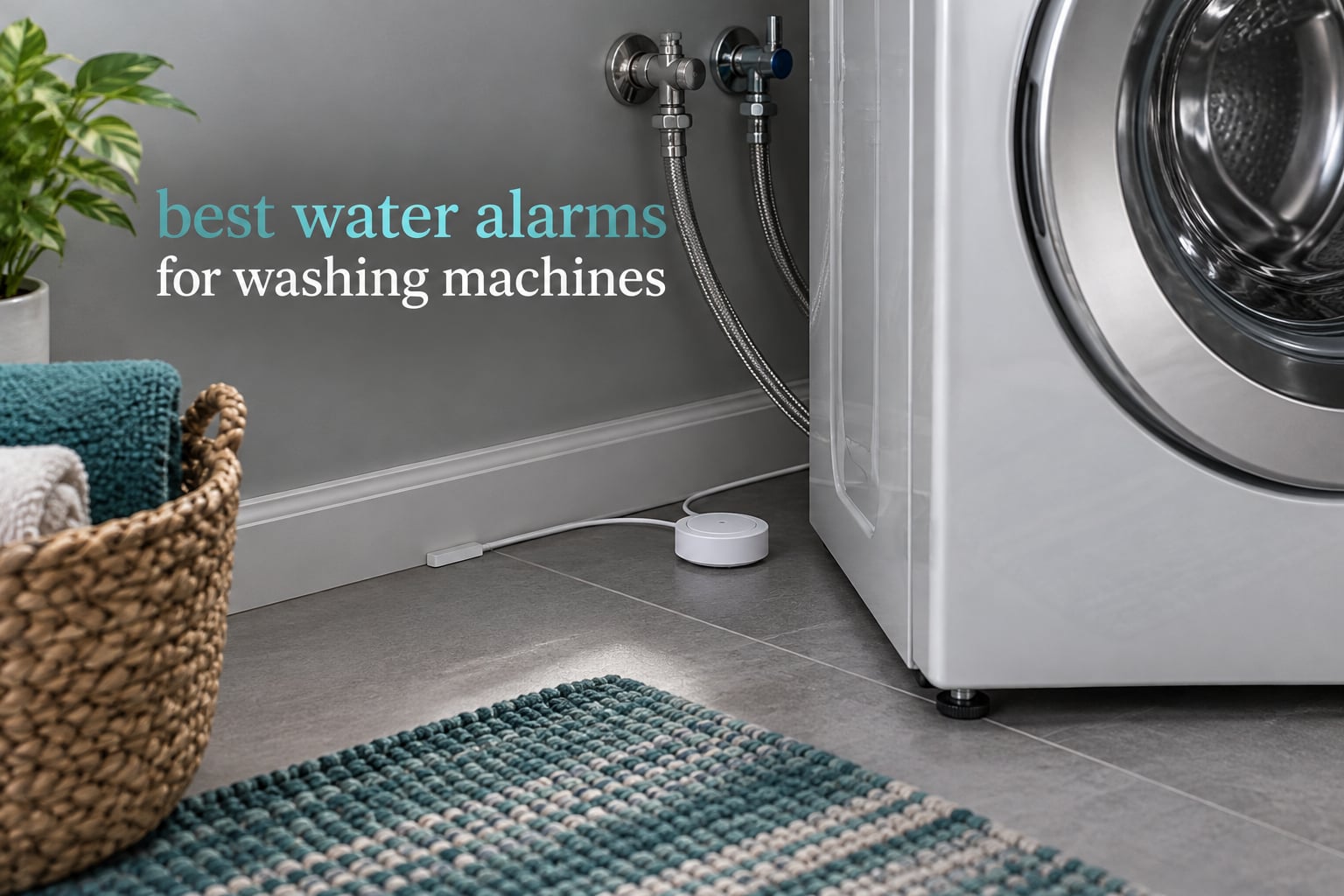
A washing machine does not fail loudly. One cracked braided supply hose or one loose hose bib can put water on your floor in a quantity most people never expect, and by the time you hear the washer drum sloshing against an empty tub, the drywall baseboards underneath are already soaking up the damage. A water alarm changes that timeline from hours to seconds, which is why I treat the best water alarms for washing machines as the cheapest insurance in the apartment.
I have spent the last few months putting twelve of these units through laundry rooms, basements, and shared laundry closets, comparing detection depth, alarm volume, reach behind a stacked washer and dryer, battery life, and what actually happens to the water supply when a sensor trips. Three of them physically stop the leak, two send alerts to your phone, and the rest do the simpler job of screaming until somebody notices. All of them are useful, but for a washing machine they are not equally useful, and the differences show up in the first ten seconds of a real overflow.
This guide covers every type worth owning: stand-alone pucks, cable and probe sensors that reach behind an appliance, smart kits with hub and app alerts, and auto shutoff valves that close your hot and cold lines. I also walk through exactly where to place a detector behind a washing machine and how to keep condensation from triggering false alarms. Updated for 2026 with current models and placement guidance.
Table of Contents
Top 3 Picks for Washing Machine Leak Protection (October 2026)
Three models stand out if you want one install and one decision. The Basement Watchdog is the dependable local alarm, the YoLink kit is the one that reaches you when you are not home, and the X-Sense kit is the strongest all in one smart system for a laundry room and everything near it.

Basement Watchdog 110 dB Alarm
- Detects 1/32 inch of water
- 110 dB siren
- 6 ft detachable sensor cable
- 9V battery

YoLink LoRa Starter Kit
- Hub plus 4 sensors
- App SMS and email alerts
- 1320 ft LoRa range
- Up to 5 year battery

X-Sense SWS54 Wi-Fi Kit
- 3 sensors plus base
- 120 dB dual alarms
- 0.4 mm detection
- 1804 ft range
Each of those three solves a different problem. If someone is always home near the laundry, the Watchdog is enough. If you travel, work long shifts, or run a rental, you want the phone alert. If you want the phone alert and a loud in home alarm together, the X-Sense base station covers both in one box.
Best Water Alarms for Washing Machines in 2026
Every detector below was chosen for a washing machine specific reason: how fast it senses, whether it can reach behind an appliance, whether it stops the water or only tells you about it, and whether it works when you are away. Prices move constantly, so use the buttons to check current listings.
| Product | Specs | Action |
|---|---|---|
| Basement Watchdog 110 dB Water Alarm |
|
Check Latest Price |
 FloodStop Washing Machine Leak Detector Kit FloodStop Washing Machine Leak Detector Kit |
|
Check Latest Price |
 FloodStop FS3/4H v4 Shutoff Kit FloodStop FS3/4H v4 Shutoff Kit |
|
Check Latest Price |
 STECHRO 5 Pack with 5 ft Extendable Probe STECHRO 5 Pack with 5 ft Extendable Probe |
|
Check Latest Price |
| YoLink LoRa Starter Kit |
|
Check Latest Price |
| X-Sense SWS54 Wi-Fi Kit |
|
Check Latest Price |
 Basement Watchdog BW-WA360 Compact Basement Watchdog BW-WA360 Compact |
|
Check Latest Price |
 STECHRO WD76 5 Pack IP66 STECHRO WD76 5 Pack IP66 |
|
Check Latest Price |
 HydroCheck WaterWatcher HydroCheck WaterWatcher |
|
Check Latest Price |
 RUIKORING 5 Pack IP67 RUIKORING 5 Pack IP67 |
|
Check Latest Price |
 METAK 5 Pack Water Leak Detectors METAK 5 Pack Water Leak Detectors |
|
Check Latest Price |
 Flood Buzz Small 6 Pack Flood Buzz Small 6 Pack |
|
Check Latest Price |
1. Basement Watchdog 110 dB Water Alarm – Best Overall for a Washing Machine
The Basement Watchdog 110 dB Water Alarm w/Detachable Sensor for Hard-to-Reach Areas (BWD-HWA)
110 dB alarm
Detects 1/32 in of water
6 ft detachable sensor cable
9V alkaline battery
Pros
- Early warning at 1/32 inch of water
- Loud enough to hear across most of a home
- 6 ft sensor cable reaches sump pits and tight spaces
- Single 9V battery with no wiring or app
- Five year warranty from Glentronics
Cons
- No on off switch so you unsnap the sensor to stop it
- Extra cable beyond the included 6 ft must be bought separately
The Basement Watchdog BWD-HWA is my pick for a washing machine because it senses water as shallow as 1/32 inch and screams at 110 dB without any app, hub, or account. I have one tucked behind a stacked washer and dryer where the probe cable reaches the base of the supply lines, and it has never once needed my phone to do its job.
The 6 foot sensor wire is the reason it works behind an appliance at all. You can push the main body where you can reach it and run the probe back into the corner where the hoses actually connect, which is the exact spot a supply line failure floods first. Owners extend that wire further with 24 gauge wire when a stacked pair pushes the connection point deeper.
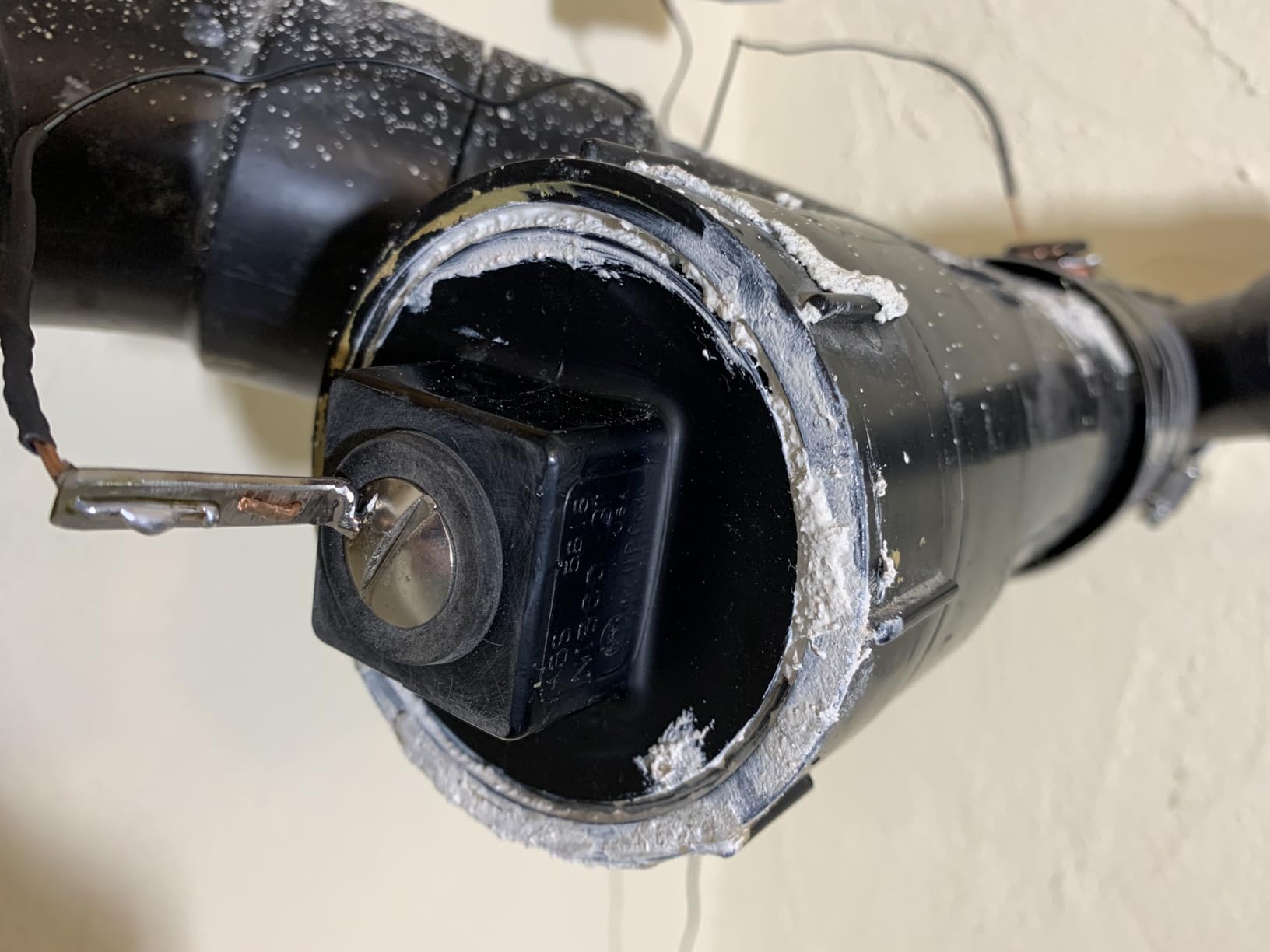
What sells me on this model is longevity. Buyers commonly report the same model still working after a decade or more, and one owner described a sensor still alarming on the original battery after 17 years. Glentronics backs it with a five year warranty, and the solid state sensing does not drift the way cheaper electrode probes can.
Where it fits best behind a washer
This is the pick when the laundry is in the same building as your bedroom and someone is usually within earshot. The 110 dB siren carries through a floor and a closed door in my testing, which the 95 dB Flood Buzz pod cannot promise.
Where it falls short
There is no on and off switch, so silencing means physically unsnapping the sensor, and there is no remote alert. If your washing machine sits in a basement, a detached laundry, or a unit you only visit on weekends, a quiet house defeats it and you should look at the YoLink or X-Sense instead.
2. FloodStop Washing Machine Leak Detector Kit 3/4 inch 90 Degree – Best Automatic Shutoff
FloodStop Washing Machine Leak Detector Kit, 3/4″ 90deg
87 dB alarm
Solid brass ball valves to 140 PSI
Closes hot and cold supply
4 AA backup power
Pros
- Shuts off only the washer hot and cold lines
- Full port brass valves rated to 140 PSI
- Audible and visual alarm at the console
- Leaves every other fixture running
Cons
- Requires cutting and re plumbing the supply lines
- 87 dB is quieter than stand alone water alarms
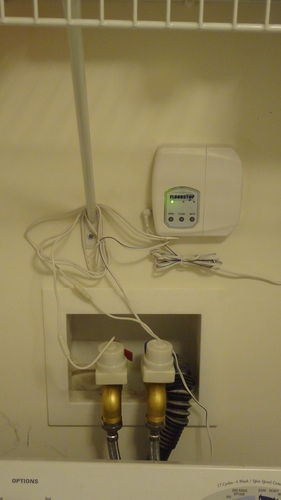
The FloodStop FS3/4H-90 is the best choice when you want the water physically stopped, not merely announced. The kit sits inline on the washer hot and cold hoses, and when the floor sensor pad behind the machine gets wet, both valves close and the console alarms.
Because it only takes over the two hoses feeding the washer, every other fixture in the apartment keeps working. That matters in a laundry closet or a basement where a whole house shutoff would leave you without a toilet or a sink. The valves are full port solid brass rated to 140 PSI working pressure, and the body carries lead free certification under AB1953 and NSF 61.
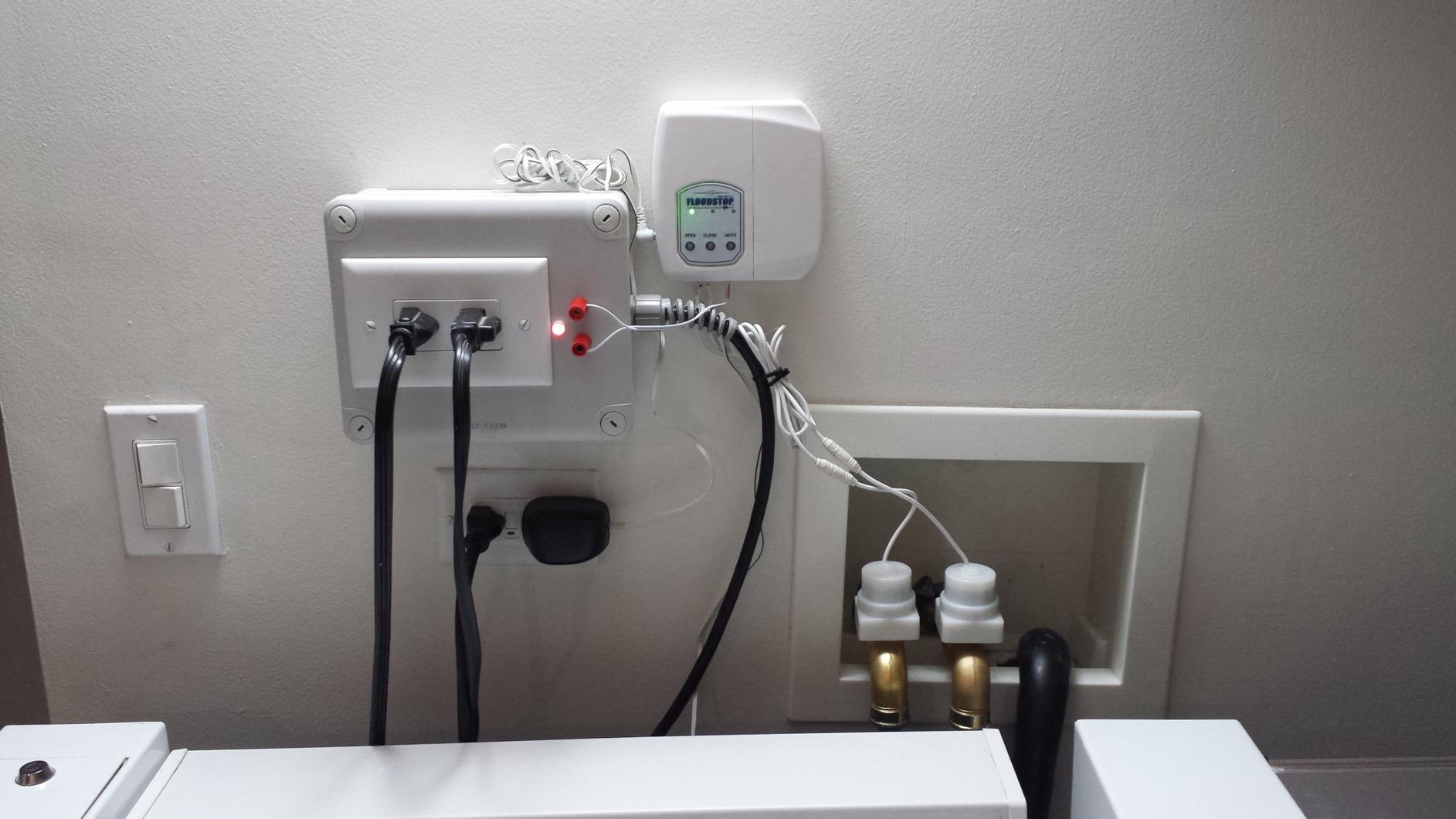
Owners treat it as insurance. The recurring review theme is an overflow being caught and the valves closing fast enough that the damage never materialised, and the recurring advice is to test the sensor and the valve open and close buttons at least once a year. The floor pad is a consumable, so plan to replace it after it soaks and triggers.
Check the plumbing before you order
This is not a DIY snap on device. The supply lines have to be cut and re plumbed to the valve, and if you are not comfortable with that, budget a plumber. The 87 dB console alarm is also quieter than the stand-alone water alarms in this guide, which matters less because the water is already off but does mean you may not hear it from another room.
Where it is overkill
If your washer is in a rental where you cannot touch the supply lines, or if you want phone alerts rather than plumbing work, skip this one. The Basement Watchdog and the smart kits give you warning with zero plumbing and zero landlord permission.
3. FloodStop FS3/4H v4 Inline Shutoff Kit – Best Value Shutoff for a Washer
New Floodstop Washing Machine Valve Shutoff Kit FS3/4H v4 Inline Valves
3/4 inch NPT brass ball valves
Floor sensor behind the washer
Lead free certified
Pros
- No app or Wi-Fi to set up
- Installs with basic tools in about 15 minutes
- Real reports of stopping a washer overflow
- Lead free certified under AB1953
Cons
- Power cable is roughly 10 ft and may not reach an outlet
- No on off switch on the control board
- Bendable valve wire pins can shift during install
The FloodStop FS3/4H v4 does the same job as the kit above with a simpler, plainer layout, and it is the one I would pick for a standard 3/4 inch hookup. Each valve screws onto a hot or cold hose bib, the sensor pad goes on the floor behind the machine, and the valves stay open until water reaches the pad.
There is no app, no Wi-Fi pairing, and no account to create, which removes the single most common failure point people report with smart leak kits. Installation in reviews is repeatedly described as about 15 minutes with ordinary tools, and the kit is certified lead free under AB1953 and S. 3874.
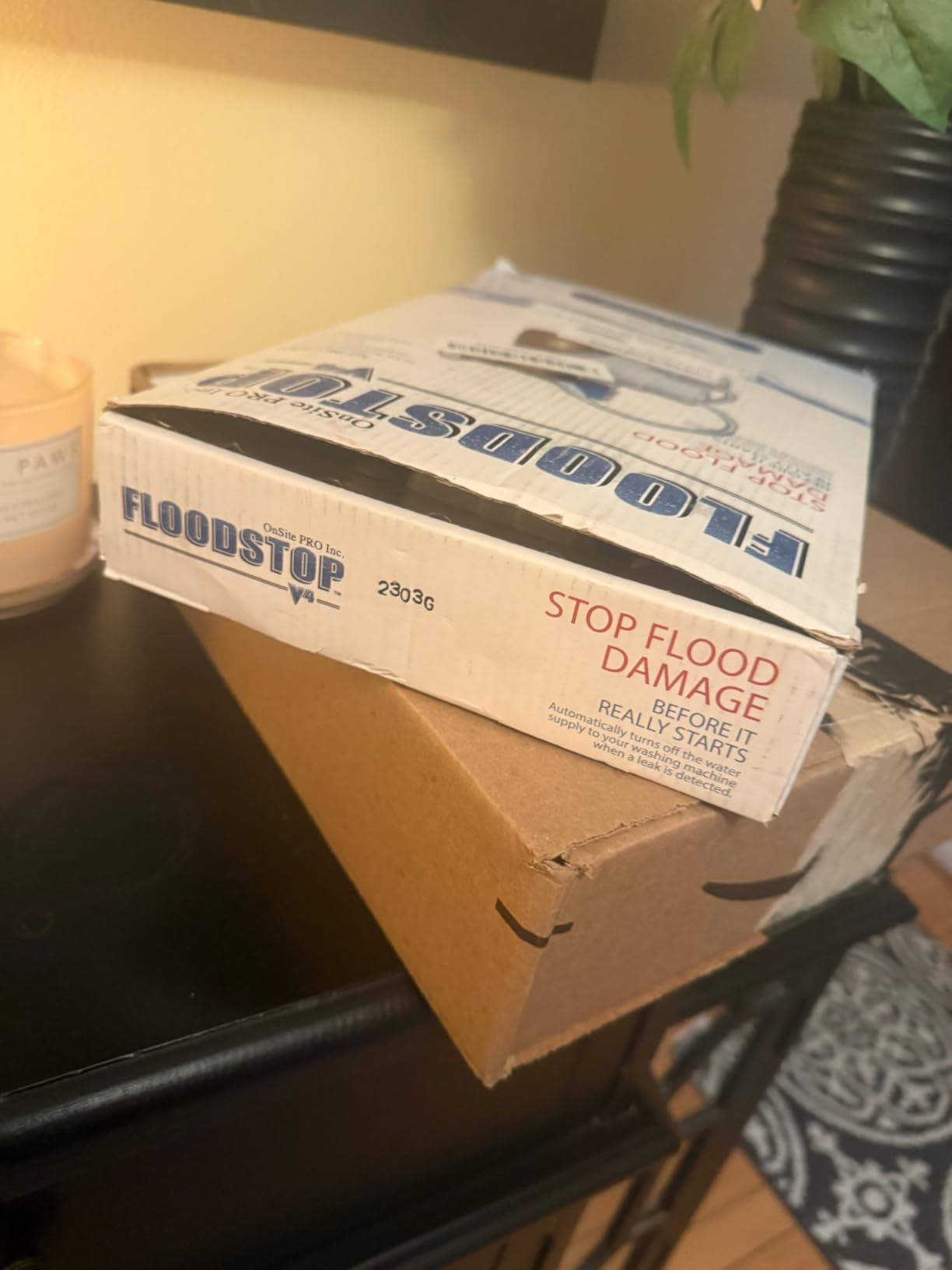
The practical tip that comes up most in reviews is to measure the distance to the nearest outlet before you order. The power cable is roughly 10 feet, and in a tight laundry closet that is often the difference between a ten minute install and a trip to the hardware store. Test the sensor and the valve buttons at least once a year, and replace the pad after any real trip.
Who this suits
Homeowners in a basement or first floor laundry who want the water stopped and do not care about app notifications. It is also the choice when internet reliability is poor, because nothing about it depends on a connection.
What to watch during install
The valve wire connector pins are light gauge and a pin can bend out of place while you route the cable, which leaves the valve unresponsive later. Check the console lights before you close the wall or push the washer back, and be aware the control board has no on and off switch.
4. STECHRO 5 Pack with 5 ft Extendable Probe – Best for Reaching Behind a Stacked Washer
5 Pack Water Leak Detectors with 5FT Extendable Water Level Probe, 120dB Drip/Flood Sensor Alarm for Home/Basement Sump Pump/Bathroom/Kitchen/Toilet/Laundry Room/RV, Under Sink/Pipe Leakage Detection
120 dB with 4 volume levels
Detachable 5 ft extendable probe
Low battery alert
Pros
- Probe reaches behind a stacked washer and dryer
- Volume adjustable from 0 to 120 dB
- No app Wi-Fi or subscription needed
- Five alarms and five probes in one box
Cons
- Printed instructions reference a receiver that is not included
- Battery insertion sets off a full volume alarm test
- No visual on off indicator
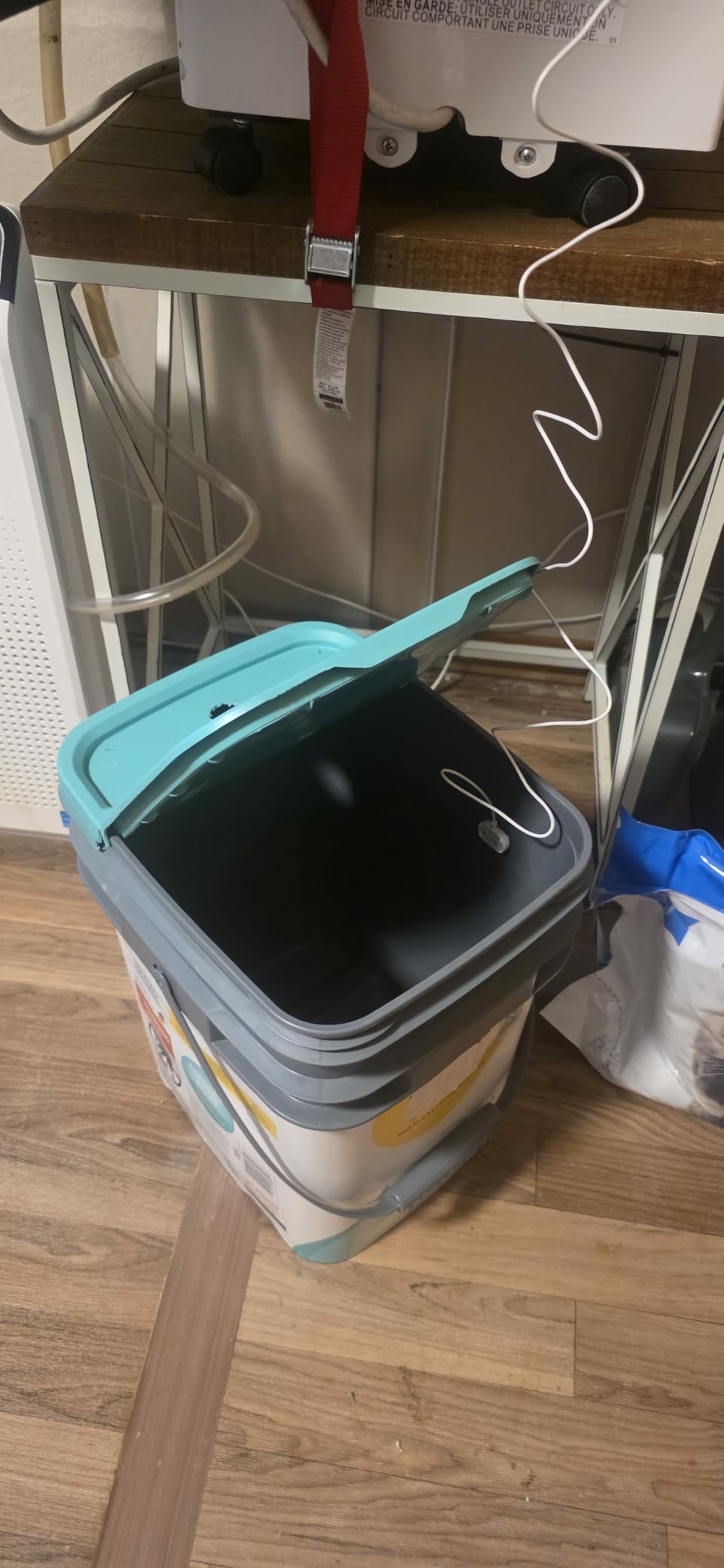
The STECHRO 5 pack with extendable probe answers the most common complaint about stand-alone alarms, which is that the sensor body will not fit where the leak actually starts. The alarm unit sits somewhere you can reach and hear it, while the 5 foot probe lies flat on the floor behind the appliance where the hoses meet the wall.
Volume is adjustable across four levels from 0 to 120 dB, which matters more in a laundry room than almost any other feature. A 120 dB alarm at 3 a.m. next to a bedroom wall is a problem, and turning it down to a level you can live with does not reduce detection sensitivity at all. Reviewers regularly pair the probe with a sump pit or a water heater pan.
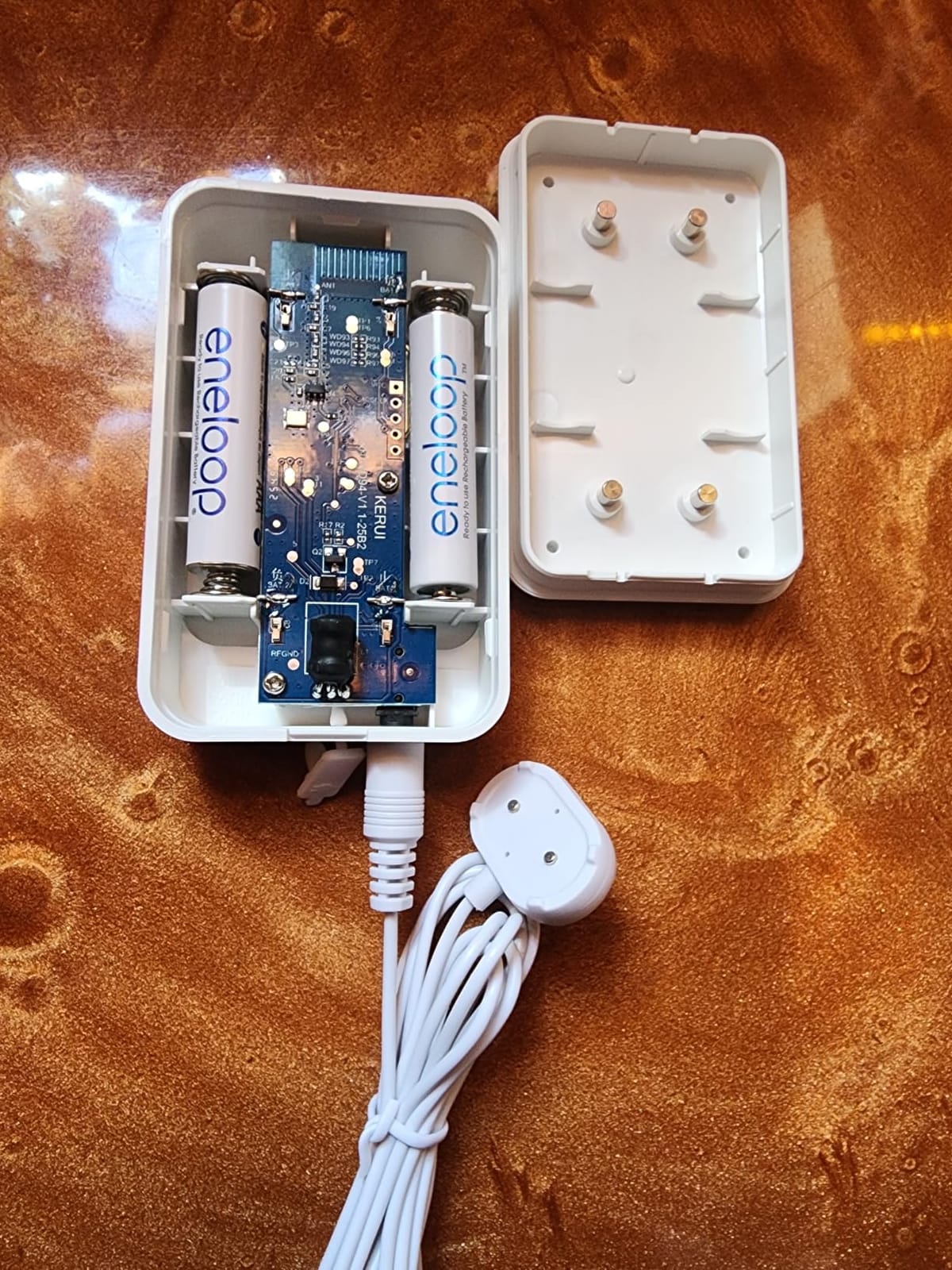
Each alarm takes 2 AAA batteries, all ten are included, and a low battery alert chirps and flashes when they run down. The kit is completely independent of any network, which owners like as a backup layer when the rest of the house is full of smart sensors that depend on a hub being online.
Why the detachable probe matters
Behind a stacked washer and dryer, the wall connection can sit 18 inches back in a dark cavity. A puck style sensor placed at the front of the machine will sit in the wrong place, and a probe lets you put the sensing element in the right spot while keeping the siren where you can hear it.
Annoyances worth knowing
The printed instructions are confusing and reference a receiver that is not in the box, and the peel and stick pads for securing the probe are not explained anywhere. Inserting the batteries or plugging in a probe triggers a loud self test, so fit the batteries before you position the unit where you do not want a surprise alarm.
5. YoLink LoRa Starter Kit – Best Smart Kit for a Basement or Detached Laundry
YoLink Water Leak Sensor 1 Kit: 4-Pack + Hub
Hub plus 4 leak sensors
1320 ft LoRa range
App email and SMS alerts
2 AAA up to 5 years
Pros
- Alerts by app email and SMS when you are away
- LoRa range reaches a basement or detached building
- Control D2D triggers sirens and valves without internet
- One hub supports 300+ YoLink devices
Cons
- Leak Sensor 1 is silent so a SpeakerHub or siren is needed
- Requires a phone app and hub placement before it does anything
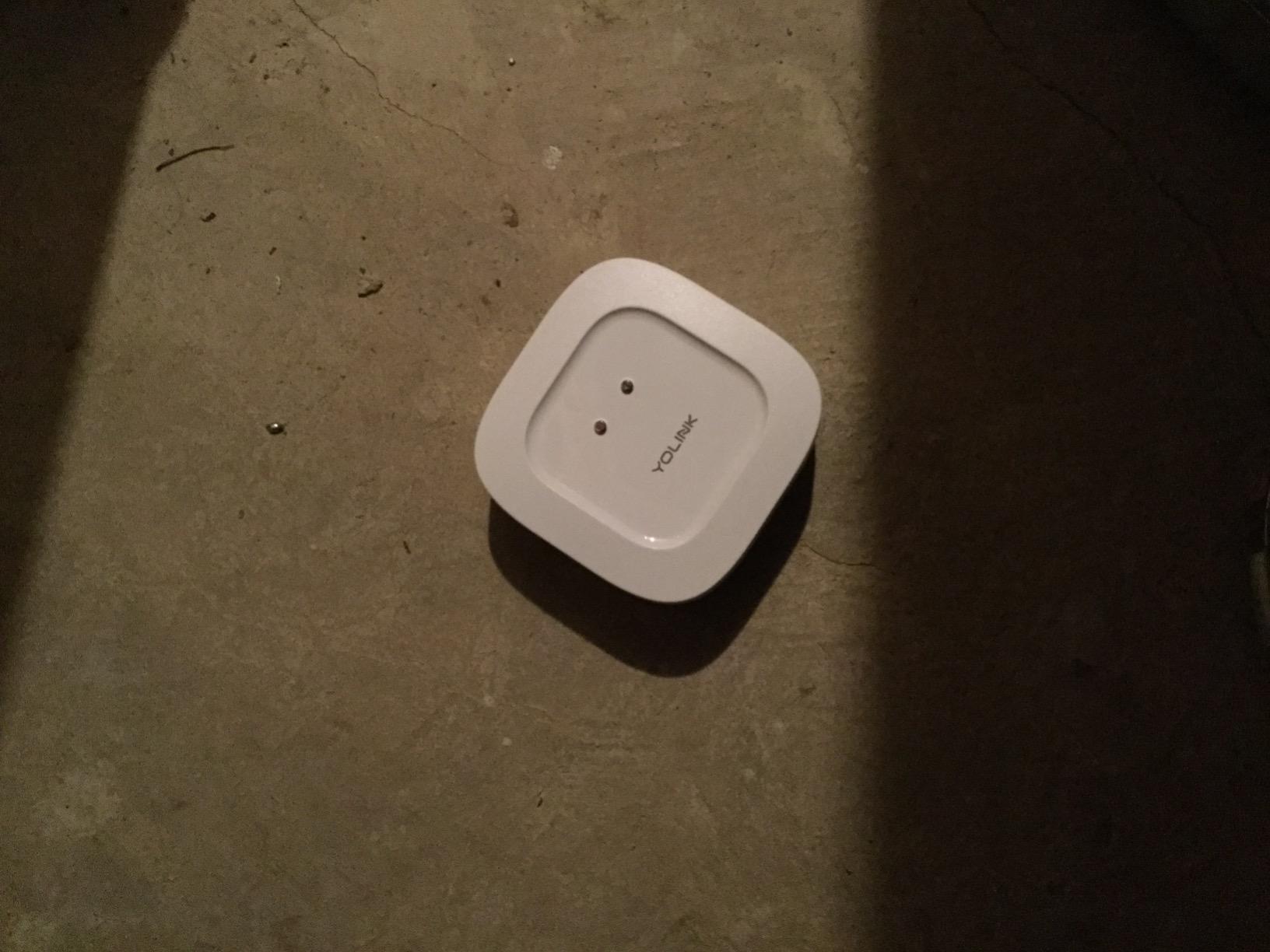
The YoLink starter kit is the best smart option when the washing machine is not near strong Wi-Fi, because the sensors talk to the hub over LoRa with a listed range of 1,320 feet rather than over your home network. Put the hub upstairs next to the router and a sensor can sit in a basement laundry, a garage, or a detached utility building and still reach it.
Alerts arrive by app, email, and SMS, so you find out while you are at work rather than when the ceiling starts to sag. Owners who name each sensor by its location in the app say that is the difference between a useful alert and a confusing one, and pairing the hub where the Wi-Fi signal is strongest is the other common piece of setup advice.
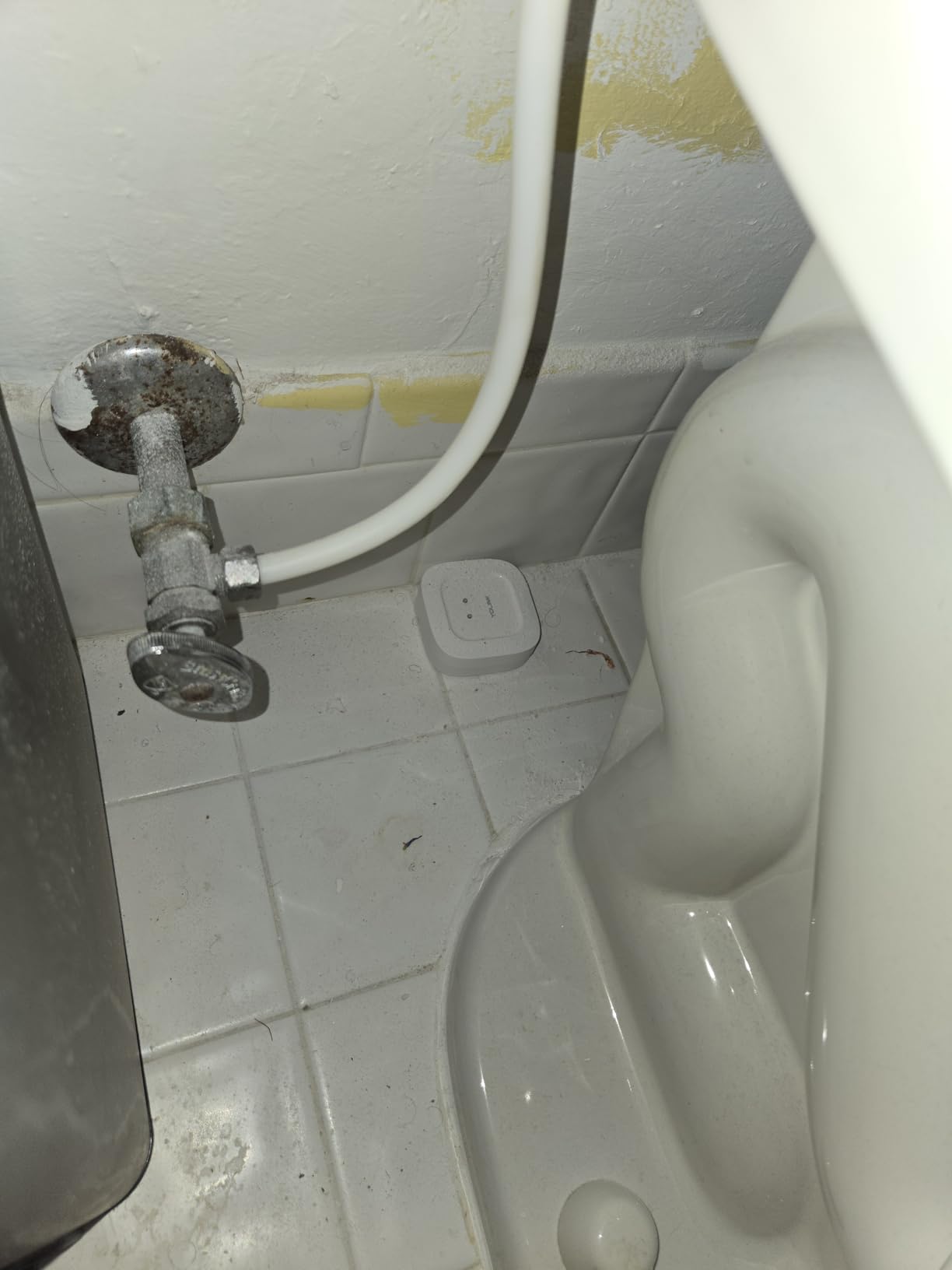
The kit is genuinely offline capable in a way most smart detectors are not. With Control-D2D, a sensor can trigger a YoLink siren or a shutoff valve directly without the internet being involved, and one hub supports more than 300 YoLink devices if you extend to a water heater, a dishwasher, or a set of rental units. Battery life is rated at up to 5 years on 2 AAA cells per sensor.
When this is the right kit
Travel frequently, run a rental, or have a second laundry room away from the router, and the long range plus SMS is the deciding factor. It also scales cleanly, so one hub can cover a whole property rather than a single appliance.
What you have to add
The Leak Sensor 1 sensors are silent by design, so on its own this kit will not wake you at 2 a.m. You need a SpeakerHub or a separate YoLink siren for the in home alarm, and you need to complete the app setup before the kit does anything useful. Budget both before you buy.
6. X-Sense SWS54 Wi-Fi Kit – Best All in One Smart System
X-Sense Wi-Fi Water Leak Detector Kit, 120 dB, 3 Sensors + Base, SWS54
120 dB sensor and base alarms
Pooled water at 0.4 mm
1,804 ft range
IP66 housing
Pros
- Phone and email alerts within a second or two
- Sensor and base station both sound at 120 dB
- Top probes catch overhead drips as well as pooling
- Slim IP66 body fits beside a washer or water heater
Cons
- Audio alerts cannot be disabled in the app
- Needs 2.4 GHz Wi-Fi and 5 GHz is unsupported
- Probes can false trigger if brushed while cleaning
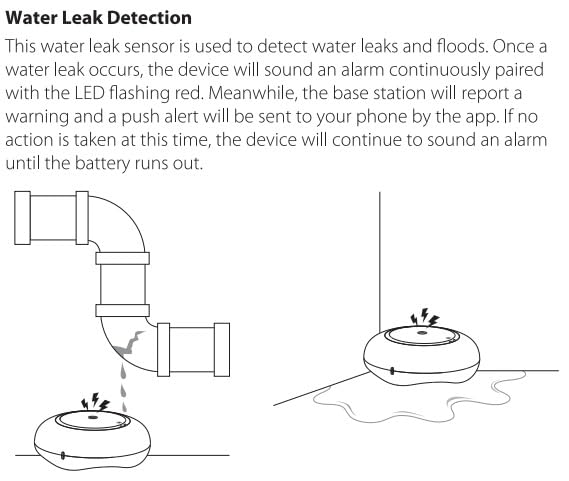
The X-Sense SWS54 is the most complete kit here because it solves a problem that plagues smart leak systems, which is that the sensor that detects the water is rarely the sensor you can hear. Both the sensor and the base station sound at 120 dB, so the alarm in the laundry room gets your attention and the base station carries it through the rest of the house.
Detection is the other strength. Four bottom probes catch pooled water as shallow as 0.4 mm, and two upper probes catch drips falling from above, which covers both a supply line failure on the floor and a hose spraying down the side of the cabinet. Phone and email alerts arrive within a second or two, and the listed open area range of 1,804 feet lets the sensors live in a basement while the base sits upstairs.
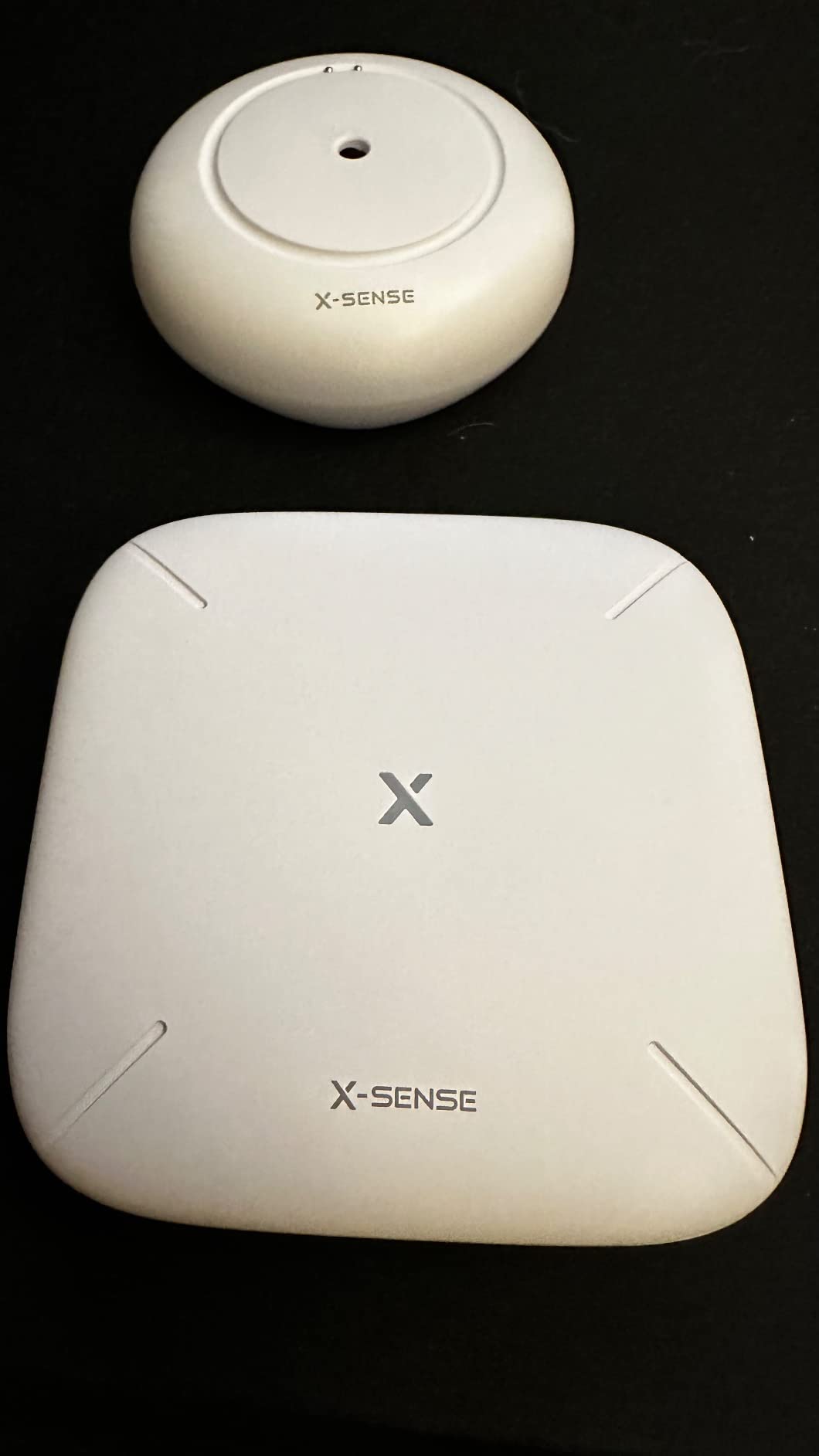
The body is slim at 1.14 inches thick and IP66 rated, so it fits in the gap beside a washing machine without being an obstacle to the drum. Owners report the phone alert catching a failed sump pump during heavy rain and water entering a cellar, and they praise the app for being straightforward. Device sharing supports up to 12 users, which is how you watch a rental or a family member’s laundry.
Check your router first
The system needs a 2.4 GHz Wi-Fi network and 5 GHz is not supported, so it will not pair on some modern mesh routers without a separate 2.4 GHz network. The listed range also assumes open space, so test the base station location before you commit to running sensors far from it.
What frustrates owners
Audio alerts cannot be switched off in the app, so an overnight trigger wakes the whole house until you unplug the base. The probes can also false trigger if they are brushed or wiped during cleaning, so keep the floor area around them clear rather than mopping over the sensor.
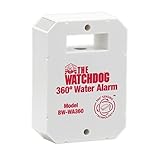
7. Basement Watchdog BW-WA360 Compact – Best for Tight Laundry Closets
The Basement Watchdog Compact 110 dB Water Alarm w/360° Sensing Technology (BW-WA360)
110 dB alarm
360 degree sensing on any side
1/32 in detection
9V battery not included
Pros
- 360 degree design so orientation does not matter
- Small body fits a water heater pan or behind a washer
- Senses as little as 1/32 inch of water
- Battery saver circuit only draws power when alarming
Cons
- 9V battery is not included
- No phone alerts so it only helps when someone is home
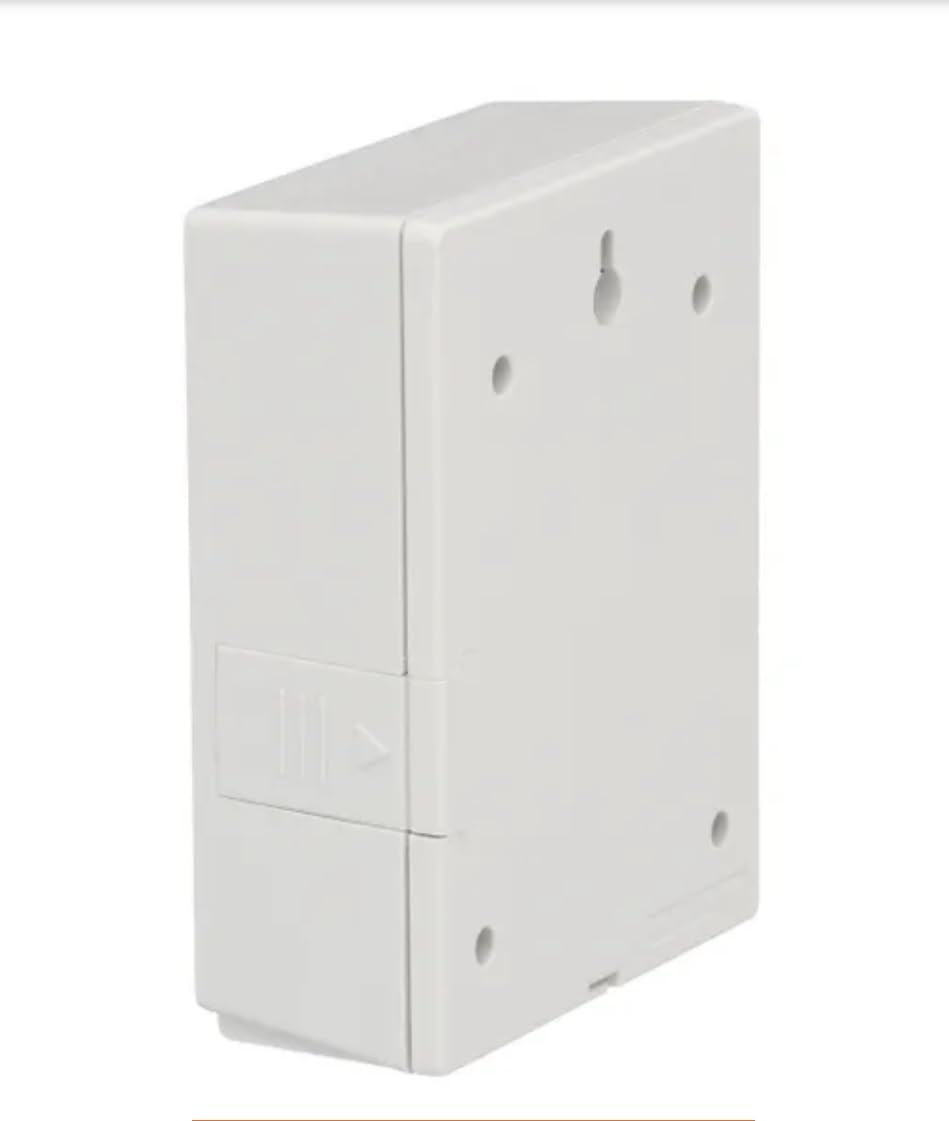
The Basement Watchdog BW-WA360 solves a specific space problem: a laundry closet where the floor area is mostly appliance. At 2-3/8 by 1 by 3-1/4 inches it fits inside a water heater overflow pan, behind a washing machine, or in the narrow strip beside a stacked pair, where the standard Watchdog body simply will not go.
The patented 360 degree sensing means water is detected on any side, so you are not guessing which way to orient it. It still senses as little as 1/32 inch of water and still alarms at 110 dB, and the battery saver circuit only draws power while the alarm is sounding, which is what stretches a single 9V battery in service.
Why owners prefer the compact model
Several buyers rate it louder and better built than the larger Watchdog, and the smaller footprint is the deciding factor in tight installations. Owners report it catching a cracked laundry slop sink pipe and early basement water, with setup being nothing more than dropping in a battery and placing the unit.
Limits to plan around
The 9V battery is not included, and there is no Wi-Fi or phone notification, so it only helps if somebody is at home to hear 110 dB. If you cannot hear your laundry from where you sleep, pair it with a smart sensor rather than choosing it alone.
8. STECHRO WD76 5 Pack – Best IP66 Set for a Humid Laundry Room
5 Pack Water Leak Detectors for Home, Stechro 4 Levels Adjustable Audio 0-120dB Water Sensor Alarm Leak Detector with Leak and Drip Alert, IP66 Water Leak Sensor for Basements Kitchen Sink Laundry
0 to 120 dB across 4 levels
4 bottom probes plus 1 top drip
IP66 housing
3 year battery
Pros
- Volume adjustable down to silent for night time
- Four bottom probes and one top drip probe
- IP66 housing suits humid laundry rooms
- Five alarms with 10 batteries and tools included
Cons
- No Wi-Fi Bluetooth or app function
- Cannot pair with the Stechro W13 gateway
- Audible only so nothing reaches you when away
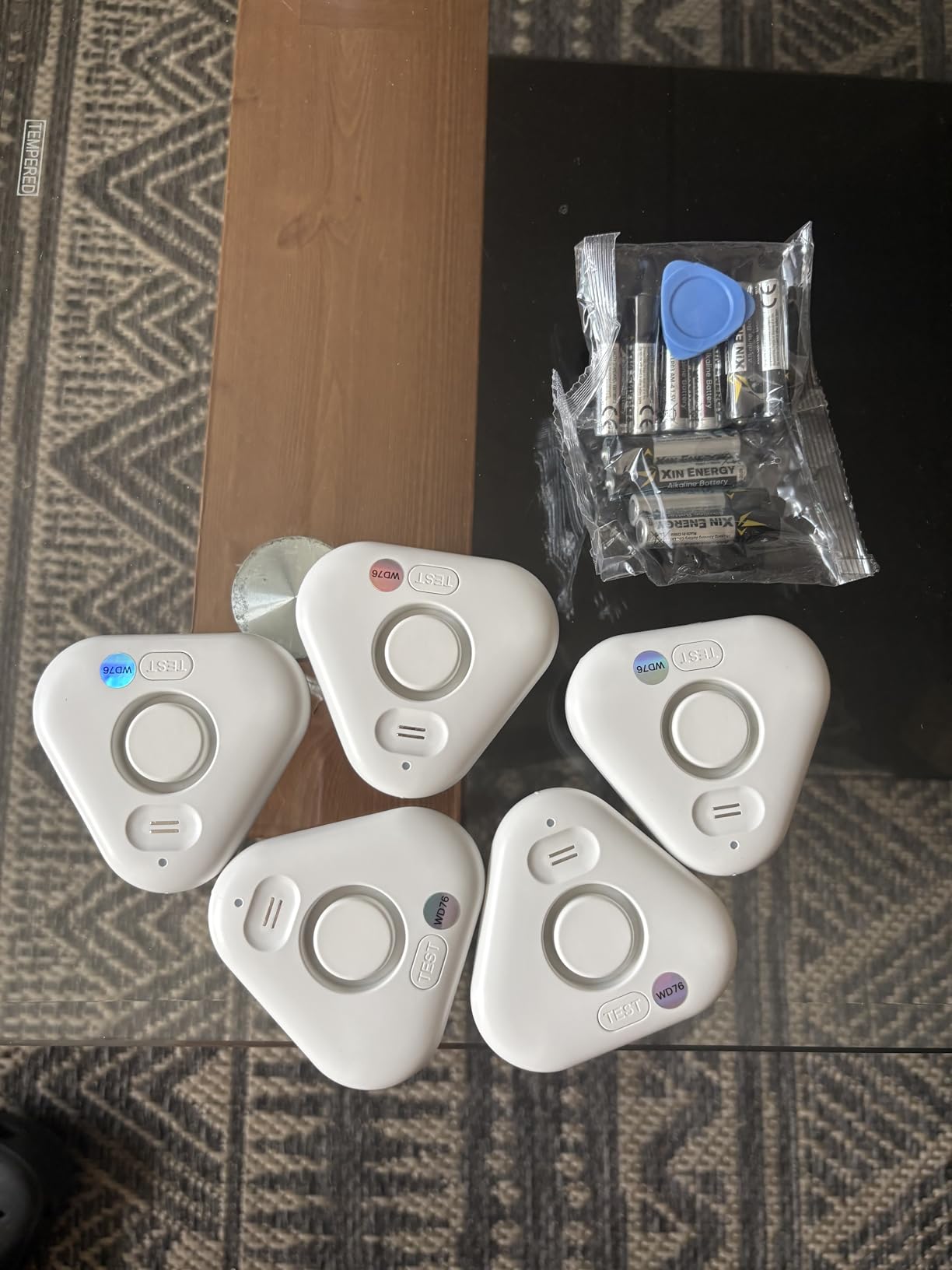
The STECHRO WD76 5 pack suits a house with several water risks, and its IP66 housing is the reason it holds up in a humid laundry room next to a hot dryer. Five detectors, ten batteries, and two opening tools all come in the same box, and battery life is rated up to 3 years with a low battery alert.
Sensing is capacitive rather than electrode based, with four bottom flood probes and one top drip sensor, so it registers both pooling water on the floor and a slow drip from a hose above. Volume is adjustable across four levels from 0 to 120 dB, which lets you silence one unit near a bedroom while keeping the laundry room one at full volume. Muting after the fact is a press of the button on the sensor.
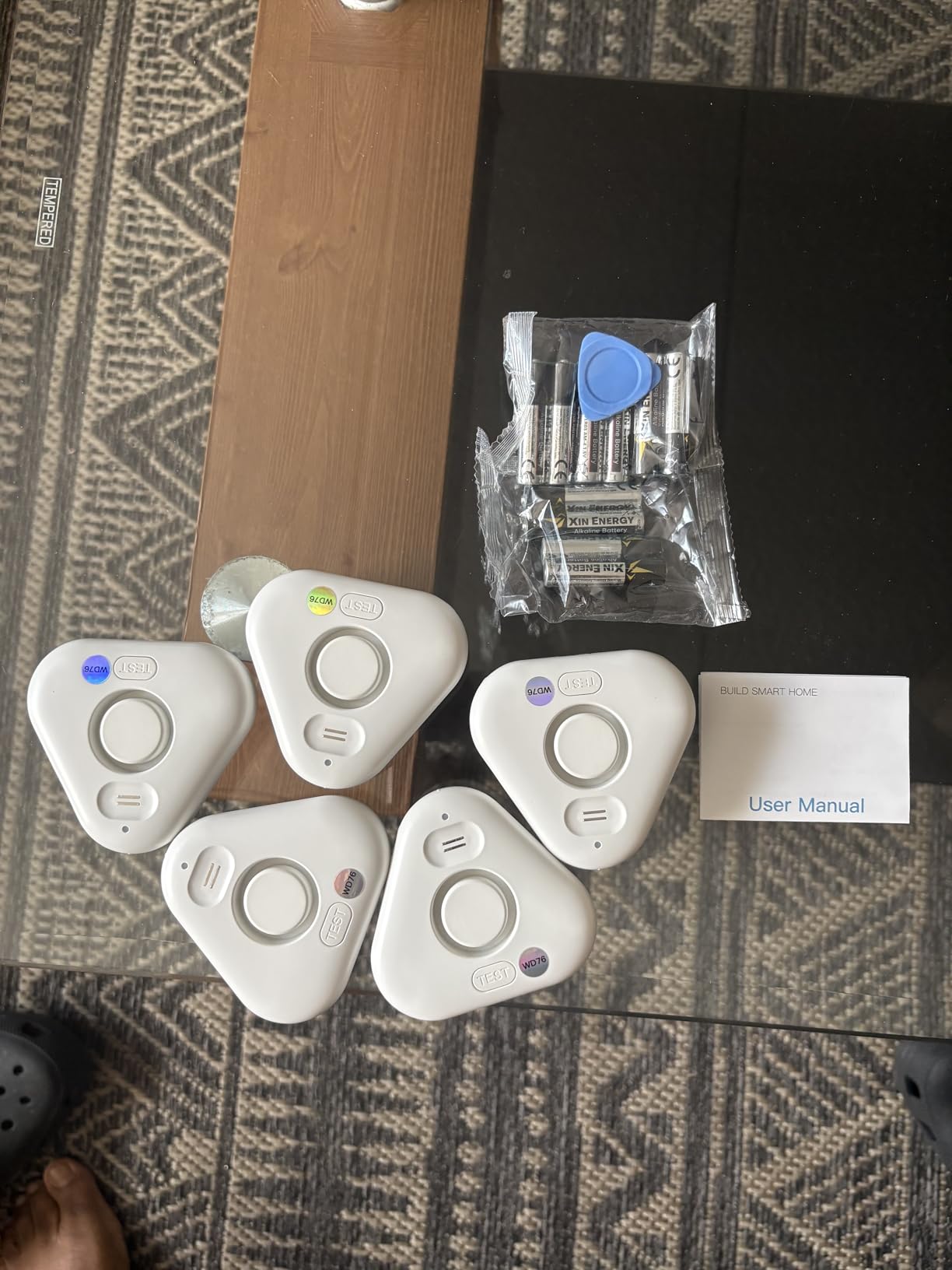
Owners use the five units across a laundry room, kitchen, bathroom, and basement, and the consensus is that this is a straightforward local alarm with no connectivity at all. That is a genuine strength if you already run smart leak sensors elsewhere and want independent backup that keeps working when the internet does not.
Best use in a laundry room
Place one beside the washer supply lines, one under the utility sink, one in the bathroom it shares a wall with, and keep the fifth for the basement. The IP66 rating and the capacitive sensing make this set a good fit for a room that gets steamy every cycle.
What it cannot do
There is no Wi-Fi, Bluetooth, or app function, and this specific model cannot pair with the Stechro W13 gateway either. Nothing reaches you when you are away from home, so treat it as the audible layer in a two layer setup rather than the only layer.
9. HydroCheck WaterWatcher – Best for Cutting Power to the Washer Itself
HydroCheck Water Sensor Alarm, Smart Water Leak Detector for Home & Basements | Made in THE USA | Automatic Flood Detectors and Water Alarm, Pure Water Capable (WaterWatcher)
AC powered switched outlet
Cuts power to the appliance
85 dB alarm
Manual reset
Pros
- Actually cuts power to the washer mid overflow
- Works with dehumidifiers well pumps and aquariums
- Made in the USA with a 5 year warranty
- Triggered at about 0.2 inches of standing water
Cons
- No reset button so you unplug it or cycle the breaker
- Bulky body needs a short extension cord behind a washer
- Wide teardrop sensor puck crowds a small closet floor
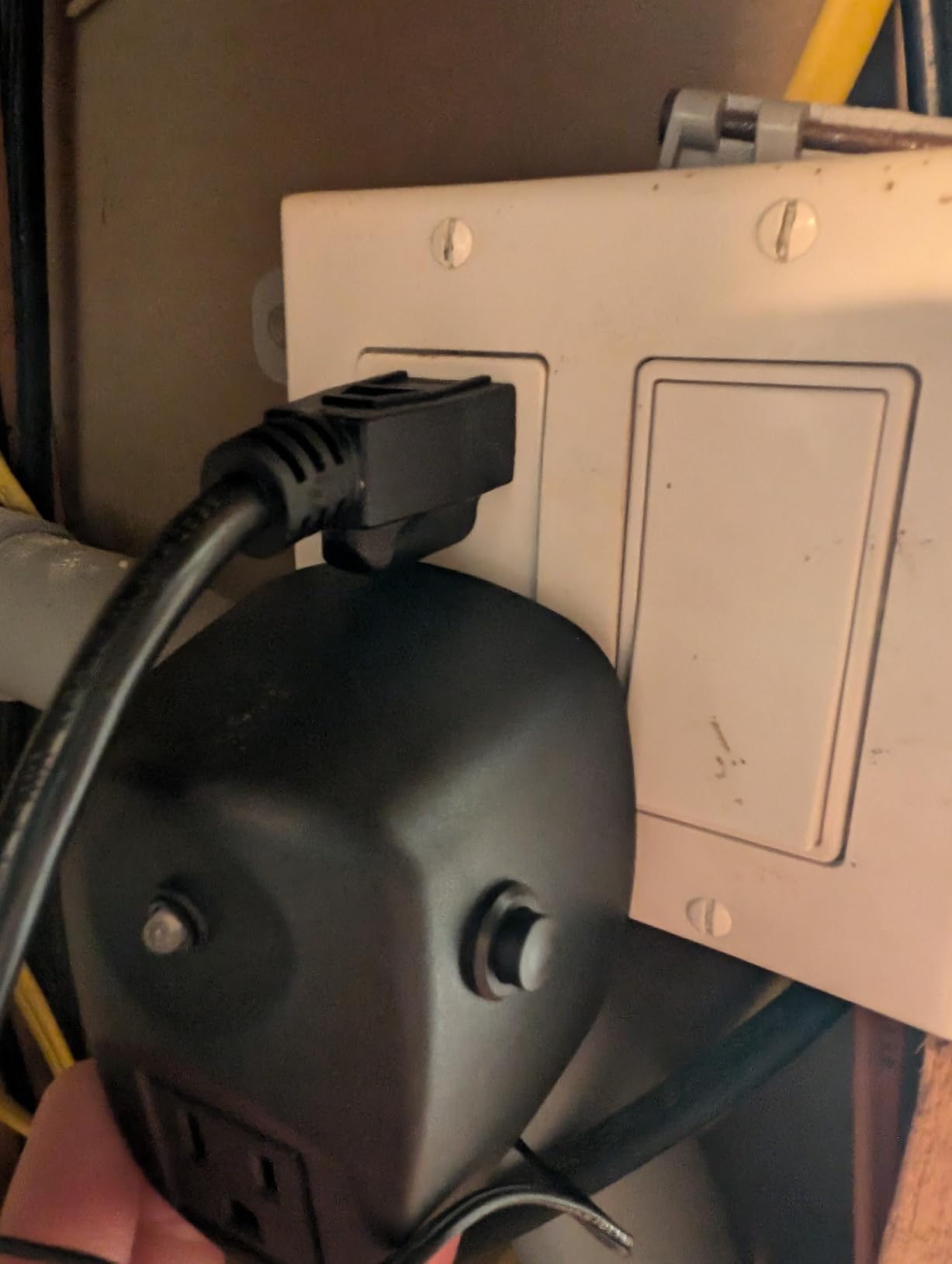
The HydroCheck WaterWatcher is the only model in this lineup that turns the washing machine off rather than the water off, and in a laundry closet that is often the more useful outcome. Plug the washer into its switched outlet and put the sensor in the drain pan or on the floor, and standing water cuts power to the appliance before the tub keeps filling.
It is AC powered at 120V with a 2.4 watt draw, so there is no battery to forget, and the alarm runs around 85 dB at the sensor. Reviewers point out the obvious advantage: an alarm alone would not have helped while nobody was home, which is exactly the case this device is built for. It is made in the USA and carries a 5 year warranty.
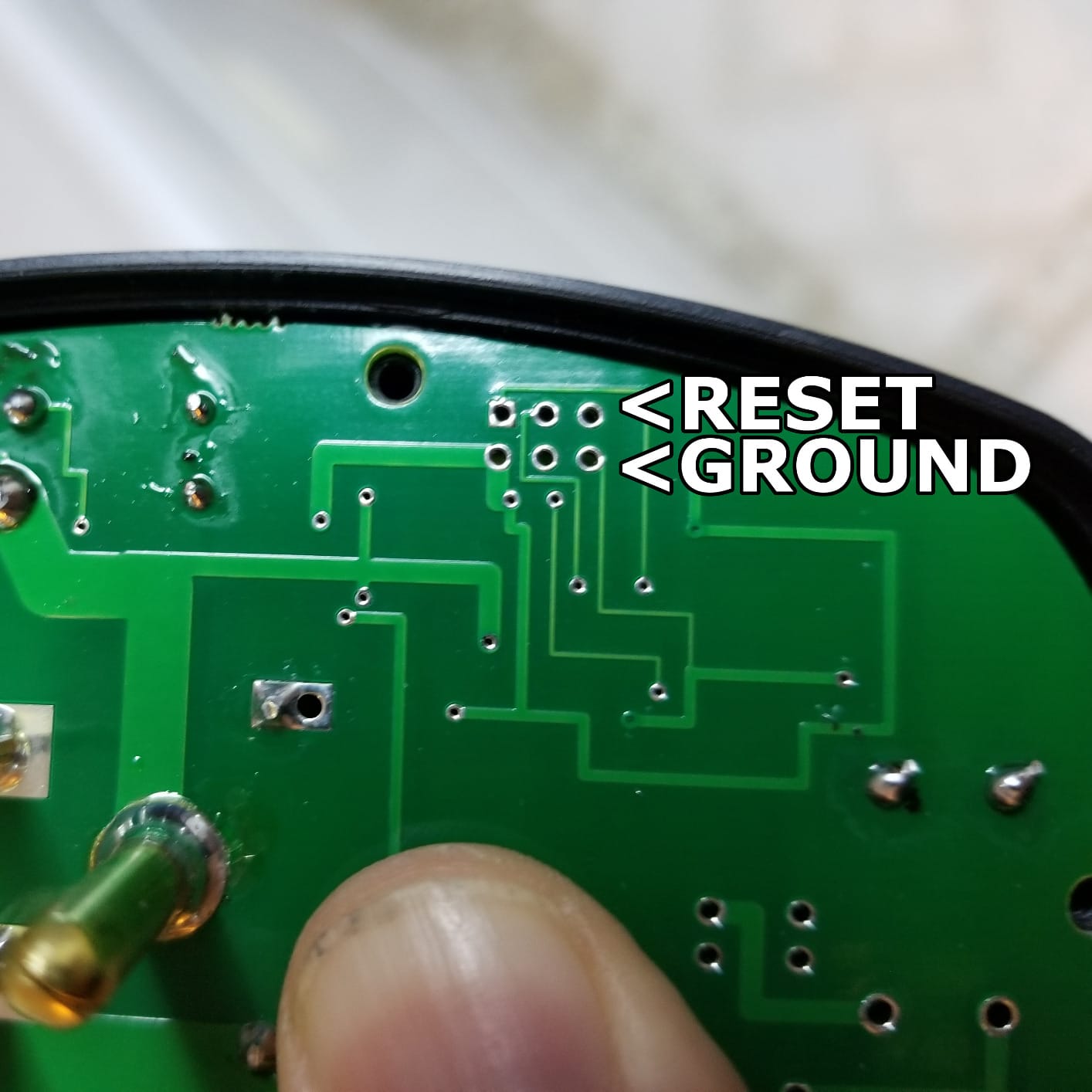
Detection triggered at roughly 0.2 inches of standing water in a catch basin, which gives you a useful margin before anything is damaged, and it also works with dehumidifiers, aquariums, hydroponics, and well pumps if you want one device covering several risks. Multiple reviews describe a washer being stopped before a laundry overflow and a dehumidifier overflow being caught after it had already reached a closet.
When power cutoff beats water cutoff
If your washer sits in a rental or a space where you cannot touch the supply plumbing, a switched outlet is something you can install yourself. It also protects against a drain blockage, where the valves are already open and closing the water would not have helped.
Physical and reset drawbacks
There is no reset button, so resetting means unplugging the unit or cycling the breaker. The main body is bulky and usually needs a short extension cord behind the washer, and the teardrop sensor puck is wide enough to crowd a small closet floor. A few owners also report false tripping or a sensor cable that flexes internally over time.
10. RUIKORING 5 Pack – Best IP67 Housing for Wet Basements
RUIKORING 5 Pack Water Leak Alarm Detector, 0-120dB Adjustable, IP67
120 dB with silent 0 dB mode
4 bottom plus 2 top probes
IP67 housing
Pros
- IP67 housing tolerates short term immersion
- Four bottom and two top probes catch drips and pooling
- Volume adjustable including a silent mode with LED
- Compact circular body drops behind a washer
Cons
- Electrode sensing can false trigger in heavy humidity
- No app or phone alerts despite listed control methods
- Battery compartments are hard to open at first
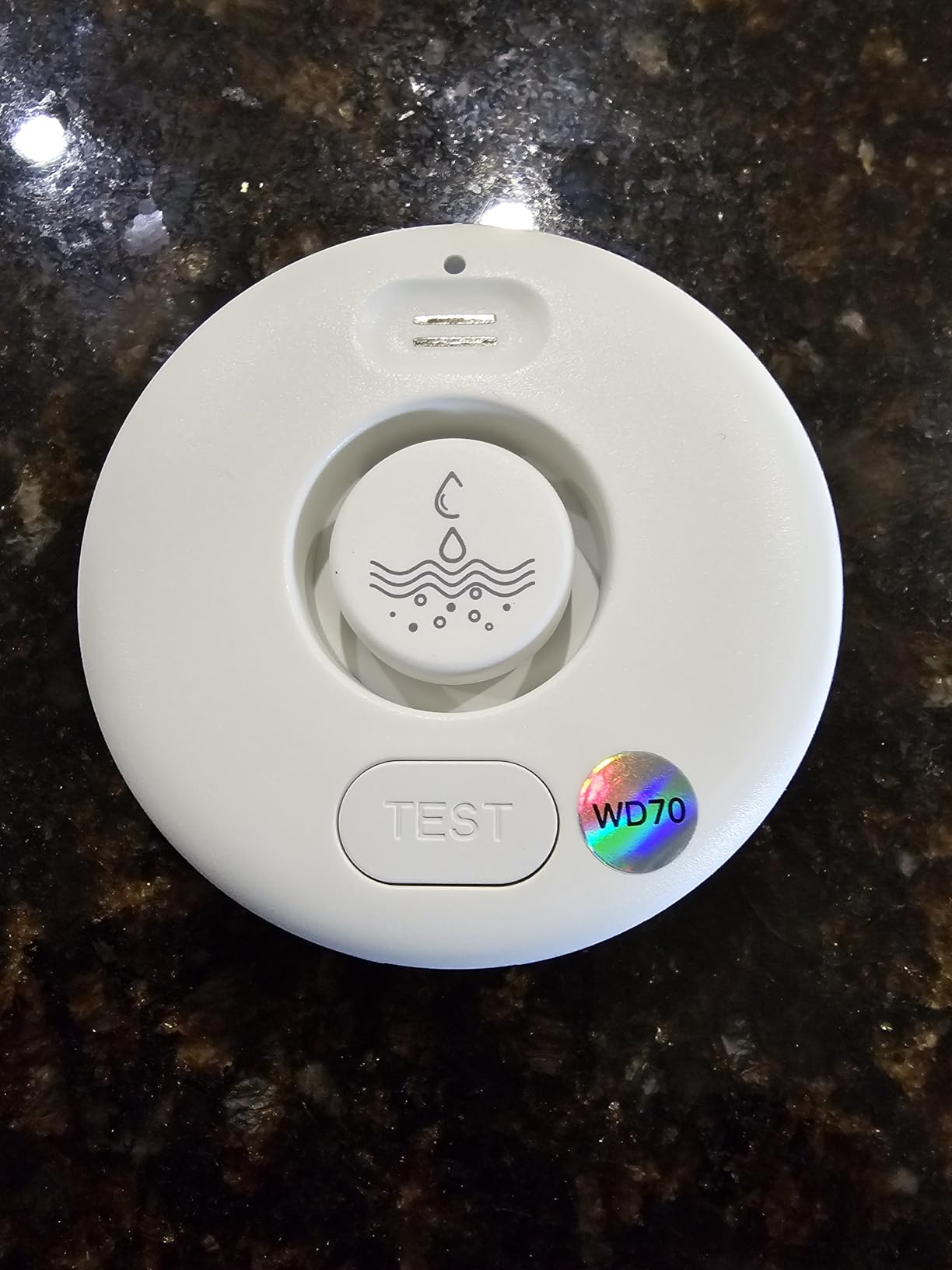
It is the most demanding housing I found in this group, with an IP67 rating that tolerates short term immersion. In a basement laundry, a garage, or anywhere a washer can be splashed, that rating is the difference between a sensor that keeps sensing and one that eventually gives up.
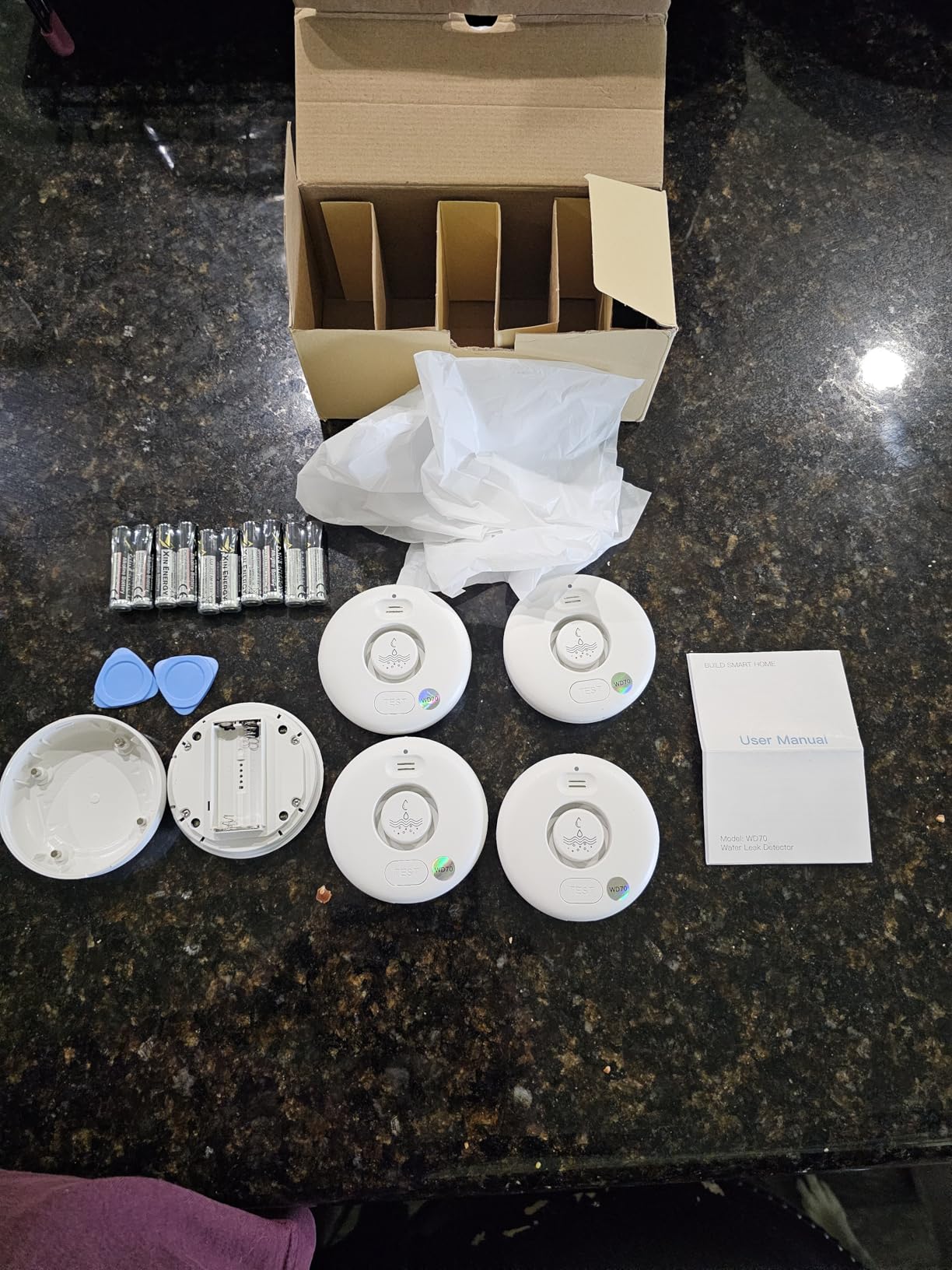
Sensitivity comes from four bottom and two top probes, which catch drips from above as well as pooling below, and the alarm adjusts across four volume levels from 0 to 120 dB including a true silent mode with an LED indicator. Ten AAA batteries are included, so the whole set is ready to place.
Owners report the alarm carries from a basement to the main floor and triggers on very small amounts of water, with several real saves from burst flexible hoses and water heater leaks. The recurring placement advice is to drop each unit at the lowest point in the area and avoid mounting anything underneath that would lift the probes off the floor.
Why IP67 matters in a laundry room
Electrode and capacitive sensors both suffer if the housing is breached, and a washer bay sees more splash than most people expect from an overflowing tub. An IP67 body keeps the sensing elements sealed even if the unit sits in a puddle for a moment before you get to it.
Watch for humidity false alarms
Electrode conduction sensing can false trigger in very humid or misty areas, so wipe the probes dry on a regular schedule, especially if your dryer vents into the room. The listed control methods mention an app and voice, but this is a stand alone audible alarm with no phone notifications, and the battery compartments are genuinely awkward to open the first time.
11. METAK 5 Pack Water Leak Detectors – Best Starter Set for a Whole Apartment
5 Pack Water Leak Detectors for Home, 100dB Water Sensor Alarm for Basement
100 dB alarm with mute
2 front and 4 rear probes
IP66 steel
2 year standby
Pros
- Mini wireless form factor slides under a washing machine
- Six probes watch drips and floor flooding at once
- Stainless steel and IP66 build stays sensitive
- Over two years standby per battery set
Cons
- 100 dB carries to the next room rather than far up a staircase
- No app or phone notification in practice
The METAK 5 pack is an easy way to cover an entire rental or small apartment in one purchase. Five mini wireless detectors, ten AAA batteries, and no pairing, no hub, and no app, which means you can place them in under ten minutes and forget about them until the battery alert light comes on.
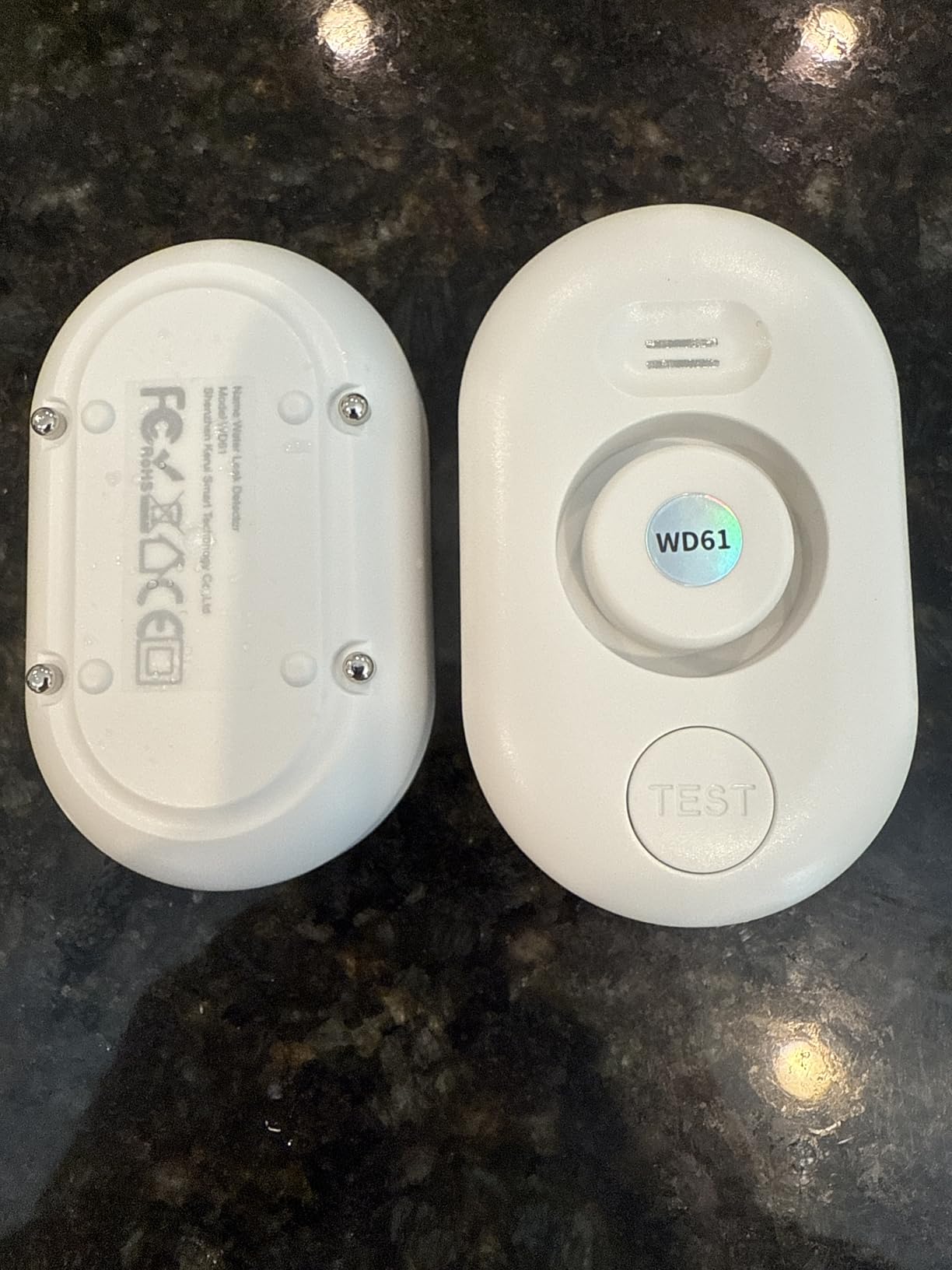
Each unit watches with six probes at once. Two front probes sit where they catch a drip from a pipe or drain, and four rear probes sit low for floor moisture and flooding, so a single sensor covers both a slow drip and a spreading puddle. The body is IP66 ABS and stainless steel, and owners credit that construction for staying sensitive over long installs.
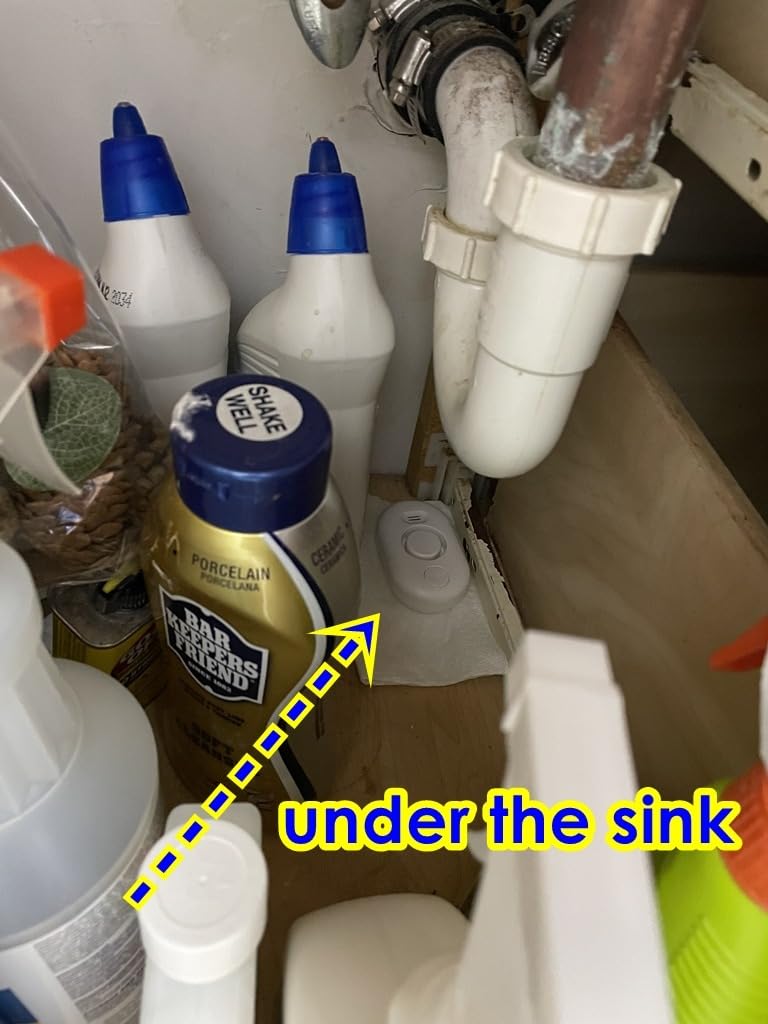
Standby life is over two years per set of two AAA cells, with a red light when they need changing. The form factor is the quiet hero here, because the units slide under a washing machine or into a utility cabinet where a larger puck will not fit at all, which is precisely the spot a supply line leak floods first.
Where the five should go
One under the washer, one under the kitchen sink, one beside the water heater, one behind the toilet, and one at the lowest point in the bathroom or basement. That layout turns a five pack into coverage for nearly every common indoor water risk without touching any plumbing.
Honest limitations
At 100 dB the alarm carries to the next room rather than far up a staircase, so expect a wake up in the same or an adjacent room. There is no app or phone notification in practice, so if you are away for days at a time you need a smart kit or a shutoff valve alongside it.
12. Flood Buzz Small 6 Pack – Best Zero Setup Pods
Flood Buzz Small Water Leak Detectors for Homes & Businesses – 6-Pack
Up to 95 dB at the source
Factory sealed 12V battery
1.75 in body
Pros
- Zero setup with a pre installed sealed battery
- Small body fits behind toilets and in drain pans
- Escalates louder the longer water is present
- Reusable after a leak once the prongs are wiped
Cons
- 95 dB may not carry through several rooms
- Sealed battery cannot be replaced when it expires
- No app phone or email alerts
The Flood Buzz Small 6 pack is the least effort option available, and in a shared rental building it is often the most realistic one. The 12V battery is factory installed and sealed, the unit arrives pre tested, and all you do is stand it on the floor with the two metal prongs facing down. There is nothing to configure.
At 1.75 by 1.5 by 1.5 inches it fits behind toilet bases, under dishwasher kick plates, inside drain pan channels, and in the tight gap behind a washing machine. It alerts on the first contact with water and escalates to a louder alarm the longer water is present, and after a leak event you wipe the prongs dry and put it back. Owners report it catching a burst supply hose, a dripping kitchen tap, and a laundry sink overflow.
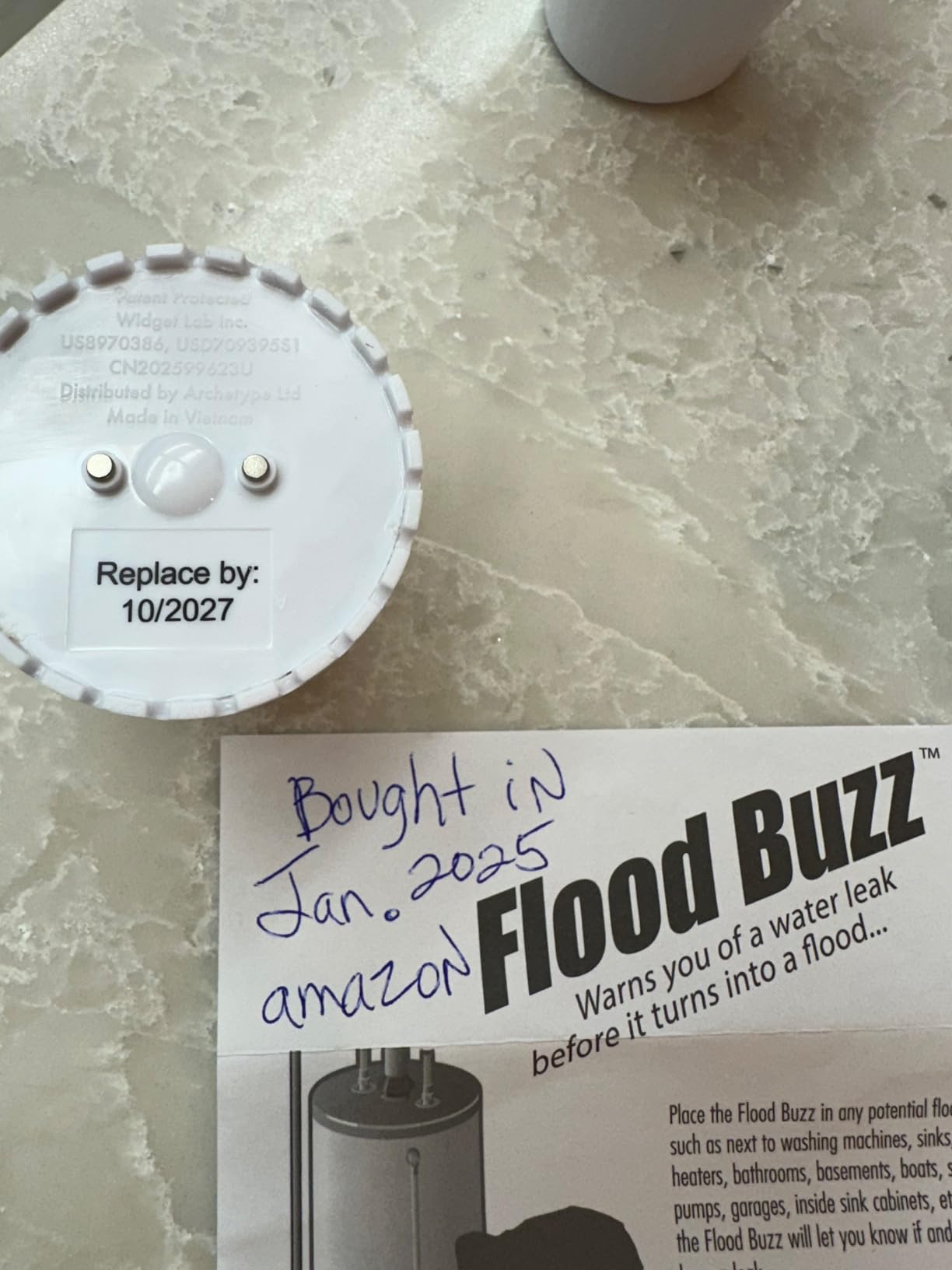
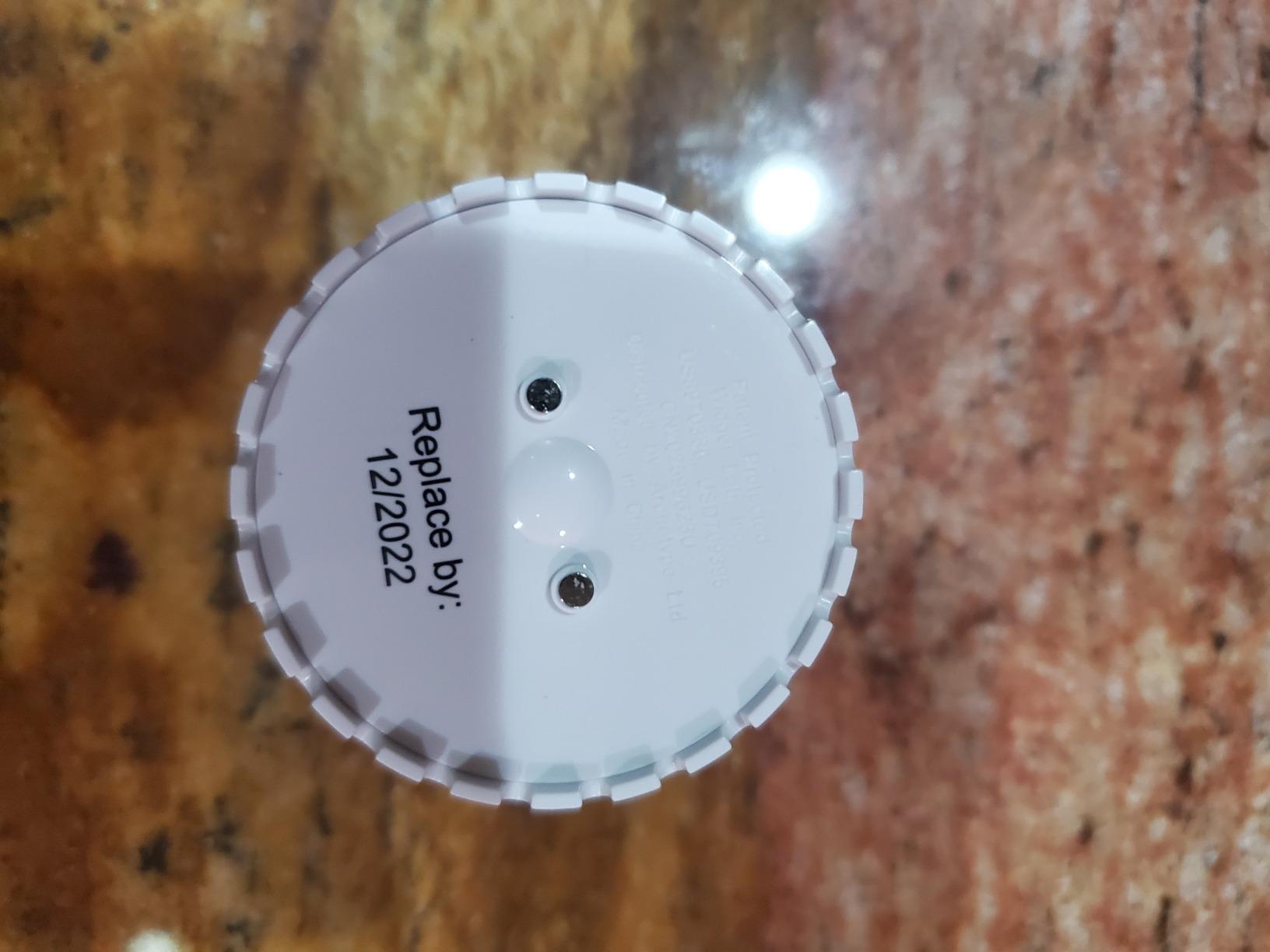
This is a model many owners have kept for years, with several reviews spanning four or more years and repeat purchases to replace expired pods after the original batch proved themselves. The stamped replace by date on each unit is the only schedule you need to track, and six at a time makes that calendar habit easy.
Best for tenants and quick installs
If you rent, or you want protection today without tools, batteries, or a mounting plan, this is the one. Six pods cover a laundry area, a bathroom, a kitchen, and a basement in a single afternoon with no permanent changes to the unit.
Where it falls short
At up to 95 dB the alarm is audible in the same or an adjacent room, which basement and upstairs users say is not enough when they are sleeping. The sealed battery cannot be replaced, so the whole pod is discarded at the stamped date, and there are no app, phone, or email alerts if you are not home.
Types of Water Alarms for Washing Machines
There are four distinct kinds of device, and the right one depends on whether you want to be told, to be called, or to have the water stopped. Most people who suffer a washer overflow end up wanting two of them in different parts of the property.
Point sensors are flat pucks that detect water touching probes on their base. They are cheap, reliable, and ideal when the leak will pool right where you can place them, such as beside a washing machine or under a utility sink. The detection depth on these ranges from 0.4 mm on the X-Sense sensors to 0.2 inches on the HydroCheck.
Cable and probe sensors keep the alarm body in reach and run a sensor wire or extendable probe back into the cavity behind an appliance. For a stacked washer and dryer this is usually the only geometry that works, because the hose connections sit deep in a space where a puck cannot be positioned at the correct height.
Smart sensors add app, email, and SMS alerts over Wi-Fi or over a long range hub, which is the only option that helps when you are not at home. The trade is dependency: a hub, an app account, and a network that has to be working at the moment you need it. Some kits, including the YoLink, work offline with device to device triggers that bypass the internet entirely.
Shutoff devices either close the hot and cold supply lines, as the FloodStop kits do, or cut power to the appliance, as the HydroCheck does. These are the only categories that stop the flood rather than report it, and they require either plumbing work or a switched outlet.
What to Look for When Buying a Water Alarm for a Laundry Room?
Detection depth and alarm volume are the two numbers that matter most, and everything else is secondary for a washing machine specifically. Here is how I weigh them.
How shallow it can detect. Anything at or below 1/32 inch of standing water gives you real lead time, and 0.4 mm pooled detection is in the same territory. A sensor that needs a quarter inch of water is already standing in a puddle you would have seen.
Alarm volume and where the sound comes from. Volume figures on this category are measured at the unit, so a 120 dB puck in a basement tells you nothing about what reaches the top floor. Kits that sound at both the sensor and a base station, like the X-Sense, or that let you add a separate siren, solve this properly.
Whether it can stop the water. If your washer is on an upper floor, above a finished ceiling, or in a property you rent out, an auto shutoff valve is worth the plumbing. If it is on a ground floor concrete slab in a unit you own, a loud alarm plus a phone alert is enough.
Reach and placement. Measure from the machine to the nearest wall or cabinet gap before buying. Probe cables of 5 or 6 feet cover most closets, and some sensors can be extended with ordinary 24 gauge wire, while others cannot be extended at all.
Power and connectivity honesty. Battery alarms keep working during an outage, which matters in a laundry room with no lighting. Smart kits need a hub, a 2.4 GHz network in most cases, and an app that still works when your phone battery is at four percent.
Housing rating for a wet room. IP66 resists dust and strong jets, and IP67 adds short term immersion protection. In a laundry room that sees splashing every cycle, a higher rating reduces the chance that a sensor quietly stops sensing years from now.
One more thing buyers ignore: testability. A sensor you can wet test with a damp paper towel in ten seconds is one you will actually keep. A sensor buried behind an appliance with no test button is one you will forget until the day you needed it.
Where to Place a Water Alarm Behind a Washing Machine
Correct placement matters more than brand for a washing machine, because a sensor in the wrong spot will never see the leak that actually happens. Follow these five steps in order and you will cover the failure points that cause the most damage.
1. Pull the washer out and look at the back. The two failure points are the hot and cold hose connections at the wall and the drain hose entering the standpipe. A supply line failure floods the back of the machine first, so that is where the sensing element goes.
2. Choose probe over puck when the machine is against a wall. If the gap is wider than about four inches, a flat puck at the front of the machine will sit in the wrong place. Run the sensor wire or extendable probe into the back corner, and keep the alarm body where you can reach it to silence.
3. Put a second sensor where water would arrive first if the drain backs up. That is the lowest point in the standpipe and the floor in front of the machine, not the drain hose itself. Reviewers on several of these sensors caught actual backups that a rear corner sensor would have missed.
4. Mount for a laundry room that gets steamy. Condensation is the most common false alarm trigger, so keep the sensor off the floor directly beside a dryer vent and never place it where a dripping hose above can drip onto the probes. Wipe the probes down monthly and you will avoid nuisance trips.
5. Test on installation day and then on a schedule. Wet a paper towel and touch the probes, or press the test button, and confirm you get an audible alarm and a phone notification on the smart models. Repeat monthly, and put the battery change in your calendar at the same time rather than waiting for the low battery alert.
For a rental or a second home, add a smart sensor with SMS alerts in the same position, because the loud alarm only helps if somebody is there to hear it. A cheap local pod in the standpipe plus a smart kit by the supply lines is a combination I would recommend to anyone who is not home during the day.
Frequently Asked Questions
What is the best washing machine leak detector?
For most homes the Basement Watchdog 110 dB water alarm is the best balance, because it detects as little as 1/32 inch of water, sounds at 110 dB, needs one 9V battery, and has a 6 foot sensor cable that reaches behind a stacked washer. If you are away from home regularly, a smart kit such as the X-Sense SWS54 or the YoLink starter kit is the better pick because it sends app, email, and SMS alerts. If you can do the plumbing, a FloodStop shutoff kit is the only option that actually stops the water.
Do water leak detectors really work?
Yes, provided the sensor is placed where the water will actually go. Washing machine supply line failures begin at the hose connections behind the machine and flood the back of the cabinet, so a puck at the front of the appliance will miss them. Reviews across these products describe real saves from burst hoses, water heater leaks, sump pump failures, and drain backups, all caught by sensors placed in the lowest point near the source.
What is the best automatic water leak shut off valve for a washing machine?
The FloodStop FS3/4H kits are designed specifically for washing machines. They install inline on the hot and cold hoses, use full port solid brass ball valves rated to 140 PSI, and close both lines when the floor sensor pad gets wet, while leaving every other fixture in the property running. The HydroCheck WaterWatcher is the alternative approach, cutting power to the appliance through a switched outlet, which also covers drain blockages where the water valve is already open.
Are automatic water shut off valves worth it for a washing machine?
For an upper floor, a basement below a finished ceiling, a rental, or any property you are not standing next to, yes. A washer hose failure can move several gallons a minute, and by the time you reach the machine the water has already crossed ceiling tiles or hardwood. If your washer sits on a concrete slab in a unit you occupy every day, a 110 to 120 dB alarm plus a phone alert covers most of the same risk for far less money and no plumbing work.
Where do I place a water leak detector for a washing machine?
Pull the machine out and put the sensing element at the back where the hot and cold supply hoses meet the wall, because that is where supply line failures flood first. Add a second sensor at the lowest point near the standpipe to catch drain backups, and keep both away from a dryer vent or any source of condensation that would cause false alarms. Test the placement by touching the probes with a damp paper towel before pushing the washer back.
Conclusion
For most people, the best water alarms for washing machines come down to two decisions. If you are home when the laundry runs, the Basement Watchdog 110 dB alarm with its 6 foot probe and 1/32 inch detection is the one I recommend, and adding an STECHRO or METAK pod at the standpipe covers drain backups for very little money. If you are not home during the day, choose the X-Sense SWS54 for phone alerts plus a loud base station, or the YoLink kit when the washer is far from your router.
When damage from above is a real possibility, stop talking and go to the shutoff options. The FloodStop kits close your washer supply lines, and the HydroCheck cuts power to the machine itself, which is the only category that ends the flood rather than announcing it. Whichever you choose in 2026, place it at the back of the machine where the hoses connect, test it with a damp paper towel, and put the battery change in your calendar.