
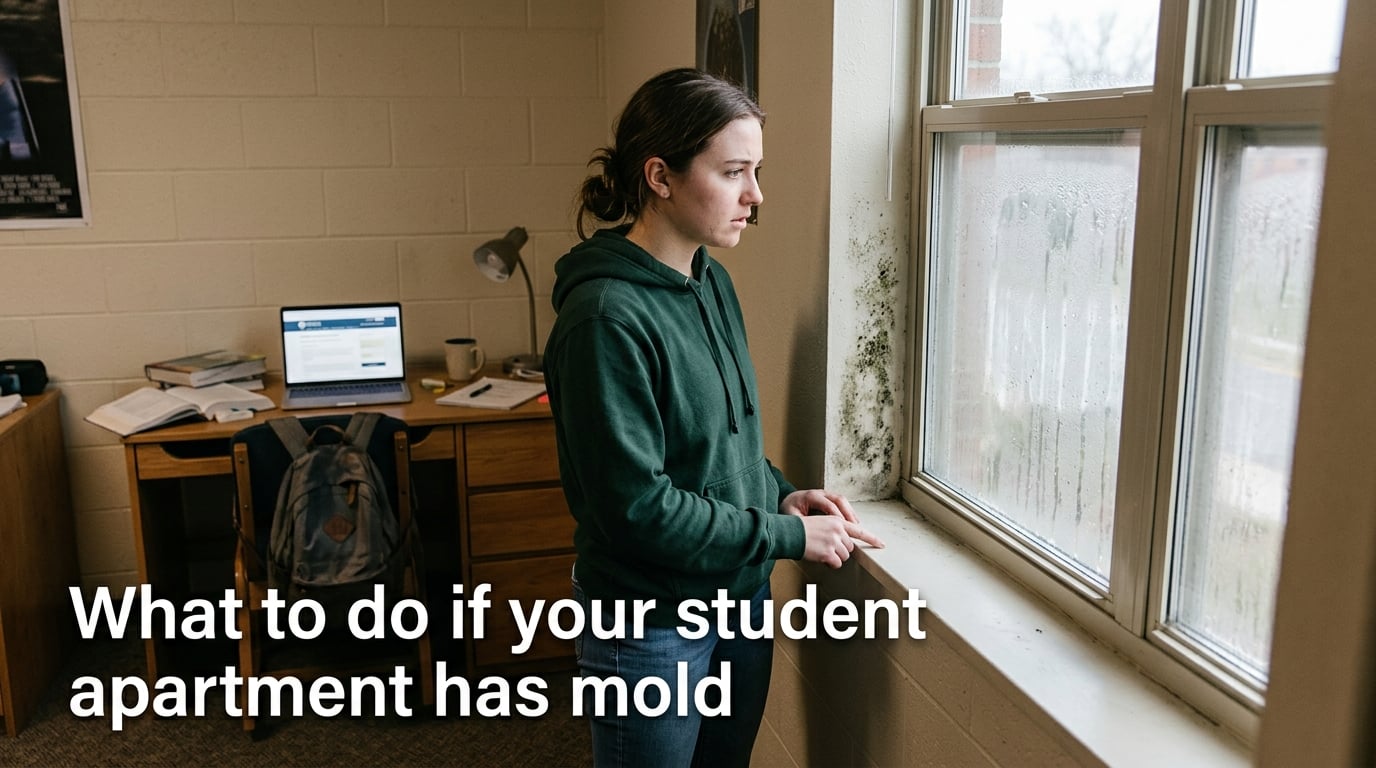
Finding mold in your student apartment can feel overwhelming, especially when you’re juggling classes, exams, and campus life. But here’s the thing—mold in student housing isn’t just a nuisance. It’s a health hazard that requires immediate action, and knowing what to do if your student apartment has mold can protect both your well-being and your legal rights.
I’ve helped hundreds of students navigate this exact situation, and the biggest mistake I see is waiting too long to act. Mold spreads fast, and what starts as a small patch behind your dresser can become a building-wide problem within weeks. This guide covers everything you need to know about identifying, reporting, and addressing mold in your student housing.
Table of Contents
Why Mold in Student Housing Is a Serious Problem
Mold isn’t just unsightly—it produces allergens, irritants, and sometimes toxic substances called mycotoxins. The EPA warns that mold exposure can cause respiratory problems, allergic reactions, and even chronic health issues with prolonged exposure.
Student housing is particularly vulnerable to mold growth because of several factors: older buildings with outdated HVAC systems, high occupancy rates that increase moisture levels, and students who may not recognize early warning signs. Universities and landlords have a legal obligation to provide habitable living conditions, which includes addressing mold problems promptly.
Health Risks You Shouldn’t Ignore
Even if you don’t have allergies, mold can trigger symptoms. Common reactions include sneezing, coughing, watery eyes, skin rashes, and headaches. Students with asthma or compromised immune systems face more serious risks, including severe respiratory infections and chronic sinus problems.
What many students don’t realize is that you don’t need to see visible mold to experience health effects. Mold spores travel through the air and can cause symptoms even when the source is hidden behind walls or under flooring.
How to Identify Mold in Your Apartment or Dorm
Catching mold early makes a huge difference in remediation efforts and health outcomes. Here’s what to look for during your regular apartment inspections.
Visual Signs of Mold
Mold appears in various colors—black, green, white, orange, or even pink. It often looks fuzzy, slimy, or powdery. Check these common problem areas:
- Around windows and window sills where condensation collects
- Under sinks and around plumbing fixtures
- Behind furniture placed against exterior walls
- In closets with poor ventilation
- Around air conditioning units and HVAC vents
- On bathroom ceilings and shower walls
- Under carpeting near exterior doors
Musty Odors and Smells
A persistent musty, earthy smell is one of the most reliable indicators of hidden mold. If you notice this odor—especially in a specific room or area—mold is likely growing somewhere you can’t see. Don’t just spray air freshener and ignore it.
Other Warning Signs
Water stains on walls or ceilings, peeling or bubbling paint, warped walls, and excessive condensation on windows all suggest moisture problems that lead to mold growth. Pay attention to these warning signs even if you don’t see mold yet.
Immediate Steps to Take When You Find Mold
Discovering mold can be stressful, but taking the right steps immediately will protect your health and strengthen any future claims.
Step 1: Document Everything
Before you touch anything, take photos and videos of all mold-affected areas. Include:
- Wide shots showing the location in the room
- Close-up photos of the mold growth
- Timestamps on all images (most phones do this automatically)
- Photos of any water damage or moisture sources nearby
This documentation is crucial if your landlord or university disputes the issue or delays action.
Step 2: Don’t Disturb the Mold
Resist the urge to scrub mold with bleach or remove it yourself. Disturbing mold releases spores into the air, potentially spreading the problem and increasing your exposure. Small areas under 10 square feet may be safe to clean with proper precautions, but larger infestations require professional handling.
Step 3: Protect Yourself
If you must be in the affected area, wear an N95 mask and keep the space ventilated. Open windows if possible, and avoid running your HVAC system, which can spread spores throughout the building.
How to Report Mold to Your University or Landlord
Reporting mold properly creates a paper trail that protects your rights. The process differs depending on whether you live in university housing or a private rental.
University Housing Process
Most universities have an online maintenance request system. Submit your report through this system AND follow up with an email to your Residence Advisor (RA) and housing office. Include:
- Date you discovered the mold
- Exact location in your room or apartment
- Photos and description of the mold
- Any health symptoms you’re experiencing
- Previous maintenance requests related to moisture or water issues
Keep copies of everything. If your university doesn’t respond within 48-72 hours, escalate to the Director of Housing or Student Affairs.
Private Rental Process
For off-campus apartments, send written notice to your landlord via email AND certified mail. Email creates a timestamp, while certified mail provides proof of delivery. Your notice should reference your state’s implied warranty of habitability and request remediation within a specific timeframe (typically 14-30 days depending on your state).
What If Your University or Landlord Doesn’t Respond?
This is where many students feel stuck. Forum discussions on Reddit reveal a common pattern: students report mold, receive no response, and don’t know their next steps. Here’s what to do:
- Send a follow-up written notice referencing your original report
- Contact your local health department to file a complaint
- Reach out to your university’s student legal services (often free for enrolled students)
- File a complaint with your city’s housing code enforcement
- Consider contacting local media—universities respond quickly to negative press
Understanding Your Rights as a Student Tenant
Whether you live on campus or off, you have legal rights to a habitable living environment. Understanding these rights empowers you to take effective action.
Implied Warranty of Habitability
Every state recognizes some form of the implied warranty of habitability, which requires landlords to maintain rental properties in livable condition. Mold that affects health or safety typically qualifies as a habitability violation. This applies to both private landlords and, in many jurisdictions, university housing.
University Housing vs. Private Rentals
University housing often operates under different rules than private rentals. Some universities have their own housing codes and dispute resolution processes. However, universities are still bound by state health and safety codes. Check your housing contract and student handbook for specific policies.
When to Consider Legal Action
Legal action should be a last resort, but it’s worth considering if:
- Your landlord or university has ignored multiple written requests
- You’ve experienced documented health problems from mold exposure
- You’ve incurred expenses for medical treatment, temporary housing, or property damage
- Mold remediation was attempted but failed, and mold returned
Many student legal aid offices offer free consultations. Some states allow tenants to withhold rent or pursue rent abatement when landlords fail to address habitability issues, but consult a lawyer before taking this step.
Health Symptoms of Mold Exposure You Should Know
Recognizing mold-related health symptoms early can prevent more serious complications. Here’s what to watch for.
Common Symptoms
According to the CDC and EPA, mold exposure commonly causes:
- Sneezing and runny nose
- Coughing and wheezing
- Red, itchy, or watery eyes
- Skin rashes or irritation
- Sore throat
- Headaches
- Fatigue that doesn’t improve with rest
More Serious Symptoms
Long-term exposure or exposure to toxic mold varieties can cause more severe symptoms:
- Chronic sinus infections
- Bronchitis or pneumonia-like symptoms
- Memory problems and difficulty concentrating (often called “brain fog”)
- Joint pain and muscle aches
- Sensitivity to light
- Nosebleeds
When to See a Doctor
If you’re experiencing persistent respiratory symptoms, unexplained fatigue, or worsening allergies since moving into your student housing, see a doctor. Mention your suspected mold exposure—medical documentation supports both your health treatment and any housing complaints you file.
Preventing Mold in Your Student Housing
Prevention is always easier than remediation. These habits can significantly reduce mold risk in your student apartment or dorm.
Ventilation Tips
- Run bathroom exhaust fans during and for 30 minutes after showers
- Open windows when weather permits to improve air circulation
- Don’t block air vents with furniture or curtains
- Use kitchen exhaust fans when cooking or boiling water
- Leave closet doors slightly open to promote airflow
Humidity Control
Keep indoor humidity below 60%—ideally between 30-50%. A simple hygrometer lets you monitor levels. If humidity runs high, consider a portable dehumidifier. Many students on Reddit recommend this as a worthwhile investment, especially in older dorms and basement apartments.
Move-In Inspection Checklist
Before unpacking, inspect your new space thoroughly:
- Check all windows for condensation or water damage
- Inspect under sinks and around toilets for leaks
- Look behind appliances and in closets for musty smells
- Examine walls and ceilings for water stains or discoloration
- Test all exhaust fans and ventilation systems
- Document any pre-existing damage with photos and report it immediately
When to Call Professional Mold Remediation
Understanding when professional help is needed saves time, money, and health risks.
The 10-Square-Foot Rule
The EPA recommends professional remediation for mold areas larger than 10 square feet (roughly a 3×3 foot patch). Smaller areas may be safely cleaned with detergent and water, but always wear protective gear including gloves, goggles, and an N95 mask.
What Professional Remediation Involves
Professional mold remediation typically includes containment of the affected area, air filtration with HEPA filters, removal of mold-infested materials, cleaning and sanitizing surfaces, and addressing the moisture source that caused the growth.
Who Pays for Remediation?
In most cases, your landlord or university is responsible for remediation costs. However, if you contributed to the mold problem (for example, by not using ventilation fans or by covering a leak instead of reporting it), you may share some responsibility. Document your prevention efforts to protect yourself.
Frequently Asked Questions
What to do if you live in an apartment with mold?
Document the mold with photos, avoid disturbing it, and notify your landlord in writing immediately. Send your notice via email and certified mail, requesting remediation within 14-30 days. If your landlord doesn’t respond, contact your local health department or housing code enforcement. Keep copies of all communications and medical records if you experience health symptoms.
My dorm has mold. What should I do?
Submit a maintenance request through your university’s online system and follow up with an email to your RA and housing office. Include photos, the exact location, and any health symptoms you’re experiencing. If your university doesn’t respond within 48-72 hours, escalate to the Director of Housing or Student Affairs. You can also contact your university’s student legal services for guidance.
Can I sue my college for mold in my dorm?
Yes, in some circumstances you can take legal action against your college for mold-related issues. You may have grounds for a lawsuit if your university ignored multiple written requests, you experienced documented health problems, or you incurred expenses for medical treatment or temporary housing. Consult your university’s student legal services first—most offer free consultations for enrolled students.
Can I get sick from mold in my apartment?
Yes, mold exposure can cause various health problems including sneezing, coughing, watery eyes, skin rashes, headaches, and fatigue. People with asthma or compromised immune systems face more serious risks. Long-term exposure can lead to chronic sinus infections, respiratory problems, and cognitive issues like difficulty concentrating. See a doctor if you experience persistent symptoms after moving into a space with suspected mold.
What are 10 warning signs of mold toxicity?
Key warning signs of mold toxicity include chronic fatigue, brain fog and memory problems, persistent headaches, unexplained muscle and joint pain, sensitivity to light, numbness and tingling, shortness of breath, chronic sinus issues, digestive problems, and increased anxiety or depression. If you experience multiple symptoms and suspect mold exposure, seek medical attention and have your living space professionally inspected.
Is mold in apartment a health code violation?
In most jurisdictions, significant mold growth is considered a health code violation or habitability issue. Landlords are required to address mold problems under the implied warranty of habitability. However, there are no federal mold standards—regulations vary by state and municipality. Contact your local health department or housing code enforcement to learn about specific regulations in your area and file a complaint if needed.
Conclusion: Take Action Now to Protect Your Health and Rights
Knowing what to do if your student apartment has mold puts you in control of the situation. The key steps are simple: document the mold, notify your landlord or university in writing, protect your health, and know your rights.
Don’t wait for mold to get worse or hope it will disappear on its own. Mold grows faster than most students expect, and early action prevents bigger problems down the road. If you’re experiencing health symptoms, see a doctor and mention your mold exposure.
Remember that you have legal rights to a habitable living environment. Universities and landlords are required to address mold problems—don’t let anyone tell you otherwise. Whether you’re in a dorm room or off-campus apartment, take action today and protect both your health and your investment in your education.