
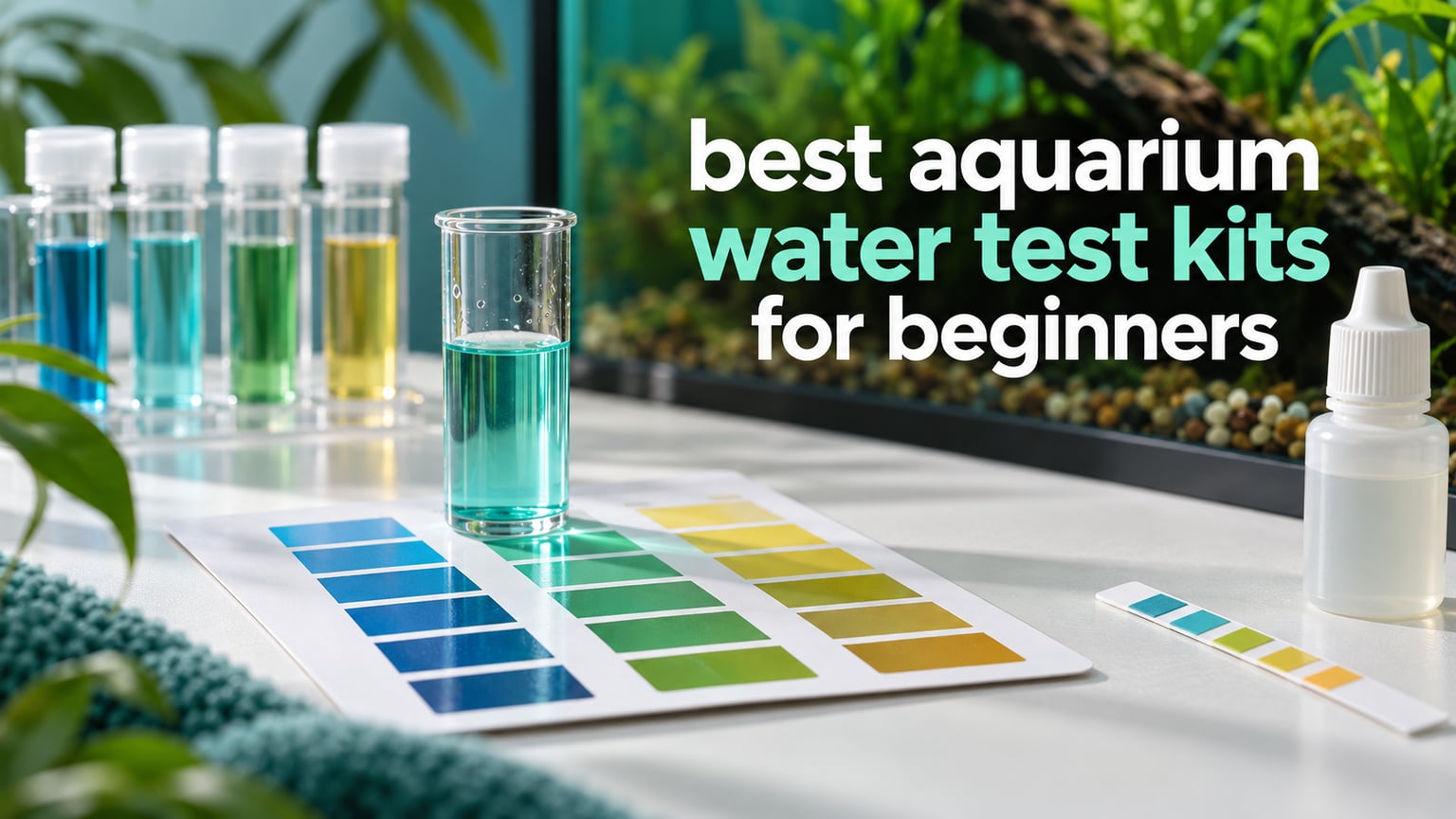
Clear water tells you almost nothing. A tank can look like a postcard and still be slowly poisoning the fish living in it, because the three things that hurt livestock most — ammonia, nitrite and nitrate — are invisible until your betta is gasping at the surface or your shrimp are dying one at a time. Testing is the only way to see them.
That is the problem for anyone searching for the best aquarium water test kits for beginners: the shelf is full of strips, liquid kits, single-parameter bottles and 11-in-1 bundles, and almost none of them tell you what they actually leave out. Two of the most popular multi-analyte strips on the market contain no ammonia pad at all, which is precisely the parameter you need most while a new tank is cycling.
My team ran through 12 aquarium water test kits, comparing parameter coverage, reagent accuracy, reading difficulty and how long each one takes. The API Freshwater Master Test Kit came out on top for most beginners, but the strips on this list are genuinely good at routine checks. Below, every kit is written up with who it suits, what it misses, and where its readings start to drift.
Disclosure: we earn a commission when you buy through the links on this page, at no extra cost to you.
Table of Contents
The Best Aquarium Water Test Kit for Beginners, Answered Directly
The API Freshwater Master Test Kit is the best aquarium water test kit for most beginners. It measures the four parameters that matter during a cycle and in weekly maintenance — pH, ammonia, nitrite and nitrate — in liquid form, which is far more accurate than matching a color pad on a strip. It is the kit we recommend starting with in 2026.
Two caveats keep it from being perfect. It does not test GH or KH, which matters if you keep shrimp, snails or live plants, and the nitrate test involves a full 30-second shake plus a one-minute wait that some people find tiring. Both are fixable: add a hardness kit later, and switch to a nitrate test only if you want tighter accuracy.
Top 3 Beginner Aquarium Test Kits (October 2026)
These are the three that came out ahead in our comparisons, each picked for a different situation rather than on a single overall score.

API Freshwater Master Test Kit
- Tests pH
- high range pH
- ammonia
- nitrite and nitrate
- 800 tests in one case
- 7 solution bottles with 4 capped tubes
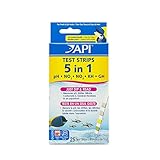
API 5-in-1 Test Strips
- pH
- nitrite
- nitrate
- KH and GH on one strip
- Works in freshwater and saltwater
- 25-count box with bottle chart
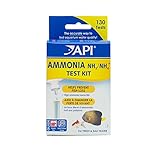
API Ammonia Test Kit
- Reads ammonia from 0 to 8 ppm
- 130 tests per bottle
- Freshwater and saltwater ready
All 12 Test Kits Compared in 2026
Every kit below appears with its own parameters, so you can check the ammonia gap before you buy rather than after.
| Product | Specs | Action |
|---|---|---|
| API Freshwater Master Test Kit |
|
Check Latest Price |
| API 5-in-1 Test Strips |
|
Check Latest Price |
 Tetra EasyStrips 6-in-1 Tetra EasyStrips 6-in-1 |
|
Check Latest Price |
| API Ammonia 130-Test Kit |
|
Check Latest Price |
 JNW Direct 9-in-1 Strips JNW Direct 9-in-1 Strips |
|
Check Latest Price |
 SJ WAVE 11-in-1 Strips SJ WAVE 11-in-1 Strips |
|
Check Latest Price |
 AAwipes 8-in-1 Test Kit AAwipes 8-in-1 Test Kit |
|
Check Latest Price |
 EASYTEST 8-Way Strips EASYTEST 8-Way Strips |
|
Check Latest Price |
 FUNSWTM 7-in-1 Strips FUNSWTM 7-in-1 Strips |
|
Check Latest Price |
 Tetra Complete Test Kit Tetra Complete Test Kit |
|
Check Latest Price |
 HOVIRAN 7-Way Strips HOVIRAN 7-Way Strips |
|
Check Latest Price |
 Umlecoa 7-in-1 Test Kit Umlecoa 7-in-1 Test Kit |
|
Check Latest Price |
1. API Freshwater Master Test Kit – Best Overall for Beginners
API Freshwater Master Test Kit 800-Test Freshwater Aquarium Water Kit, White, Single, Multi-Colored
Tests pH, high range pH, ammonia, nitrite and nitrate
7 solution bottles, color card, 4 capped tubes
800 tests
Pros
- Liquid accuracy across the full nitrogen cycle
- Sealed reagents keep working far longer than strips
- Detailed manual and color card shorten the learning curve
- Portable caddy holds each vial securely
Cons
- Full routine takes around 10 minutes
- No GH or KH tests included
- Manual contains typos and incomplete sentences
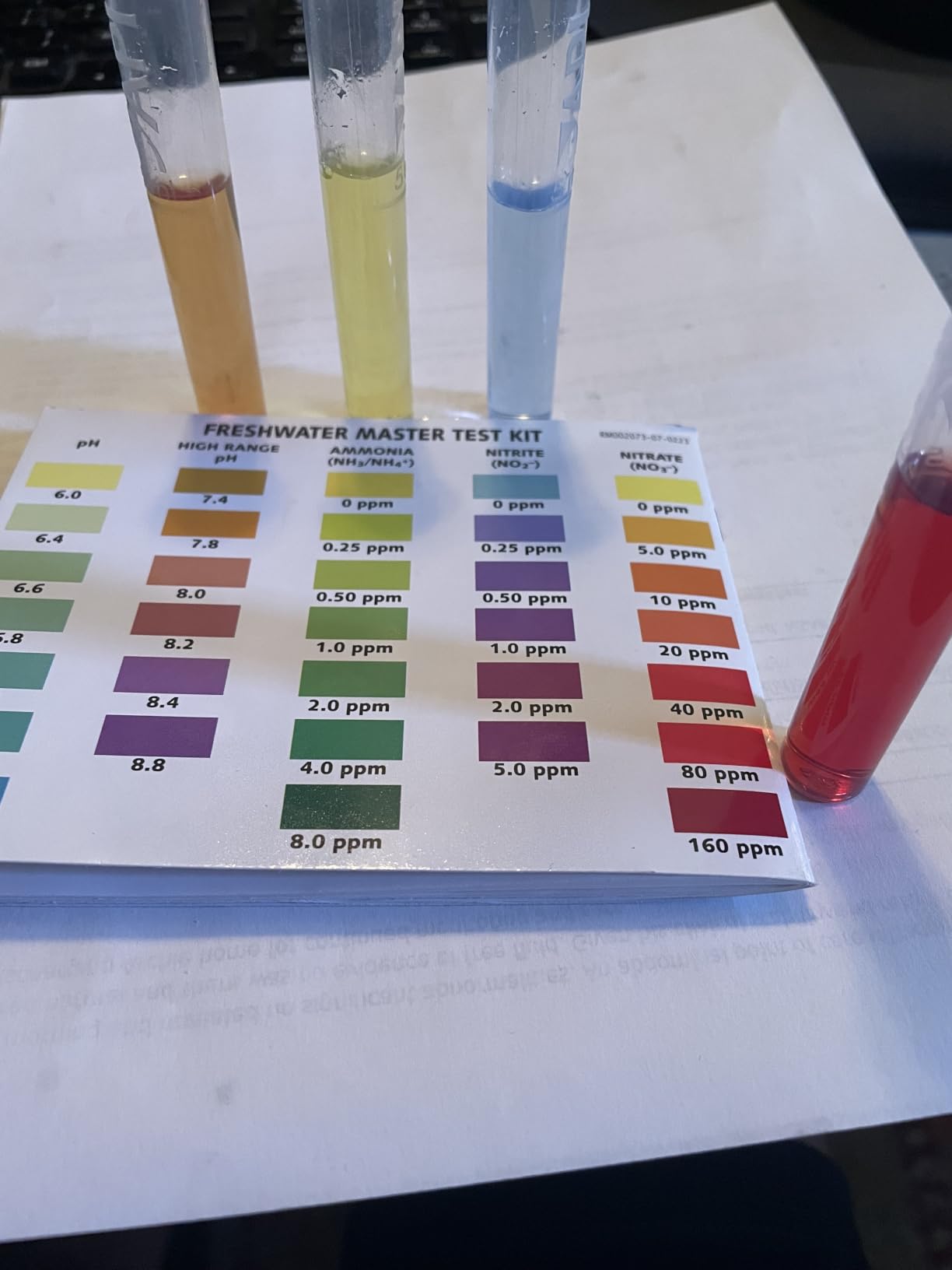
I started using the API Freshwater Master Test Kit on a tank I was cycling fishless, and it is the kit I have gone back to on every new setup since. The box holds 7 bottles of solution, a printed color card and 4 capped tubes, and the label on each bottle tells you how many drops go in and how long to wait. For a beginner, that labelling matters more than it sounds.
My routine is ammonia, nitrite, nitrate and pH on the same sample, and the whole run takes roughly ten minutes including waits. Most of that time is standing still, which is exactly when people who think liquid kits are too slow usually give up.
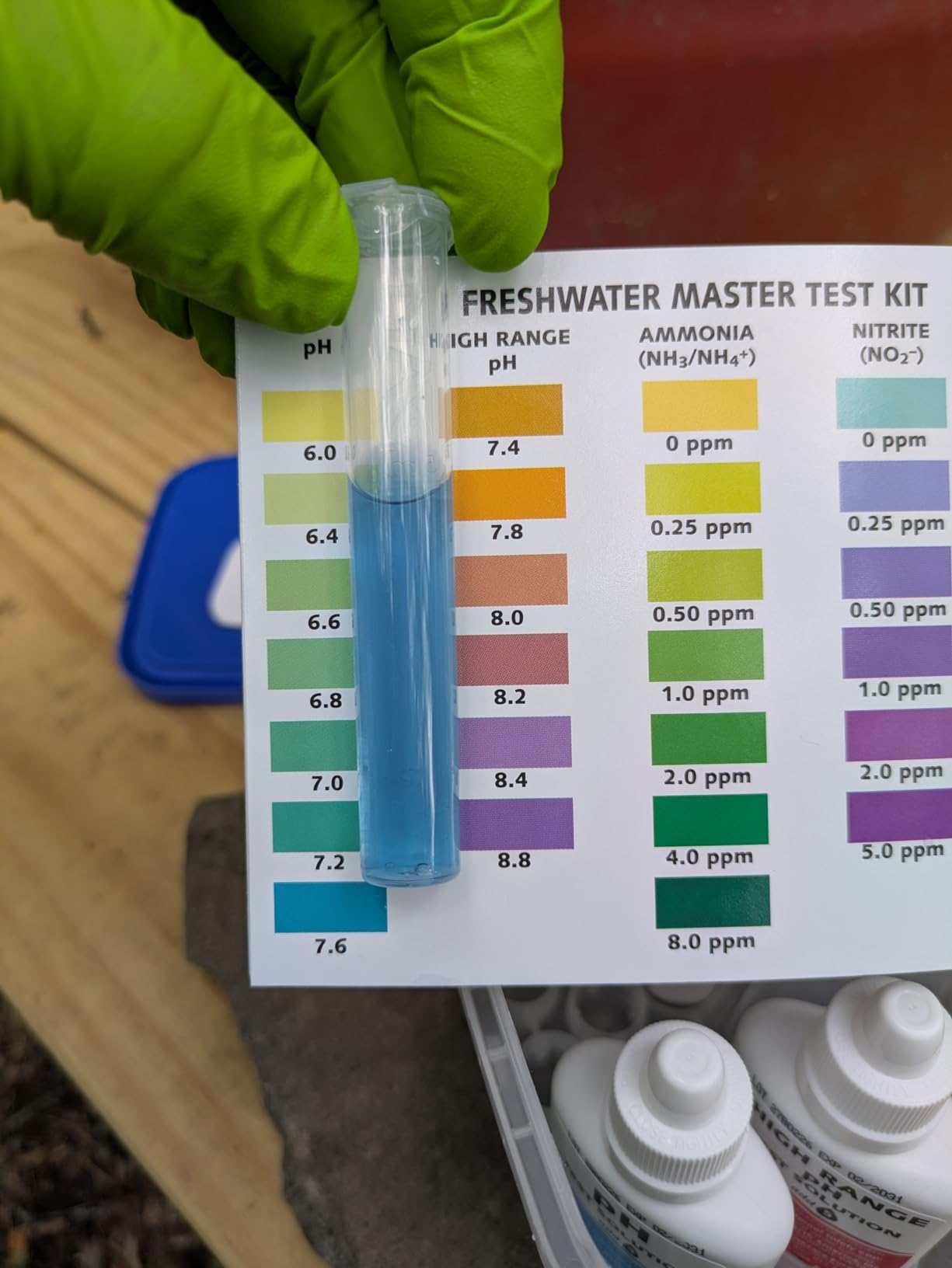
Reviewers describe it consistently as the long-standing benchmark liquid kit for beginners, and the 4.8 rating across more than 31,000 reviews backs that up. What they praise most is that sealed reagent bottles hold accuracy far longer than strip chemistry, and that the instruction manual makes first-time use straightforward.
The honest weakness is scope. There is no GH or KH bottle in this kit, so if you keep shrimp, snails or heavy planted tanks you will need a separate hardness test. The manual also has typos and truncated sentences, which is a small thing that makes a first read feel clumsier than it needs to.
The nitrate test is the fussiest part of the routine. It needs a full 30-second shake followed by a one-minute wait before the powder dissolves, and skipping either step produces a wrong color. Set a timer and it stops being a problem.
When this kit is worth the ten minutes
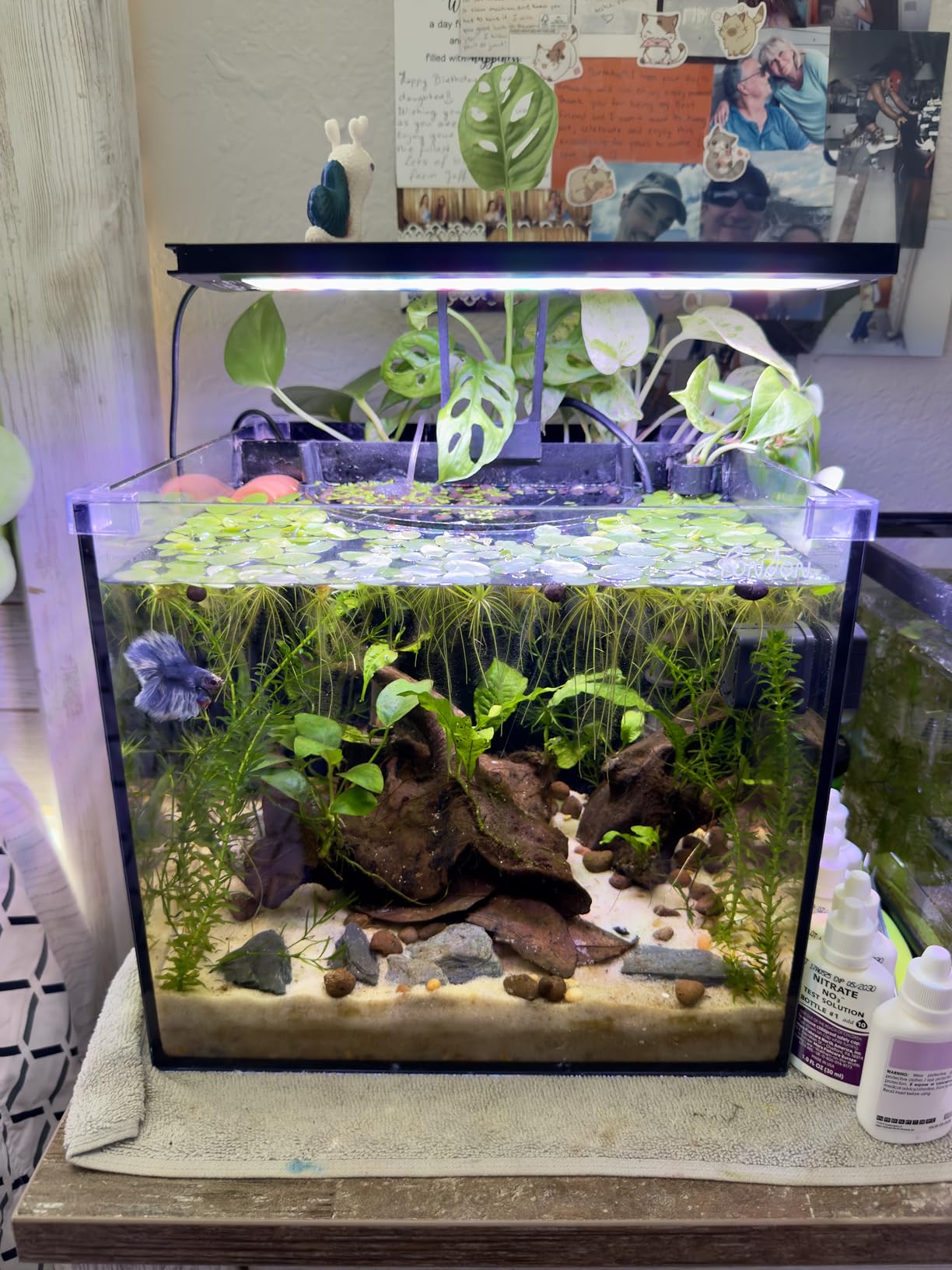
This is the kit for a new tank in the first six weeks, when ammonia and nitrite readings change daily and a strip simply cannot resolve the difference between zero and a trace. It is also the right choice any time fish are showing stress, because a bad reading early beats a guess.
Once your cycle is established and the numbers hold steady week to week, you can shift most routine checks to a strip and keep the liquid kit for the parameters that matter. The Master Kit rewards a patient owner, not a hurried one.
Where it falls short
If your tap water is very hard or very soft, this kit tells you nothing about it, and that gap is what causes most planted-tank and shrimp-keeping headaches. Add a GH and KH test before you start adjusting anything.
It is also freshwater only. Marine keepers looking at calcium, magnesium and alkalinity need a reef kit instead, and the parameters in a reef tank are not interchangeable with these five.
2. API 5-in-1 Test Strips – Best Value Routine Check
API 5-in-1 Test Strips Freshwater and Saltwater Aquarium Test Strips 25-Count Box
pH, nitrite, nitrate, KH and GH on one strip
Freshwater and saltwater
25 strips with bottle chart
Pros
- Fast and genuinely simple for a first tank
- Covers KH and GH that the liquid master kit omits
- Color matches the bottle chart closely
- Safer than liquid reagents around children
Cons
- No ammonia test at all
- Color scale too coarse at the low end
- No instructions in the box
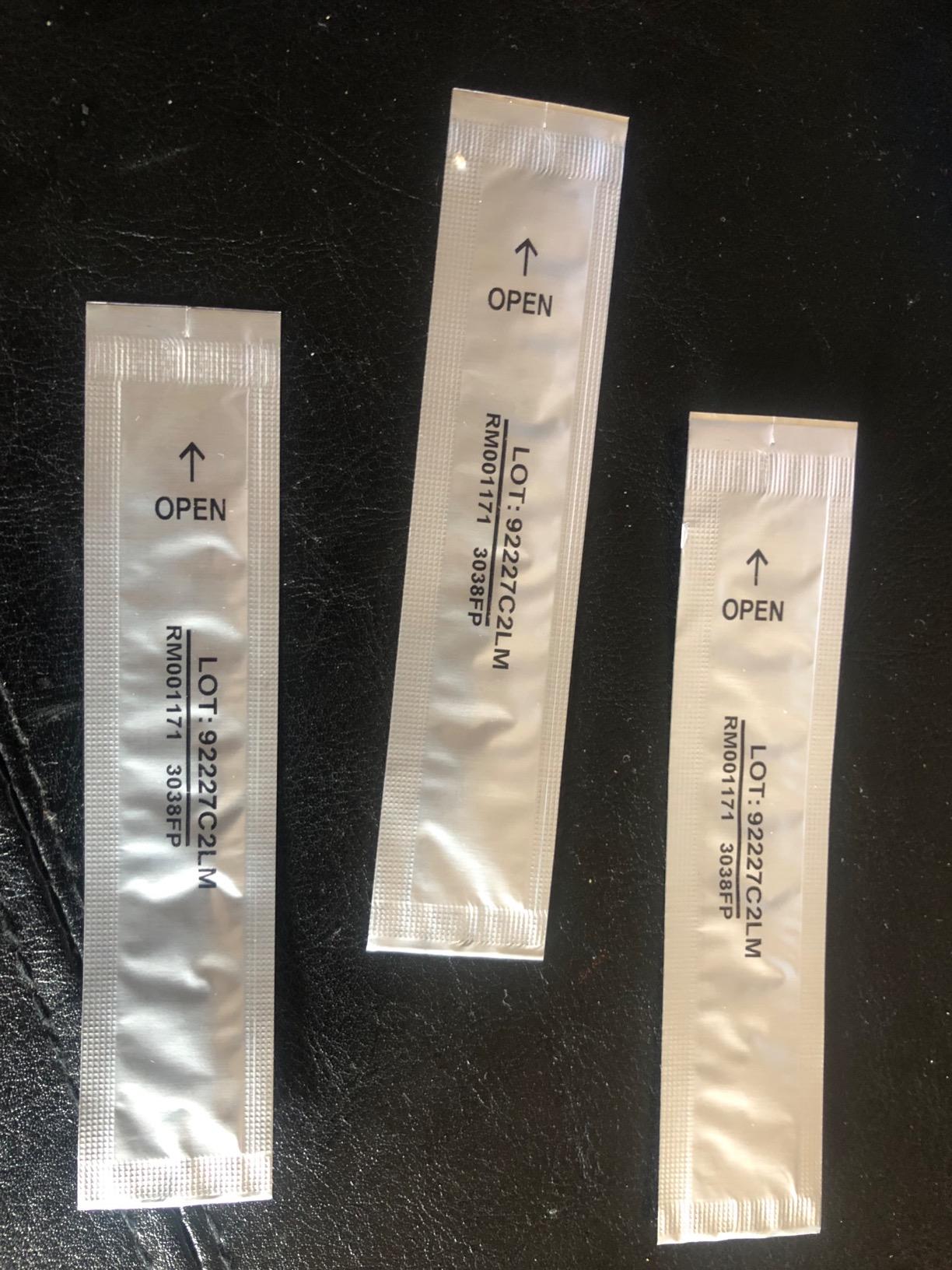
The API 5-in-1 strips solve a specific problem: the liquid master kit does not test hardness, and most beginners running shrimp or planted tanks need to know their KH and GH. This puts both on a single dip, alongside pH, nitrite and nitrate.
Usage is about fifteen seconds. Dip the strip, shake it dry, hold it against the bottle chart and read. There is no drop counting, no waiting and no clean-up, which is why so many people keep a box in the cabinet as a weekly sanity check.
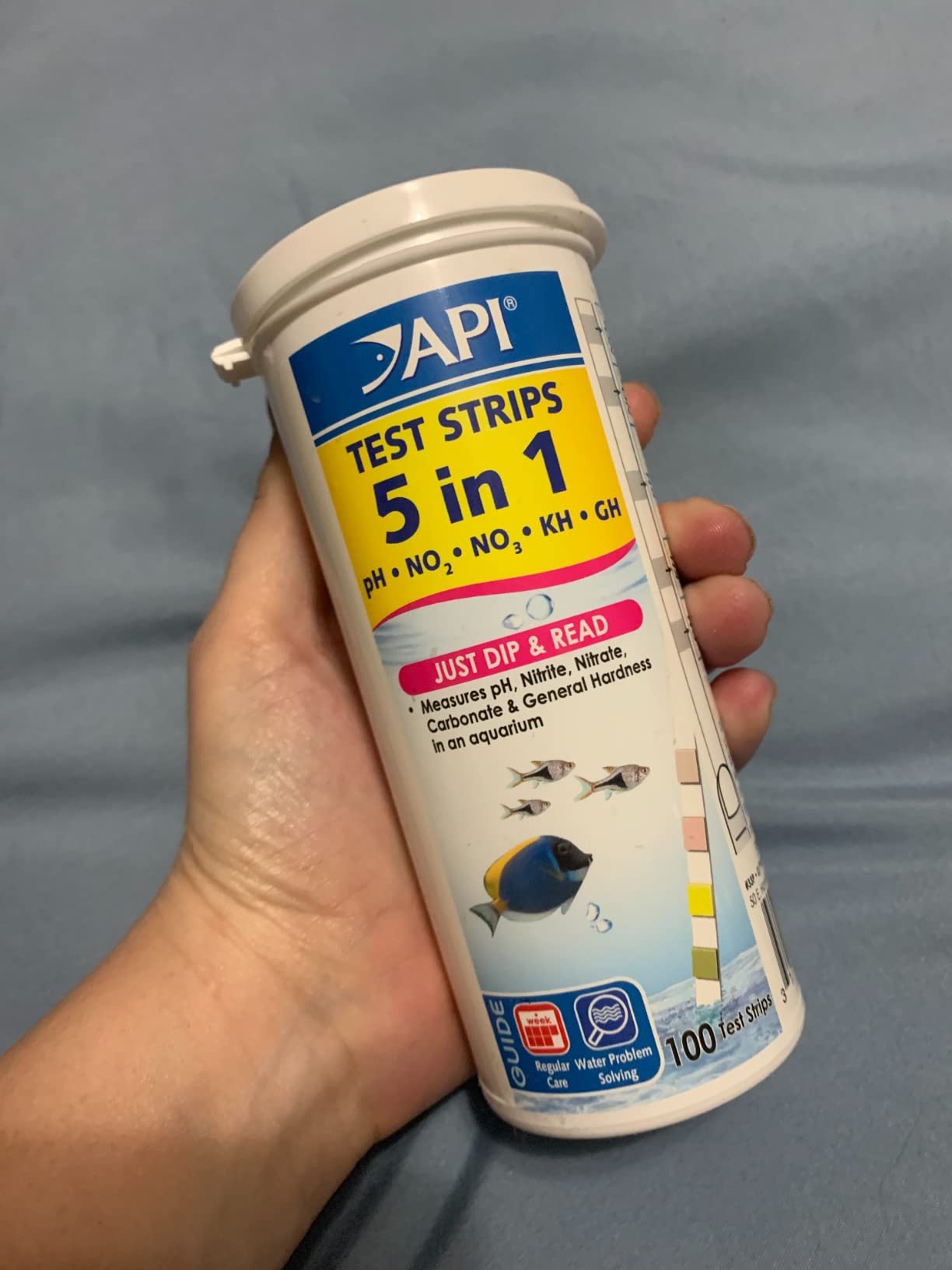
The important thing to know before you buy is what is not on it. There is no ammonia pad, and ammonia is the single parameter you need most while cycling a new tank. Owners regularly point this out, along with the coarse low-end scale where nitrite and nitrate shades are hard to tell apart.
Reviewers also note that instructions are not included in the box, which matters more than it should because the correct timing changes what you read. Read at the wrong moment and a perfectly good strip gives a wrong number.
For households with children, the sealed pads are a genuine advantage over open reagent bottles. There is nothing to spill, and nothing that needs shaking hard enough to slop out of the tube.
When this strip earns its place
Use it for weekly maintenance on a tank that is already cycled, and for checking GH and KH alongside your liquid tests. The speed makes it the only option most people will actually use every week, and consistency of habit is worth something in its own right.
It is also the easiest kit to hand to somebody starting their first tank. The learning curve is nearly flat, which means fewer missed tests caused by confusion rather than neglect.
Where it falls short
Do not use it to cycle a new tank, and do not trust it alone when a fish is sick. A missing ammonia pad and a low-end scale that merges two similar colors make it a screening tool, not a diagnostic one.
Hardness readings can cap out early, so very hard water may read flatter than it is. If your tap water is extreme, confirm with a titrated liquid test before you start dosing minerals.
3. Tetra EasyStrips 6-in-1 – Best Six-Parameter Strip
Tetra EasyStrips 6-in-1 Aquarium Water Test Strips, 25 Count
Nitrate, nitrite, hardness, chlorine, alkalinity and pH
60-second readout
Freshwater and saltwater
Pros
- Six parameters from a single dip
- Very quick 60-second readout
- Works in both freshwater and saltwater
- Backed by a large review base
Cons
- No ammonia test
- Can disagree with liquid tests at the low end
The Tetra EasyStrips 6-in-1 is the version of the classic beginner strip with chlorine added, which makes it more useful straight out of the box for anyone filling a tank on chlorinated tap water. One dip covers nitrate, nitrite, water hardness, chlorine, alkalinity and pH.
The procedure is fixed at 60 seconds. That consistency is the appeal: you do not have to learn a different wait time for each pad, and a beginner can repeat the same routine without reading a manual.
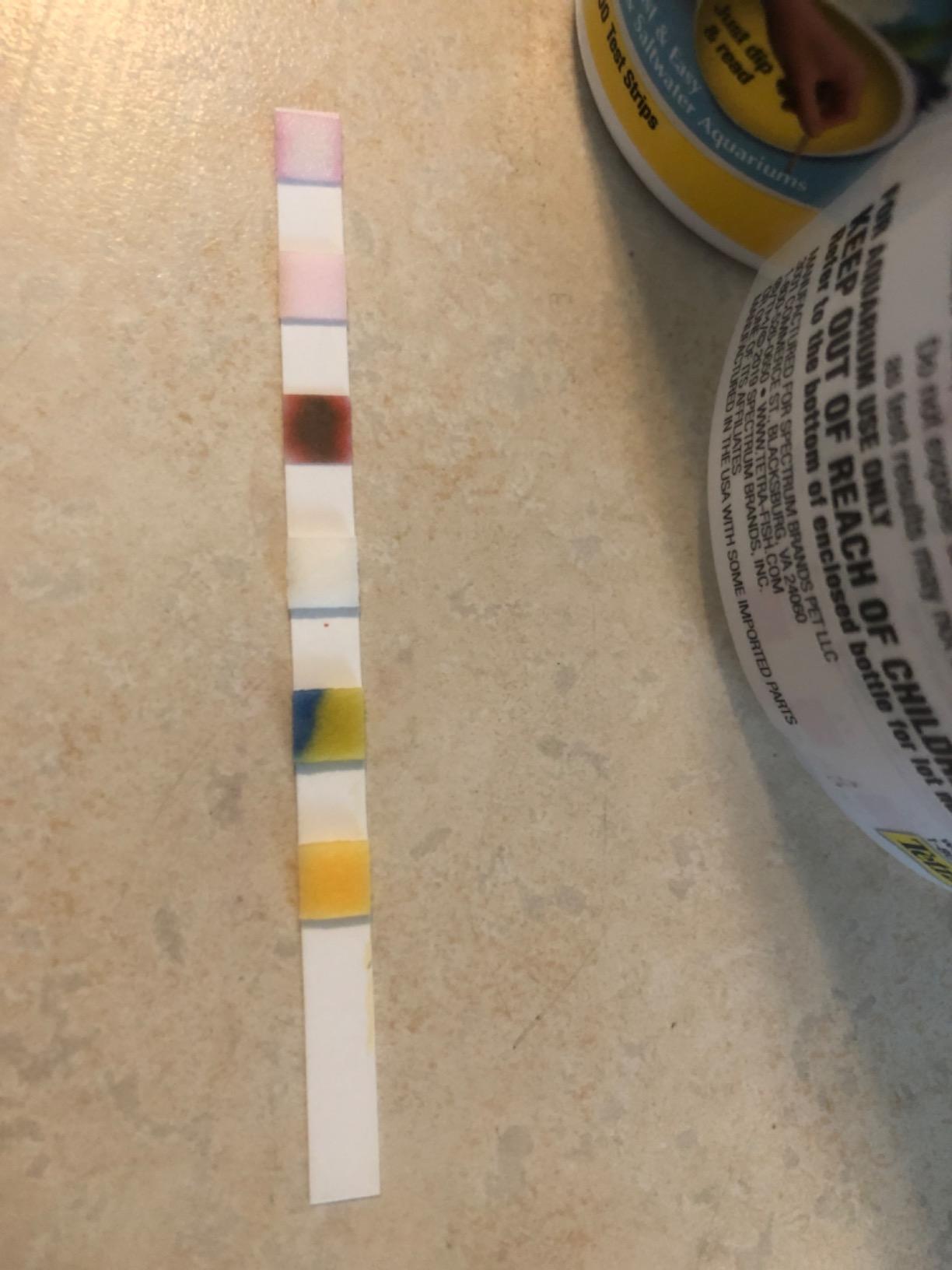
What it cannot do is measure ammonia, and that is the same gap as most strips in this category. Owners accept it for routine work and flag it firmly for anyone mid-cycle.
The other recurring note is low-end disagreement. At small values, the shade of nitrite and nitrate can sit between two chart steps, and the reading you get may not match what a liquid kit says on the same sample. For trend watching that is fine; for a decision it is not.
Reviewers rate the clarity of the color chart highly, and the fact that it works in both freshwater and saltwater means one box can cover a second tank if you ever branch out.
Who this strip suits
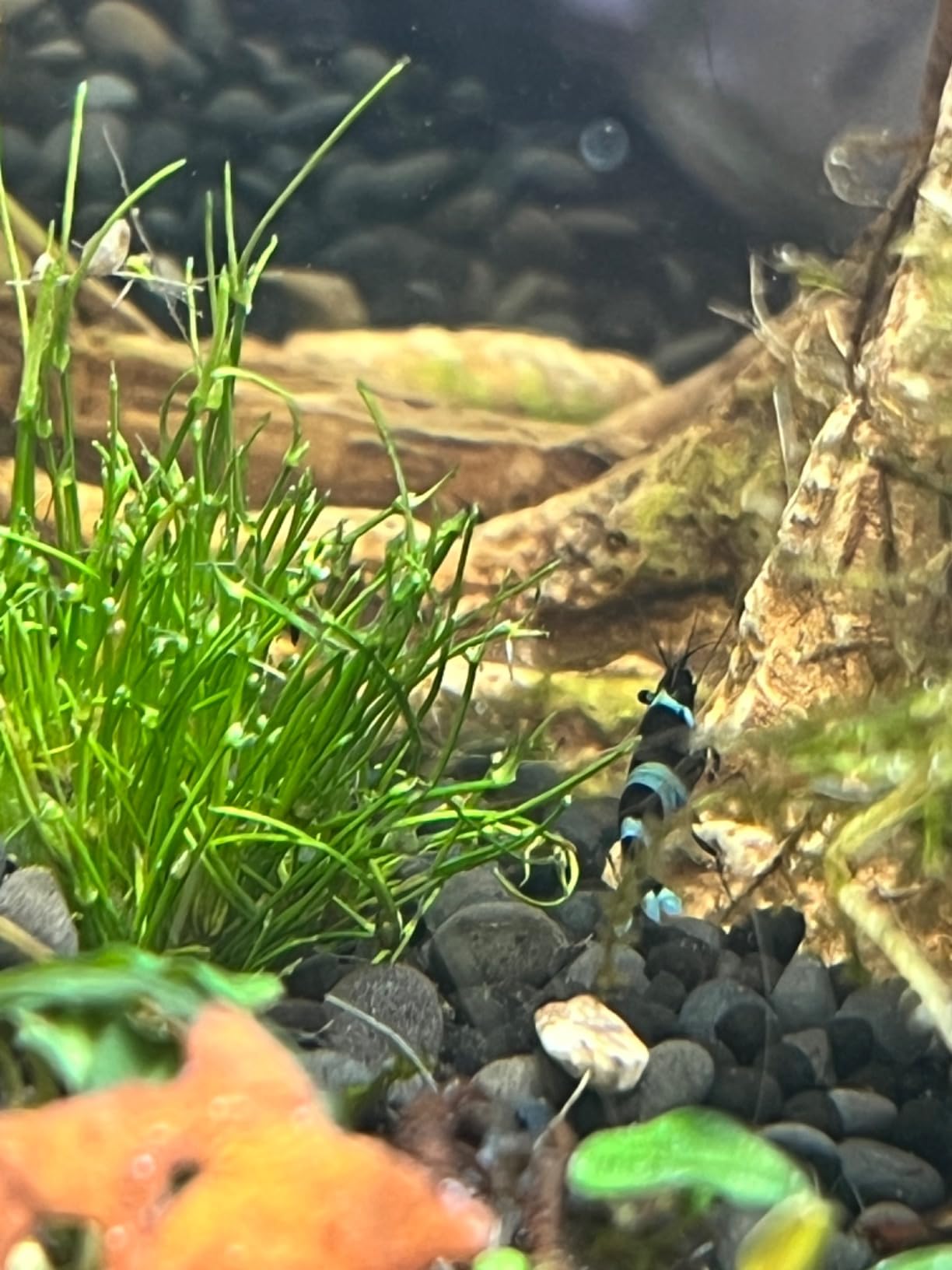
It suits someone who wants a five-second weekly check and does not want to handle reagents at all. It is a good companion to a liquid kit rather than a replacement for one, especially during routine maintenance where the cycle is already stable.
The chlorine pad also makes it practical for new setups. If you have just filled a tank and dosed a dechlorinator, watching the chlorine square fall to zero is a useful confidence signal.
Where it falls short
Six parameters sounds thorough but omits the one that decides whether a new tank is safe. If you are fishless cycling, you need a liquid ammonia test, and this strip cannot substitute for it.
Low-end accuracy is limited by the chart itself. If you are trying to tighten a nitrate level from high to low, use a liquid kit to confirm the number once the strip shows the direction of travel.
4. API Ammonia 130-Test Kit – Best for Cycling a New Tank
API Ammonia 130-Test Freshwater and Saltwater Aquarium Water Test Kit
Reads ammonia from 0 to 8 ppm (mg/L)
130 tests
Freshwater and saltwater
Pros
- Targets the parameter new tanks struggle with most
- Liquid reads beat strip color matching
- Compact 130-test kit
- Dependable reagents from a known brand
Cons
- Only covers ammonia
- Not a complete kit on its own
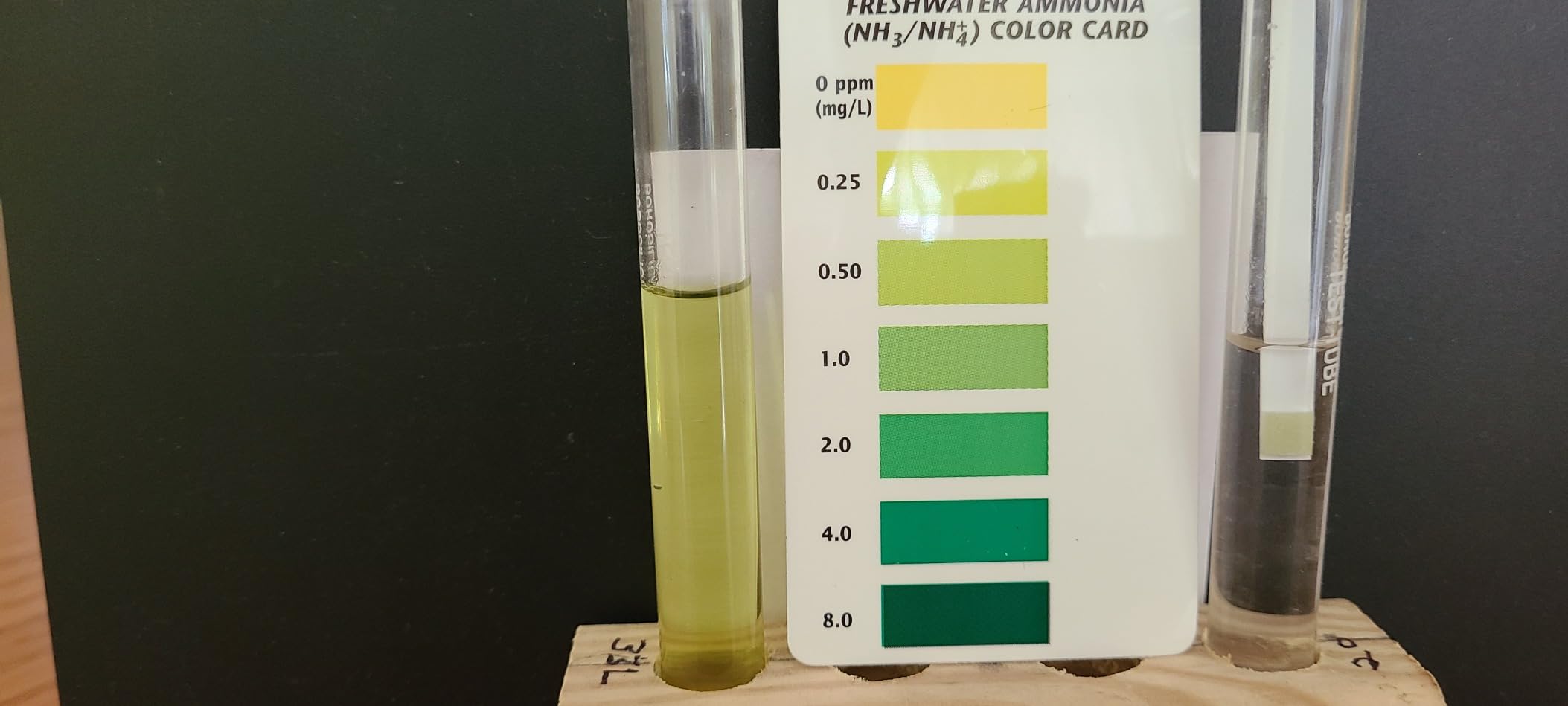
Almost every strip on this list skips ammonia, which makes this bottle the fix. It reads from 0 to 8 ppm (mg/L) in liquid form, and 130 tests is enough to run a full cycle several times over before you need another.
The test itself is short. Sample the water, add the reagent drops, cap and shake, wait, then match the color. Being liquid, it resolves low concentrations that a strip simply cannot show, which is exactly the range where cycle problems hide early.
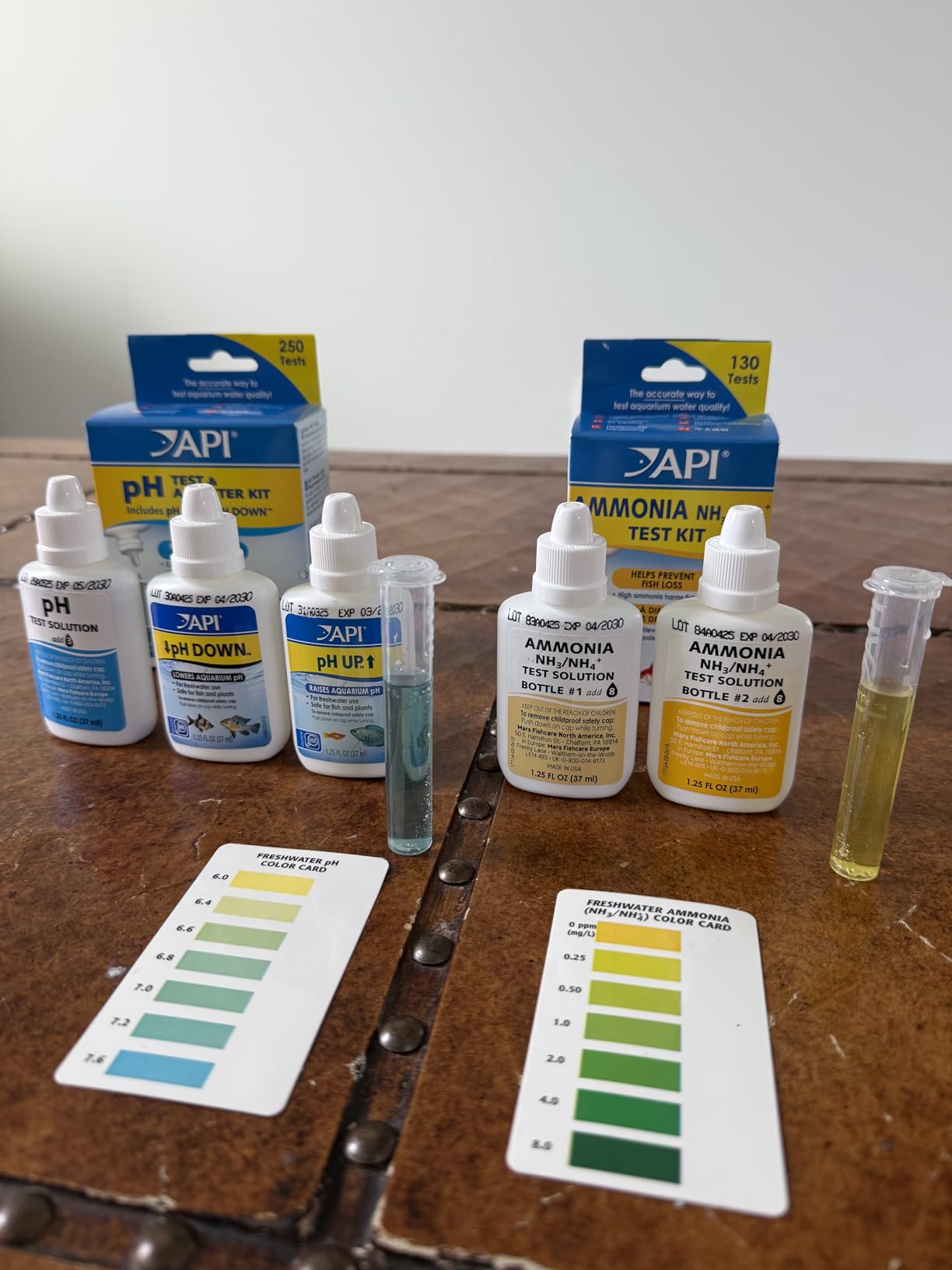
Owners buy it as a companion to a master kit rather than instead of one, and the 4.7 rating across nearly 3,700 reviews reflects that. It is compact, and it uses the same reagents and color card style as the rest of the API range, so there is nothing new to learn.
It works in both freshwater and saltwater, which means a brackish or reef-adjacent setup can use it during the initial cycle without buying a second product.
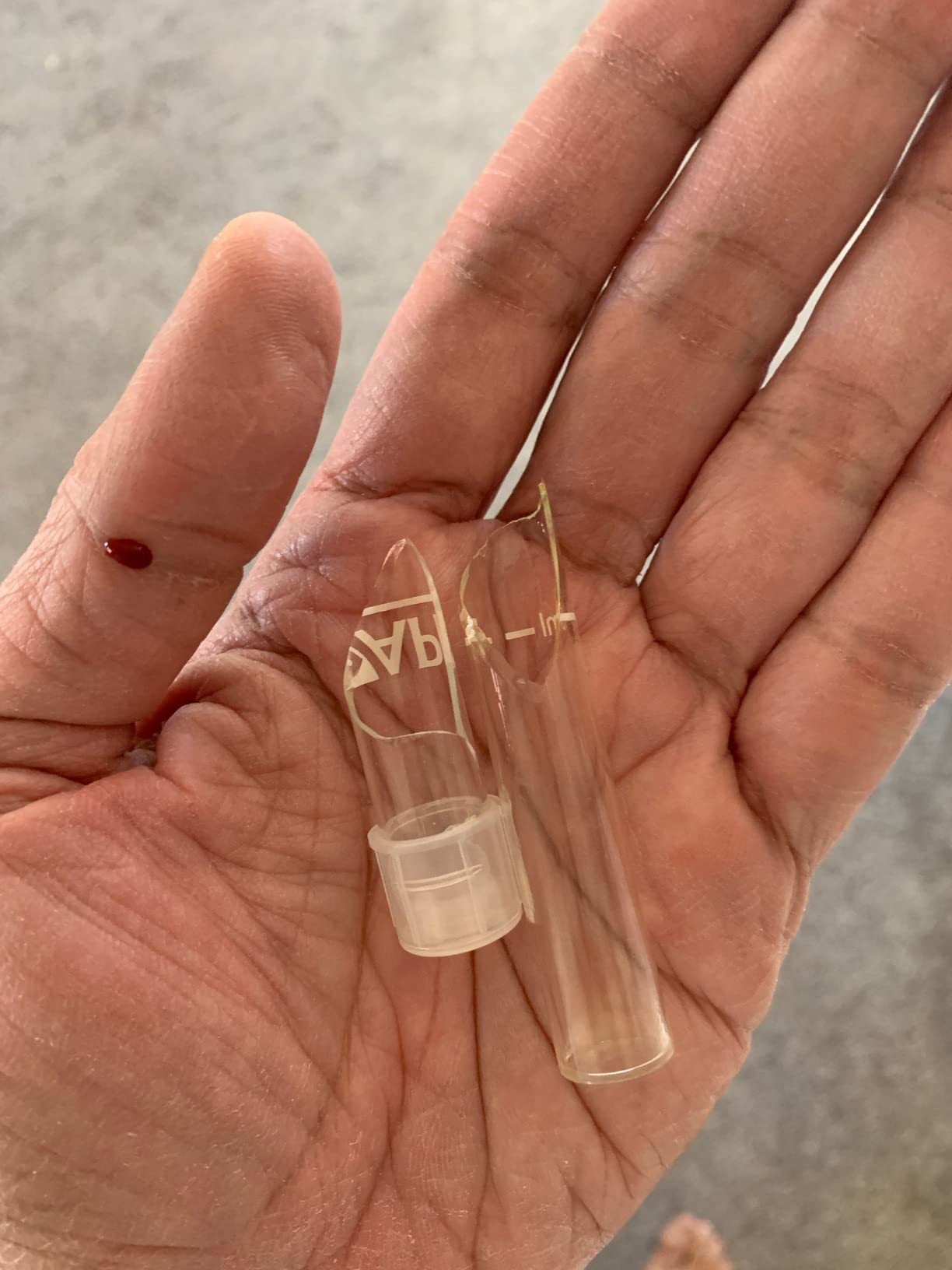
The limitation is stated plainly in the reviews: on its own, it tells you nothing about nitrite, nitrate or pH. A stalled cycle looks very different depending on which part of it is stuck.
When ammonia is the only number you need
During a fishless cycle, ammonia is your primary signal. You dose it to a target, test, then watch it fall as the bacteria colonize, and knowing it precisely is what tells you whether to dose again or wait.
It is also the right addition for a brackish tank in the first weeks, and for anyone whose fish are gasping at the surface and needs an answer now rather than a trend line.
Where it falls short
It is a single-parameter test. If you buy only this, you still cannot tell a healthy cycle from a half-finished one, and you will be tempted to interpret an ammonia result on its own.
Also note that a low reading only means what your reagent can resolve. If your cycle has not started yet, a clear result tells you nothing about what happens next.
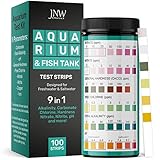
5. JNW Direct 9-in-1 Strips – Best for Bulk Testing
Aquarium Test Strips – 9-in-1 Aquarium Test Kit with eBook – Aquarium Water Test Kit with Quick and Accurate Fish Tank Test Strips – 100 Test Strips by JNW Direct
9 parameters on one strip
100 strips per container
Detailed color chart included
Pros
- Large 100-strip count
- Chart is visible without peeling a wrapper
- Safe ranges marked in bold
- Several owners cross-checked against API and Tetra
Cons
- Color matching is subjective and needs bright light
- App color scales do not match the bottle chart
- One owner reported a reading that contradicted a shop test
Nine parameters and 100 strips in one container makes this the volume pick of the group. For anyone running several tanks, or testing on a schedule that burns through strips quickly, the per-test math is the reason to choose it.
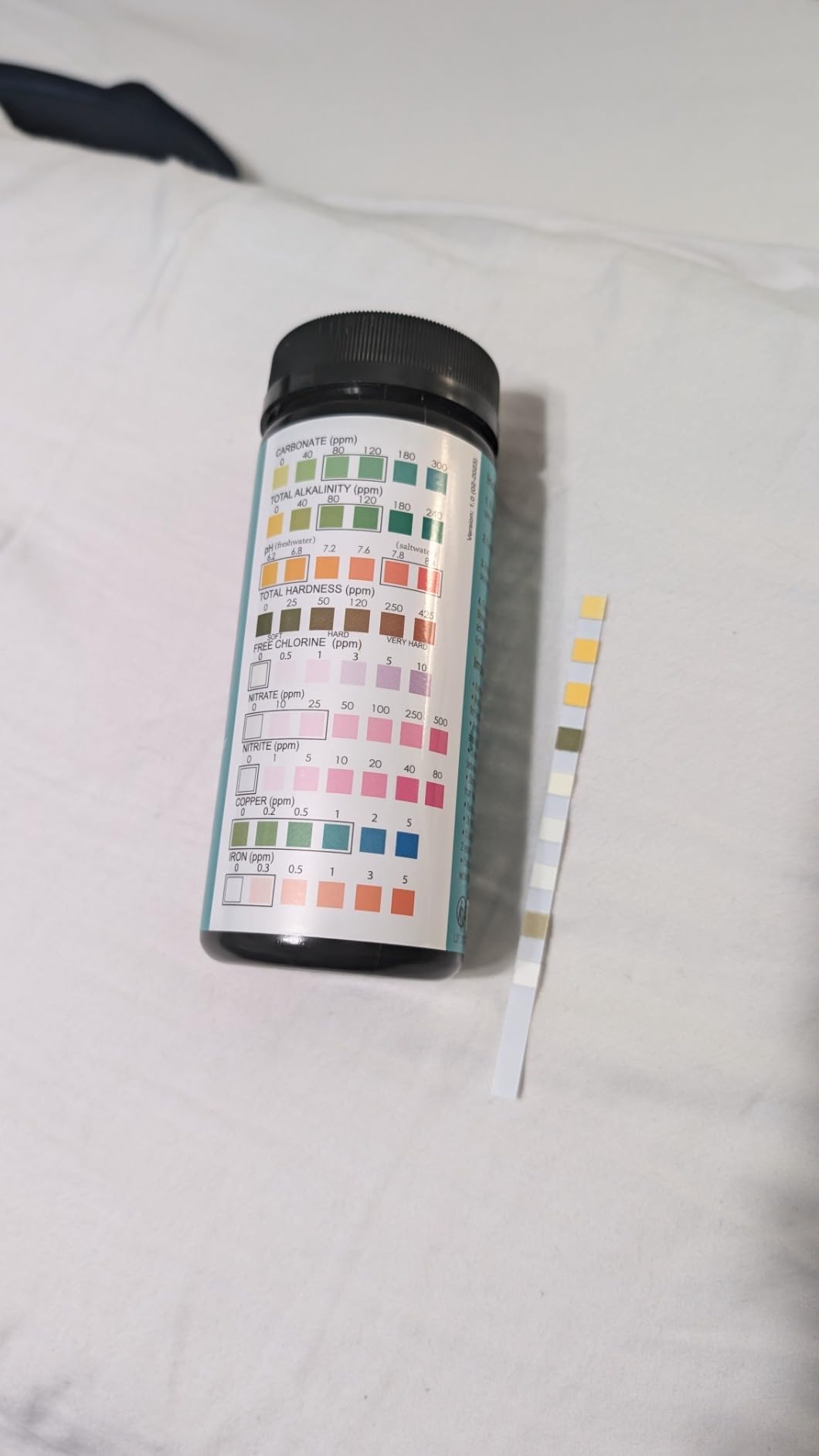
It works in both freshwater and saltwater and comes with a detailed color chart, plus an eBook walking through what each result means. The chart is the part you will actually use, and reviewers single it out for being readable without peeling back a foil wrapper.
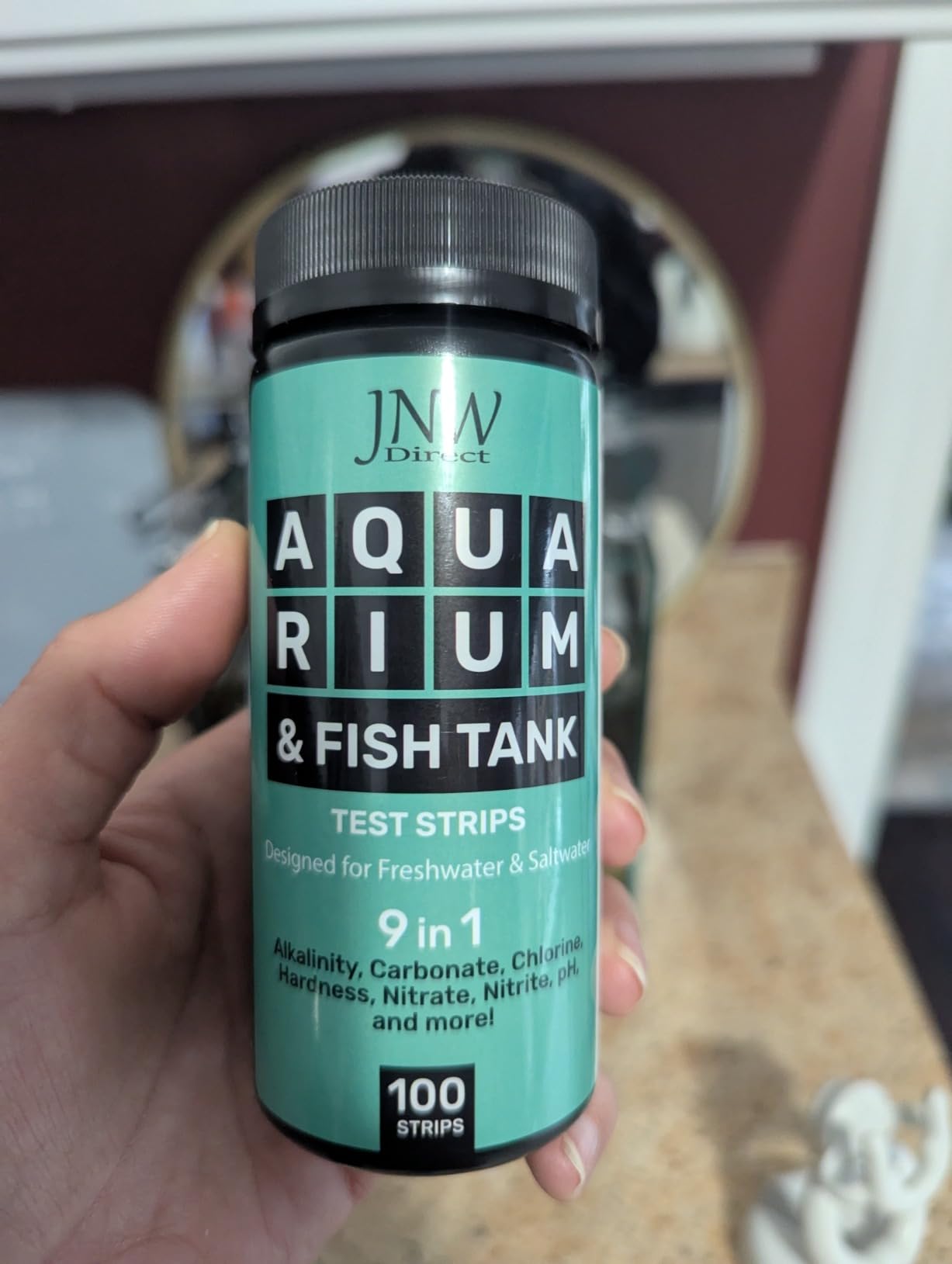
Several buyers report cross-checking readings against API and Tetra strips on the same samples and finding them broadly consistent, which is a reasonable standard of trust for routine work. The bold safe-range markings on the bottle make a weekly glance interpretable in seconds.
Two cautions come up repeatedly. Color matching is subjective and benefits from bright lighting, and the color scales in the companion app do not match the printed chart, which is a good reason to ignore the app entirely.
One reviewer reported readings that showed zero nitrite and nitrate while a local shop found high levels. A single report is not a pattern, but it is exactly why I would not use this strip alone to diagnose a sick fish.
When the strip count matters most
This is the kit for a classroom, a fish store, or a household with three or more tanks where the same weekly check has to happen repeatedly. At that volume, a large container stops being a luxury.
It also works well as a trend-screening tool. Dip weekly, write the numbers down, and look at the direction over a month rather than reacting to a single reading.
Where it falls short
Nine pads sounds comprehensive but the practical accuracy is limited by how many distinct colors you can tell apart on a strip under a kitchen light. Expect the low end to be approximate.
For anything involving a cycle or a diagnosis, pair it with a liquid kit rather than relying on it. The 4.3 rating reflects solid value with real limits.
6. SJ WAVE 11-in-1 Strips – Widest Parameter Coverage
11 in 1 – Aquarium Test Strips | 950 Tests – 150 Strips | Fish Tank Aquariums Water Test Kit & ebook | Aquarium Thermometer | Fish Tank Water Testing Kit Includes 50 Ammonia Strips | Versatile Usage
11 parameters including ammonia and copper
150 strips split between bottle and bag
Color chart and test tubes
Pros
- Widest coverage here
- including ammonia and copper
- 150 strips with split packaging
- Color charts make instant readings easy
- Sensitive to low-level impurities
Cons
- Many pads go unused
- Use within 3 months of opening
- eBook adds little beyond the chart
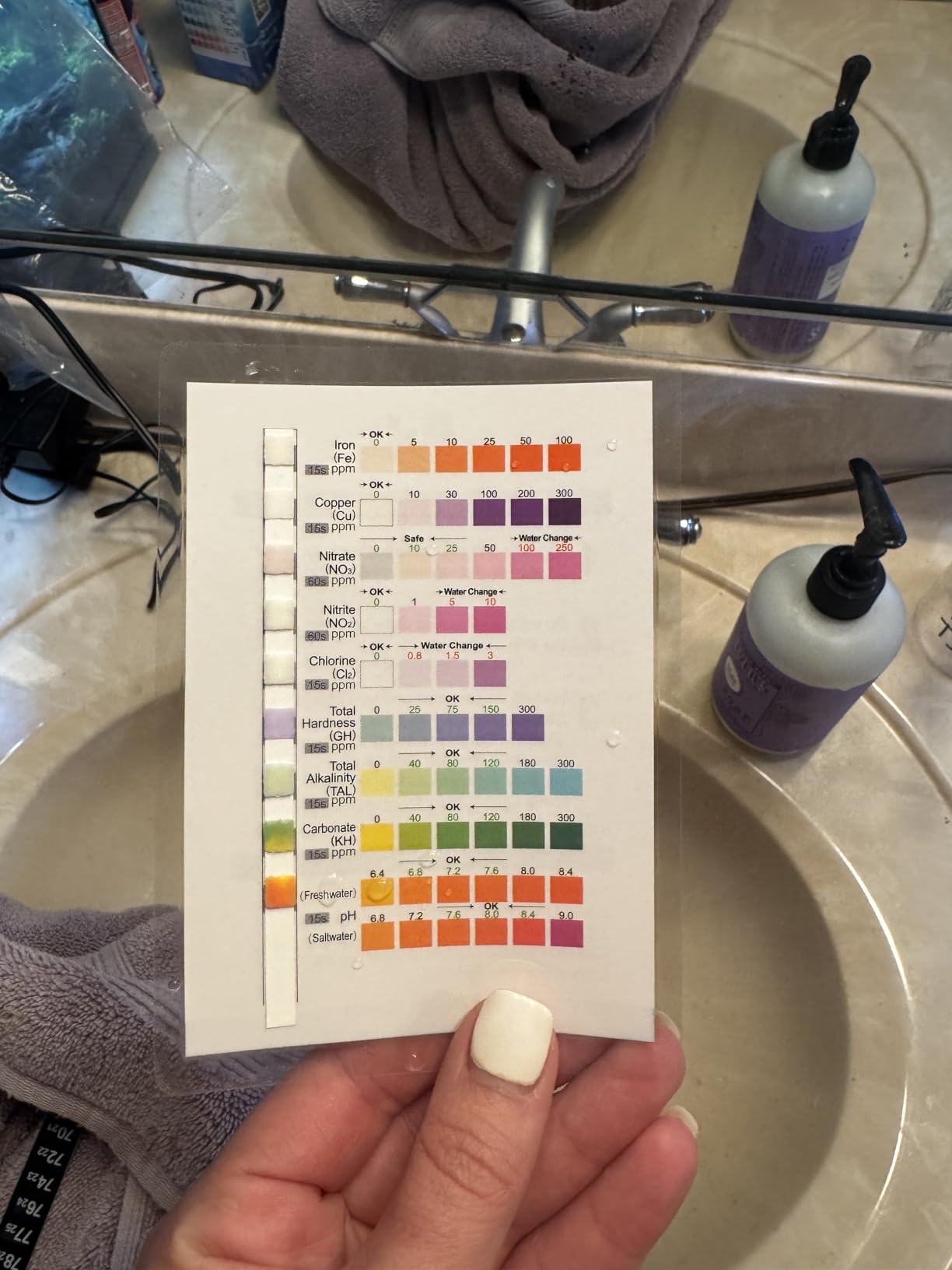
This is the only kit in the group that covers eleven parameters, and it does include ammonia, which puts it ahead of most strips despite the higher pad count. It tests pH, iron, chlorine, GH, carbonate, nitrate, nitrite, total alkalinity, copper, ammonia nitrogen and temperature.
The split packaging is a smart detail. 50 strips sit in a bottle and 100 in a sealed bag, so the ones you use first are the ones most exposed to moisture, and the bulk of the supply stays protected.
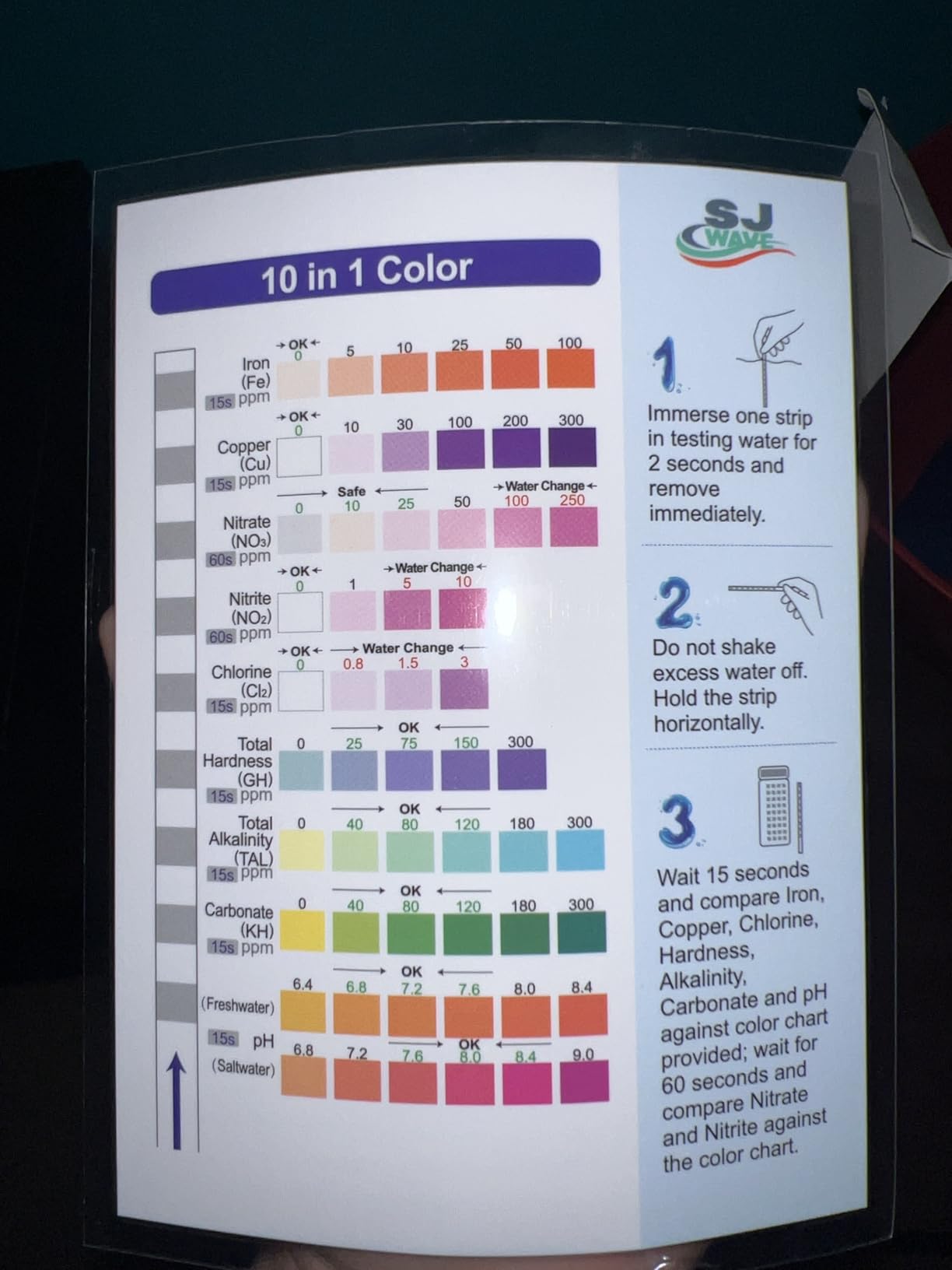
Reviewers like the coverage and the quantity, and the category ranking reflects that. For a beginner who wants one product that answers most questions without a second kit, this is genuinely the most complete strip here.
The obvious catch is that most of those pads will never be used by a freshwater beginner. Copper and total alkalinity are niche, and a 4.5 rating across more than 5,000 reviews reflects a good product with a padded feature list.
The three-month guidance after opening is the more important caveat. Strips lose accuracy as they absorb humidity, and a strip that has been open since last summer will happily give you a confident wrong number.
When one box needs to do everything
Choose it if you want a single strip product that will not leave you guessing, or if you move between fresh and salt water and want a kit that suits both. The instructions confirm suitability for saltwater, freshwater, betta tanks and ponds.
The included test tubes let you do a more controlled sample than a casual dip, which is a small upgrade if you are comparing readings over time.
Where it falls short
Parameter count is not accuracy count. Each of the eleven pads is a color match with a limited range, and the more shades on a strip, the harder each one is to call accurately.
Write the opening date on the bottle. If you only test once a week, most of a 150-strip pack will expire before you reach it, and you will be trusting chemistry that has degraded.
7. AAwipes 8-in-1 Test Kit – Most Versatile With Ammonia
AAwipes 8-in-1 Aquarium Test Kit for Fish Tanks – Quick & Accurate Water Testing Strips for Aquariums & Ponds. Tests pH, Ammonia, Alkalinity, Hardness, Chlorine, etc. (K02-50)
8 parameters including ammonia nitrogen
50 strips
Non-bleeding fiber paper pads
Pros
- Includes ammonia
- which most budget strips omit
- Highest-ranked product in its category
- Non-bleeding pads give clean colors
- Suits aquariums
- ponds
- pools and shrimp tanks
Cons
- Ammonia pad needs a separate dip and a 180-second wait
- Reading multiple pads takes more care
Most budget strips skip ammonia, and this one does not. It measures free chlorine, nitrate, nitrite, hardness, sodium chloride, total alkalinity, pH and ammonia nitrogen, which is an unusually complete set for the price band.
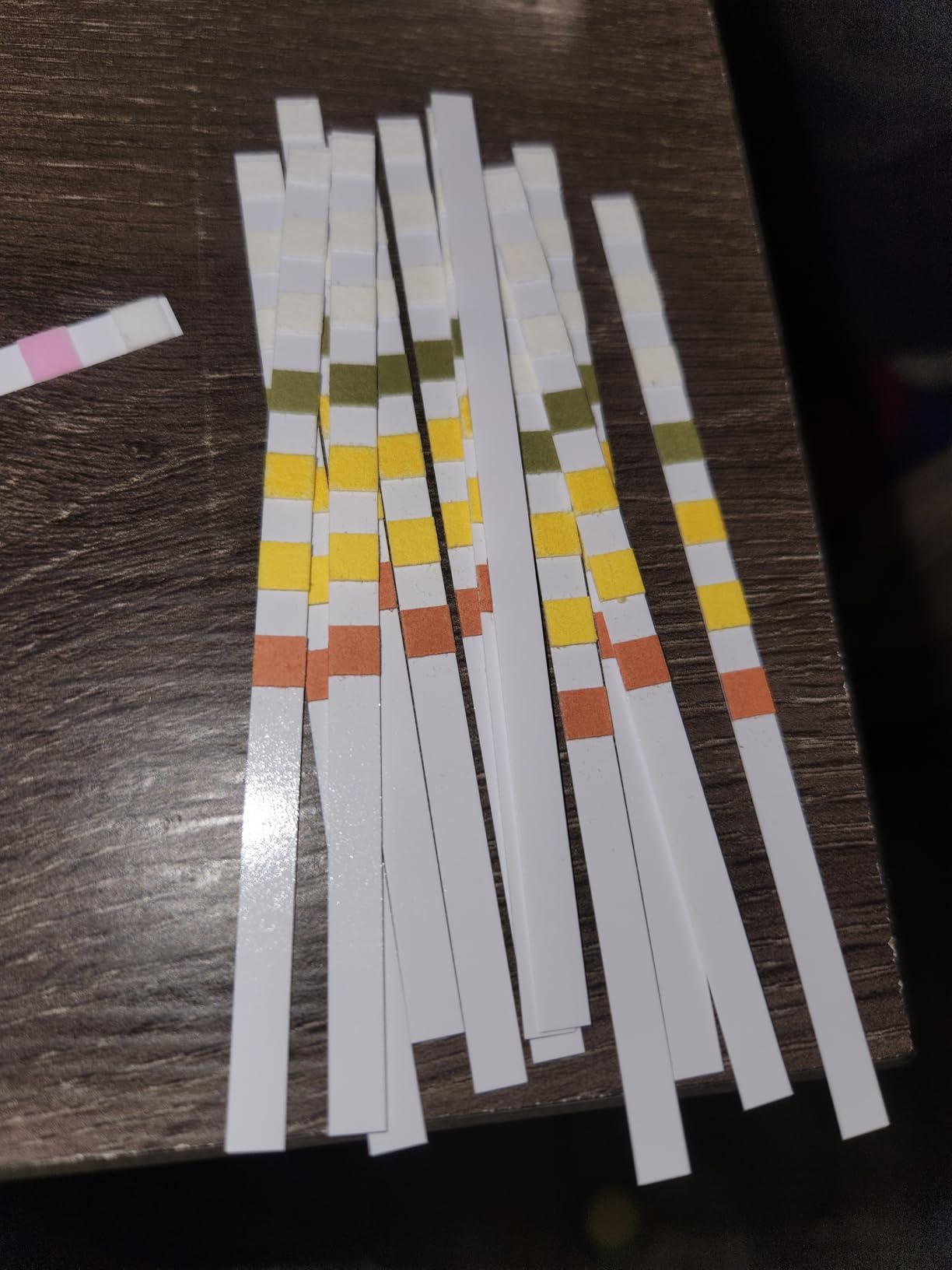
Two details set it apart from cheaper pads. The fiber paper is designed not to bleed color between squares, and the packaging is sealed to keep moisture out before you open it, which is what ruins strips most often.
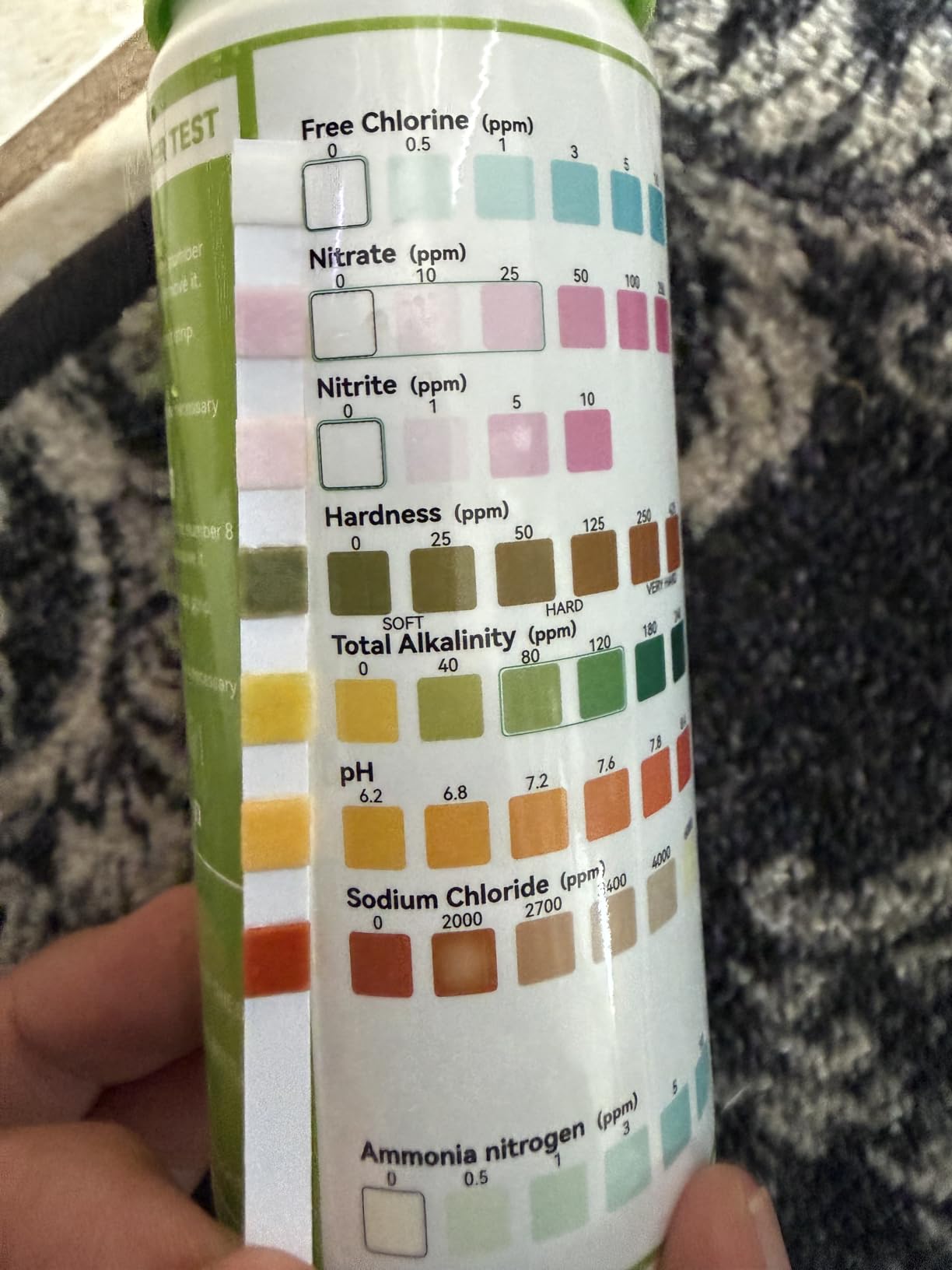
The category ranking it holds is not an accident; reviewers consistently note the parameter coverage and the clarity of the colors. For a beginner building a first setup, having ammonia on the same strip as everything else removes one step entirely.
What makes it less simple is the two-stage timing. Pads 1 through 7 go in together for two seconds, then pad 8 is dipped separately for five seconds. You read the first seven at 30 seconds and the ammonia pad at 180 seconds, which means setting two timers.
That extra step is the reason the rating sits at 4.3 rather than higher. It is not confusing once you know it, but it is not the one-dip simplicity that makes strips attractive in the first place.
When this kit makes sense
It suits a beginner who wants ammonia coverage and clean colors without buying a liquid kit, and it handles shrimp tanks and ponds as well as aquariums, which widens what one box can cover.
The sodium chloride pad is a small bonus if you ever keep a brackish tank or a betta setup, and the non-bleeding paper makes side-by-side comparisons cleaner.
Where it falls short
Two timers is a real cost in attention for a product sold on simplicity. If you expect to test once a week, the extra three minutes will not matter; if you are testing daily during a cycle, it will.
Even with an ammonia pad, a strip cannot resolve the low concentrations that a liquid test does, so do not treat a clear pad as proof your cycle is complete.
8. EASYTEST 8-Way Strips – Best for Routine Weekly Checks
EASYTEST 8-Way Aquarium Test Strips with Ammonia, 50PCS Fish Tank Test Kit
pH, hardness, alkalinity, chlorine, nitrate, nitrite, carbonate, ammonia
50 strips
Pros
- Eight parameters including ammonia on one strip
- Owners report readings matching pricier kits
- Quick and simple
- Chart marks safe and risky levels clearly
Cons
- pH scale tops out around 6.4
- Nitrate can read slightly off versus a liquid kit
- Occasional inconsistent batches
The EASYTEST 8-Way covers pH, hardness, alkalinity, chlorine, nitrate, nitrite, carbonate and ammonia nitrogen, with the ammonia pad on the same strip. Compact fiber paper is used to stop colors bleeding into each other, which is the failure mode that makes cheap strips hard to read.
Timing is the one wrinkle. Most values are read at 15 seconds, nitrate and nitrite at 60 seconds, and the instructions say to cut off the ammonia pad for an accurate ammonia reading. Get it right and it is fast; get it wrong and the number is decorative.
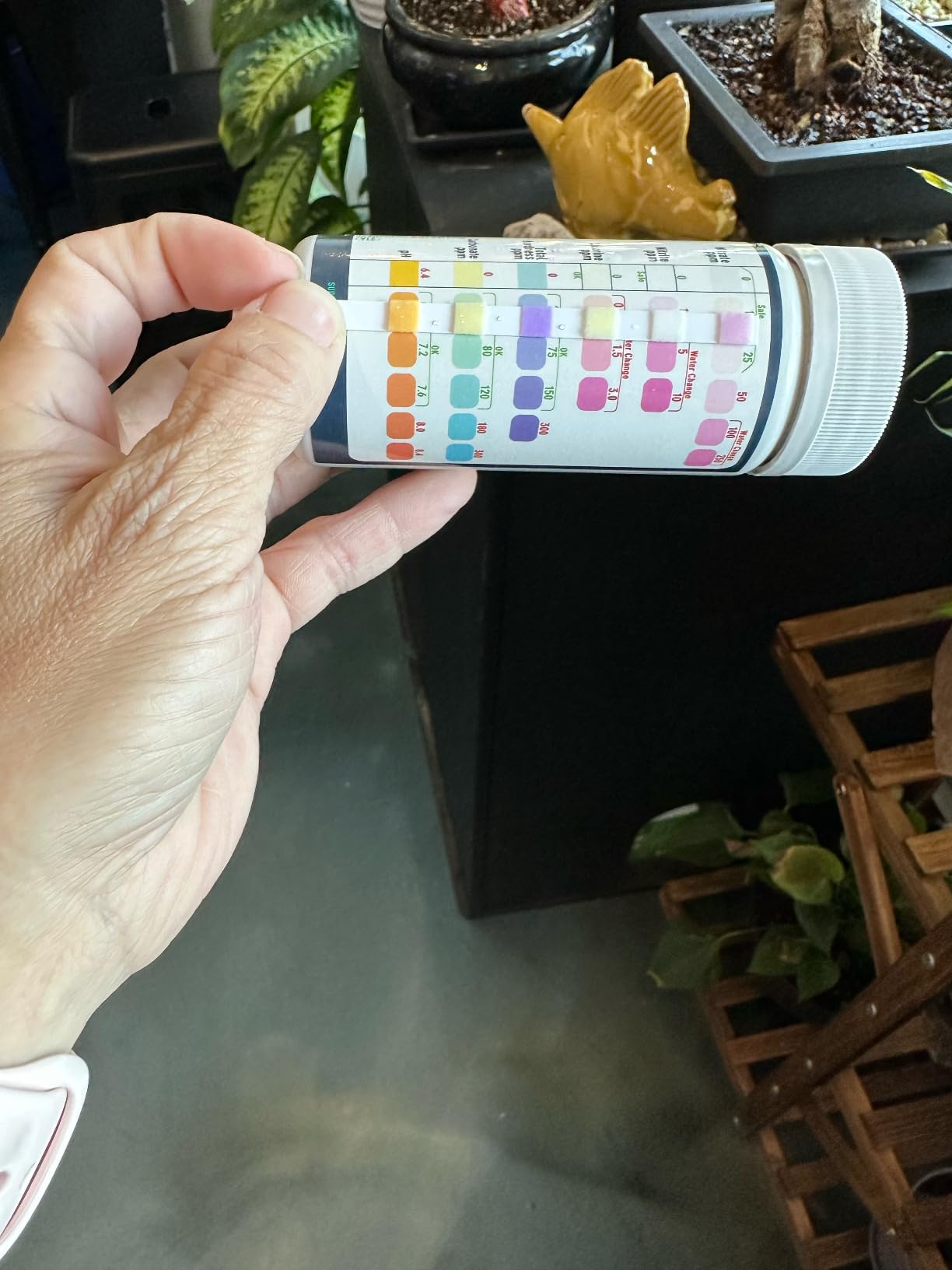
Several owners report readings that match more expensive brand-name kits, and one runs 15 tanks with them, which is a fair endorsement for routine monitoring. The chart marks safe and risky levels clearly enough to make a weekly glance meaningful.
The pH scale is the real limitation. It tops out around 6.4, so anything more alkaline than that cannot be read precisely, which is a problem in hard-water regions and for anyone keeping live plants or reef-style setups.
Nitrate can read slightly off compared with a liquid kit, and a few buyers have reported a decline in strip quality on a recent batch or strips arriving faulty. Treat it as a screen and confirm anything surprising.
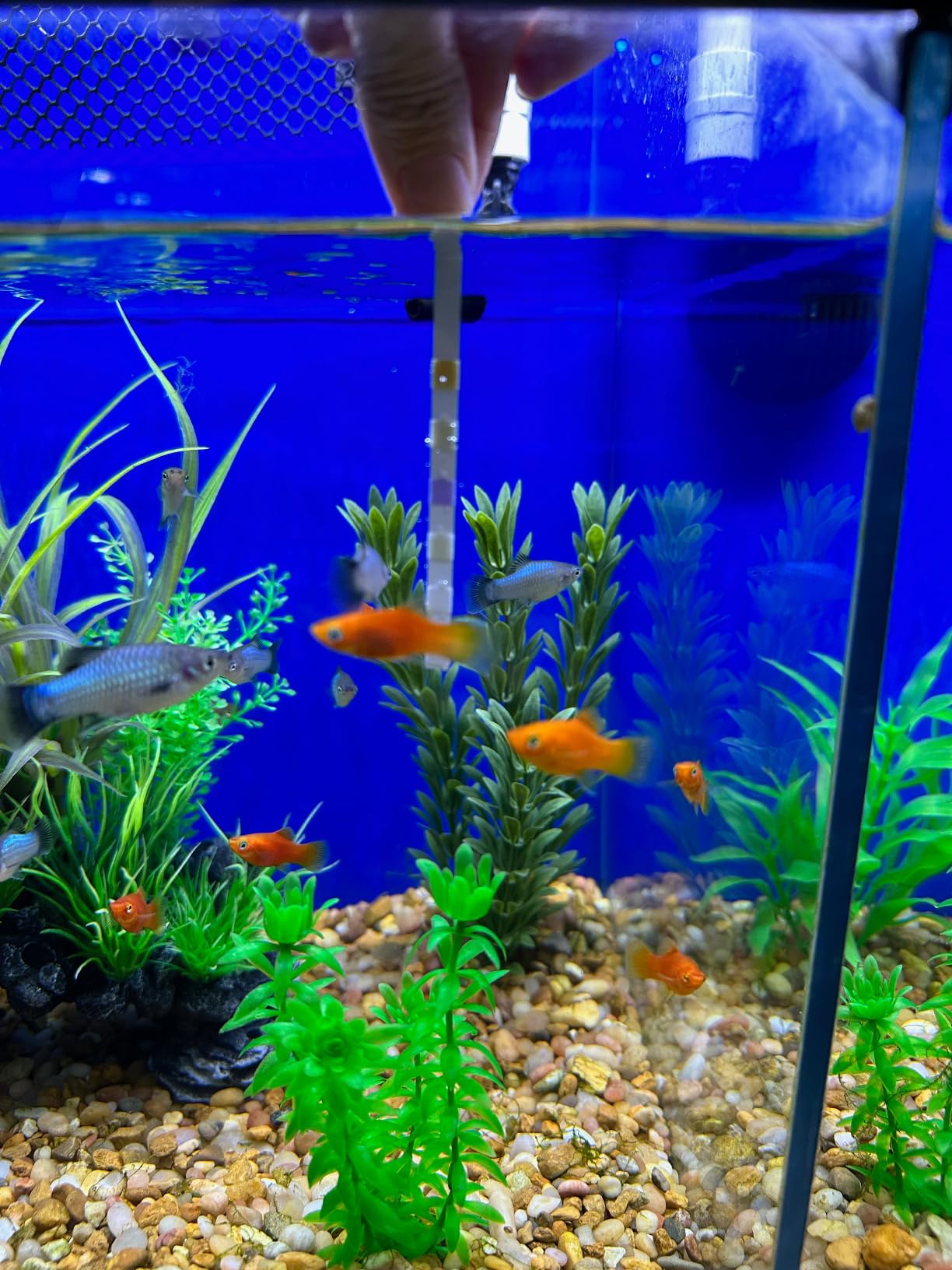
When routine speed is the goal
This is a good choice for a beginner who wants a broad weekly picture across several tanks without touching reagents. The dip is short and there is nothing to clean up afterwards.
It suits freshwater, saltwater, betta, shrimp tanks and outdoor ponds, so one pack covers more setups than most of its rivals.
Where it falls short
If your tap water is hard or your tank runs above pH 6.4, the color scale simply cannot give you a usable number. That is a common situation, not an edge case.
Cutting off the ammonia pad is an extra step that many people skip, which quietly produces a wrong result. If you are going to use it, read the instructions once and set your timers.
9. FUNSWTM 7-in-1 Strips – Best for Planted Tanks
Aquarium Test Strips for Freshwater Fish: 7 in 1 Fish Tank Water Testing Kit for Aquarium Pond – Accurate Testing Nitrate Nitrite Hardness Free Chlorine pH Carbonate Total Alkalinity-100 Strips
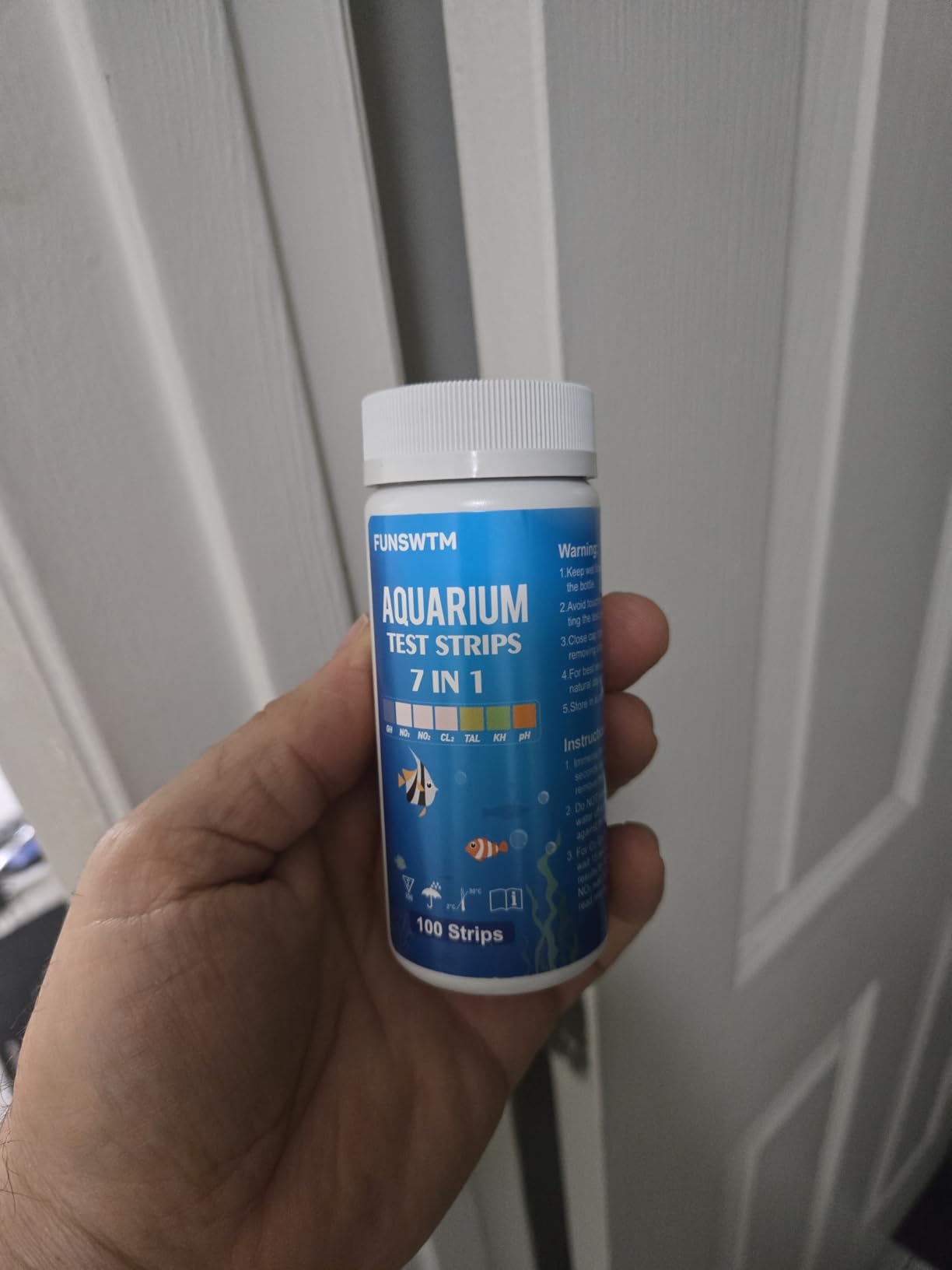
Nitrate, nitrite, hardness, free chlorine, pH, carbonate, alkalinity
100 strips
2-year guarantee
Pros
- Seven parameters with a no-bleed pad
- Very quick 2-second dip and 15-30 second read
- Backed by a 2-year guarantee
- Works for planted and saltwater setups
Cons
- No ammonia test
- Several strip counts share one listing
- which is confusing
Nitrate, carbonate and total alkalinity on a single strip is a combination planted-tank keepers care about more than most people do. Those three values tell you a lot about whether a heavily planted tank can hold steady or will swing.
The routine is quick: two seconds in the water, then a 15 to 30 second wait before comparing against the bottle chart. The no-bleed pad technology keeps each square readable independently, which matters when eight colors sit next to each other.
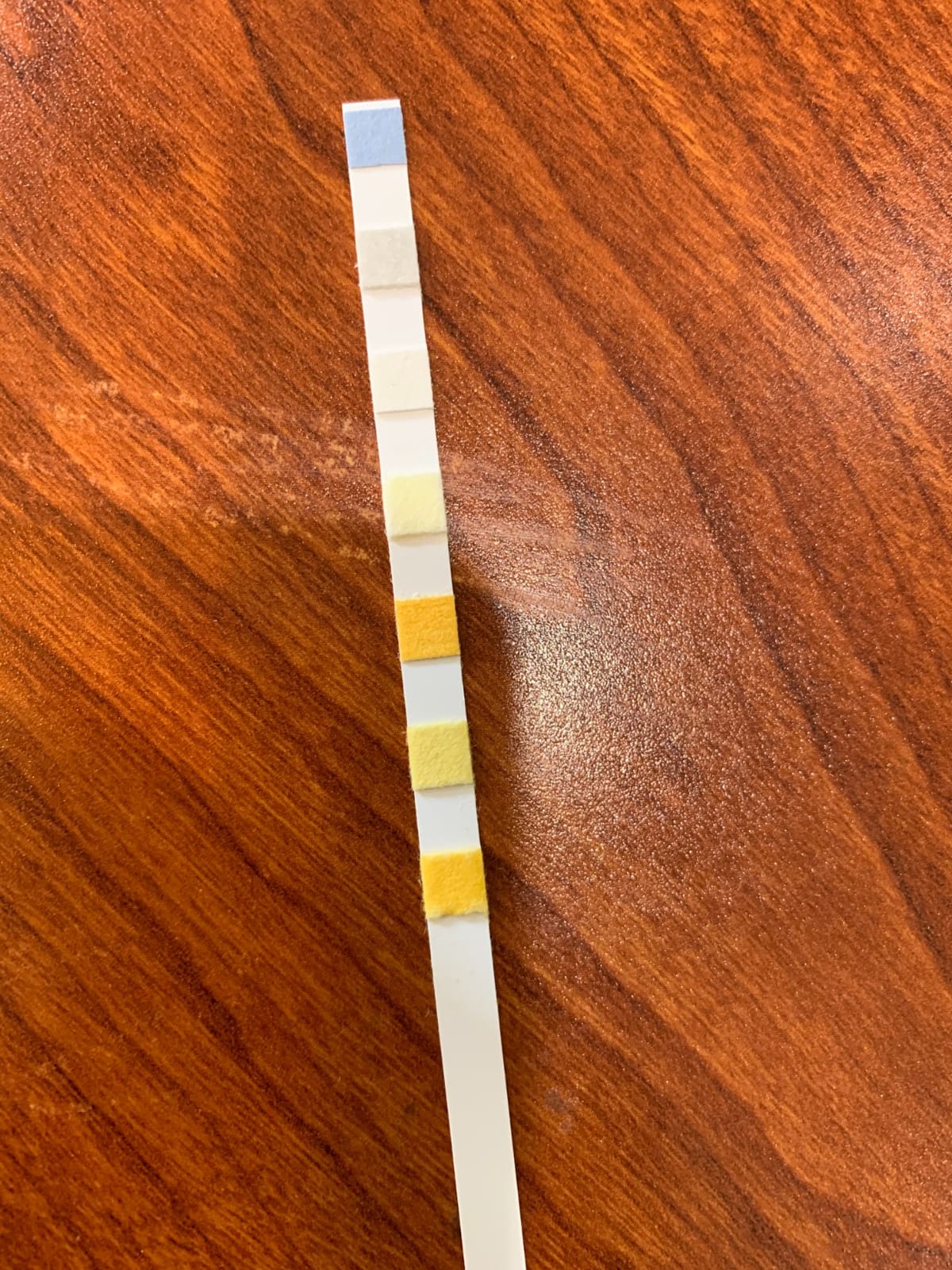
Reviewers rate it well for ease and color clarity, and the 2-year guarantee is unusual in this category. It is listed as suitable for betta tanks, tropical fish, ponds, planted aquariums and both freshwater and saltwater.
The gap is ammonia, which is the most common complaint in the reviews and the one that matters most during a cycle. There is no way to work around it with this product.
Also be careful when ordering. Several strip counts and parameter mixes are offered under a single listing, so check the count and the pad list before you commit rather than after the box arrives.
Who should pick this one
Planted tank keepers who want a fast weekly check on nitrate, carbonate and alkalinity will get the most out of it. So will anyone running a mixed set of tanks where a single 100-strip pack covers several weeks.
Because it suits saltwater too, it is a reasonable addition for a brackish or marine-adjacent setup where a dedicated strip would be overkill.
Where it falls short
No ammonia pad means this cannot help you cycle, and that is the moment most beginners actually need data. Plan on a separate liquid ammonia test.
With 15 to 30 second windows, easy to read at the wrong moment and land on a neighboring color. Pick one wait time and use it every single time.
10. Tetra Complete Water Test Kit – Best All-in-One Strip With Ammonia
Tetra EasyStrips Complete Aquarium Water Test Kit, 25 Count
Ammonia, nitrate, nitrite, hardness, chlorine, alkalinity and pH
60-second read
25 strips
Pros
- Seven tests including ammonia
- which is rare at this level
- All-in-one box with nothing extra to buy
- Simple 60-second procedure
- Works in freshwater and saltwater
Cons
- Strip readings are less precise than liquid tests
- Small 25-count box runs out fast with multiple tanks
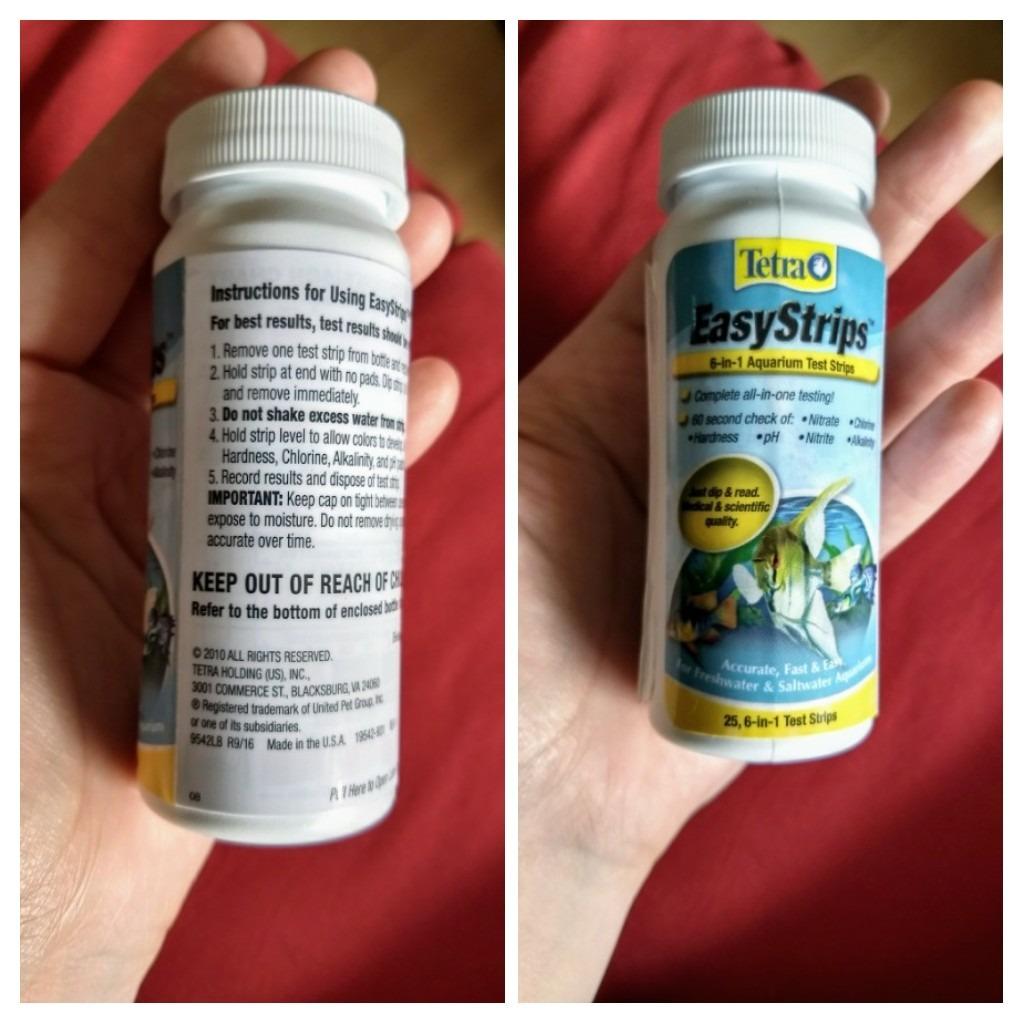
This is the version of the beginner strip that includes ammonia, and that single pad changes what it can be used for. One strip monitors ammonia, nitrates, nitrites, water hardness, chlorine, alkalinity and pH, and there is nothing else to buy to get started.
The procedure is the standard one: dip, wait 60 seconds, read against the chart. The fixed timing is genuinely beginner-friendly, because there is only one number to remember.
Owners like the completeness of the box and the reassurance of a widely trusted name. It works in both freshwater and saltwater, and the manufacturer recommends it weekly, after water changes or when adding new fish.
Strip-based readings are simply less precise than liquid tests, and reviews say so directly. The value here is breadth and convenience, not the last digit of a number.
The 25-count box is the other limitation. If you run more than one tank, or test more than weekly, you will go through it quickly, and larger counts are listed as separate variants.
When one box should be all you need
If you have a single freshwater or saltwater tank, and you want a first product that covers the whole beginner checklist including ammonia, this is a clean place to start. Nothing is missing, and the routine fits in a minute.
It is also a good companion for a larger kit. Use the strip weekly for the quick picture and the liquid kit whenever the numbers need to be exact.
Where it falls short
Color matching is still color matching, and low values in particular will be approximate. During a cycle, treat the ammonia pad as a screen and confirm with a liquid test before you add livestock.
Count your tests per week before choosing the box size. A 25-count box is generous for one tank and insufficient for three.
11. HOVIRAN 7-Way Test Strips – Best for High-Volume Testing
7 Way Aquarium Test Strips, 125 Strips for Fish Tank & Pond Test Kit
7-way strip for fish tanks and ponds
125 strips
Dip and color-compare reading
Pros
- 125-strip count keeps the cost per test very low
- No liquid reagents to handle
- Works for fish tanks and ponds
- Ranks well in its category
Cons
- Listing details are thin with only one feature bullet
- No clear confirmation that ammonia is among the tested parameters
At 125 strips, this is the pick for anyone who tests on a schedule rather than occasionally. Seven parameters cover the usual weekly sweep, and the dip-and-compare procedure needs no reagents, no vials and no clean-up.
The simplicity is the point. There is no timing chart to memorise beyond the standard wait, so a strip in a classroom or a shared facility is easy to hand to somebody who has never tested water before.
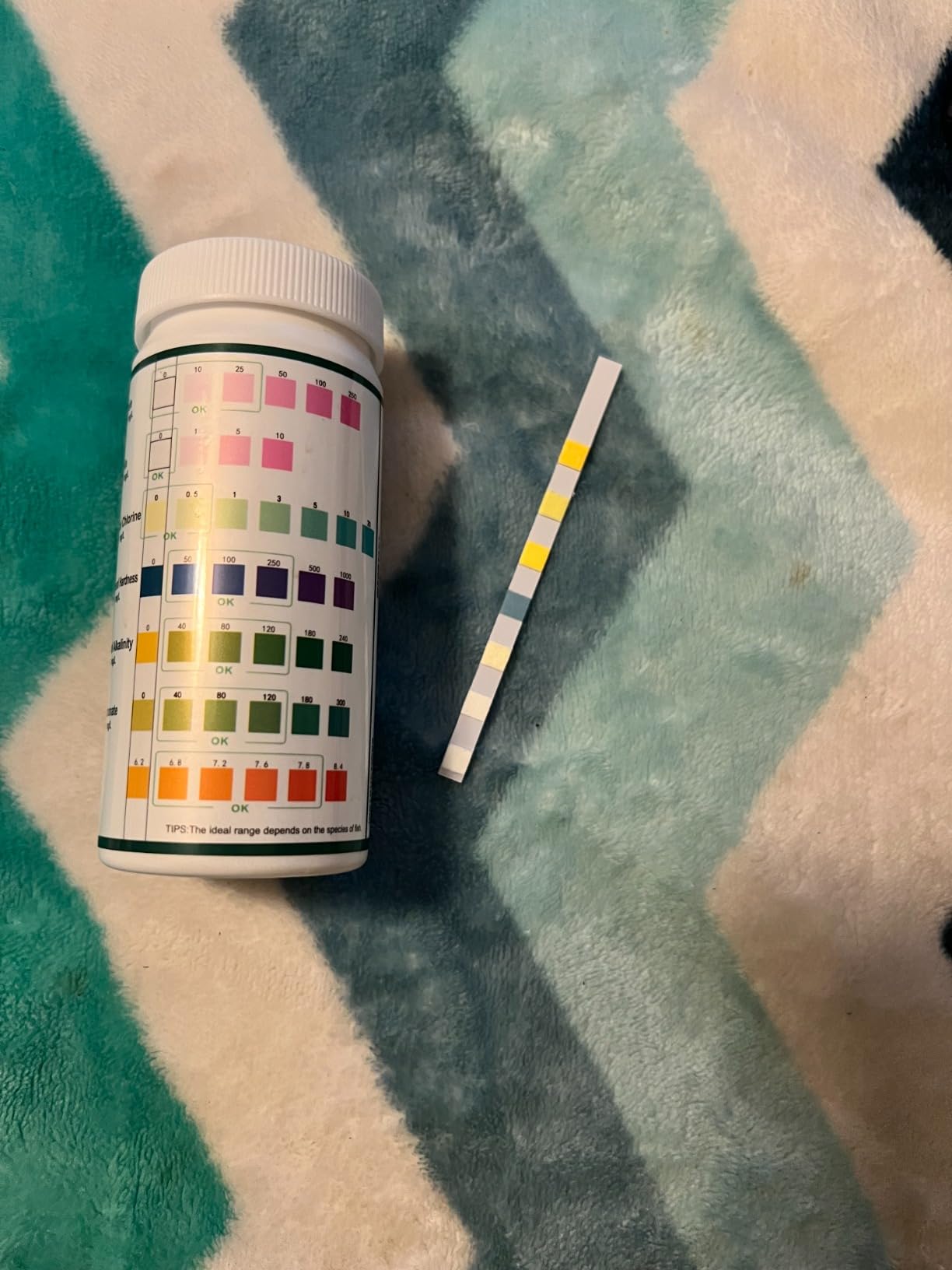
It suits fish tanks and ponds, and the ratings are solidly positive, reflecting a simple product doing a simple job. The 4.4 score across 1,269 reviews is a fair read of a dependable budget option.
The honest weakness is documentation. The listing provides very little detail beyond a single feature bullet, and the parameter list is not spelled out clearly enough to confirm whether ammonia is included. That uncertainty is exactly the kind that catches beginners out.
Do not assume a seven-pad strip covers ammonia. If that pad is what you need, check the chart in hand before you buy, or choose a product that states it plainly.
When the strip count is the deciding factor
For high-frequency testing across multiple tanks, a pond, or a teaching setup, a 125-strip container means you can test on a schedule without rationing. The low per-test cost is what makes daily use realistic.
It is also a reasonable companion to a liquid master kit, giving you a fast weekly screen while you reserve the accurate tests for the parameters that need them.
Where it falls short
Thin listing details mean you are relying on the physical chart to know what you are measuring, and that is not a good way to make a buying decision for your first kit.
It also has the lowest review base in this group at 1,269, so there is less long-term feedback about how the colors hold up over time.
12. Umlecoa 7-in-1 Test Kit – Best Starter Bundle
Umlecoa 7 in 1 Aquarium Test Kit for Freshwater and Saltwater – 125 Aquarium Test Strips with Test Tube & Thermometer – Fast & Accurate Water Testing Strips for Aquarium/Pond/Pool
Nitrate, nitrite, chlorine, GH, TA, KH and pH
125 strips
Test tube with cap and thermometer included
Pros
- Includes a test tube and thermometer that other kits skip
- 125-strip count
- Color chart is clear
- Readings come back in under a minute
- Works for tanks
- ponds and pools
Cons
- No ammonia pad
- 7 parameters is fewer than several rivals at the same level
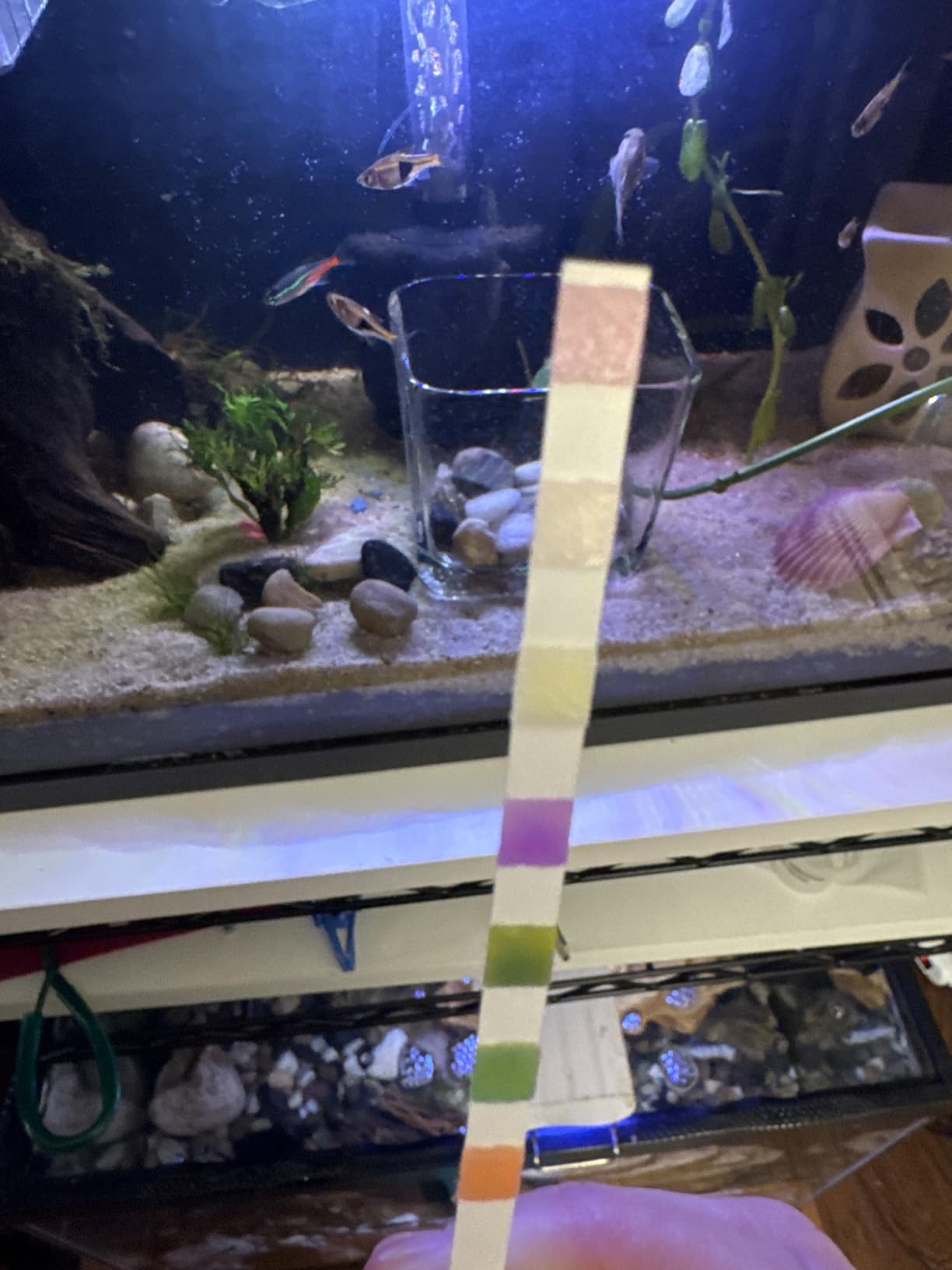
The included extras are what set this one apart. Alongside 125 strips you get a test tube with a cap and a thermometer, so a beginner is not left needing a second purchase just to handle a sample and check temperature.
Seven parameters cover nitrate, nitrite, chlorine, total hardness, total alkalinity, carbonate and pH. The routine is a two-second dip followed by 30 to 60 seconds held horizontally before comparing to the chart.
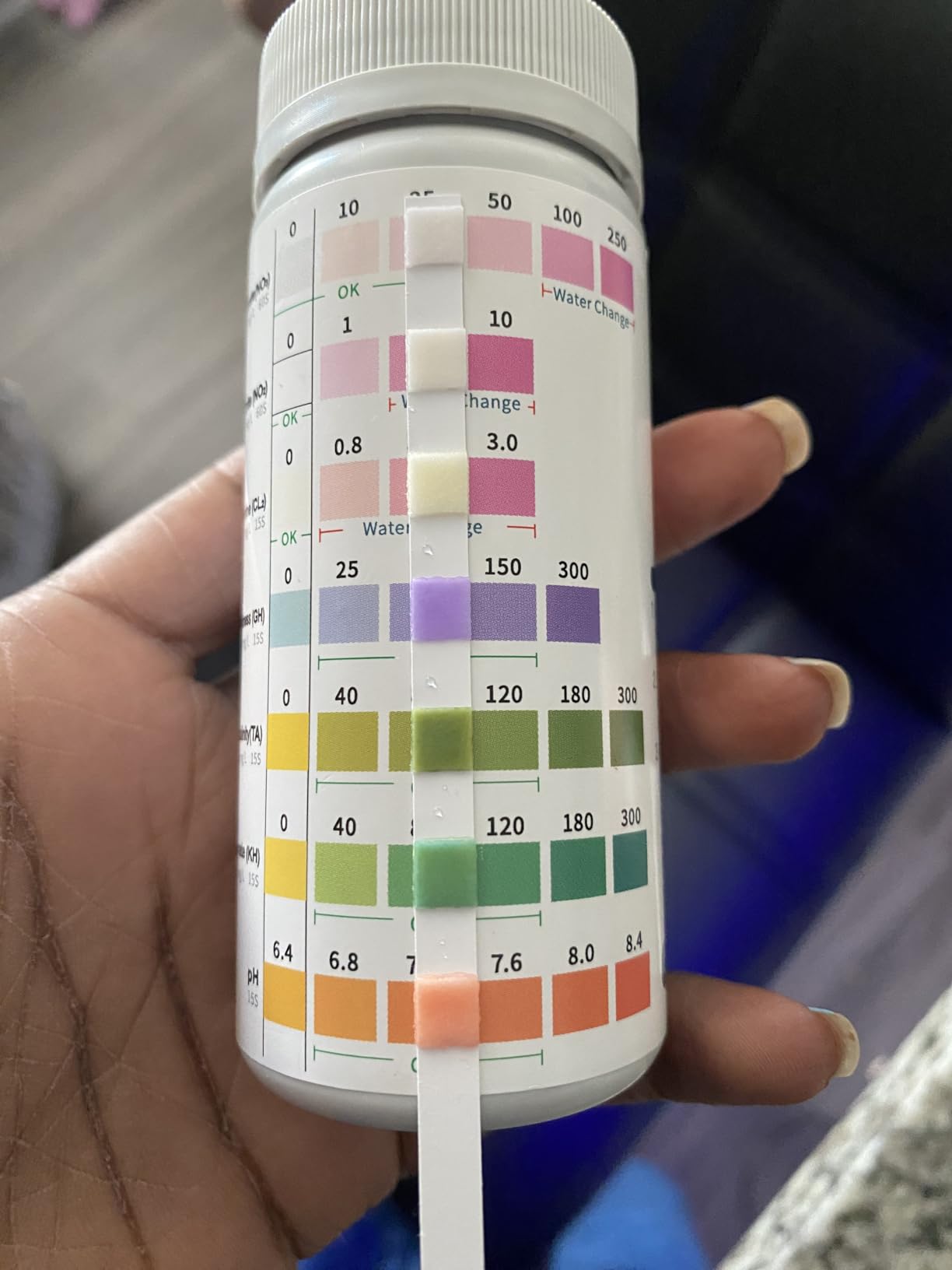
Reviewers rate it highly for value and ease, and the 4.6 rating is a good signal for a kit this simple. The color chart is described as clear, and results come back in under a minute.
There is no ammonia pad, so ammonia has to be checked with a separate product. That is the same limitation as several other strips here, and it is the one that matters most while cycling.
Seven parameters is fewer than several competitors in the same tier, so if you are choosing purely on coverage, a wider strip will give you more per dip.
When the bundle makes sense
It suits saltwater and freshwater tanks, ponds, planted aquariums, betta and shrimp setups, and even pools, which makes it a flexible first purchase for a household doing more than one kind of water testing.
Having a test tube in the box is more useful than it sounds, because taking a proper sample and letting it settle gives a cleaner read than holding a strip in moving water.
Where it falls short
Without an ammonia pad it cannot be used for a fishless cycle, and that is the single most common reason beginners need testing in the first place.
The review base is the smallest here at 898, so there is less evidence about long-term consistency than for the higher-rated strips. Treat it as a convenience product.
Liquid Test Kits vs Test Strips: Which Should Beginners Use?
Liquid kits win on accuracy, and strips win on everything else. That is the whole decision. A liquid kit resolves low concentrations and gives you a defensible number, while a strip gives you a color you matched by eye in roughly the time it takes to make coffee.
For beginners, the practical split is simple. Use a liquid kit for ammonia, nitrite and nitrate while you are cycling a tank, whenever a fish is sick, and any time a reading needs to be exact. Use a strip for weekly routine checks and for parameters where a trend is enough.
The most common beginner mistake is trusting a strip for a low reading. A pad cannot reliably distinguish zero from a small trace, so a strip that looks clear during a cycle proves very little. The color scale is also coarse at the low end, where nitrite and nitrate shades merge into each other.
A second mistake is treating the strip count as the quality signal. Reading 40 ppm on a strip when the true value was 4 ppm is not a rounding error; it sends you dosing water conditioner for a problem you do not have. Confirm anything surprising with a liquid test before you act on it.
My recommendation: buy one liquid master kit now, and add a strip product for weekly maintenance. Skipping straight to strips saves time and teaches you less.
The Four Parameters Every Beginner Has to Test
Ammonia, nitrite, nitrate and pH are the four that matter, and each one tells you something different about your tank.
Ammonia is the waste product that comes first, and it is toxic. In a healthy cycle it is read, converted, and never accumulates. Any detectable level in a stocked tank is a problem you act on immediately.
Nitrite is the intermediate step that bacteria create while processing ammonia. It is also toxic, and it is the parameter most likely to spike right after you add fish to a tank that was not fully cycled.
Nitrate is the end of the chain. Lower is better, and a rising nitrate reading is your cue that a water change is due before fish start showing stress.
pH describes how acidic or alkaline the water is, and consistency matters far more than the exact number. A tank that holds steady at a slightly different value is healthier than one that swings weekly.
GH and KH are the next tier, and they are why shrimp keepers, snail keepers and heavily planted tanks need more than the four above. GH is general hardness, the dissolved minerals that invertebrates need for healthy shells. KH is carbonate hardness, your buffer, and it is what stops pH from crashing overnight.
How Often to Test Aquarium Water?
A brand new tank needs daily testing. That is the period where the numbers move fastest and where a missed day can cost you livestock, so test ammonia, nitrite and nitrate daily until you see both ammonia and nitrite read zero and stay there.
For an established freshwater tank, weekly is the standard. Test before a water change so you know what you are correcting, and test after any significant addition: new livestock, new filter media, new substrate or a move to a new home.
Test immediately when something changes. Gasping at the surface, hiding, loss of appetite, cloudy water, unexplained deaths or stubborn algae are all reasons to run a full set rather than guess.
Keep a written log. Trends are far more informative than any single reading, and a written record is the fastest way to see that a change you made two weeks ago actually worked.
How to Read a Color Chart Without Fooling Yourself
Most beginner misreadings come down to lighting, not chemistry. Hold the vial or the strip against a white background, and compare in natural daylight rather than under a warm kitchen bulb or against a dark counter.
Read from the top down, in the order the chart is printed, rather than hunting for one square in isolation. Human eyes are poor at judging one color in isolation and better at comparing neighbors, which is exactly what a color scale is built for.
Do not tilt the vial toward a window to catch the light. Refraction shifts the apparent color, and the same sample will look different depending on which way it is held.
On liquid tests, shake the bottle every time the instructions say to, and count drops out loud or with a phone counter. A missed shake is the most common cause of a wrong nitrate reading I see.
What to Look for in an Aquarium Water Test Kit
Check the parameter list for ammonia first. This is the single most useful filter you can apply. Most 5-in-1 and 6-in-1 strips omit ammonia, and ammonia is the parameter that decides whether a new tank is safe. If ammonia is not stated on the box, assume it is not there.
Prioritize range over resolution. A test that reads 0 to 8 ppm covers a cycle. A kit that reads to 40 ppm but cannot show the difference between 0 and 0.25 is less useful than a narrower kit with finer steps in the low range.
Look at the color chart, not the parameter count. Ten pads do not mean more accuracy. What matters is how many distinct steps sit between your expected value and the next one, and how well the printed colors are separated. Charts with bold safe-range markings are easier for a beginner to read under ordinary room light.
Count tests per bottle, not tests per kit. A kit advertising 800 tests works out at far fewer per bottle than the headline suggests, and the number of usable tests matters more than the number printed on the front. Strips make the opposite calculation, so check the strip count against how often you actually intend to test.
Know your reagent shelf life. Liquid reagents stay accurate for roughly a year after opening when stored indoors at normal room temperature, and considerably less if kept warm, which is why a kit that lives in a hot utility room can drift without warning. Strips degrade faster still, and guidance on several products here is to use them within three months of opening. Store bottles closed, out of direct sunlight, and write the opening date on them.
Match the kit to your water type. Freshwater kits cover the nitrogen cycle and pH. Marine and reef parameters are different animals: calcium, magnesium and alkalinity, tested with a reef kit or individual titrations. Most beginners can skip all of that for a long time, and a strip or pen covers spot checks.
Add GH and KH if you keep invertebrates or heavy planting. Shrimp, snails and live plants depend on dissolved minerals, and KH is the buffer that keeps pH stable. This is the most common add-on purchase after a master kit, and it is the one most worth doing deliberately.
Plan a staged order rather than one big purchase. Buy a liquid master kit now and use it for the cycle. Add a hardness test if you keep shrimp or plants. Add a strip product for weekly routine checks once the numbers are stable. Add reef or specialty parameters only when you move to a marine tank. Electronic pens and continuous monitors are a later upgrade, not a starting point.
Ongoing upkeep is the part most guides skip. Reagents do not spoil on a schedule you can see, they just drift, so replacing a master kit roughly once a year removes an entire class of confusing readings.
Frequently Asked Questions
What is the most accurate aquarium water test kit?
A liquid test kit is more accurate than any strip, because a titrant or colorimetric reaction resolves low concentrations that a color pad cannot. The API Freshwater Master Test Kit is the most accurate option for most beginners, measuring pH, high range pH, ammonia, nitrite and nitrate. If a single parameter matters most, the API Ammonia 130-Test Kit is the dedicated choice for cycling.
What is the best water quality test kit for an aquarium?
For a single freshwater tank, the API Freshwater Master Test Kit covers the four core parameters in liquid form and is the kit most keepers start with. Add a strip product such as the API 5-in-1 for weekly checks and, if you keep shrimp or heavy planting, a separate GH and KH test. Buy for coverage of ammonia, nitrite, nitrate and pH first.
Are aquarium test strips accurate enough?
For routine weekly checks on a cycled tank, strips are accurate enough to show trends and catch extremes. They are not accurate enough for cycling a new tank, diagnosing a sick fish, or reading low concentrations, because most omit ammonia entirely and the low end of the color scale is coarse. Confirm any surprising strip reading with a liquid test before you change the water or add a treatment.
How often should I test my aquarium water?
Test daily while cycling a new tank, until both ammonia and nitrite read zero and stay there. On an established freshwater tank, test weekly before a water change. Test immediately after adding livestock, filter media or substrate, and any time fish show stress such as gasping, hiding or loss of appetite. Keep a written log so you can read trends rather than single numbers.
How long do aquarium test kit reagents last?
Liquid reagents generally stay accurate for about a year after opening when stored indoors at normal room temperature, and lose accuracy faster if kept warm or exposed to sunlight. Strips degrade quicker still, and several products here are labeled for use within three months of opening. Write the opening date on the bottle, keep it closed, and replace a master kit roughly yearly to avoid drifting readings.
Which aquarium parameters should beginners test?
Start with ammonia, nitrite, nitrate and pH, in that order of urgency during a cycle. Ammonia is the first waste product and is toxic, nitrite is the intermediate step and the one most likely to spike after stocking a tank, nitrate is the endpoint and tells you when to change water, and pH matters most for consistency. Add GH and KH next if you keep shrimp, snails or live plants.
Final Verdict
The best aquarium water test kits for beginners in 2026 come down to one honest rule: buy accuracy for the parameters that decide safety, and convenience for everything else. The API Freshwater Master Test Kit is the kit to start with, because liquid tests resolve the low readings that a new tank turns on, and the API 5-in-1 strips are the right weekly companion once your numbers settle.
Whatever you choose, check the box for an ammonia pad before you buy, read your colors in daylight against white, and write the readings down. That last habit catches more problems than any kit on this list.